This morning we sailed from Koblenz to Rudesheim, an area known as the Middle Rhine or the Rhine Gorge.
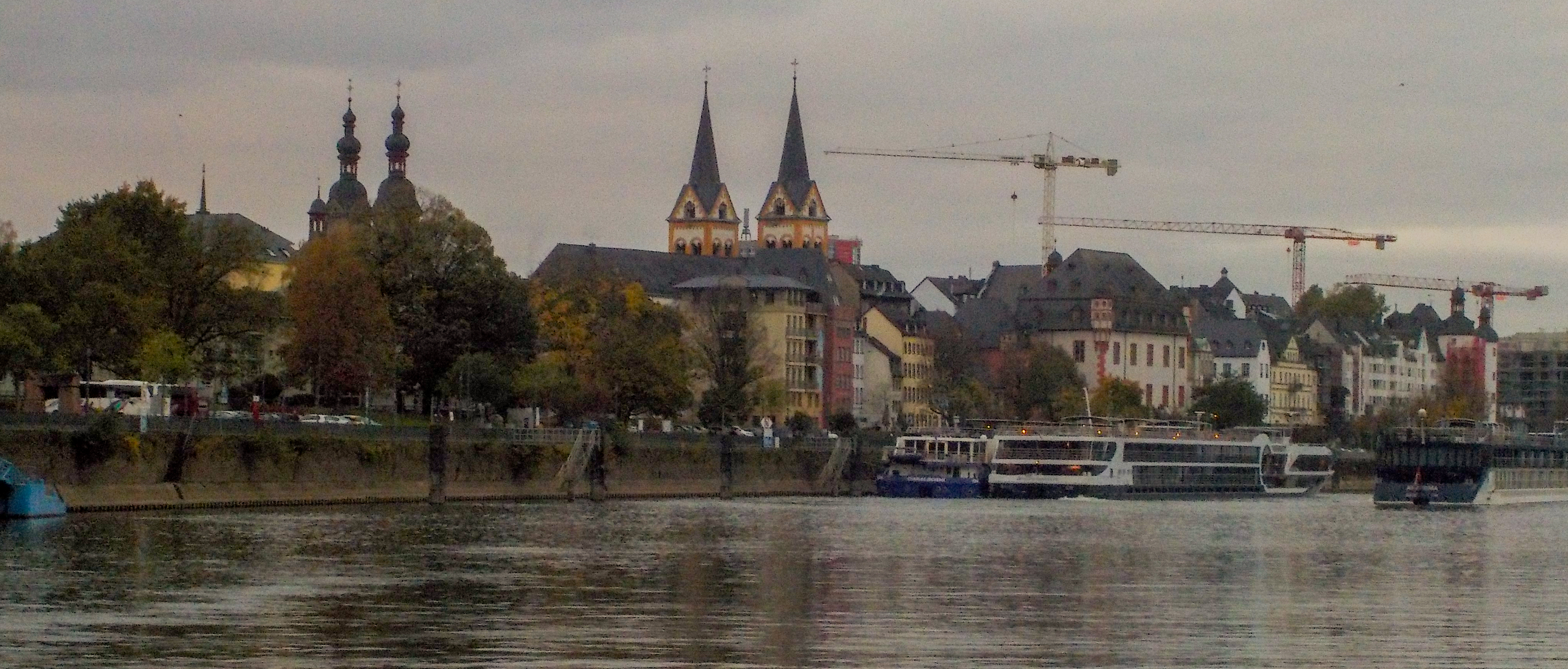
Koblenz
This area of the Rhine is known for having a bunch of castles and would have been a very interesting place in the Middle Ages. We got up bright and early to position ourselves in a warm spot with a good view and quick access to the deck for pictures.
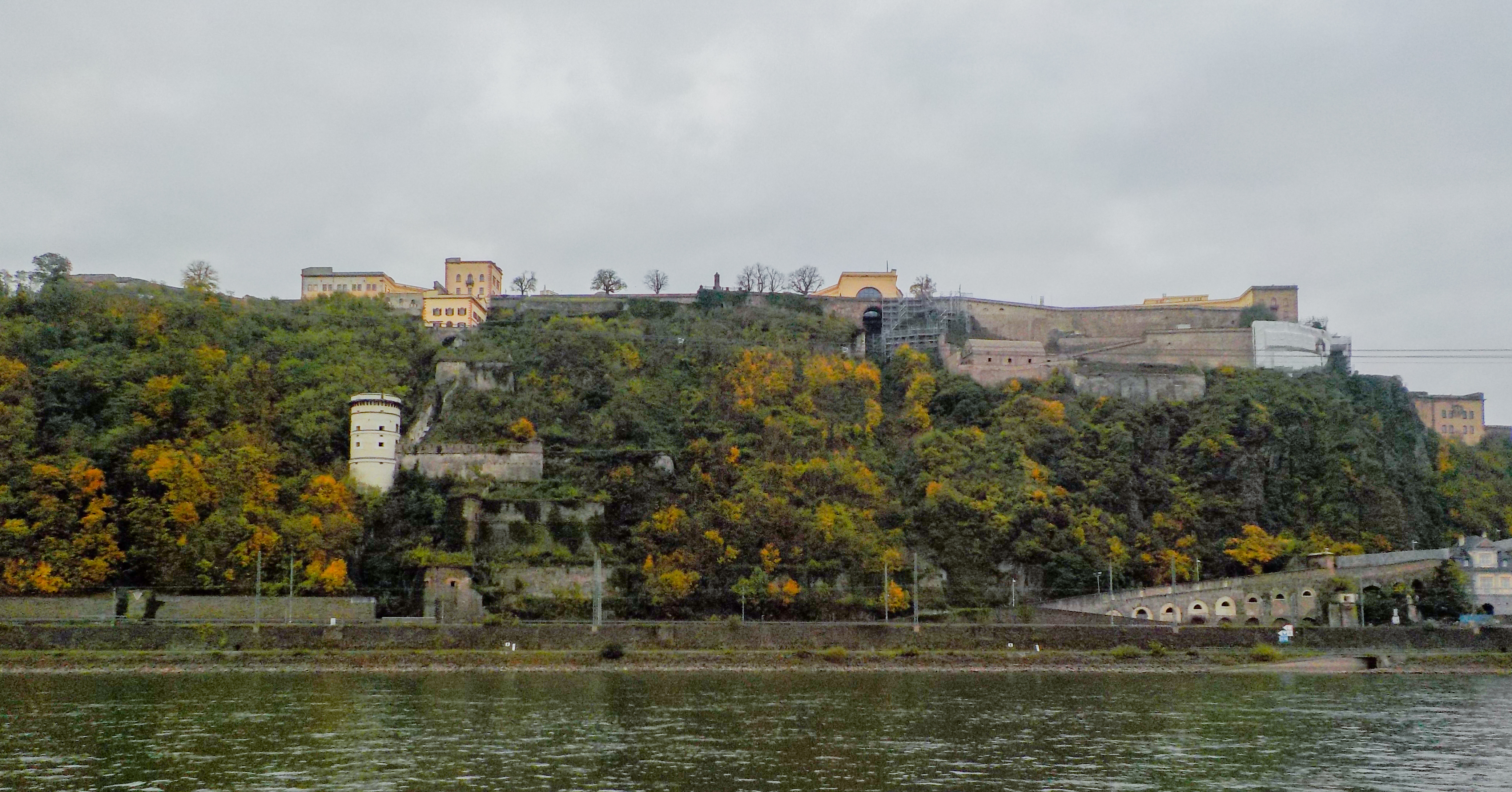
Fortress Ehrenbreitstein
Right at Koblenz is the Fortress Ehrenbreitstein. It started as a Roman fort in the 3rd century, later a castle in the 11th century, and was eventually developed and expanded into a fortress in the 17th century. It has been a part of many historical battles and besiegements.
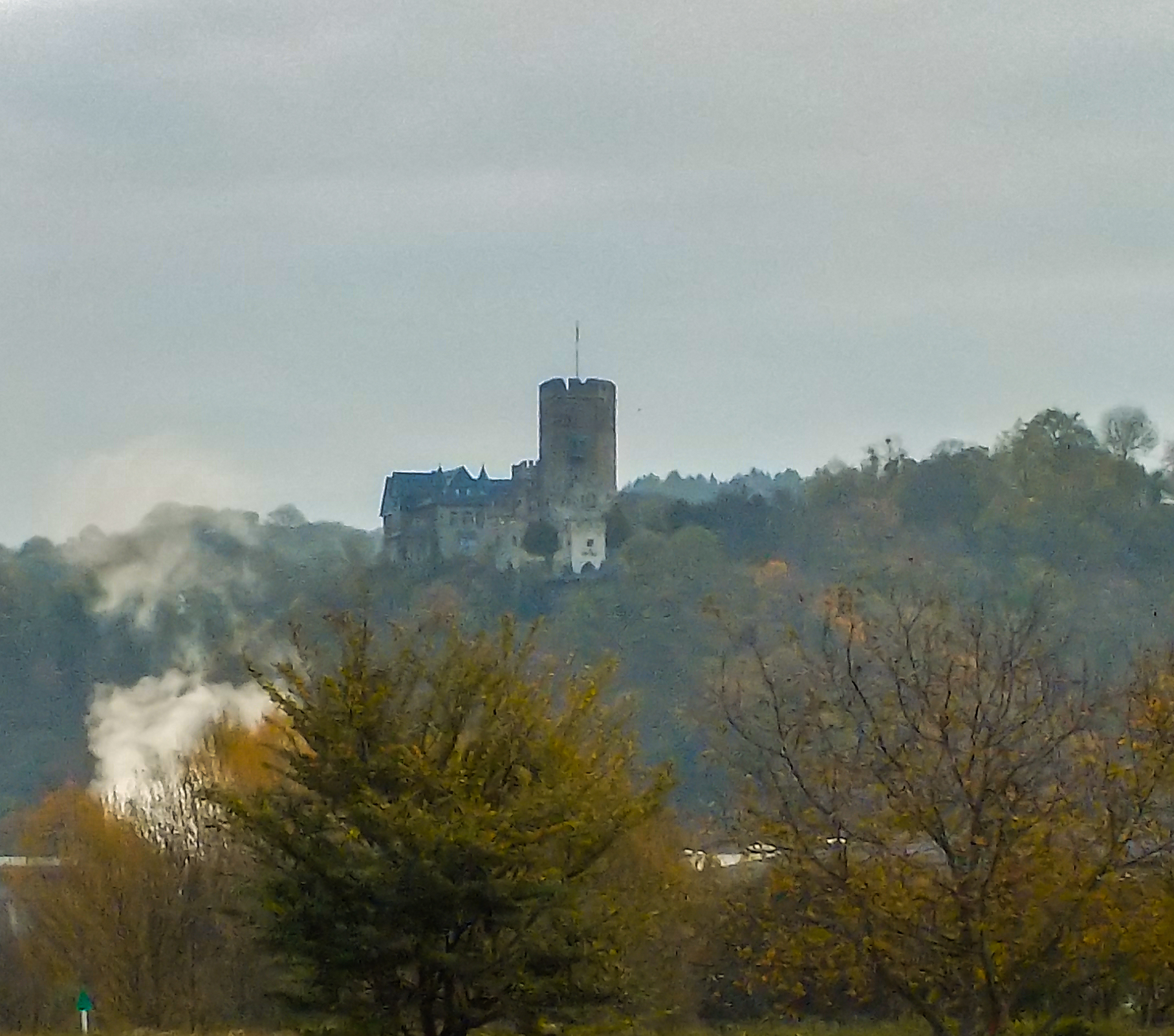
Unknown castle near Rhens
We went past Rhens, which was a cute village. Since 1273 the four Rhine electors met at Rhens, the intersection of their territories. Twice they voted a German king here.
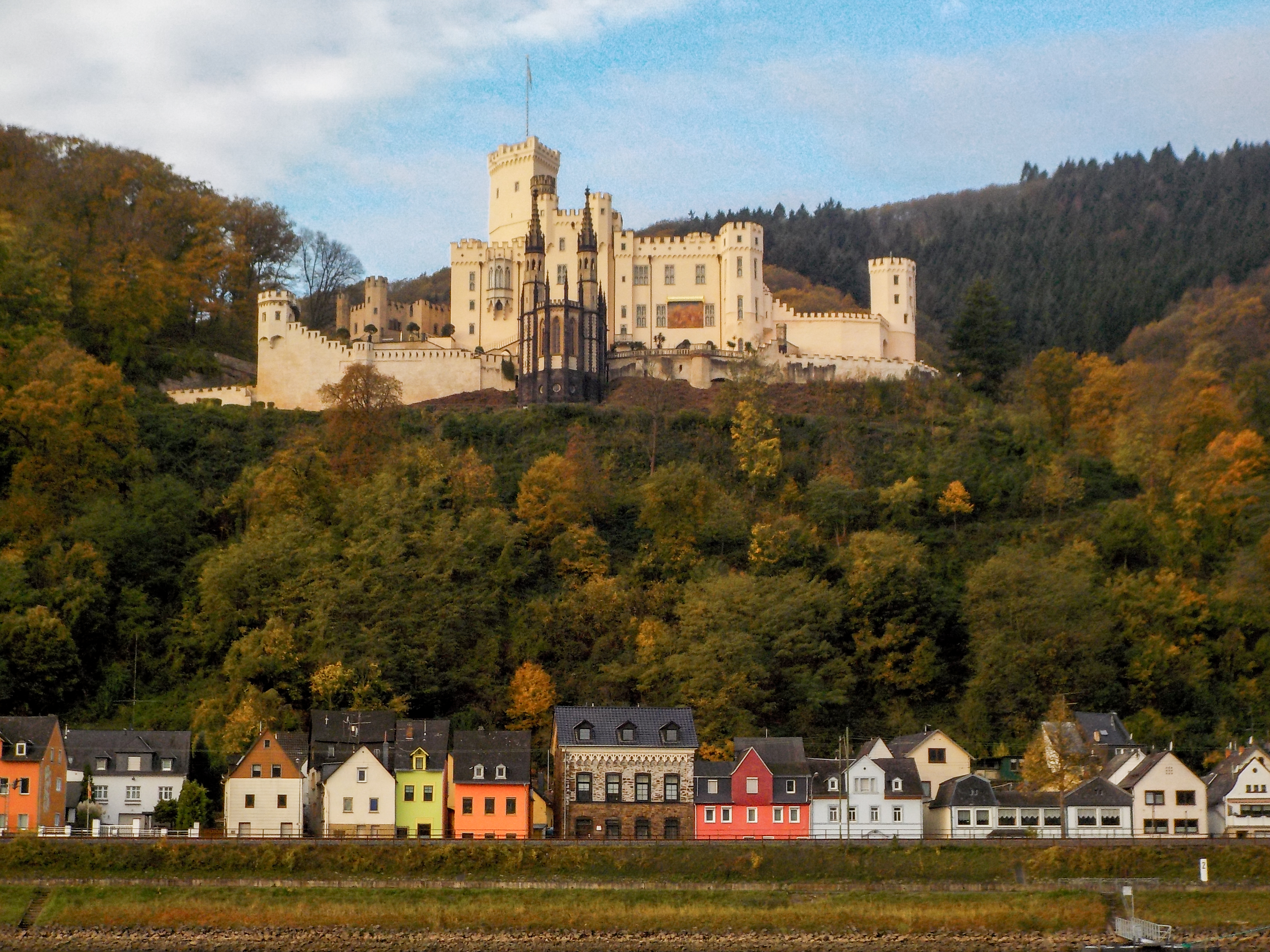
Stolzenfels Palace
Stolzenfels was built in the 1200s and the castle served later as a toll station. In 1689 the destruction in the Palatinate War of Succession put an end to its military history. Around 1823 the city Koblenz gave the ruin to the later Prussian king Friedrich Wilhelm IV. It was redesigned as a summer residence and is now considered as one of the most outstanding evidences of German romanticism.
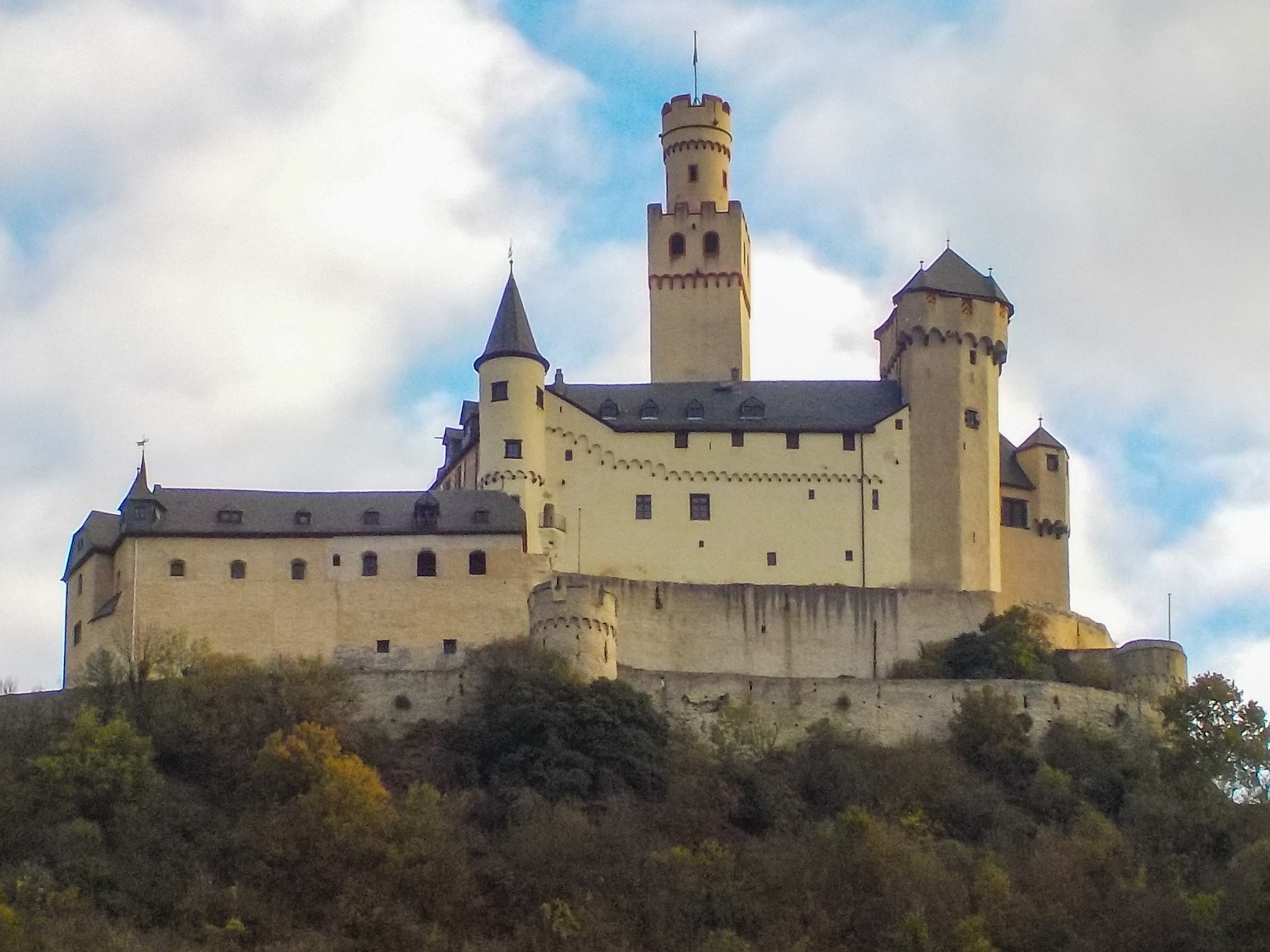
Marksburg Castle
We went by the Marksburg Castle, which, of the 40 hill castles between Bingen am Rhein and Koblenz, Marksburg was the only one which was never destroyed. It is quite stunning on the top of a hill looking down at the river. The stone keep of the castle was built in 1100. Napoleon gave the Marksburg to his ally the Duke of Nassau for his service. He used the castle as a prison and as a home for disabled soldiers.
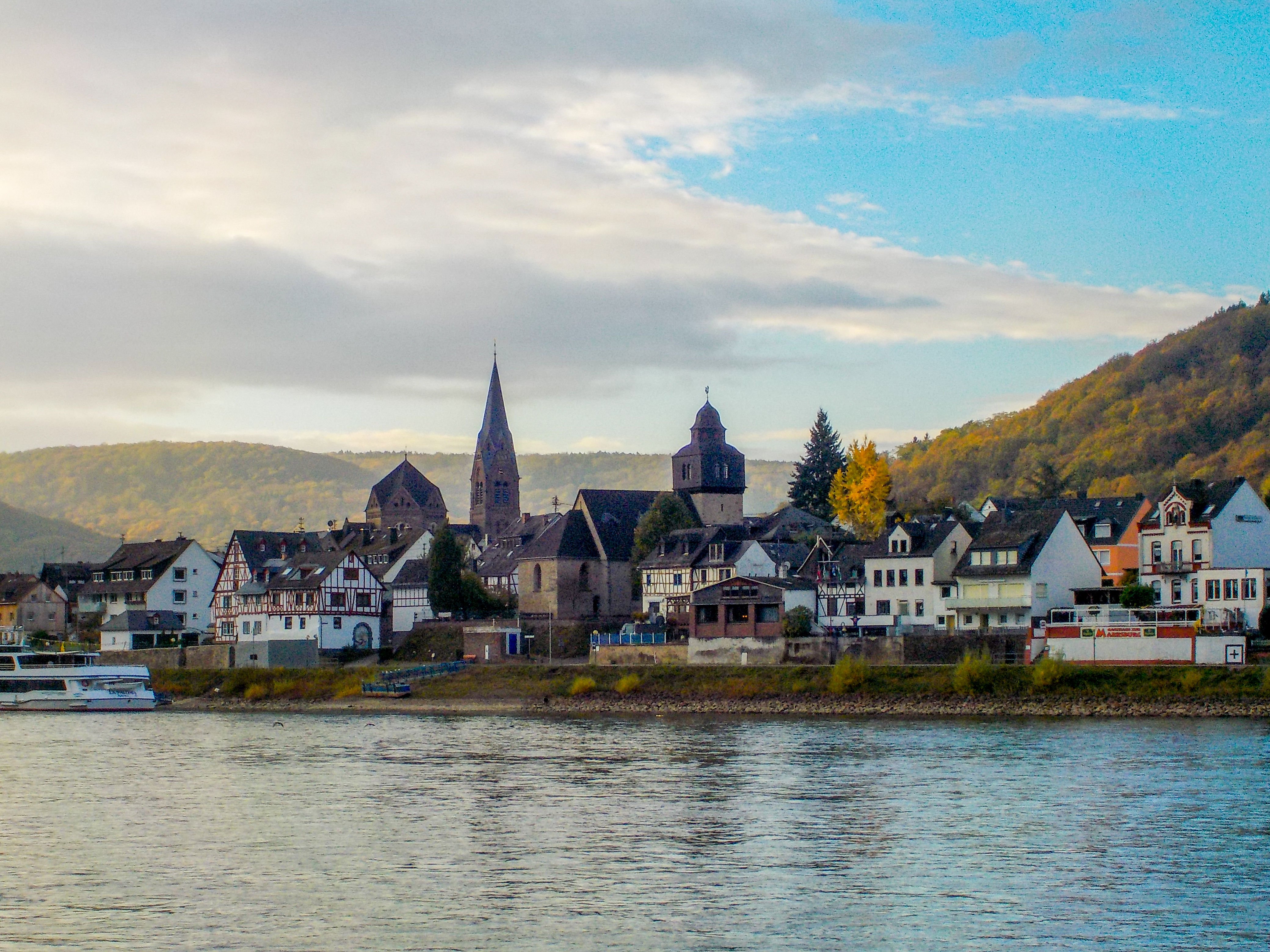
German town along the Rhine
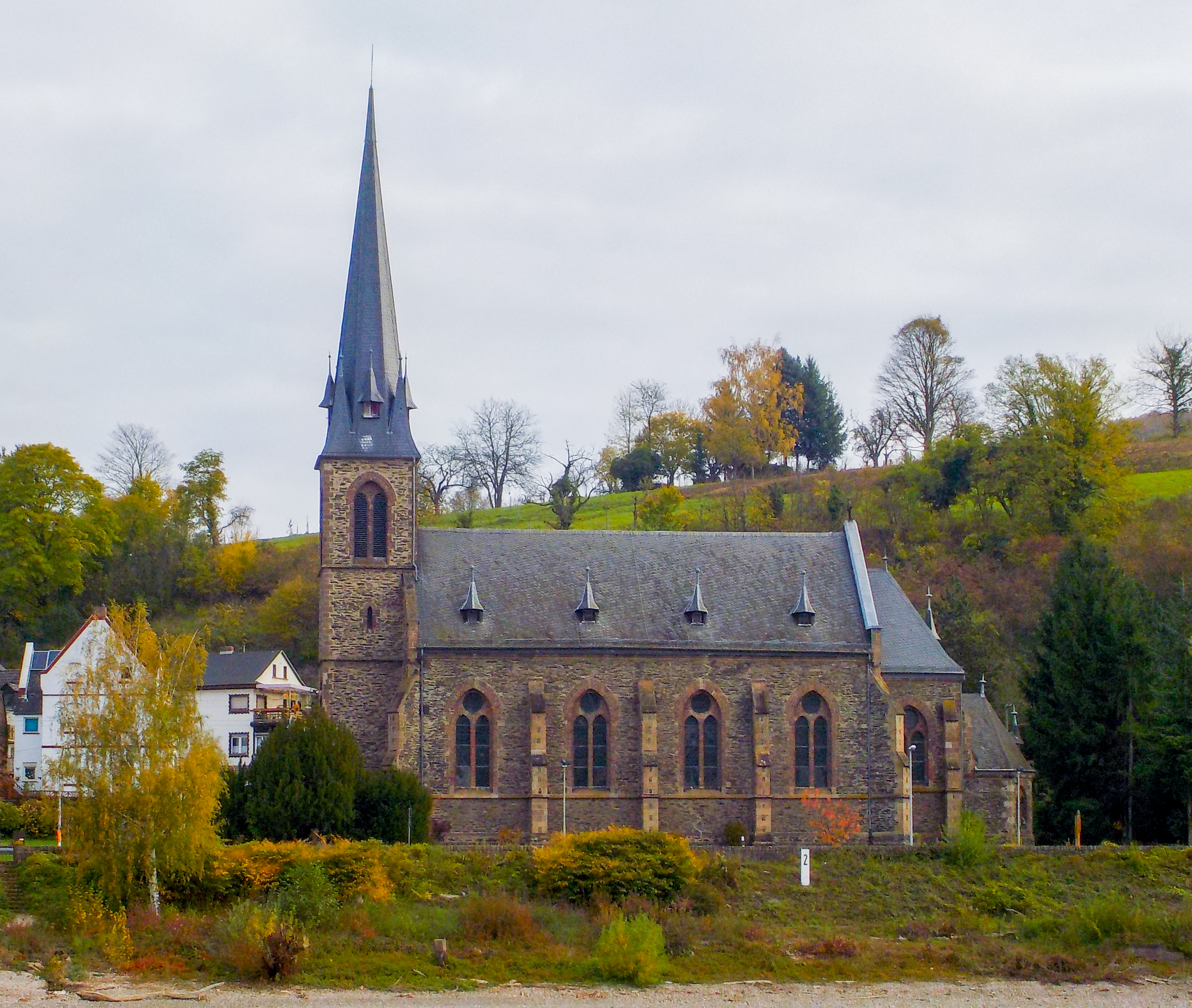
Church
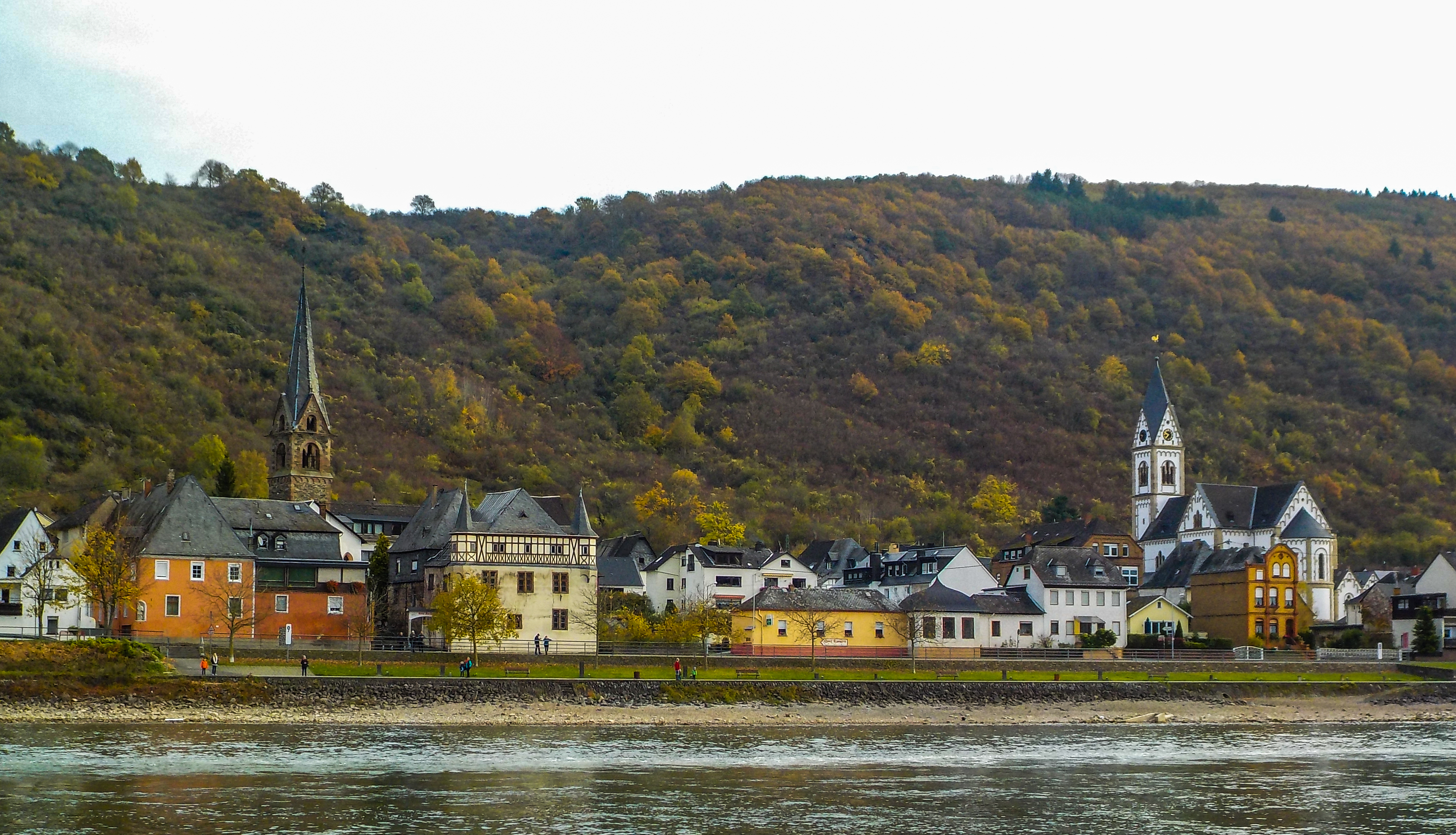
Town
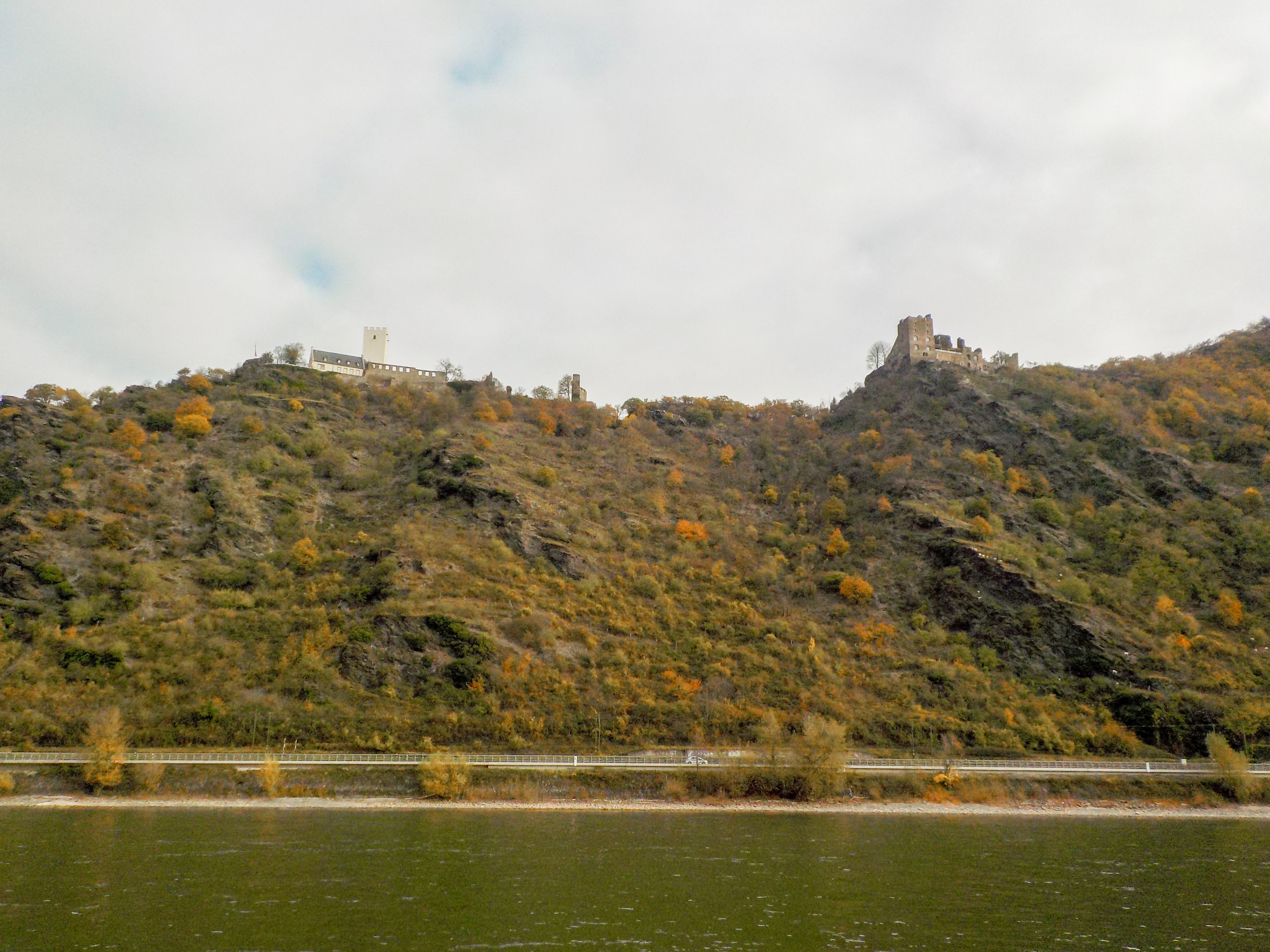
Sterrenberg Castle on the left, Leibstein Castle on the right
The Sterrenberg Castle was built sometime in the 11th or 12th cneturies. The noble family of Bolanden stayed as lords of Sterrenberg Castle until the second half of the 13th century. The Leibstein Castle, built in the 13th century, is right next to it. At one point the two castles were owned by 2 quarreling brothers. They actually built a high wall between the two castles and eventually one brother, reportedly accidentally, killed the other.
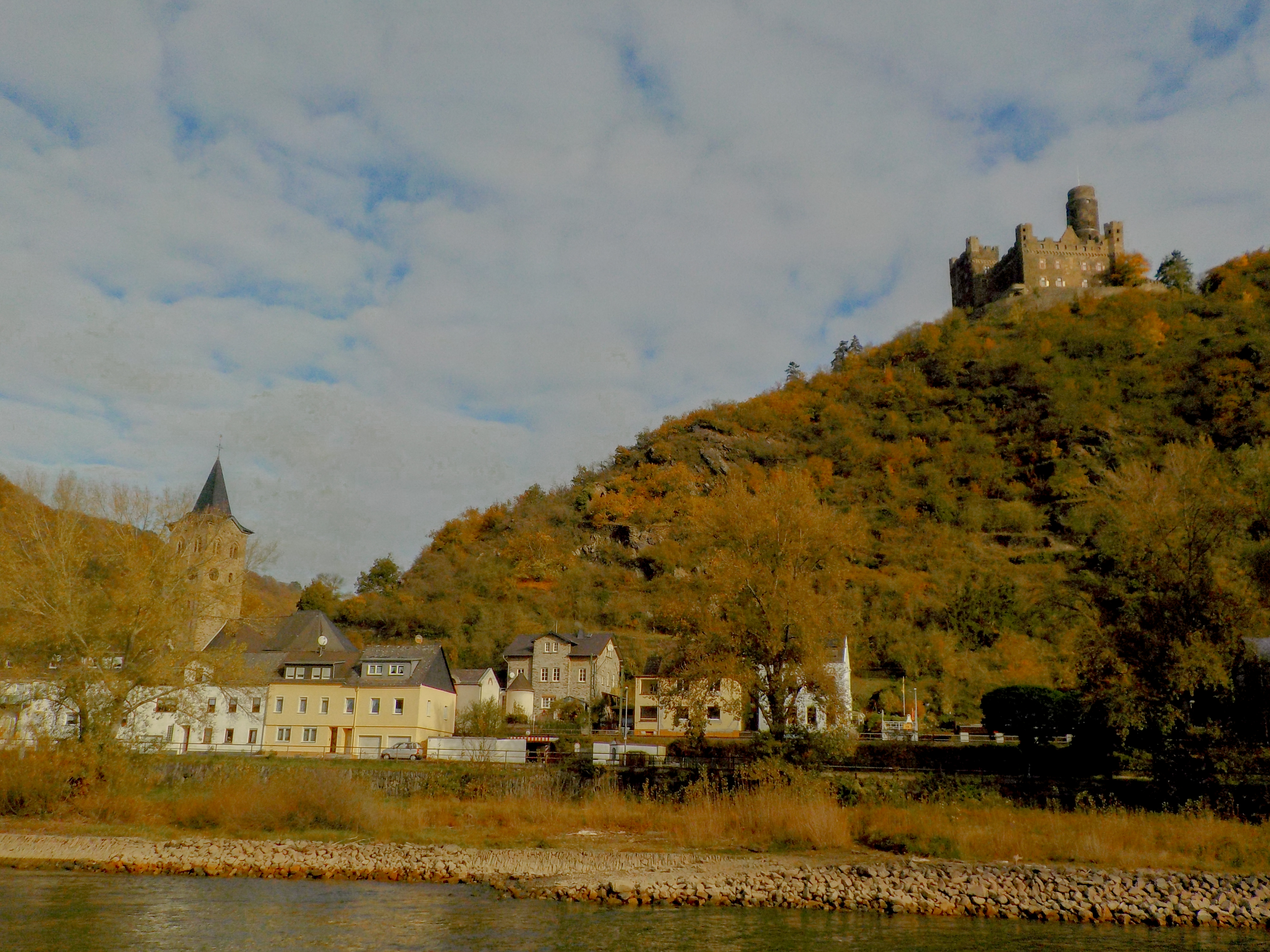
Maus Castle
Maus Castle was built in the 1300s. It was actually named the Thurnberg Castle, but local folklore attributes the nickname to the Counts of Katzenelnbogen’s mocking of the Electors of Trier during the 30 years of construction, who reportedly said that the castle was the “mouse” that would be eaten by the “cat” of Burg Katz. . This castle actually suffered damage from bombing in WWII.
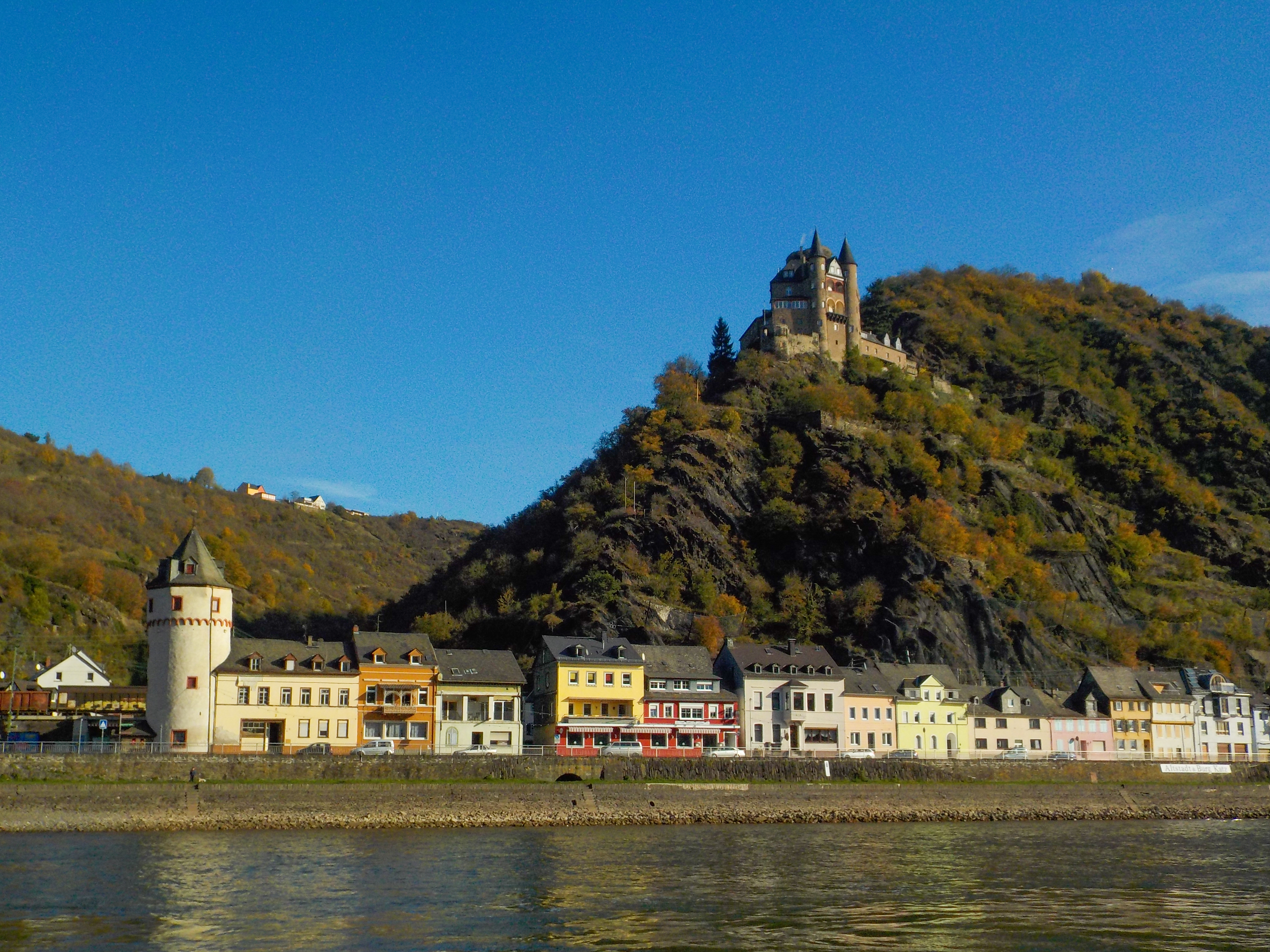
Katz Castle
Neighboring Katz (cat) Castle was built in the second half of the 14th century. Due to the intentionally chosen location on the mountain ridge it was thought that Katz Castle could not possibly be conquered from the valley. Only after the invention of fire arms, Katz Castle had to be substantially reinforced. In succession of long-lasting disputes on heritage, Katz Castle and Rheinfels Castle were besieged, demolished, rebuilt and extended several times. Even though repairs had been made in 1800, Napoleon blew up Katz Castle in 1806.In 1896 District Administrator Berg acquired Katz Castle, to reconstruct it as close as possible to the original design.
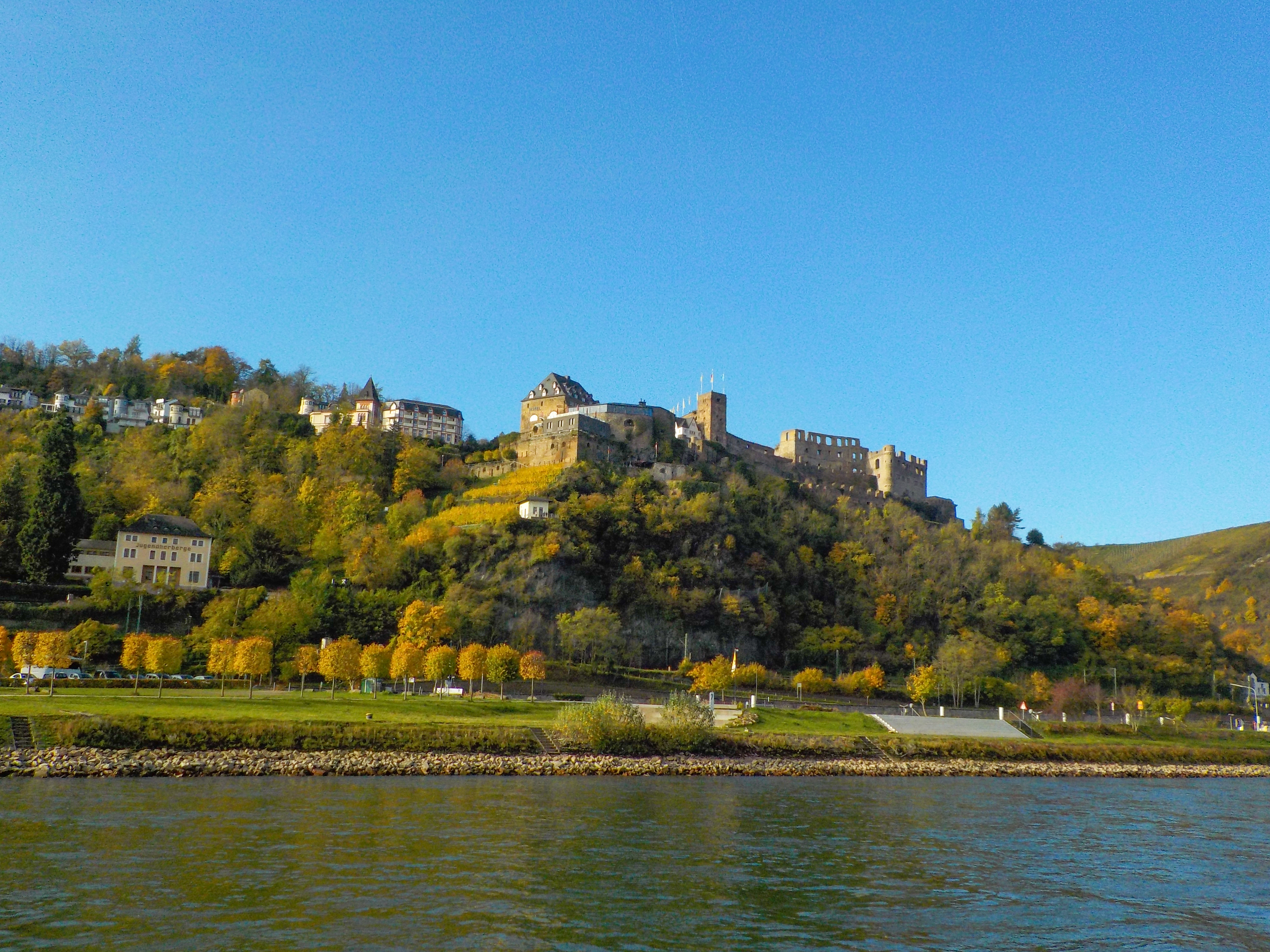
Rheinfels Castle
The counts of Katzenelnbogen founded Rheinfels Castle around 1245. The castle was used as the count’s residence and was one of the most significant centres of courtly life of the region. In 1479 the castle came to the landgraves of Hessen who expanded Rheinfels to a fortress. As the only military complex arrangement on the left bank of the Rhine river it withstood the troops of Louis XIV in 1692. in 1794 Rheinfels fell to the French revolutionary army, that blew it up. The remains served later as a stone quarry for the reconstruction of Ehrenbreitstein, before Prince Wilhelm of Prussia acquired the medieval part of the ruin in 1834.
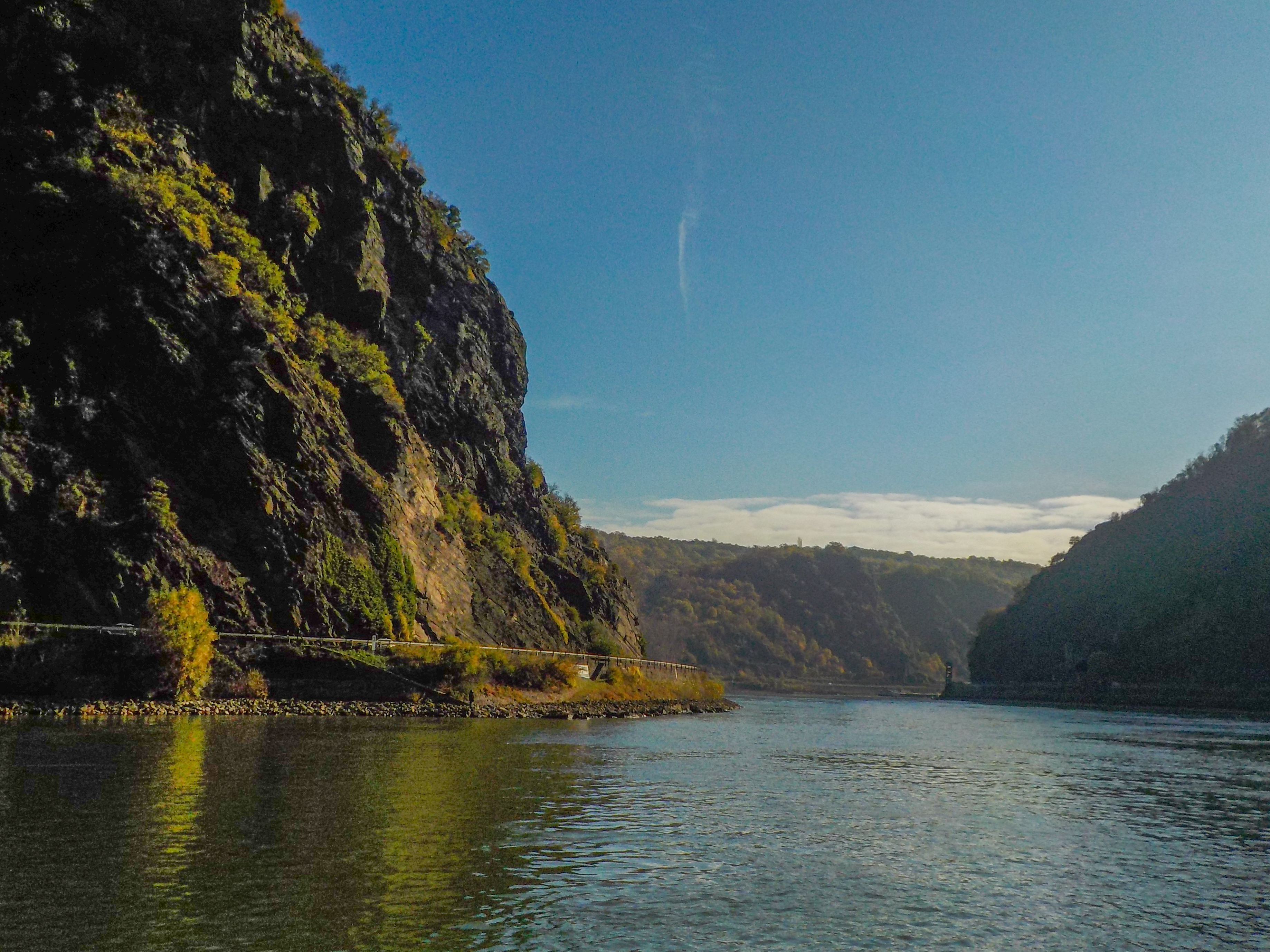
Lorelei
The Loreley ( Lorelei ) is a 433 feet high slate cliff in the Upper Middle Rhine Valley World Heritage near the town of St. Goarshausen. The view of St. Goarshausen, from the Loreley ( Lorelei ) outlook point, with Castle Katz and the view of the town St. Goar and its Fortress Rheinfels, leaves a wonderful impression on all Loreley ( Lorelei ) tourists. The Rhine at the Loreley ( Lorelei ) is up to 82 feet deep and only 371 feet wide. Because this area is so deep and narrow, it is one of the most dangerous places in the World Heritage Upper Middle Rhine Valley.
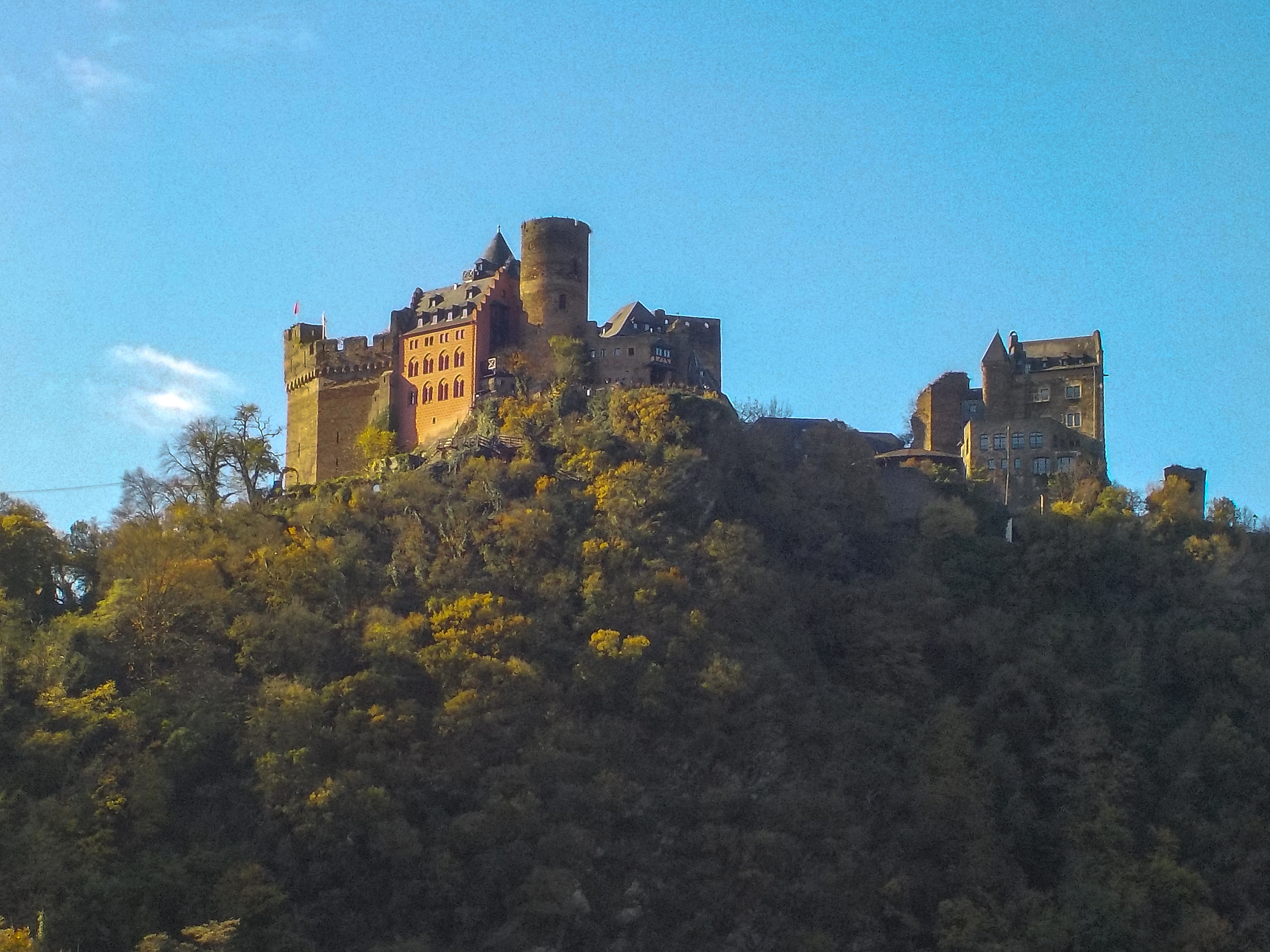
Shonburg Castle
Shonburg Castle was built in the 12th century. It was largely destroyed in 1689. It is above the town of Oberwesel. There is a reddish church called Liebfrauenkirche which was built in the 1300s.
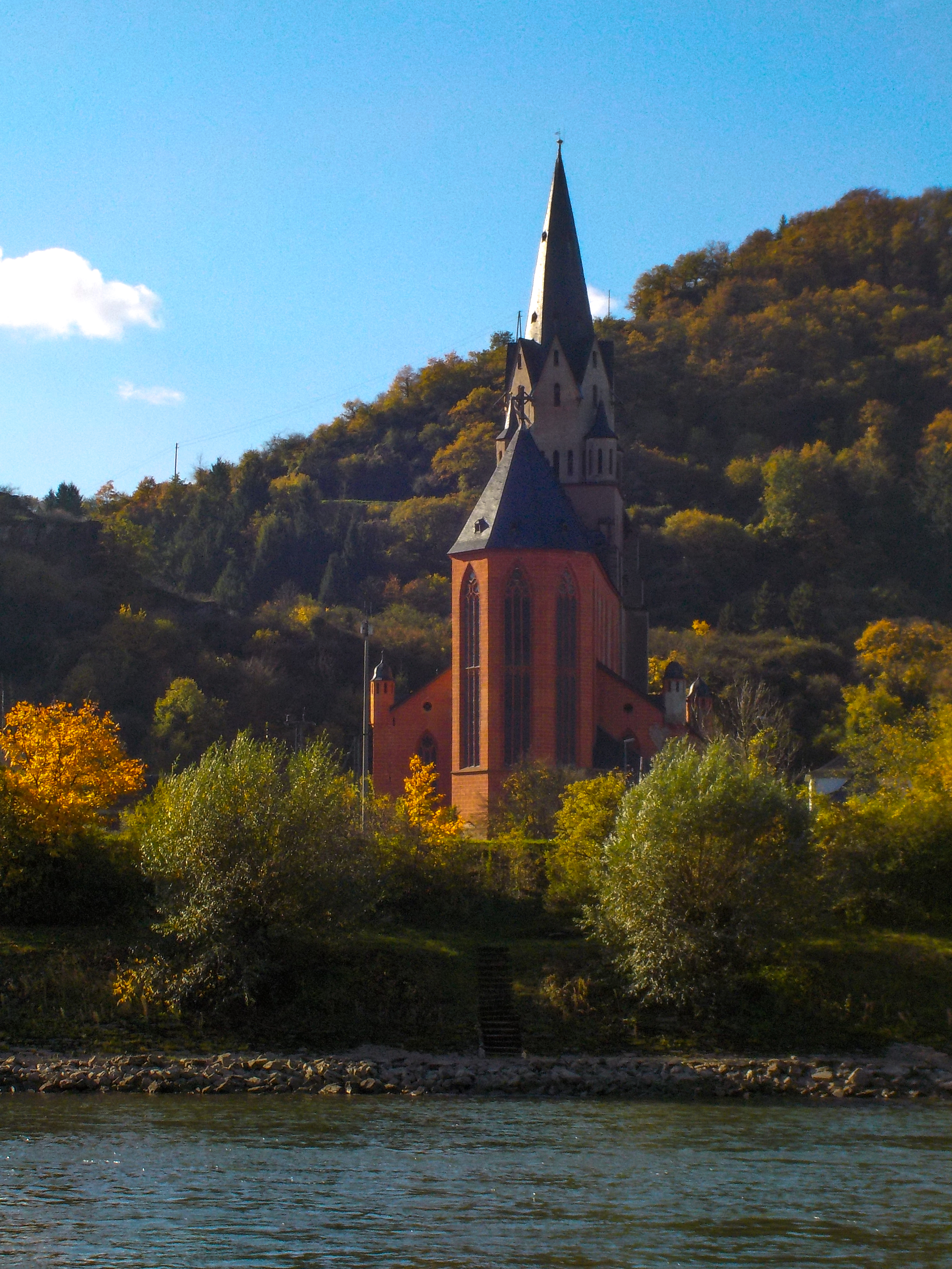
Red Church in Oberwesel
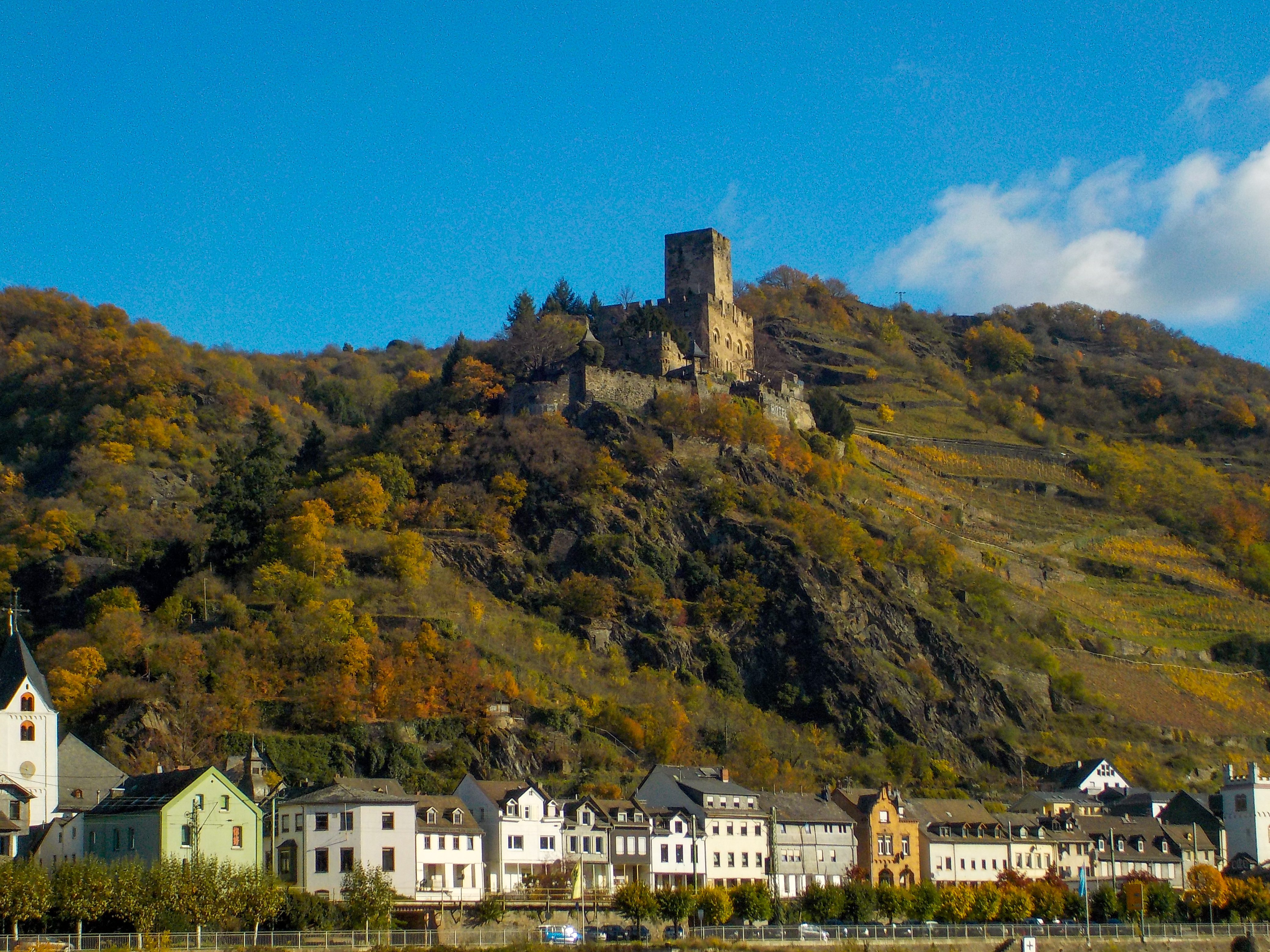
Gutenfels Castle
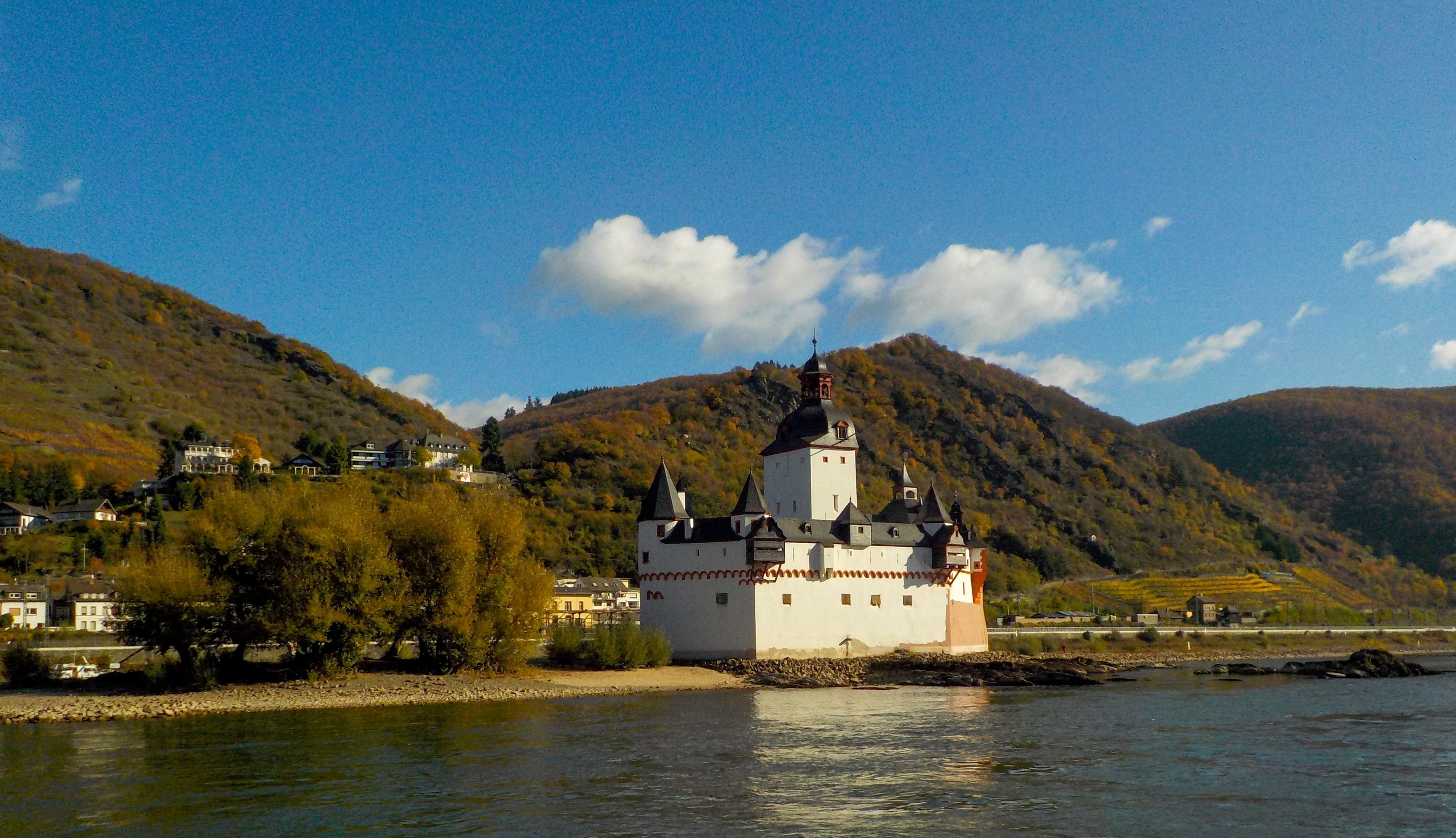
Pfalzgrafenstein toll station
Gutenfels (solid rock) Castle was built in the 1200s and spent most of its history owned by a single family. It is now a hotel. Right below this castle is Pfalzgrafenstein, which was a toll station in the middle of the Rhine. When the water level is higher it looks like it is floating in the river, as it is on a shallow island. It was built in 1327 and was in operation as a toll station until 1866. Here the Prussian Field Marshal Blücher succeeded in crossing the Rhine with his army, which introduced the fall of Napoleon.
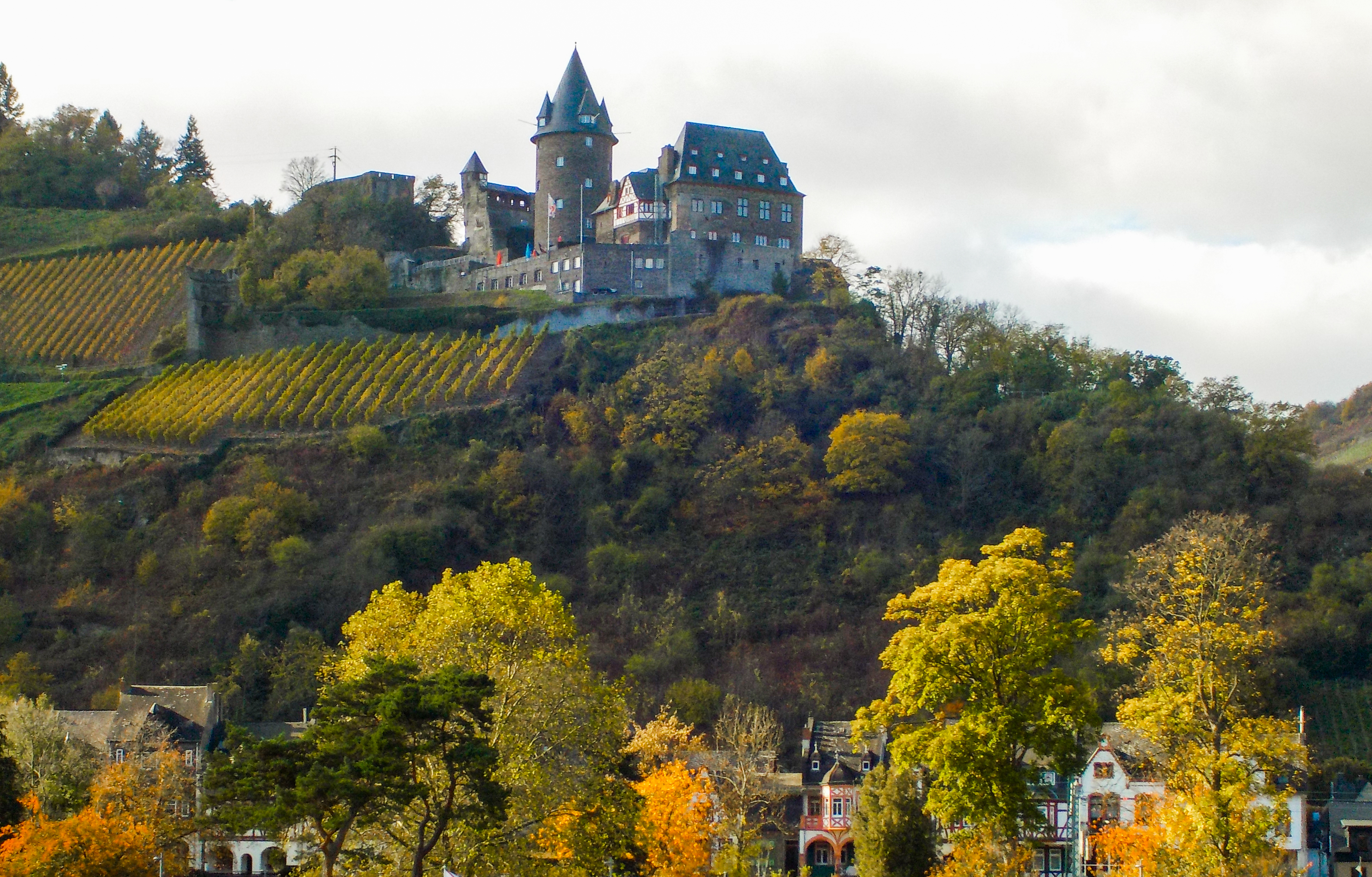
Stahleck Castle
Stahleck Castle was mentioned in historical documents as far back as 1135. In 1689 it was blown up by the French and eventually rebuilt in the 1900s.
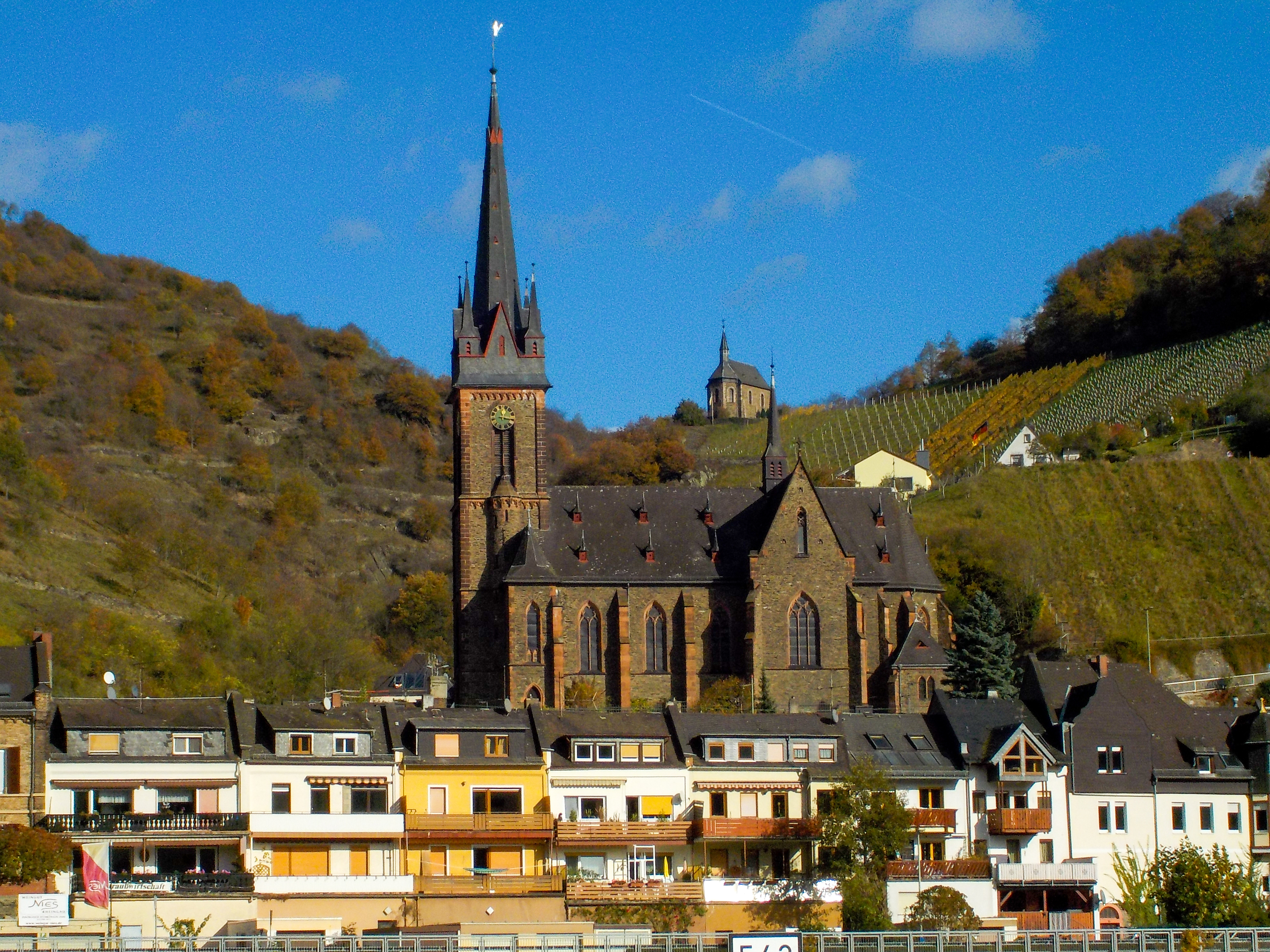
Town
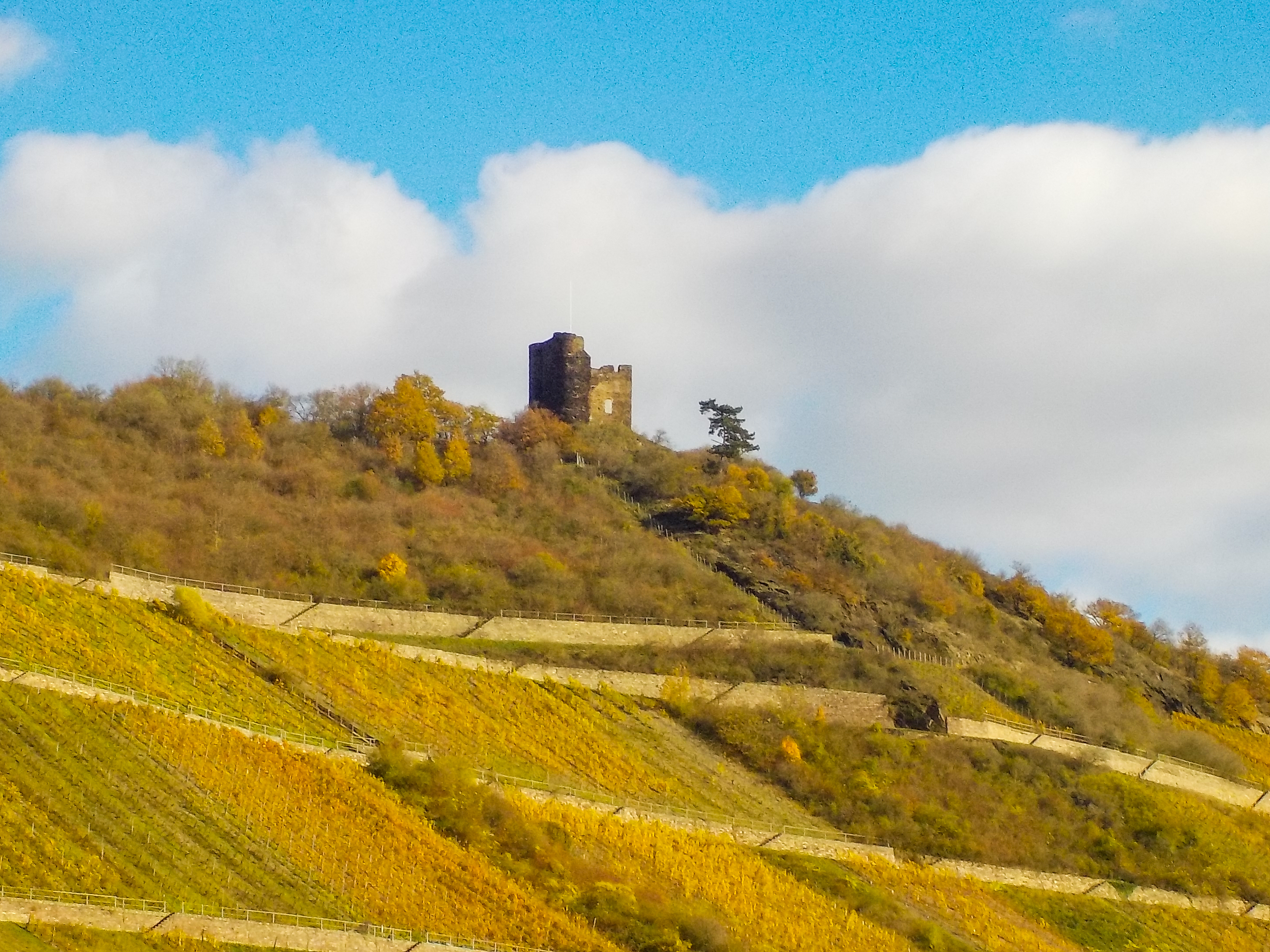
Nollig Castle ruins
Nollig Castle is a ruin from about 1300. I can’t find much of anything else about it.
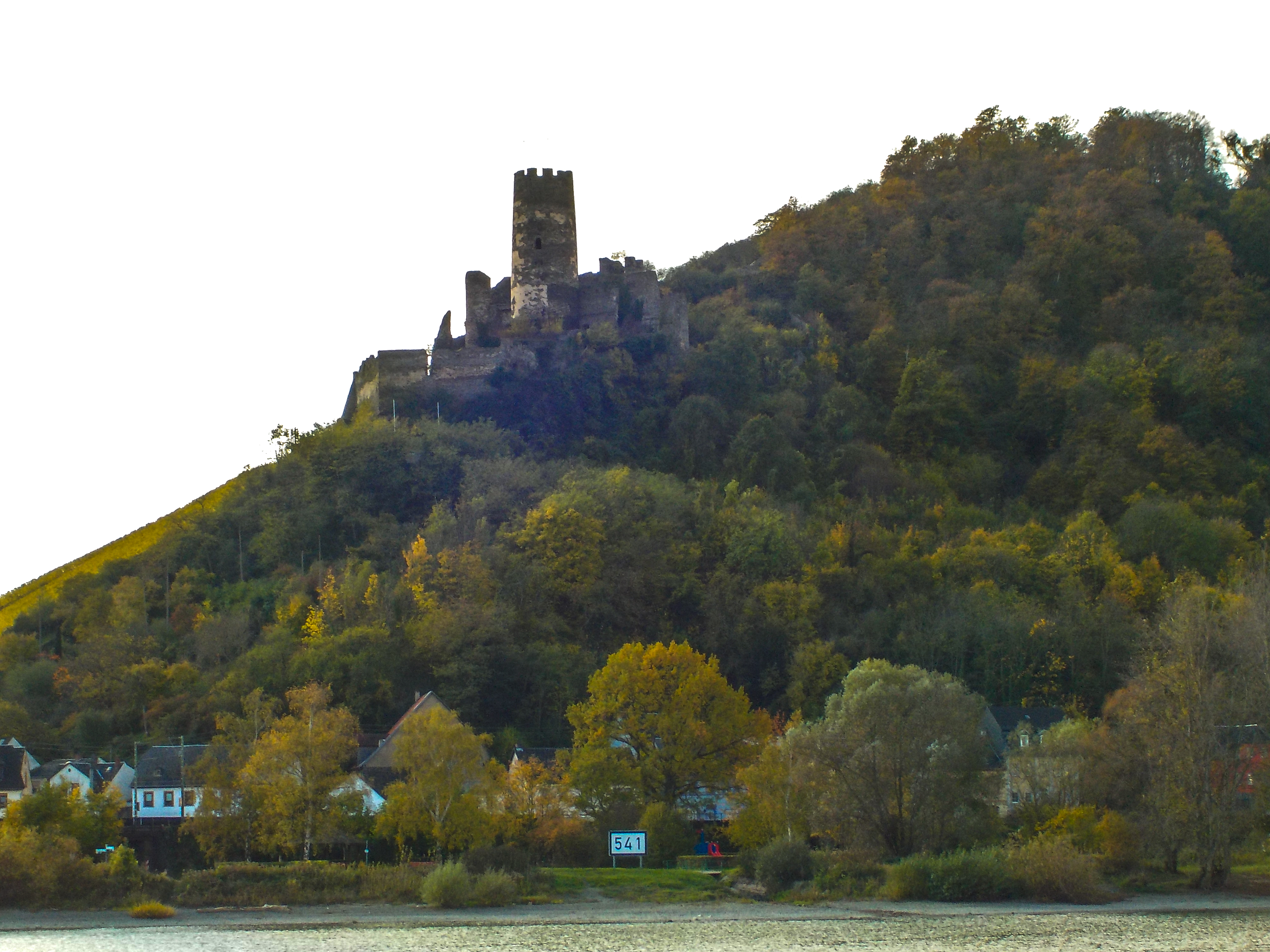
Furstenberg Castle
Furstenberg Castle was built in 1219 and destroyed during the Palentine Succession War. It is currently a ruin.
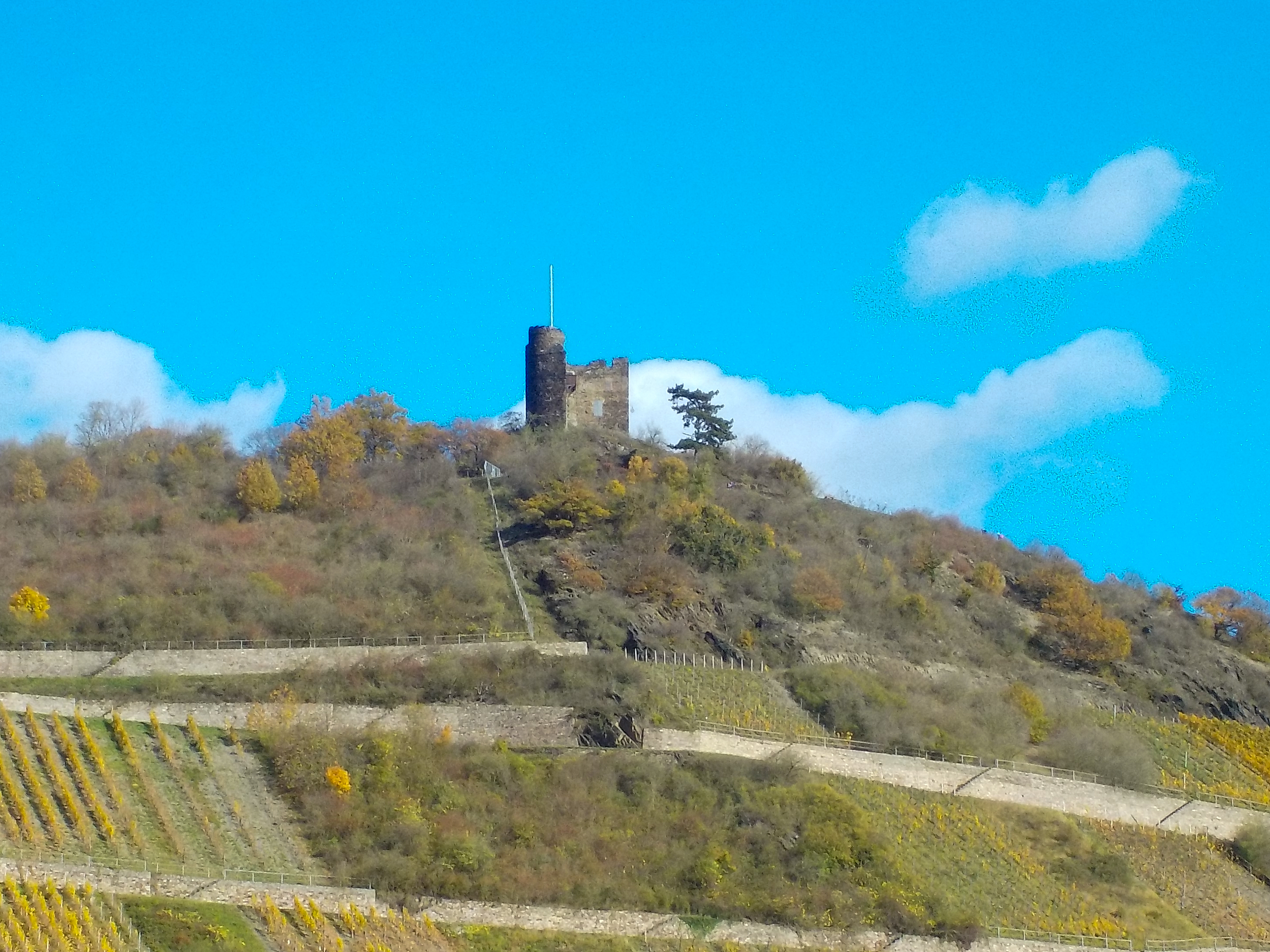
Heimburg Castle (unsure…may be another one in the same area)
Heimburg castle was built from 1294 on as a bastion in the Electorate of Mainz against the Palatines. It decayed later and was destroyed by the French in 1689. In the 19th century it was rebuilt by the industrialist Hugo Stinnes.
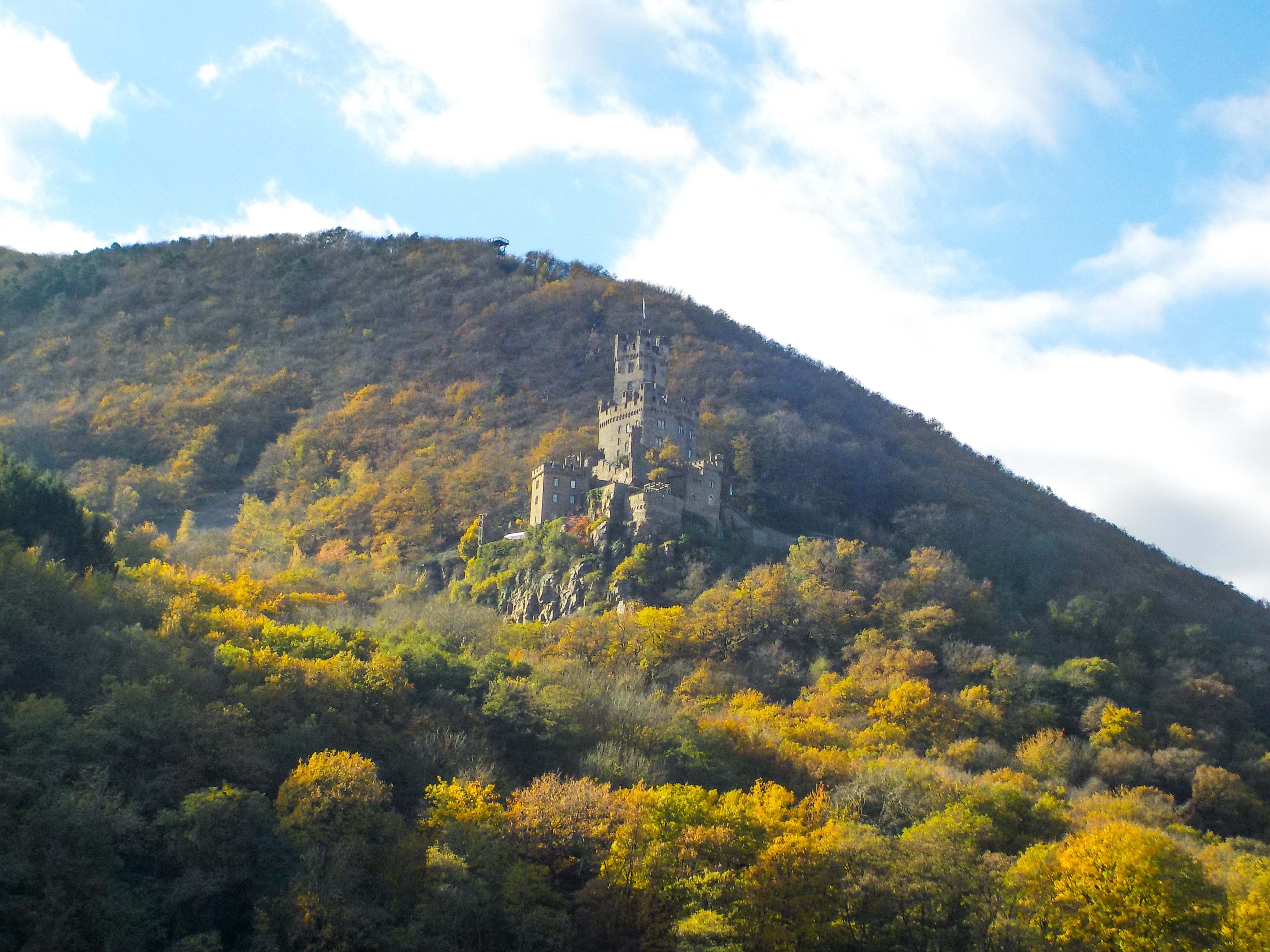
Sooneck Castle
Sooneck Castle, probably built in the 11th century, was part of an expanded defence system of the abbey Kornelimünster near Aachen. The chatelains neglected their obligations, undertook raids and raised toll arbitrarily, which impaired the trade strongly. King Rudolf of Habsburg put an end to their practices in 1282. One robber nest after the other, also Sooneck, was destroyed. The rebuilt castle was again destroyed in 1689. Friedrich Wilhelm IV. ordered to convert the ruin into a hunting seat in 1842. He commissioned the Prussian architect Schnitzler to do the work, which was finished in 1861.
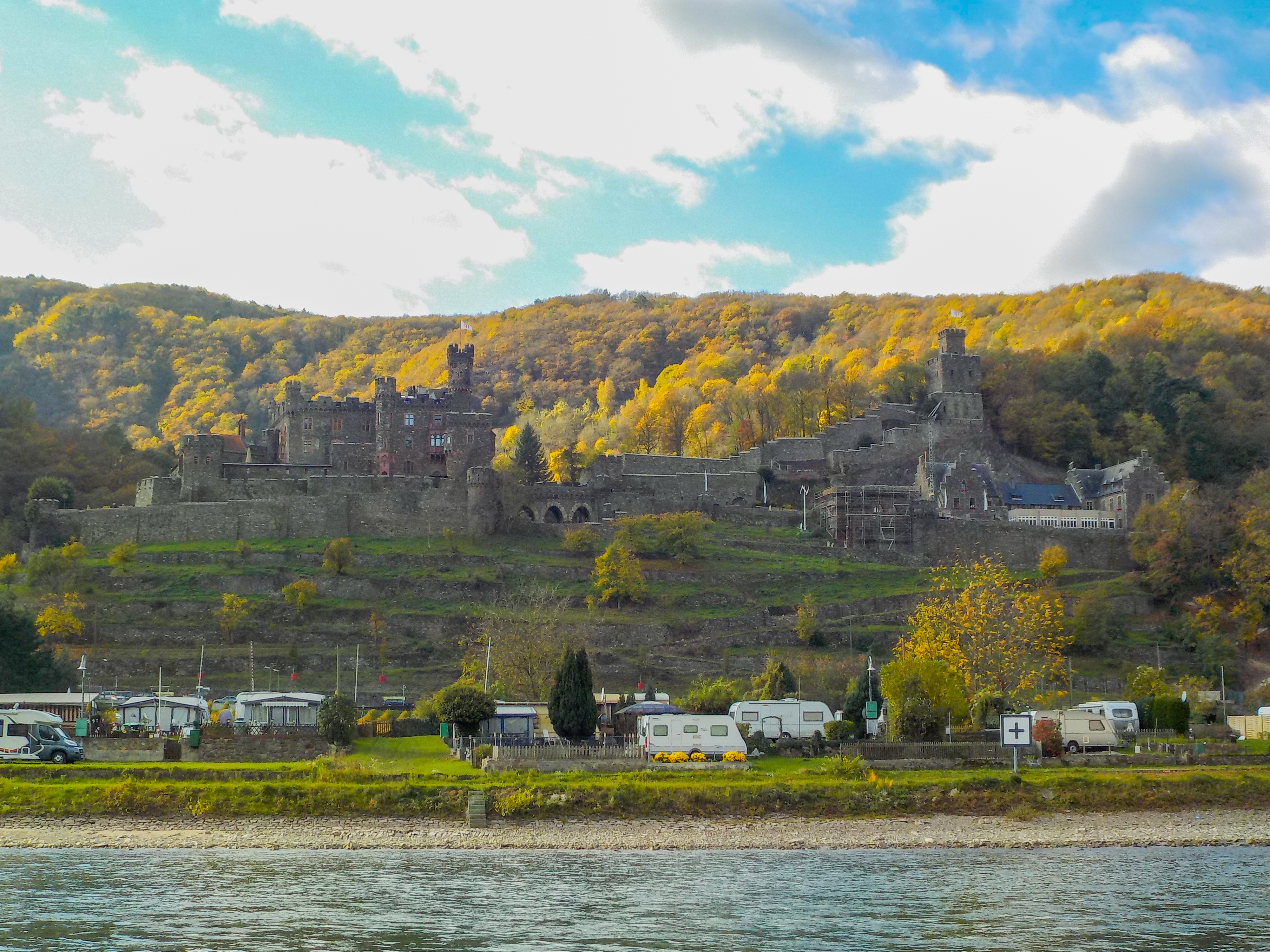
Reichenstein Castle
Reichenstein Castle, also called Falkenburg, is located above Trechtingshausen. The large construction is one of the spectacular examples of the castle reconstruction in neo-Gothic style. Reichenstein Castle, built in the 11th century, was owned by a robber-baron. Therefore it was destroyed in 1253 and again in 1282. It decayed since the 16th century.In 1834 Friedrich Wilhelm von Barfuß started the reconstruction. Baron Kirsch Purcelli bought the castle in 1899 and continued generously the work of reconstruction.
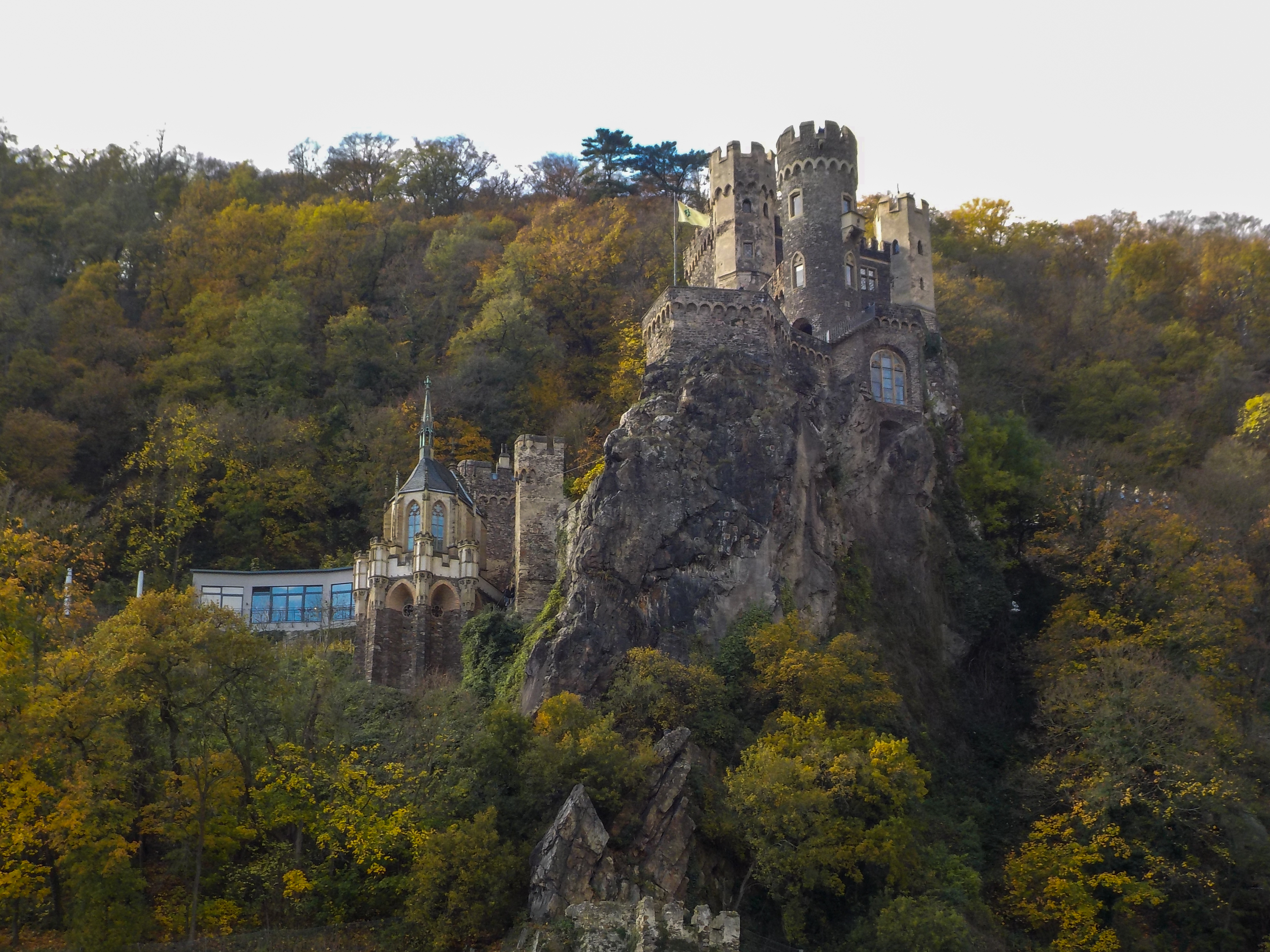
Rheinstein Castle
Rheinstein Castle is located opposite to Assmannshausen on a steep rock. It is one of the most important examples of romantic castle reconstruction. As a masterpiece of the architect Johann Claudius of Lassaulx the castle was built in the beginning of the 14th Century. It was a princely summer residence.
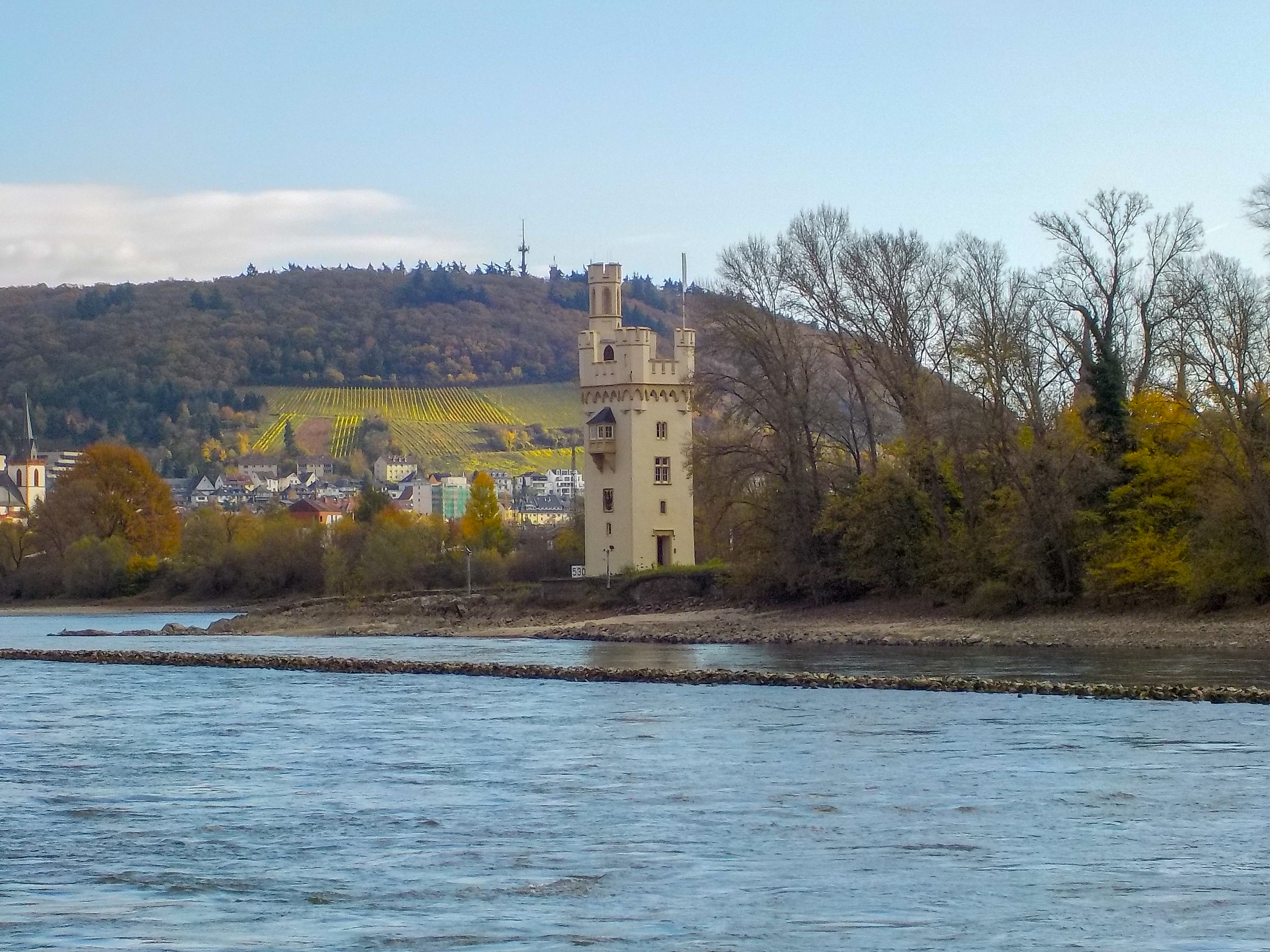
Mauseturm Toll Tower
On a rock island in the Rhine stands the former “Wartturm”, whose name is derived from “Maut” (toll). The archbishops of Mainz built the tower probably in the 13th century and later ordered the extension. Between 1856 and 1858 it was restored in neo-Gothic style. Until 1974 the tower served as signal station for the shipping. Legend has it that the stingy archbishop Hatto has been eaten by mice after being confined in the tower because he had burned starving people.
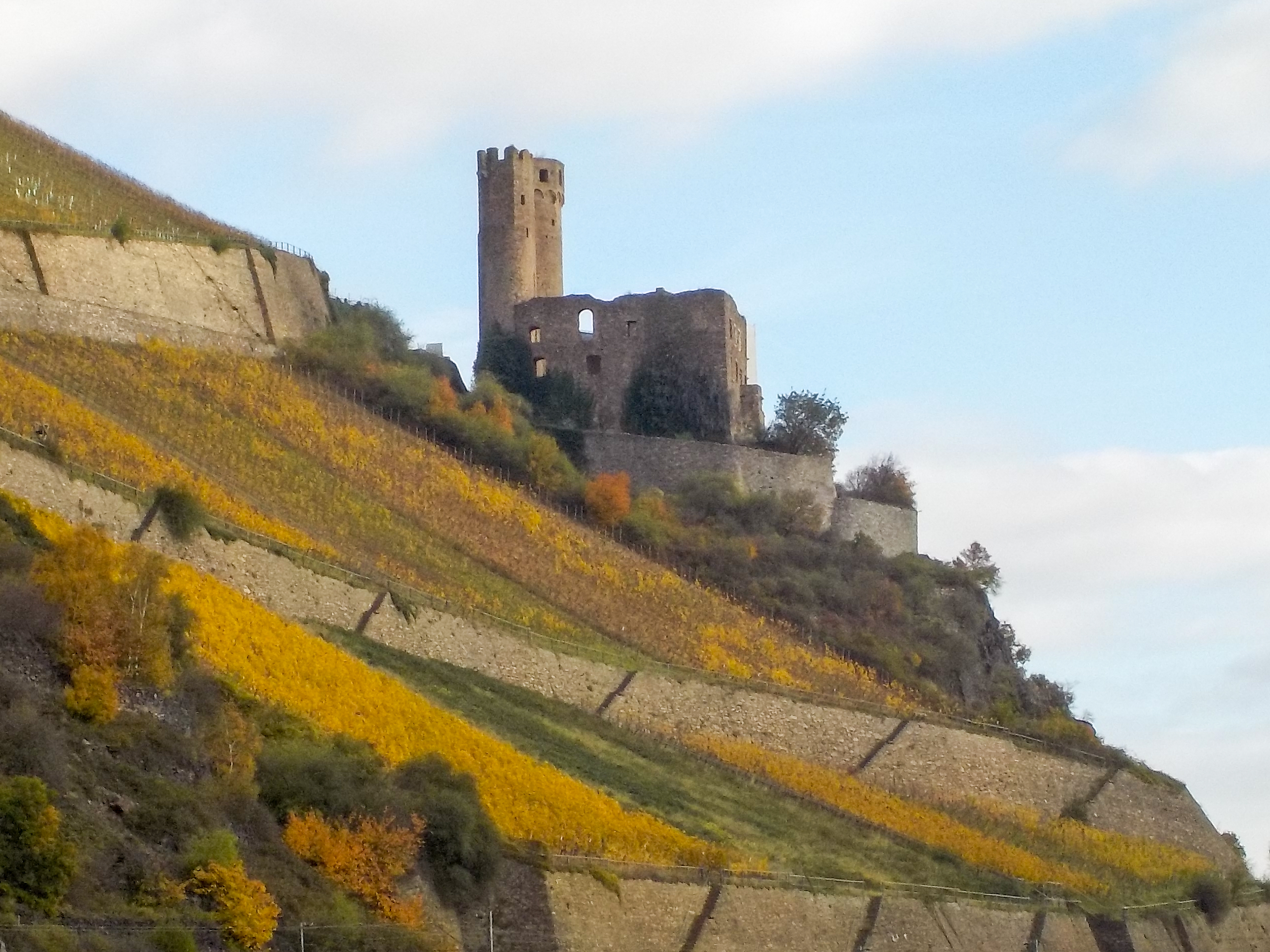
Ehrenfels Castle
The Ehrenfels Castle was built in 1212. In the Middle Ages it was strategically of great importance because of its favorable location and it also was a toll station. The castle, which was used in times of war as a hiding place for the cathedral treasury of Aachen, was extensively destroyed in 1689. It has not been restored.
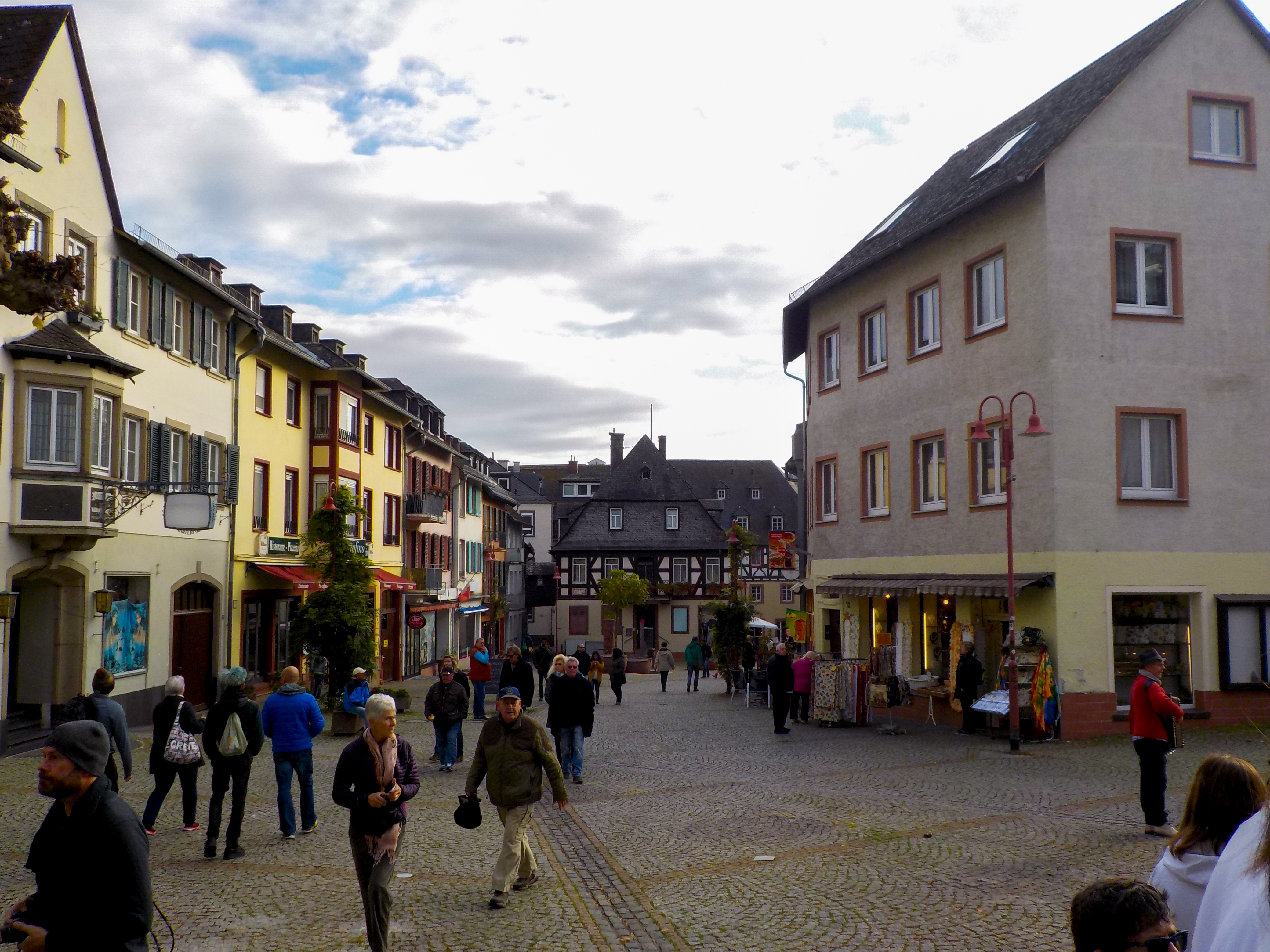
Rudesheim
This afternoon we went on a “6 mile hike” to Ehrenfels Castle from Rudesheim. We only went 3 miles but we definitely had a portion of steep walking … but our guide didn’t take us anywhere near the castle. We basically walked through vineyards and back to town. Very odd and not worth the “hike.” Honestly, in 3 cruises with Ama, this is the only thing we have ever had to complain about (we have had nothing but amazing service)…and it was a local guide, not one of their employees, who screwed up. The cruise director was quite surprised to hear about it.
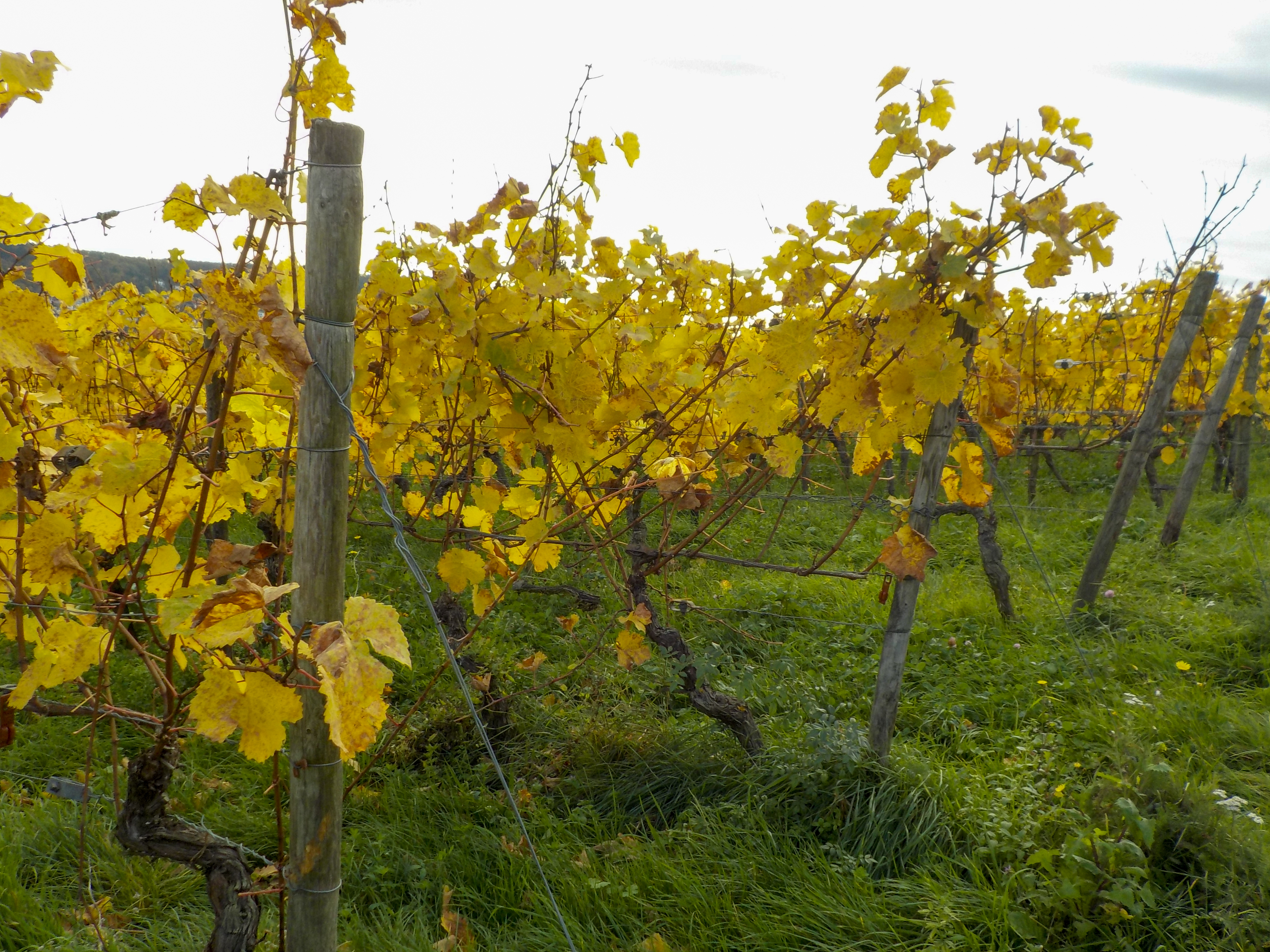
Vineyards in the fall
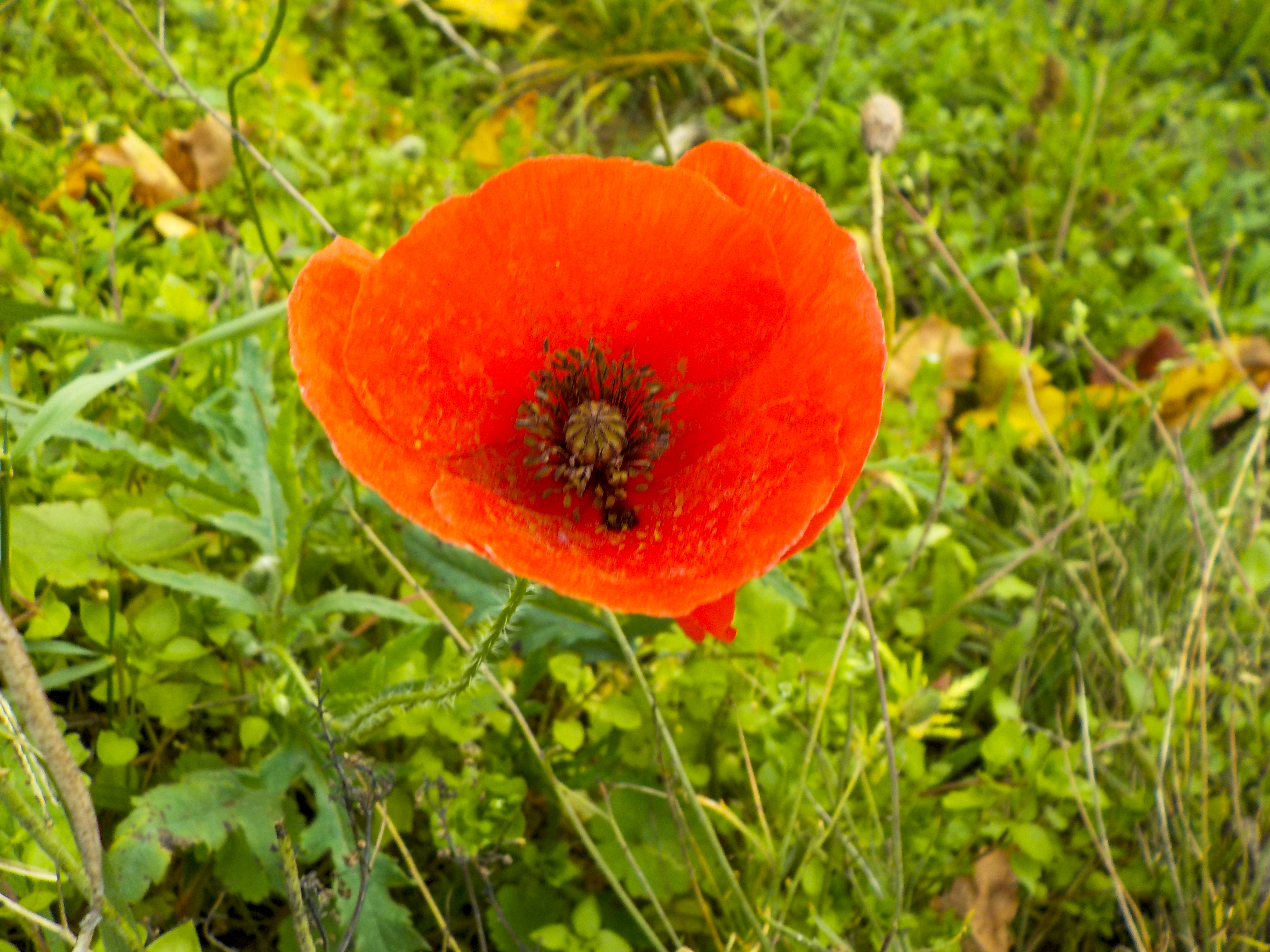
Poppy
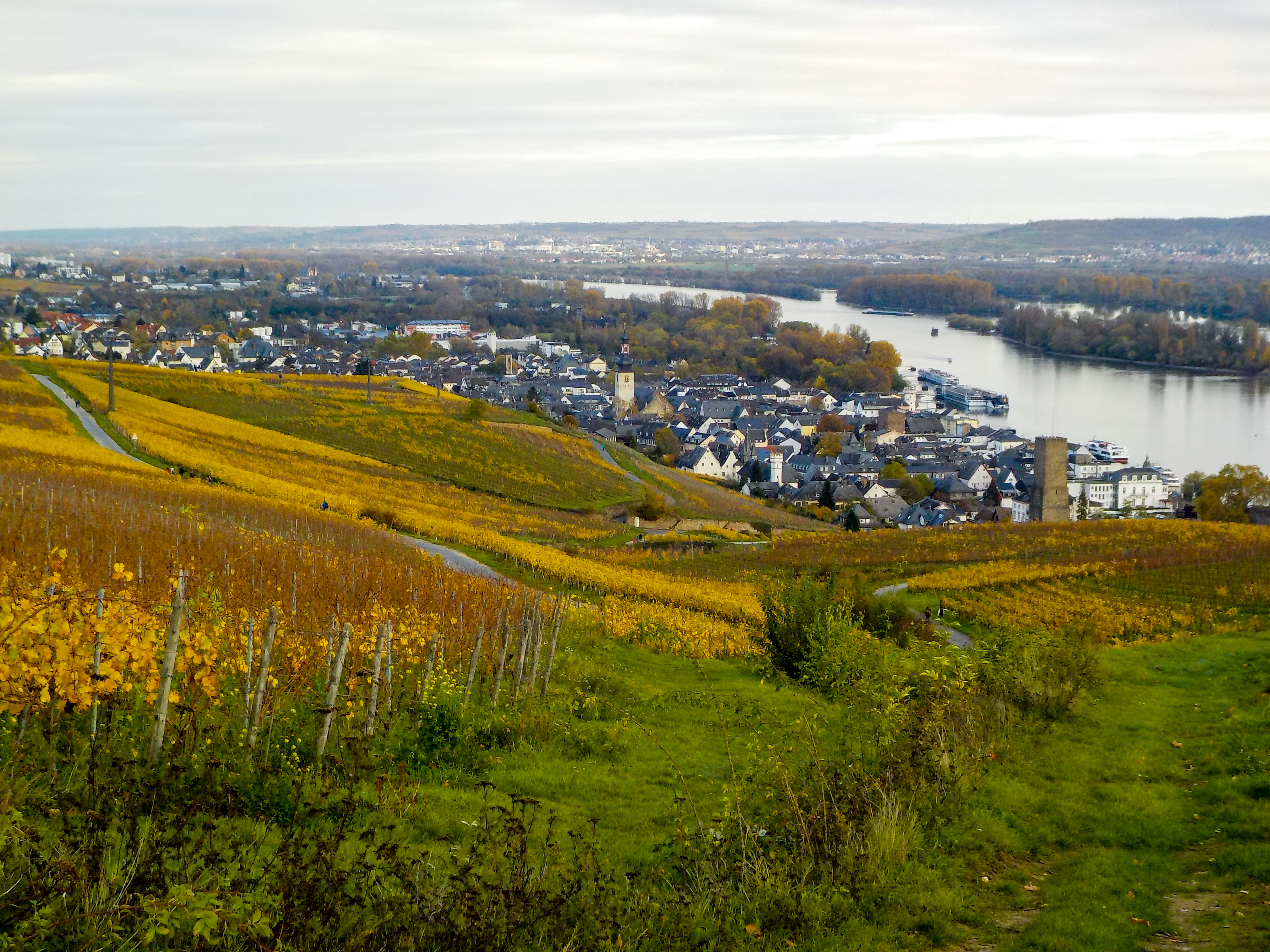
View of Rudesheim from the vineyards
We had some afternoon time to relax, a good dinner, and more time to relax in the evening.
 Will Suture for Travel