We spent the morning sailing on the Rhine. Much of the area was industrial. Around lunchtime we docked in Mannheim. The first documentation of the city was in 766 and the city was granted city privileges in 1607. Apparently Mannheim is known for being where the first bicycle (1817) was created and where the first production car was made (Benz, in 1886).
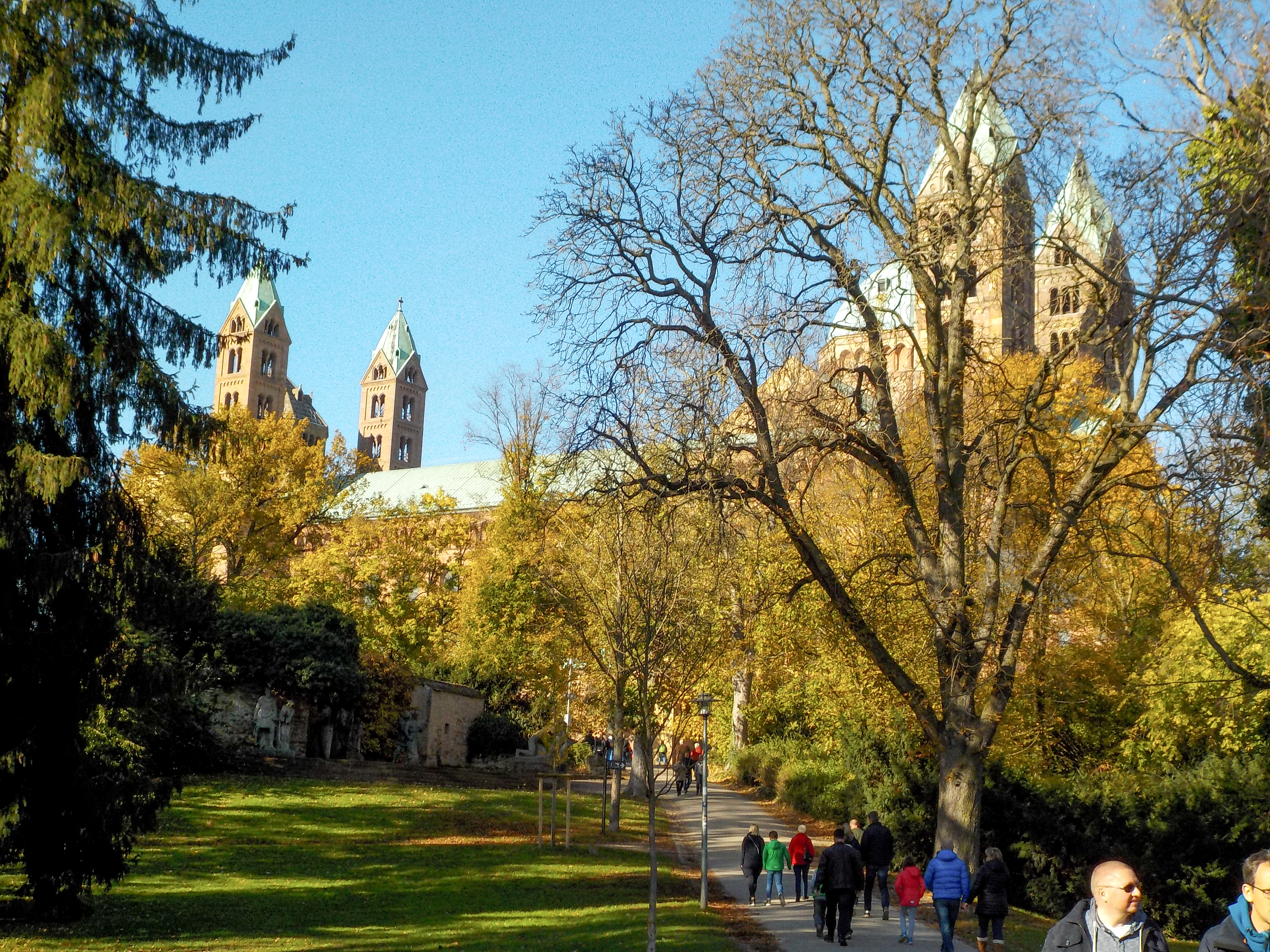
walking up to Speyer Cathedral
We didn’t spend time in Mannheim, but took a bus to Speyer, one of the oldest towns in Germany. It was a Celtic settlement in the 2nd millennium BC! By 50 BC it was part of the border of the Roman Empire. The town, like much of Europe, changed hands many times over the centuries. It was destroyed about 450 AD during the barbarian invasions. Rebuilt and created a bishopric in the 7th century, it was a free imperial city from 1294 to 1797 and was the seat of the Reichskammergericht (Imperial Chamber of Justice), the Holy Roman Empire’s high court, from 1527 to 1689.

Speyer Cathedral
Work on the Speyer Cathedral began in 1030, with the construction consecrated in 1061. The initial cathedral and a first expansion was completed in 1106, but, as with all of these huge cathedrals, construction continued for centuries. In 1689 it partially burned and was rebuilt over the next few centuries. It is one of the largest Romanesque cathedrals and is an impressive sight. The interior is mostly plain but does have some frescoes. The cathedral has a crypt that dates to the 11th century. There are original carvings of lions and a flora relief that may be from an even earlier church. There also are tombs of eight German emperors and kings, three empresses, and multiple bishops.
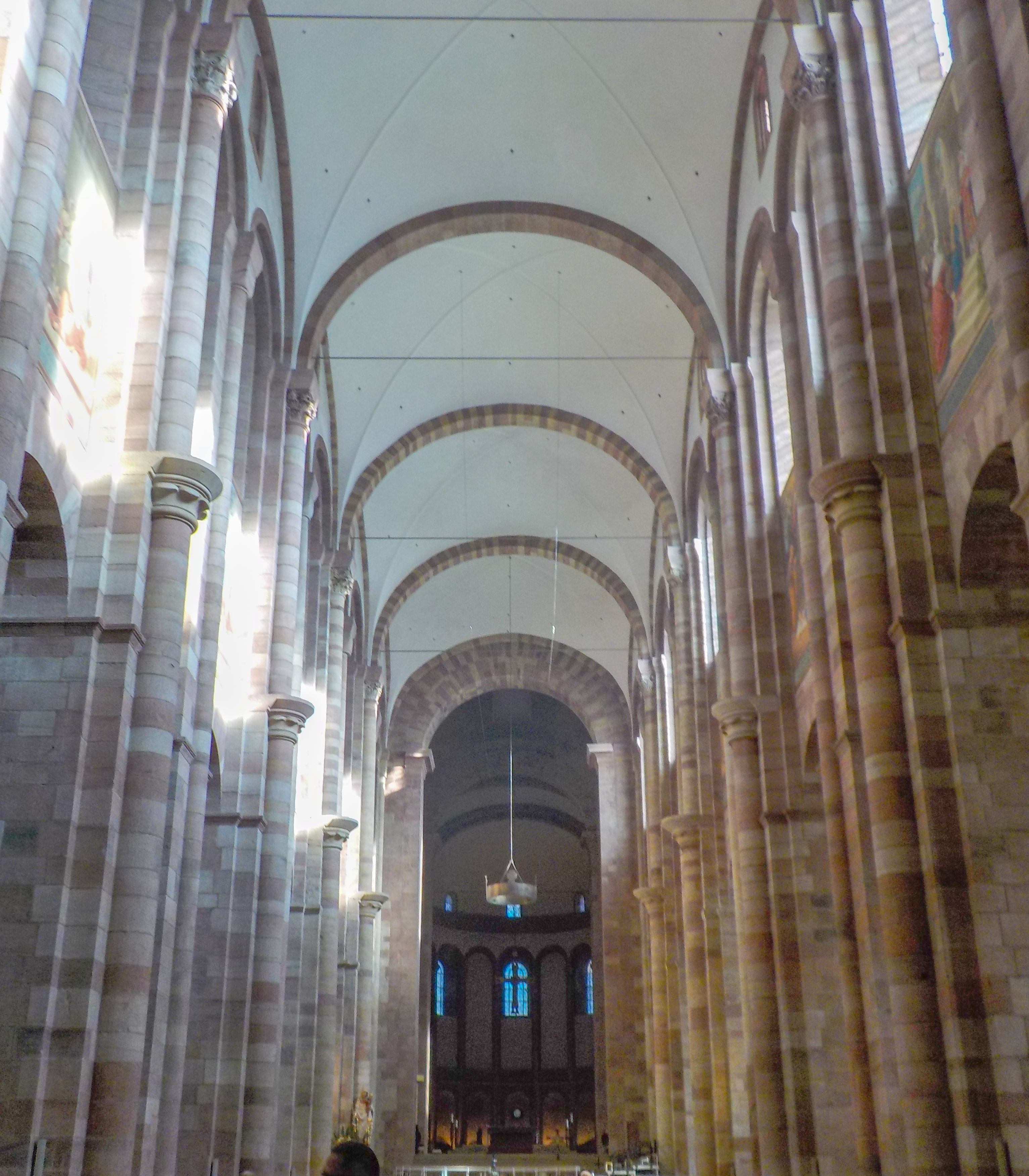
Inside the cathedral

Cathedral doors

One section of the doors

Frescoes
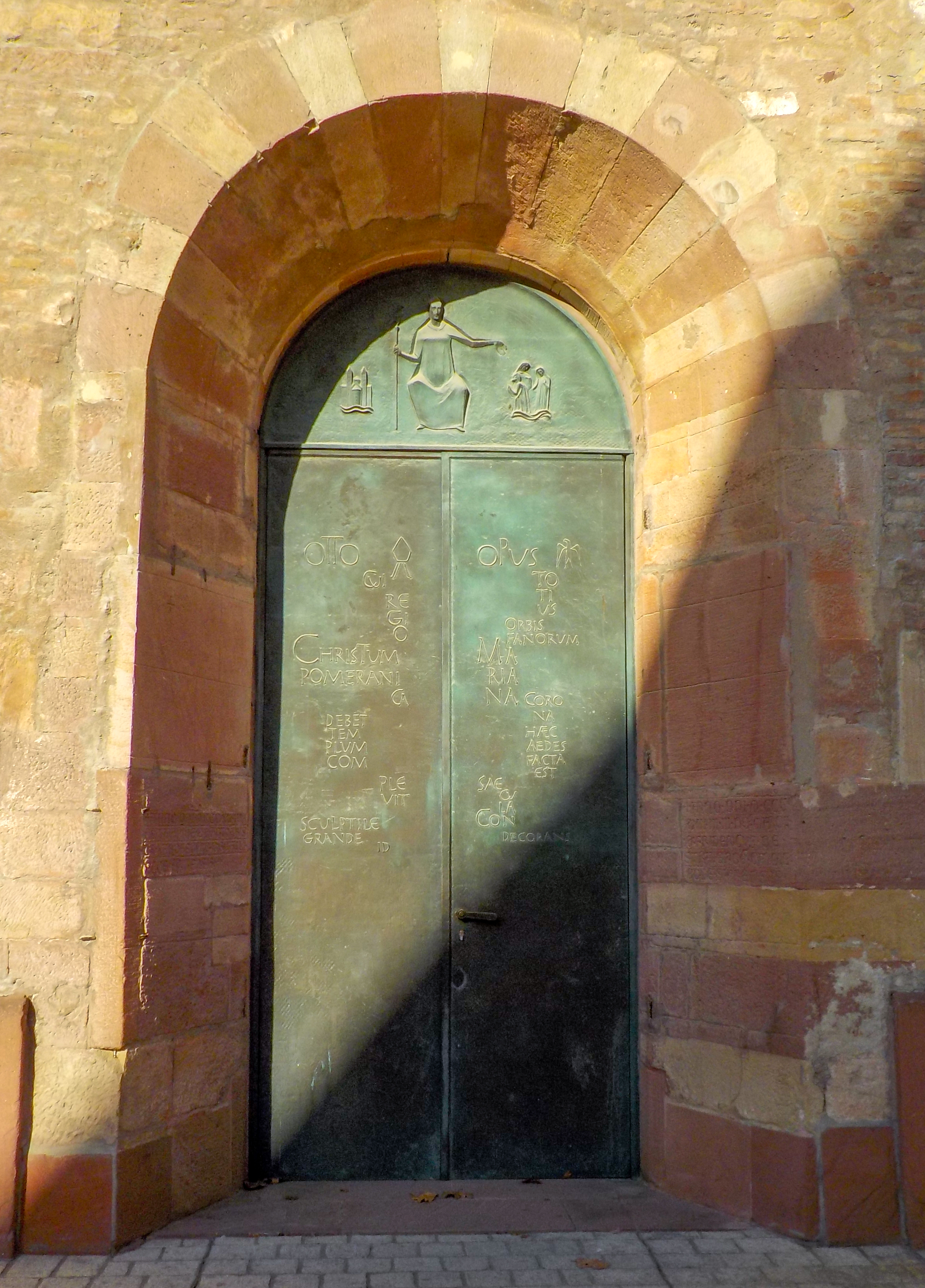
Side doors
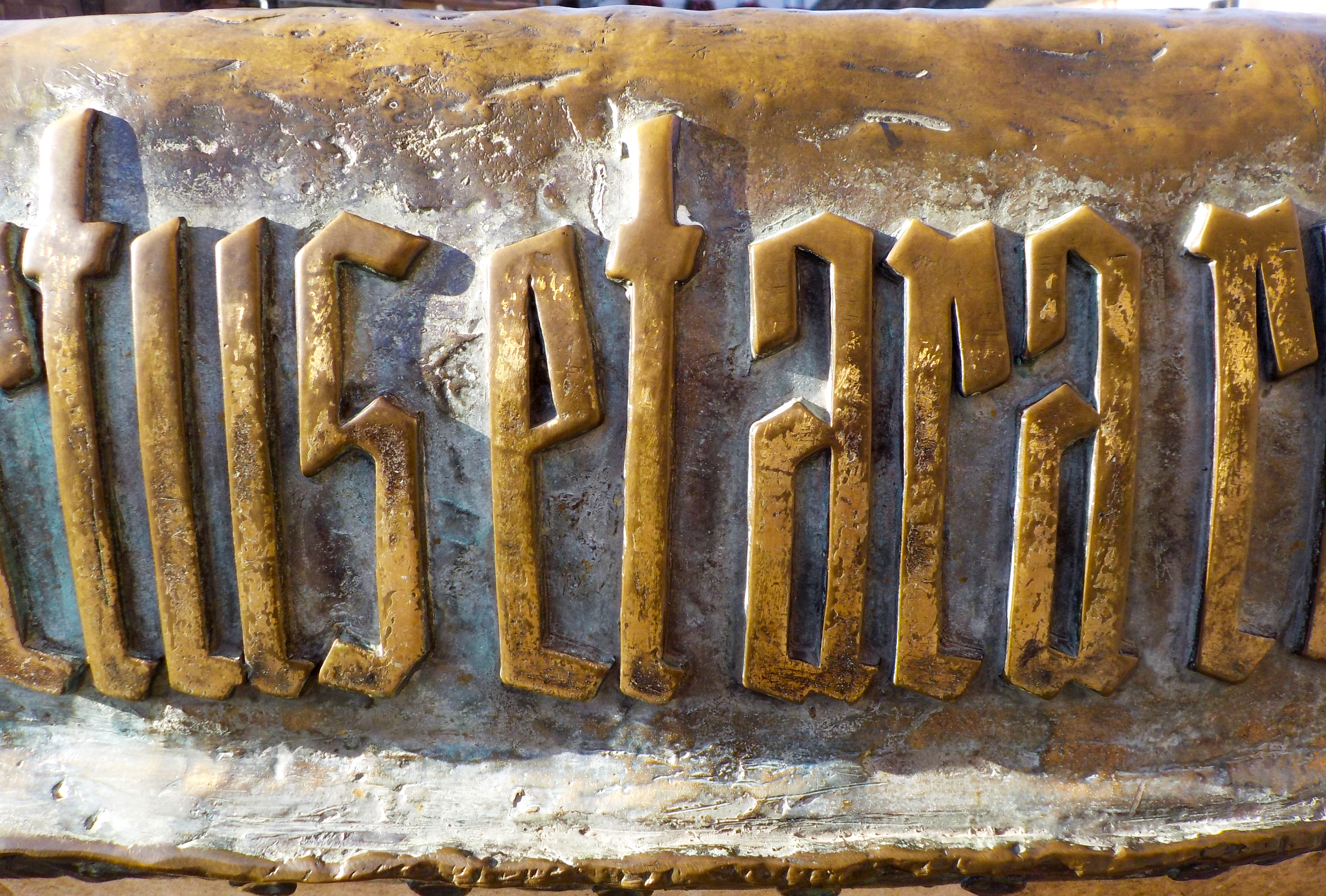
large bowl in front of the cathedral known as Domnapf: used when new bishops are elected
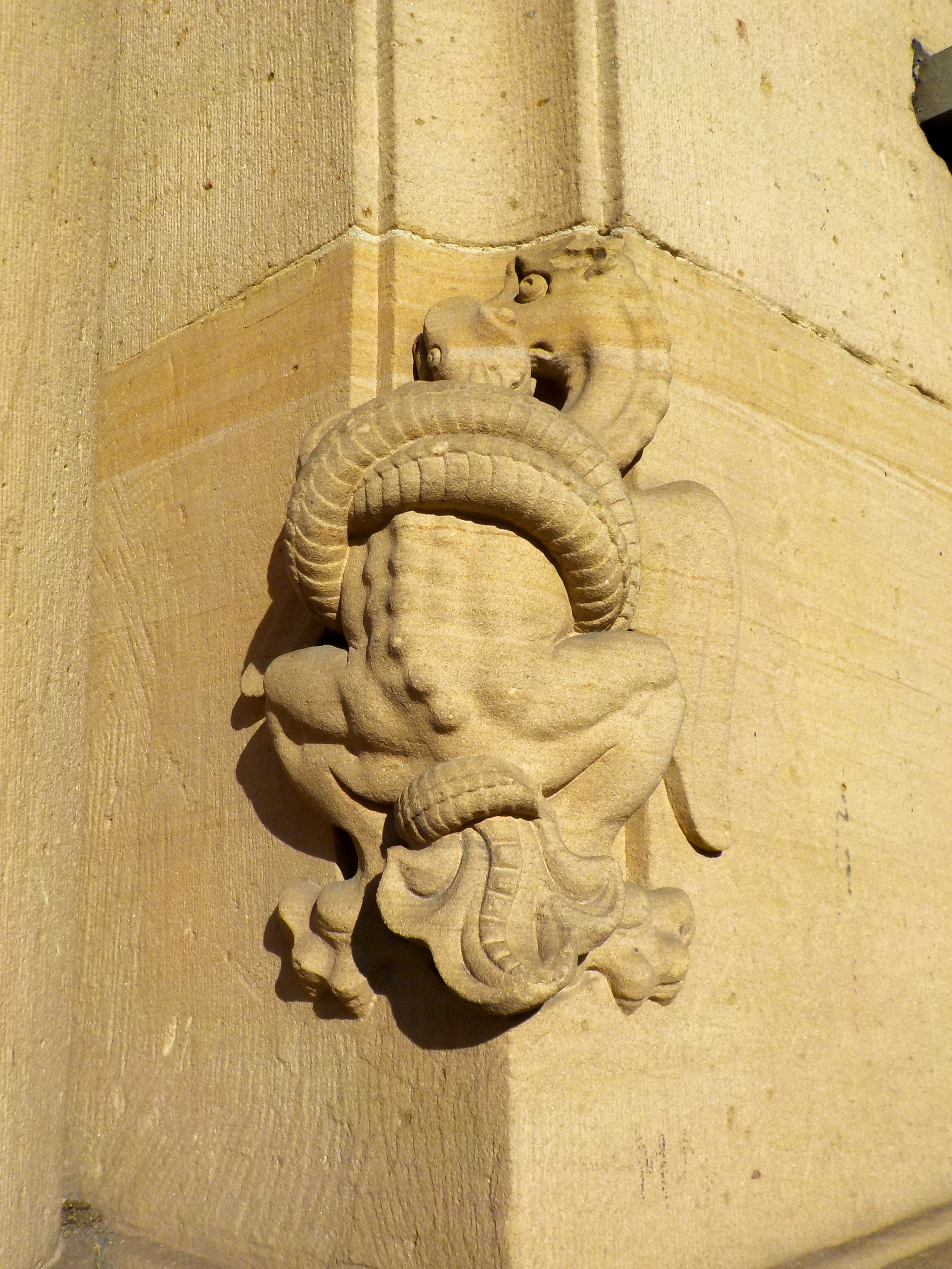
dragon on the cathedral
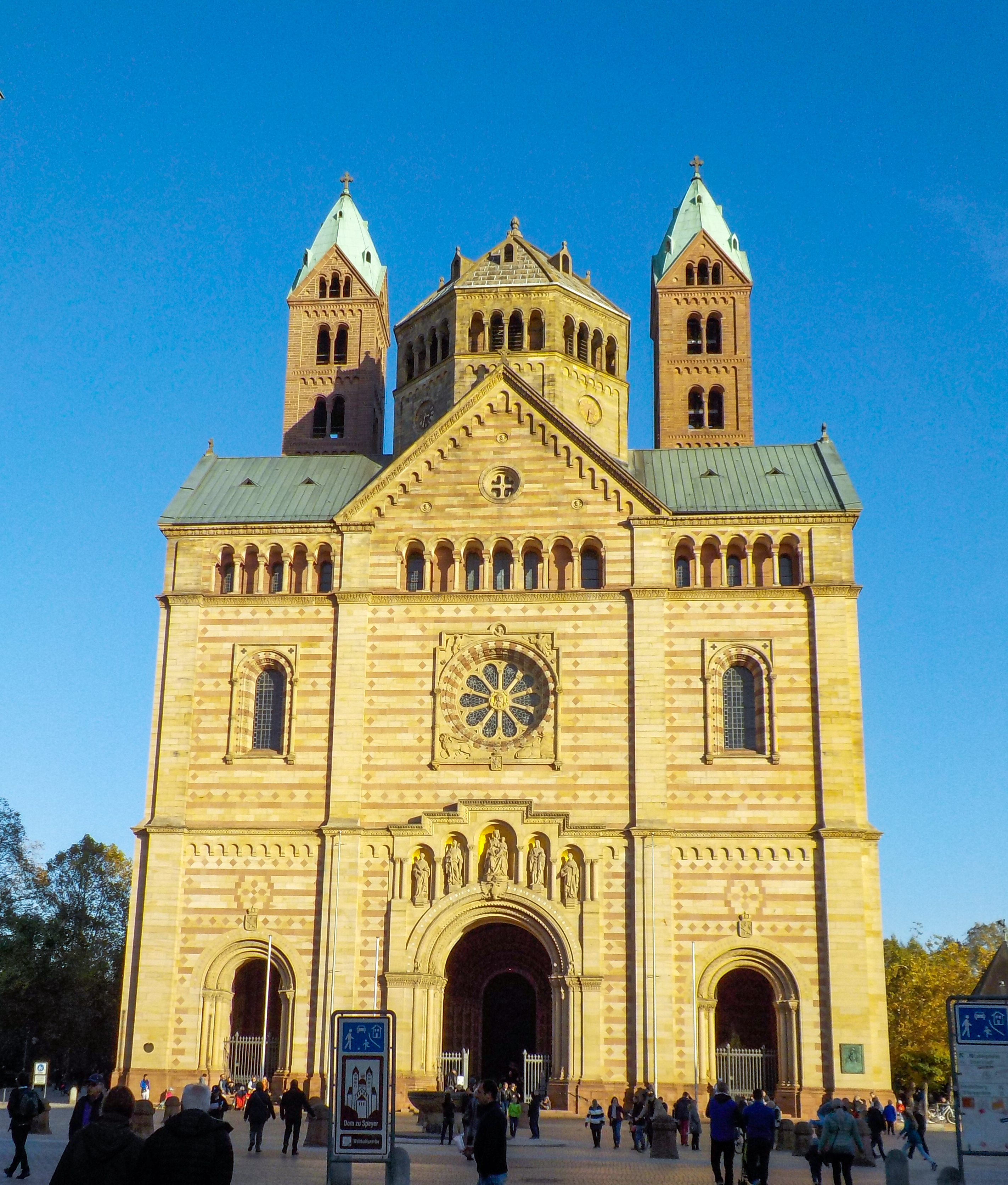
Cathedral
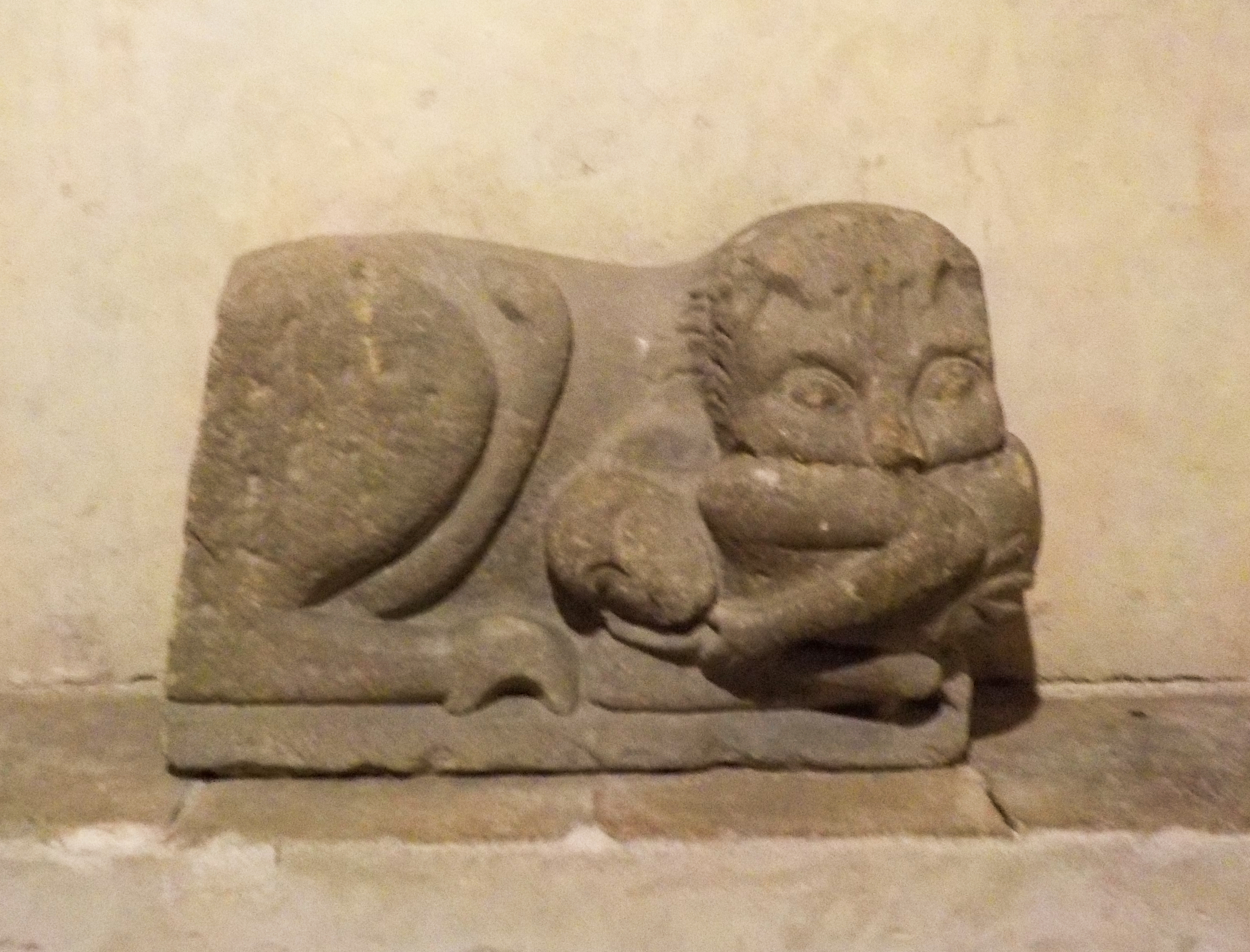
lion in the crypt

tombs in the crypt
We also visited the site of a medieval Jewish synagogue. In the middle ages Speyer had a significant Jewish community that was strong into the 14th century, although not without periods of antisemitism. Unfortunately, by 1500 an anti-Jewish sentiment grew and the Jewish community was largely gone. Their synagogue was converted to an arsenal and later largely destroyed by French forces. Parts we rebuilt and used as a residence. The mikvah, or ritual bath, is largely intact. It was constructed around 1120 and you can still walk down to the water of the bath.
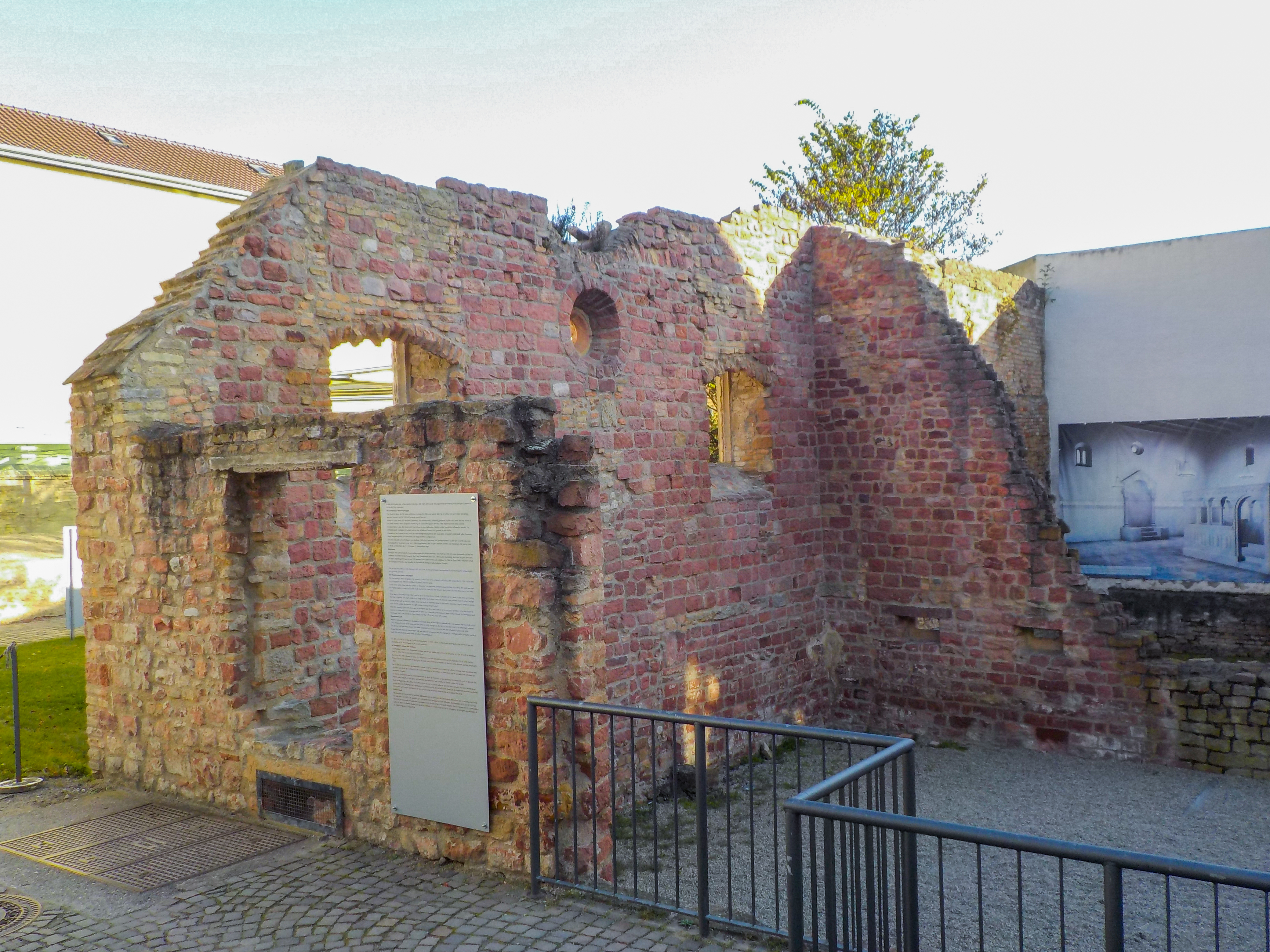
Ruins of the synagogue

Mikvah

City gate
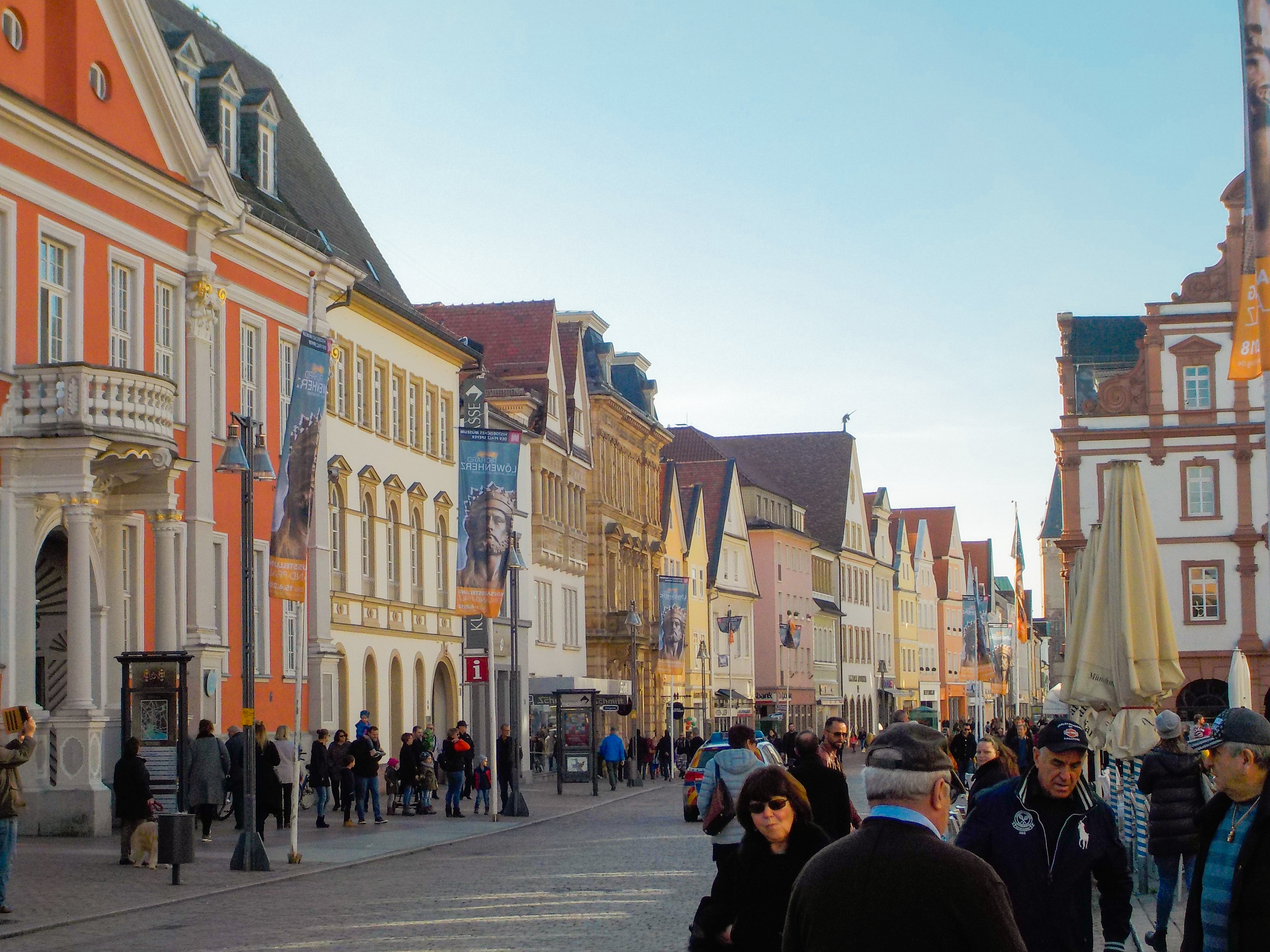
Speyer
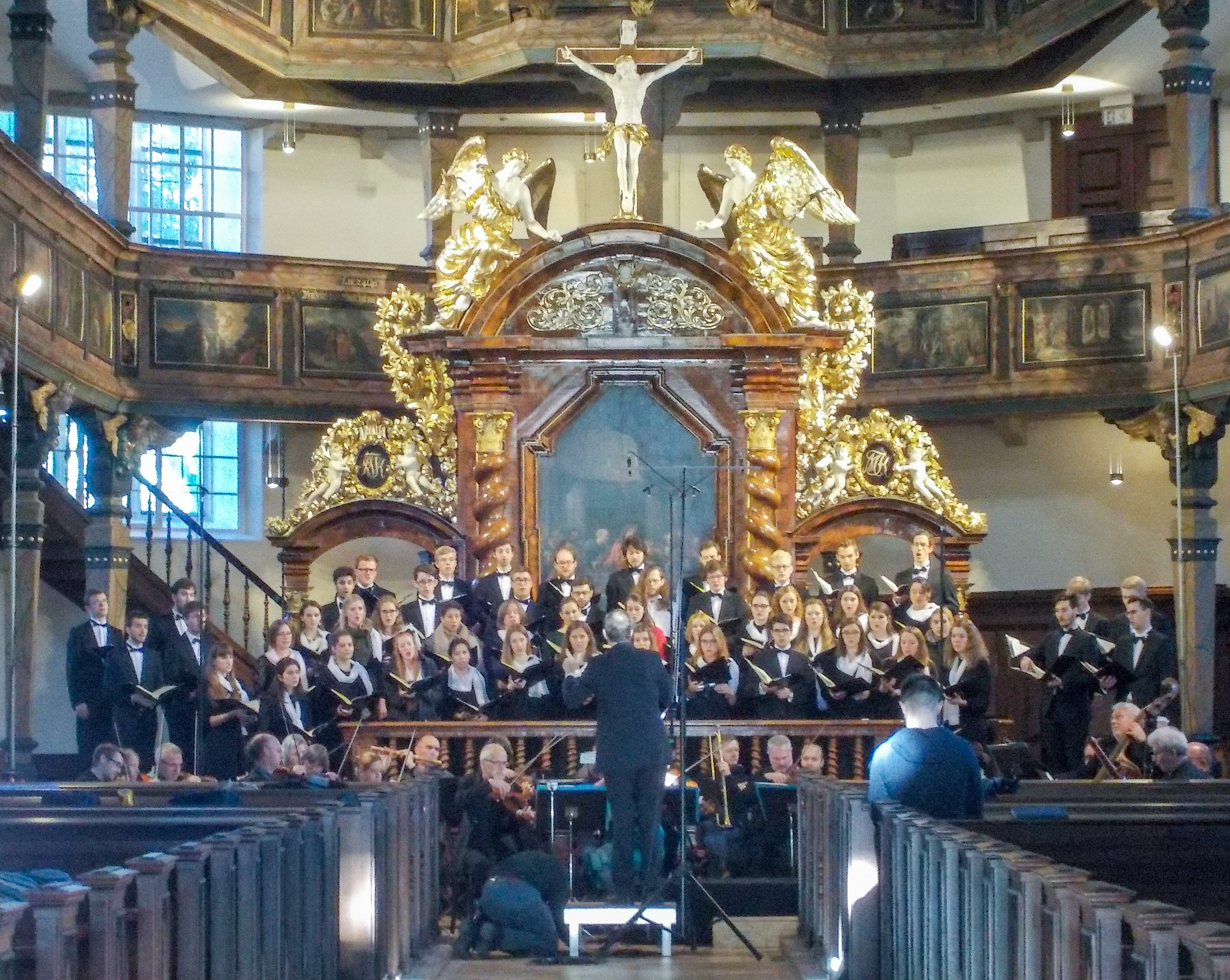
Choir practicing in the Lutheran church

Side street
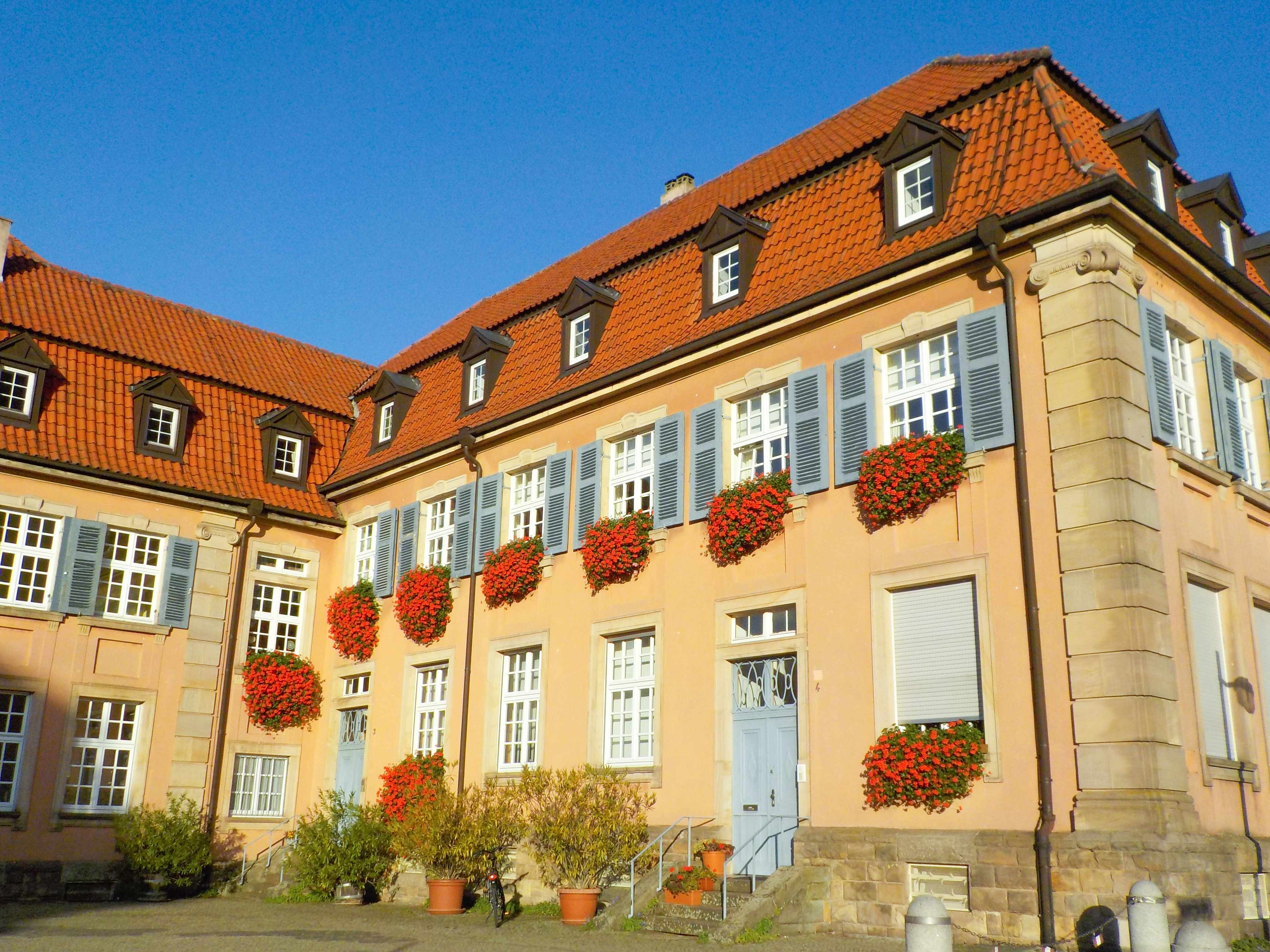
flowers

