Today we docked in Strasbourg, France, yet another town that dates back to Roman times. This is an interesting area that has changed hands between France and Germany multiple times in the past 100 years. Strasbourg is situated on the eastern border of France with Germany.
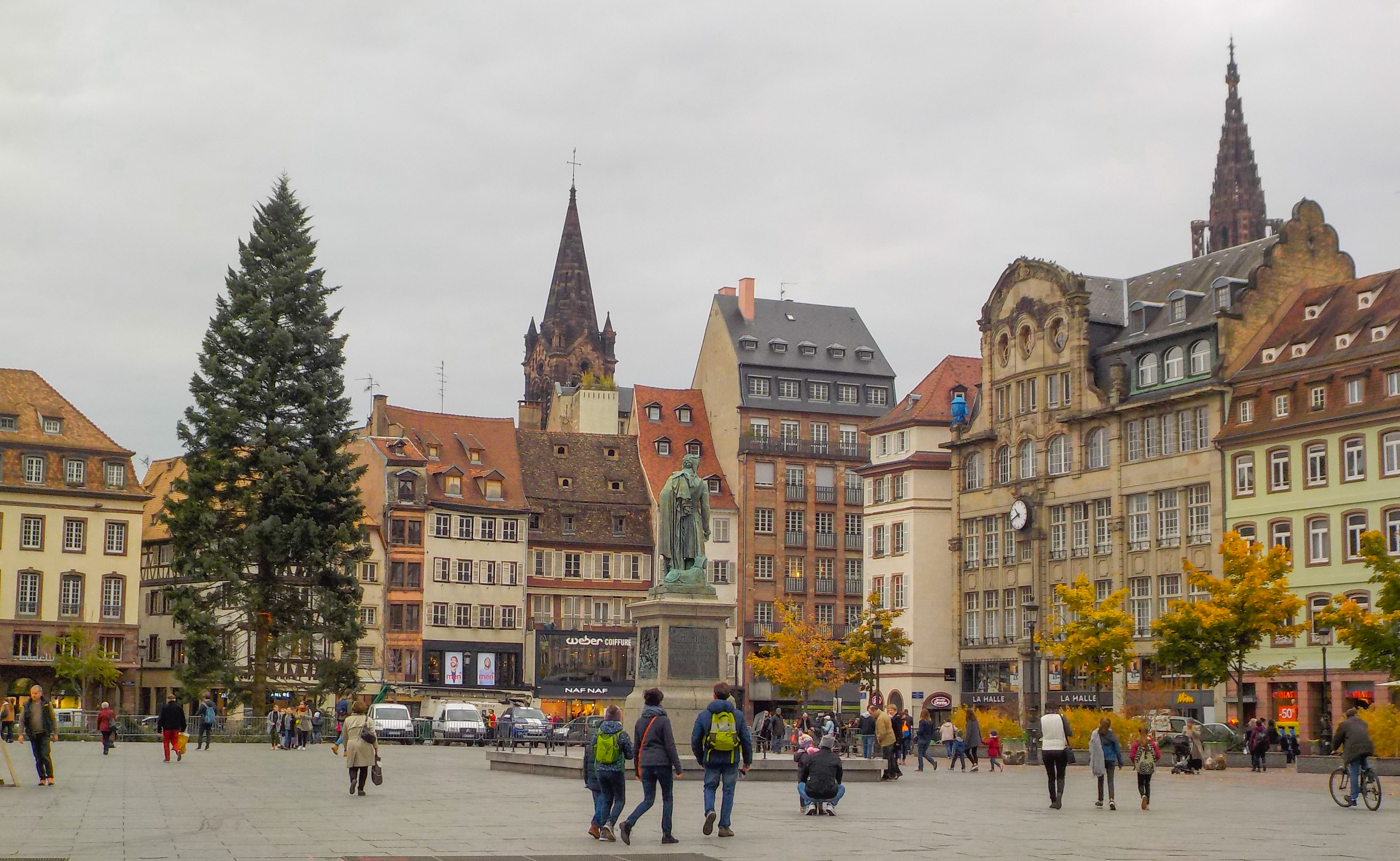
Strasbourg
This border is formed by the Rhine, which also forms the eastern border of the modern city, facing across the river to the German town Kehl. Our tour guide said that the people here don’t think of themselves as French or German but rather Alsatian. She said that her grandfather was drafted by the Germans, after Strasbourg had changed from French to German control, in WWII. After the war the town went back to France and the French blamed him and others for “volunteering” to fight for the Germans. One can see how they might feel disenfranchised.
Our tour guide told us some “Europe jokes” along the way (we walked 3 miles together). My favorite was this:
Europe heaven: You’re greeted by the British, the Germans organize everything, the French feed you, and the Italians entertain you.
Europe hell: You’re greeted by the French, the Italians organize everything, The British feed you and the Germans entertain you.
Strasbourg is still an interesting city on the international front. It is the home of the European Parliament, the European Court of Human Rights, and the Council of Europe. On our walking tour we went by each of these. We also went through the Orangery Park, where they historically had over a hundred orange trees housed in a building. They are no longer there, but there is a nice park that is a breeding ground for storks, the official bird of Strasbourg.
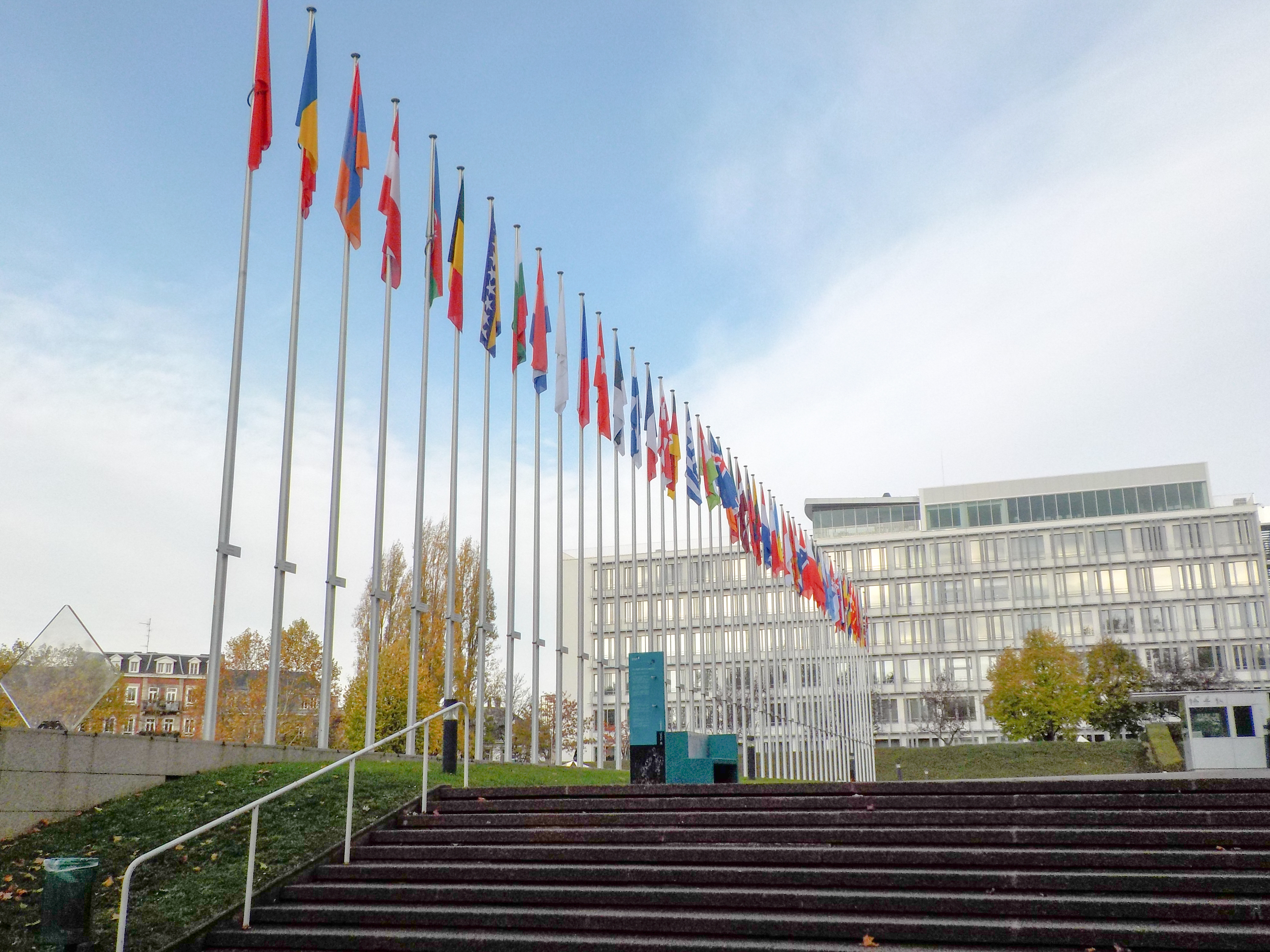
Council of Europe
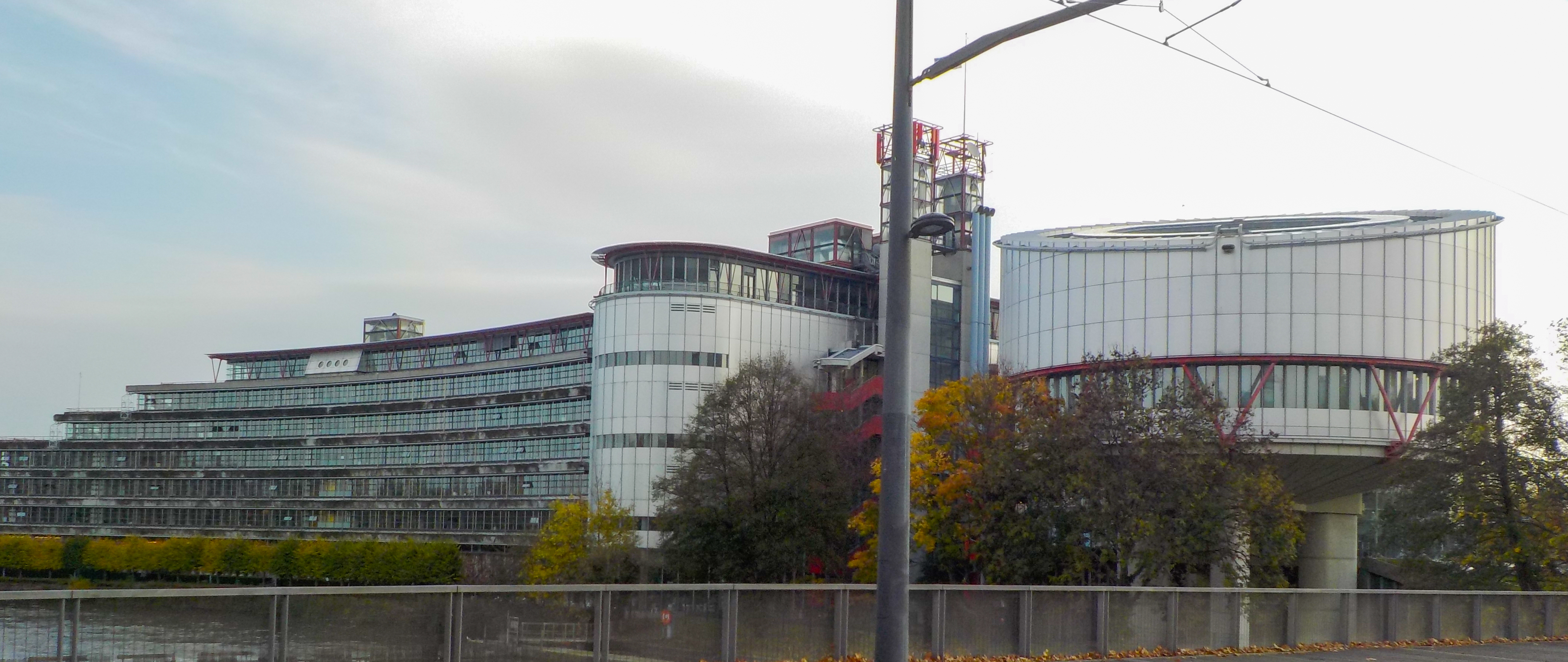
European Court of Human Rights
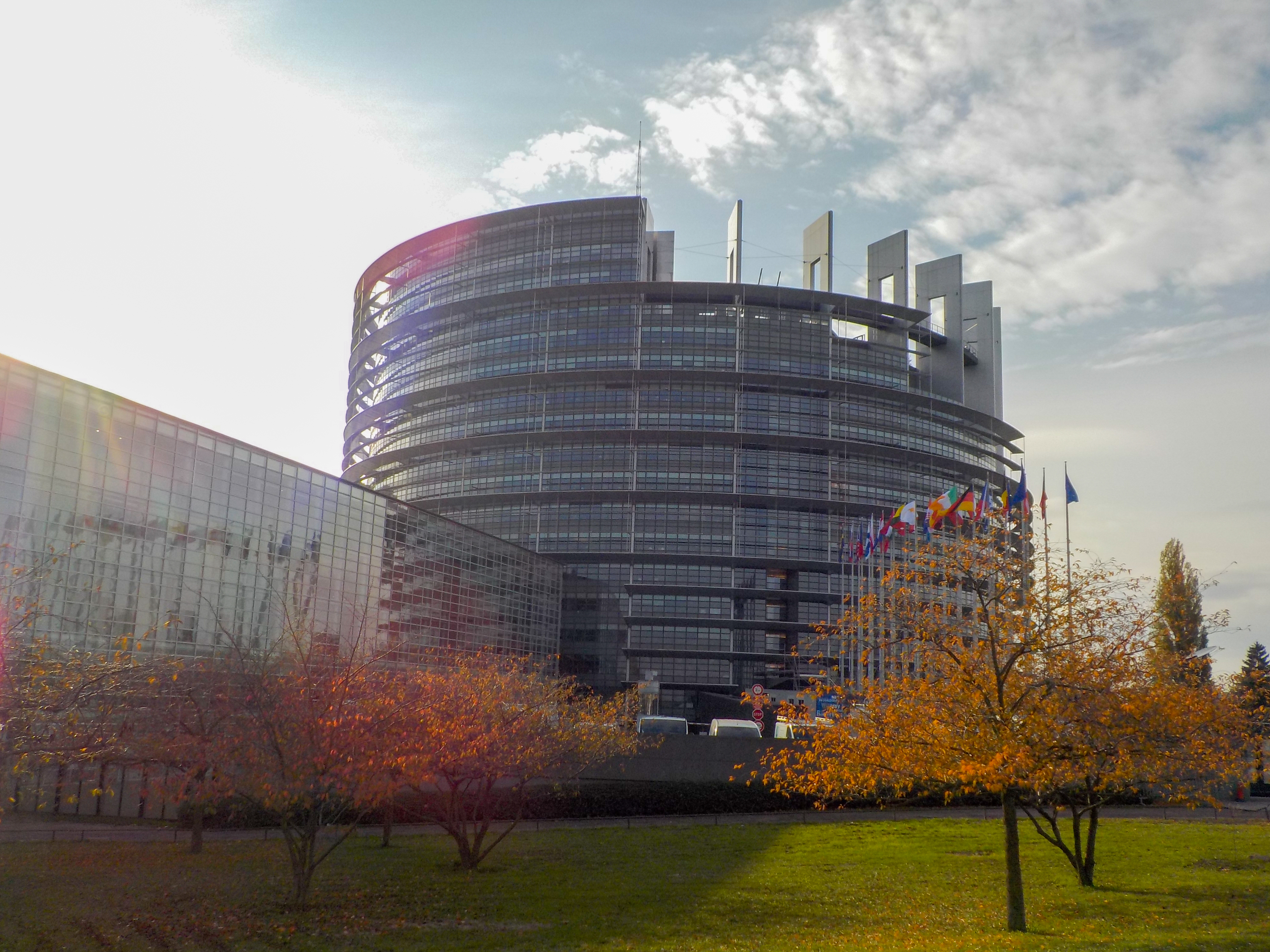
European Parliament
We spent the morning and half of the afternoon walking around the older part of the town. We went through the cathedral, which dates back to 1176. It is a huge Gothic structure that is closely surrounded by the old town. Inside there is an astronomical clock from the 1800s. During WWII the stained glass windows were removed and hidden from the Nazis to protect them from damage. They eventually were found by the Nazis and later rescued by the Fine Arts and Archives section of the United States military…as in the movie “Monuments Men.” They were replaced in the cathedral after the war. That means that the cathedral has stained glass windows from the 1300s!
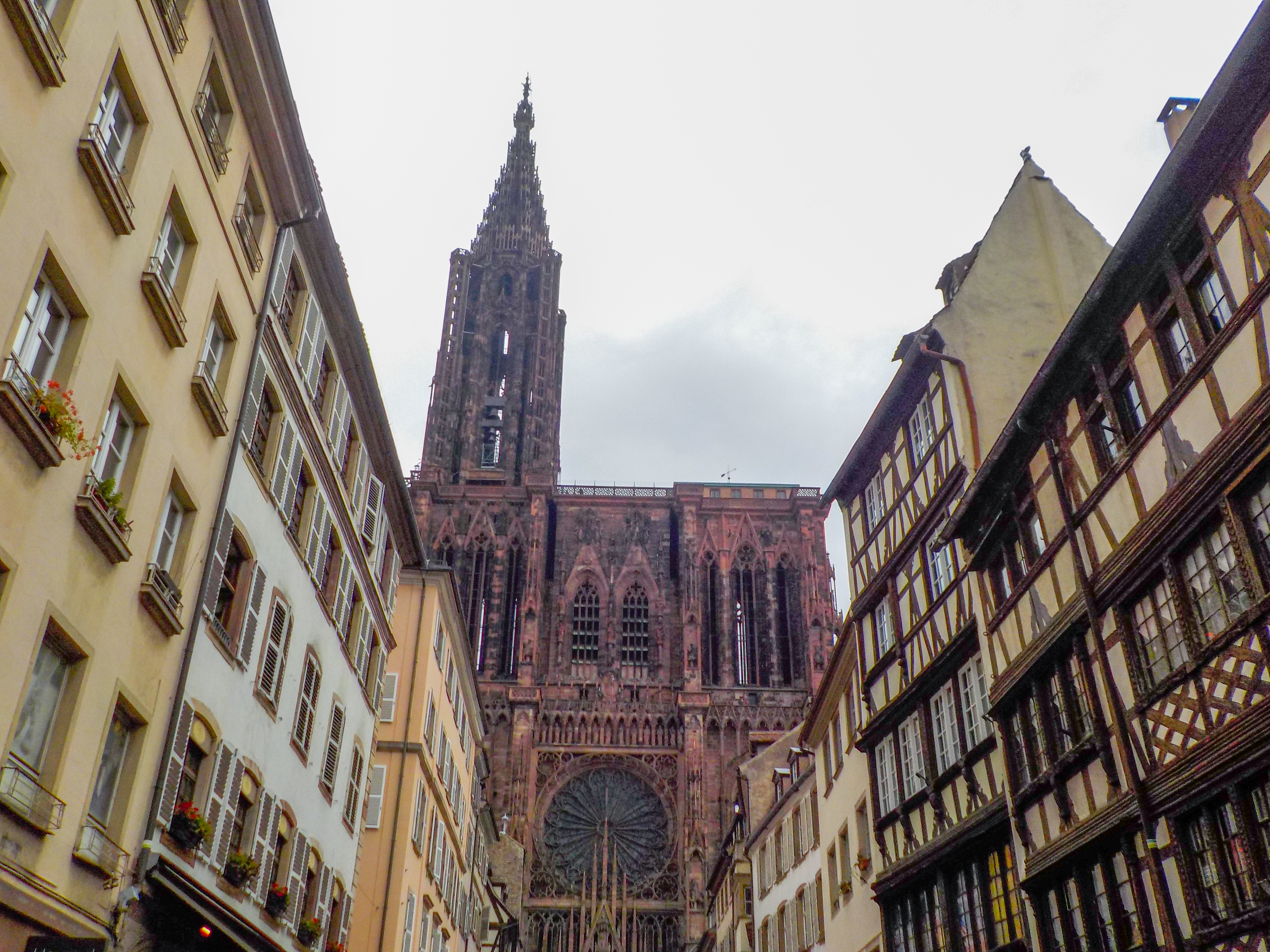
Cathedral
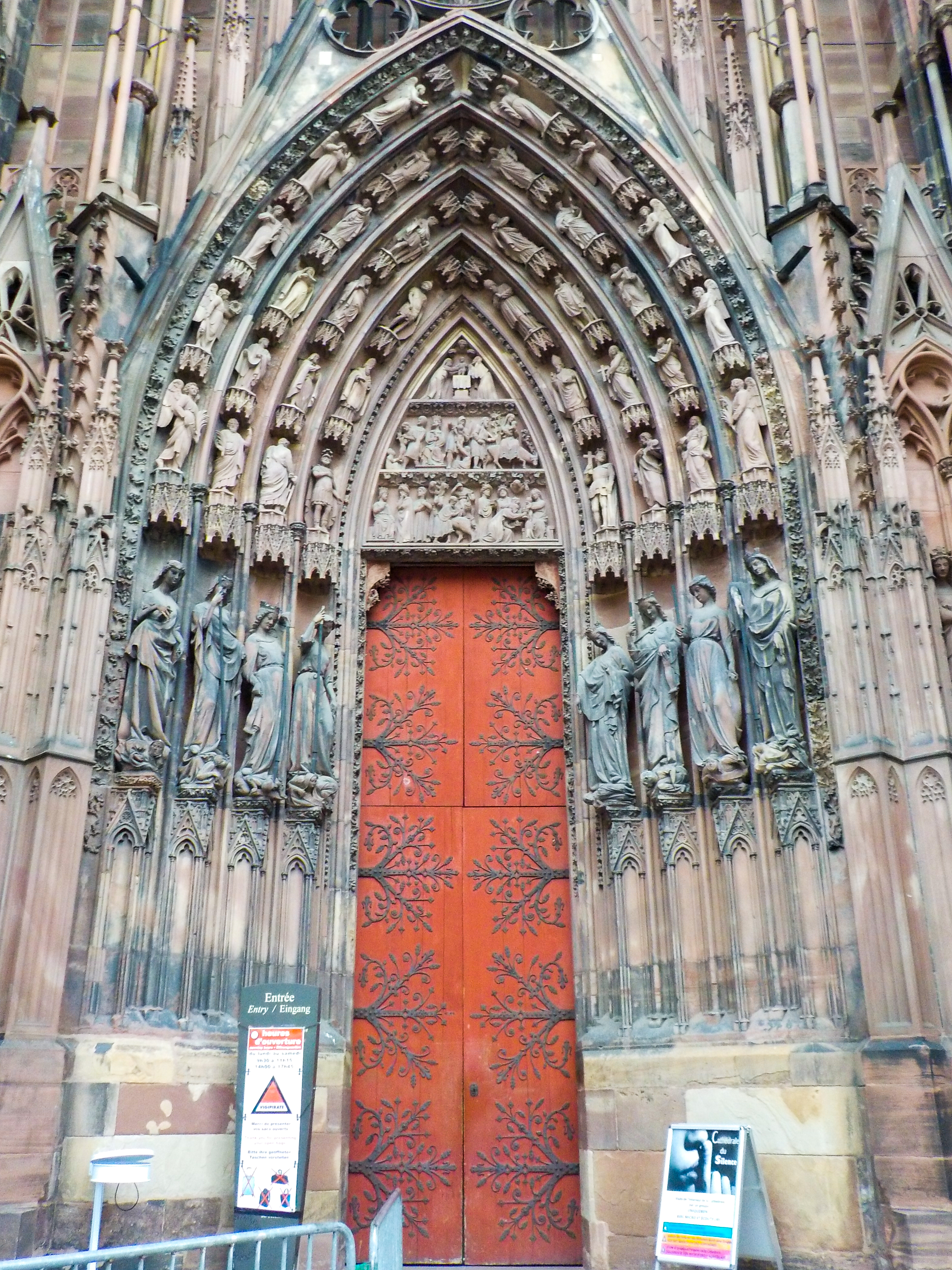
Cathedral doors
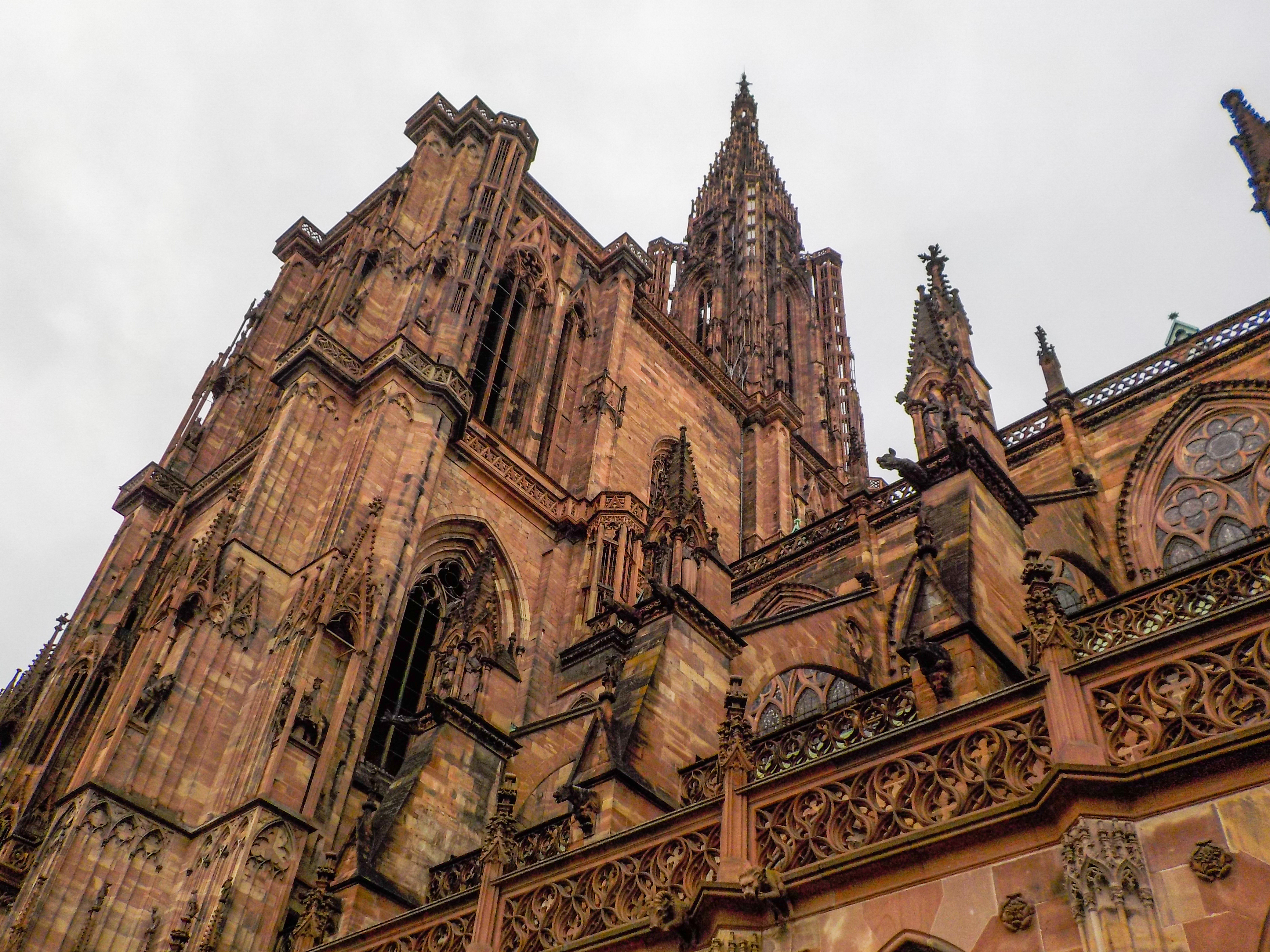
Cathedral
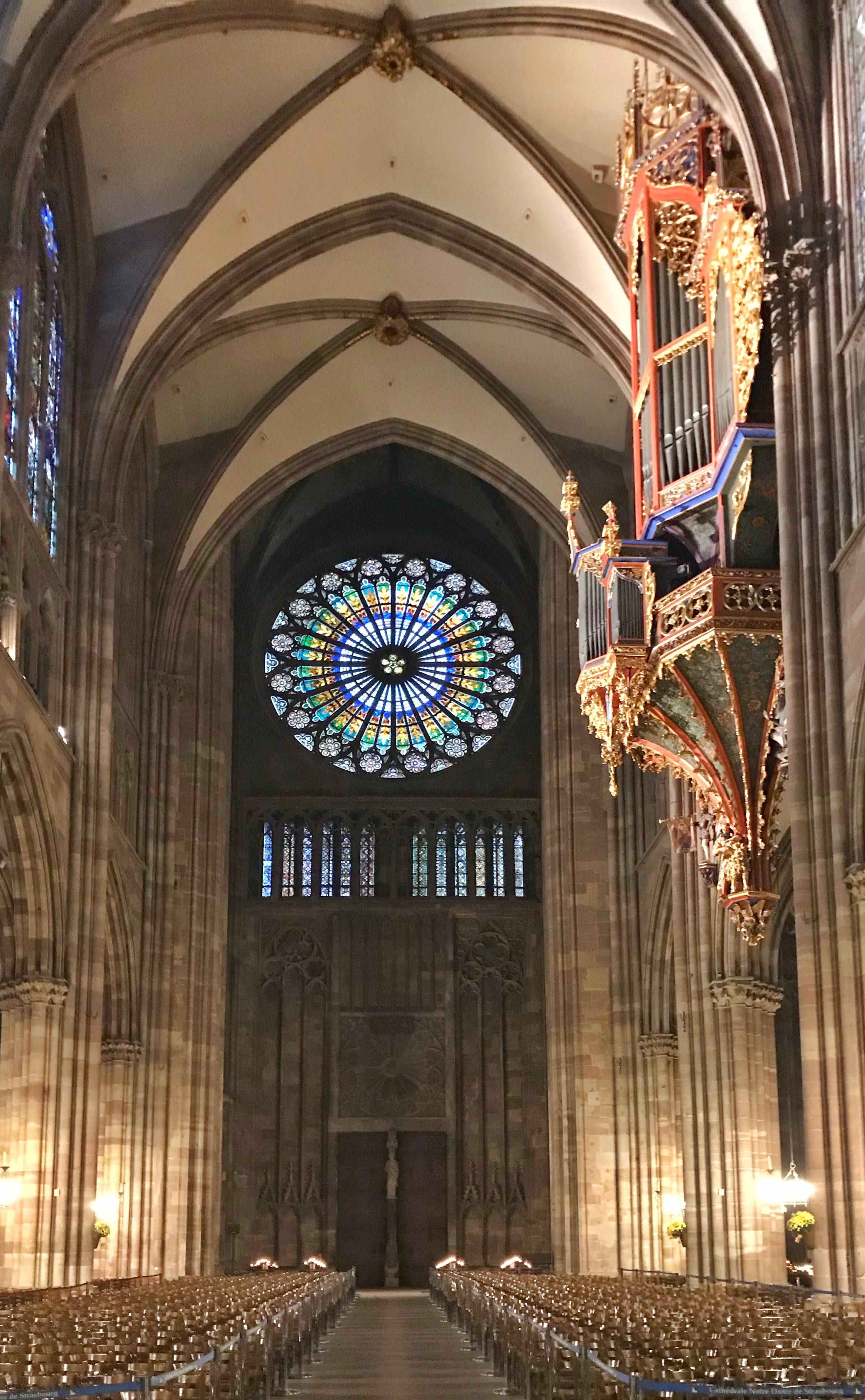
In the cathedral
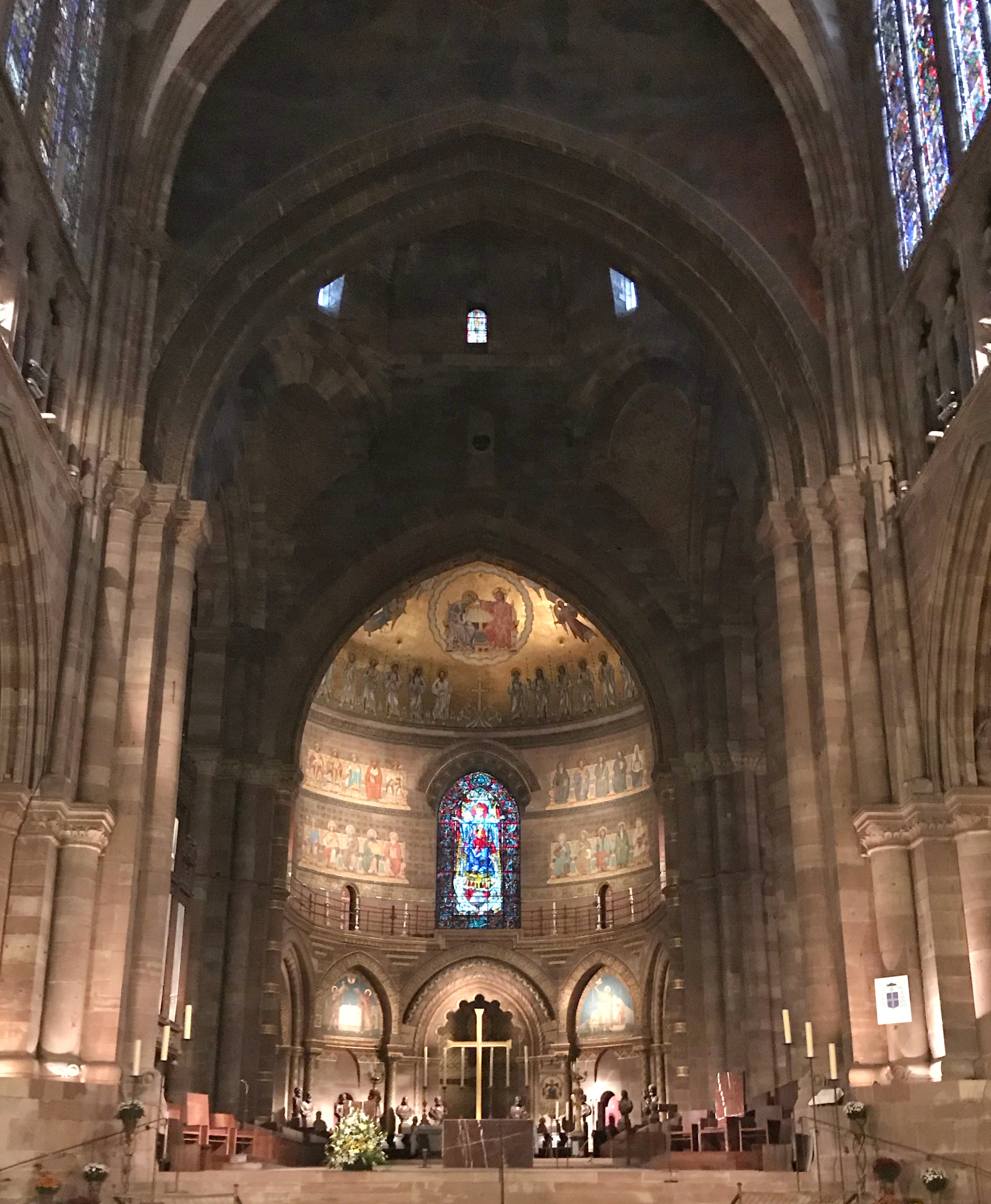
In the cathedral
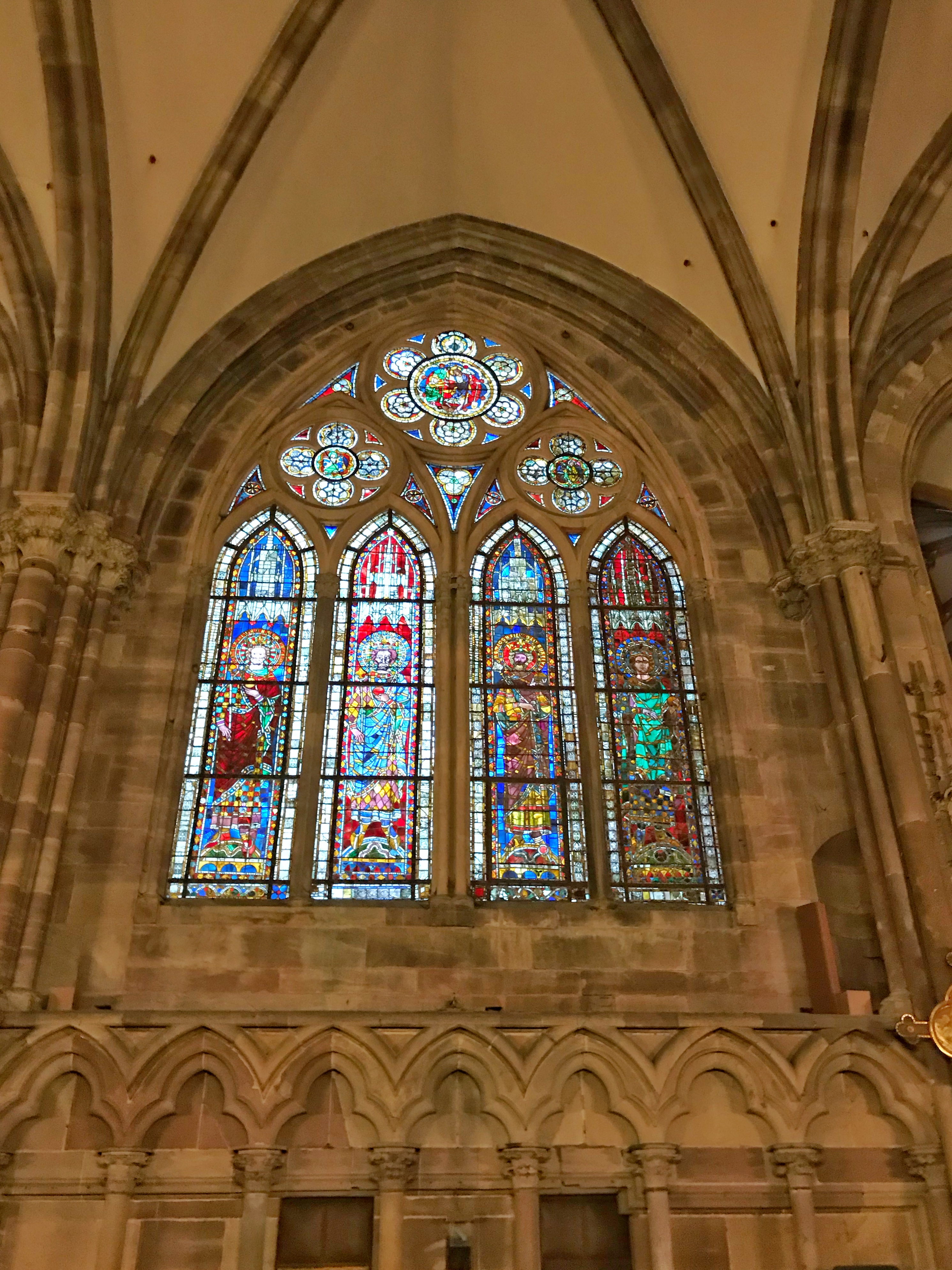
Original stained glass
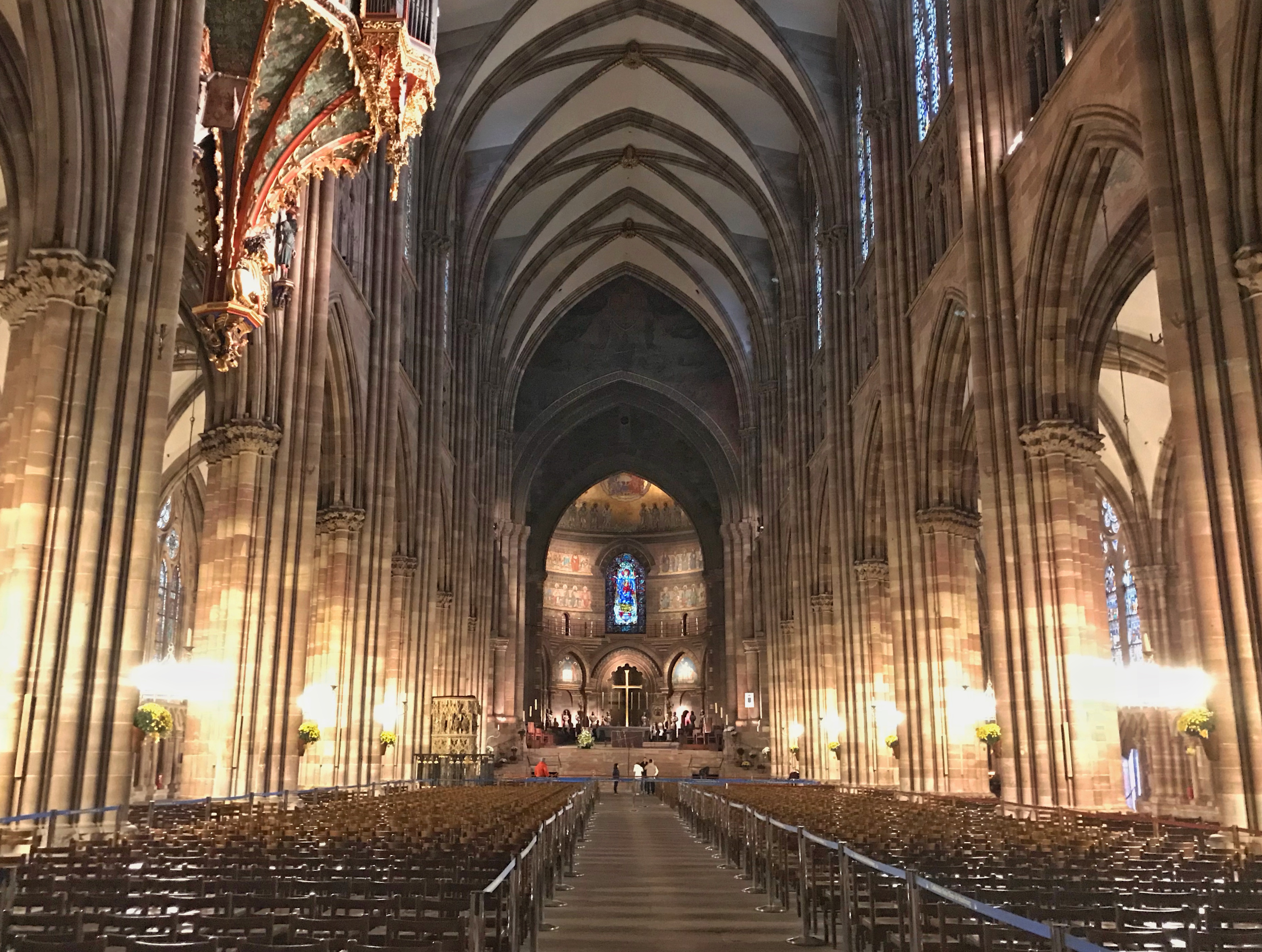
Sanctuary
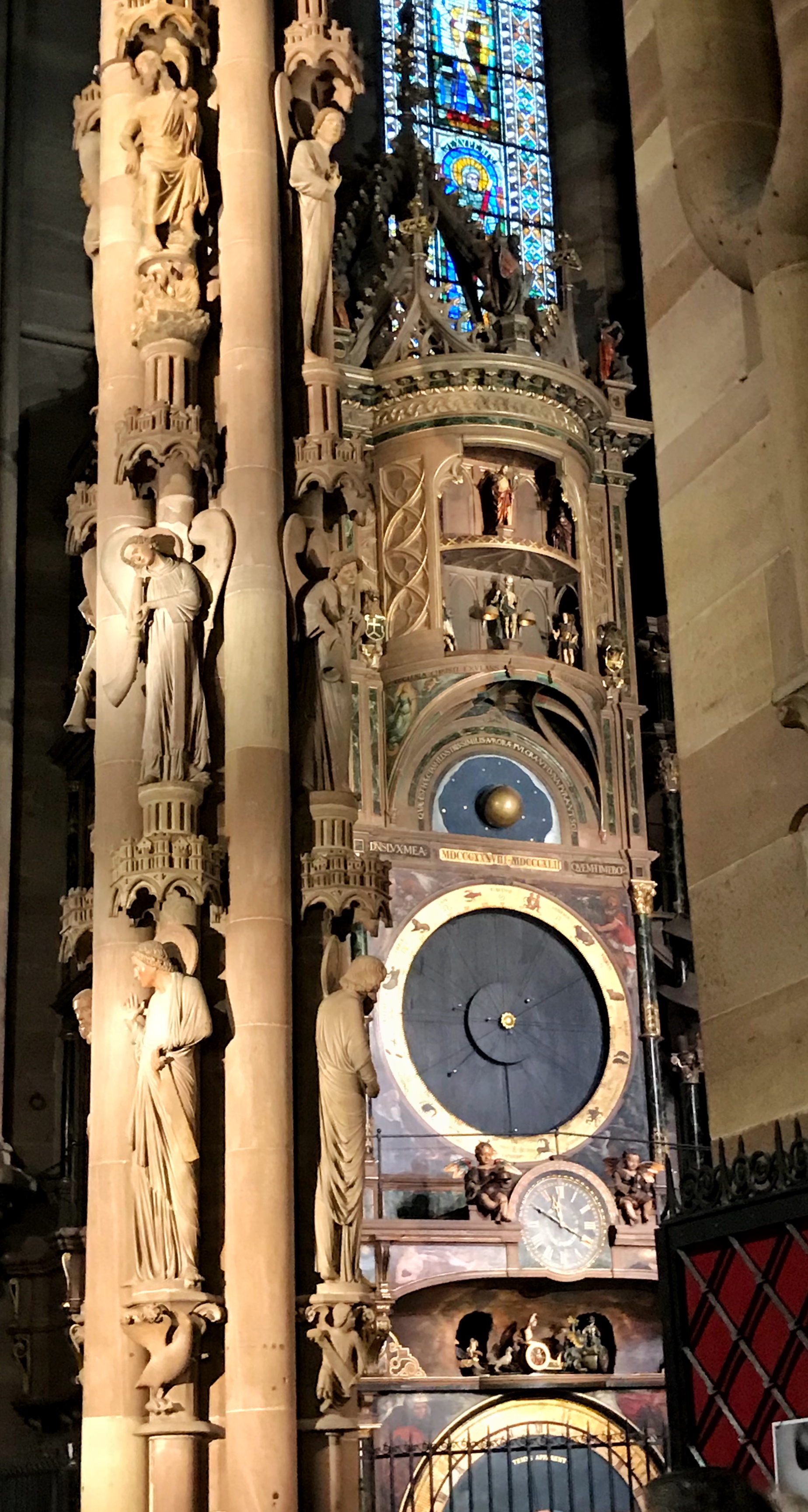
Astronomical clock
We enjoyed walking around the narrow streets and seeing areas like Little France. We had lunch and, later, pastries. It was a relaxing day.
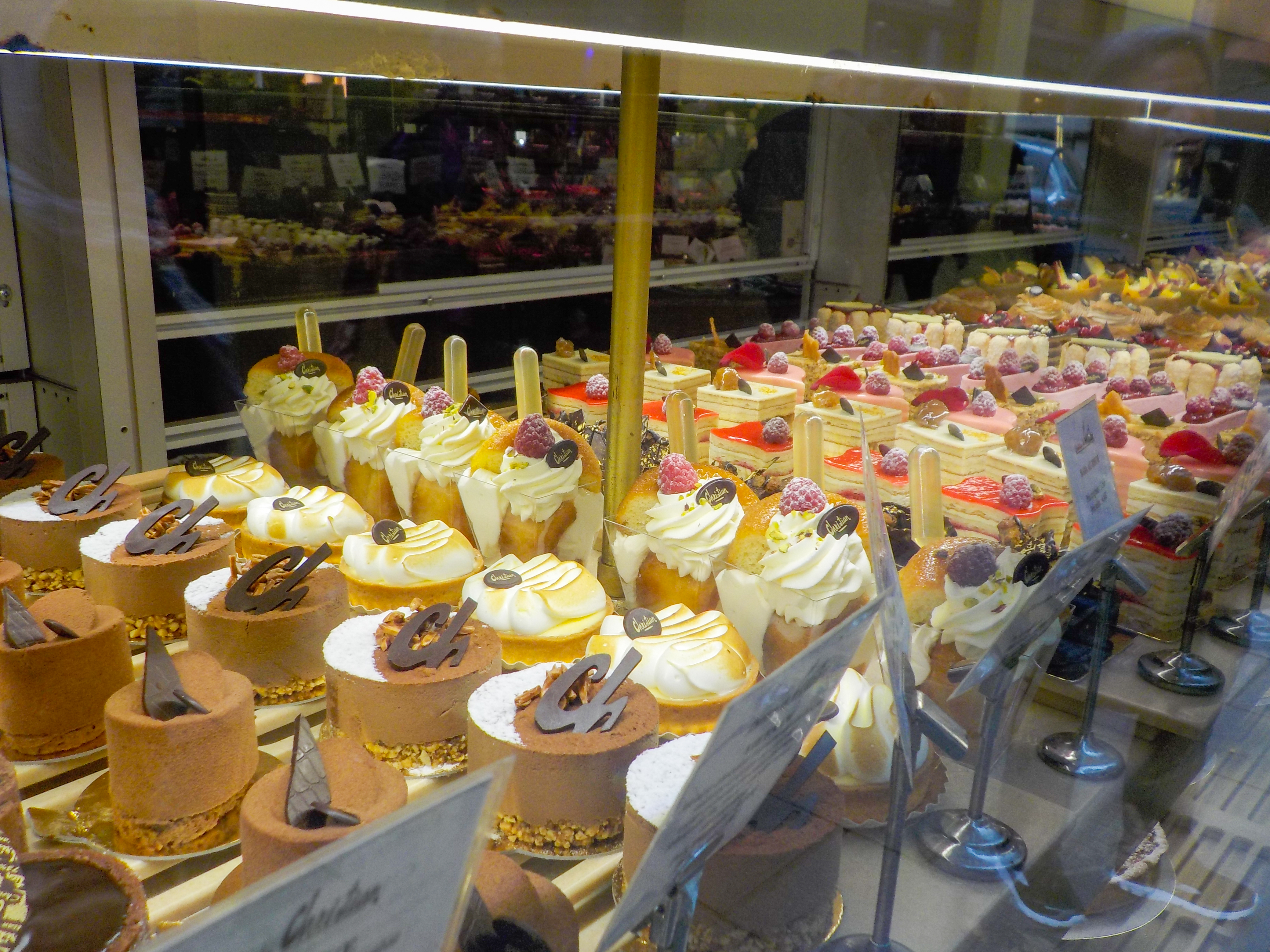
Pastries
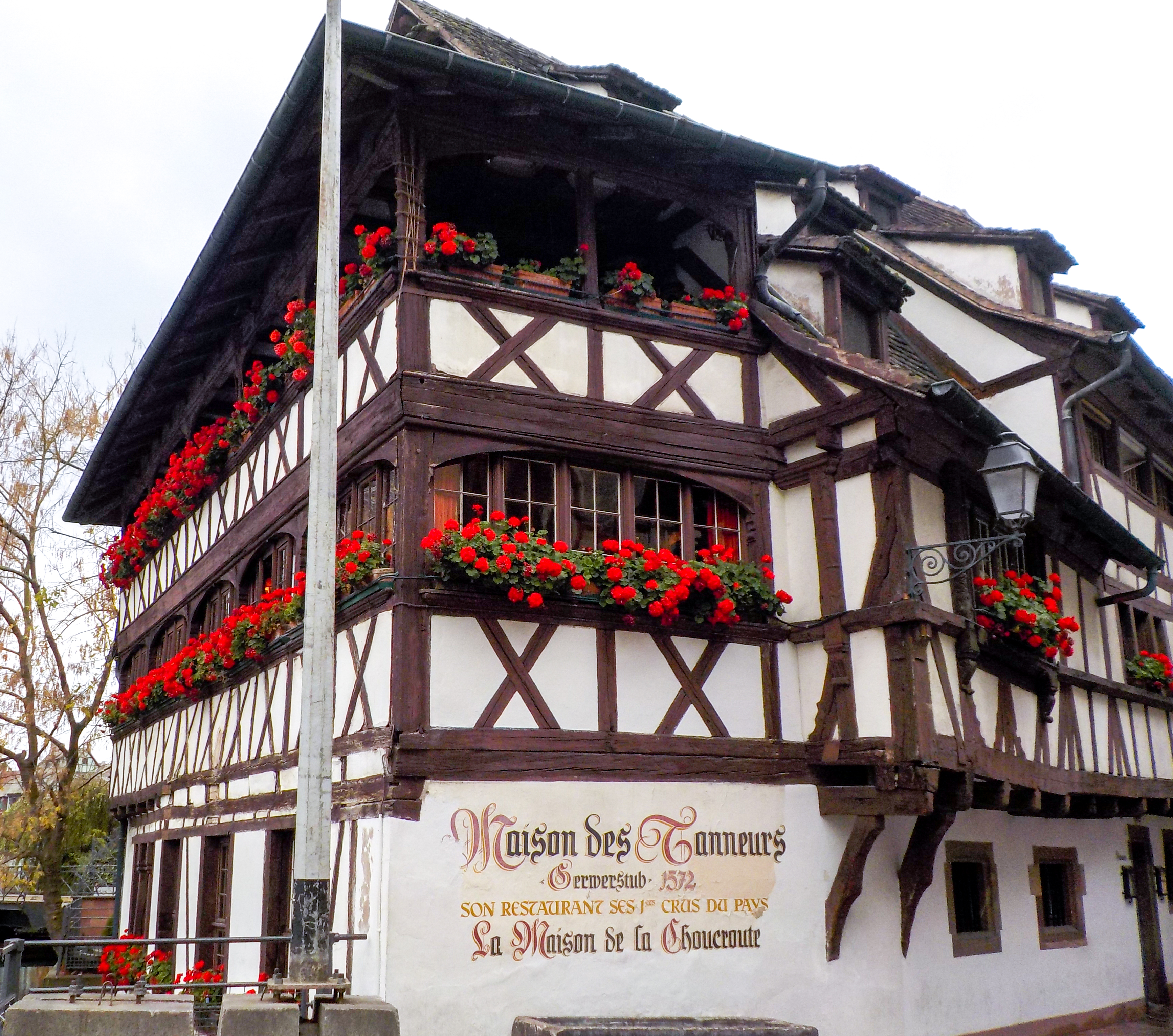
building in Little France that dates back to 1572, now a restaurant
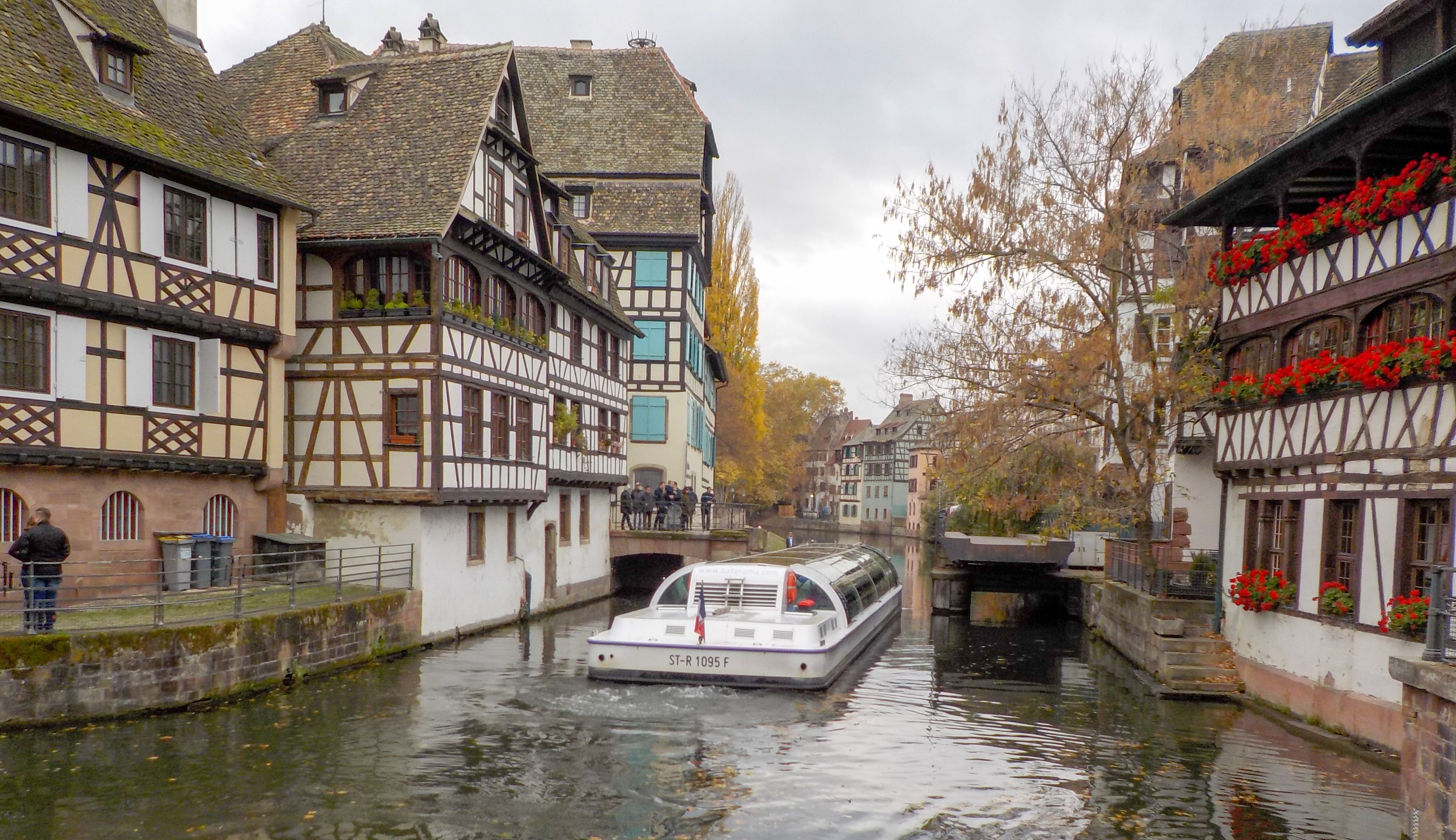
Canal in Little France
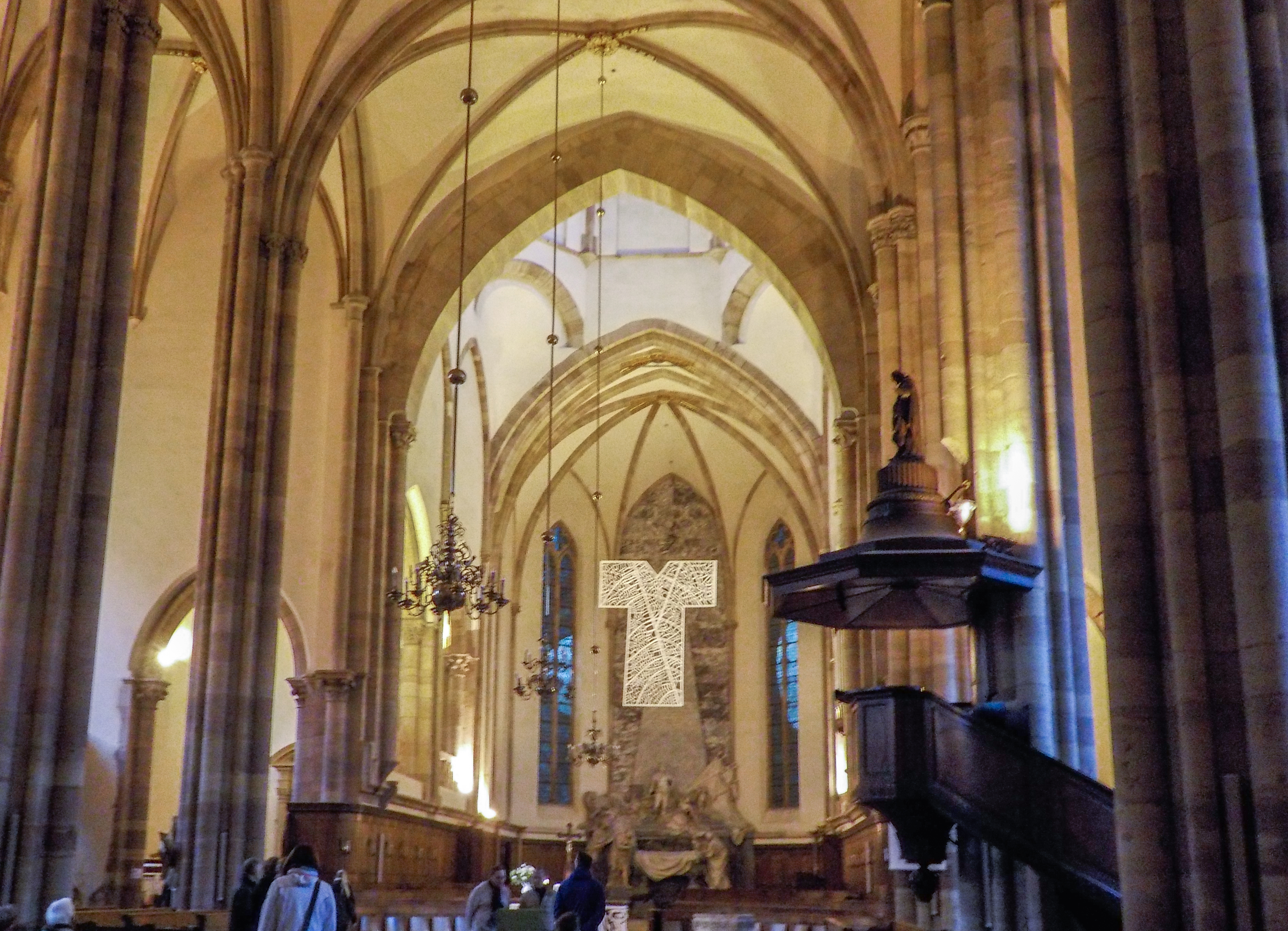
St Thomas’s Lutheran Church, dates as far back as the 11th century
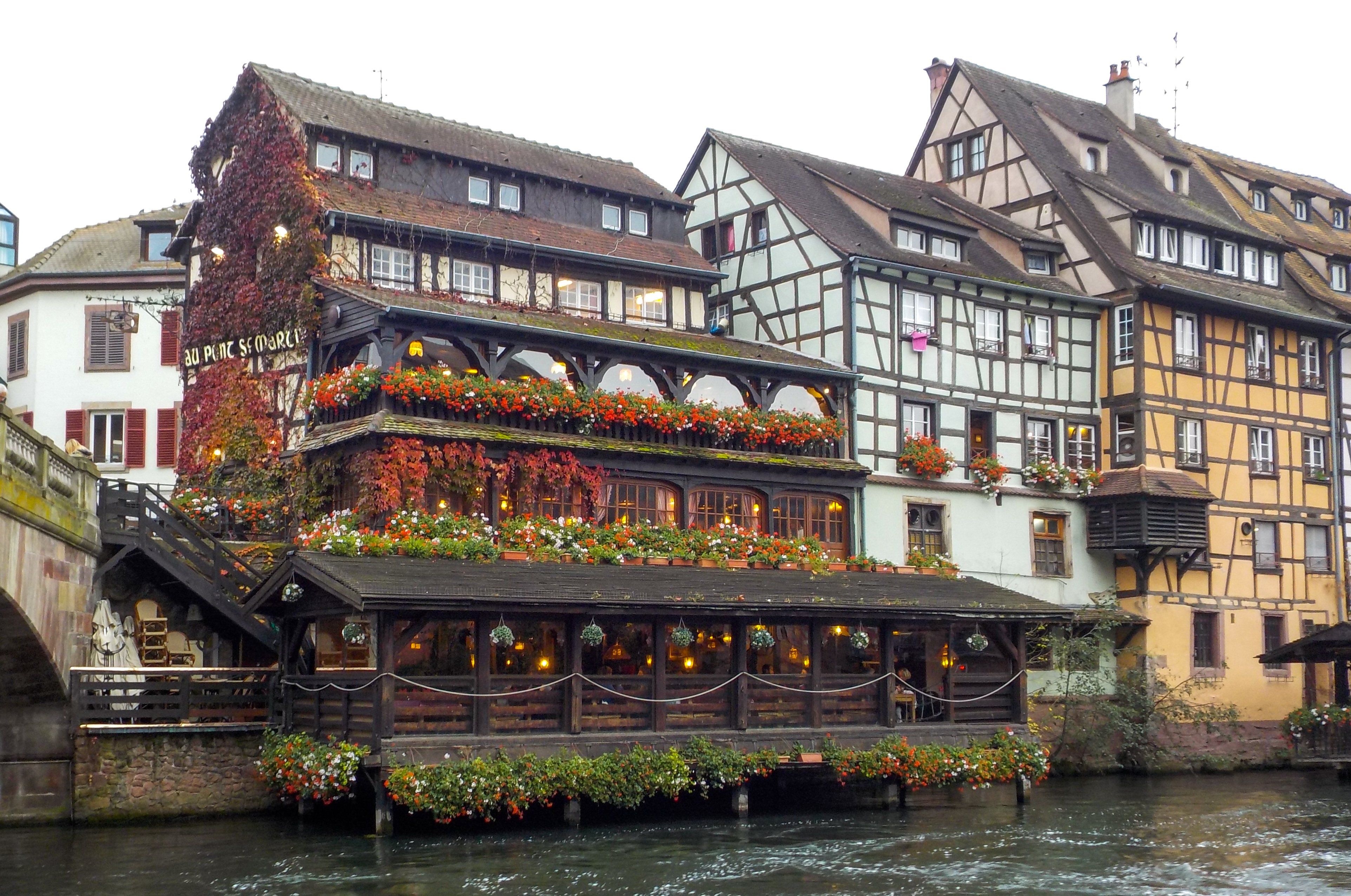
Little France
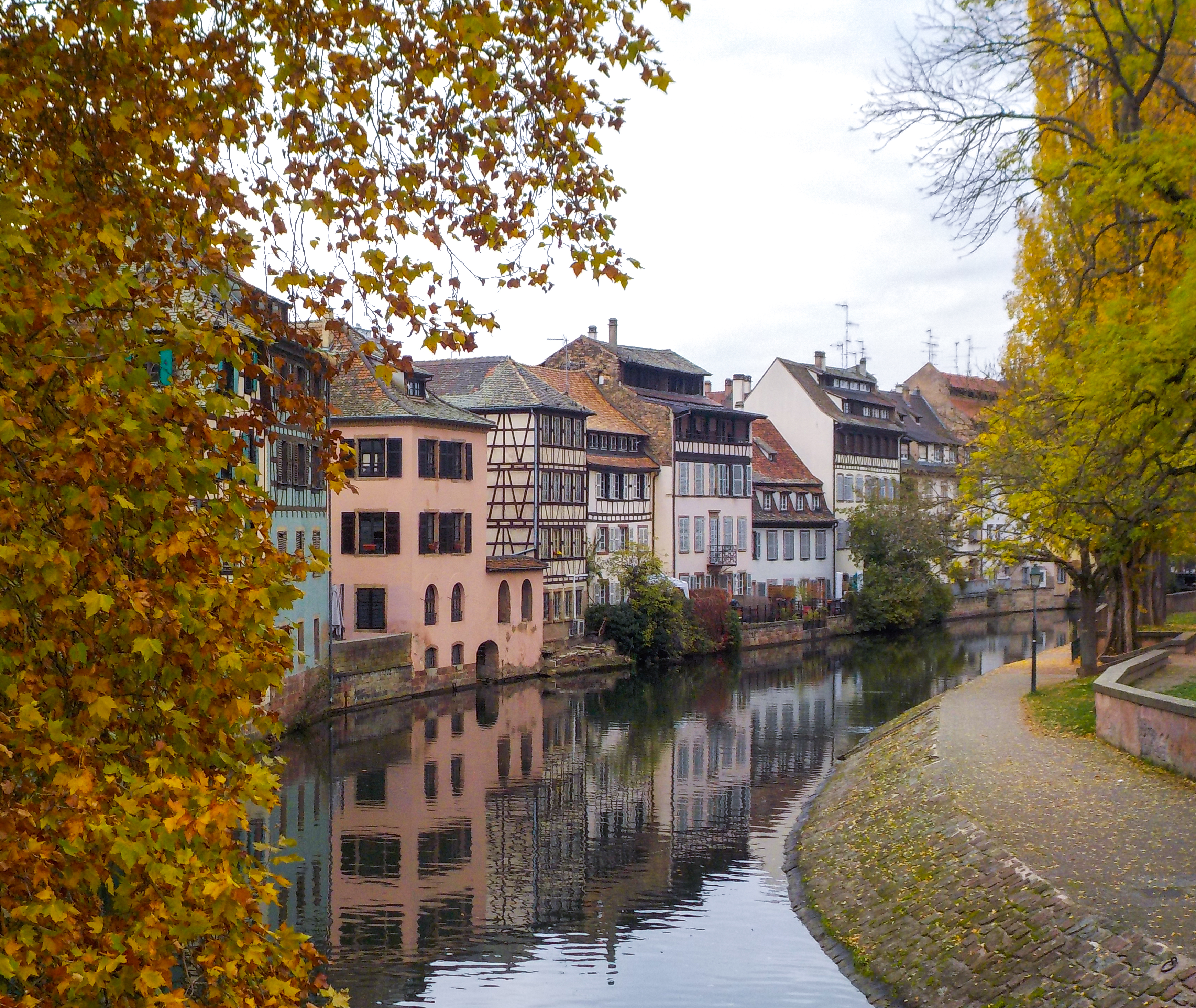
Canal in Little France
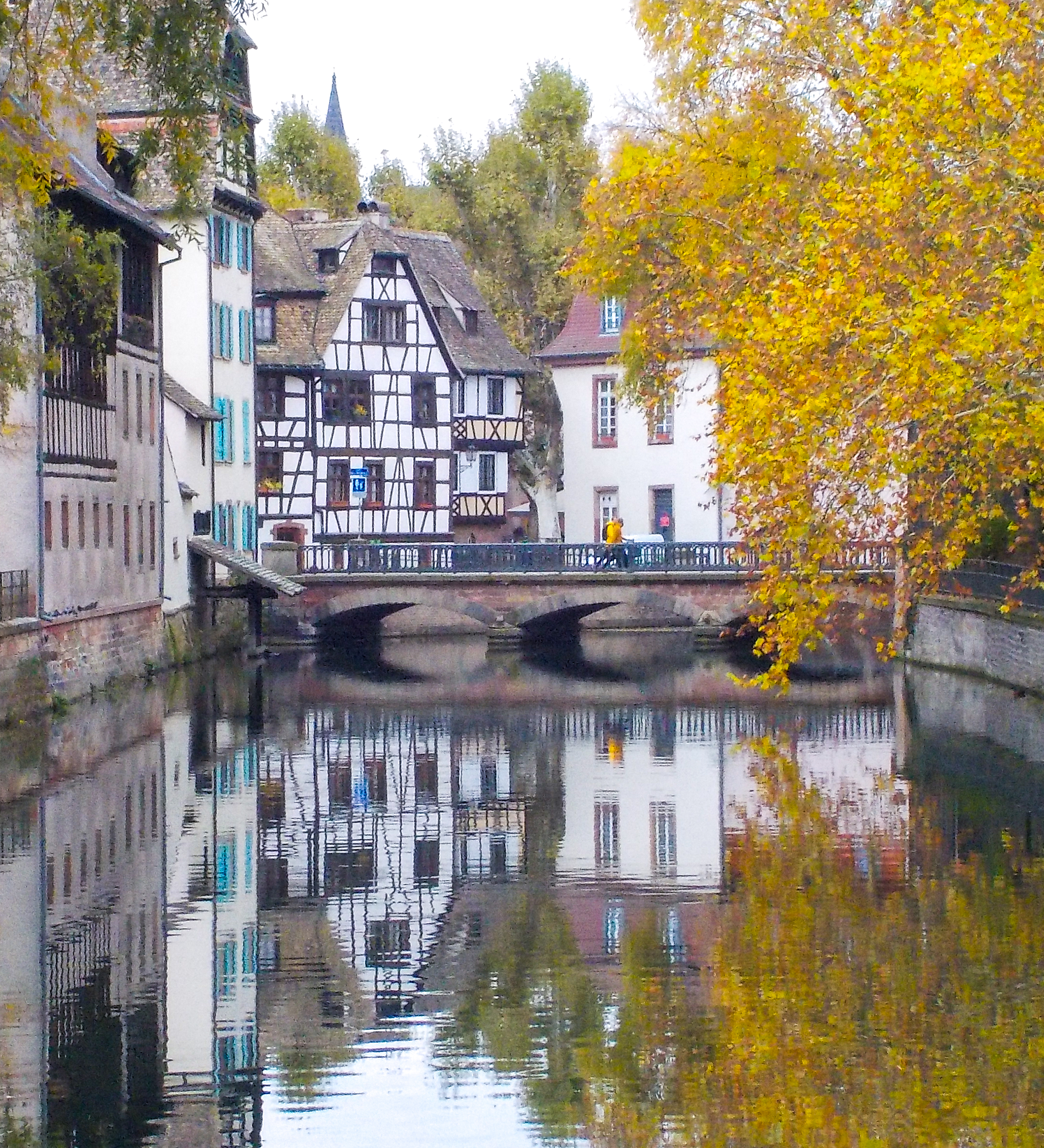
Canal in Little France
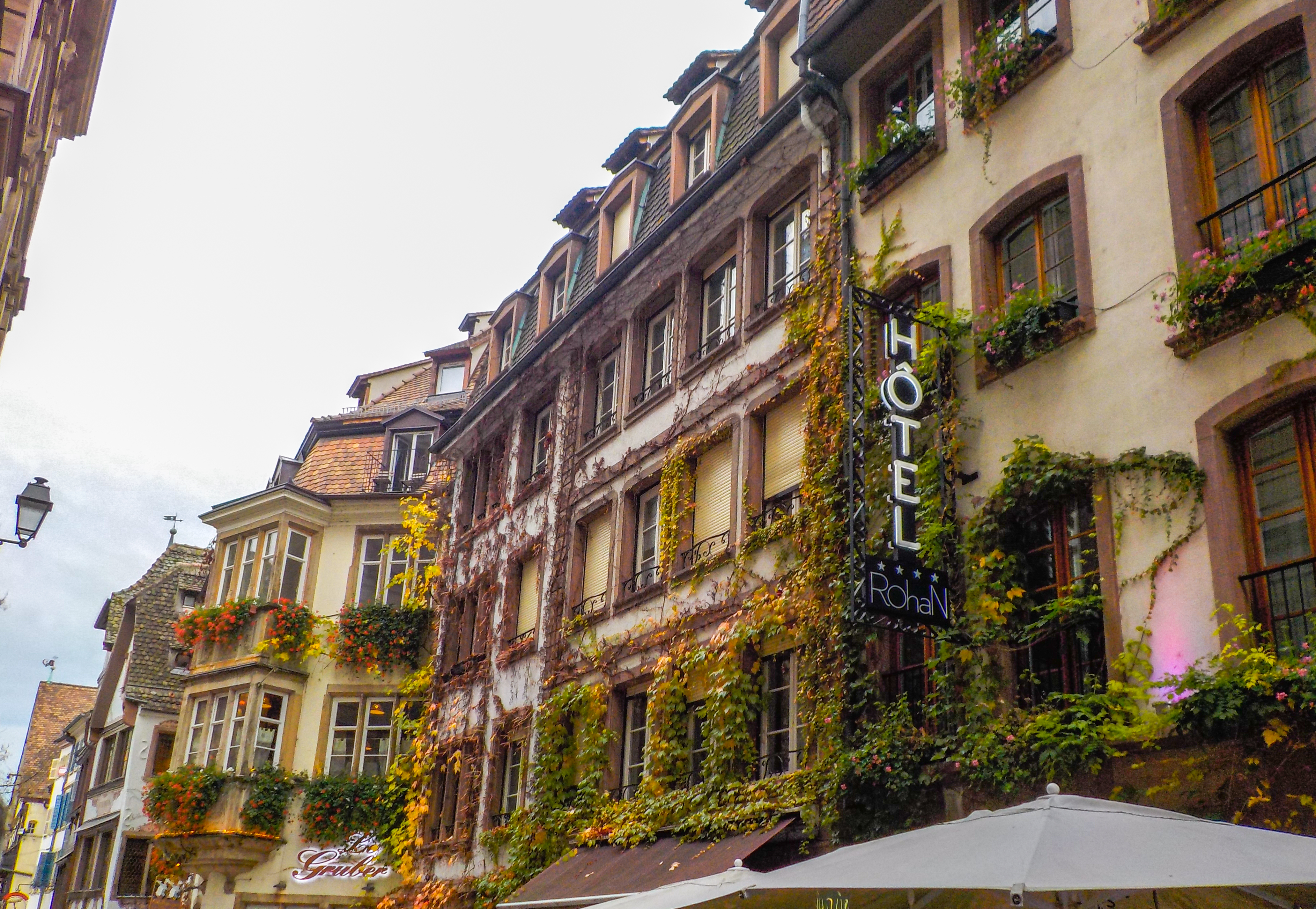
Strasbourg

