Today we had an island tour. It wasn’t what we had asked the tour company to book us on, but we made the best of it.
We spent the day on a boat. We were supposed to be going on a boat to different islands for land tours. This was an all-day boat tour with snorkeling. Keep in mind that we are in the Southern Hemisphere and it is the winter here. The water is about 65 degrees. Not our idea of snorkeling temperatures. Also, if we were going to get in the water we would have booked scuba diving, not snorkeling. We wanted to be on the islands themselves so that we could see the wildlife because each of these islands has different critters and plants. We did make an attempt at snorkeling. With full wetsuit I made it maybe 10 minutes, which actually was pretty impressive considering my Raynauds. There wasn’t even anything to look at when we were in the water. The fish we saw were while we were on the boat. We had a brief time on shore (of the island we are staying on!) at the end of the day. We had to wade in the water in somewhat deep water after being taken part way on a dingy so I couldn’t risk my real camera, but I got some decent phone pics from there.
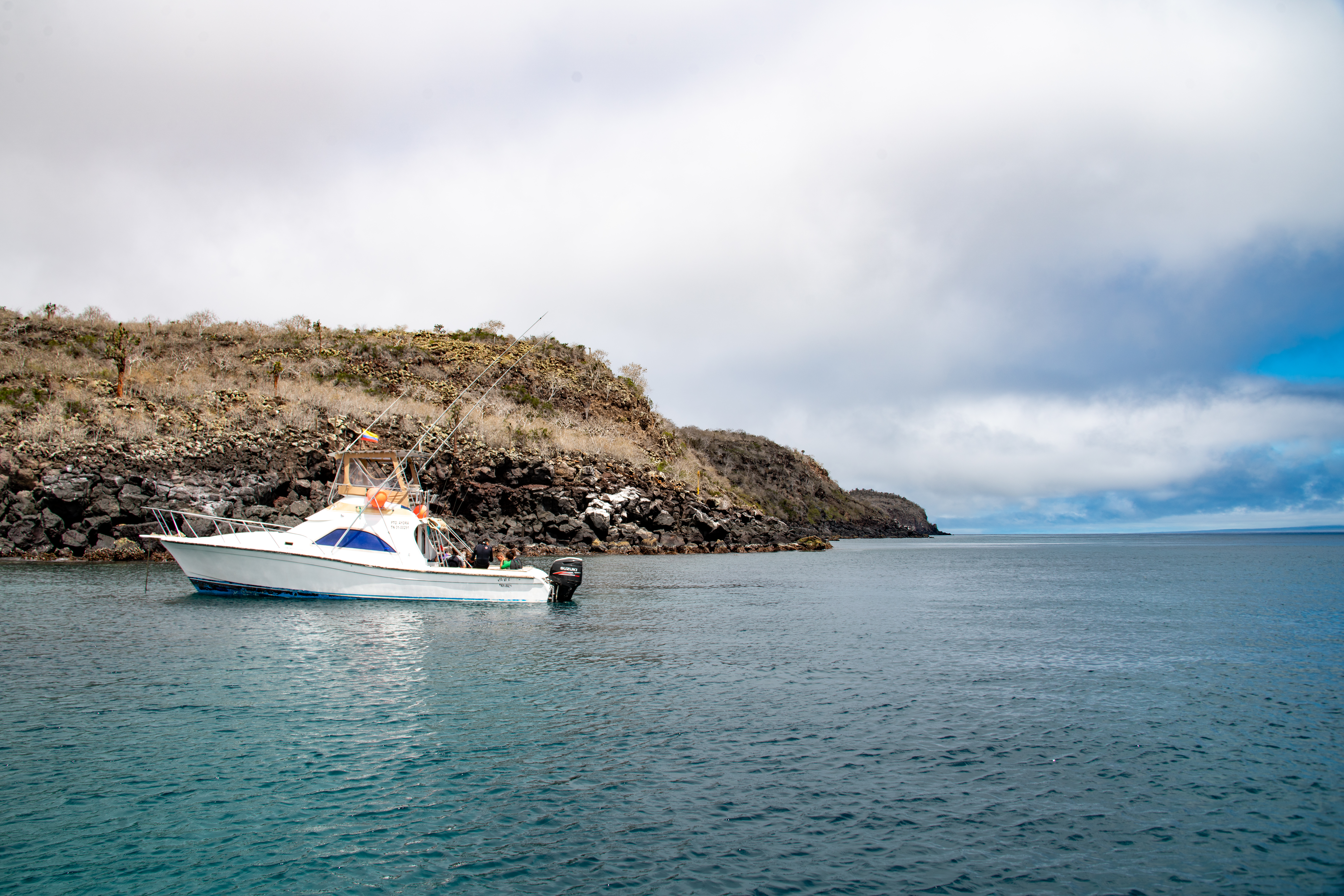
Santa Fe Island
Santa Fe Island is a small, flat island. It is known for land iguanas and its own subspecies of rice rat. There is evidence that tortoises used to live here, but they had not been there in the last century. In 2012 they were reintroduced to the island. It was determined that the Espanola tortoise was the one genetically most like the ones originally on the island, so those were the ones reintroduced there. They continue to reintroduce more to the population. There is a significant population of sea lions on the island as well.
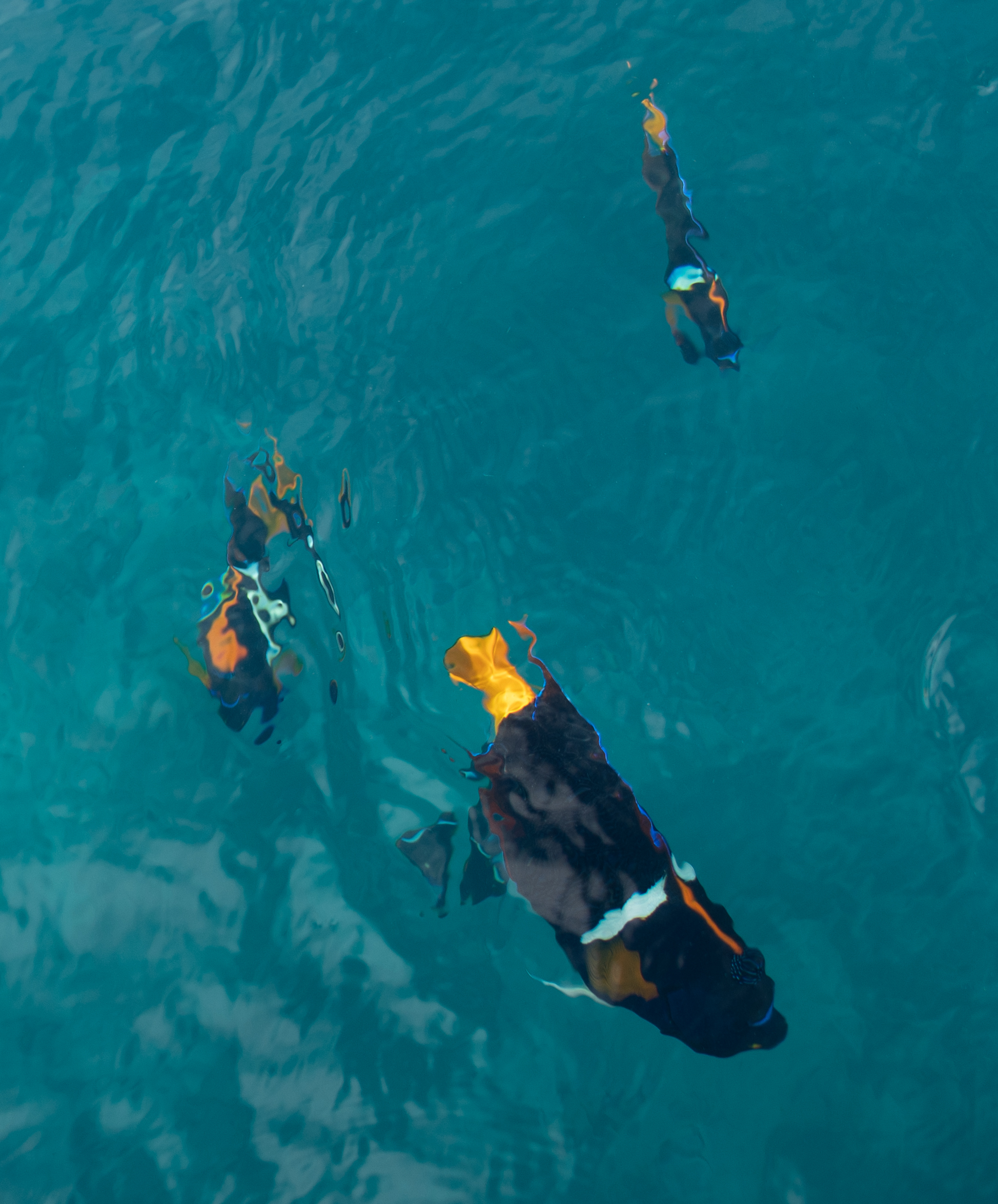
Fish eating lunch scraps off the side of the boat
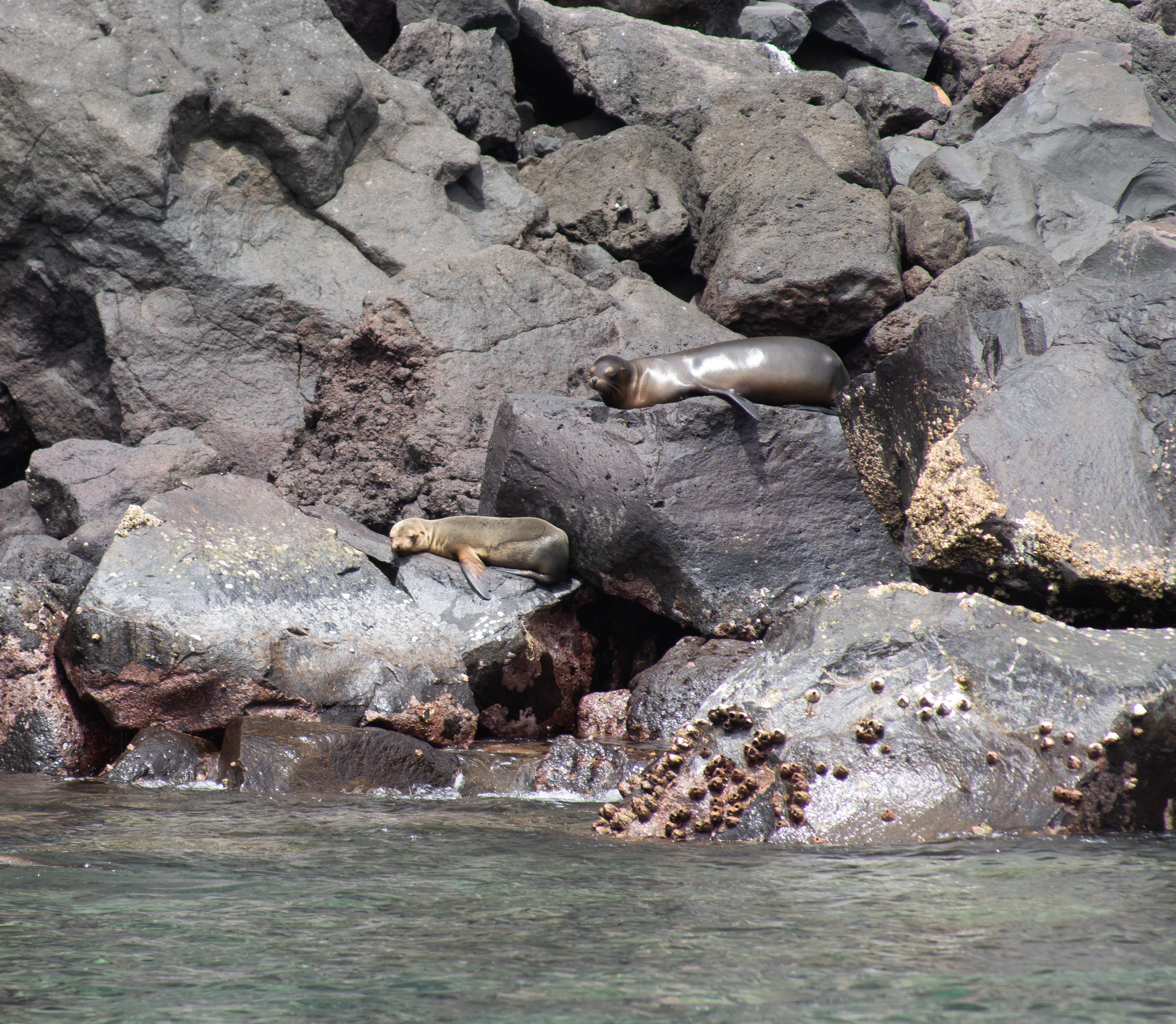
Sea lion momma and baby
Sea lions are the largest mammals in the Galapagos as the full-grown males can weigh up to 550 lbs. The females give birth to one pup a year and rear them for 1-3 years. The sea lions are very friendly and are everywhere!
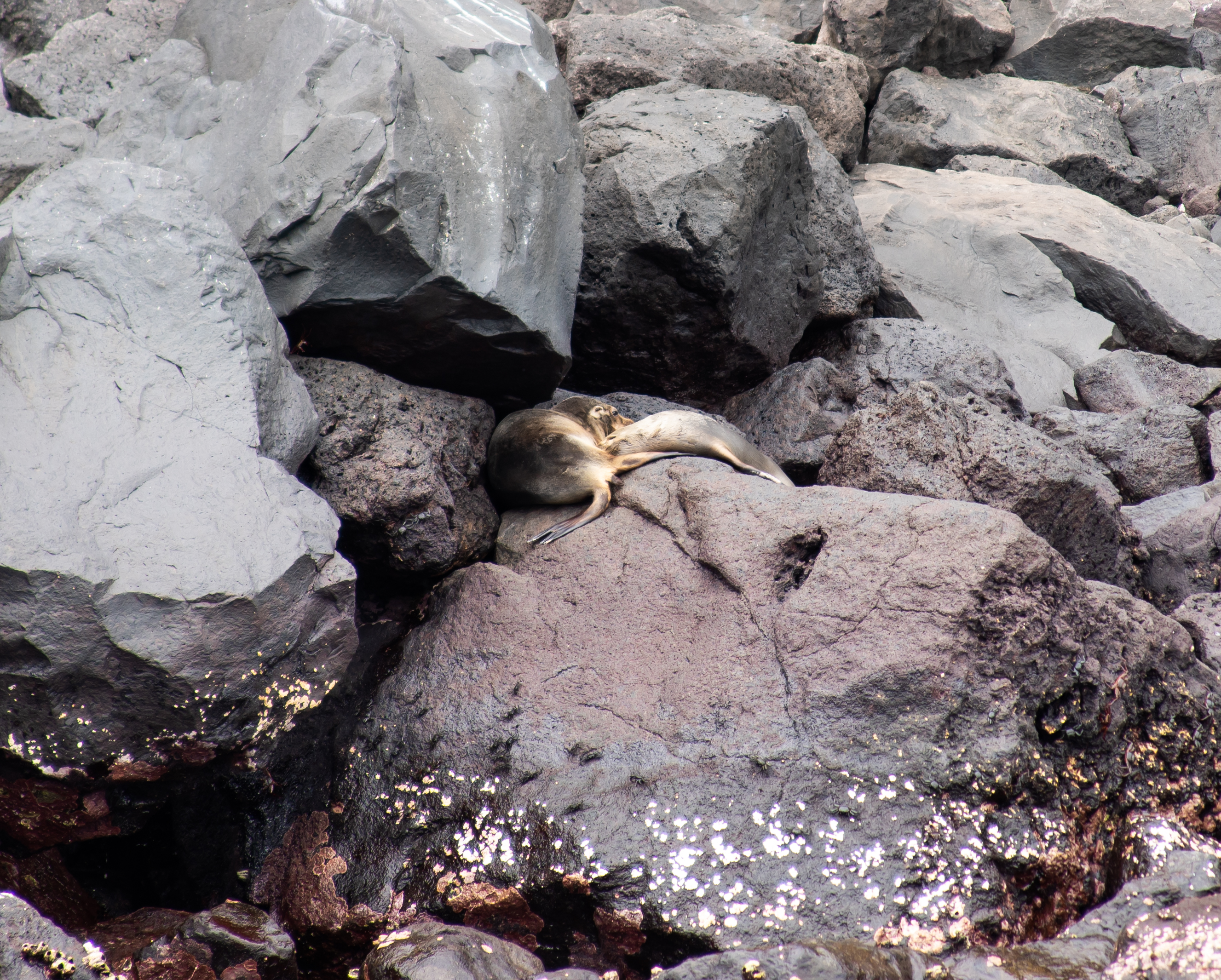
Sea lion baby nursing
As I said, we did spend some time on Santa Cruz, where we are staying. We went to a different part of the island, as this is one of the larger islands. We started in a nice bay and then walked over to a marine iguana colony.
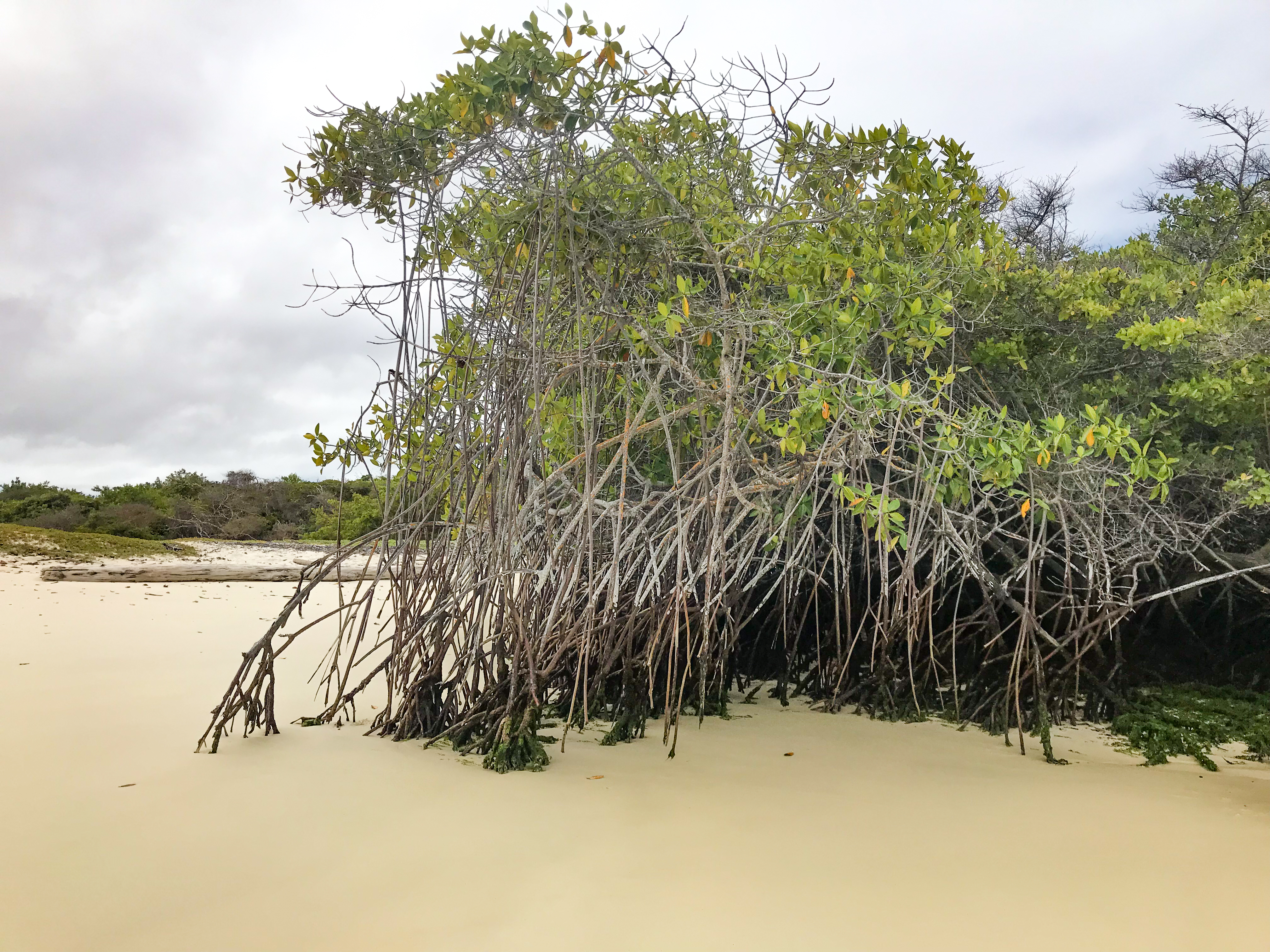
Mangroves on Santa Cruz Island
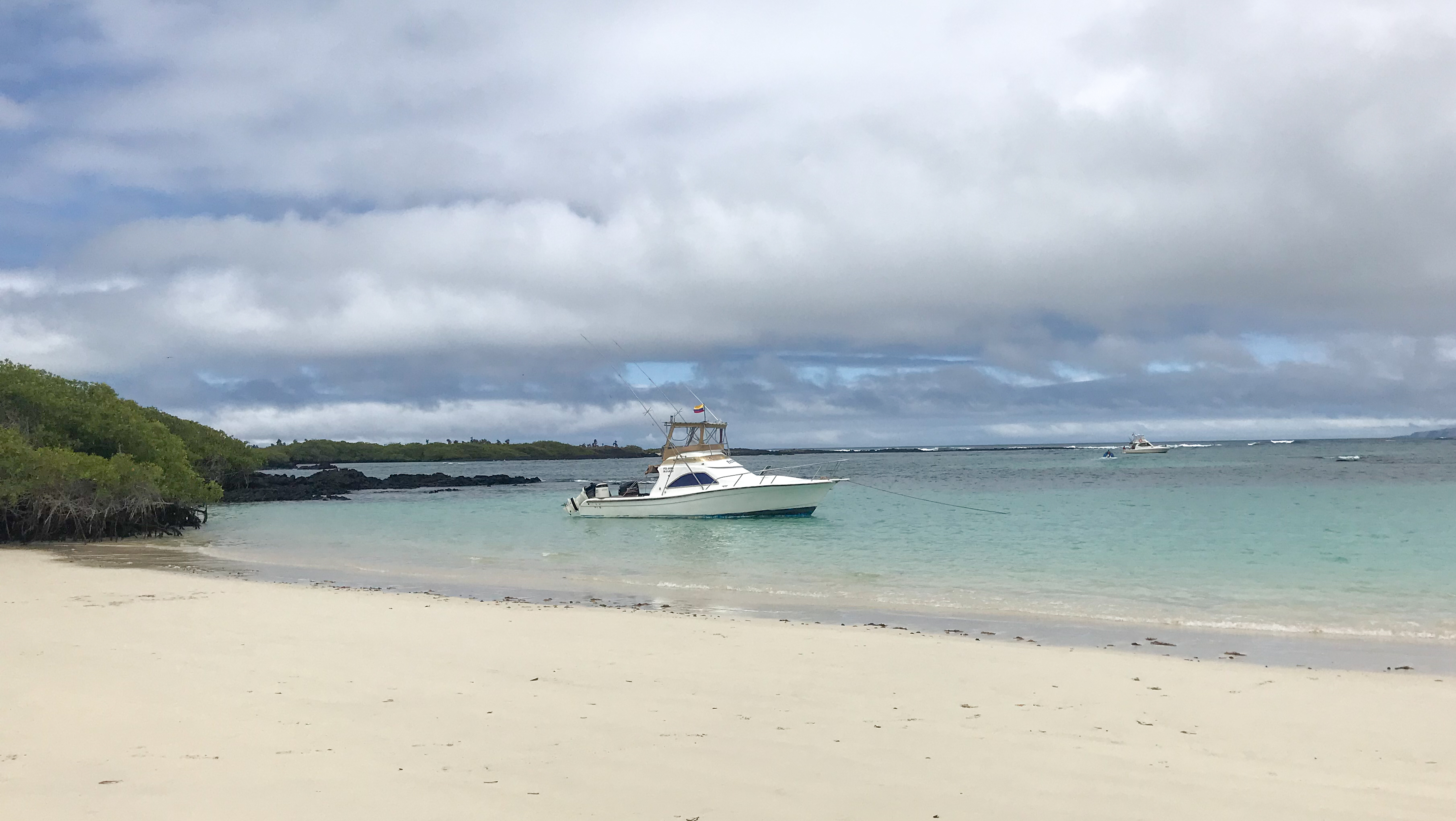
View of the bay
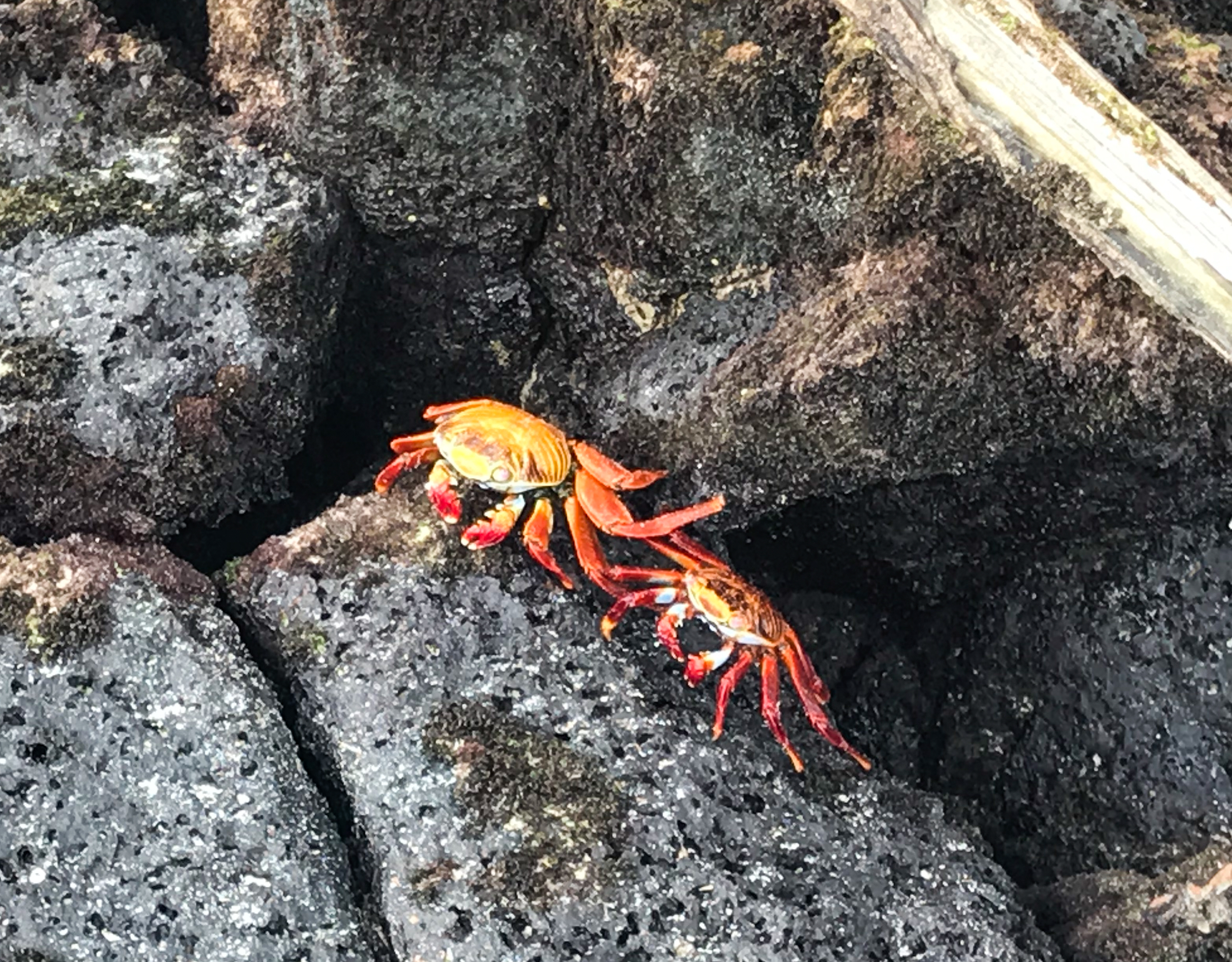
Galapagos Sally Lightfoot Crabs
These crabs are not unique to here, but there are quite a few of them.
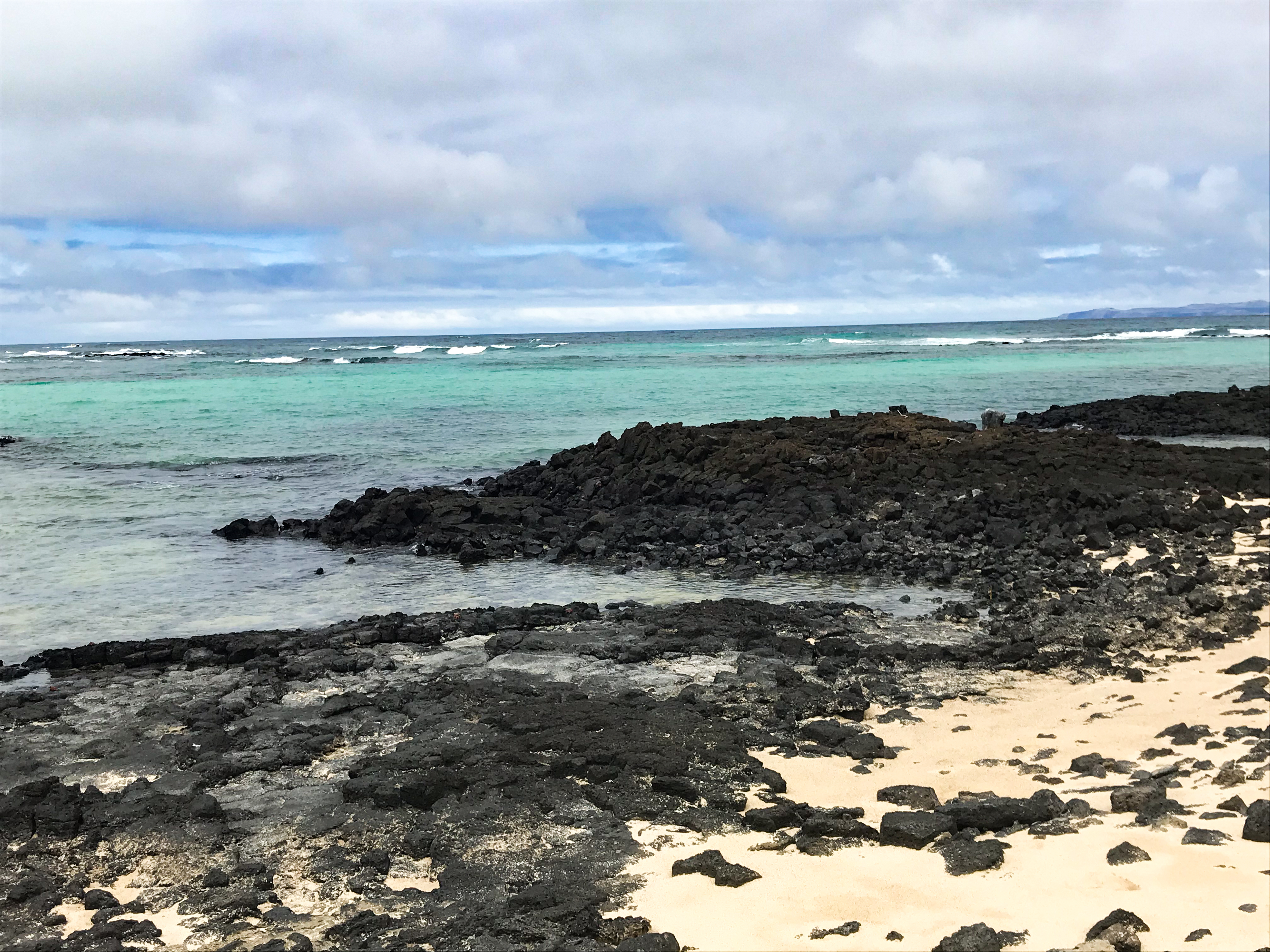
Clearly volcanic origin
Galapagos Marine Iguanas are only found here. They are herbivores, eating mostly algae. They live in colonies along the shore. This colony had 30 or so lizards, but some can be 500-1000. There are subspecies among the islands with some variation in appearance. They can be up to 22 inches long, nose to rump with the tail being up to an additional 33 inches. Since they are reptiles that spend time in the (cold) water, they spend most of the rest of their time sunning themselves. They also have to excrete the excess salt. They do this by snorting it out of their nostrils. It’s pretty classy…especially with a large group of them all doing it.
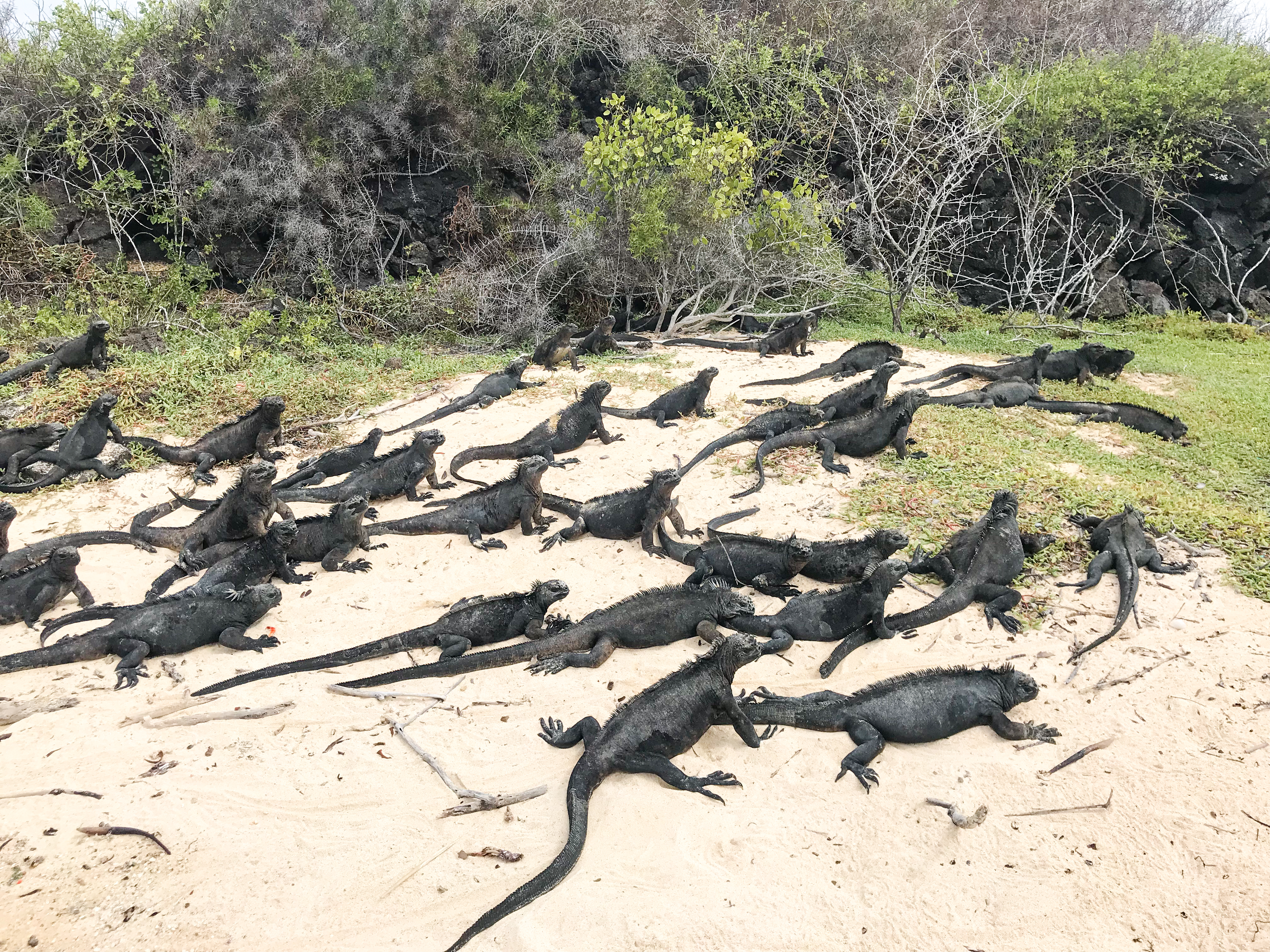
We found a few Galapagos Marine Iguanas!
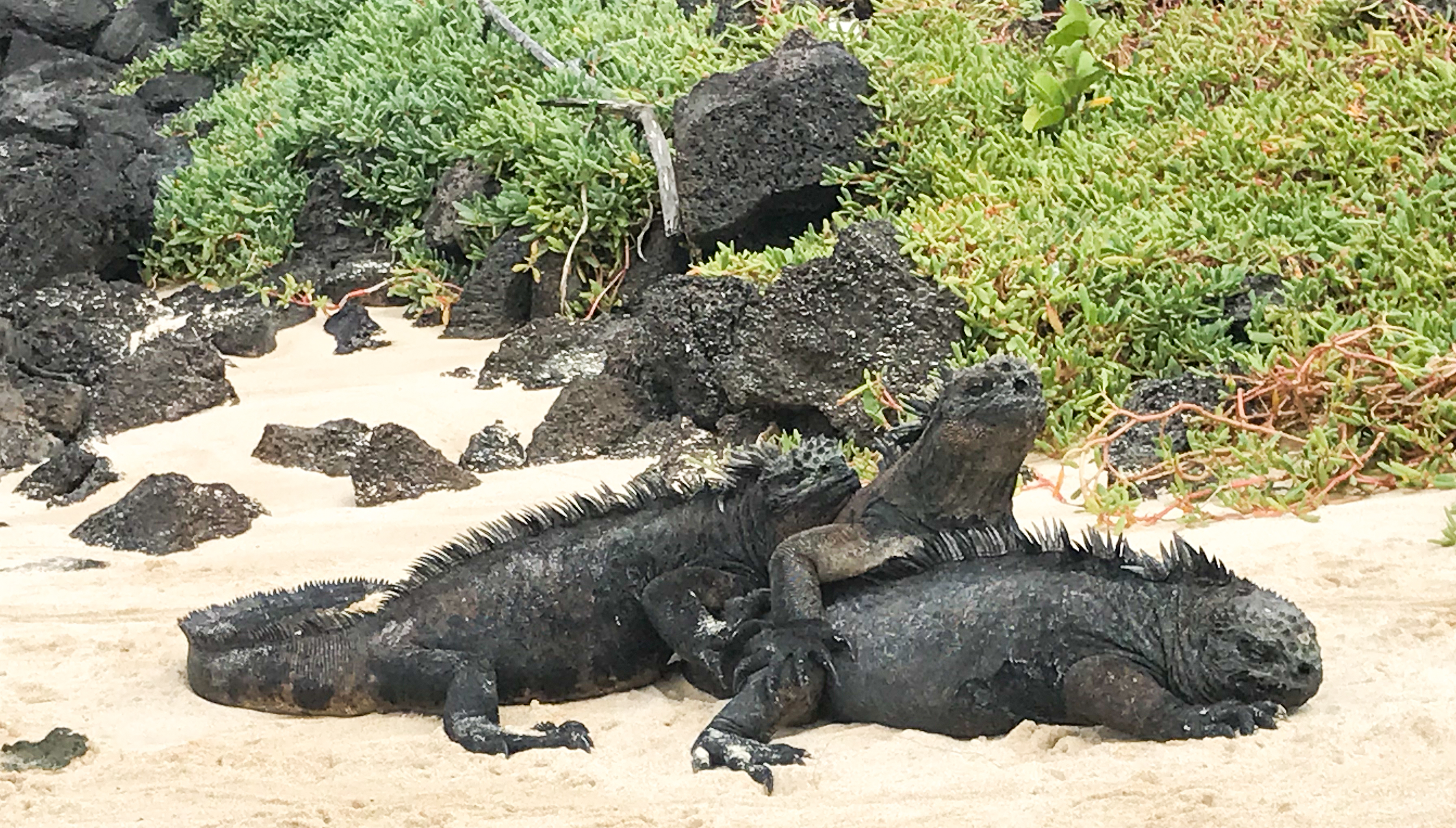
Stacked dinosaurs
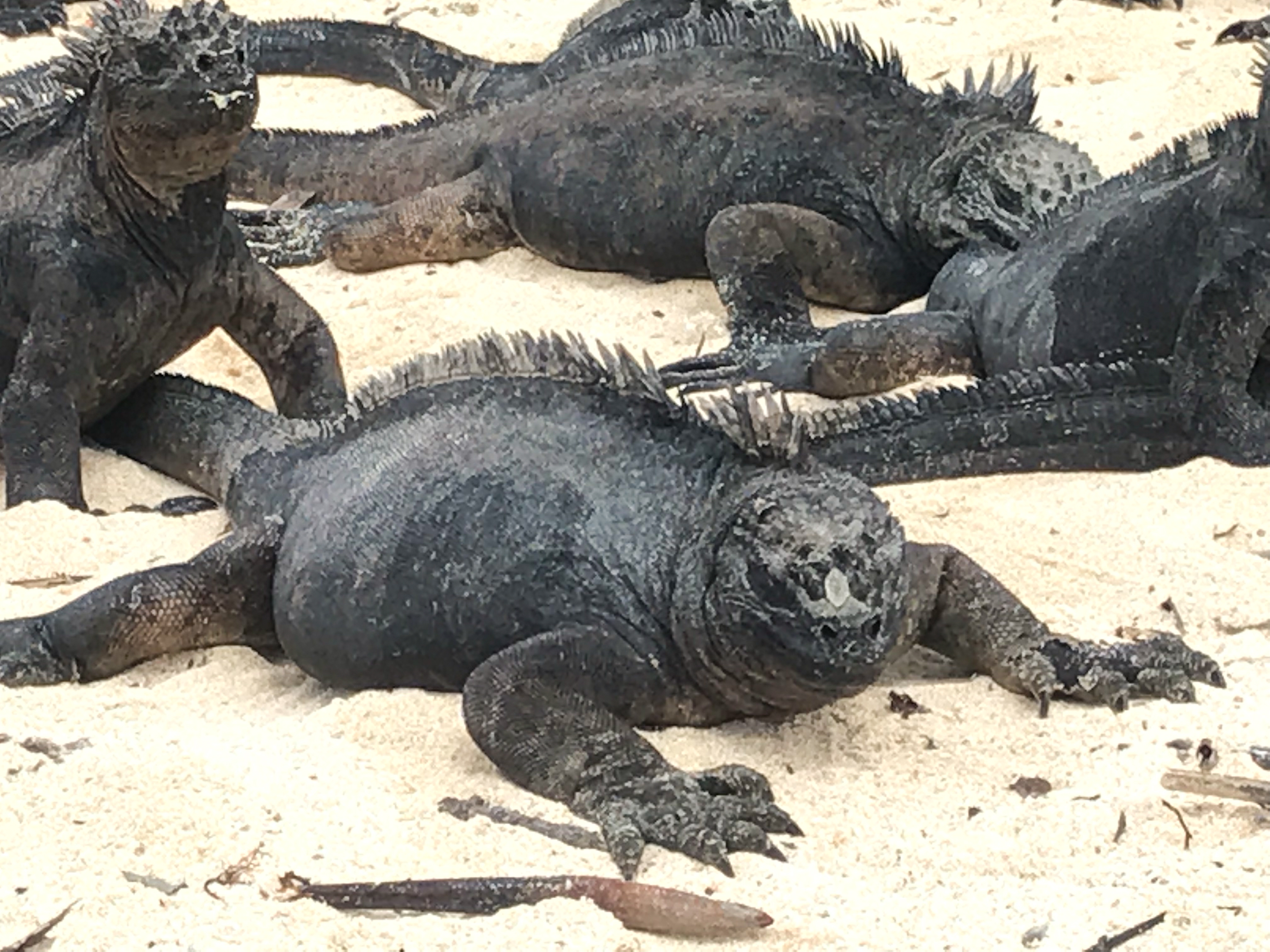
Face only a mother could love 🙂
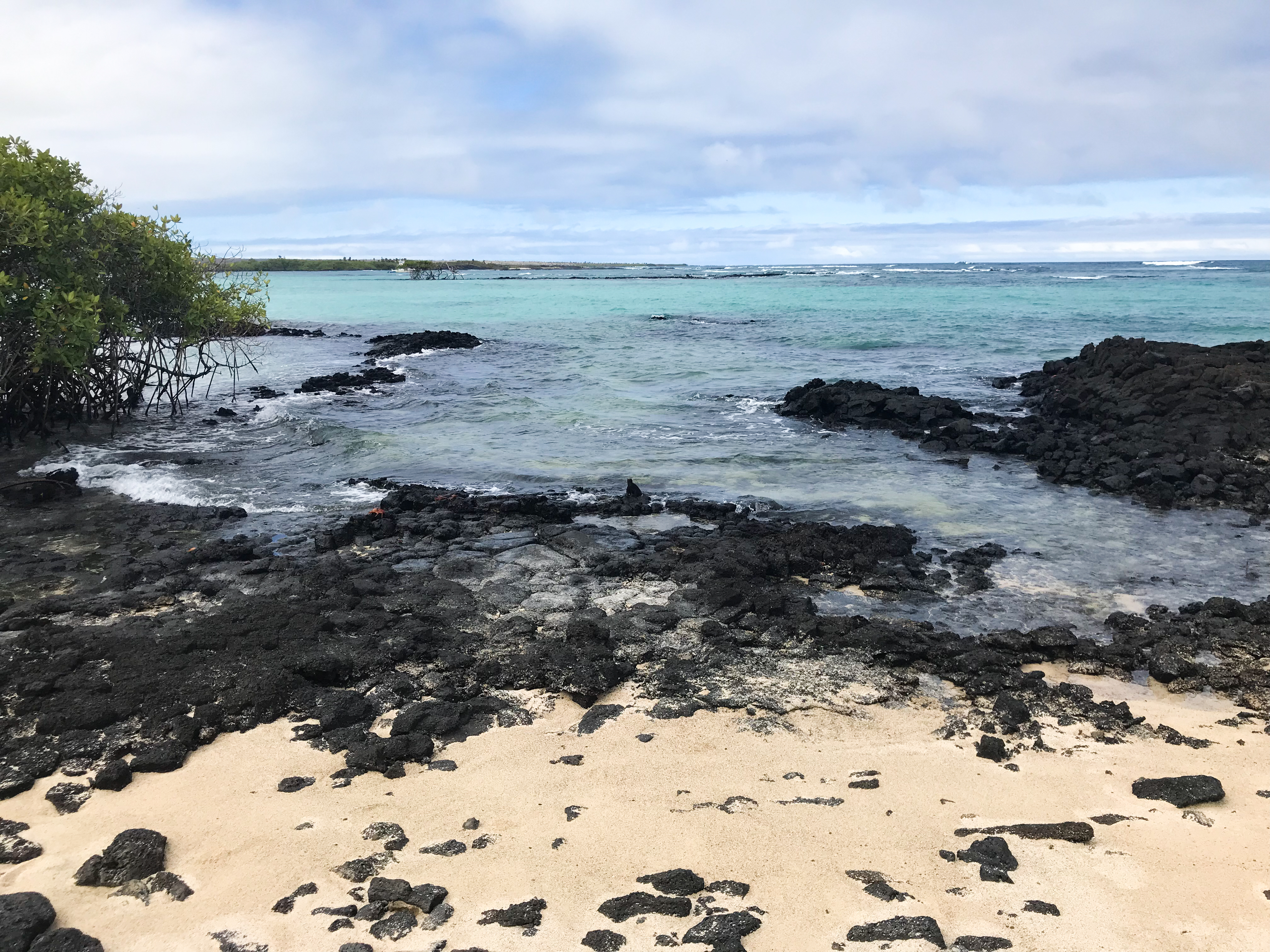
Another bay view
Once we got back, we called our tour agency to reschedule our tours for the next 2 days as they had us booked on boat/snorkeling for 2 more days. They said they couldn’t do that for us. We explained that they did not book us for what we requested and that it was still business hours in the US (and in the Galapagos). They called back a few minutes later and said it was impossible to book tours at the last minute. Amazingly, we managed to go into town and book ourselves tours for the next 2 days that matched what we wanted to do in the first place. Add this to yesterday and we’re really unhappy with them right now. That said, we would rather pay extra and actually see what we want to see than be stuck on a boat and not see animals in the Galapagos, of all places!
 Will Suture for Travel
Leave a comment