Today we flew from Cape Town to the Hoedspruit Airport, which is at the edge of Kruger National Park. We are staying at a private game reserve that is adjacent to and open to Kruger, meaning it has an unfenced border with the national park. By staying in the private reserve we have nicer accommodations and service, along with private guides.
We arrived at the reserve at 2 pm and had our first safari at 3:30, so basically had time to get checked in check out our “tent.” By tent, I mean glamping on steroids. Huge space, our own pool, claw tooth tub and a big shower, double vanity…seriously, we are not roughing it.
Anyways, we hit the ground running, as it were, sunscreened and bug sprayed. This area is grassy with dense underbrush, so it is not easy to see animals. It is winter here, so some of the trees have lost their leaves, but the challenge remains. Also, many of the larger animals are spread out. We still managed to see quite a bit this first afternoon/evening.
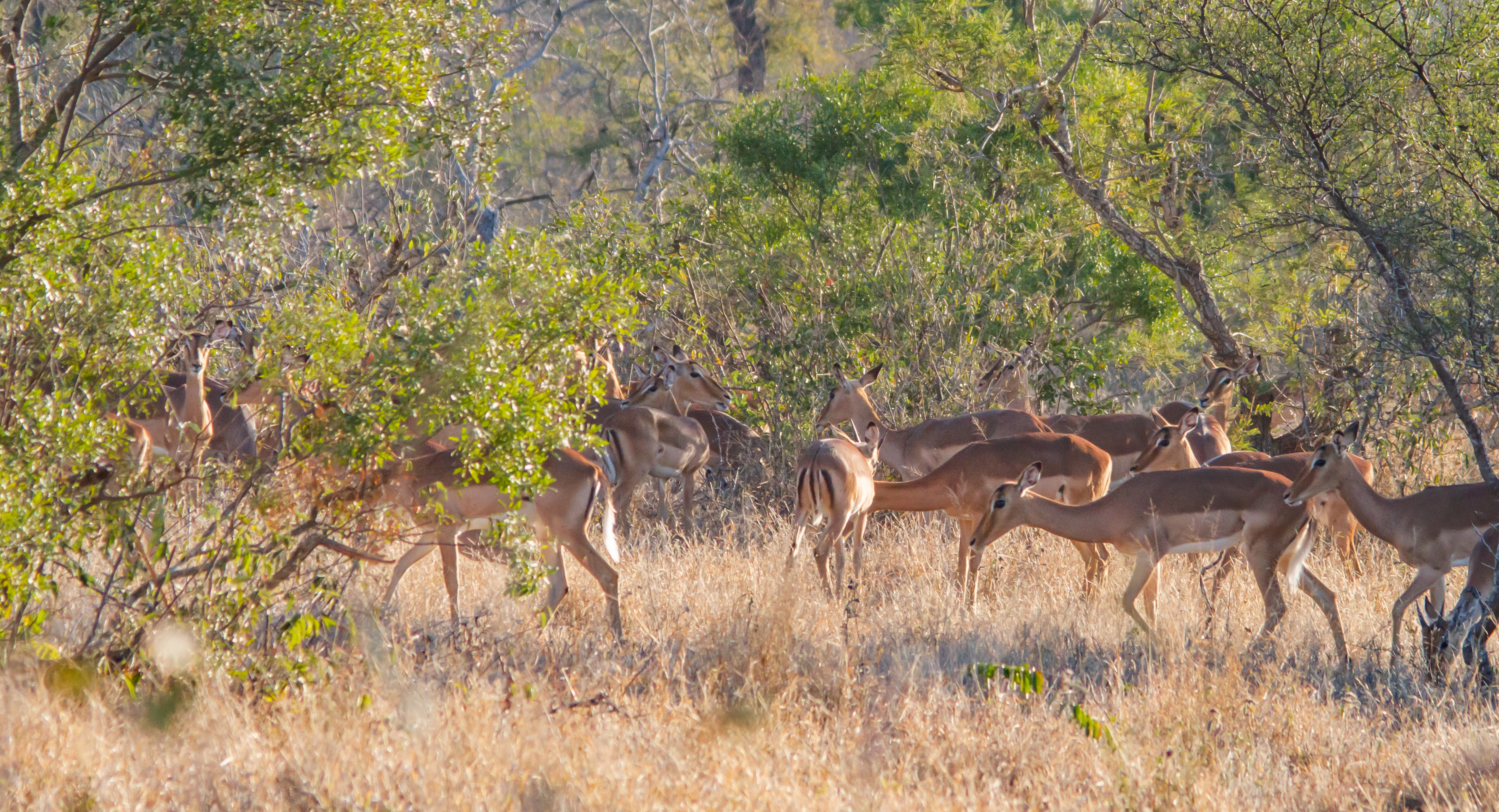
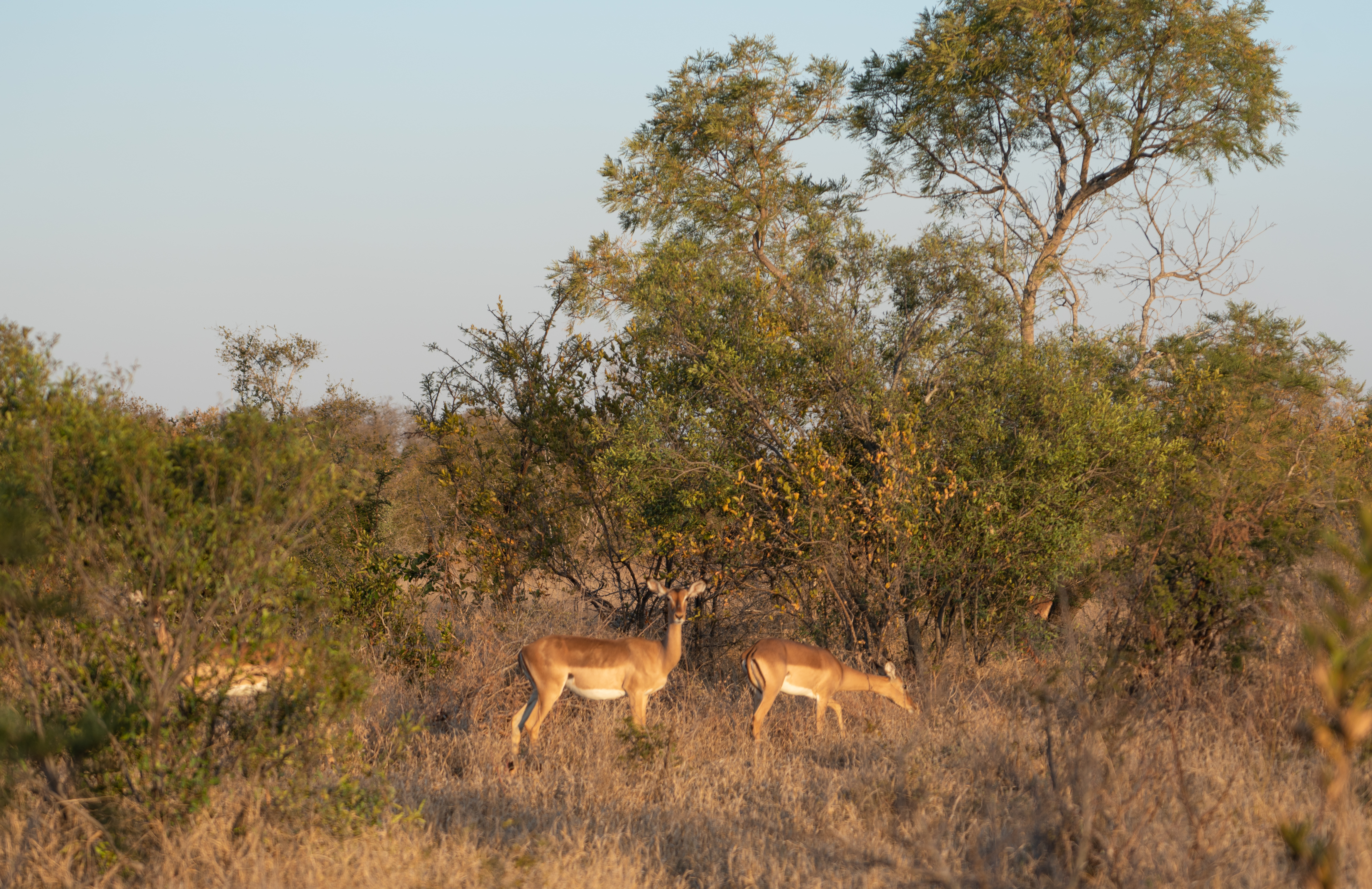
There are impala everywhere. They are like antelope and stay in groups for safety. They form harem groups with a single male and large groups of females, so you also find groups of males that have no harems.
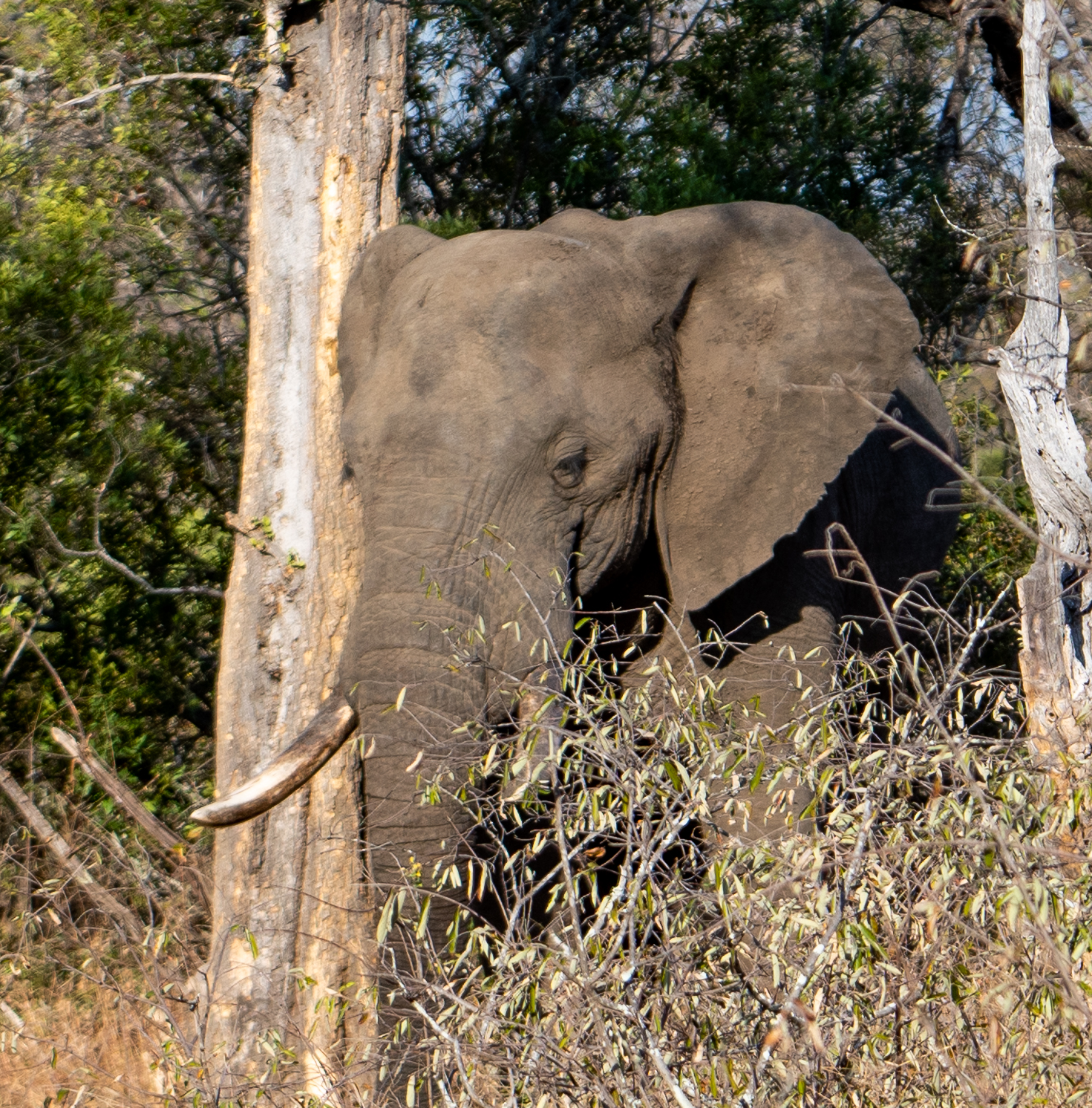
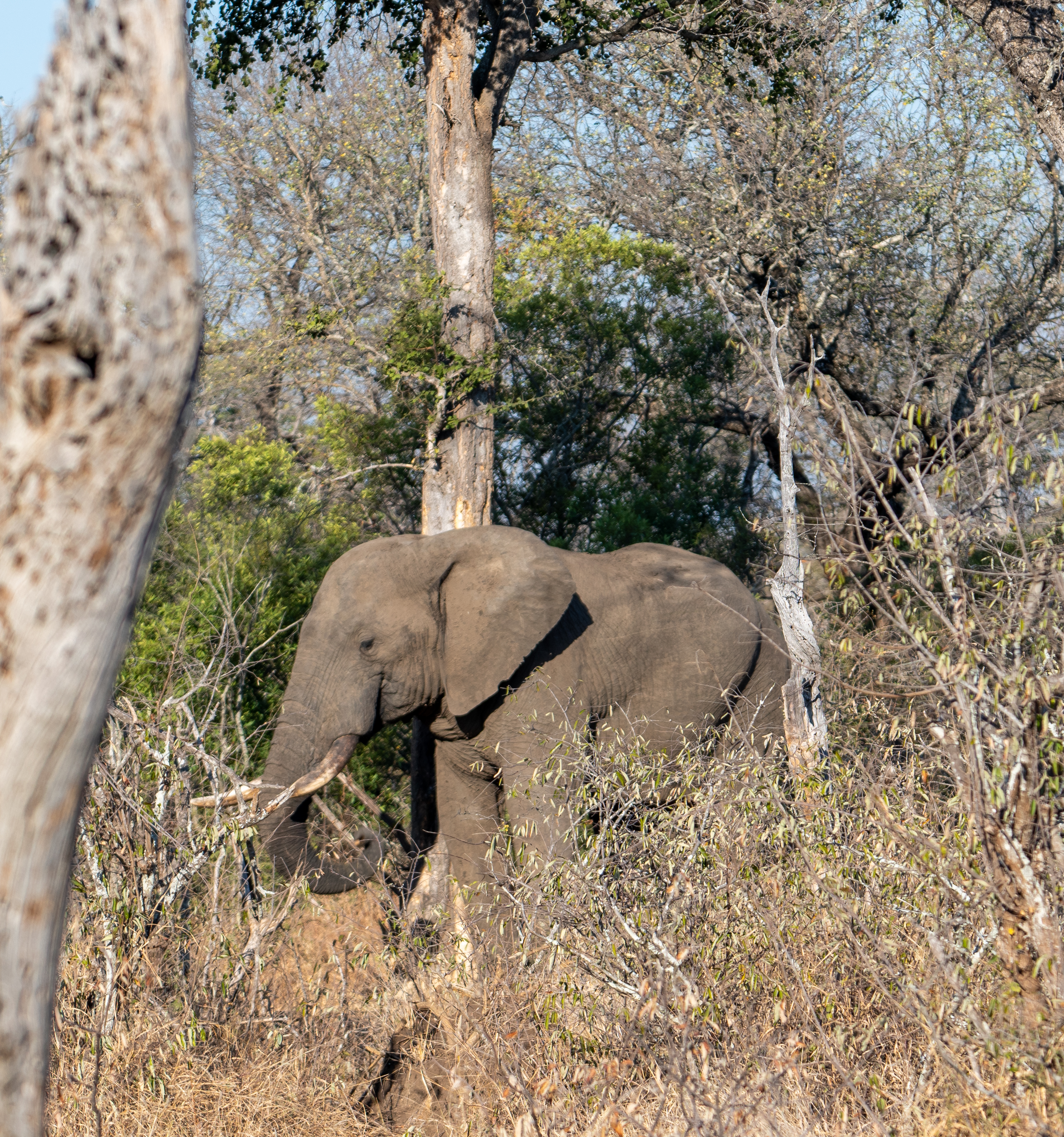
We came across a bull African bush elephant. He was busy snacking around a tree. These are the largest land mammals and they are quite impressive.
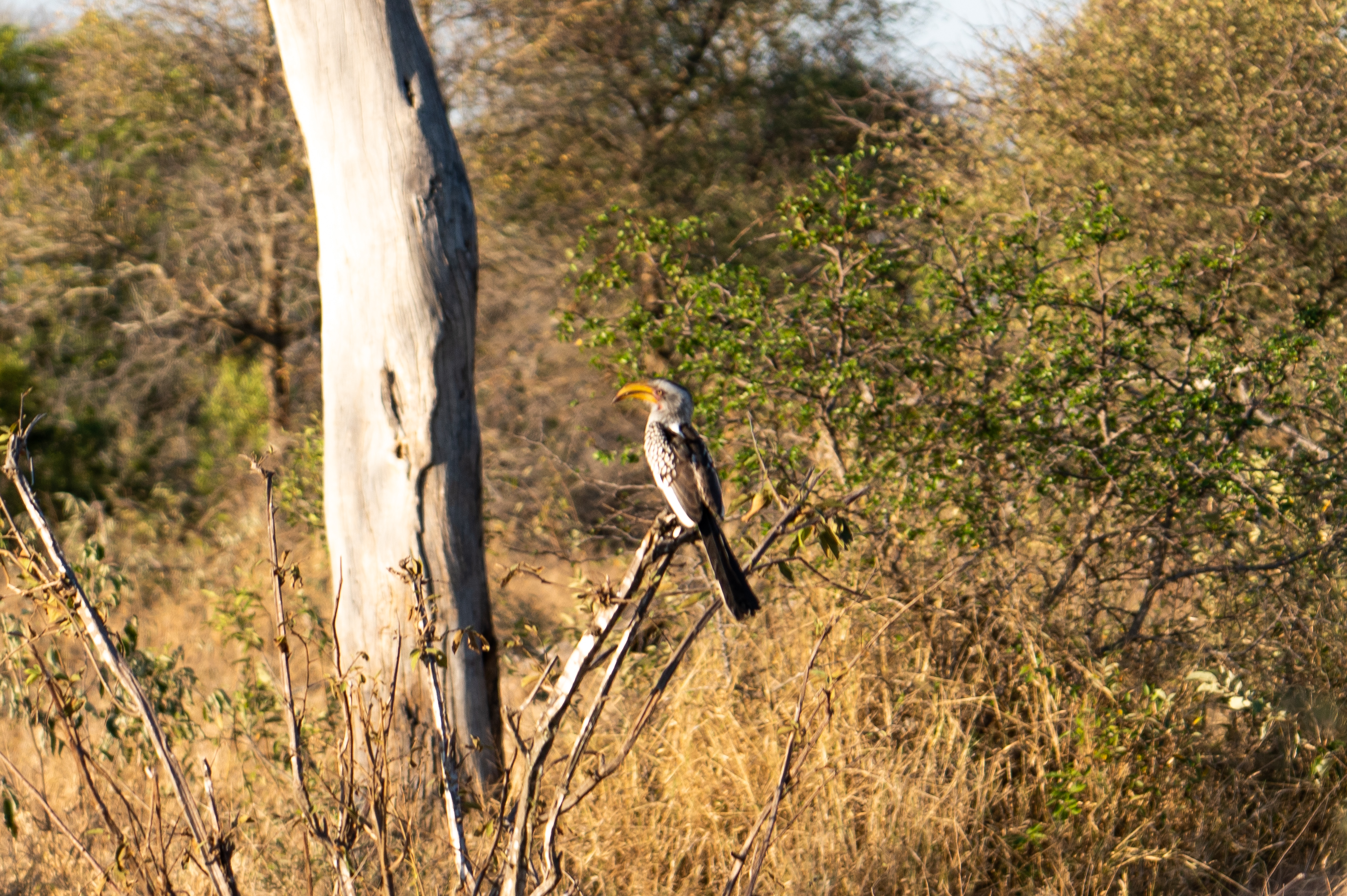
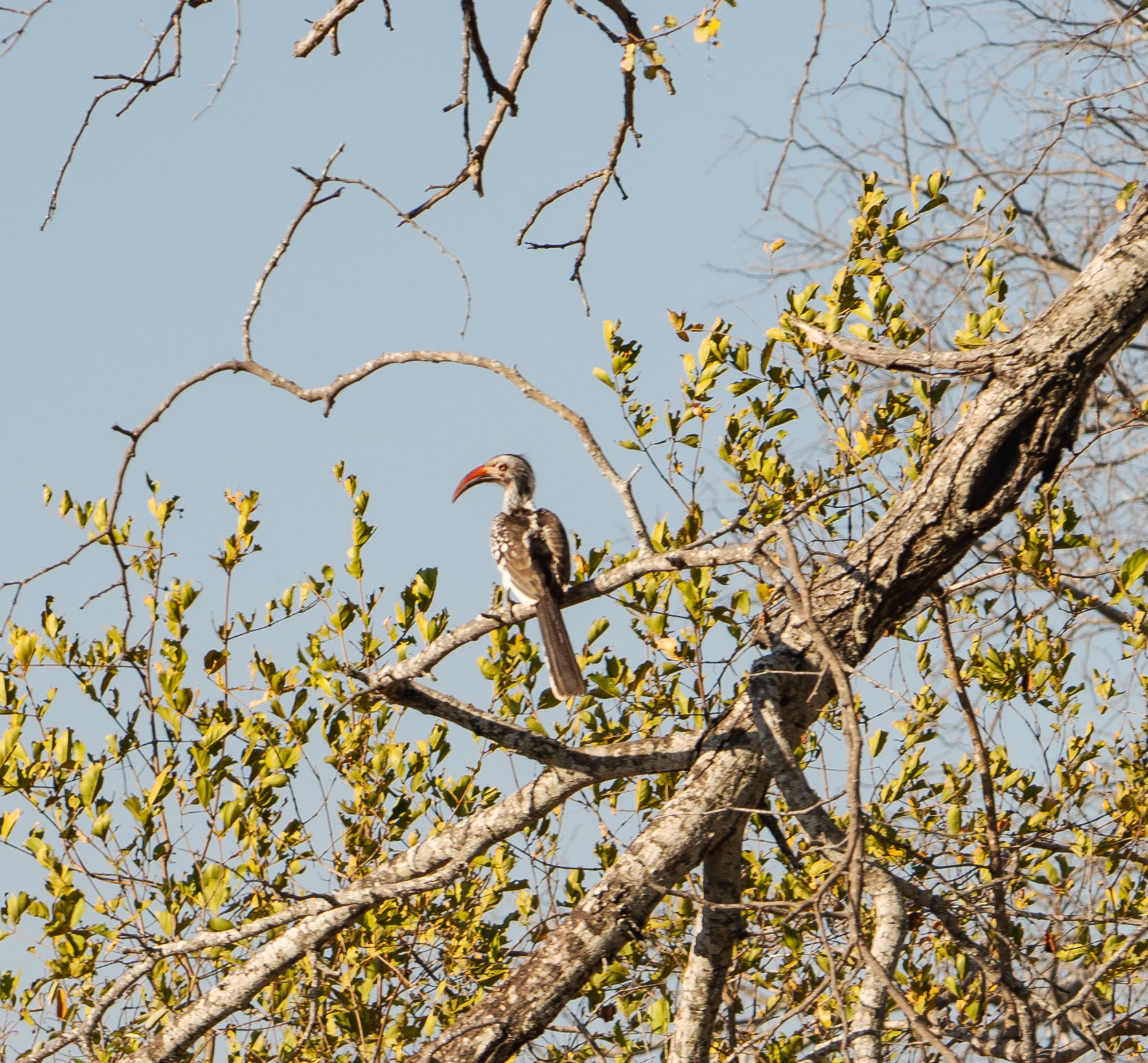
We saw both a southern yellow-billed hornbill and a southern red-billed hornbill. The yellow-billed hornbills are all over the place and a pretty cute. They feed on the ground, so they are often hopping around.
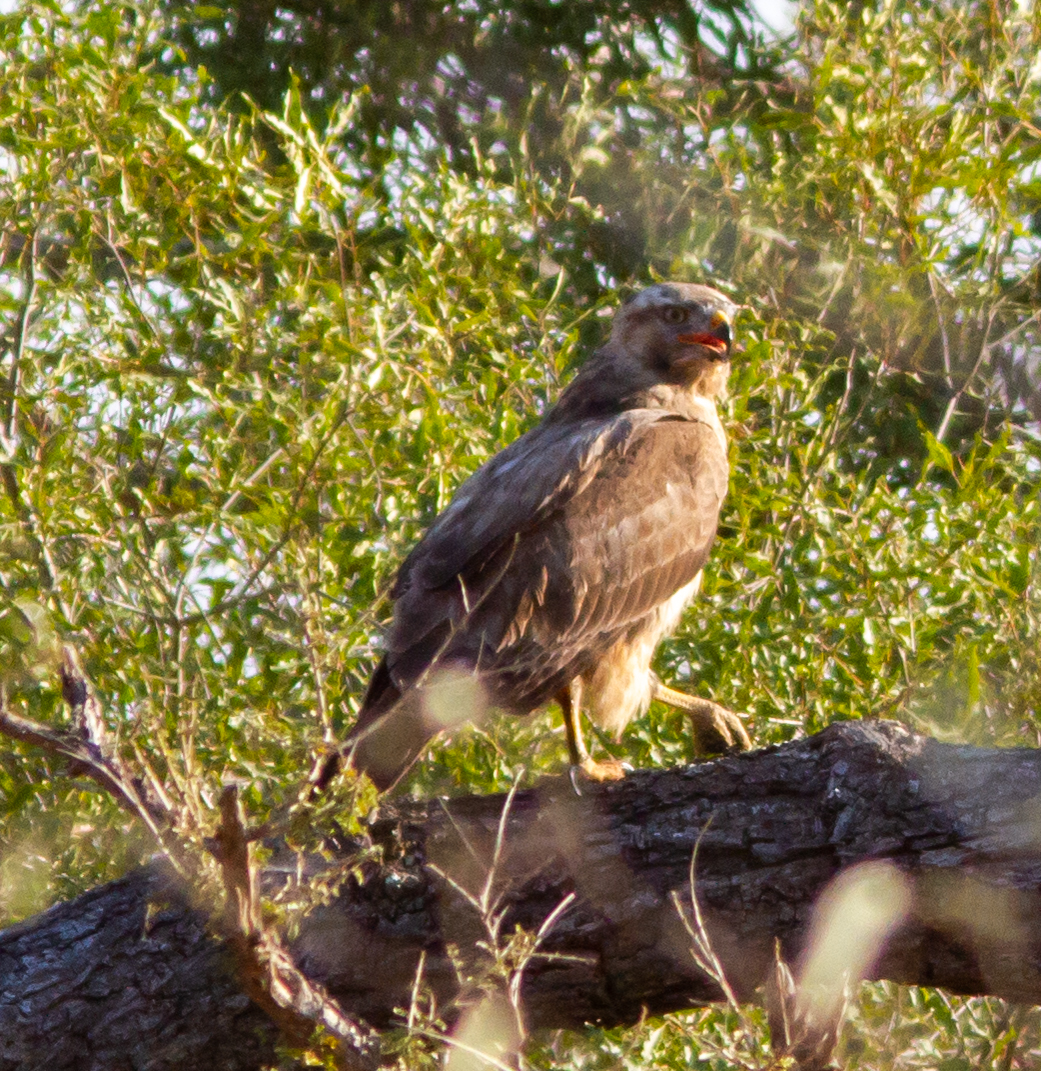
A tawny eagle landed close enough for pictures with the telephoto. These have a breeding range that goes all the way up to India.
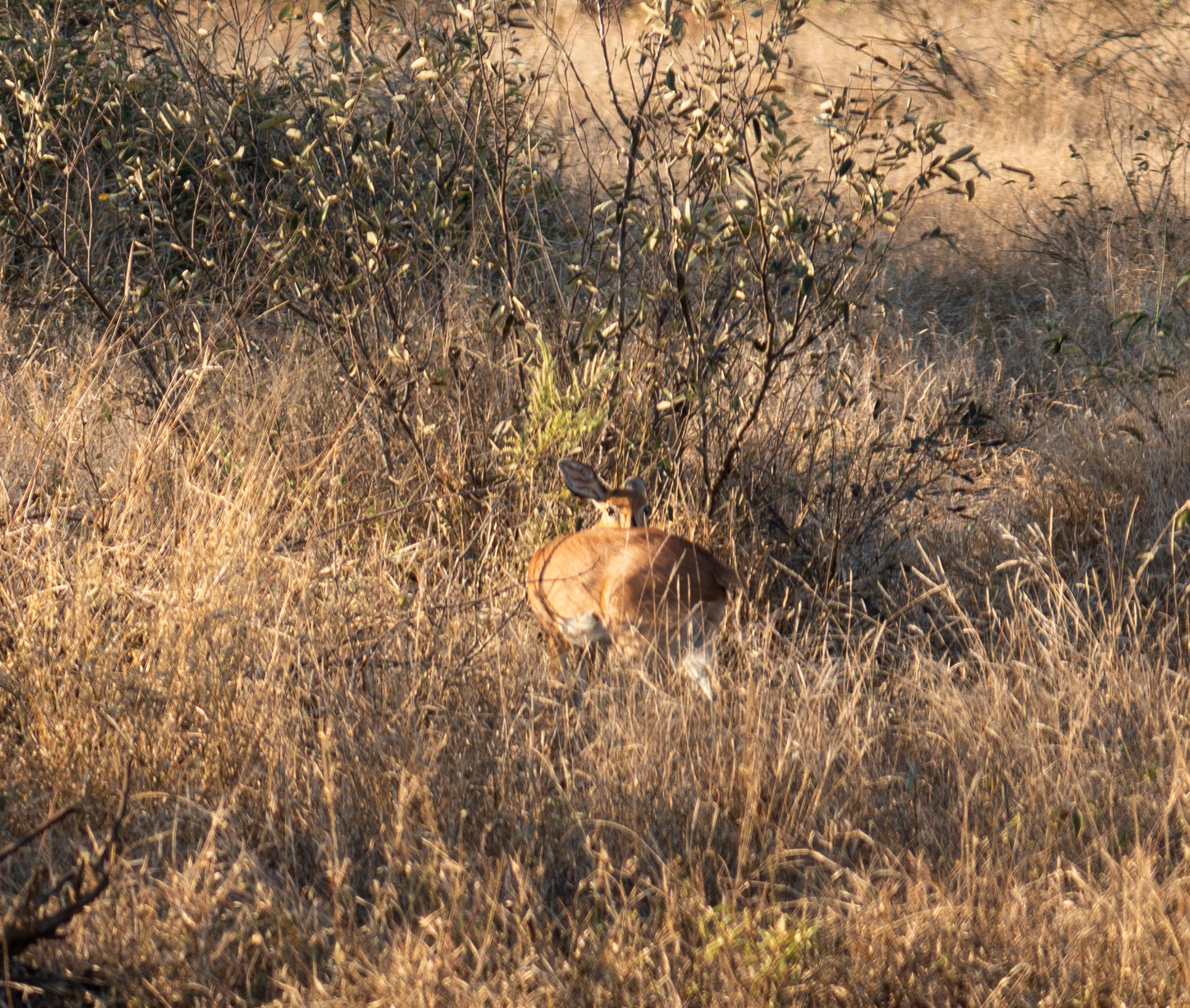
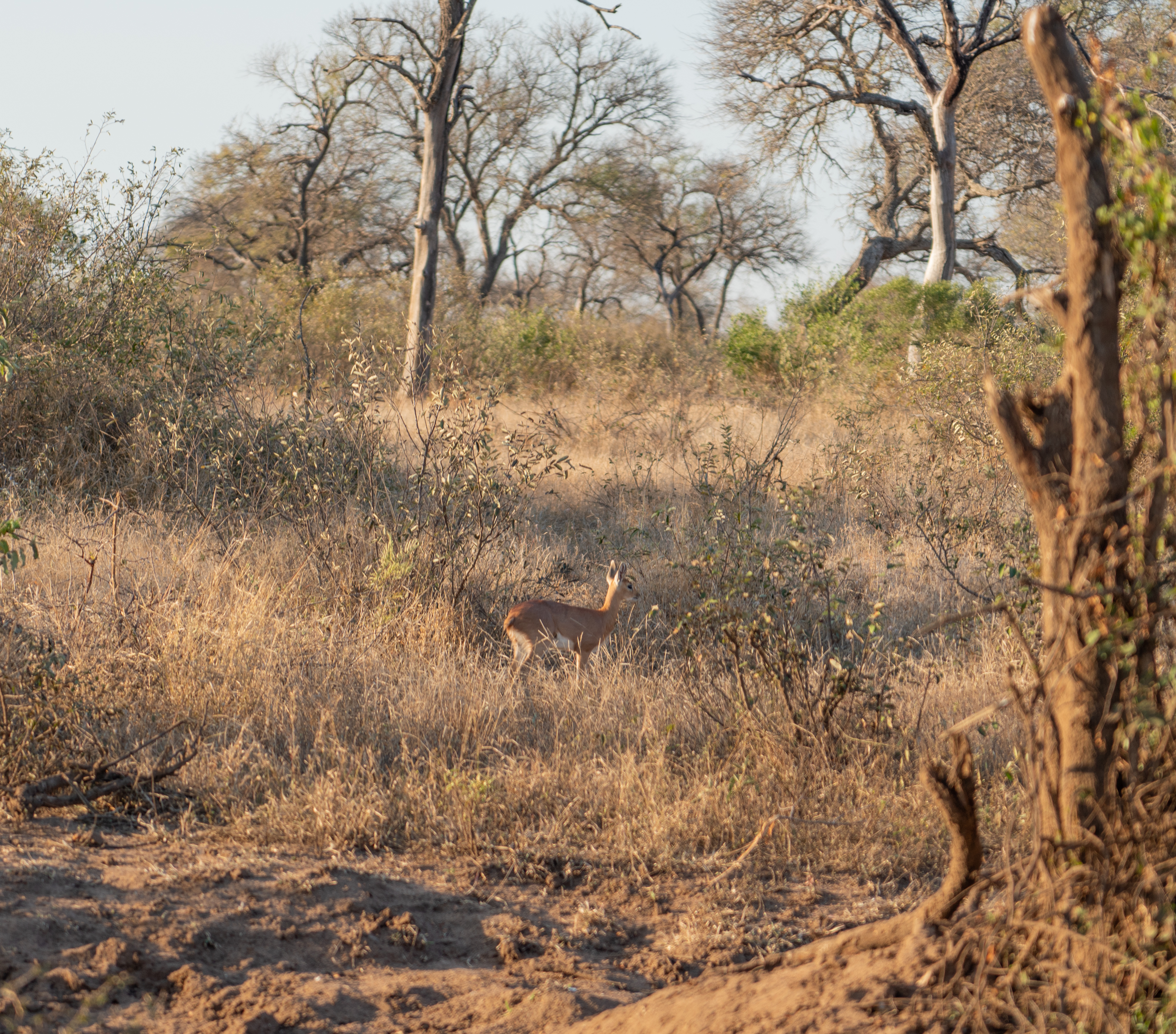
A steenbok attempted to hide from us in the grasses. These are 16-24 inch tall deer-like animals. If hiding in the grasses does not work, they run in a zig-zag pattern to avoid predators.
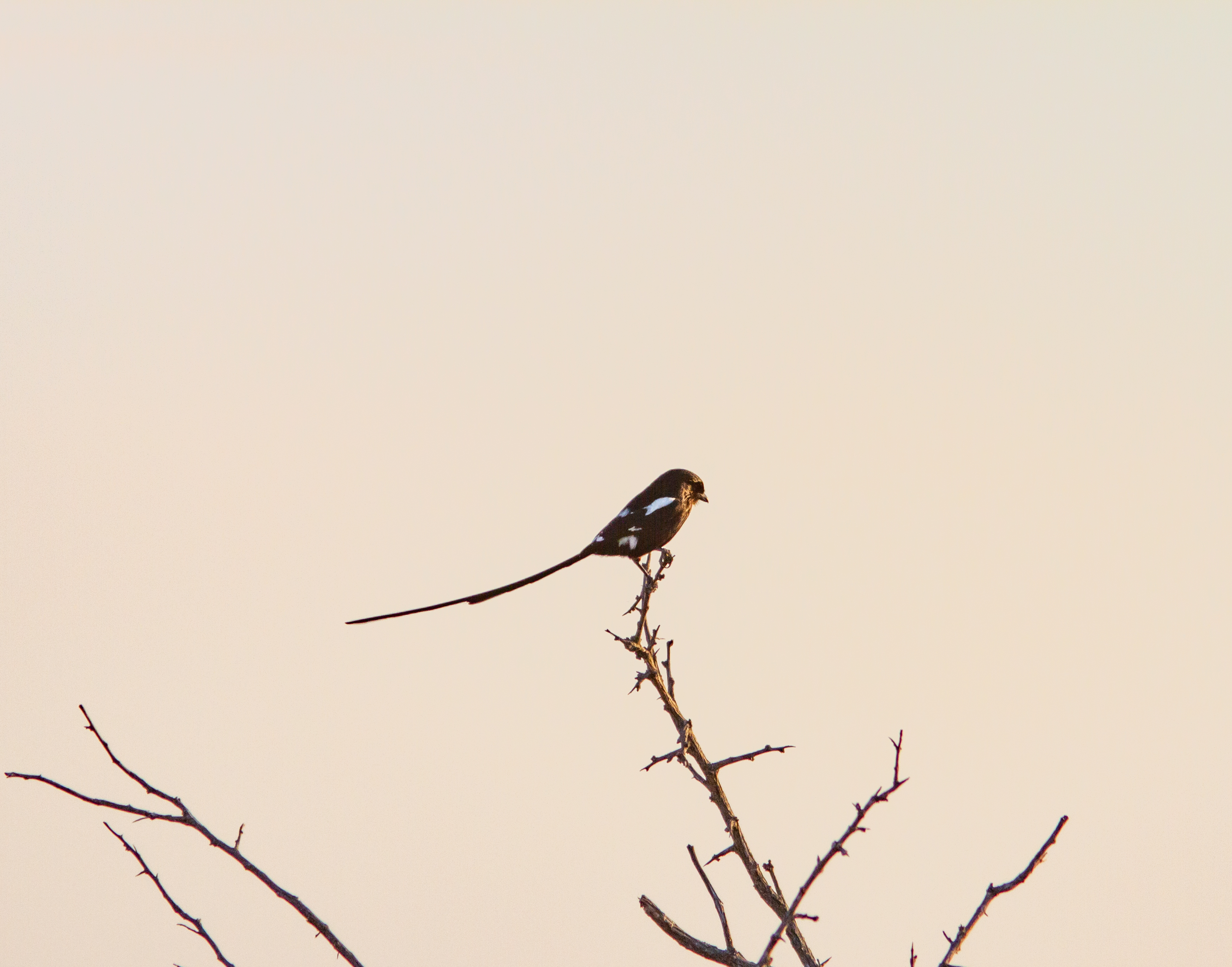
A magpie shrike was kind enough to pose long enough for me to take a picture. These perch up high to search for food.
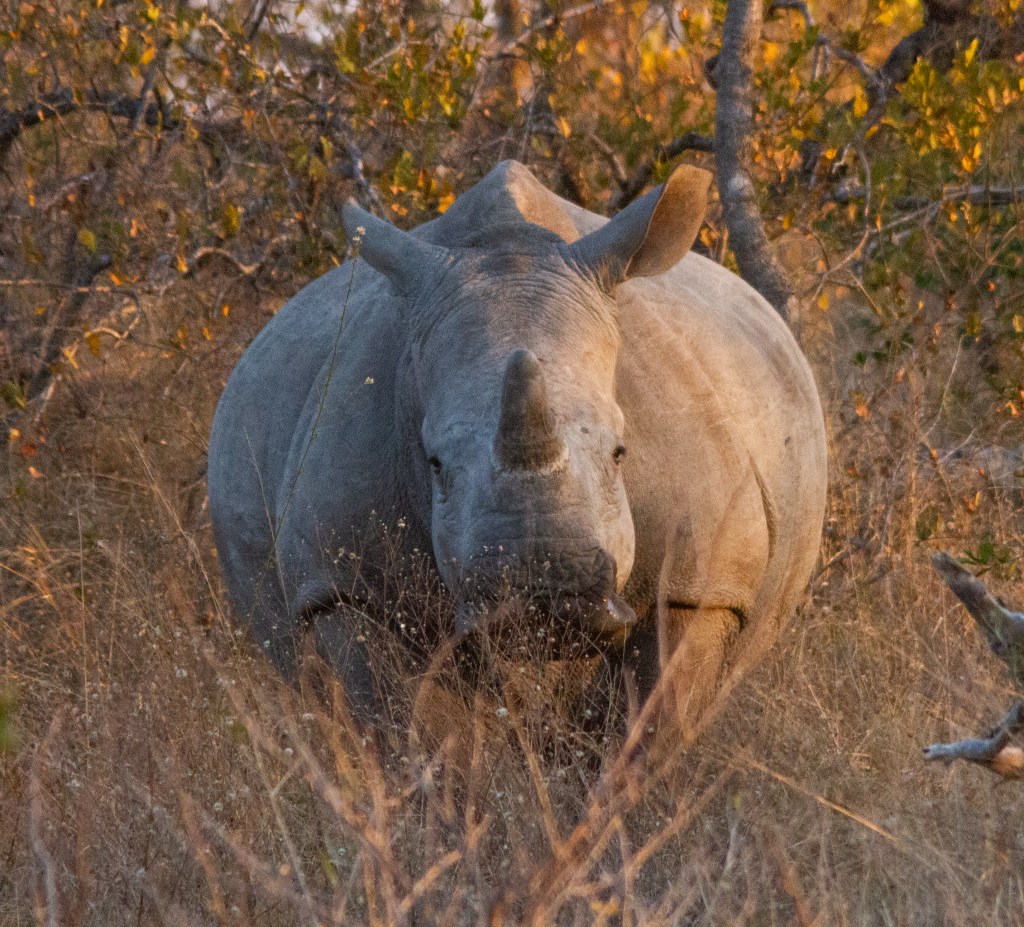
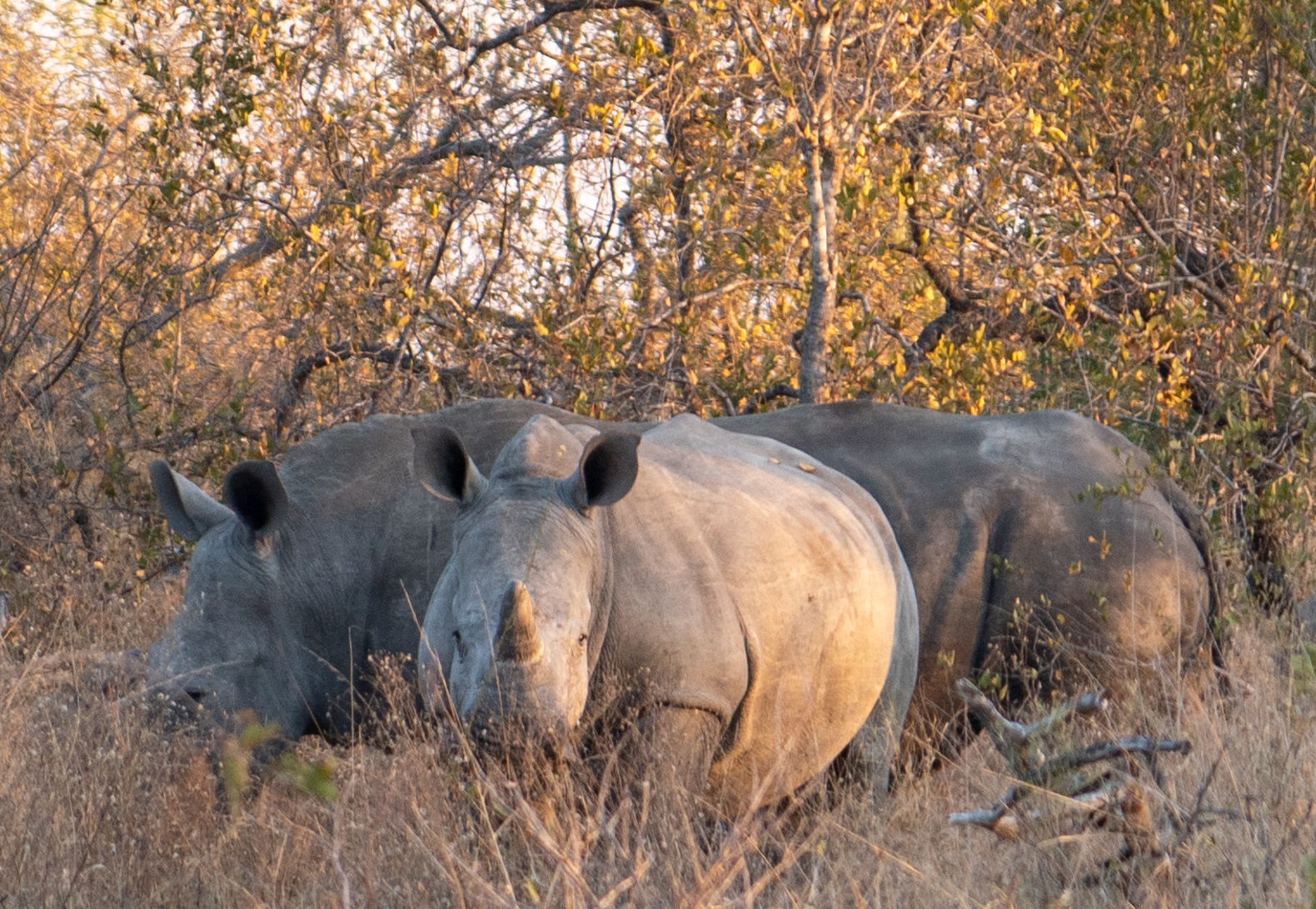
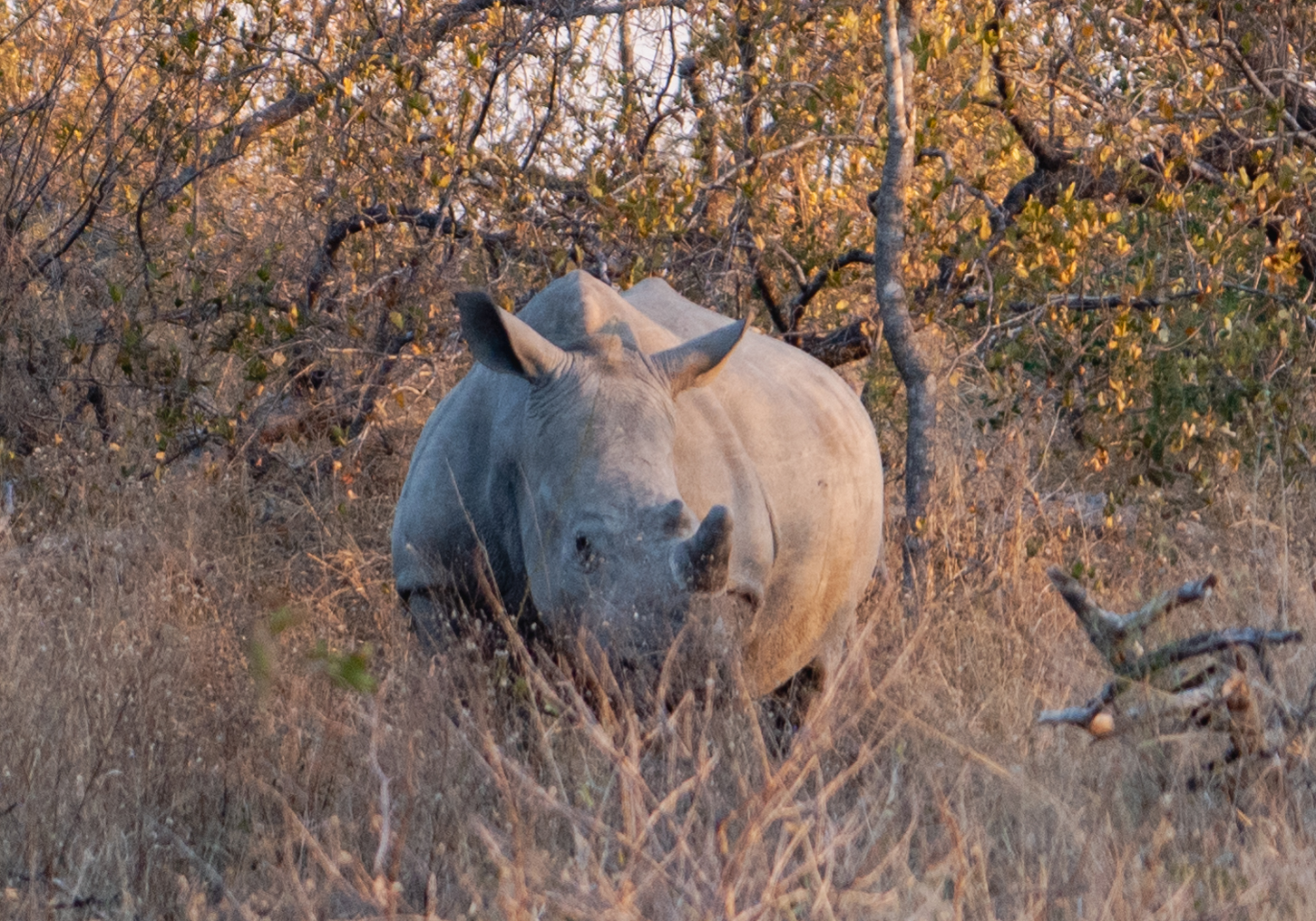
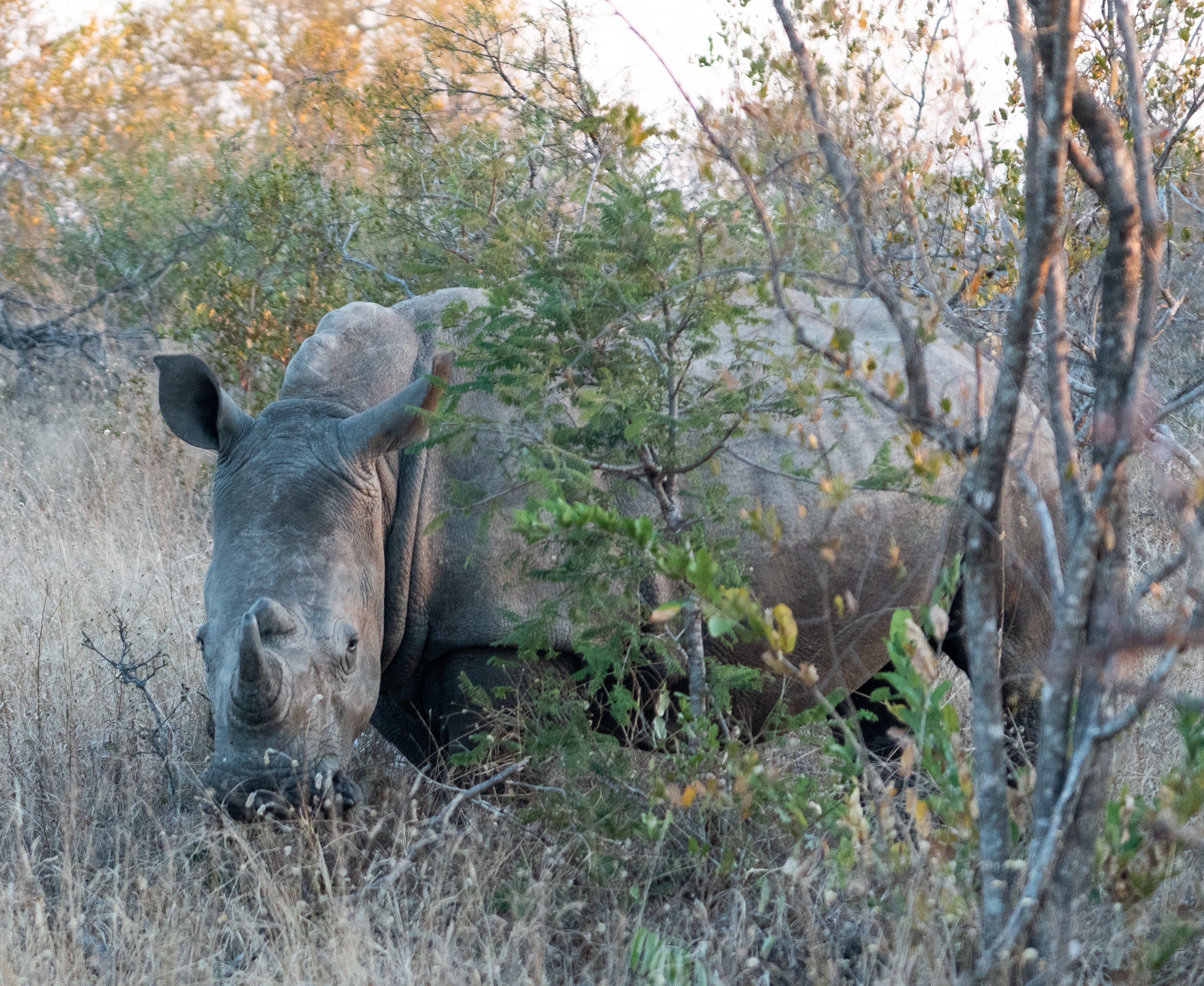
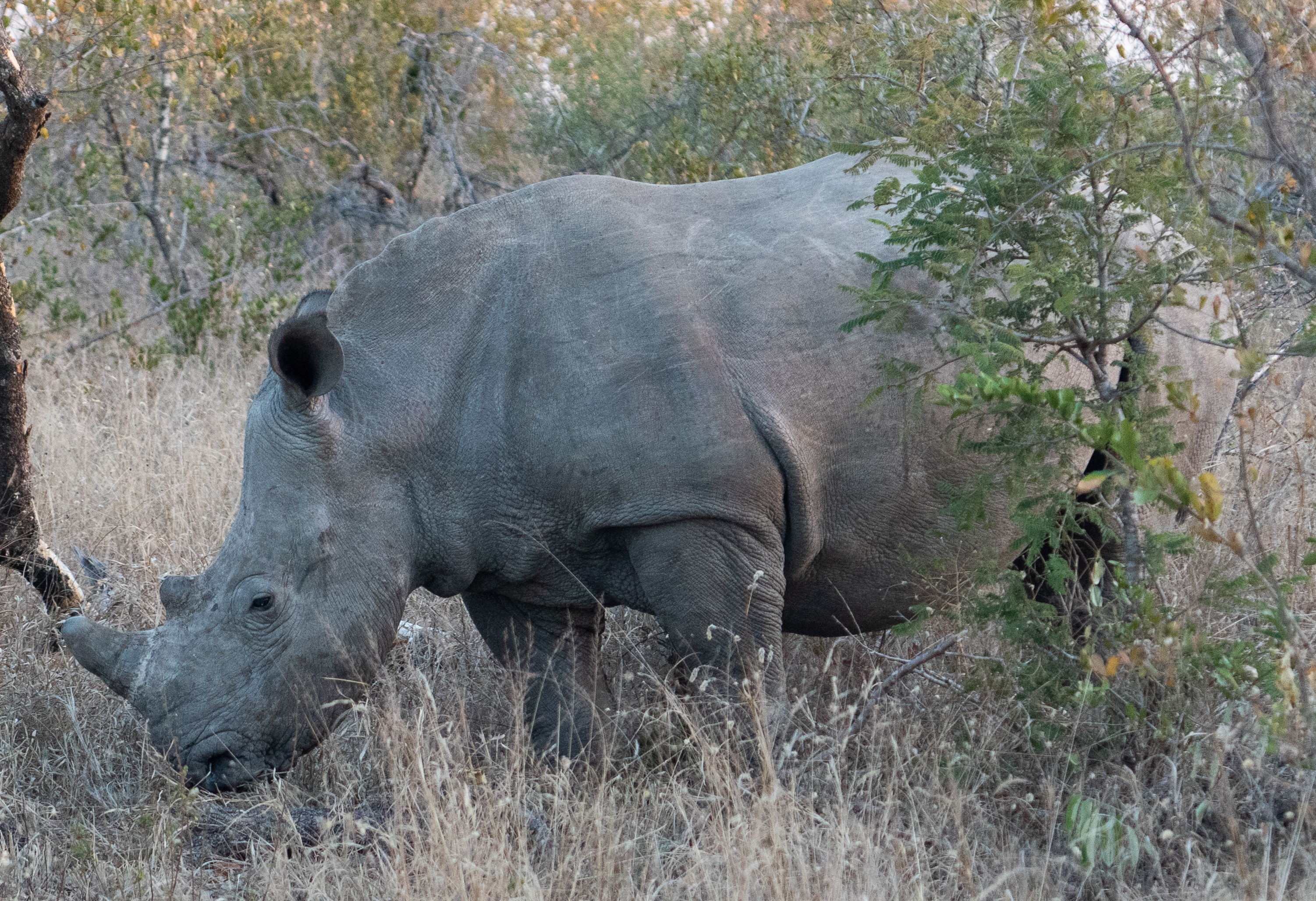
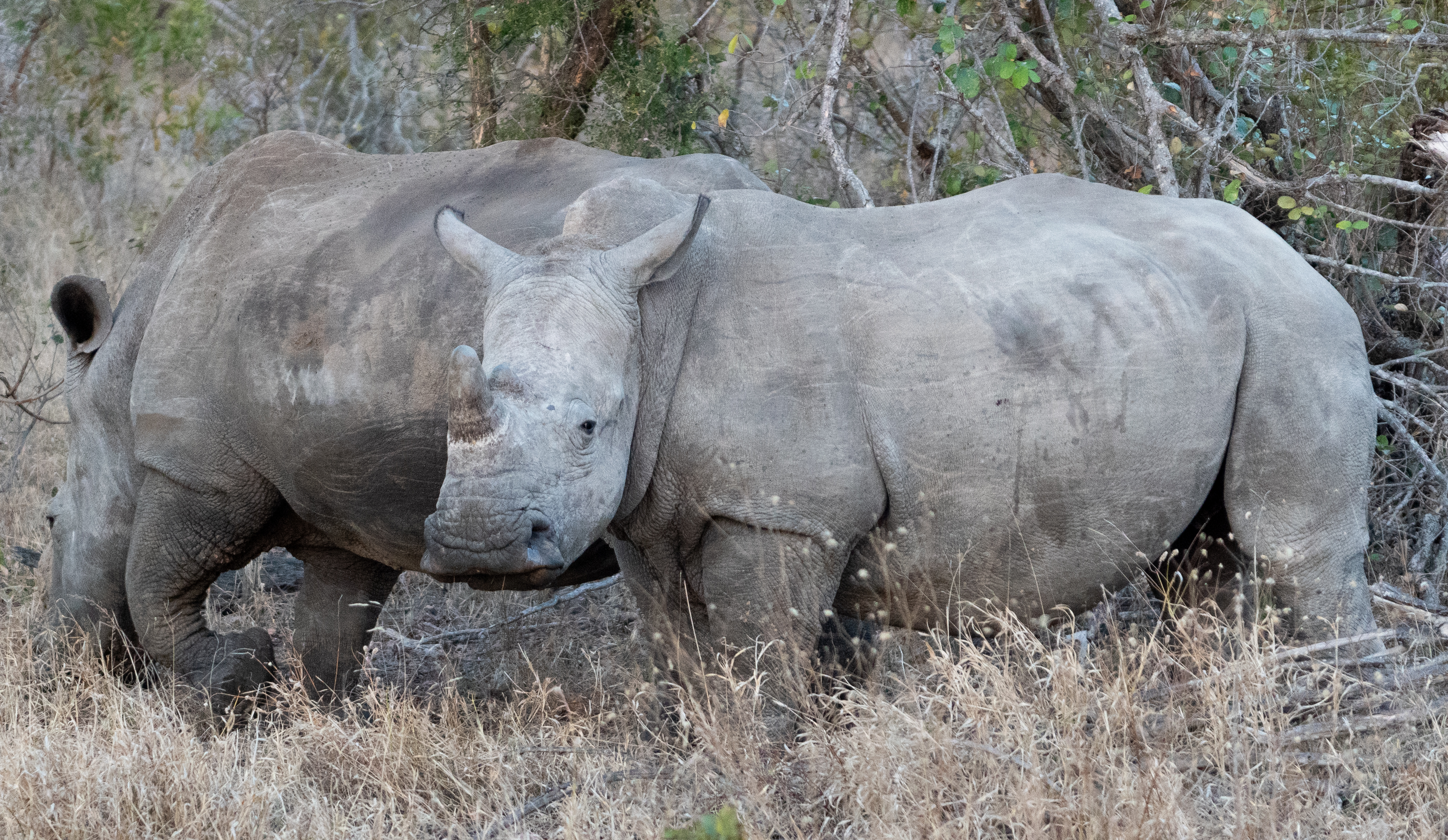
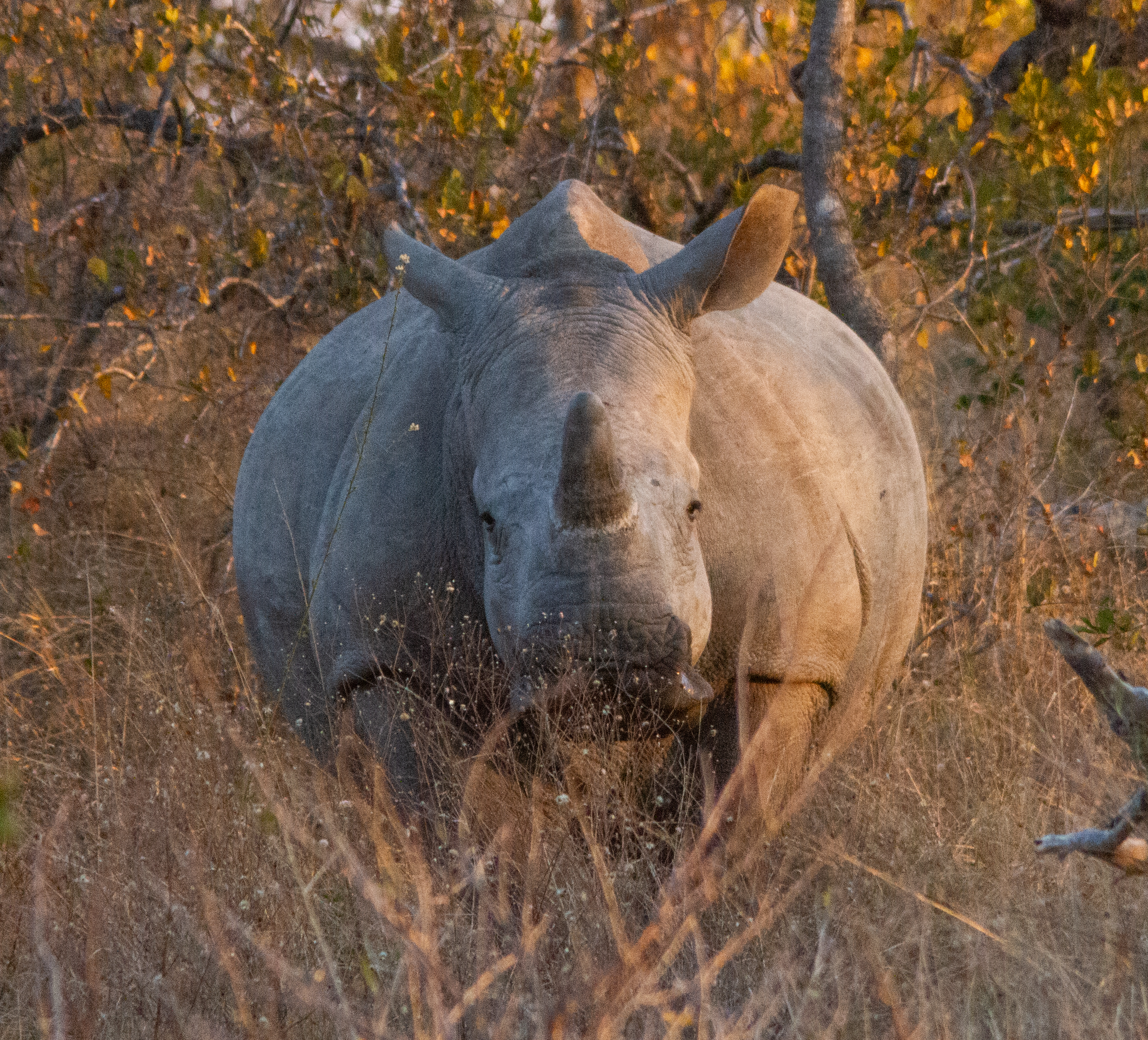
Our huge find of the day was a group of southern white rhinoceros. Groups of rhinos are called crashes. White rhinos were endangered, but have largely recovered. They are continually threatened by poachers. The rhinos at this reserve are de-horned to discourage poachers, since that is usually what they are killed for. A couple in this group we saw had not been de-horned yet.
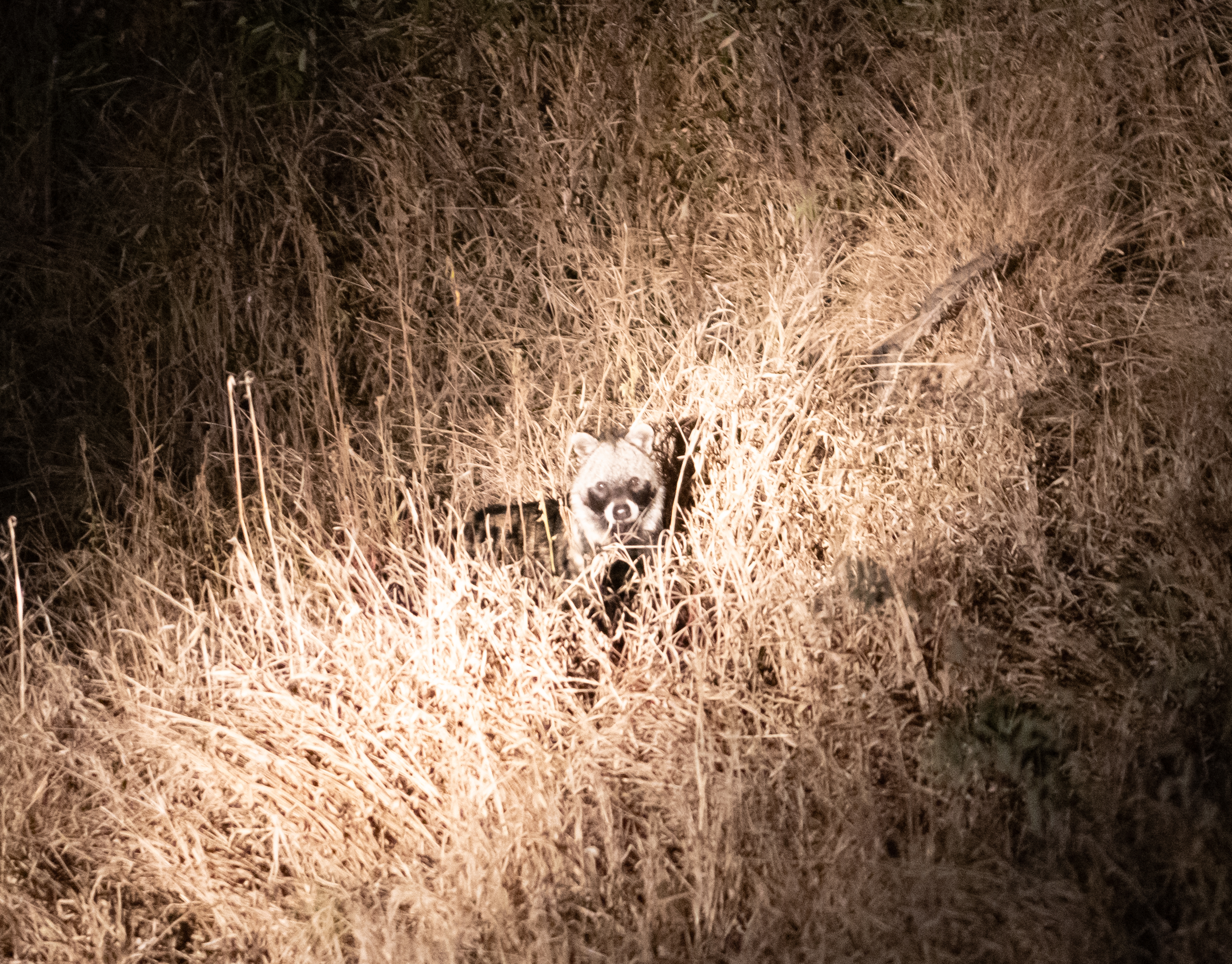
In the dark we found an African civet. This is a small mammal with a masked face, like a raccoon. It is nocturnal and carnivorous.
We saw multiple other things that I did not get good (or any) pictures of, such as a vervet monkey, zebra, crested barbet, and a crested francolin.
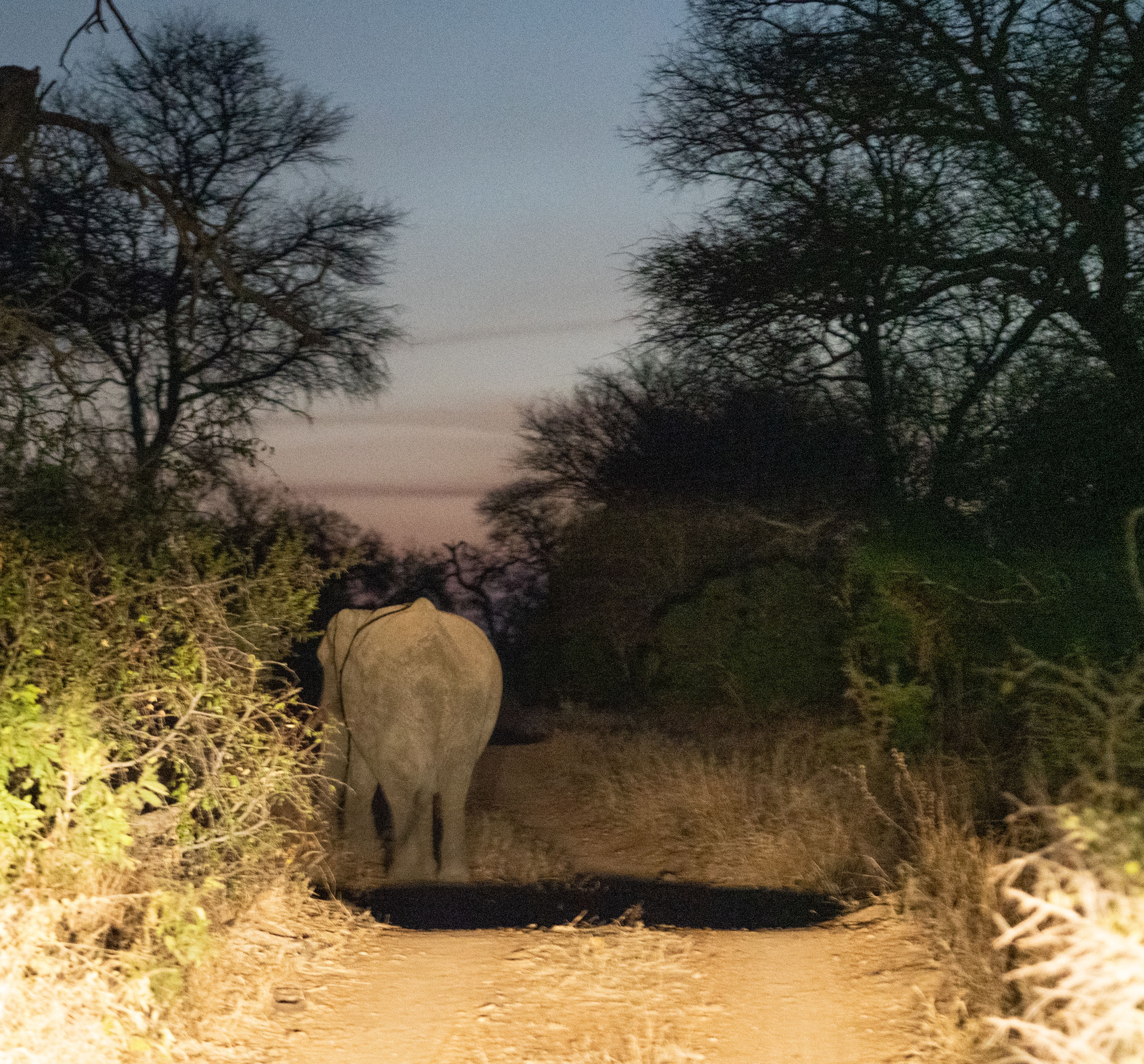
We ended the day with an elephant road block on the way back to the lodge for dinner.
 Will Suture for Travel
Leave a comment