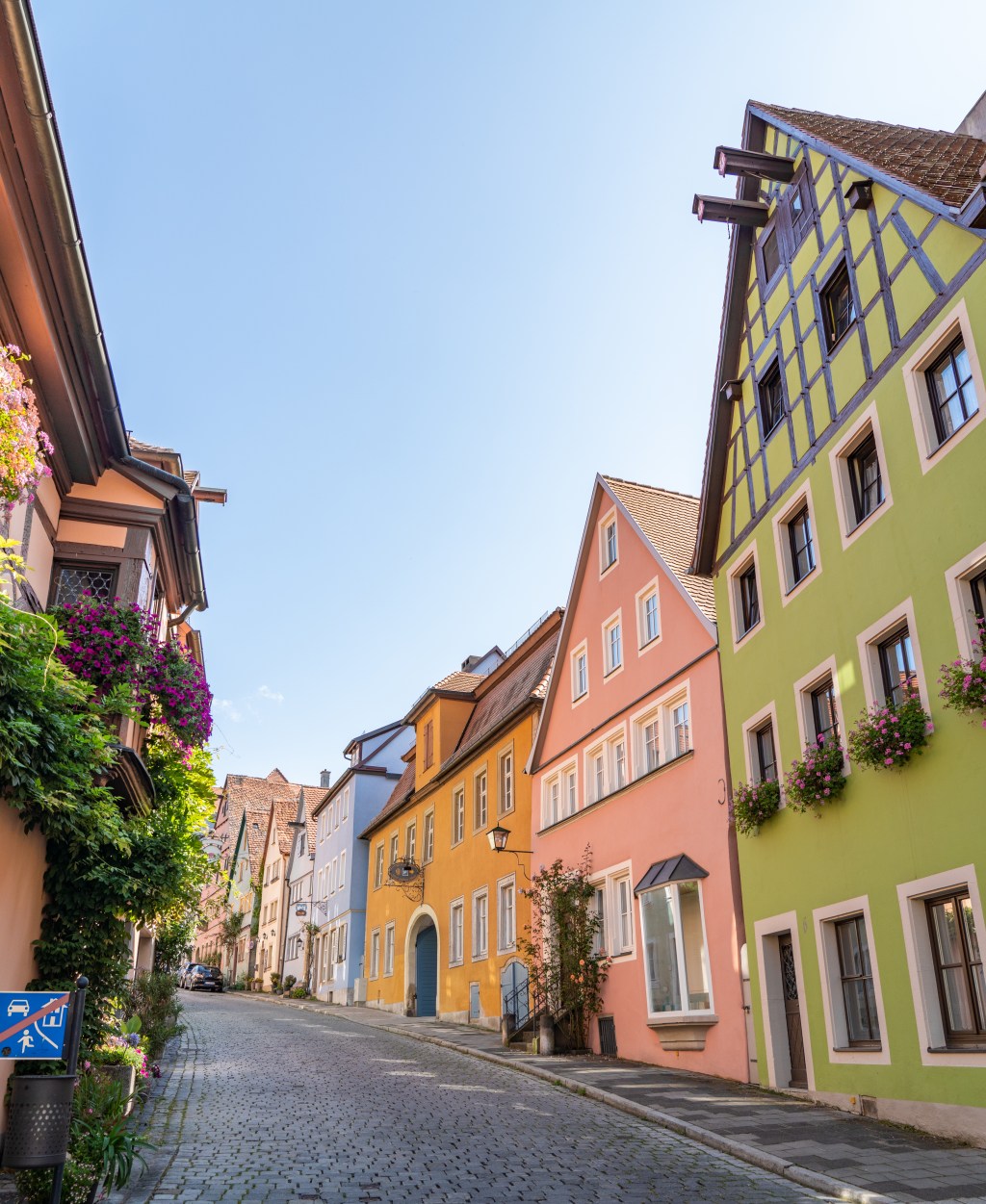
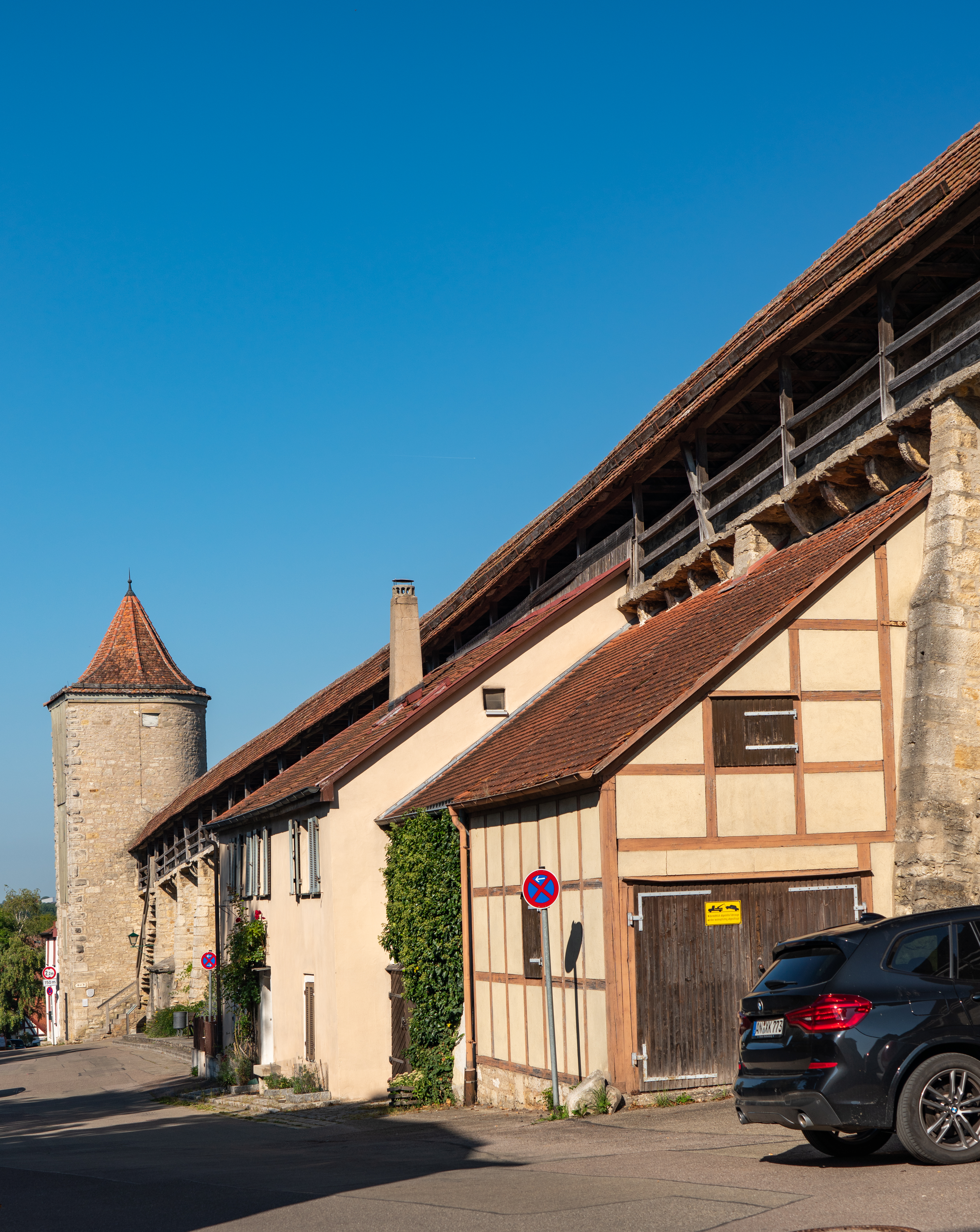
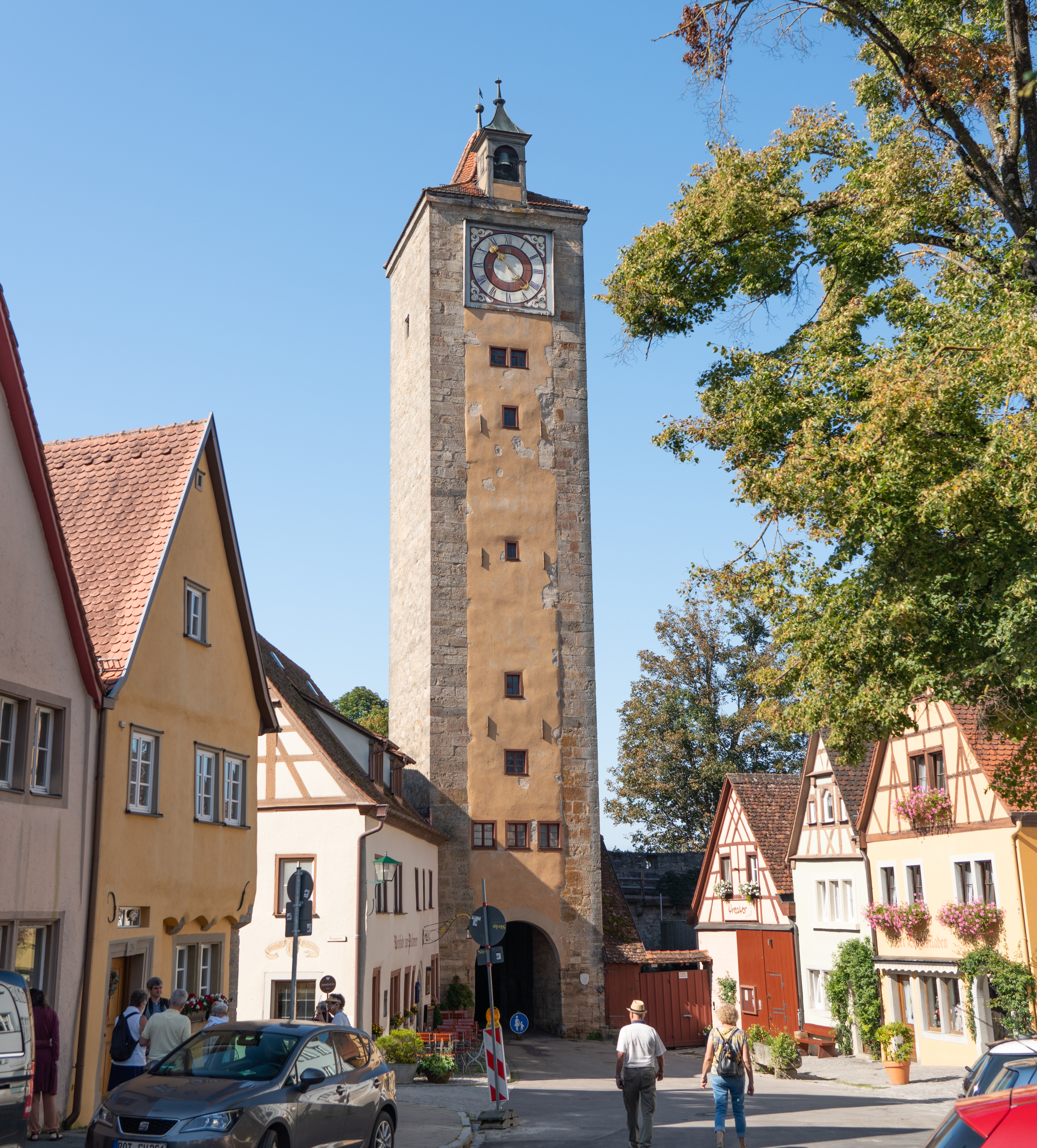
We spent today in Rothenburg. This is one of only 3 towns in Germany with completely intact medieval city walls. The area has been inhabited since the before 1st century BC, but the city was officially founded in 1170. and in 1274 it became an imperial city in the Holy Roman Empire. The city walls and towers were built in the 13th century.
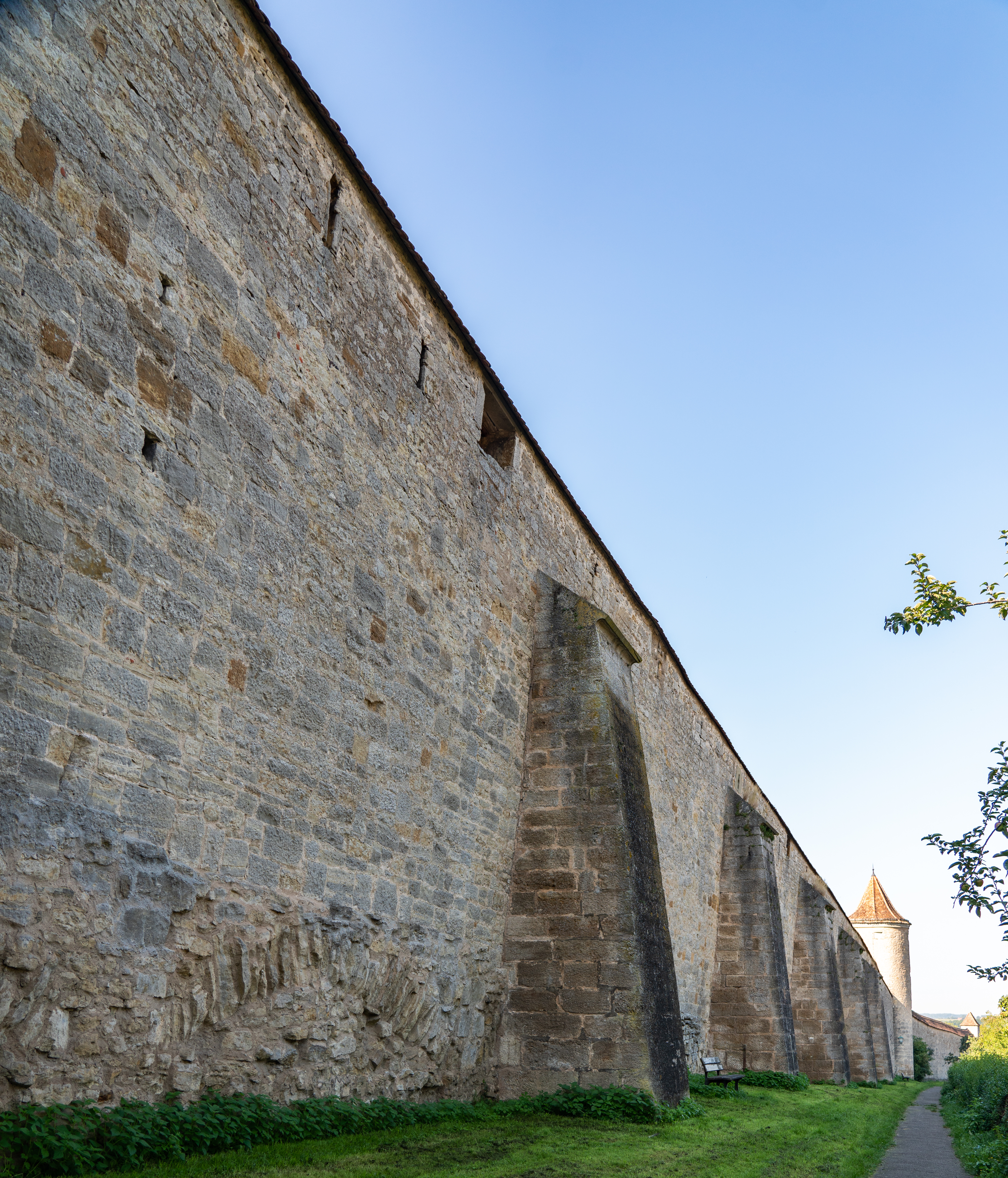
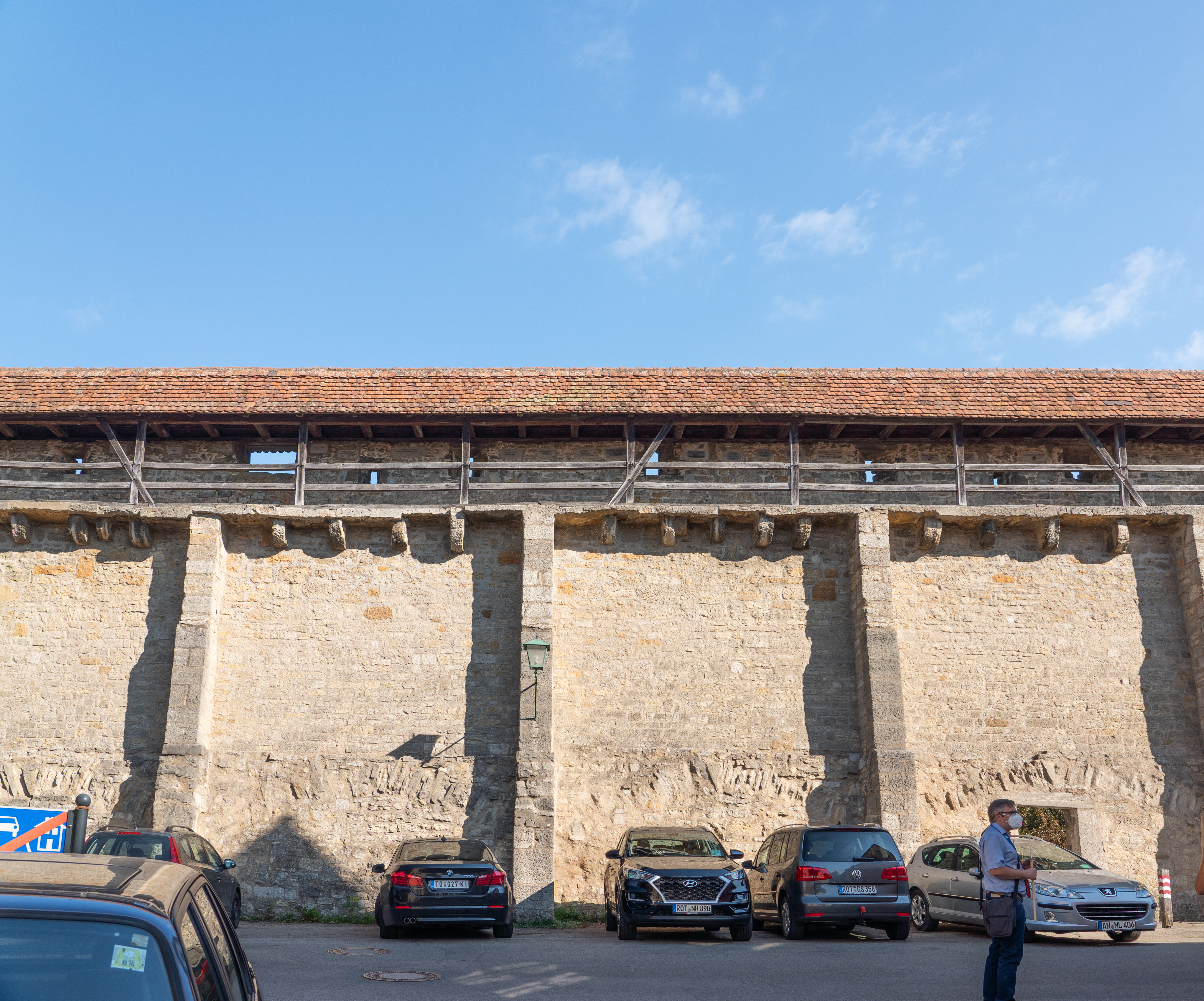
The city originally had a castle known as the Staufer Castle which was built in 1070. The this castle was destroyed by an earthquake in 1356 and the only remaining structure today is a chapel. No other castle was built here after that.
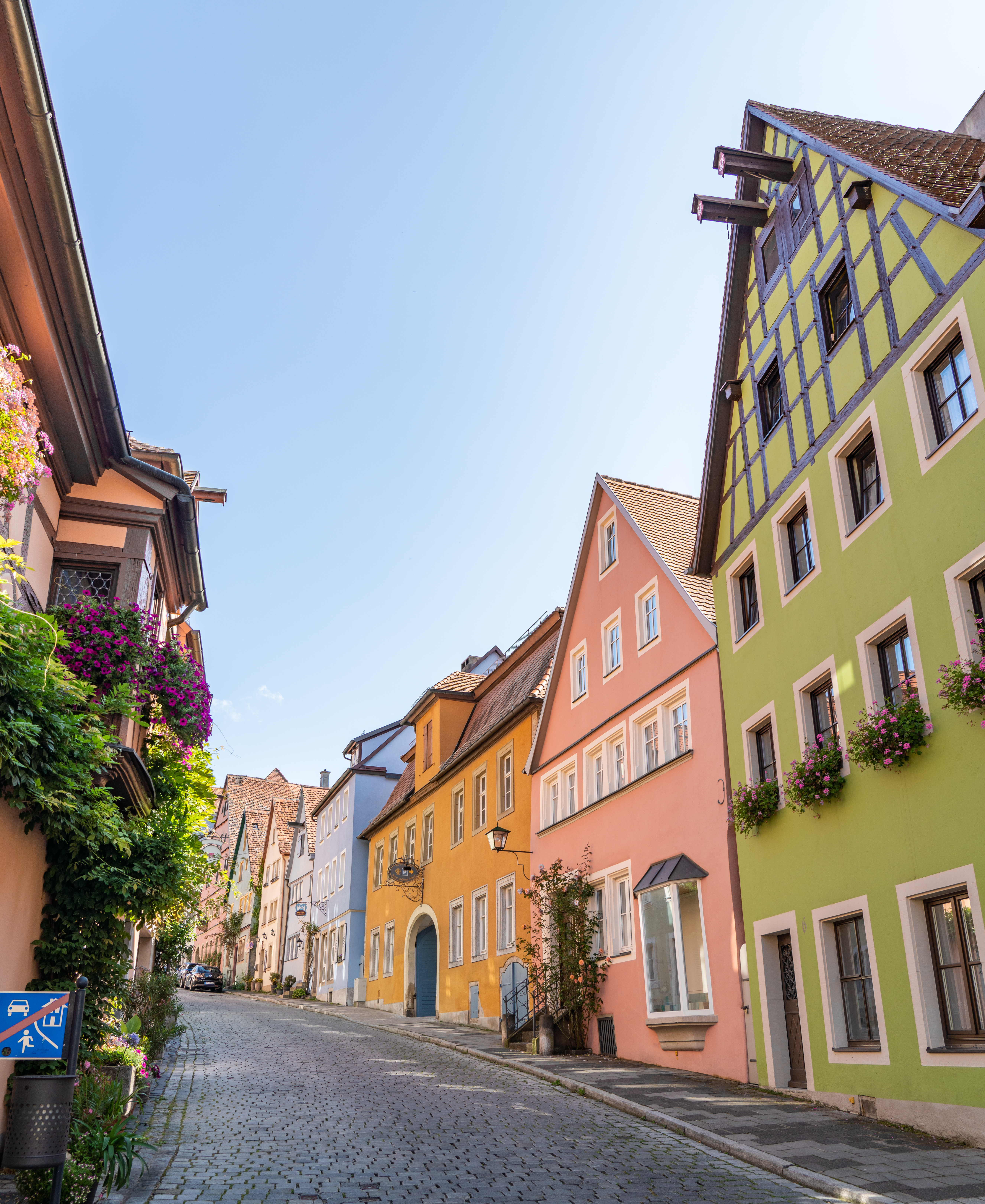
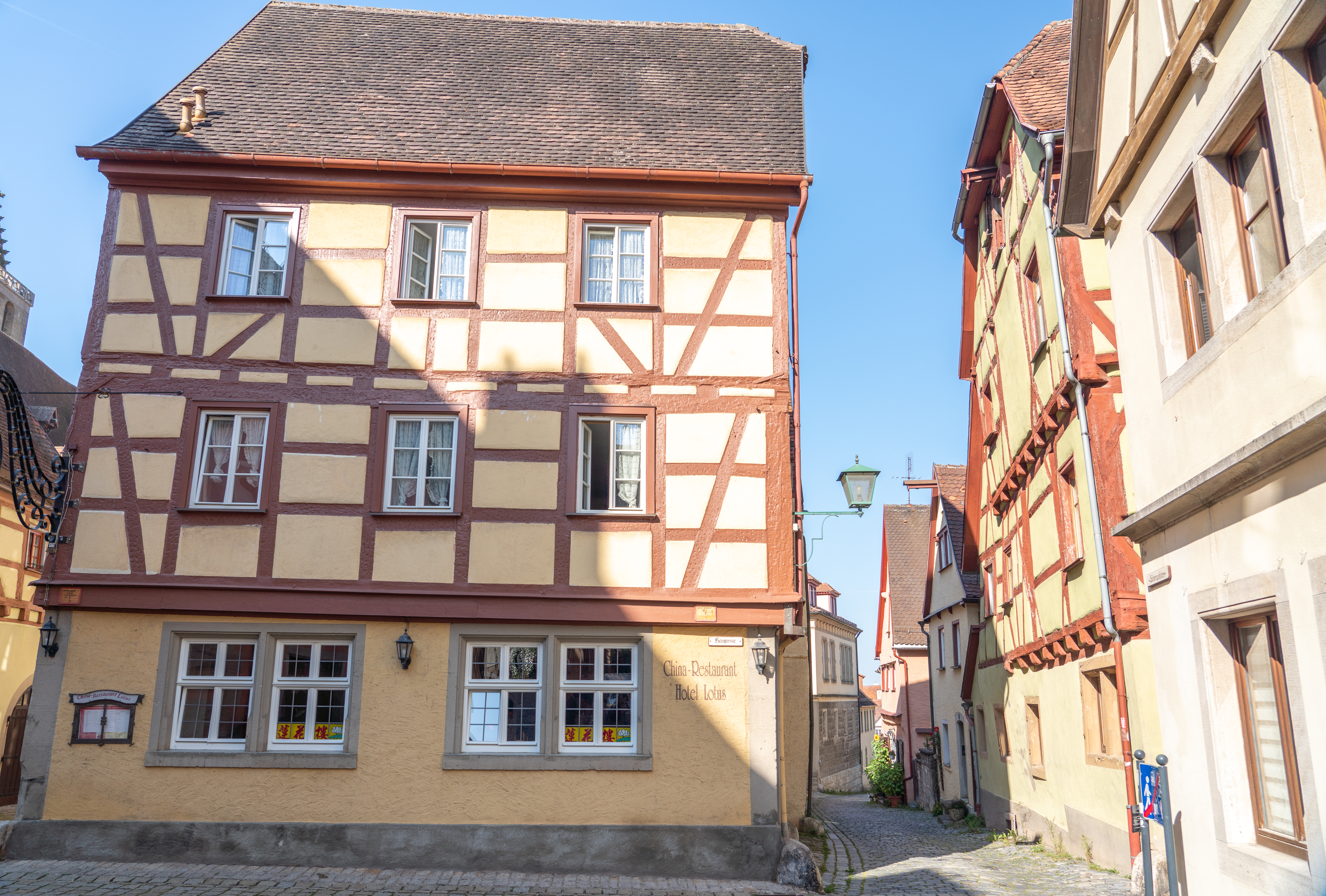
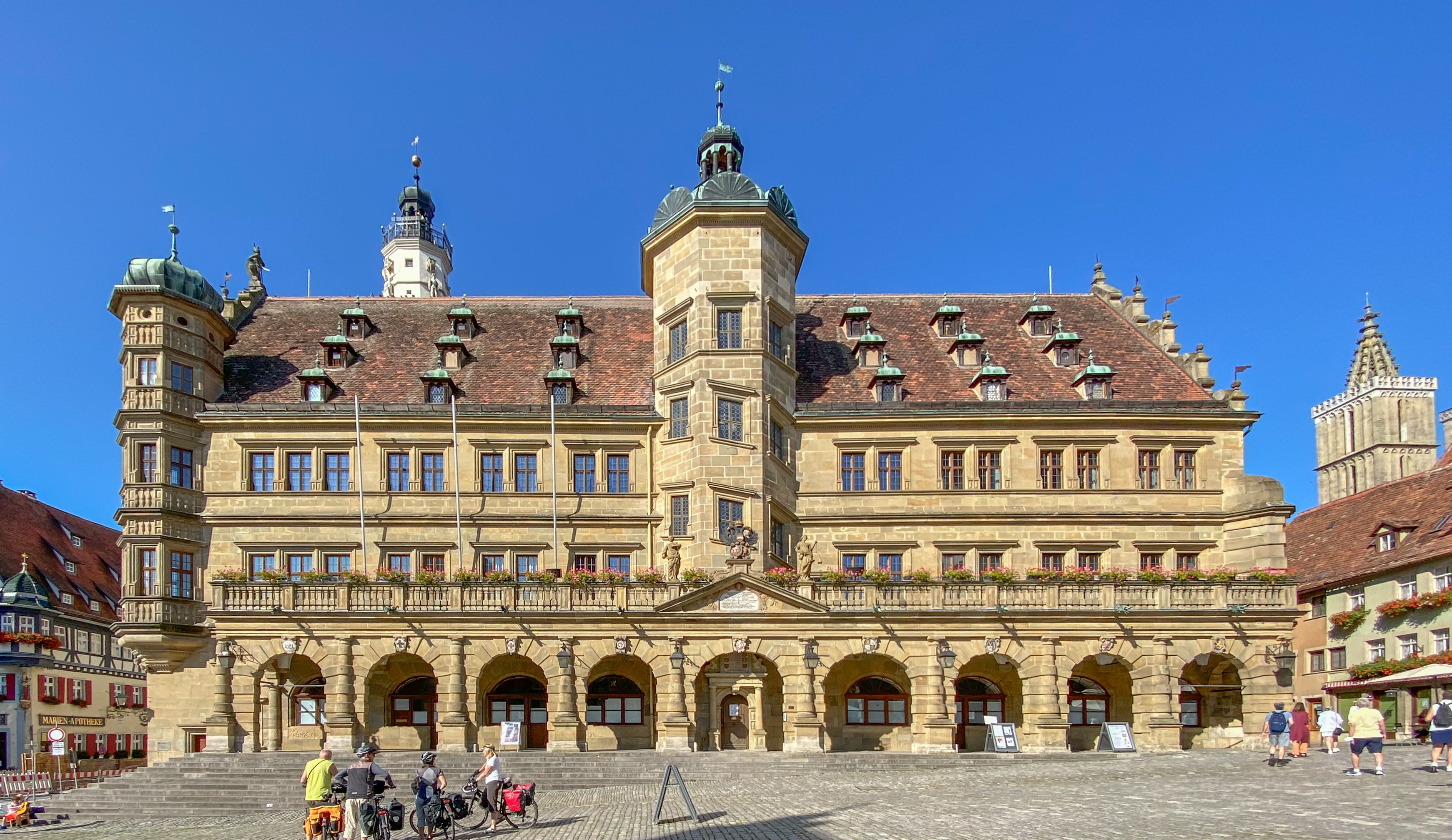
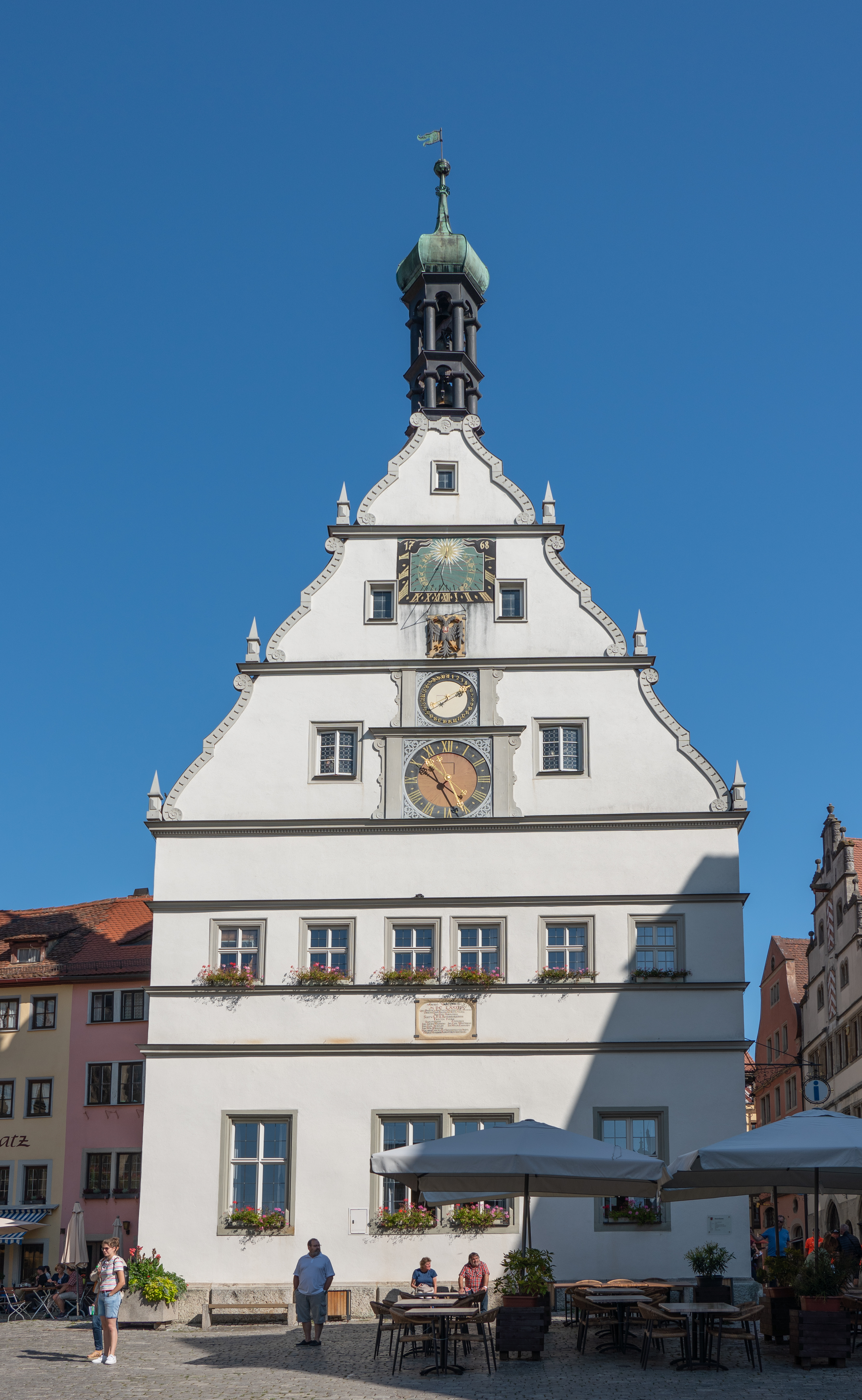
Rothenberg has a traditional town square. The rear part of the city hall building is Gothic style and dates from 1250. The attached front Renaissance portion of the building is from 1572.
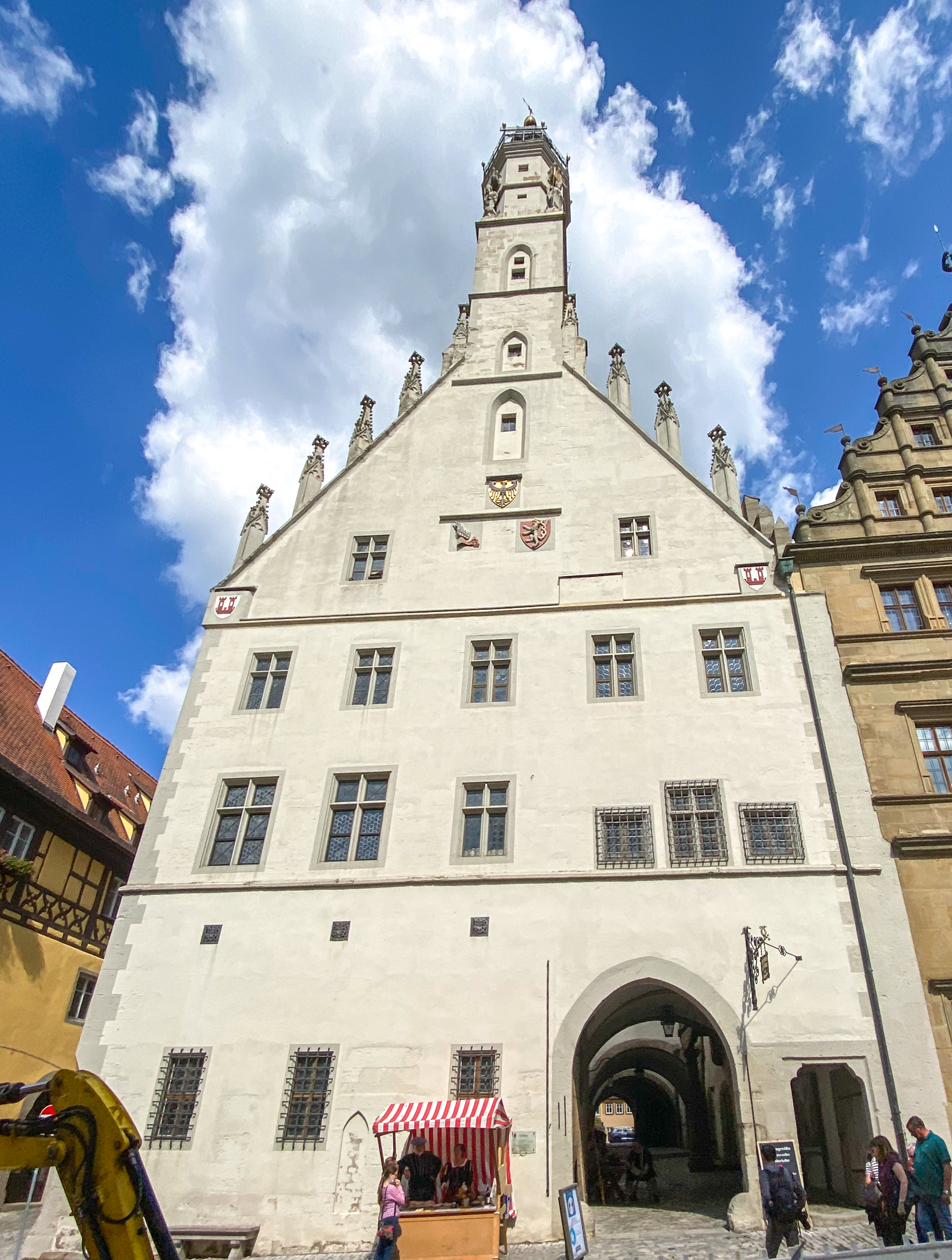
The town square also has a Councilman’s Tavern with an astronomical clock. The clock on the facade of the building depicts the legend of the Master Draught (Meistertrunk) from 1631. The legend (probably apocryphal) goes like this. During the Thirty Years’ War, the Catholic Count of Tilly wanted to quarter 40, 000 troops in Lutheran Rothenburg. The town didn’t want this and decided to wait out a siege, but they fell quickly. The General condemned the councilmen to death and the city to be burned, but the councilmen tried to ply him with a large drink of 3 1/4 liters of wine. The general stated that if anyone could drink all of that in one drink, he would spare the city. The mayor of the city, who apparently had been training for this his whole life while at the Councilman’s Tavern, drank the wine in a single gulp, saving Rothenburg. The town still celebrates this annually. Every hour the clock opens up and shows Count Tilly on the left and Mayor Nusch drinking the wine on the right.
During WWII, major portions of the eastern portion of the city were damaged by bombing and had to be reconstructed. The western portion of the town houses many of the town’s historical landmarks, so most of those are in their original state. The US Assistant Secretary of War, John McCloy, recognized the historical value of Rothenburg and arranged for artillery to not be used against the city. A surrender of the city was also offered to the city via army messengers in lieu of the city facing further bombing. This offer was accepted by the city. In 1948, John McCloy was named an honorary citizen of Rothenburg for his actions.
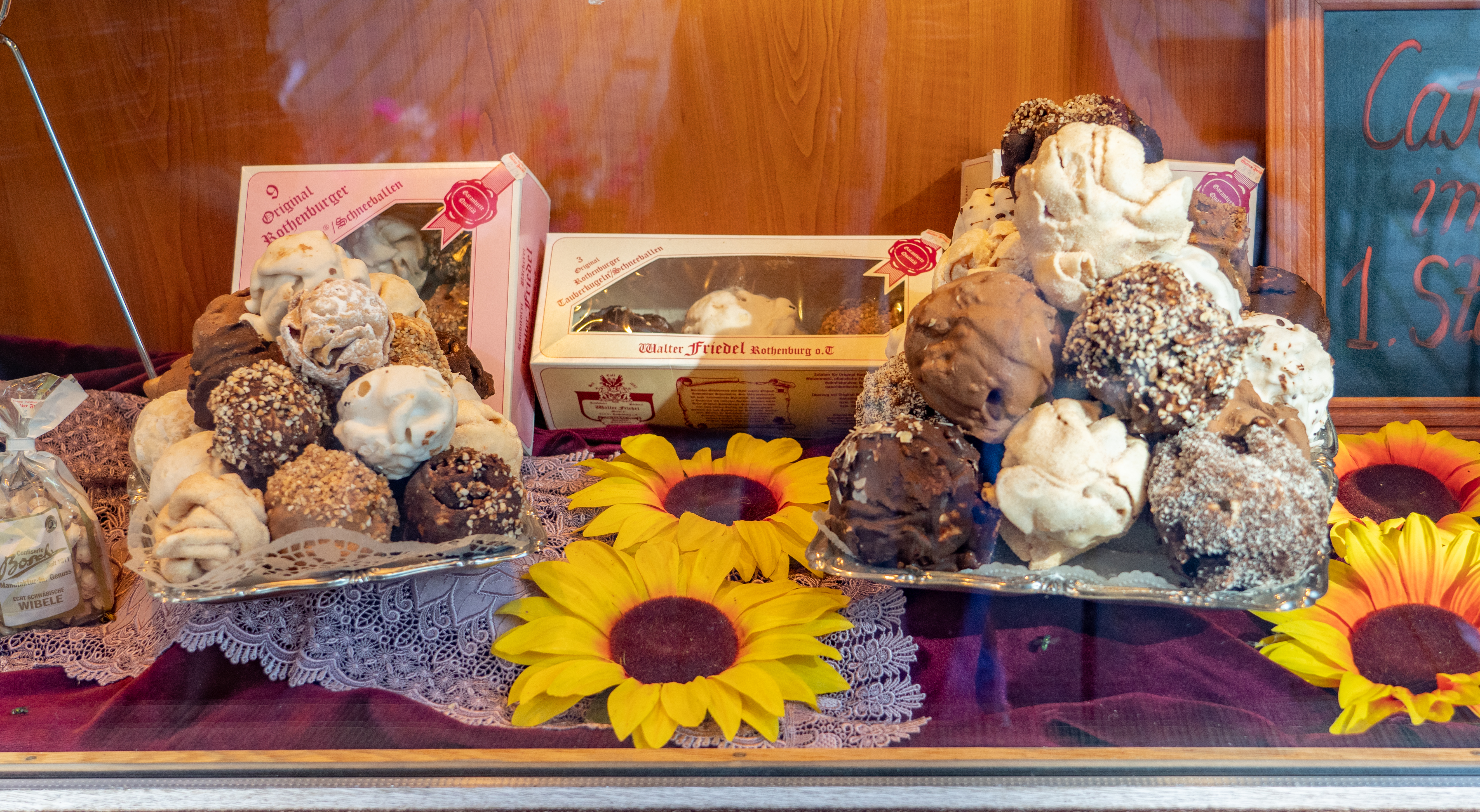
There are a couple of things that are unique to Rothenburg and the surrounding area of Franconia. There is a pastry snack, called a schneeball (snowball), that was developed here about 300 years ago. It is made from strips of short cut pastry that are formed into a loose ball, deep fried, and then coated with sugar or chocolate. I was going to get one, but our guide said they are very, very dry and have a shelf life of 8-10 weeks, being just as dry on day 1 as on week 10. Not so enticing.
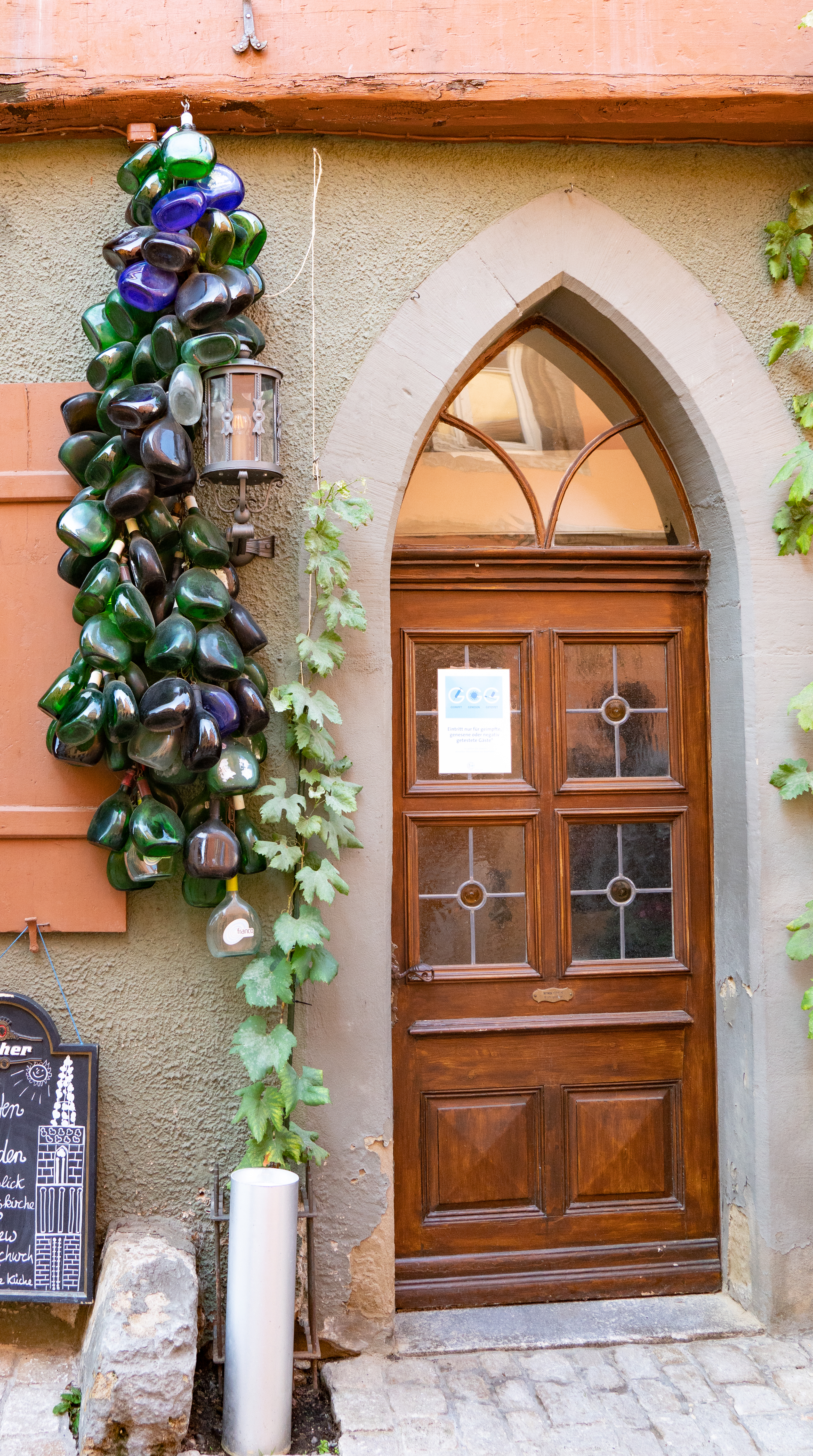
Another is an unusually shaped wine bottle called a bocksbeutel. They are flattened and somewhat drop-shaped. Within the EU, the use of this bottle shape is regulated and can only be used for certain wines in certain regions.
A little more Rothenburg trivia: Rothenburg was the inspiration for the village in the 1940 Walt Disney movie Pinocchio. Also, filming was done in Rothenburg for Harry Potter and the Deathly Hallows Parts 1 and 2.
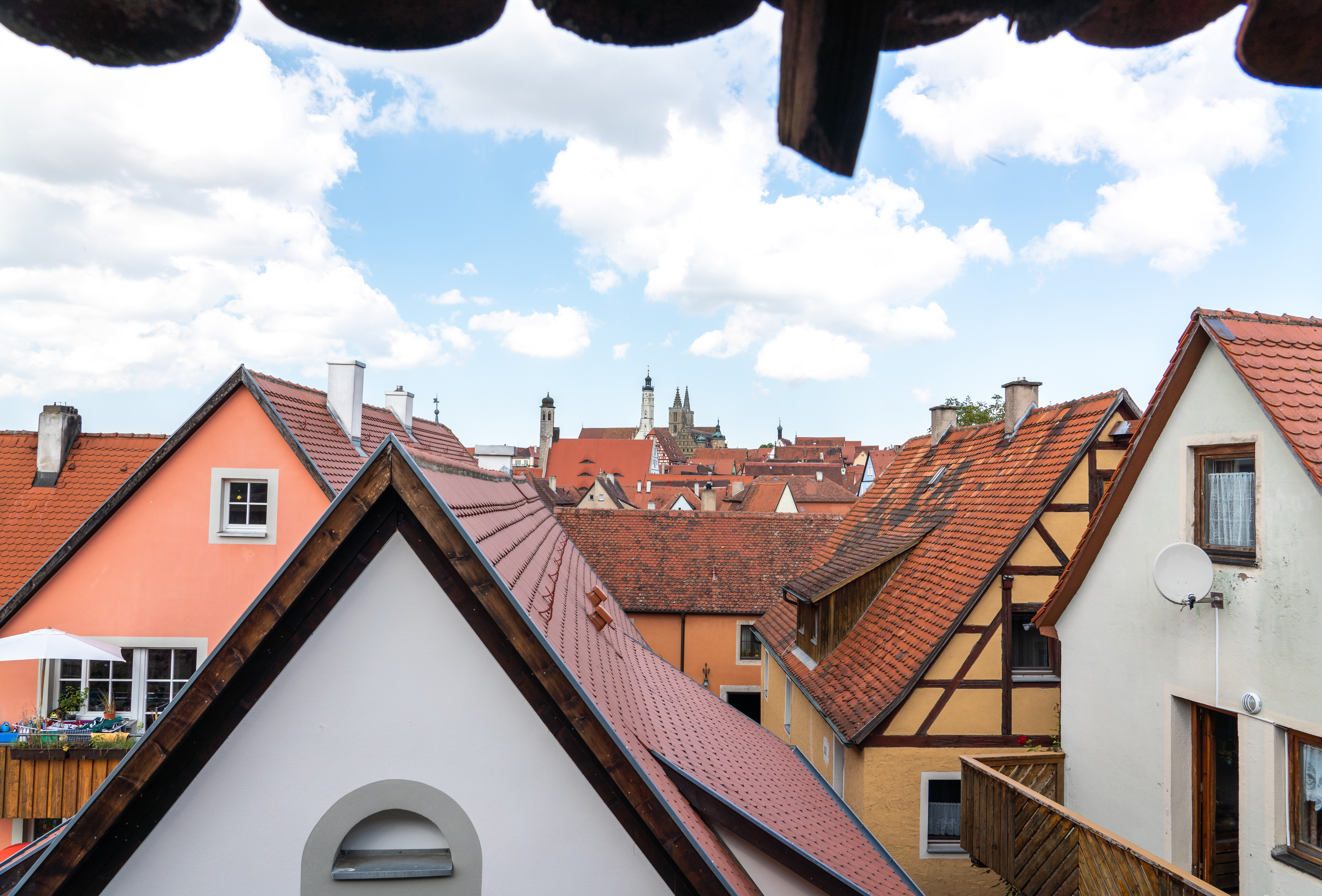
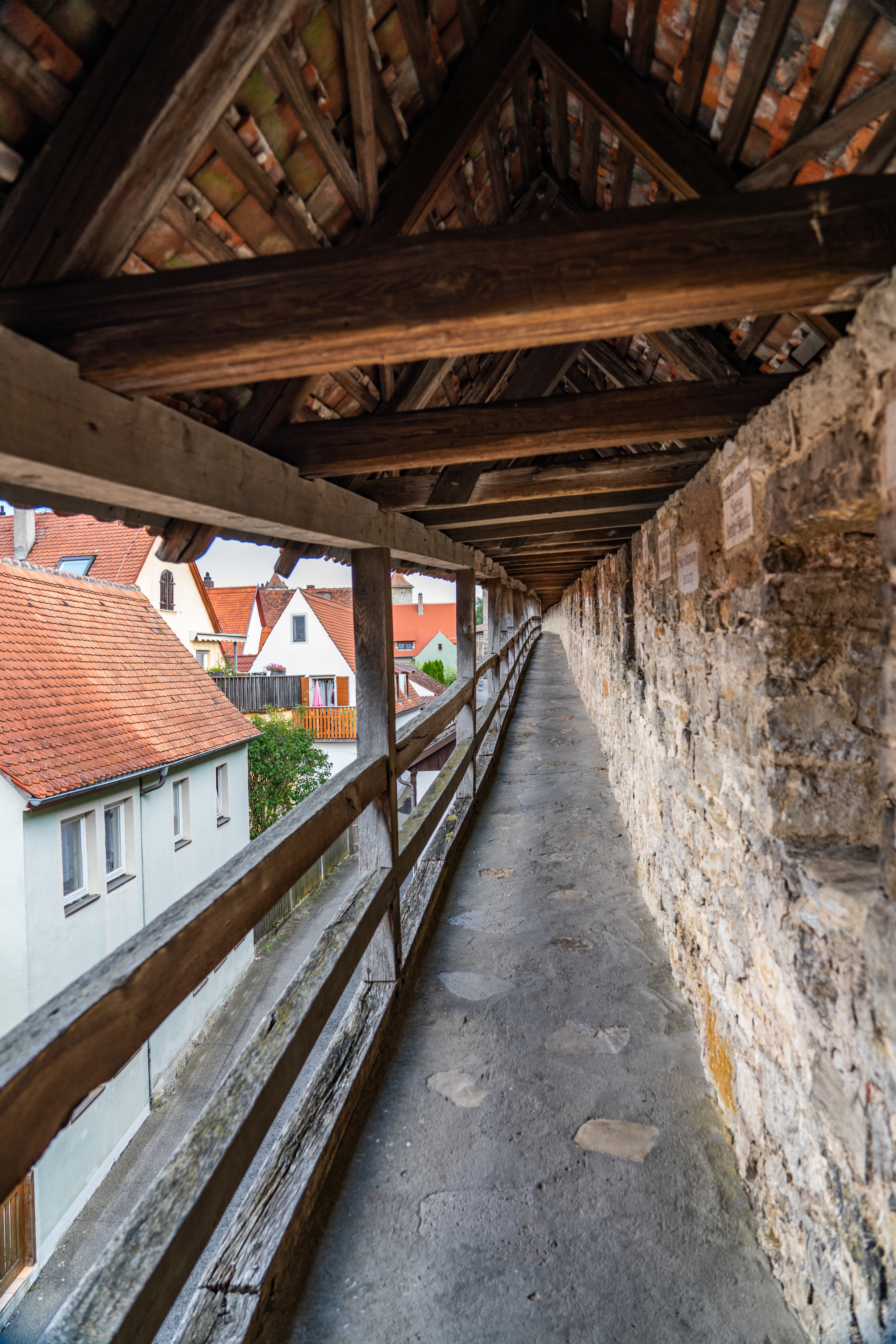
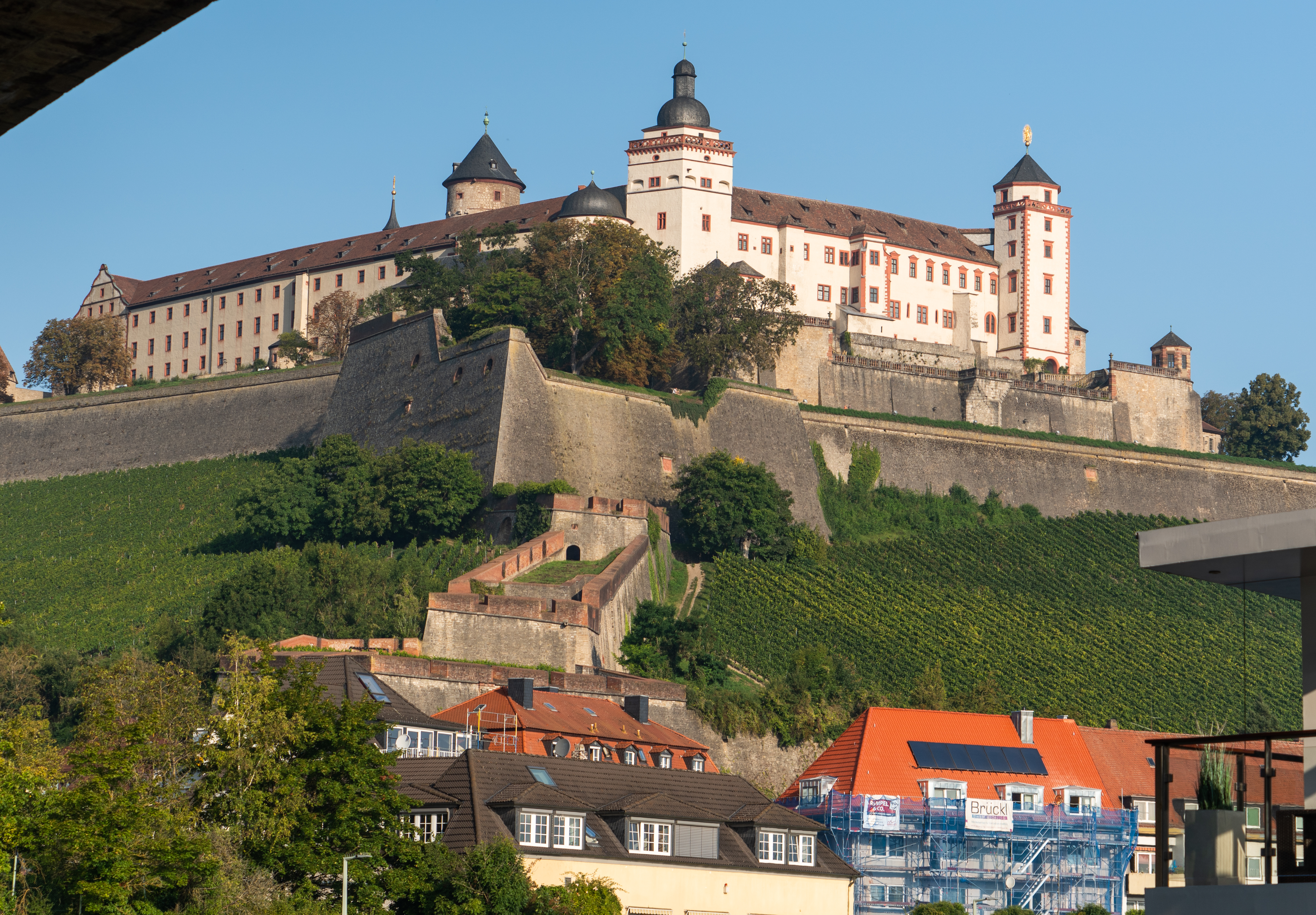
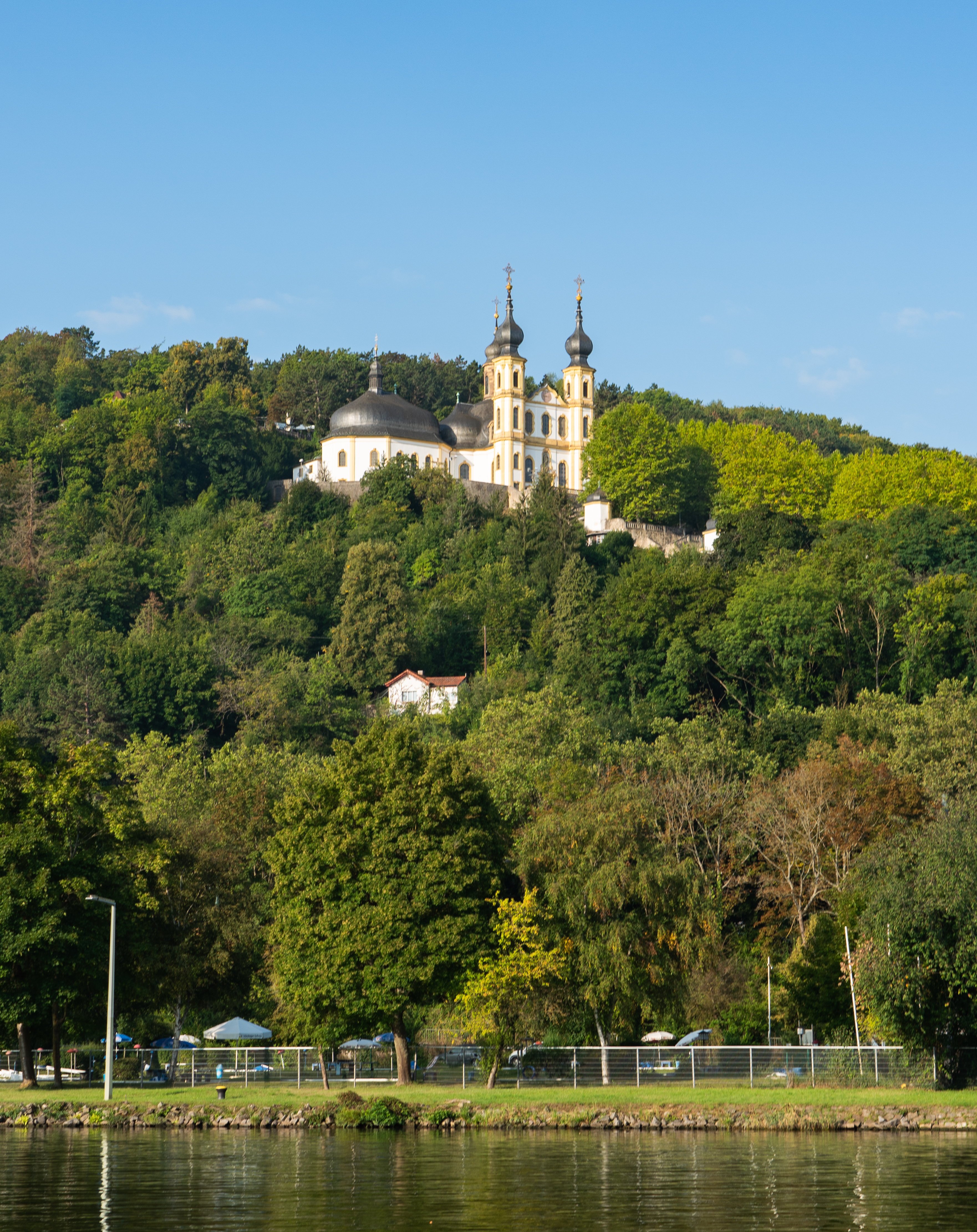
We were ported in Würzburg, so I managed to get a couple of pictures even though we did not wander around.
 Will Suture for Travel
Leave a comment