This morning we flew from Nairobi to a landing strip by a small village called Sasaab. We then drove 1.5 hours to our safari “camp” in Samburu. Samburu National Reserve is a conservation area in north-central Kenya. It is small, only 64 sq miles, and is fed by the Ewaso Ng’iro River. The area is very dry otherwise and is currently in a 4 month severe drought. Because of this, nearly every plant that is not along this river is dead. This has led all of the animals who have not died due to the drought to move near the river. This area is having a really tough time. I cannot imagine what it is like for the people who live here. We were told that they get their water from a deep well system.
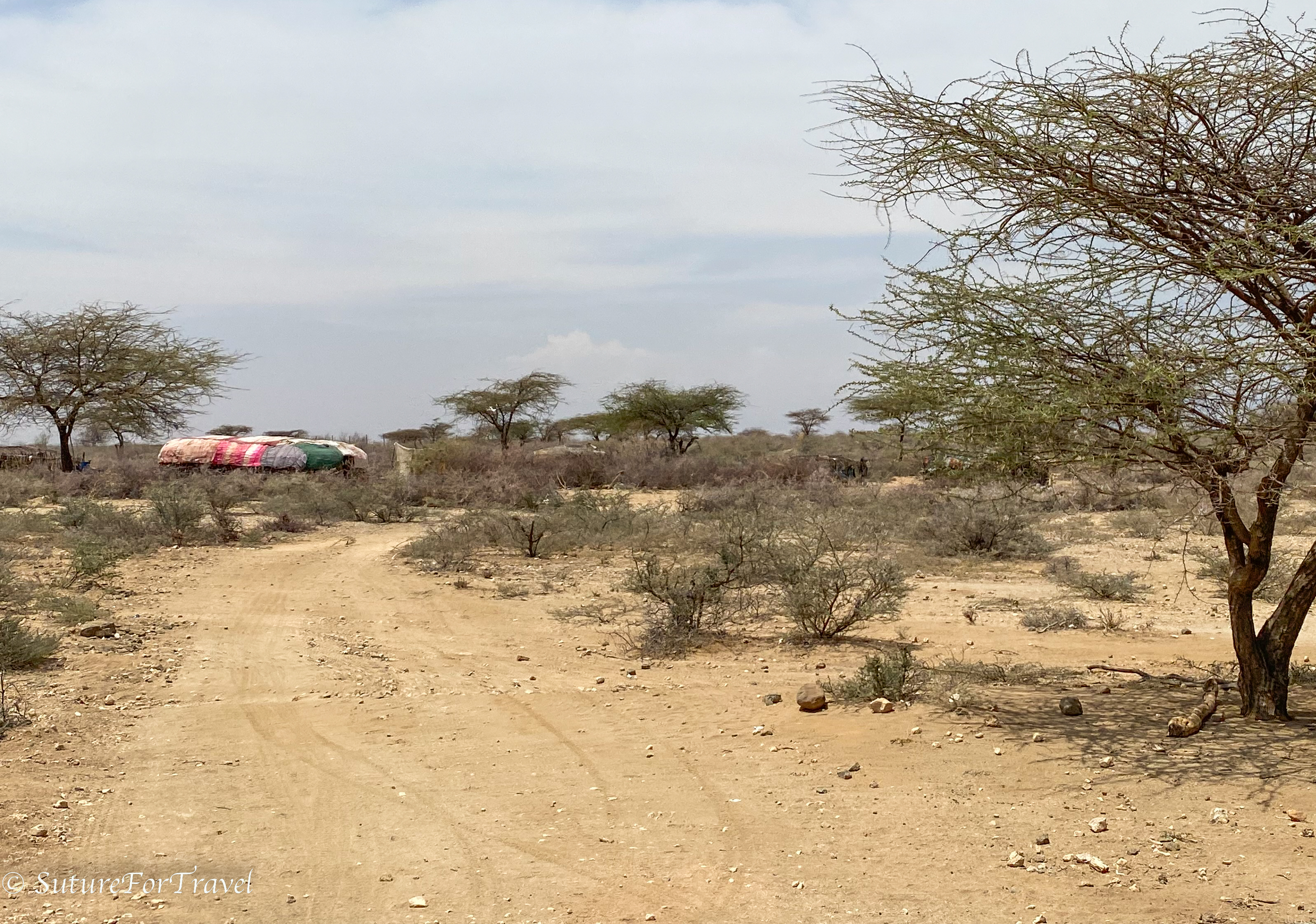
Sassab
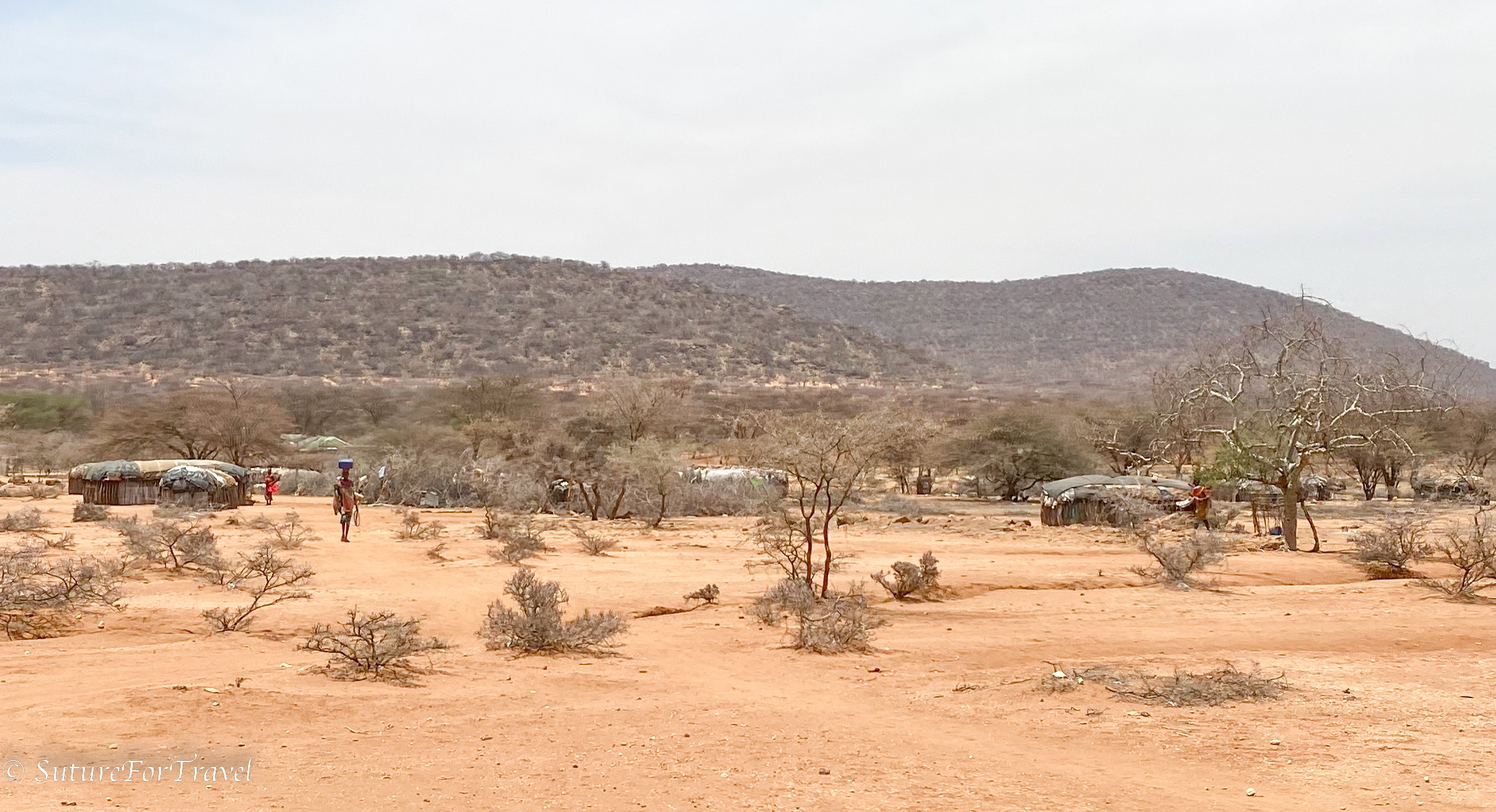
another village we drove through
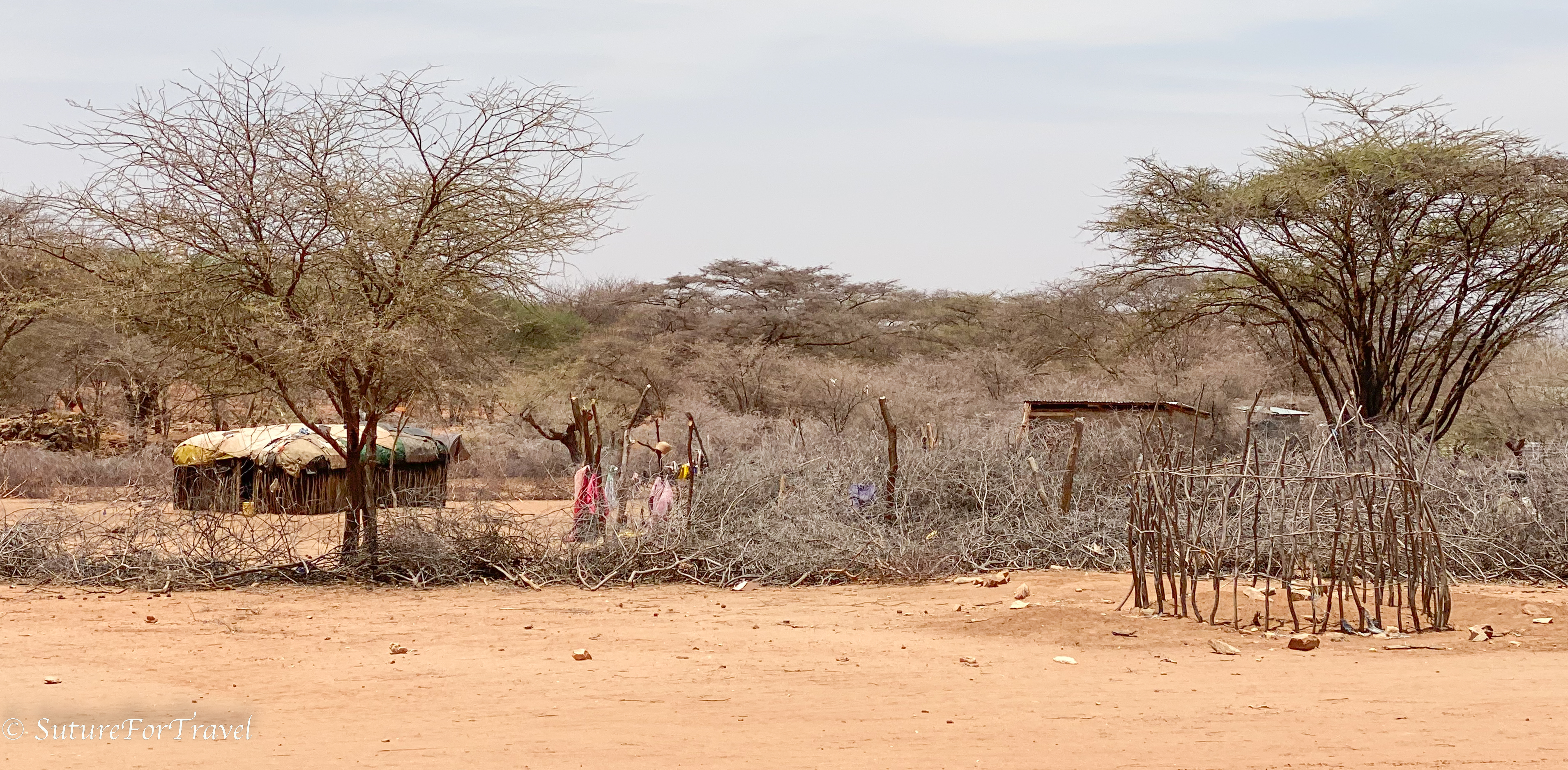
same village
The people who live here are the Samburu, a semi-nomadic tribe that is distantly related to the Maasai. They, along with multiple other Maasai-related tribes, speak Maa. They commonly raise cattle. Our safari guide here, Sumoro, is Samburu, as are many of the staff. Sumoro lives in a village about 30 minutes away (we drove through it on our way to the camp). He said that the Samburu is polygamous, but that he has chosen to have only one wife. He says that they have multiple wives because there is generally too much work for just one husband and wife to do. He has 3 children. His oldest 2 are in school and he plans on them going to college. He has chosen for the youngest to stay at home and help with the household work. That child will not go to school at all, but will be take part in the family cattle business. The rest of the family will make sure all of his needs are cared for since he will have no formal education. Sumoro dresses traditionally, as did the rest of the staff and everyone we saw in the villages we drove through, with the exception of the small children. They wear plaid or dark cloths with beaded bands, necklaces, and bracelets. He said that things are slowly modernizing, for example, about 20% of villagers have cell phones, mostly those who have jobs that take them away from home, like he does.
Our camp is a nearly 1 hour drive to the river, so we, unfortunately spent 2 hours (one each way) of our safari drive just driving past dead zones with essentially no animals. Not anyone’s fault, but a big time suck. Double that for the next 2 days with 2 drives. Once we got to the river area, it was worth the drive. Since we got here at lunch time we only had an afternoon drive today. The afternoons here are hot, so the animals are scarce until it cools off nearer to sunset. As always, we are in search of bit cats.
Samburu has most of the usual animal life, but is know for what is called the Samburu Five. There are 5 animals that are unique to this area of Africa, and 5 of them are in Samburu: reticulated giraffe, gerenuk, Grevy’s zebra, oryx, and Somali ostrich. Of course, our goal is to see them all before we leave here.
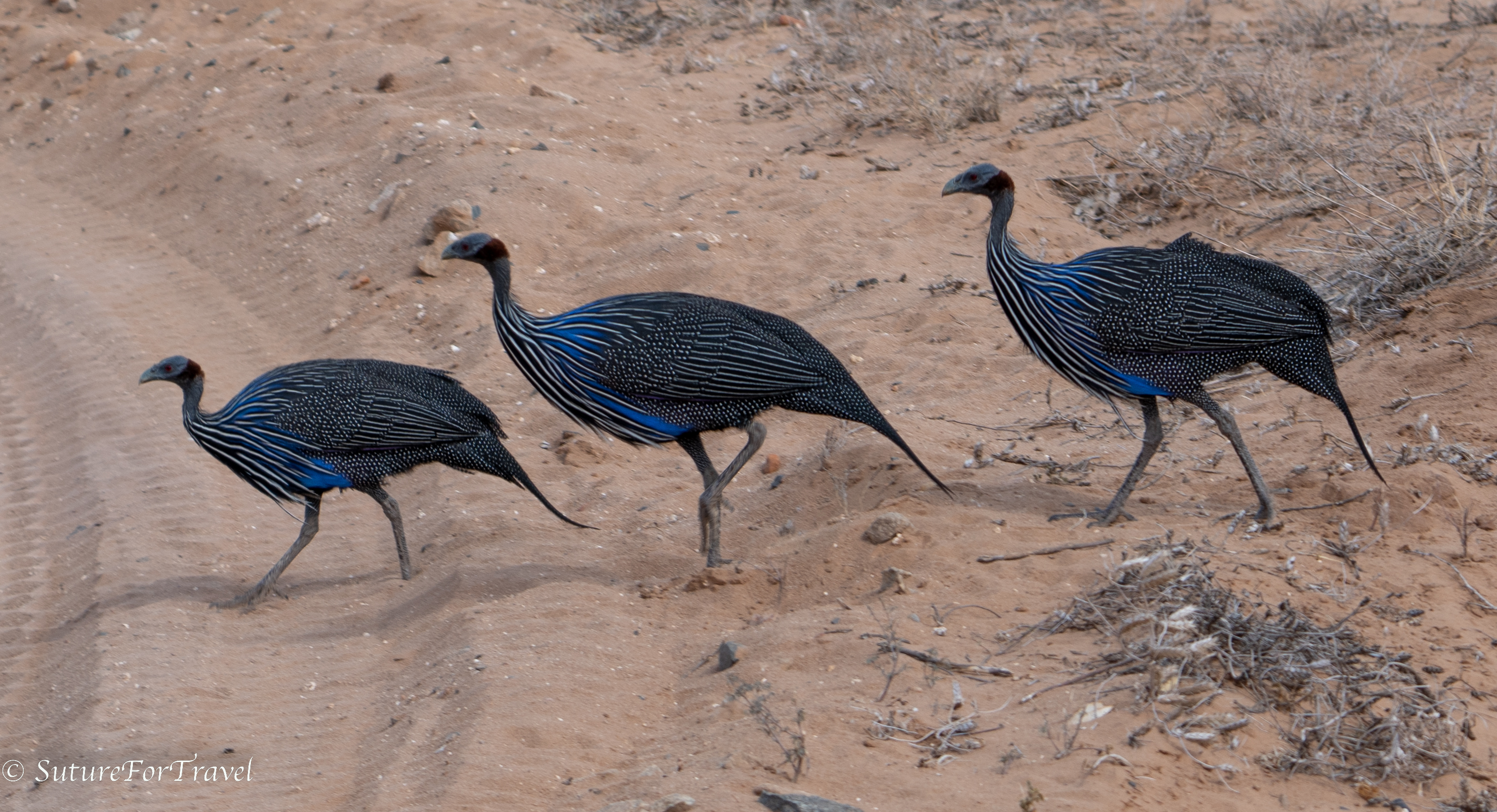
vulturine guinea fowl: These guys hang out in groups of 25+. They’re just a little smaller than chickens. They run around on the ground and eat seeds and invertebrates.
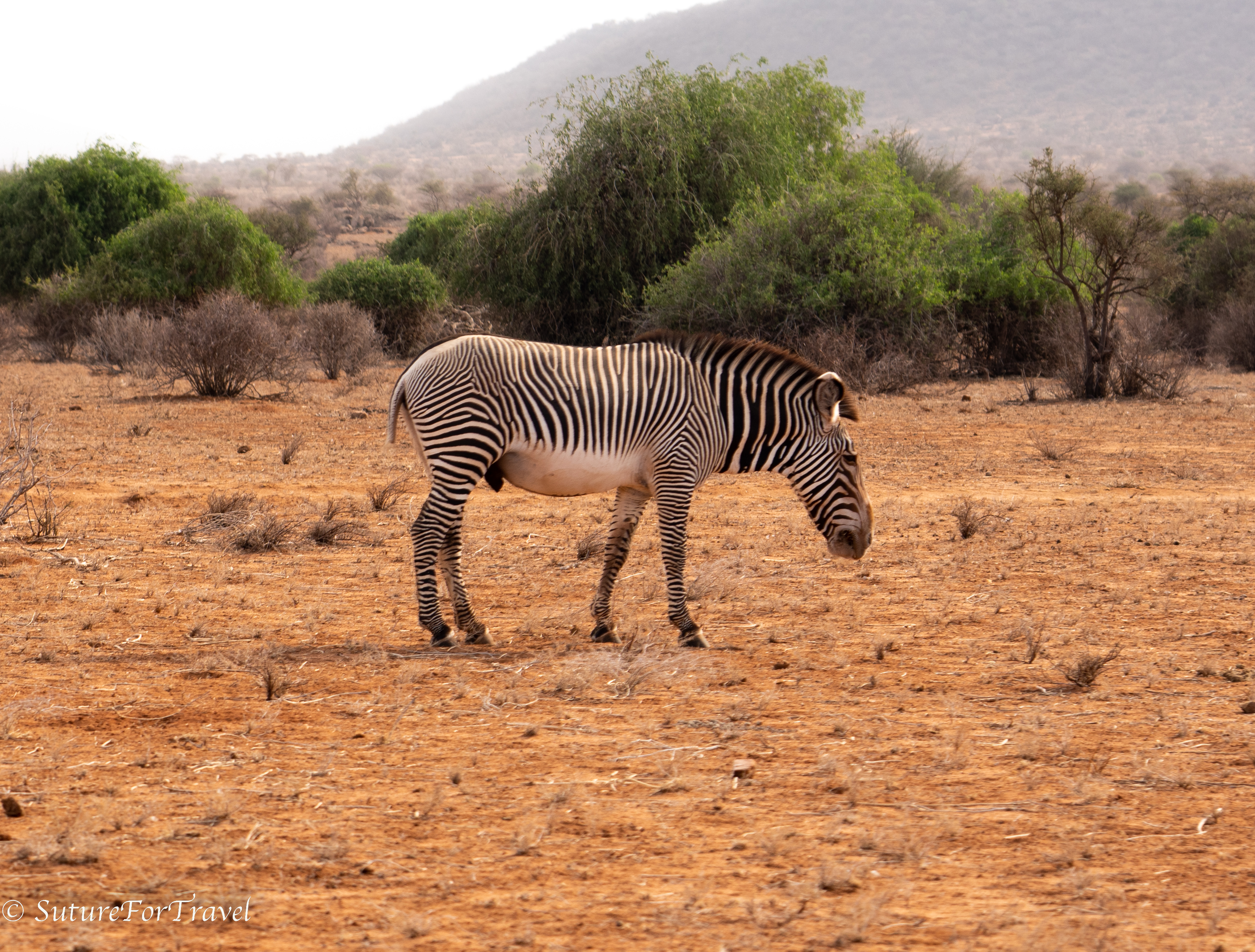
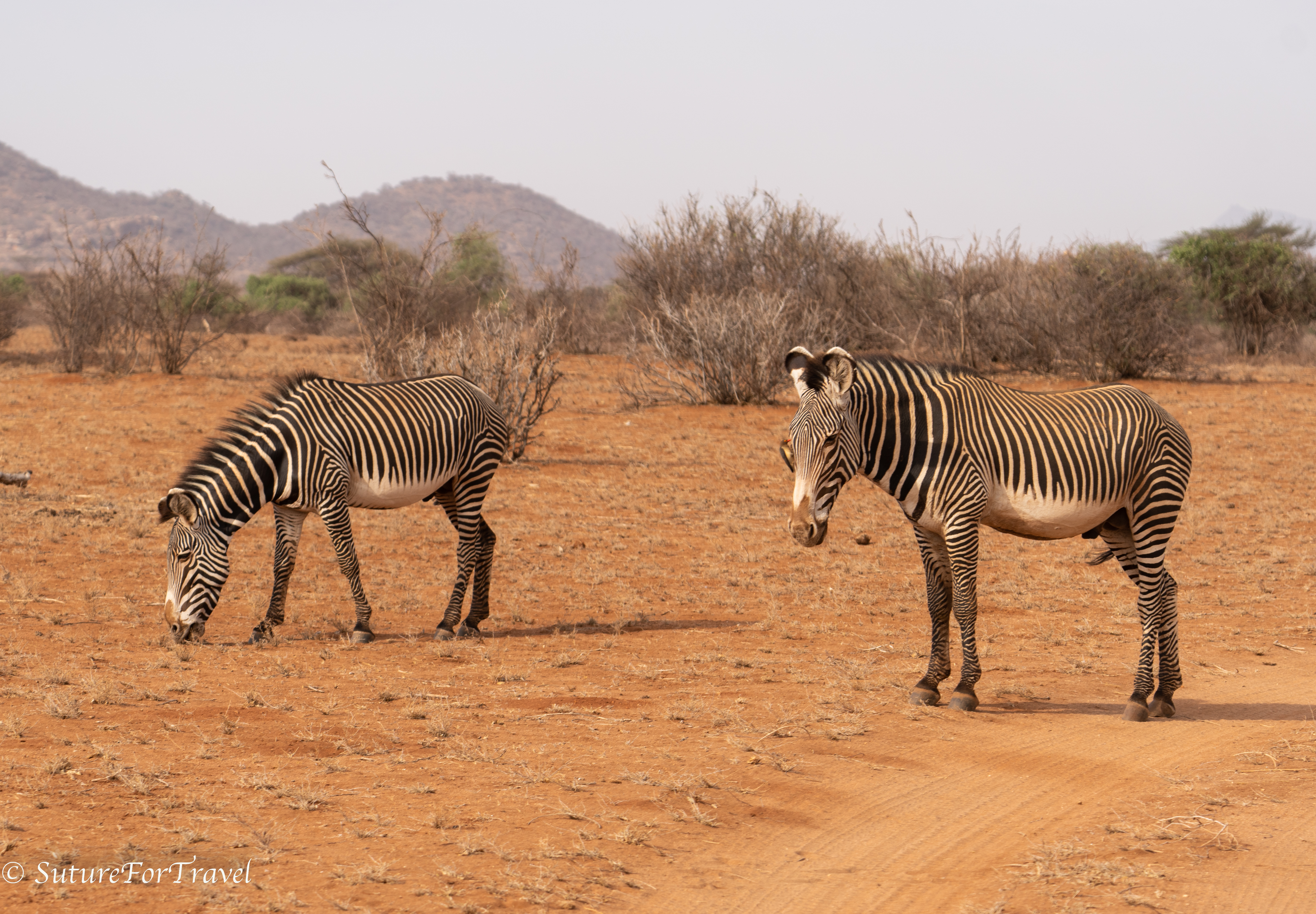
Grevy’s zebra: These are the largest living African equine. They are built a bit like a donkey. Their stripes are narrower than other zebras, they have a white belly, and they have bigger ears. They can survive up to a week without water. Grevy’s zebras are endangered.
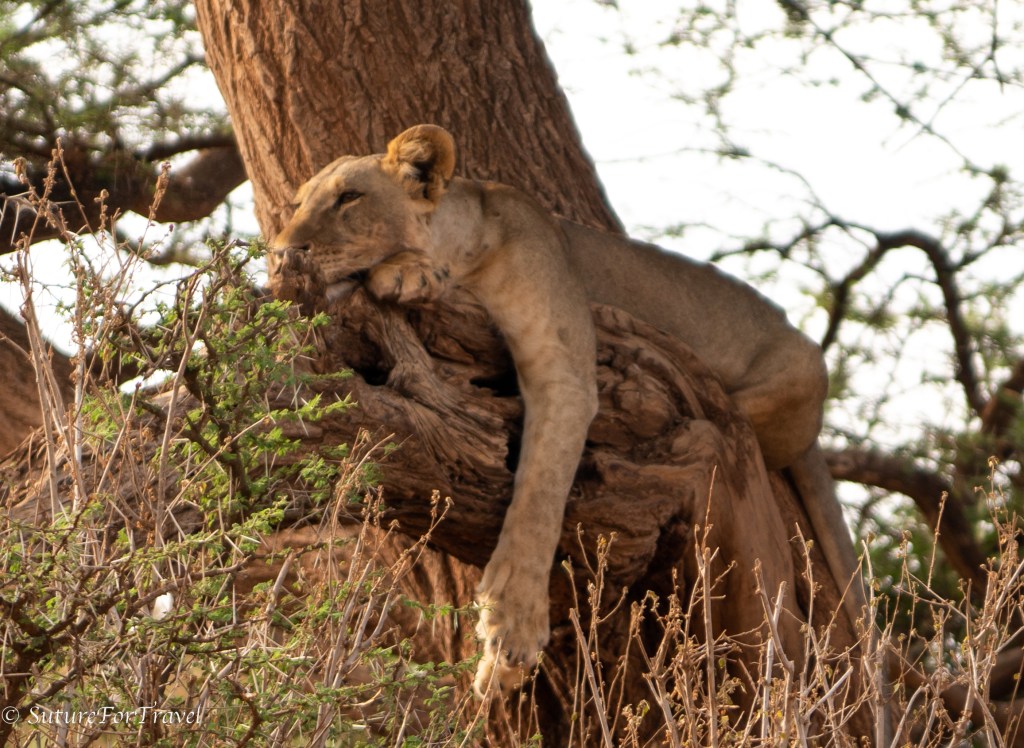
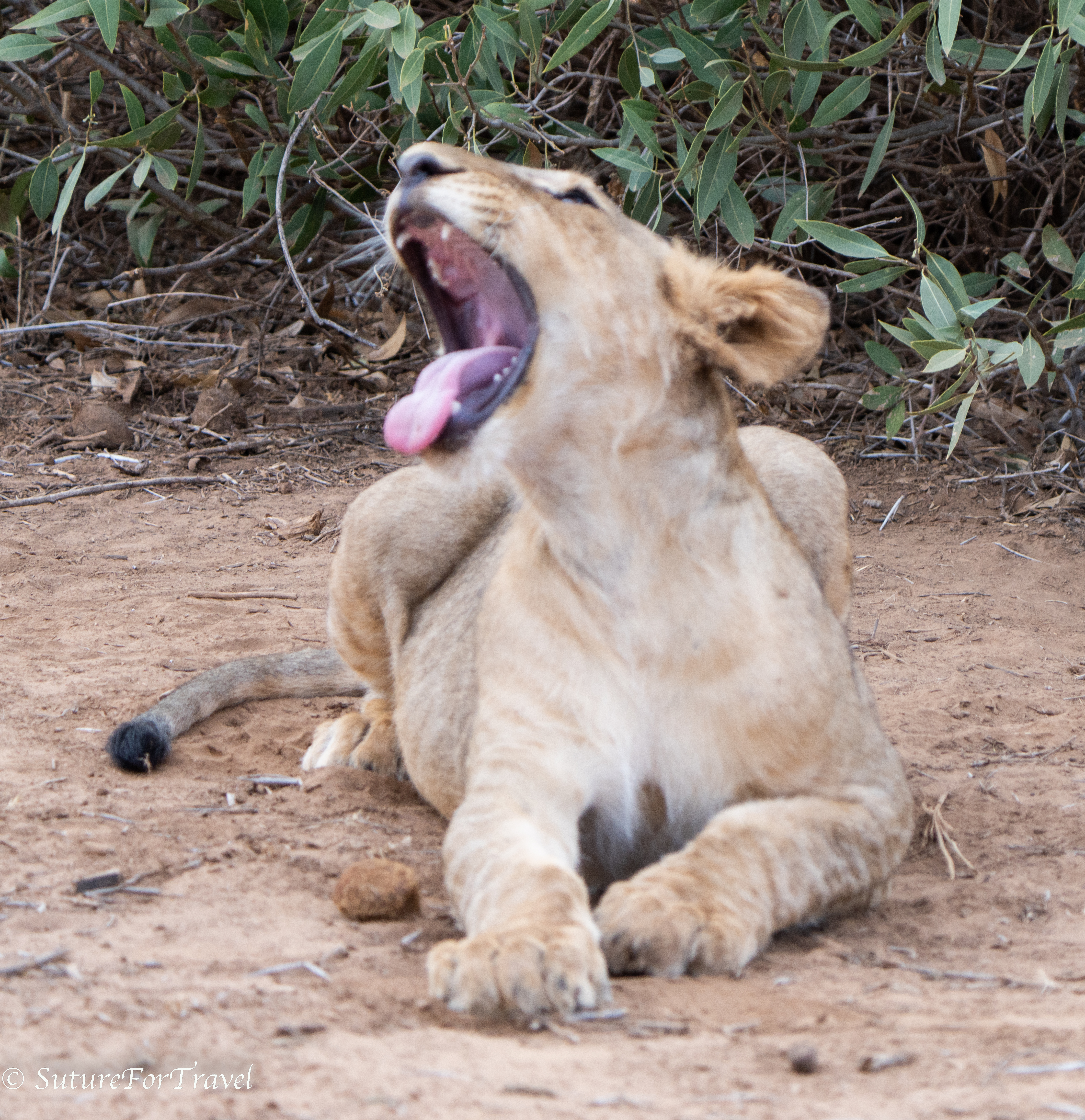
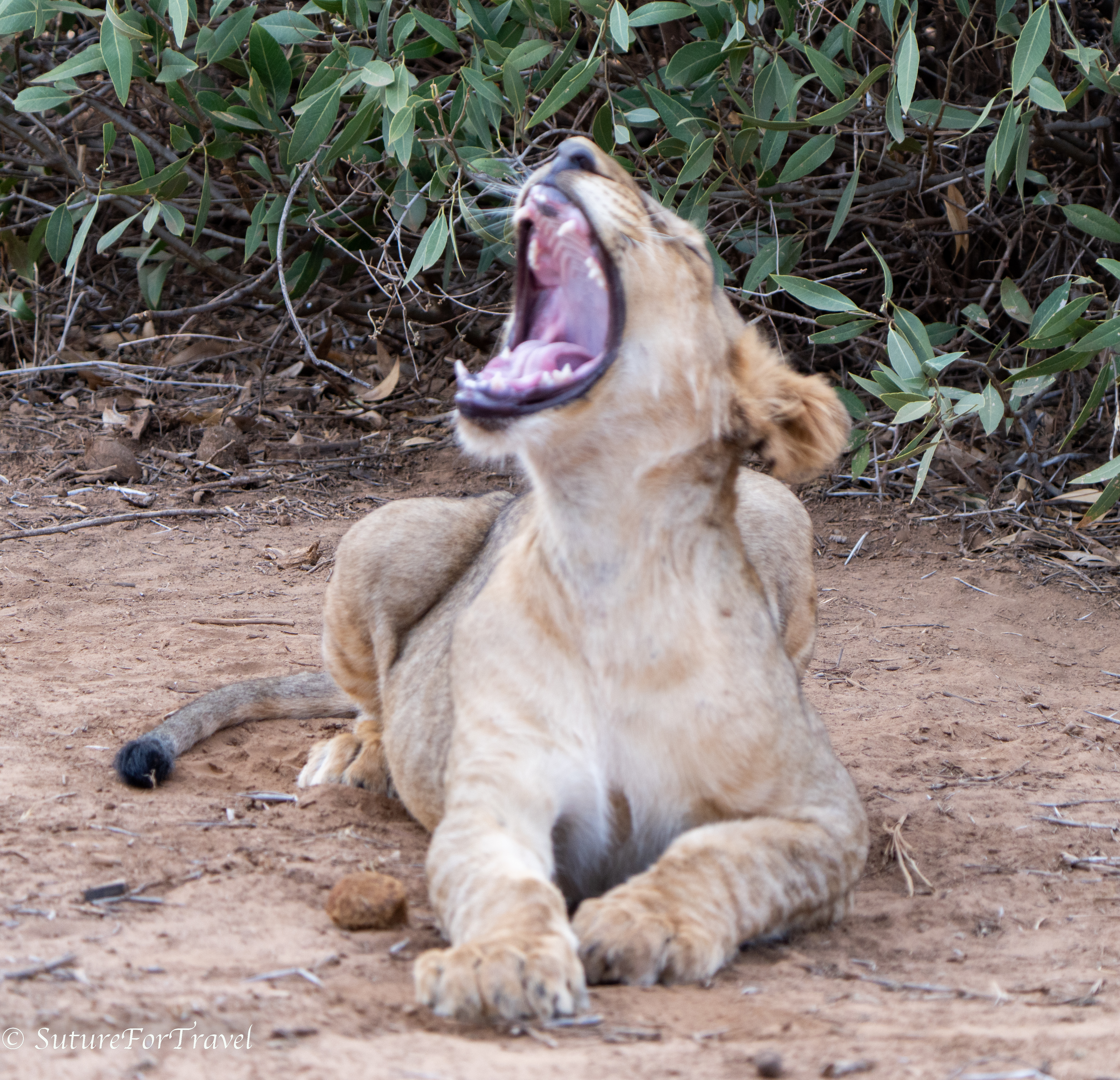
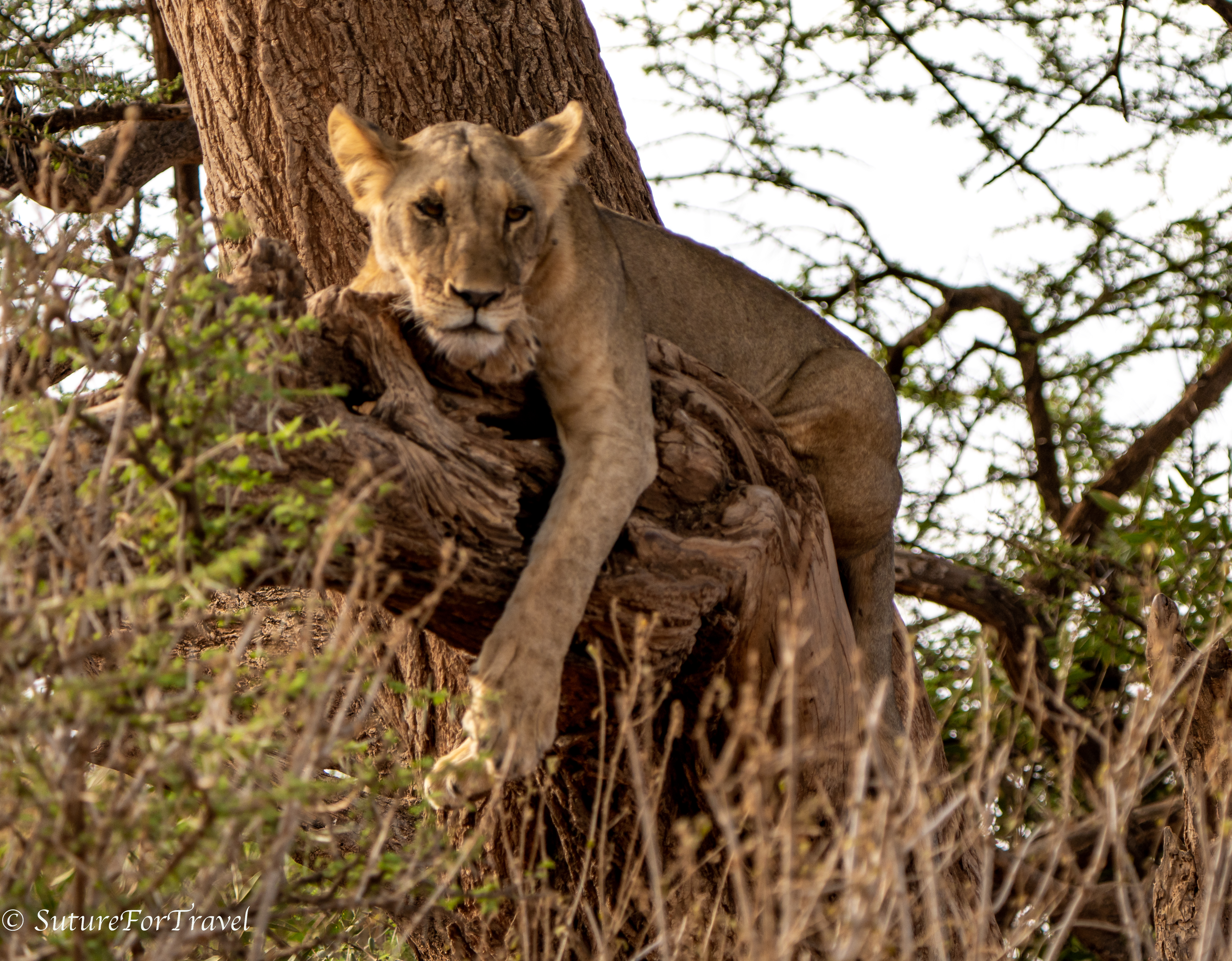
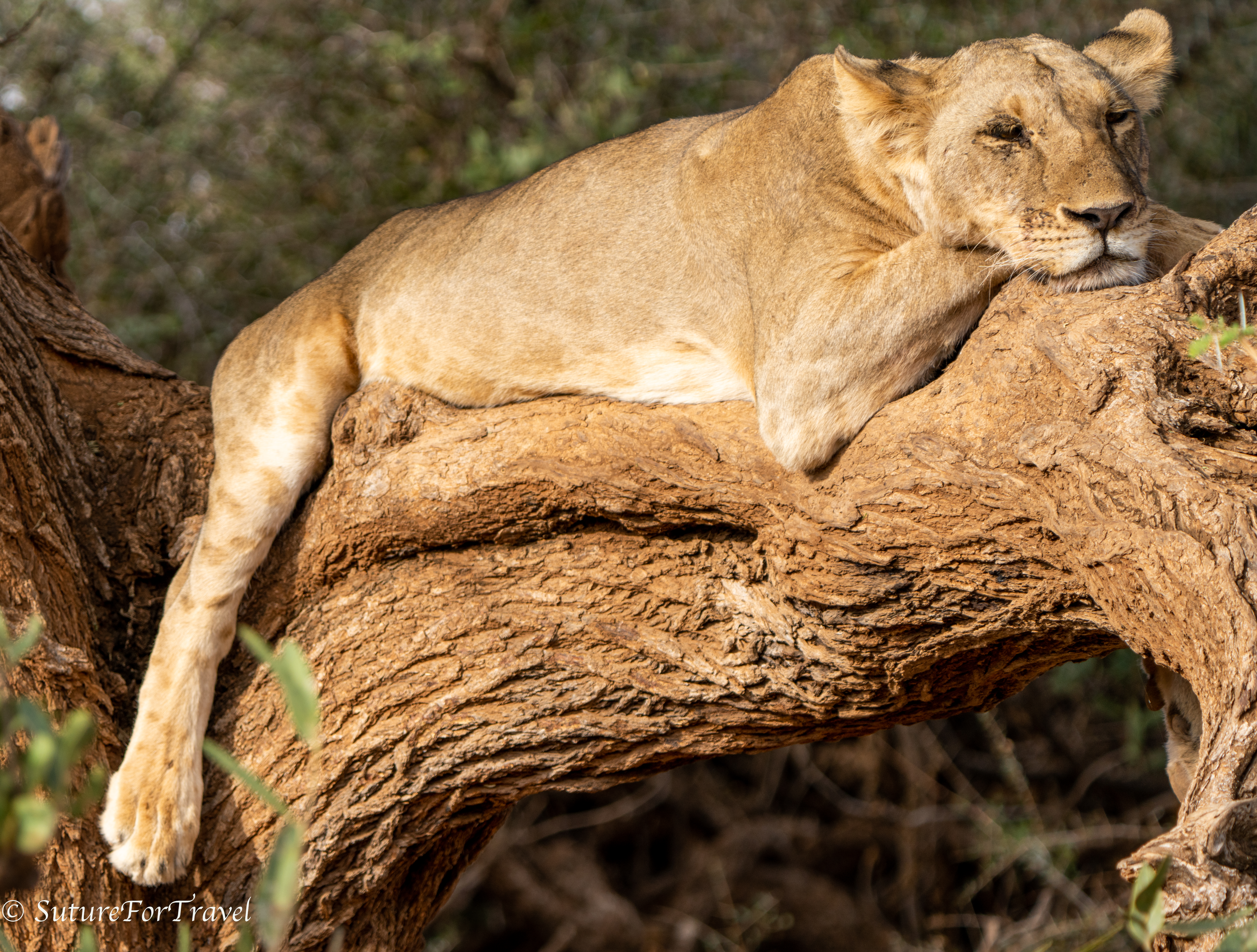
We came upon a local lioness napping after a kill with 4 cubs. One belongs to her sister, who just had another litter, and 3 of her own. The two have recently split up because of the drought and this one kept the older cubs. The oldest singleton is 2 years old and the 3 younger ones are 1. The cubs were hanging out and occasionally walking down to the giraffe kill to have snacks.
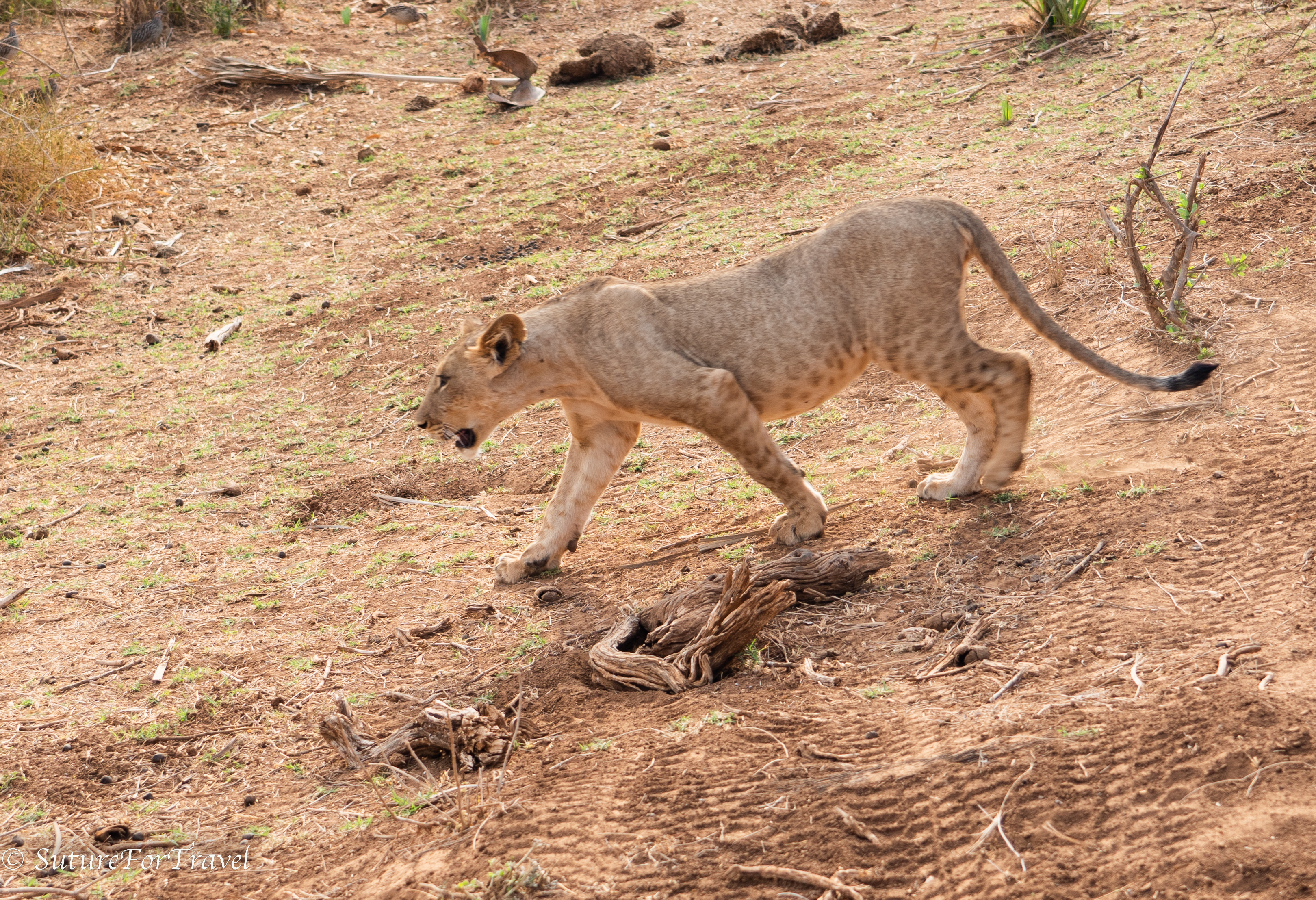
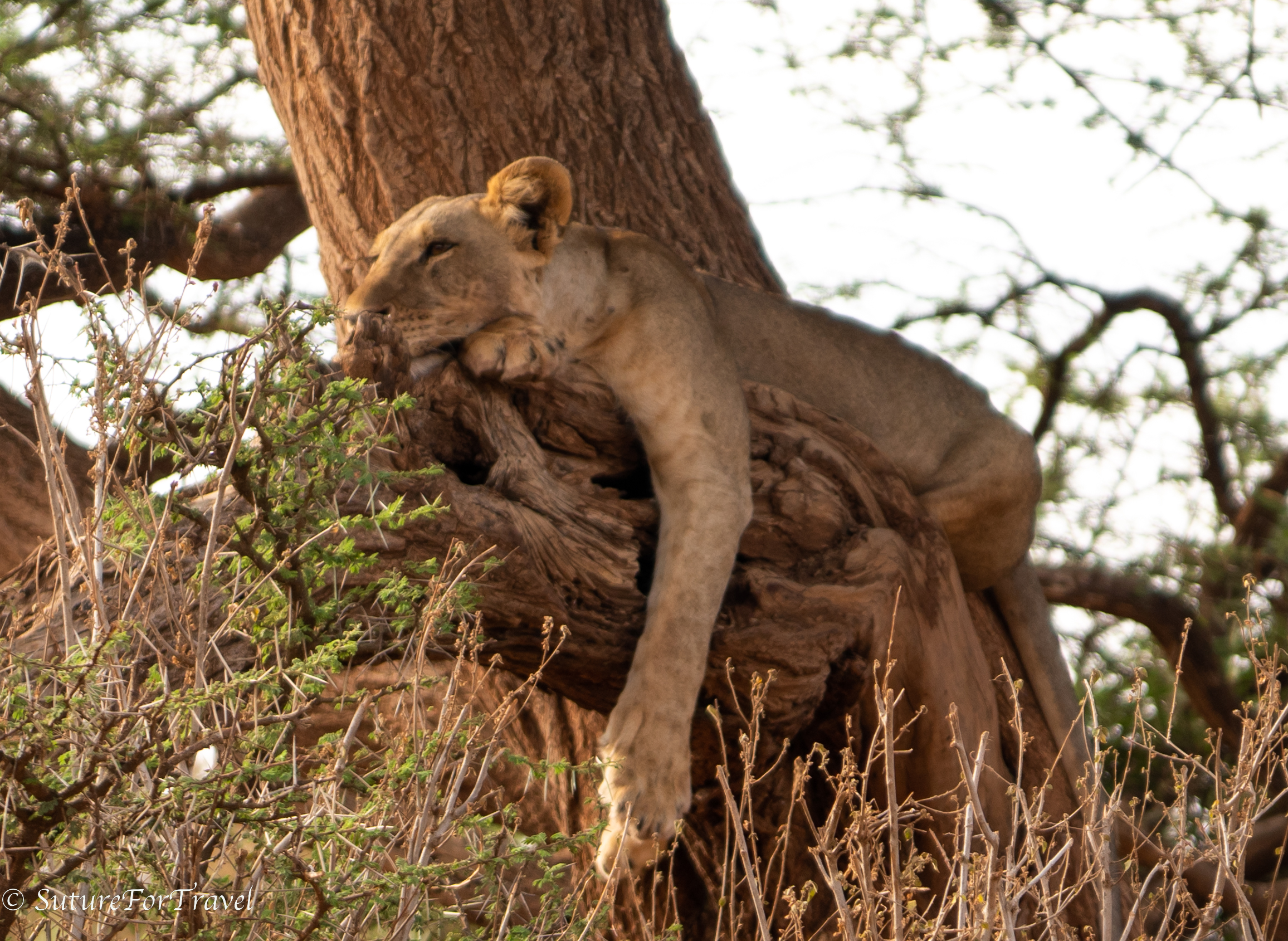
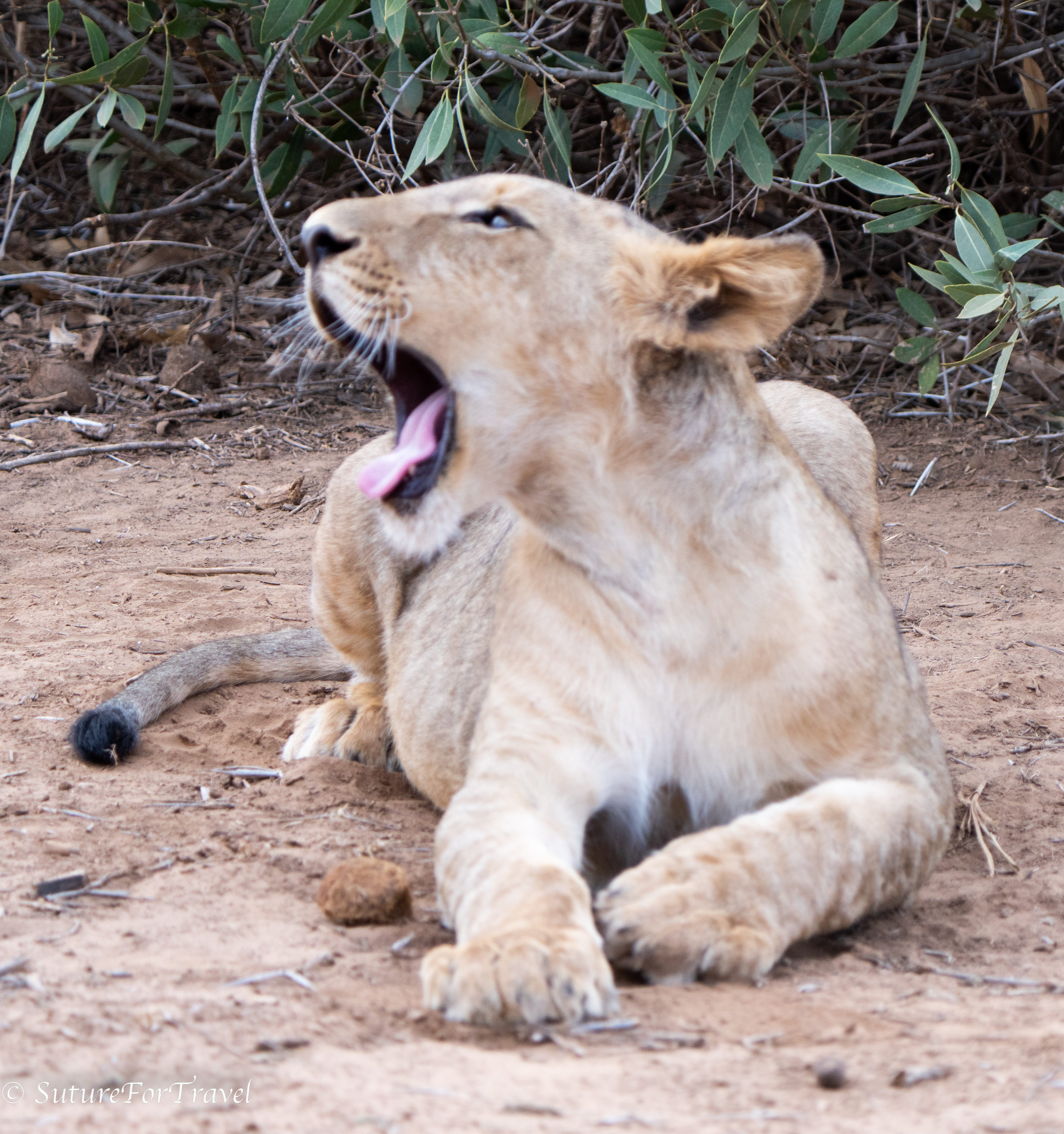
Time to yawn
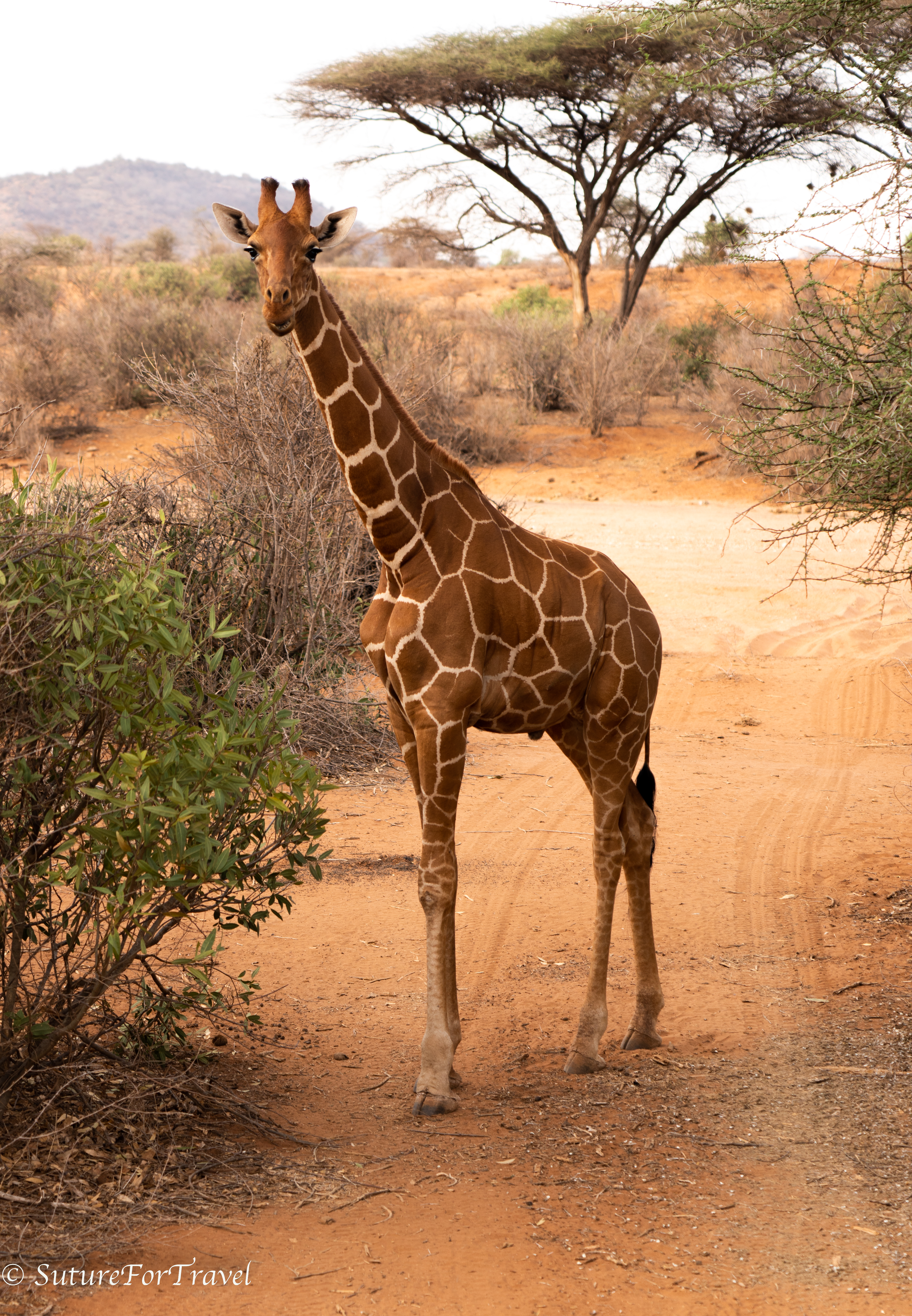
reticulated giraffe: This is a subspecies of giraffe that lives in the Horn of Africa. They have solid blocks of brown on a light background. They are striking looking and so far are my favorite giraffe.
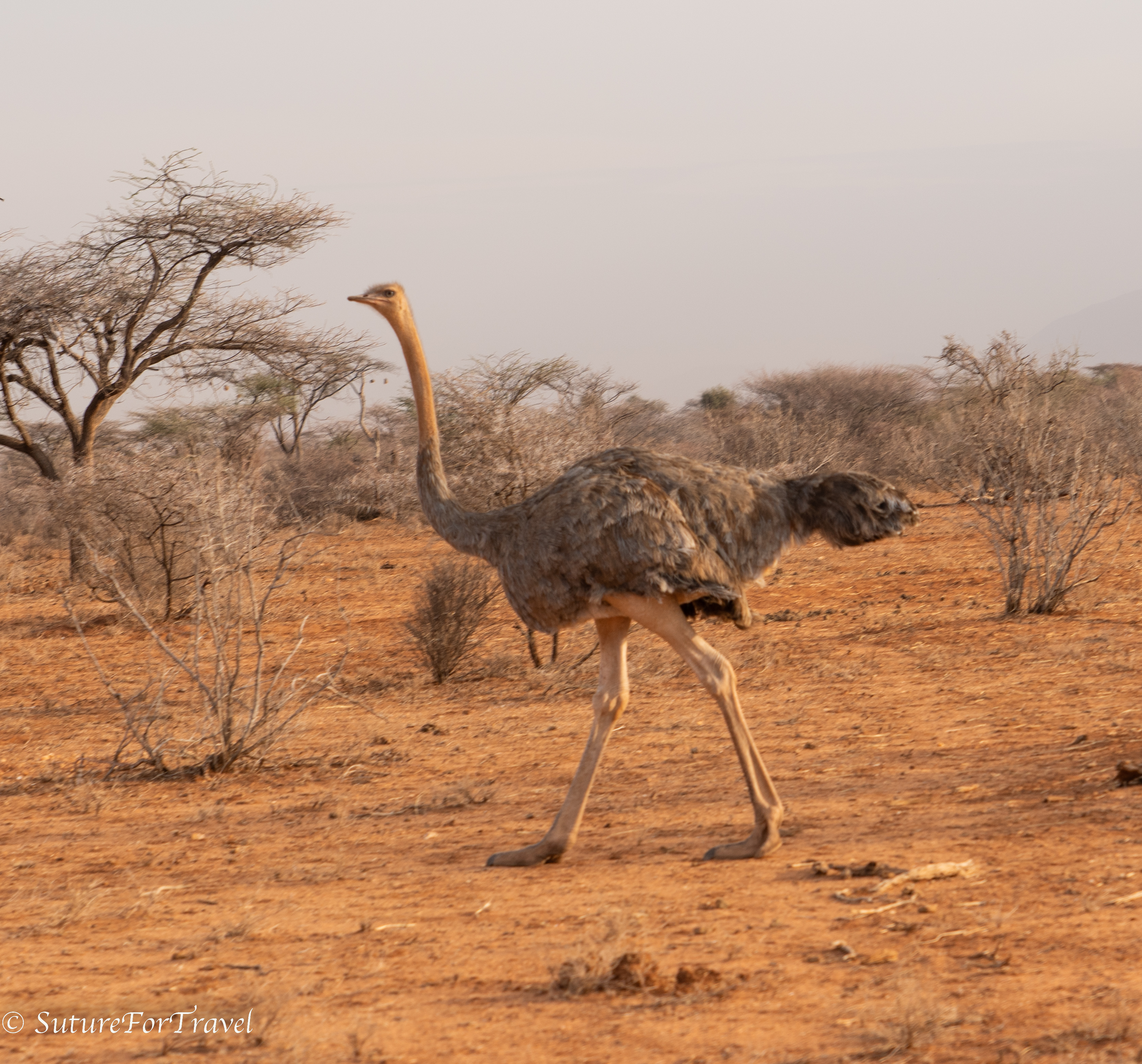
female Somali ostrich: they look exactly like female common ostriches, so not really exciting
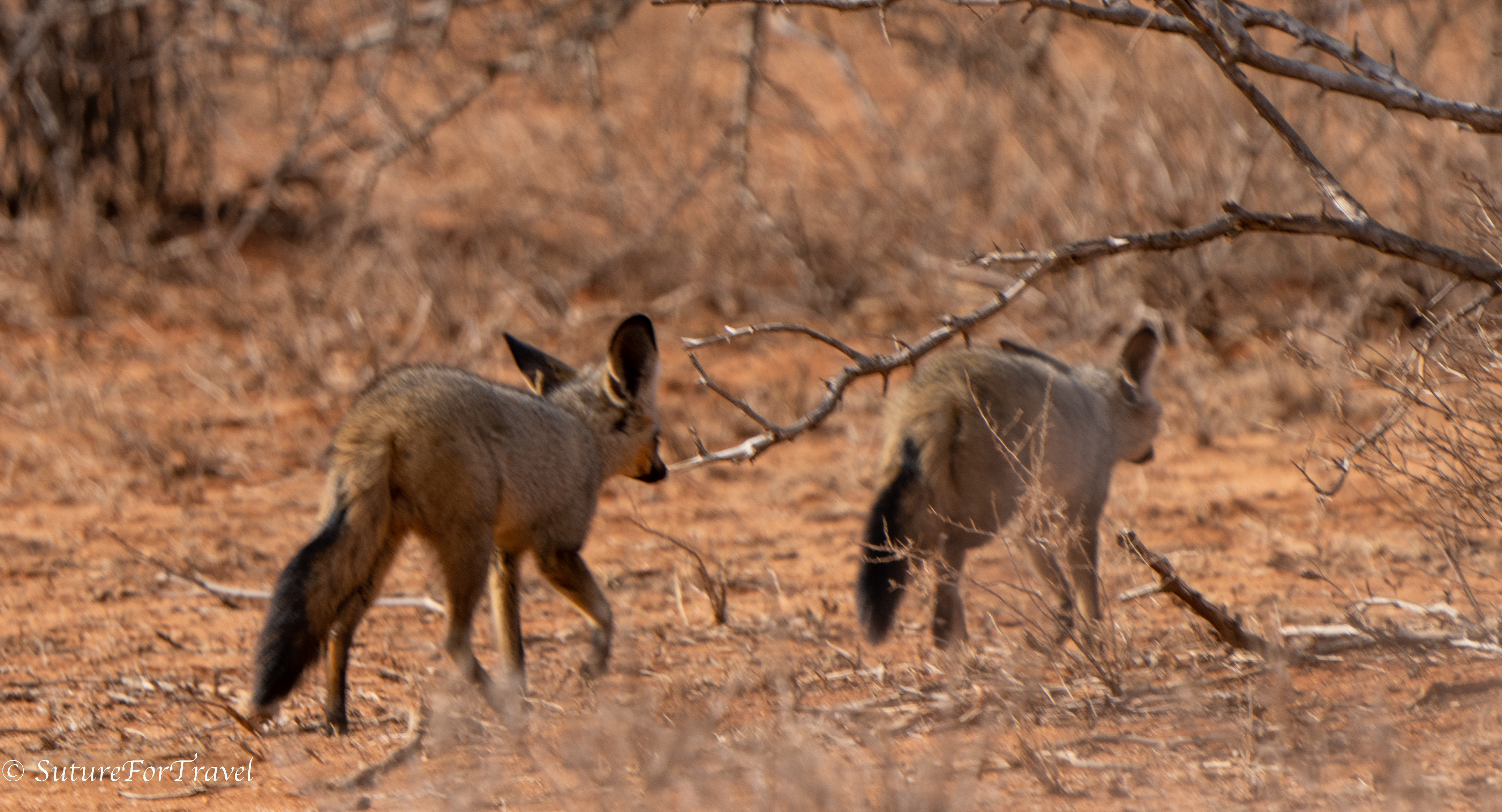
bat eared foxes: I really tried to get these guys, but they would’t cooperate. They’re not an everyday sight.
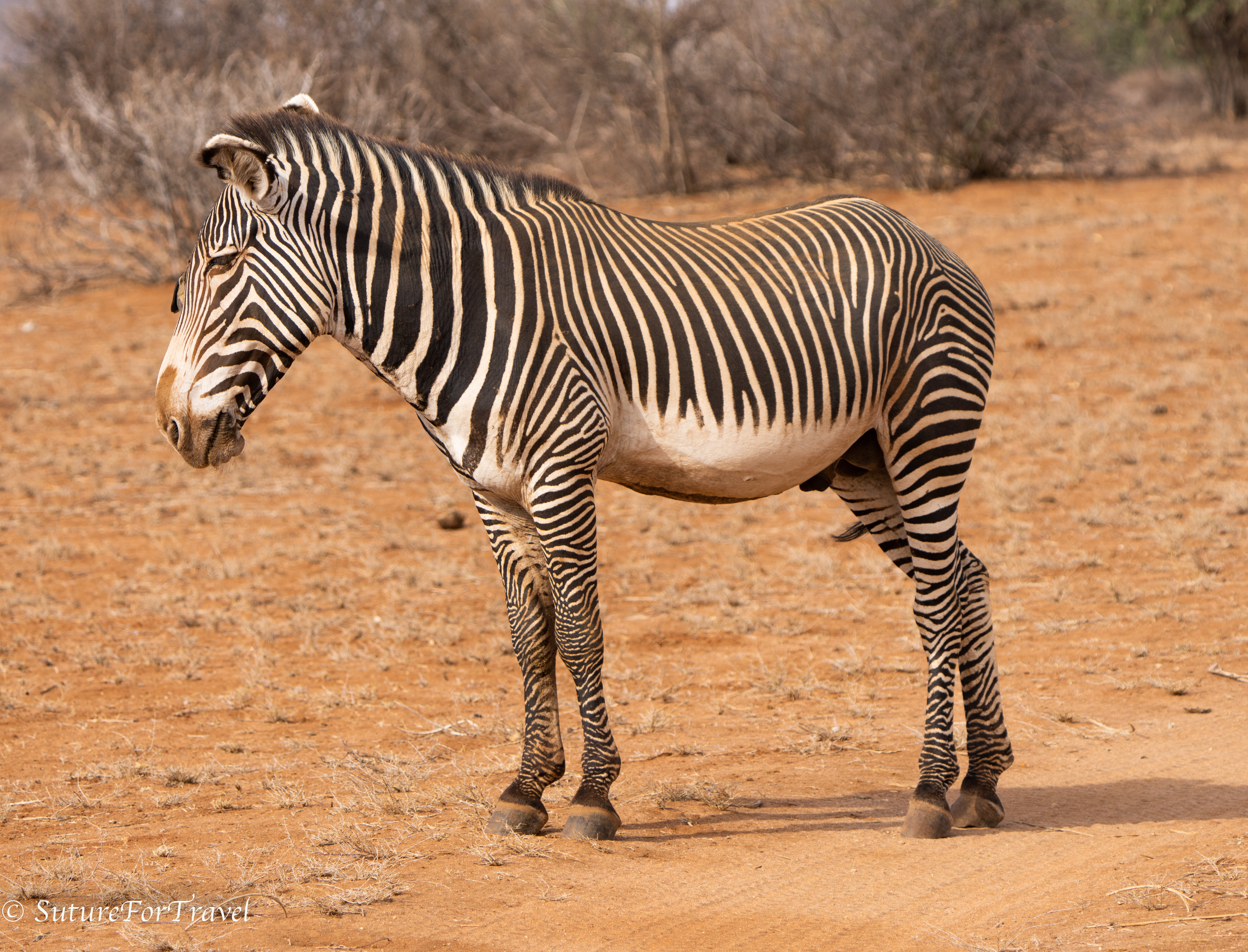
more zebra
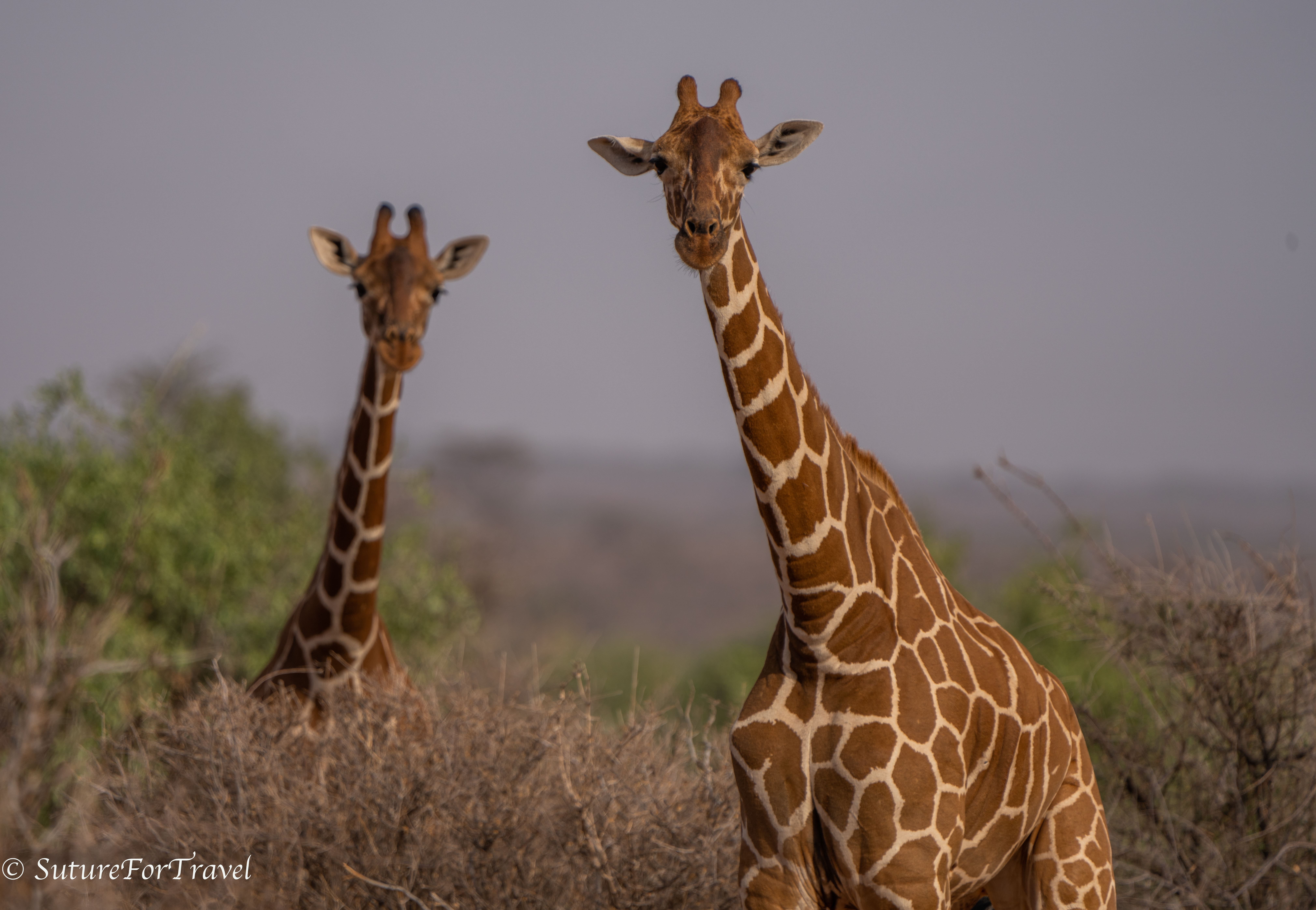
more giraffe
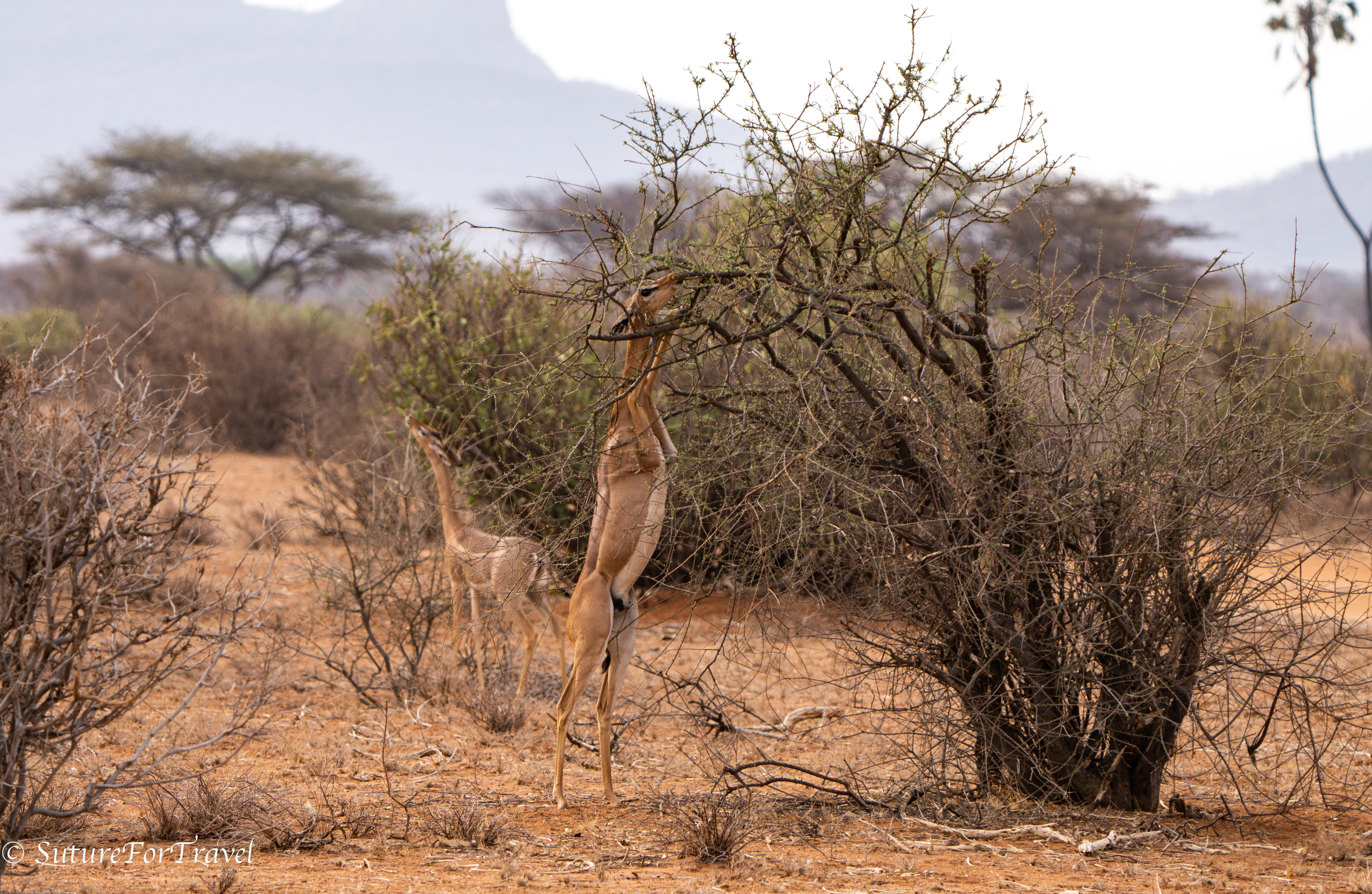
gerenuk: This is a long-necked antelope about the size of impala. Only males have horns. They stand up like this to feed on higher branches. They are able to eat the smaller leaves off of thorny bushes. They also can go very long periods of time without drinking water, essentially not regularly drinking water.
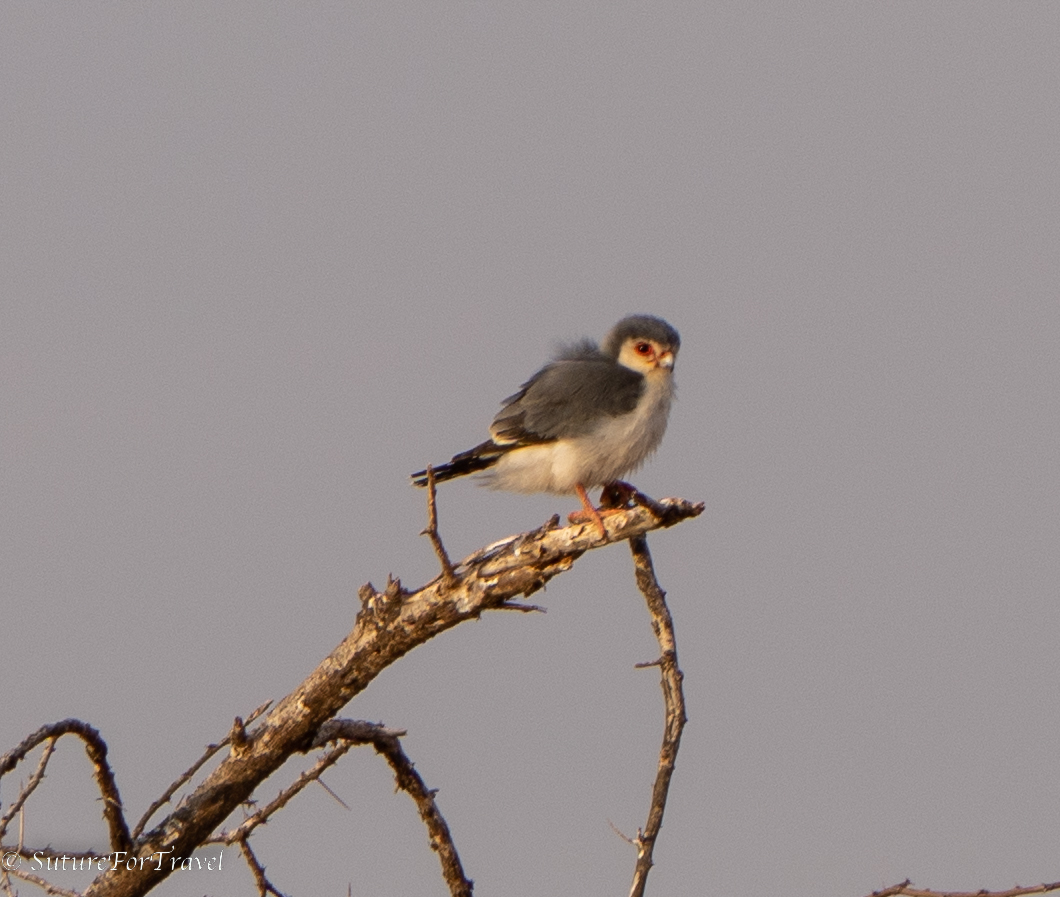
pygmy falcon: the smallest raptor in Africa at about 8 inches head to tail. They eat reptiles, insects, and sometimes small birds and rodents. They steal weaver bird nests rather than making their own.
.jpg)
We ended our day with a bush dinner and a large bonfire. Not a bad first day in the Kenyan bush.
 Will Suture for Travel
Leave a comment