
Safari drives start early to catch the animals in the cool of the morning.
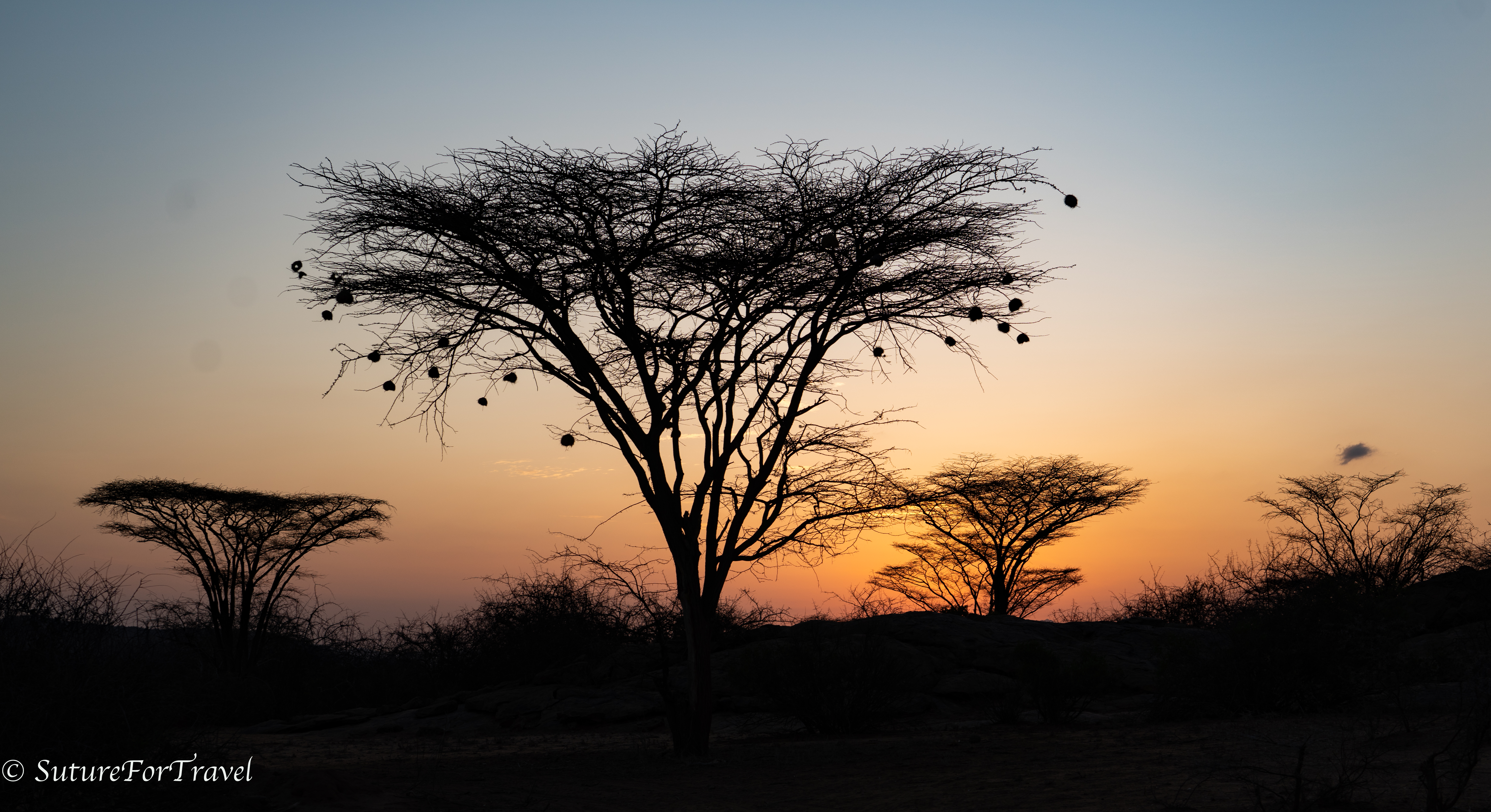
Sunrise
We headed out this morning and Sumoro, our guide, quickly found the fresh tracks of 2 male lions near the river. We went off in search of them. While we were out following their tracks we came upon a fresh kill that was abandoned, but hidden. It had leopard tracks by it. It was near a main safari road and Sumoro figured the leopard got frightened off by the safari trucks. We now had a split mission to find 3 big cats. Of course, nature comes to you.
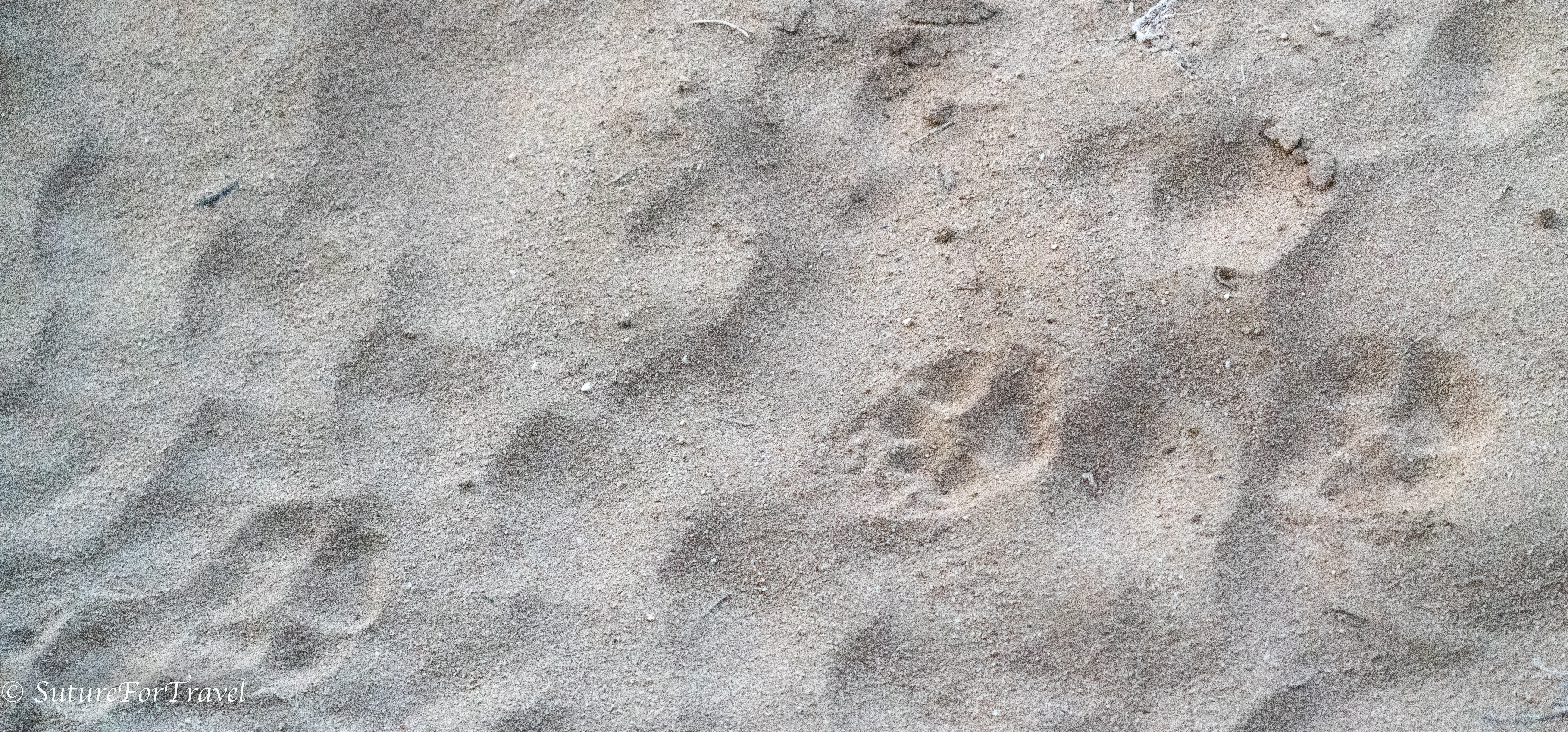
lion tracks
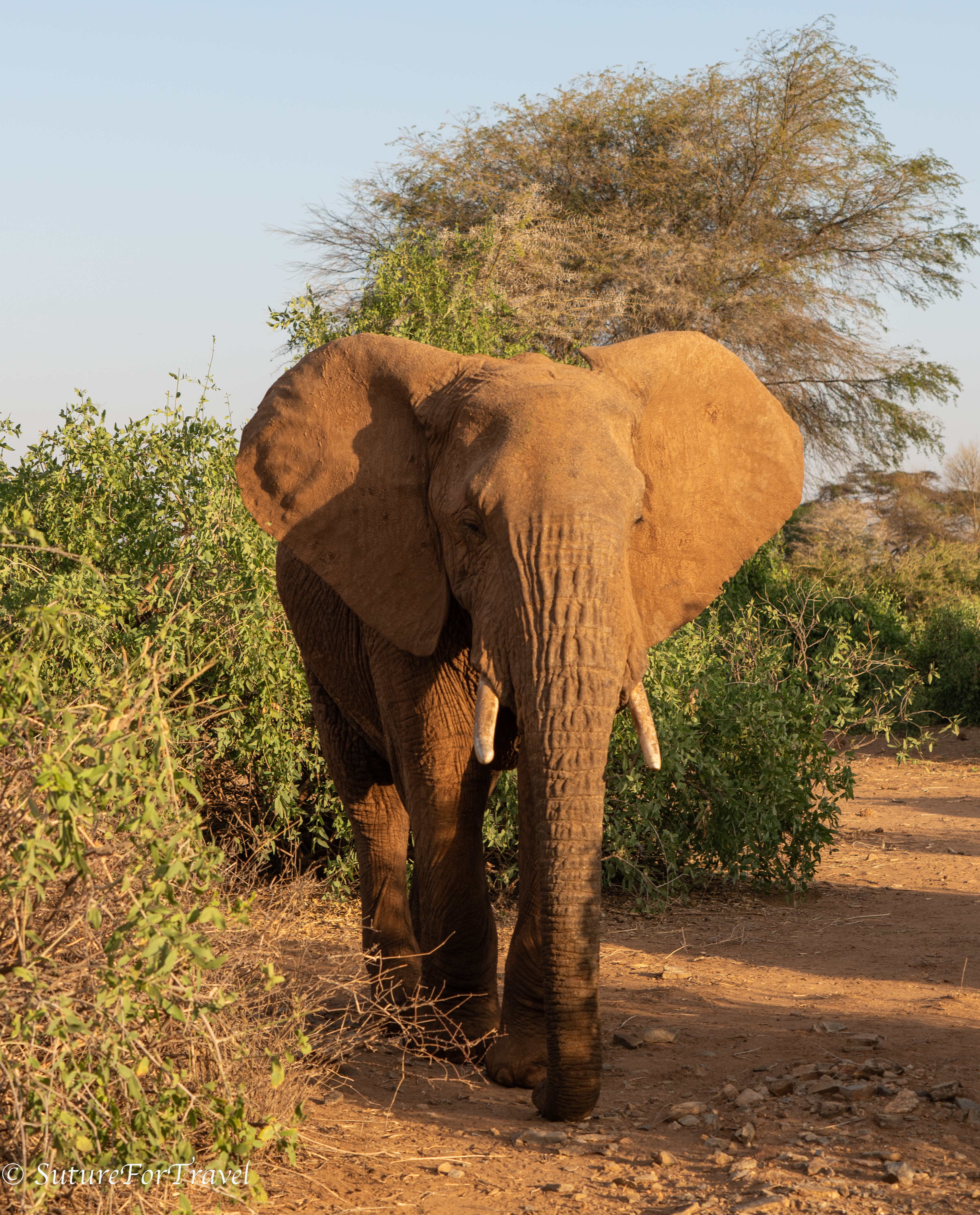
elephant
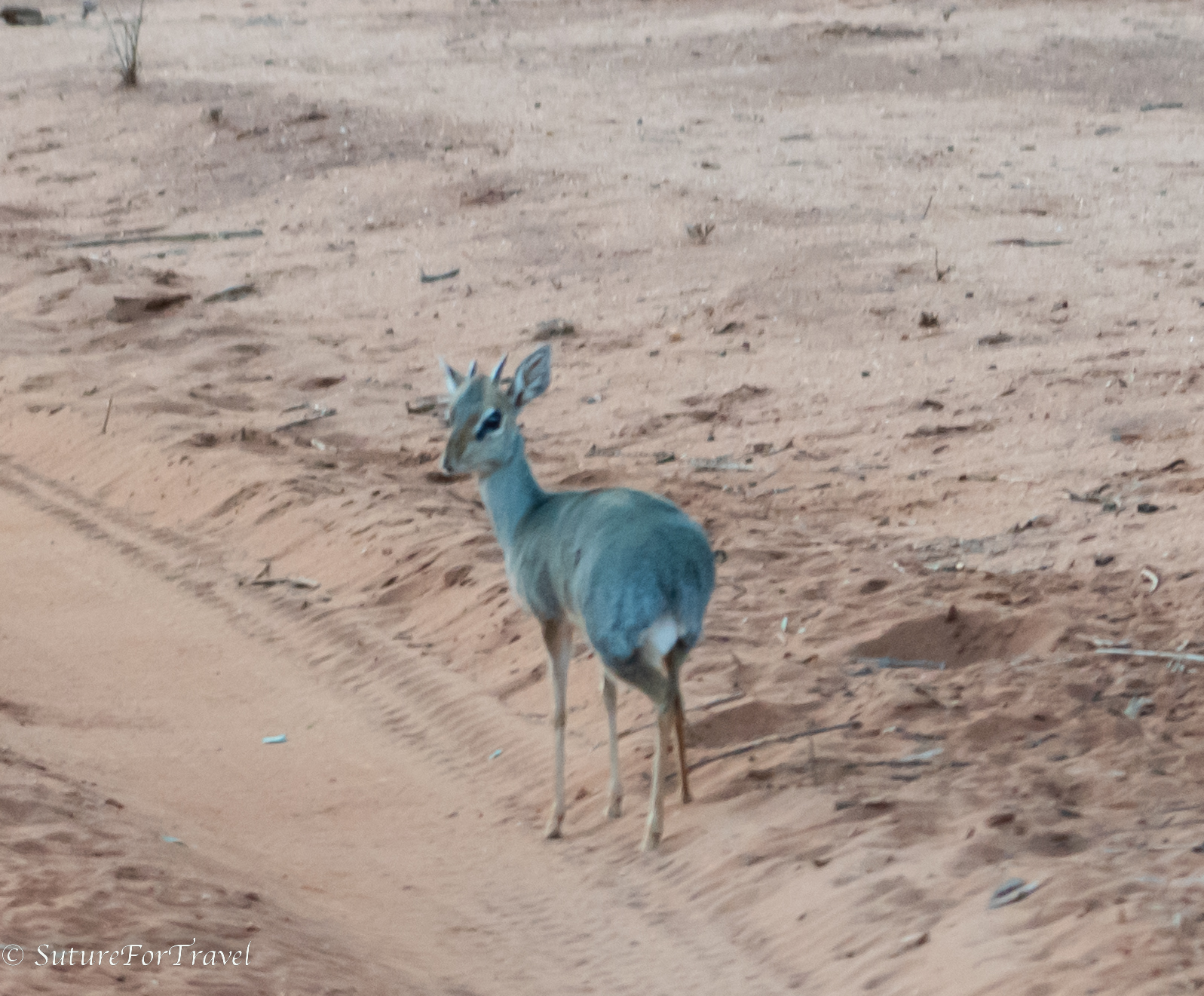
dik dik: These are tiny antelope. They’re the size of a very small dog, maybe 6-8 lbs. They’re very skittish and almost always immediately run off, so they are hard to get pictures of. There are tons of them around here. They are nearly always seen in mated pairs.
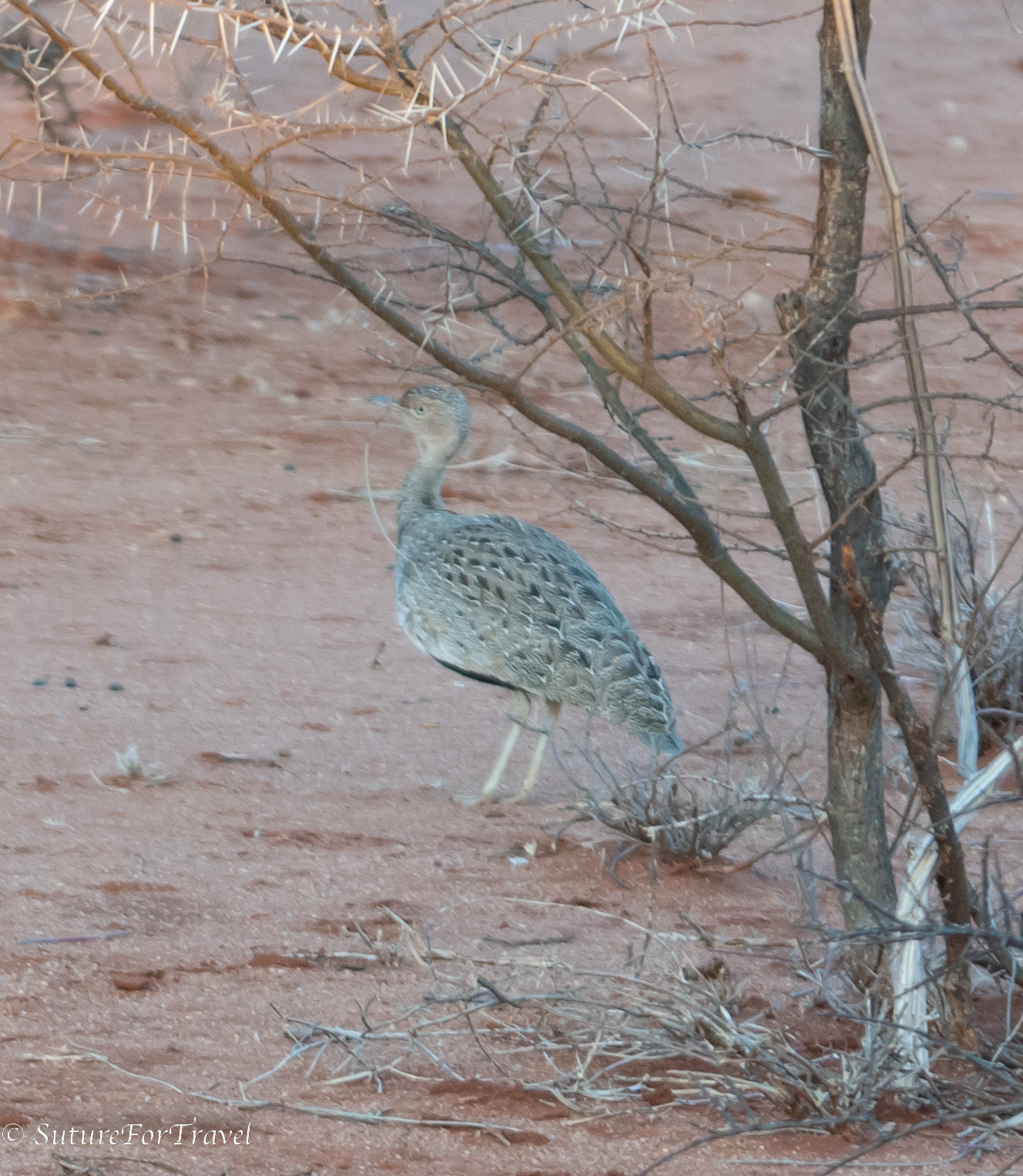
buff-crested bustard: these birds can be up to 2 feet tall. They blend in perfectly with the arid environment.
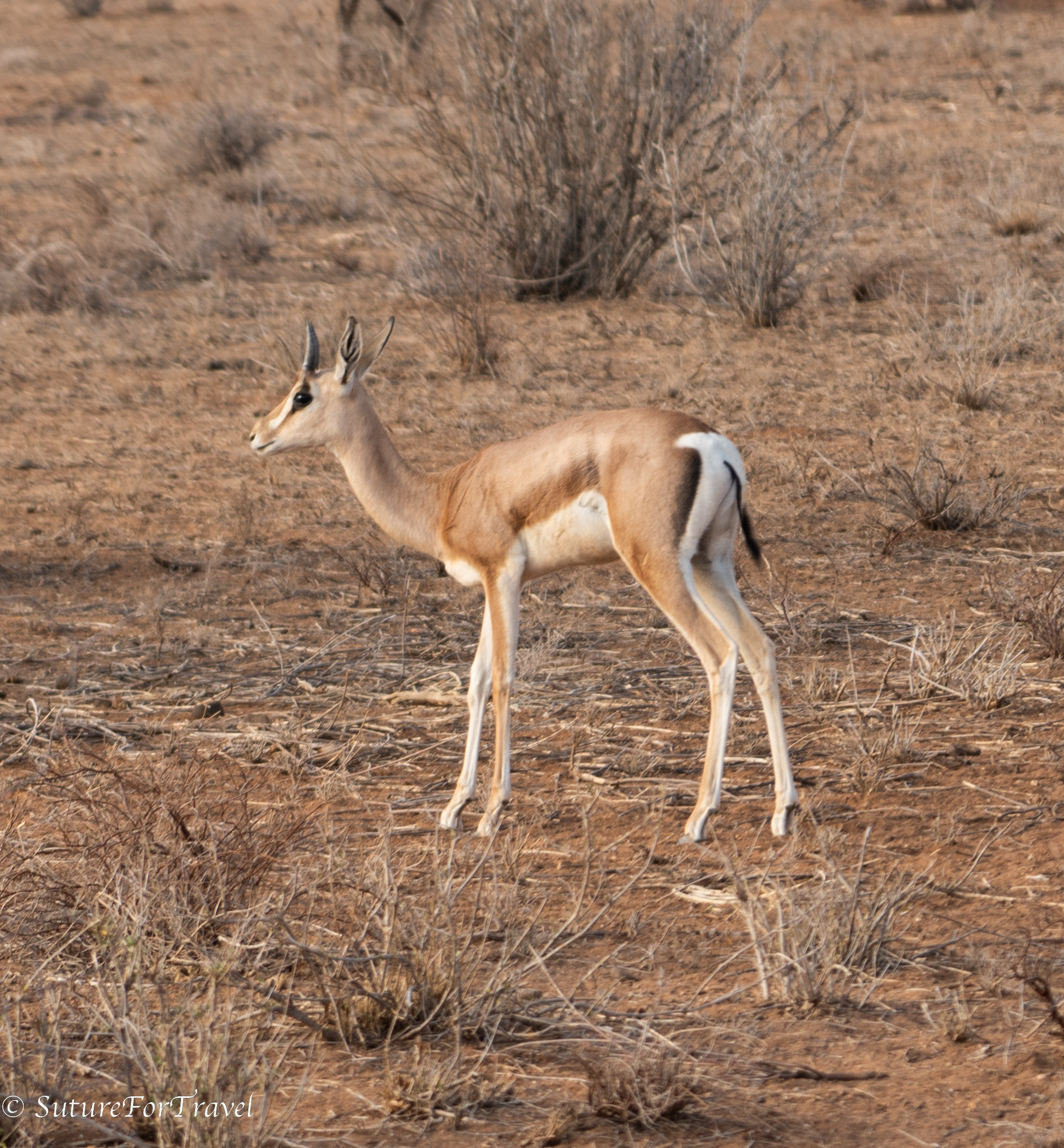
Impala: These are medium-sized antelope that are common in eastern and southern Africa. They graze in herds.
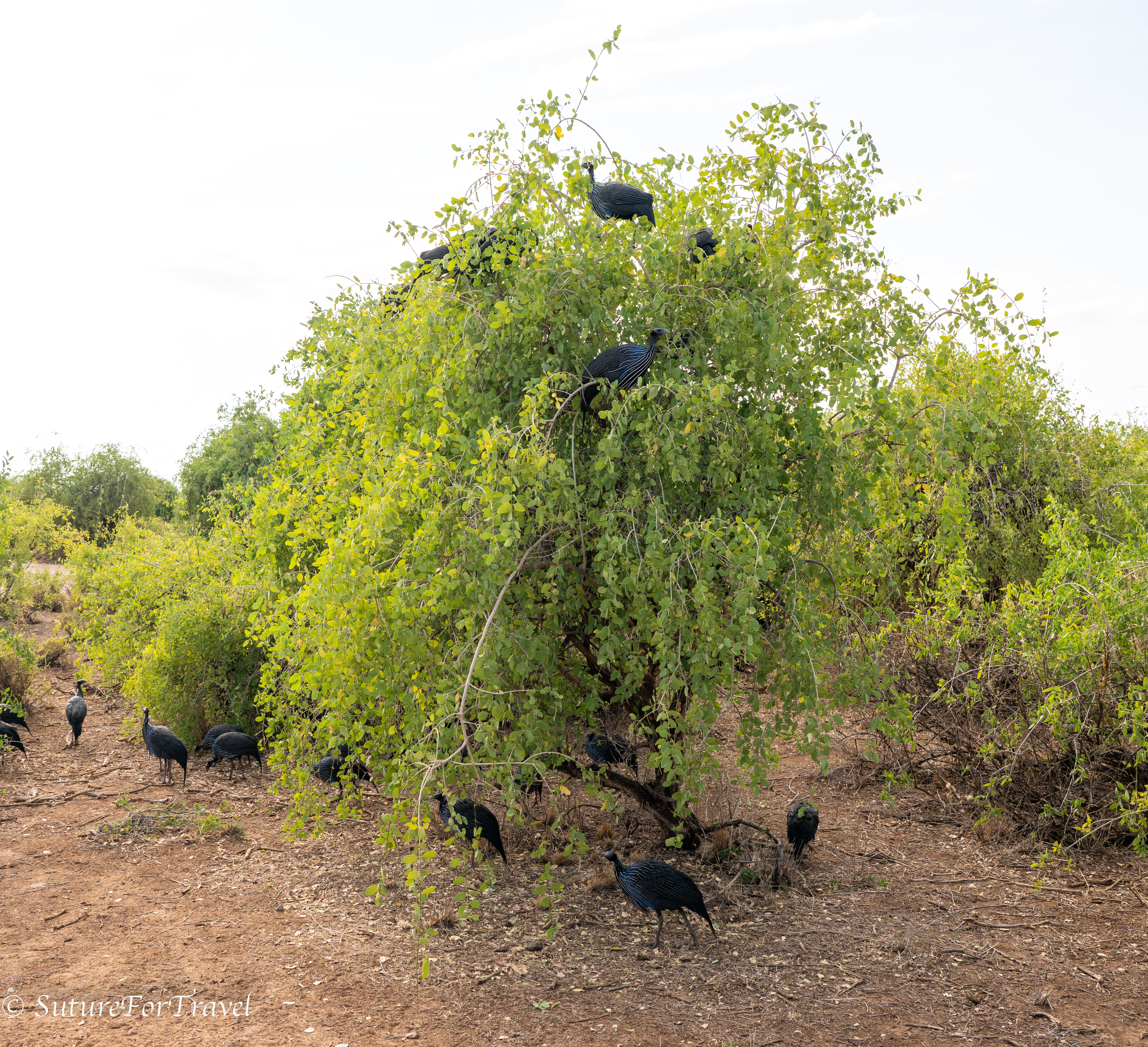
vulturine guinea fowl up in a bush
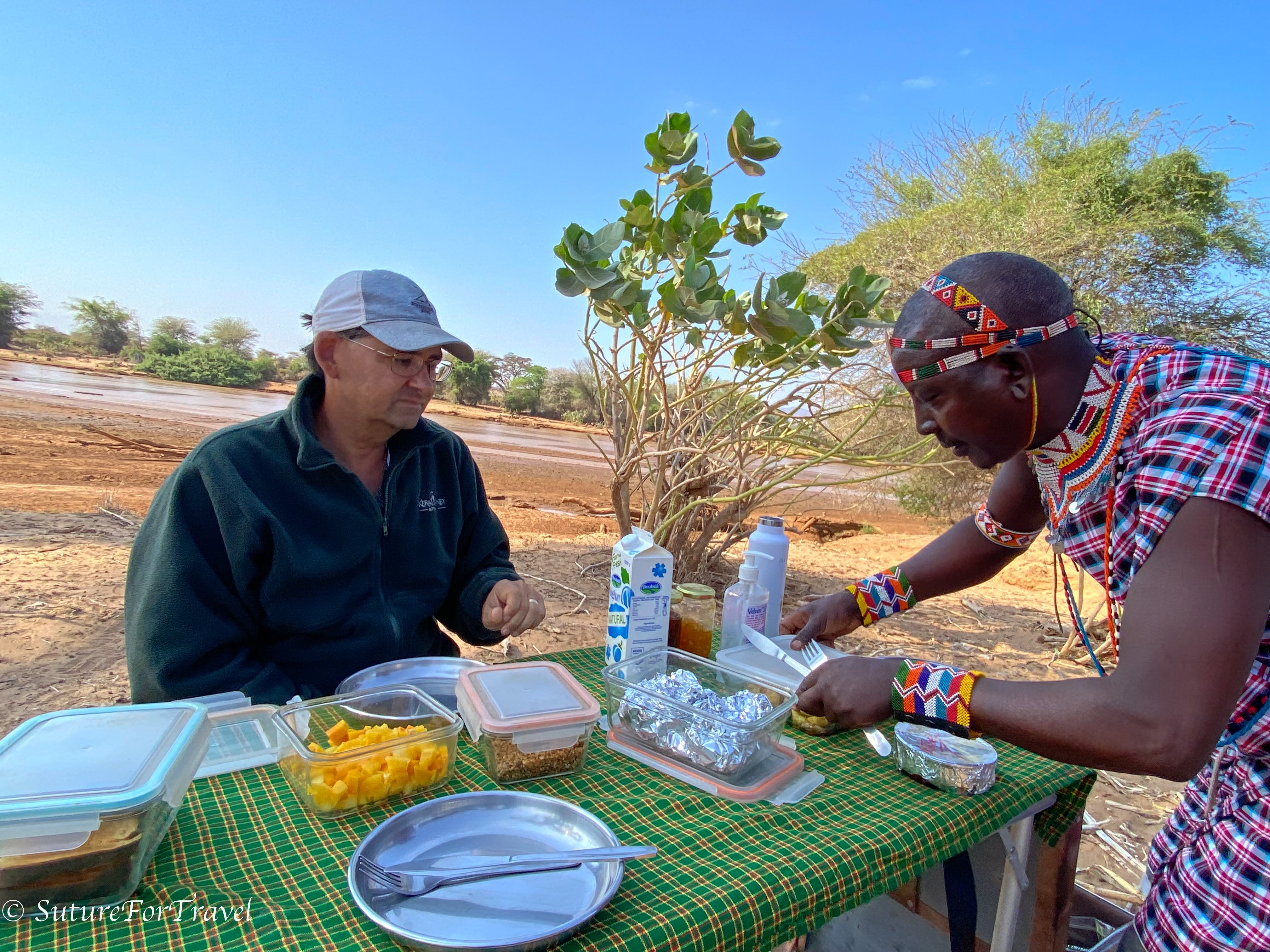
bush breakfast: That is our guide, Sumoro, setting things out. He is wearing traditional Samburu clothing and beads.
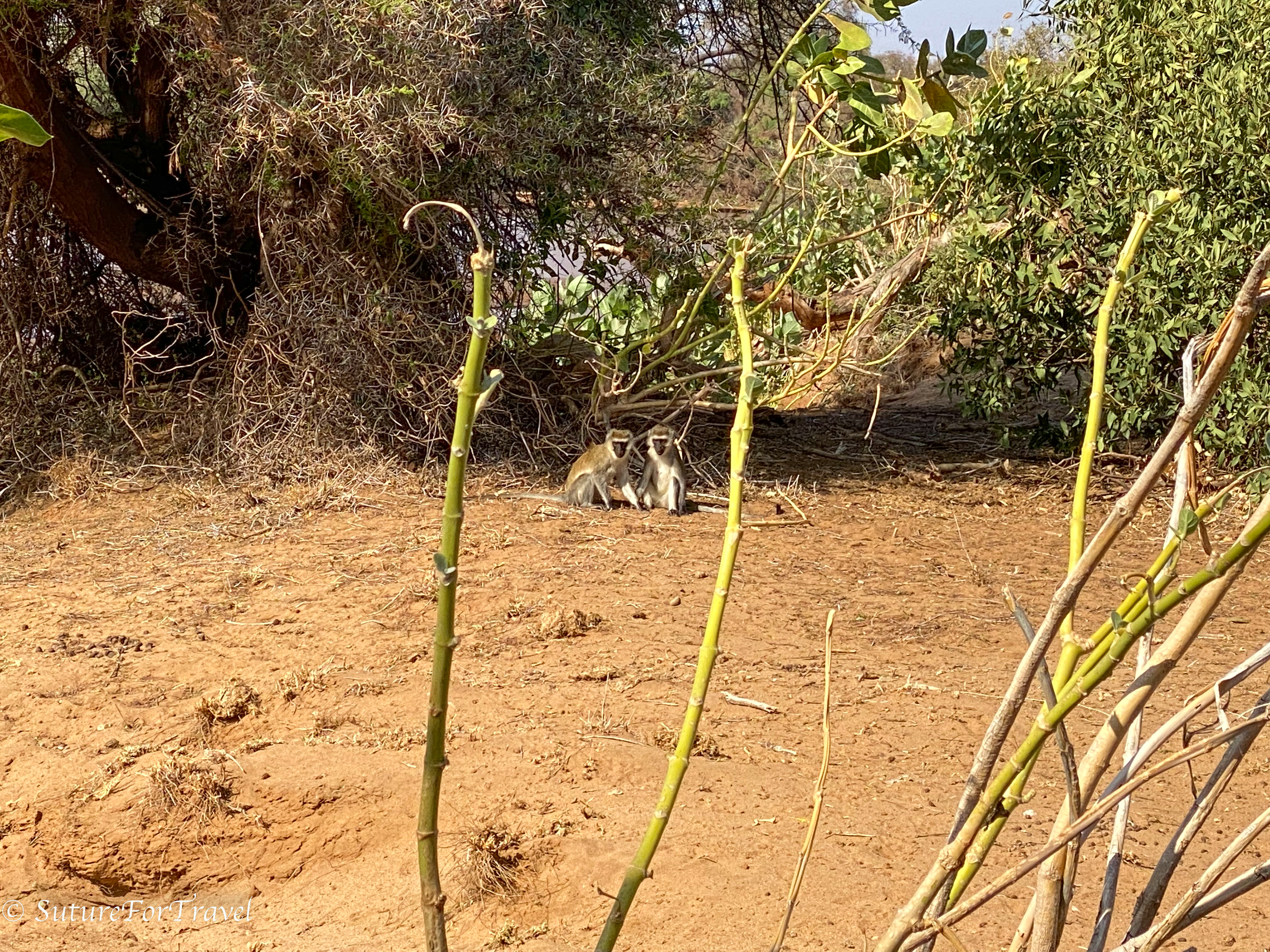
bush breakfast visitors: the vervet monkeys really wanted to join us and were coming at us from multiple directions.
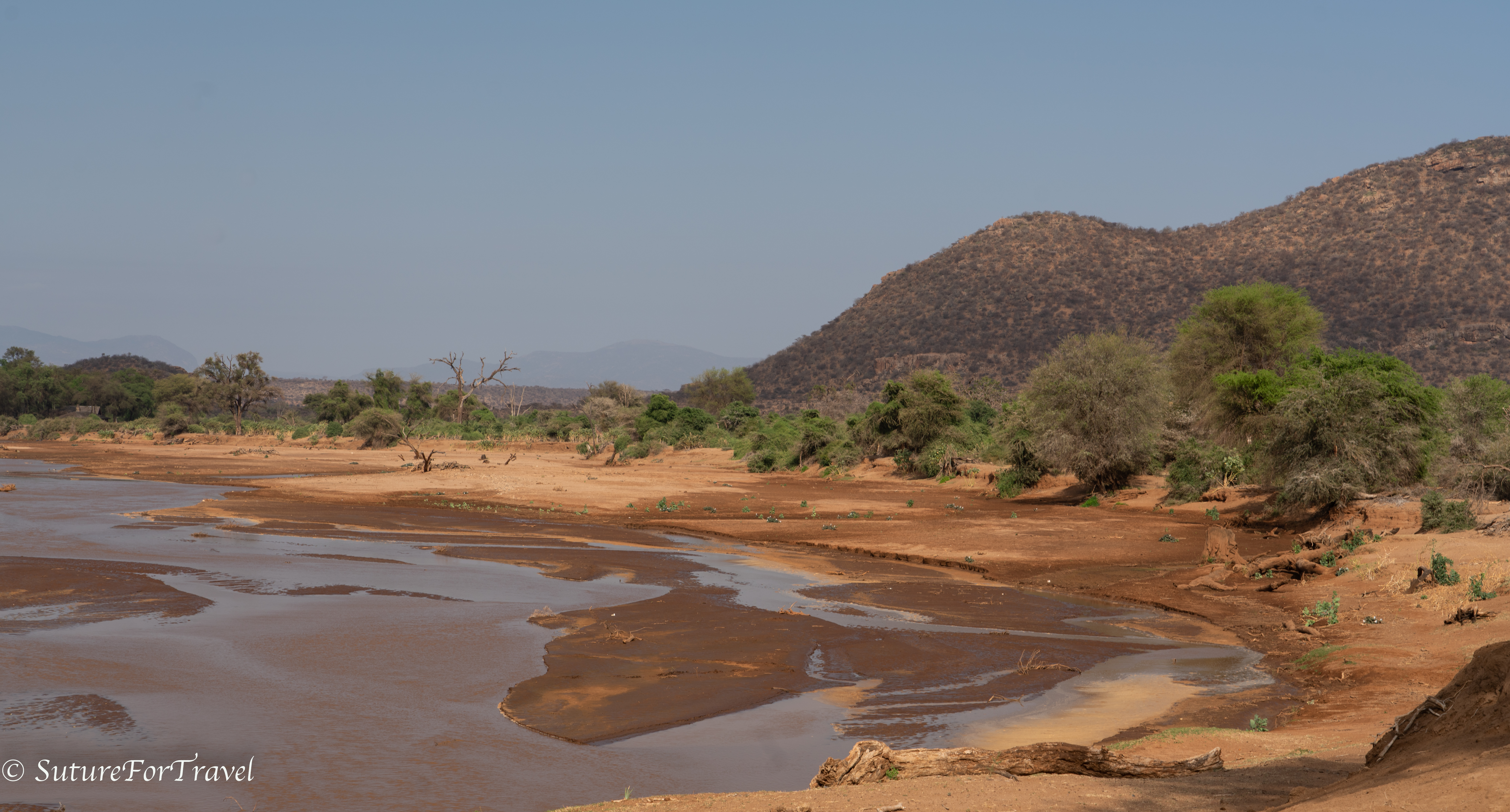
breakfast view
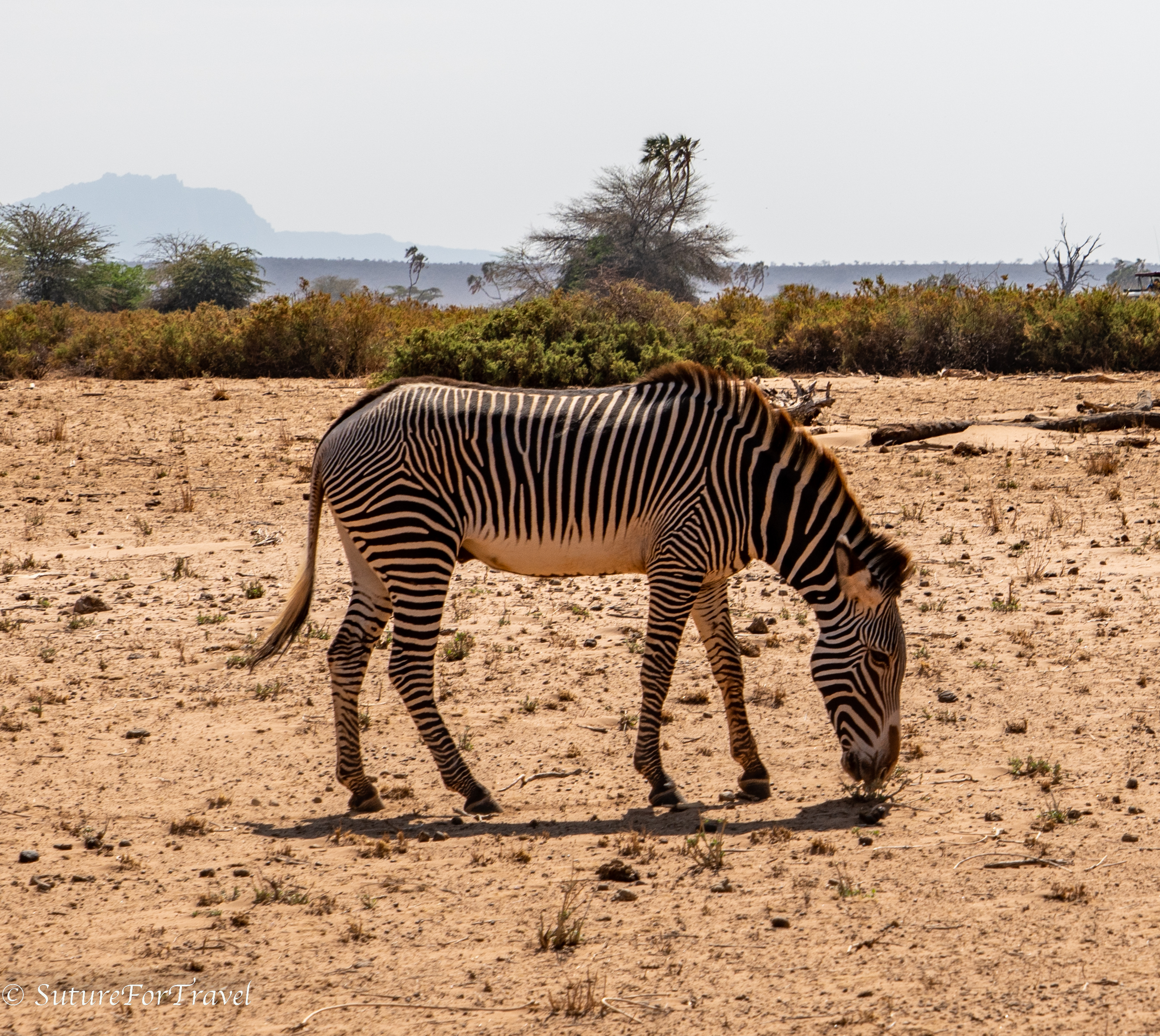
Grevy’s zebra
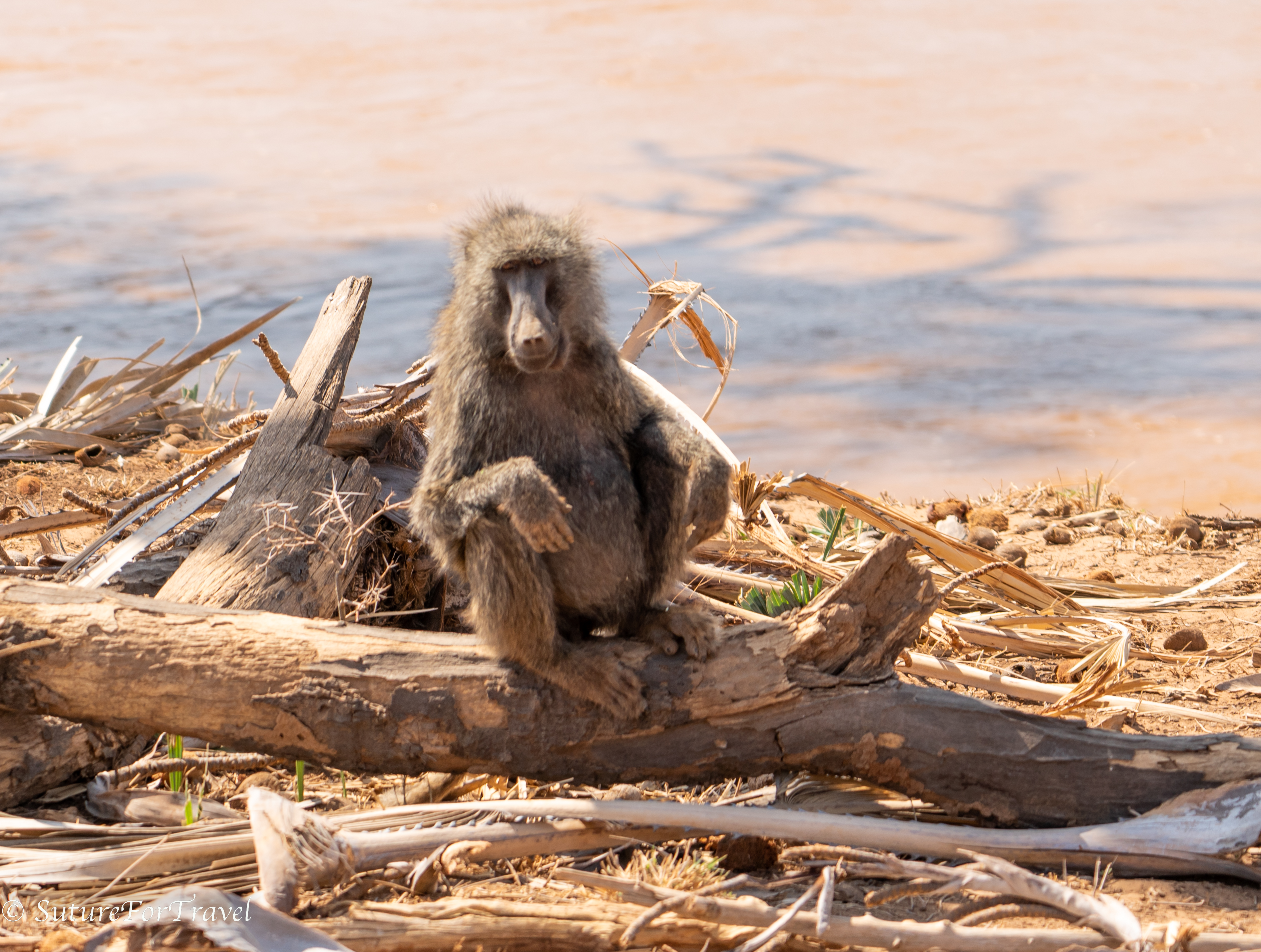
Olive baboon
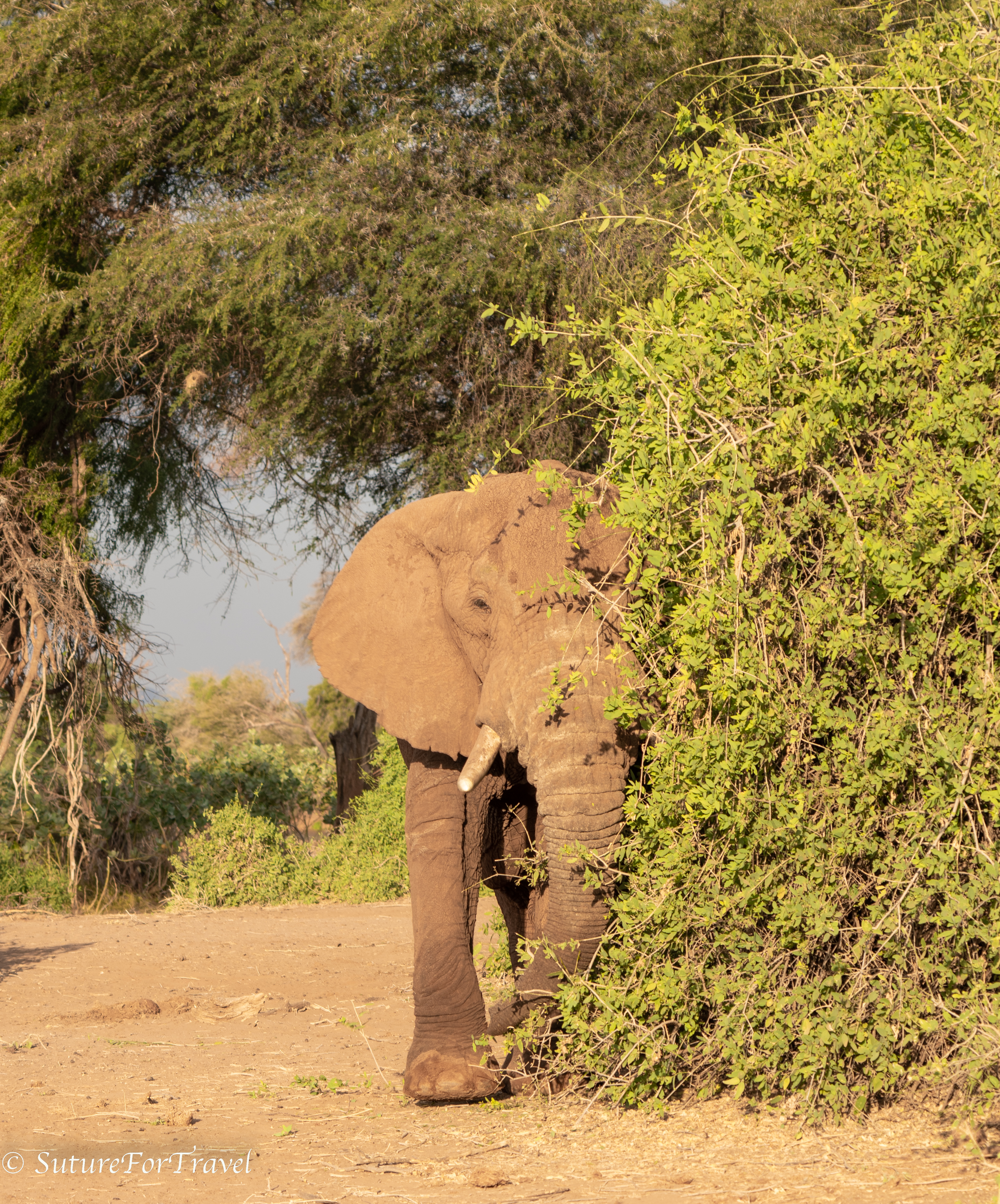
Not long after this, this elephant got grumpy.
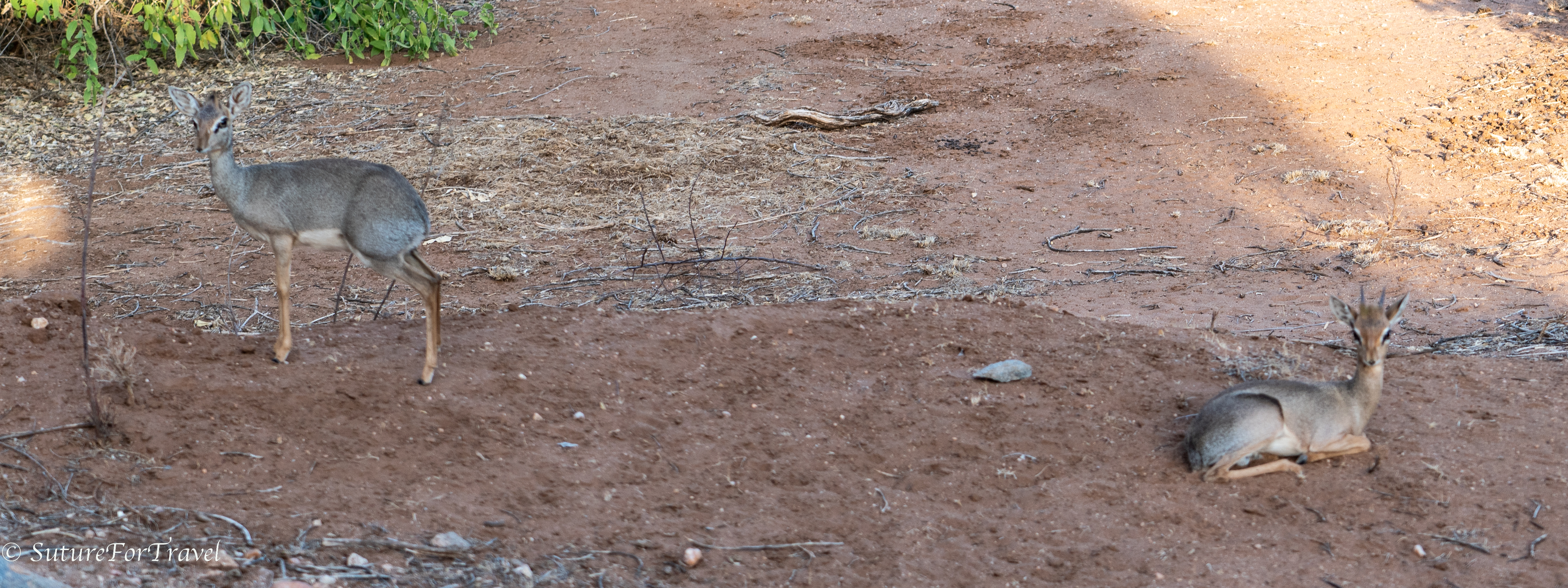
dik dik pair
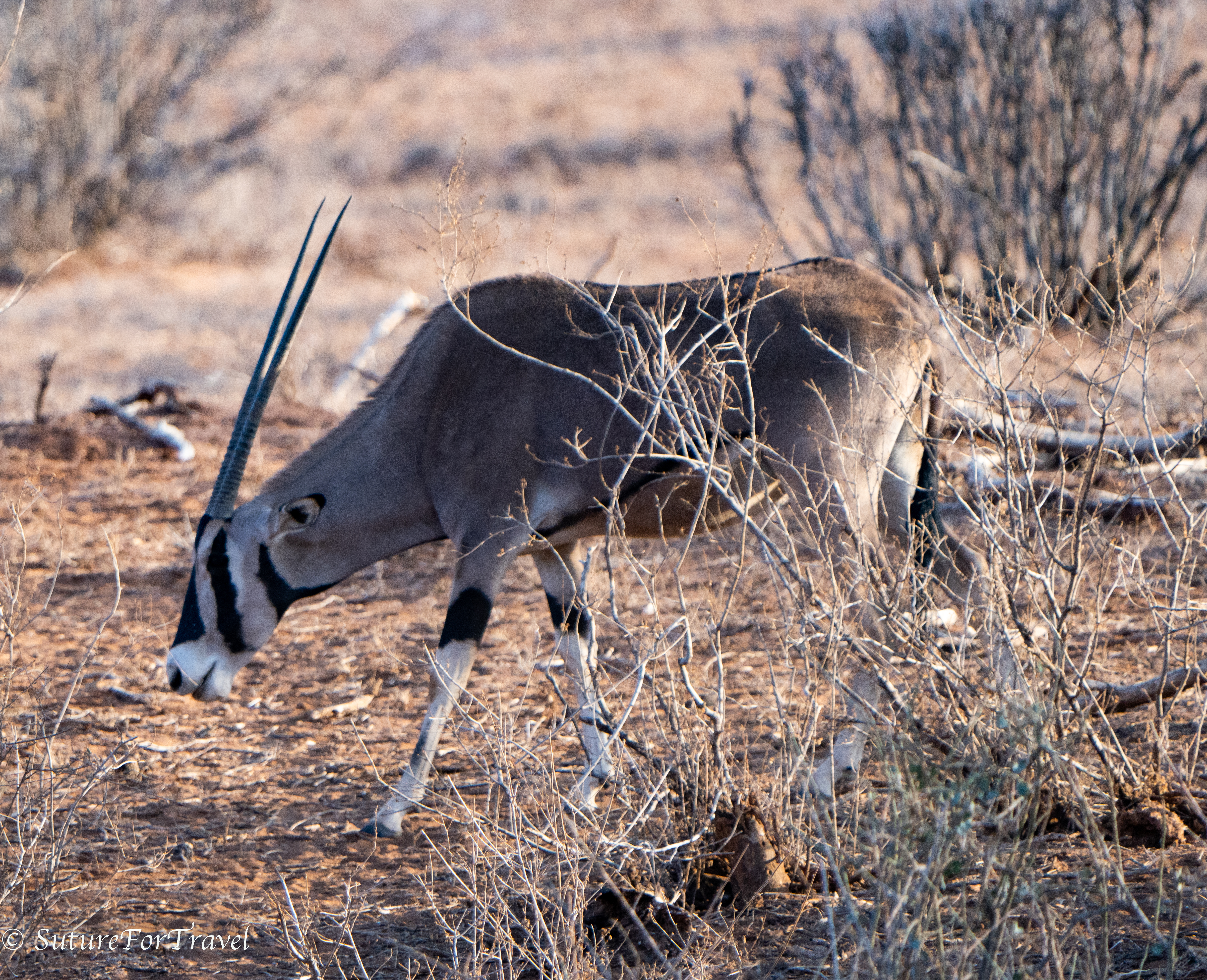
East African oryx (common beisa oryx): one of the Samburu special 5. It is a large gray antelope with distinctive black and white facial markings and long horns. They are endangered and currently are mainly found in Northern Kenya and Ethiopia.
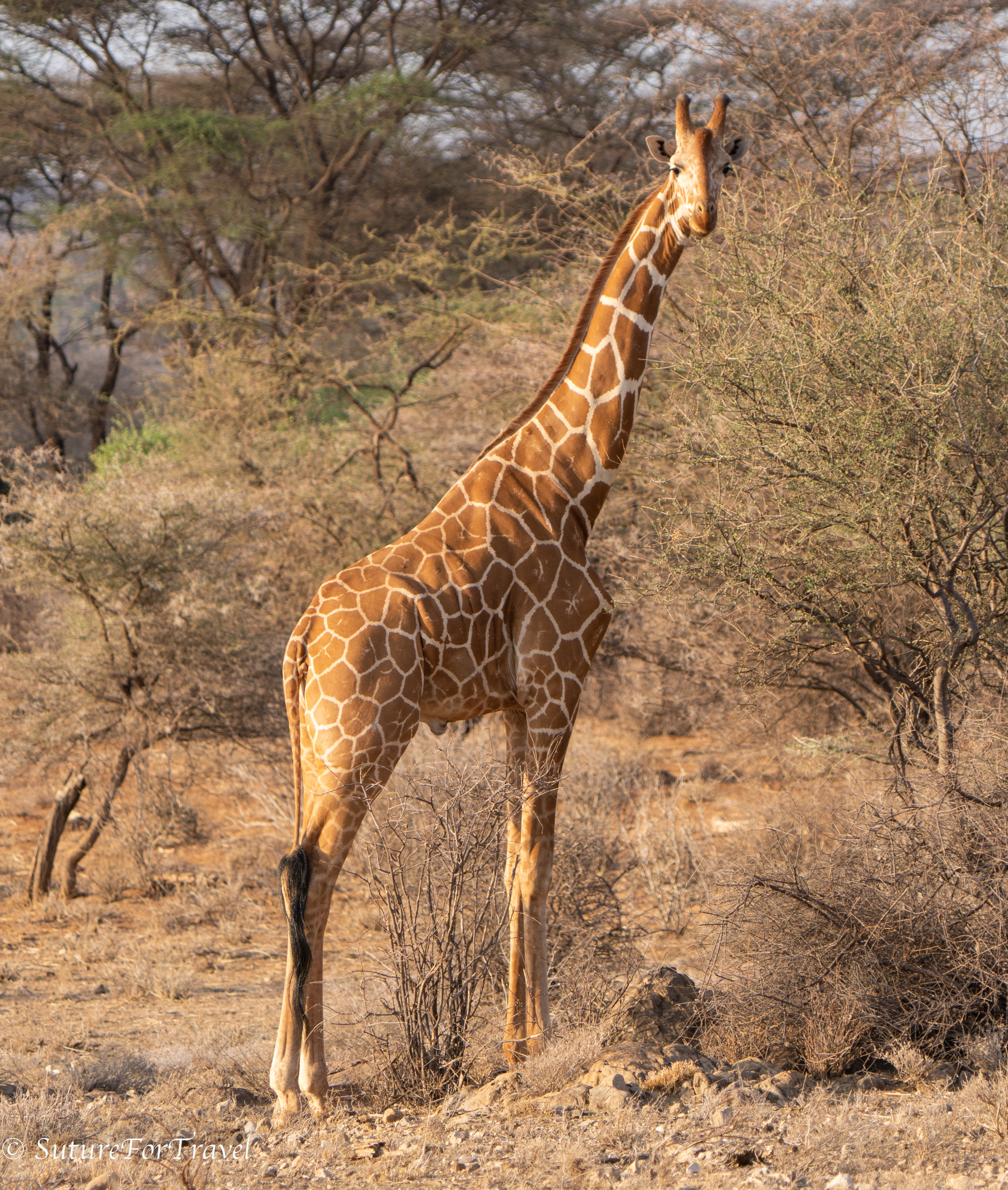
reticulated giraffe
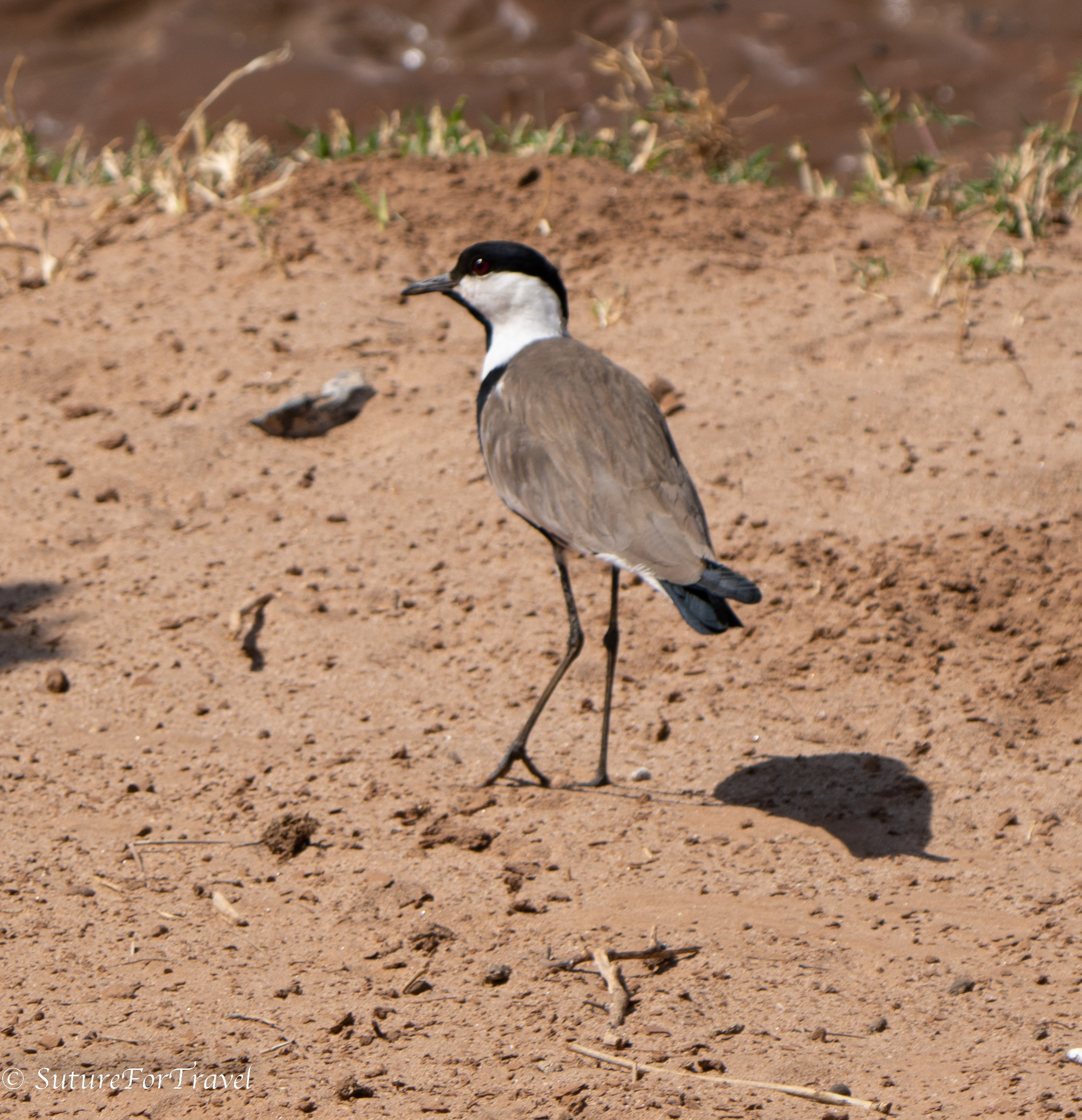
spur-winged plover
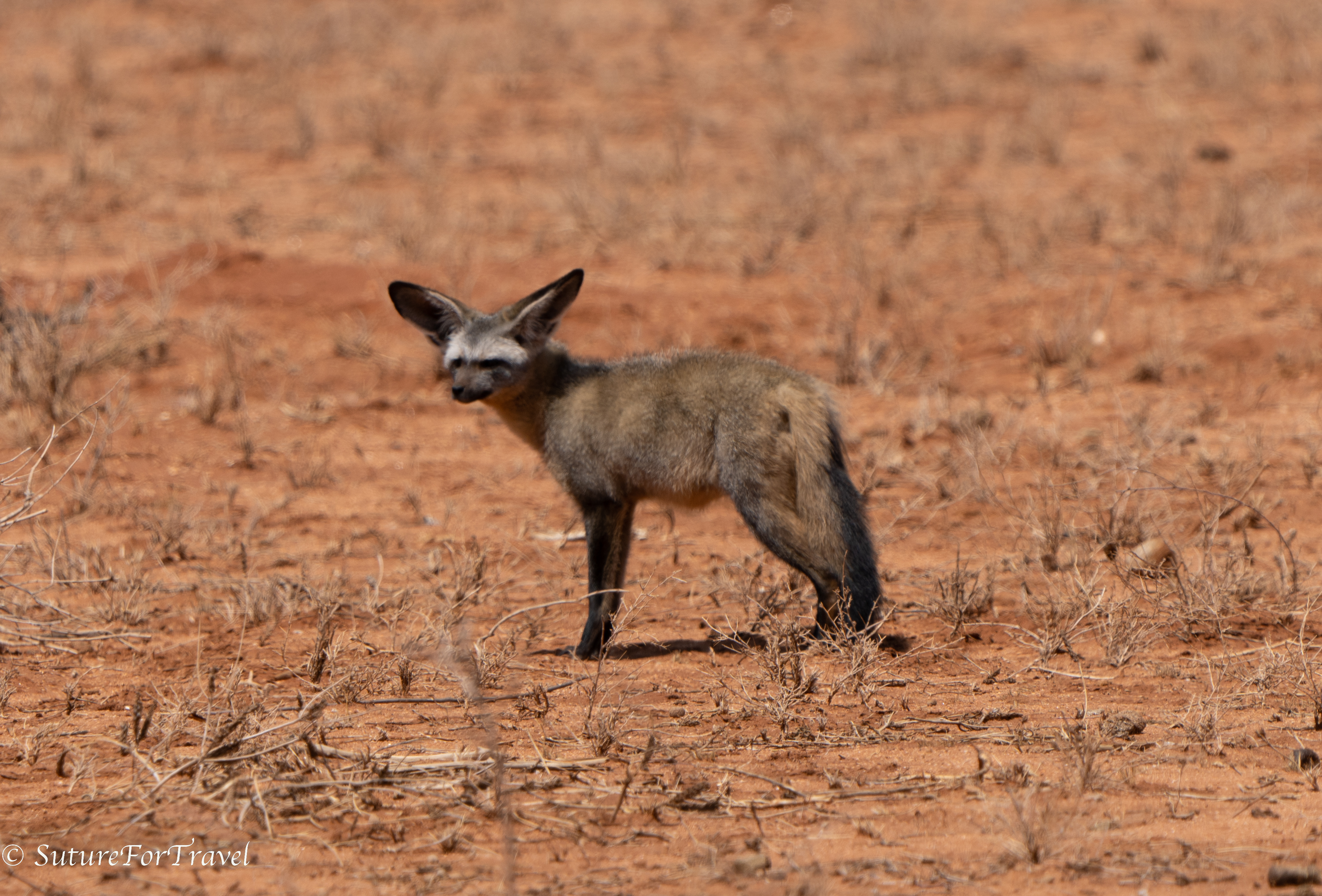
bat eared fox: Better picture today. Named for their big ears. These are small, nocturnal foxes that eat insects.
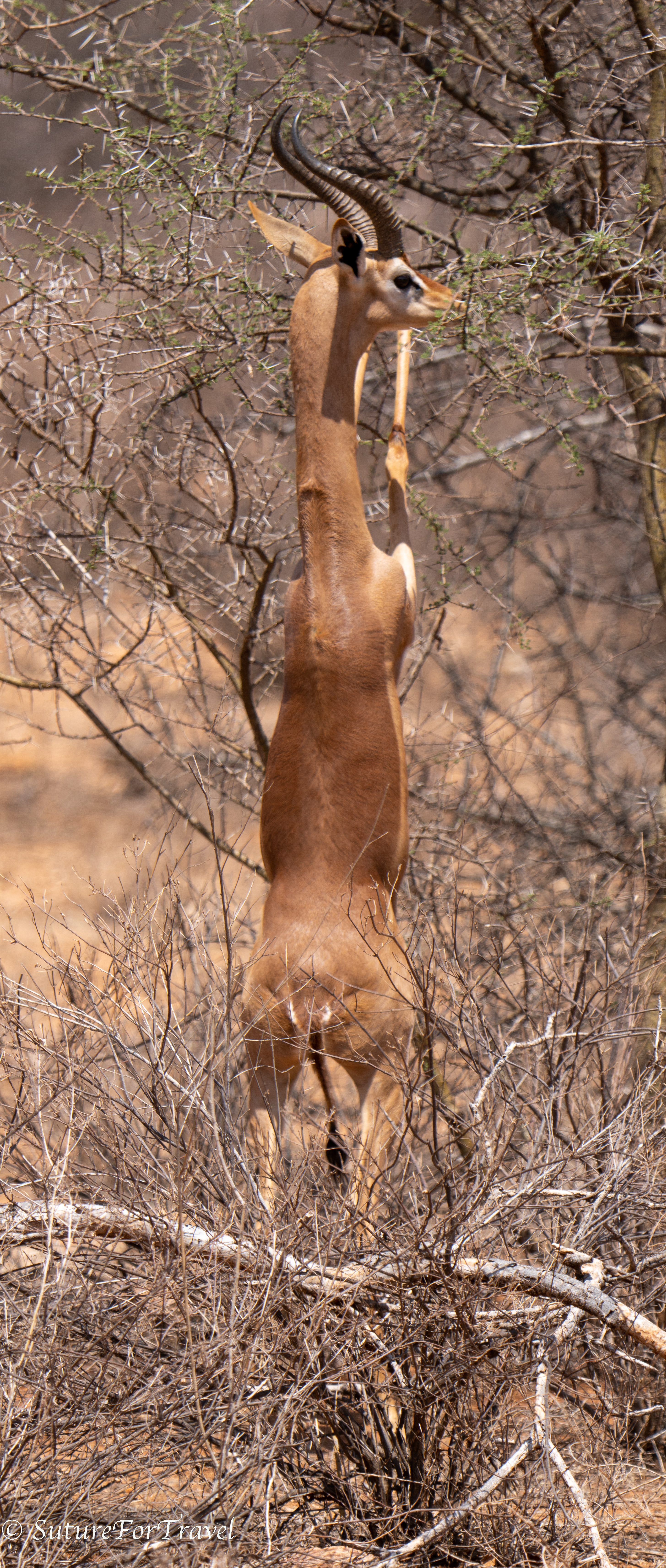
gerenuk eating: I love the markings on the inside of the ear.
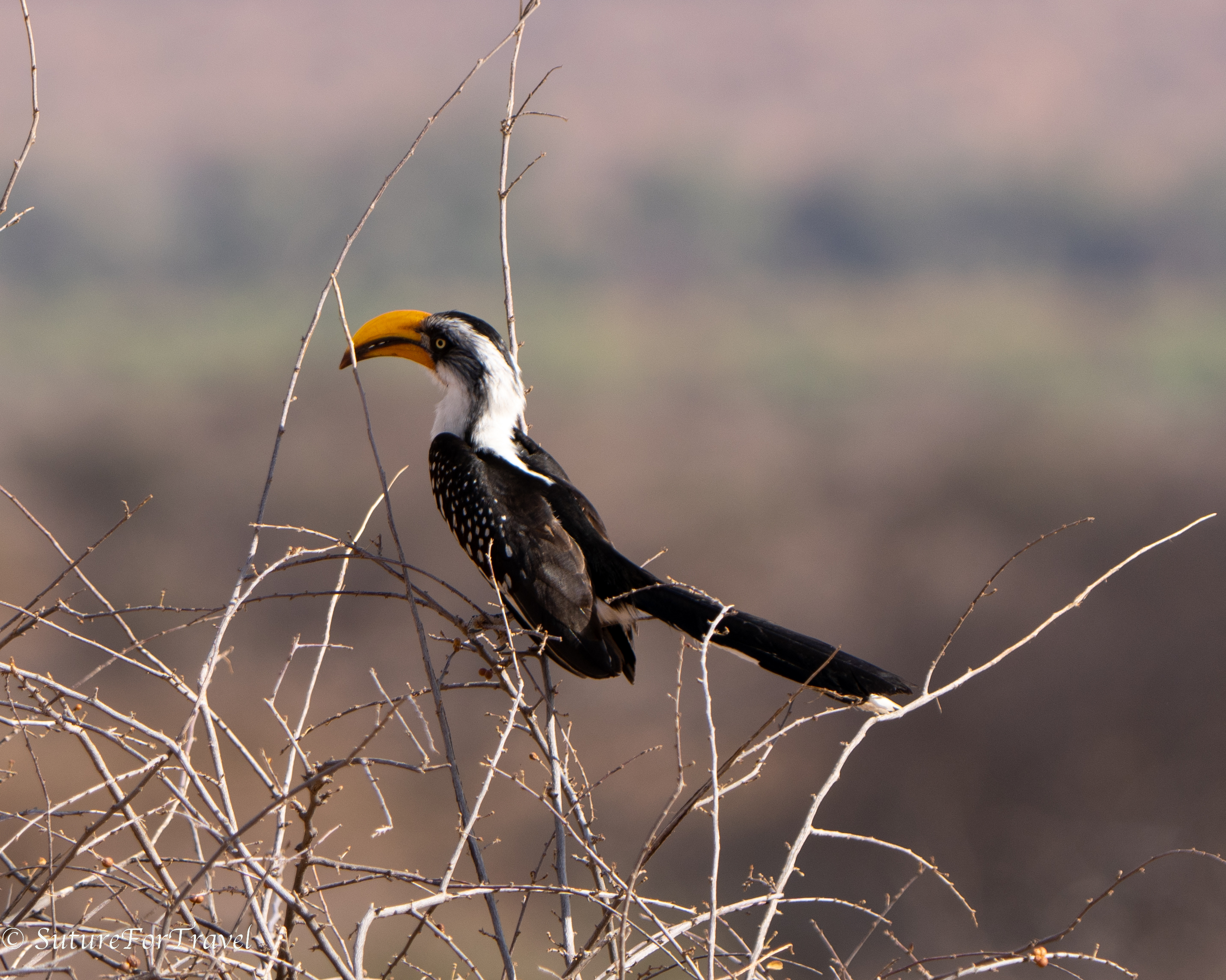
eastern yellow-billed hornbill: also known as the northern yellow-billed hornbill and not to be confused with the southern yellow-billed hornbill.
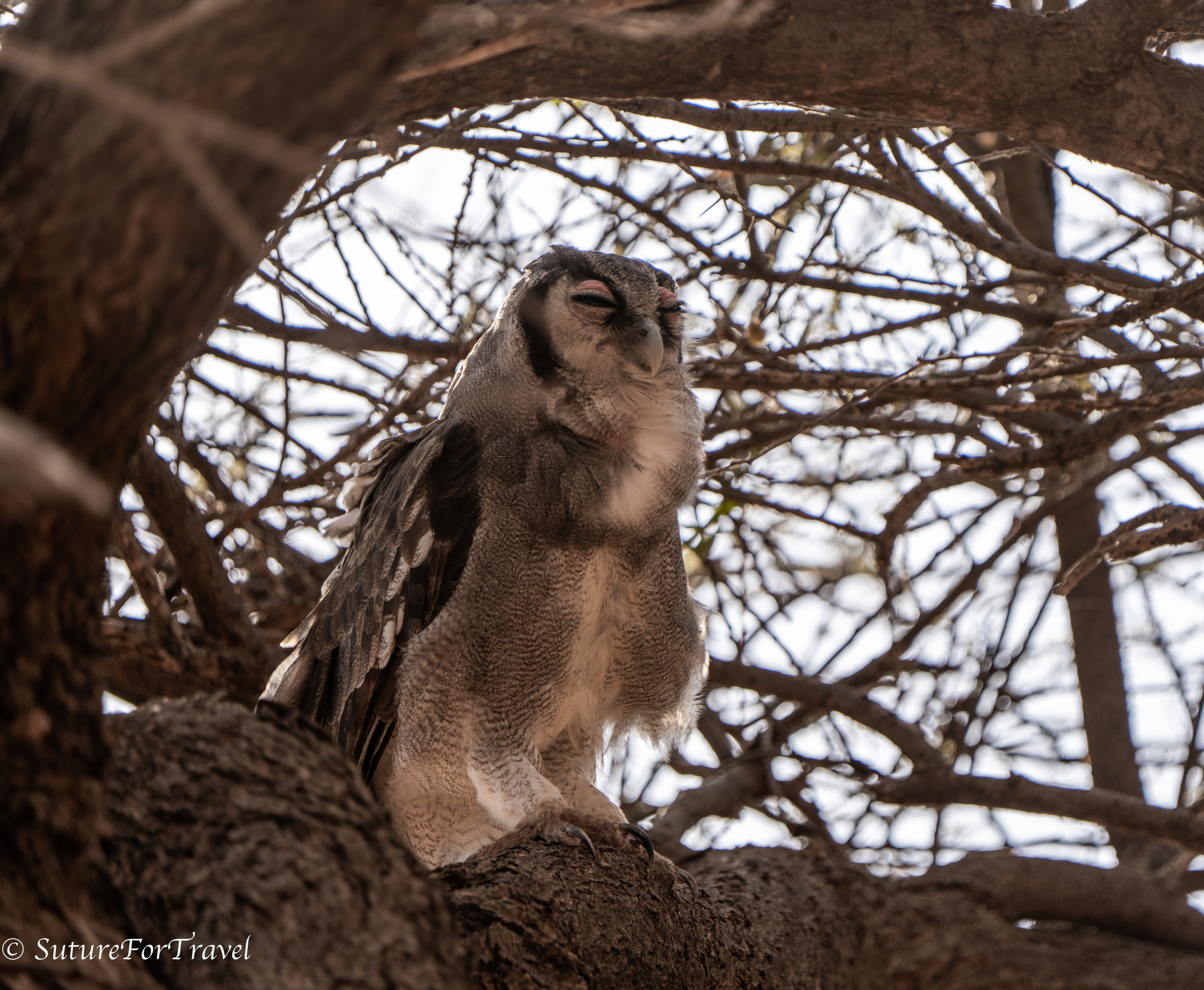
Verreaux’s Eagle Owl: This is the largest owl in Africa at up to 25 inches tall. They have pink eyelids.
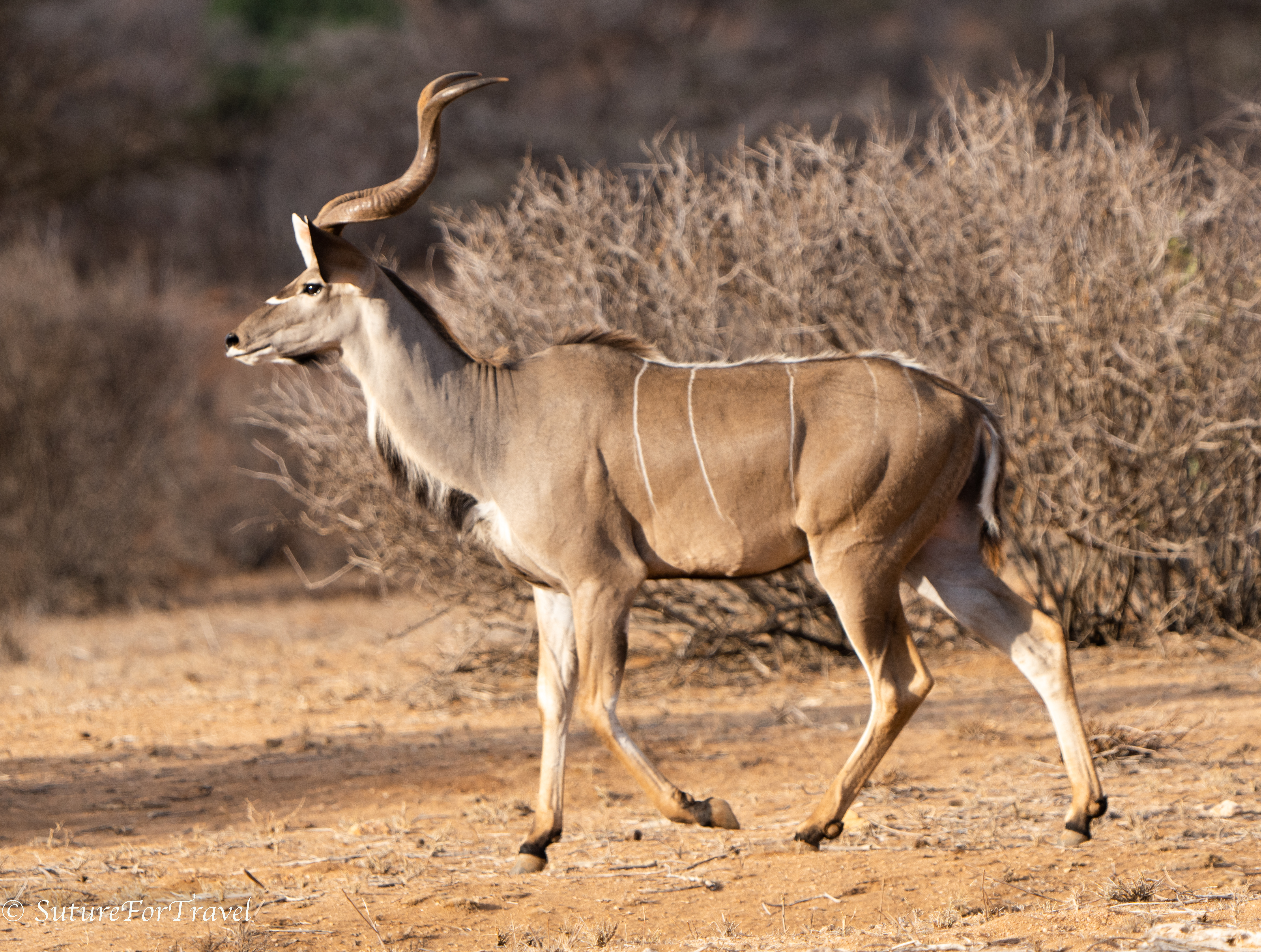
kudu: This is a large antelope that has beautiful markings and huge spiral horns.
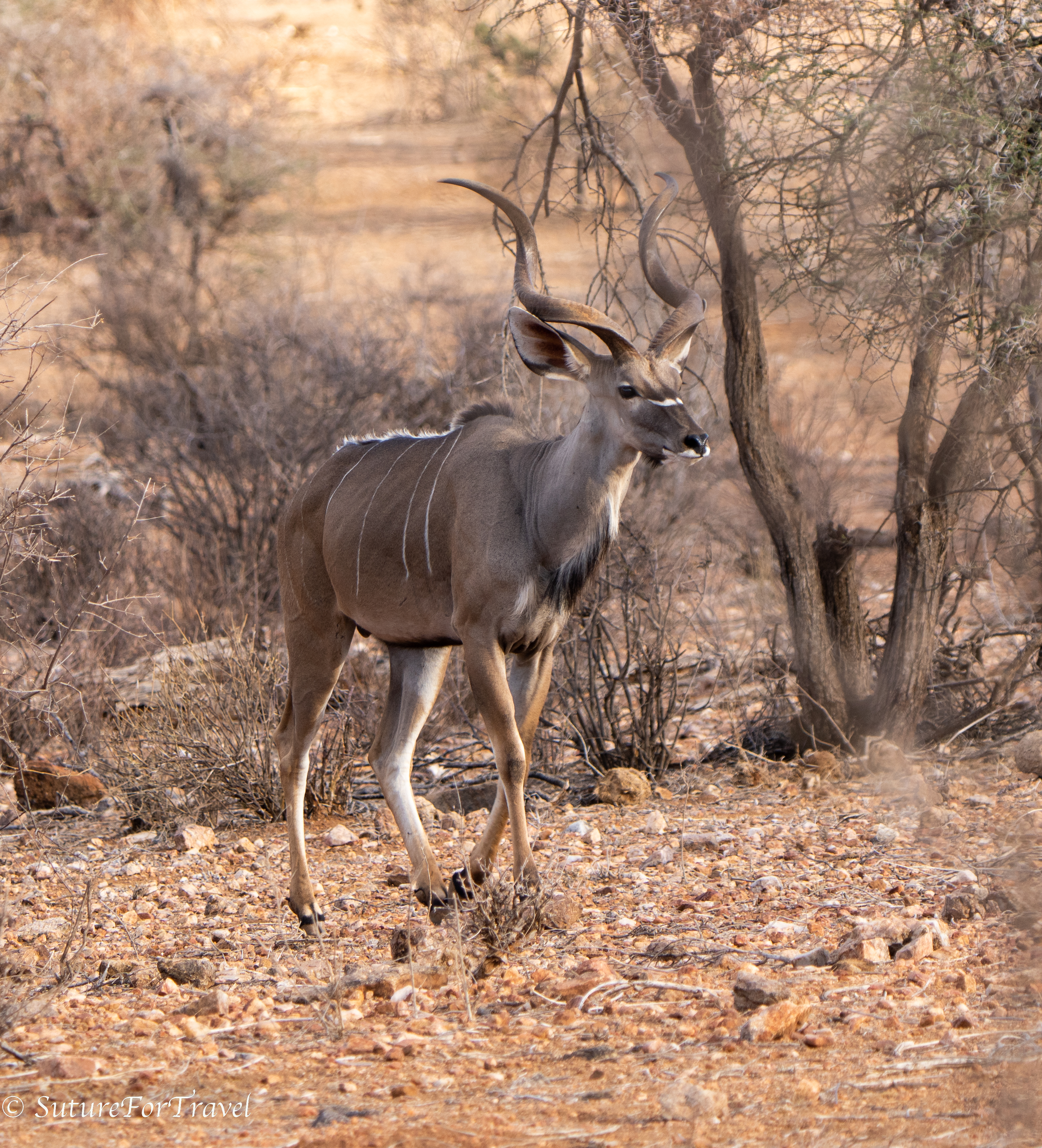
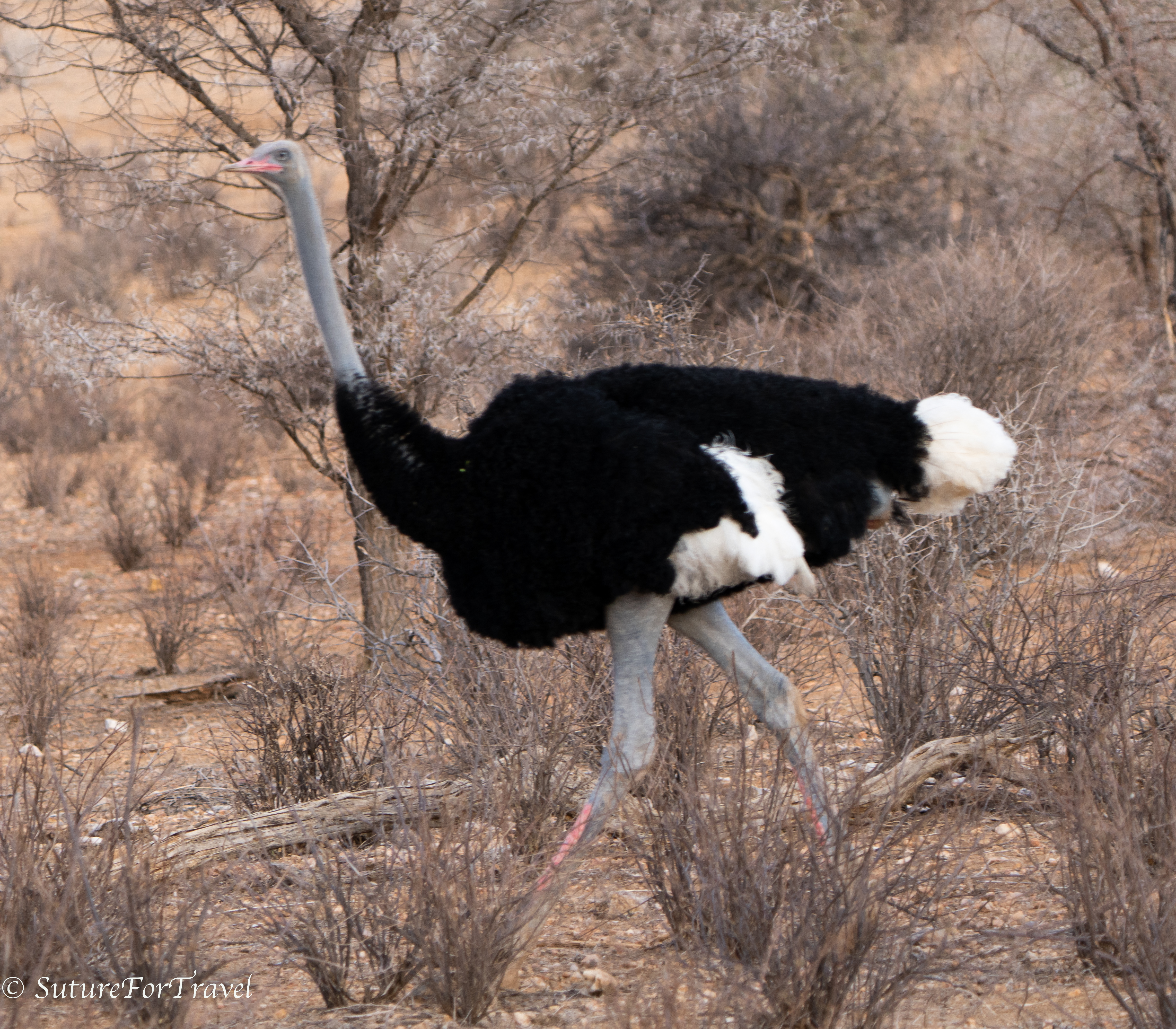
male Somali ostrich: This guy has been hiding! The light for my pictures was awful, but we got to see him in all his blue-gray glory. The standard male common ostrich has pink skin, but these guys have this blue-gray skin. This gets bright blue in the mating season. They also have white tail feathers.
It was nearly sunset, but we went off to one other area to look for a leopard. We had another truck from our camp with us, but they turned off right before we came upon this. We called to them, but she ran off before they made it to where we were.
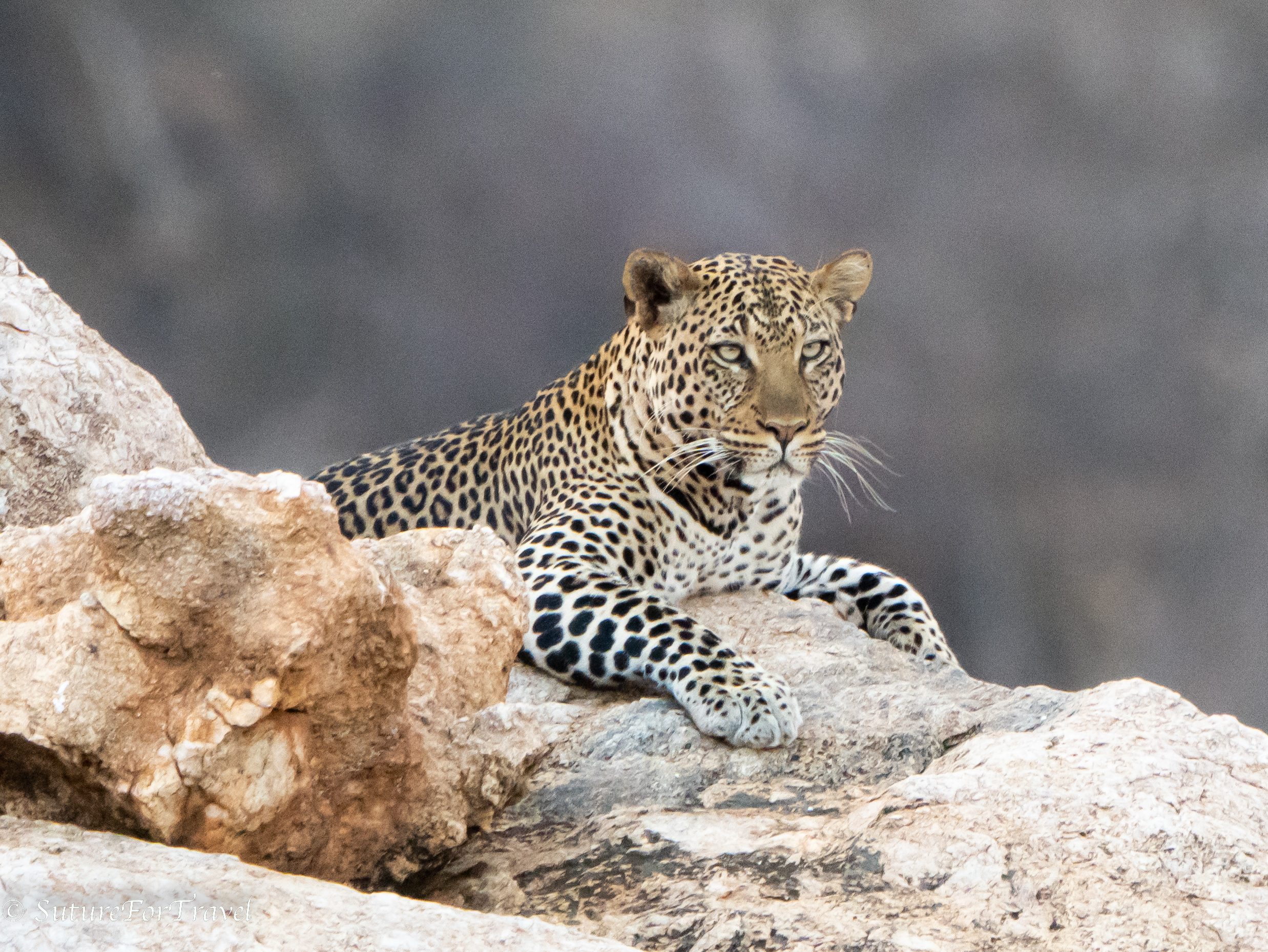
This is a female leopard. The guide here are familiar with all of the local big cats since it is a limited area. She was about 100 yards off sitting on a large rock. Ironically, about 30 minutes prior to this, Paul had stated in frustration that he just wished that someone would put a leopard out on a rock for us!
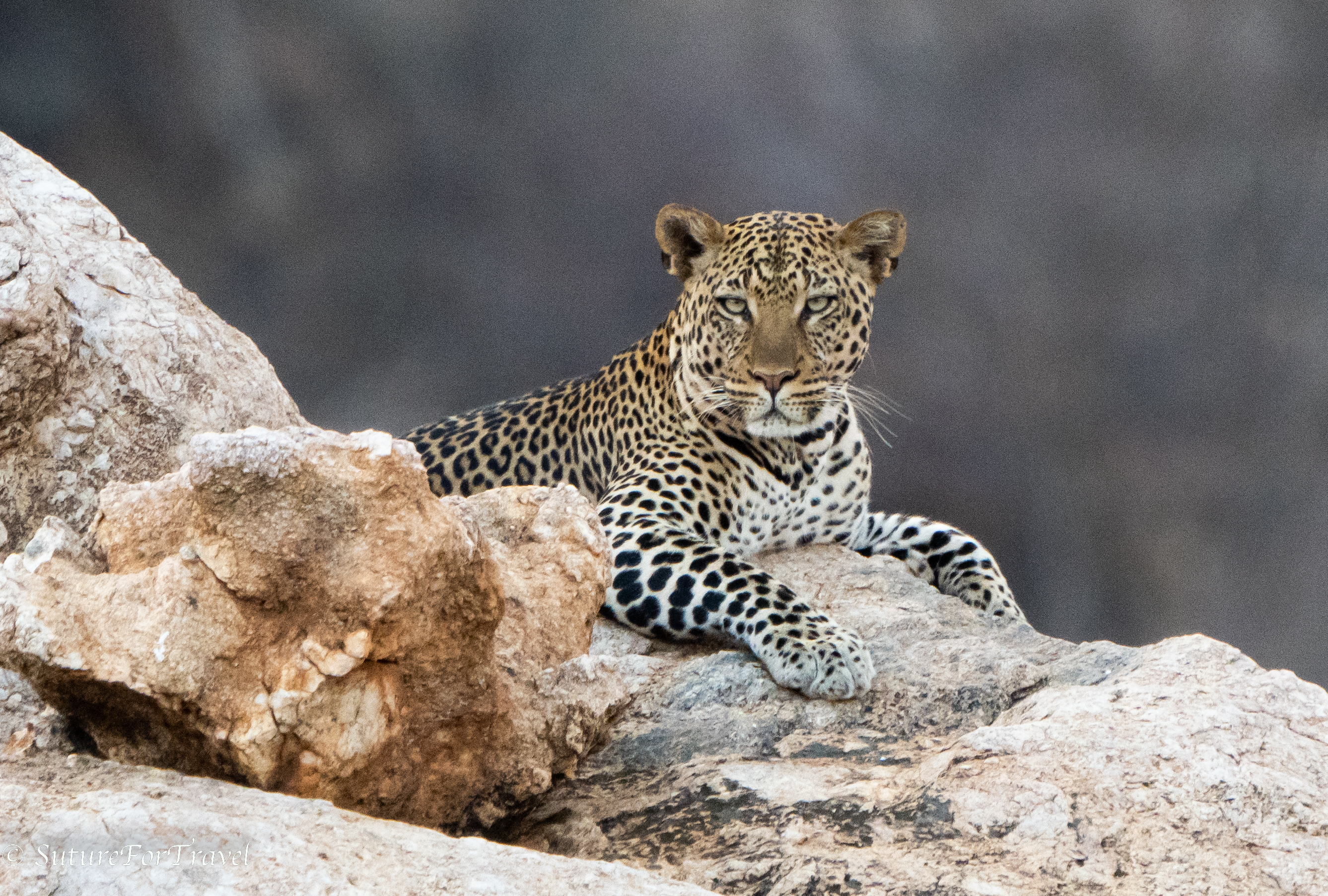
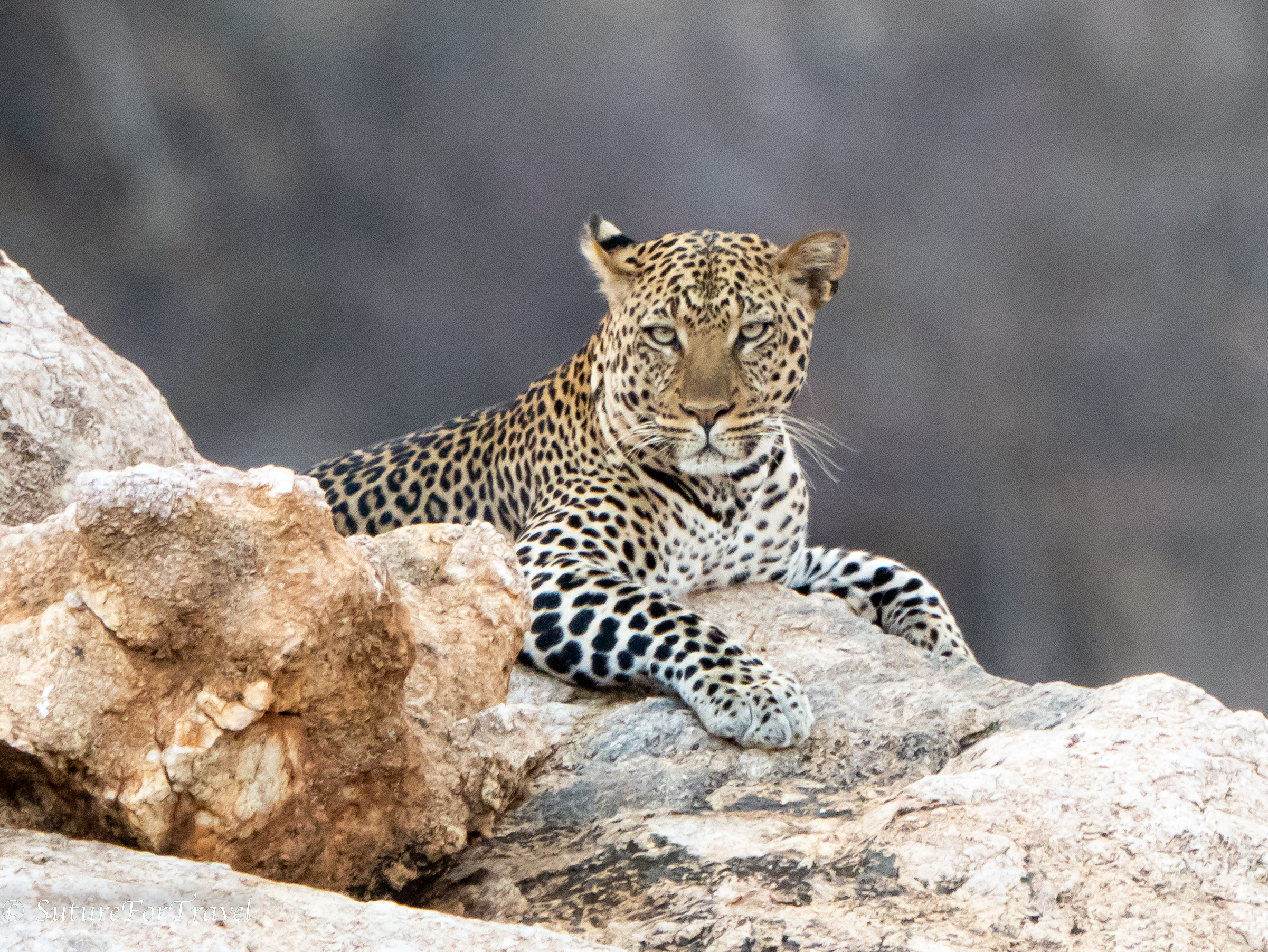
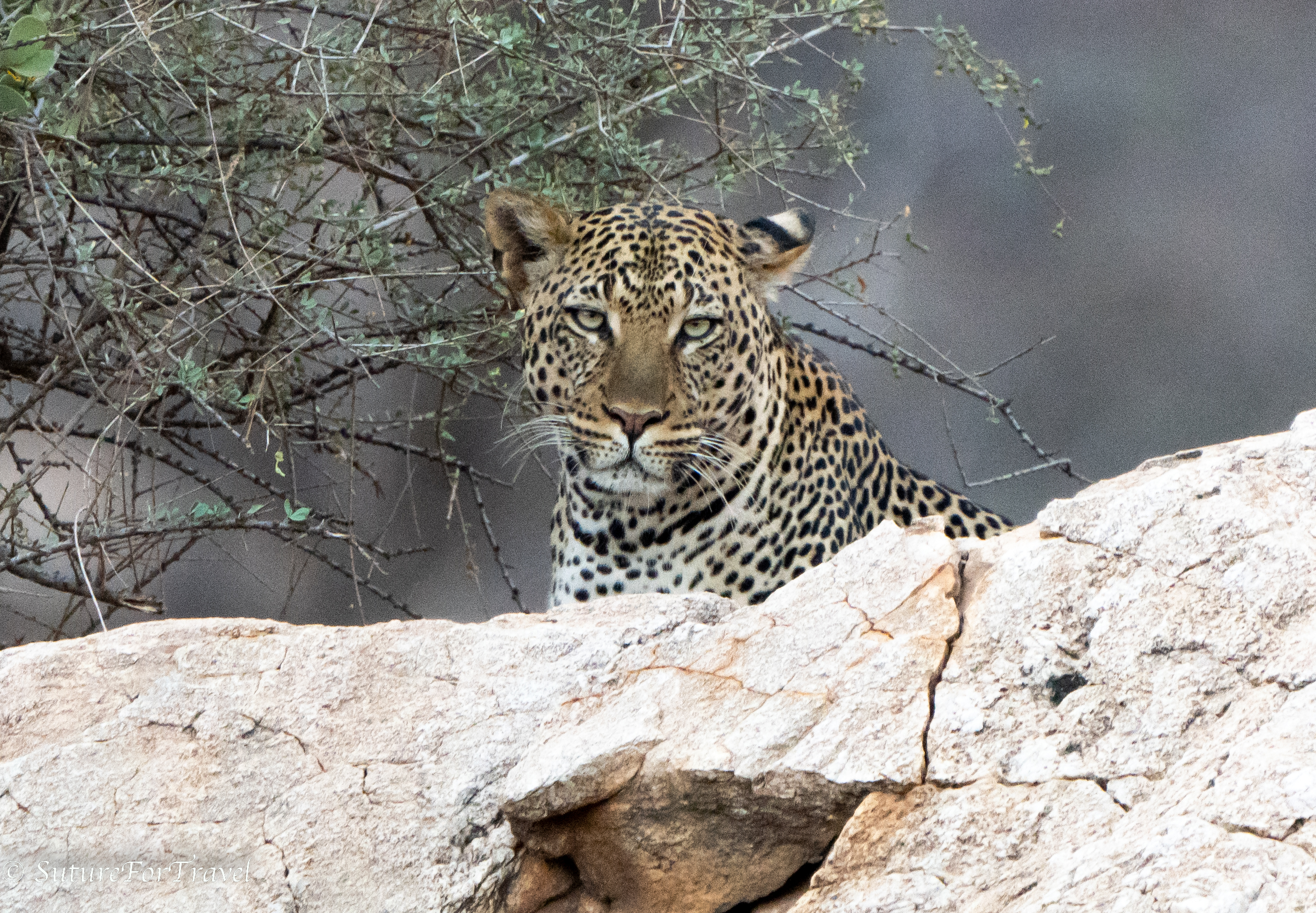
When we tried to get a little closer she darted off and repositioned but she quickly left this spot entirely.
We were very fortunate to get to see her at all. She was not clearly visible without binoculars (which Paul has) or my telephoto lens and there is no way I could have gotten pictures of her without the telephoto.
So we have now seen all of the Samburu special 5 and can check off leopard from our goal of leopard and cheetah sightings for this trip.
 Will Suture for Travel
Leave a comment