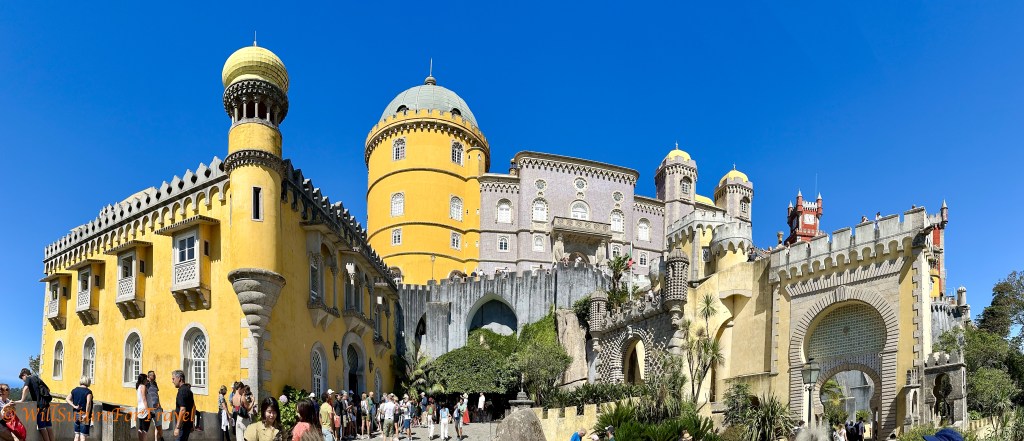
Today we headed out west of Lisbon to the town of Sintra to see the Pena Palace. This palace was built on an existing monastery. King consort Ferdinand II purchased the land with his own, not royal, funds and built the palace in the mid 19th century and it was used routinely by the royal family. He outlived Queen Maria II and continued to use the palace as a primary residency. He eventually remarried and when he died he left the palace to his second wife. The royal family bought the palace back from her and used it regularly until the revolution in 1910.
The palace has an eclectic mix of architecture styles, making it very unique.

Pena Palace
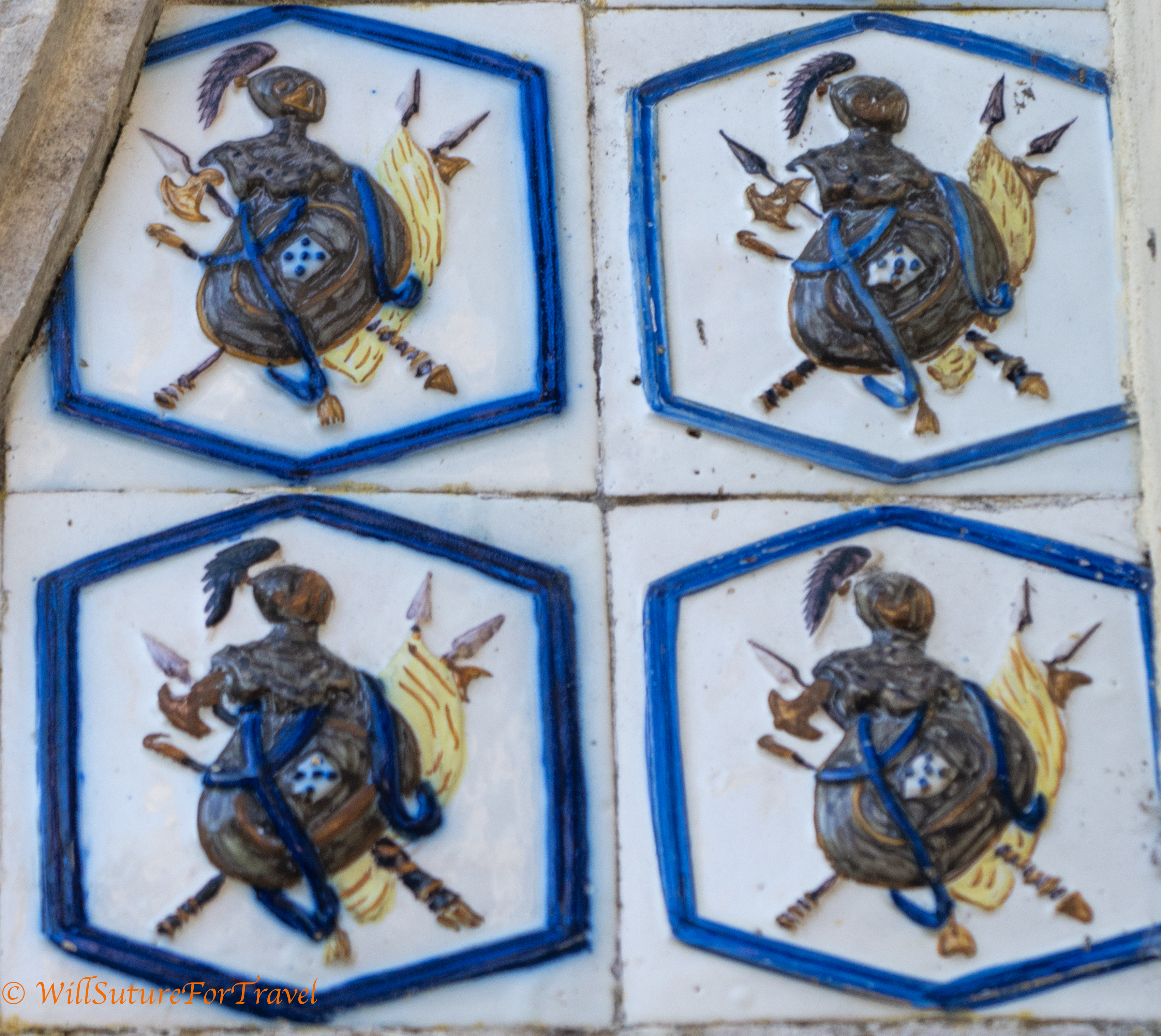
Tile on the entry arch to the palace depicting soldiers.
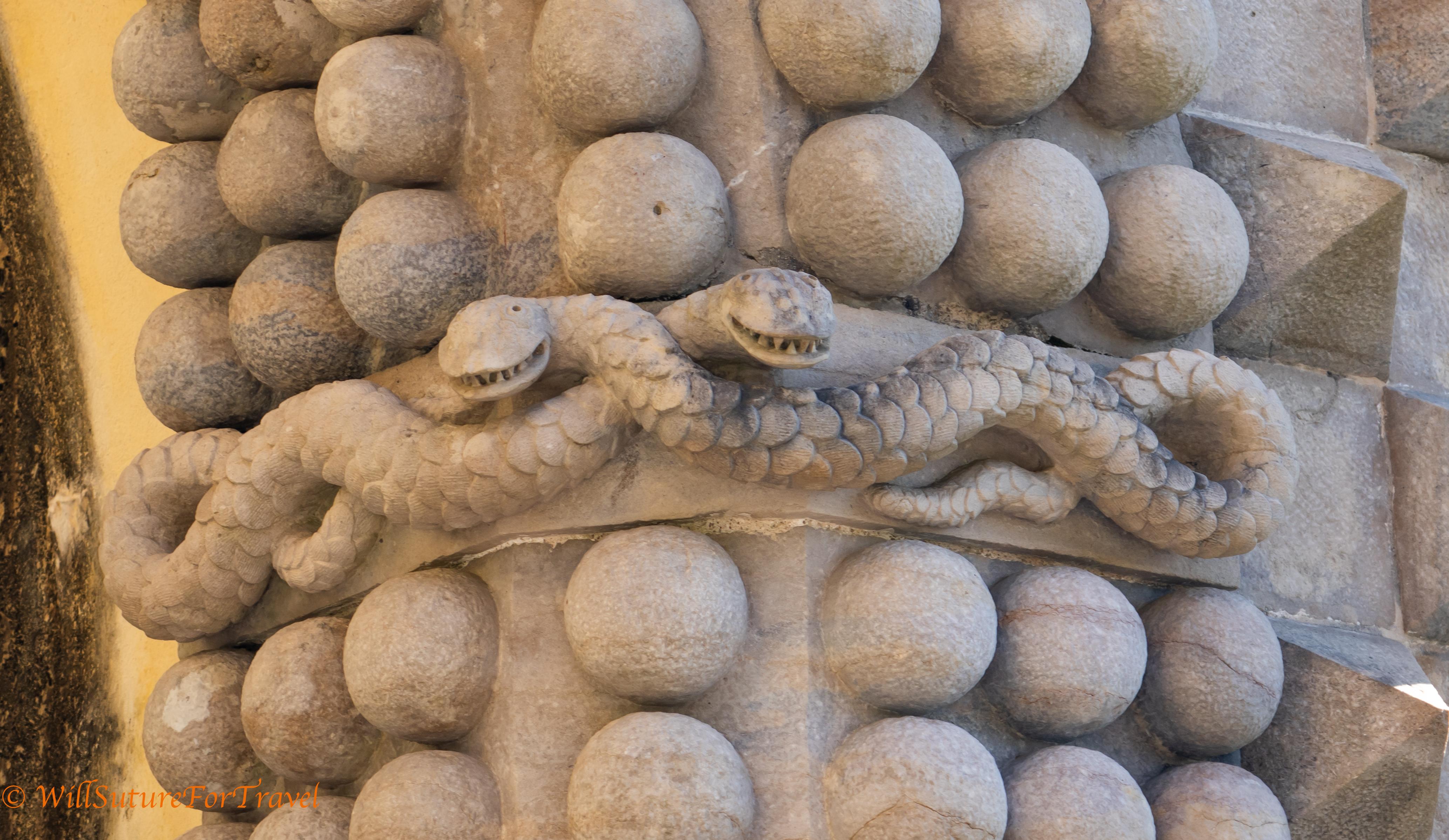
Another entry arch with very happy snakes.
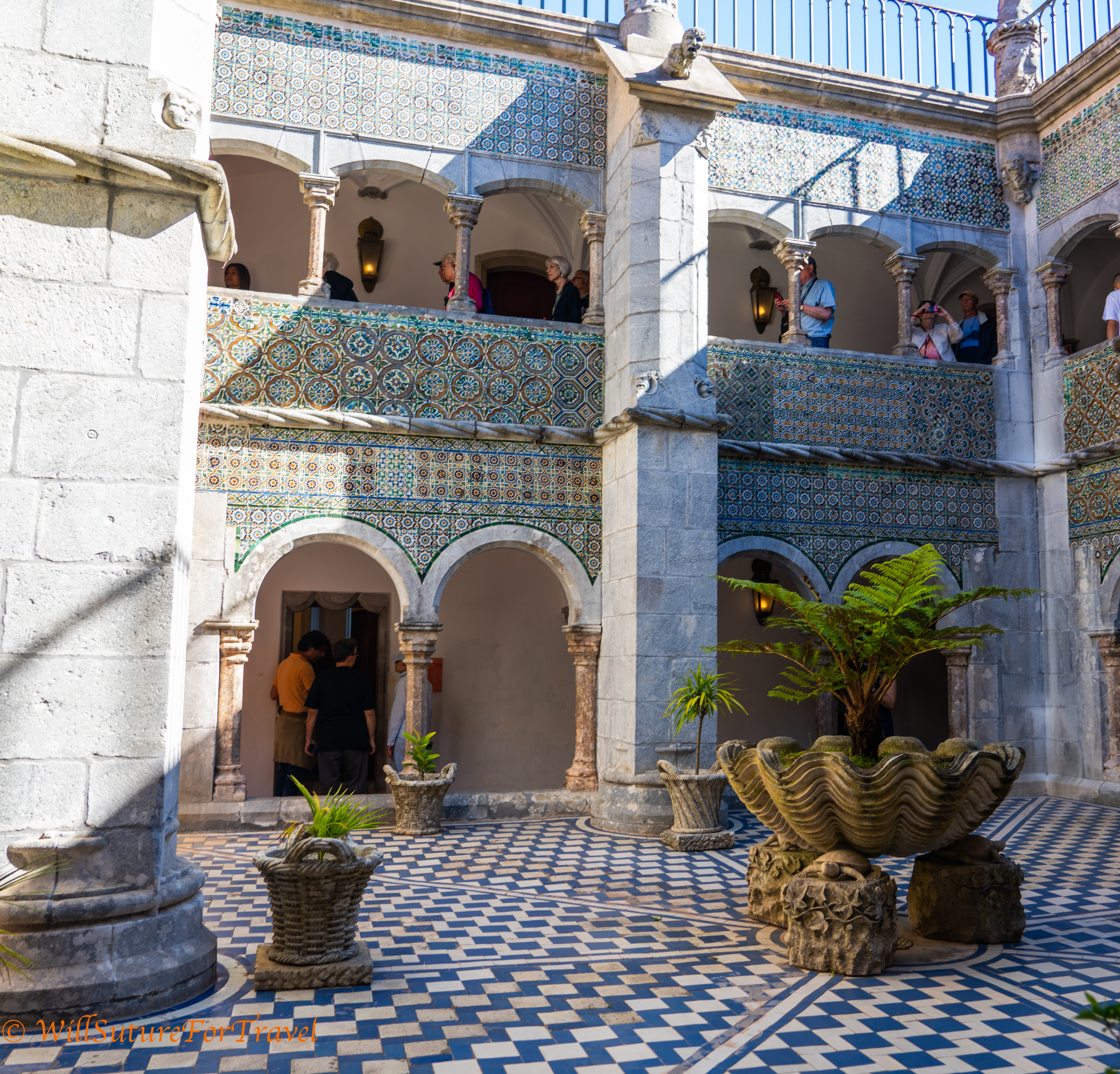
One of the cloisters of the original monastery repurposed in the palace
This ceramic vase is supposed to represent winter. I feel you vase. I feel you.
Now this is a kitchen.
Proof we were here.
View of the outside of the palace
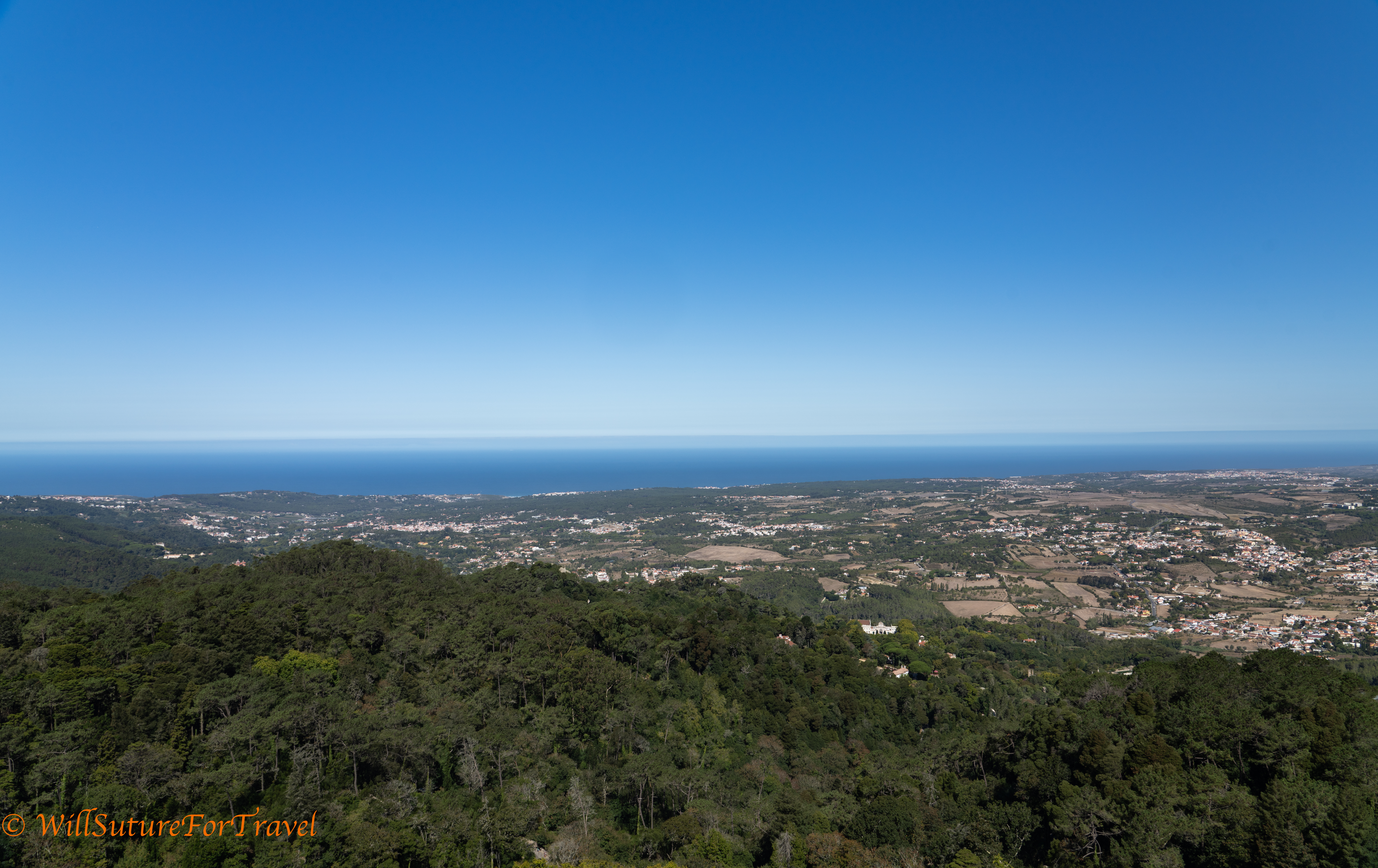
View from the palace out to the Atlantic Ocean
View from the palace looking down on the walls that once were around a Moorish castle. This was built in the 8th-9th centuries and fell to Christians in the 12th century. You can see the town of Sintra below.
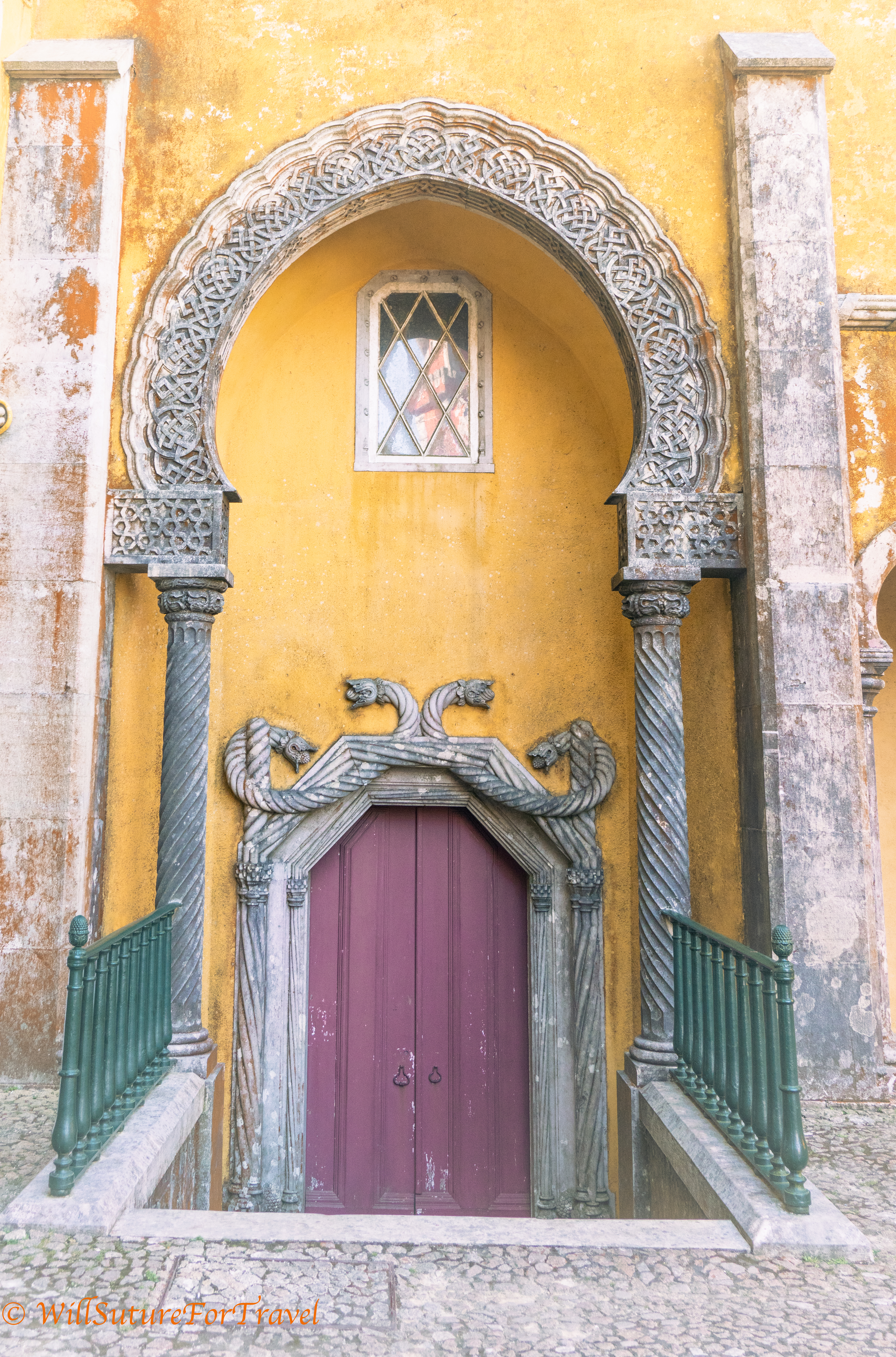
Interesting doorway
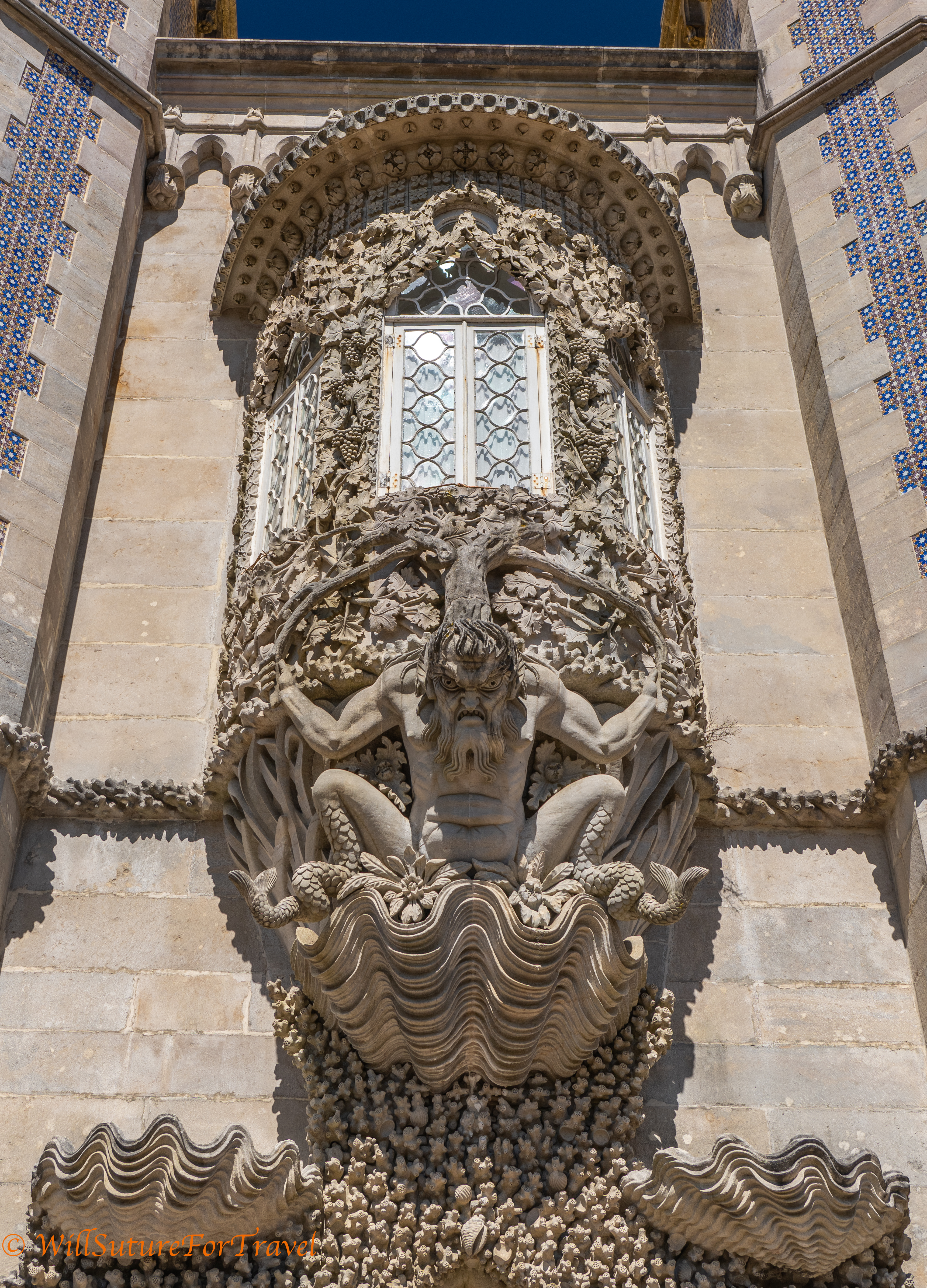
He doesn’t look happy to be there (but he is a good example of Manueline architecture.
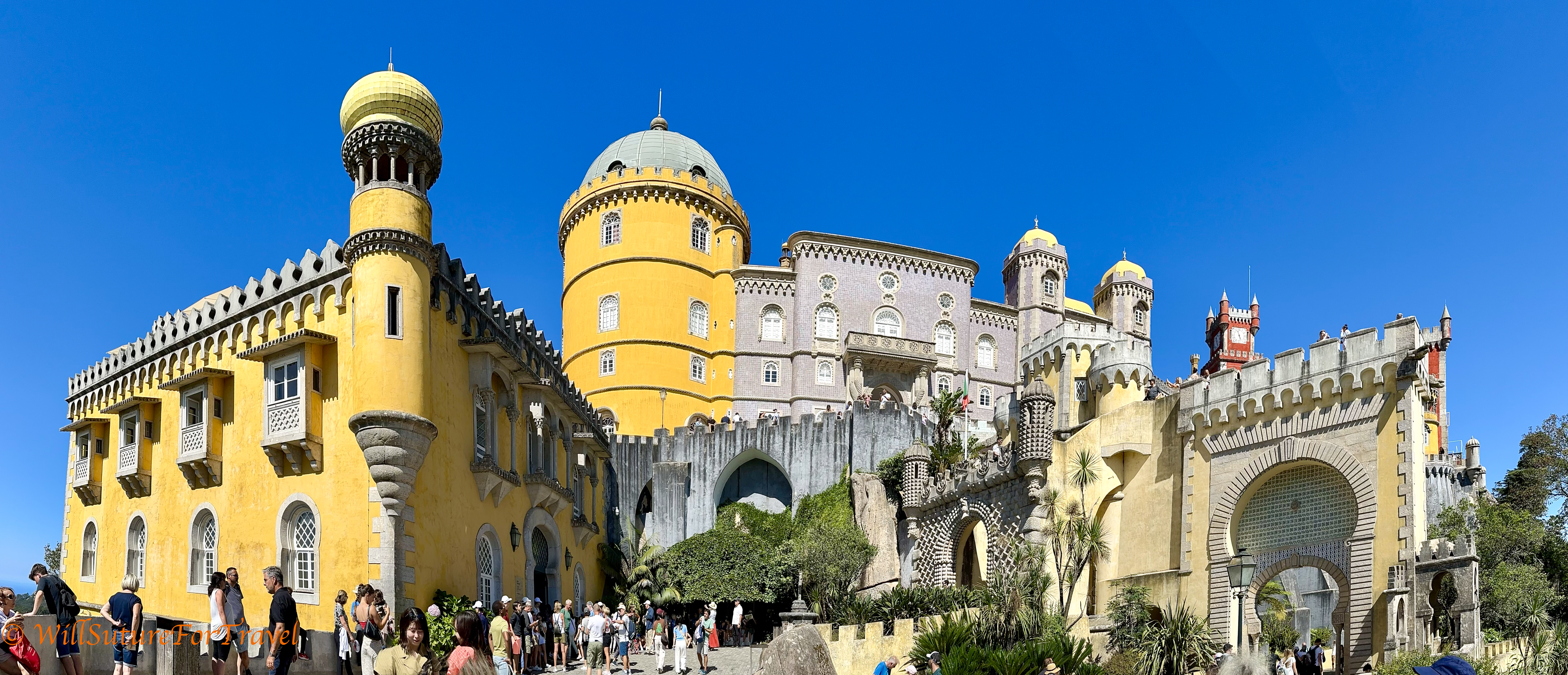
View of the palace
We then went down to the town of Sintra for some lunch and free time.
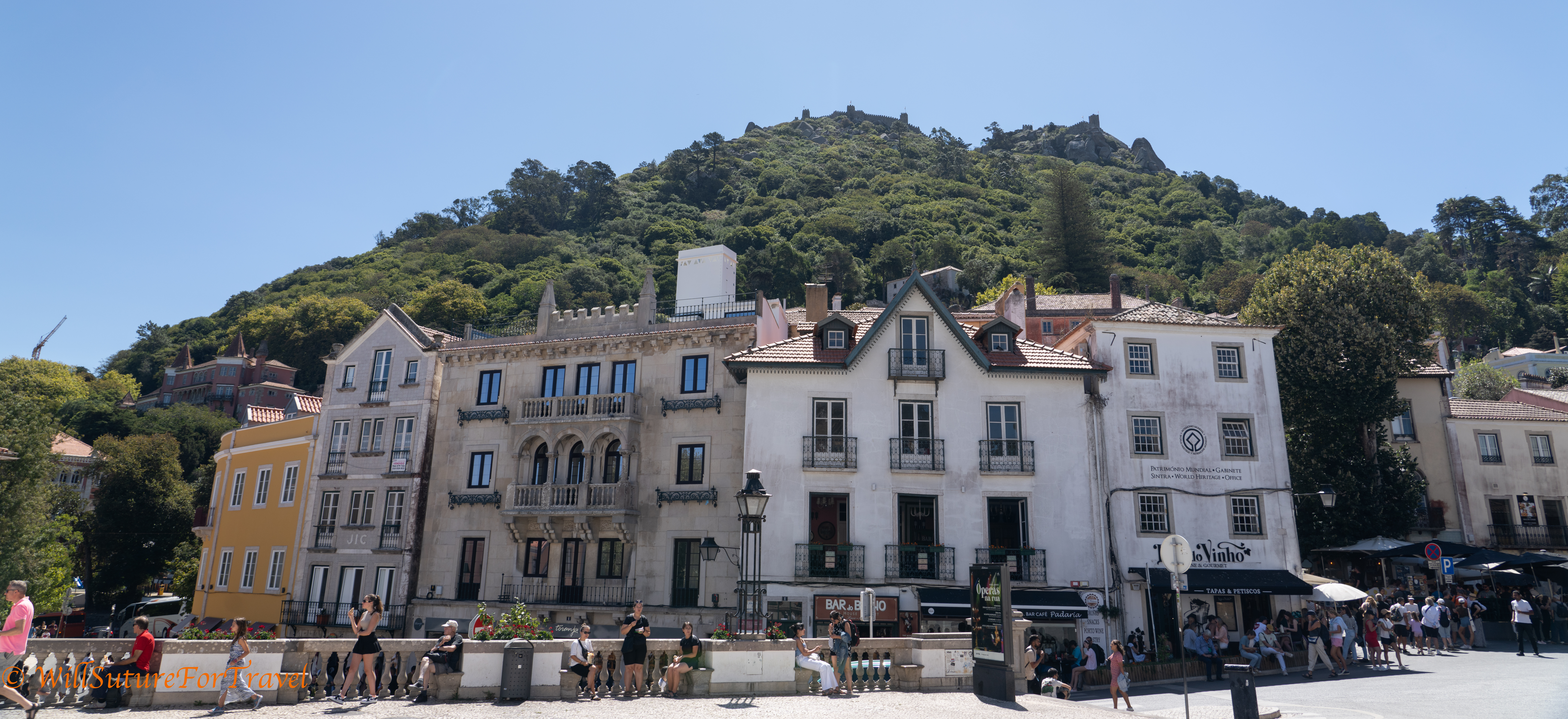
View of Sintra looking up towards the Moorish castle
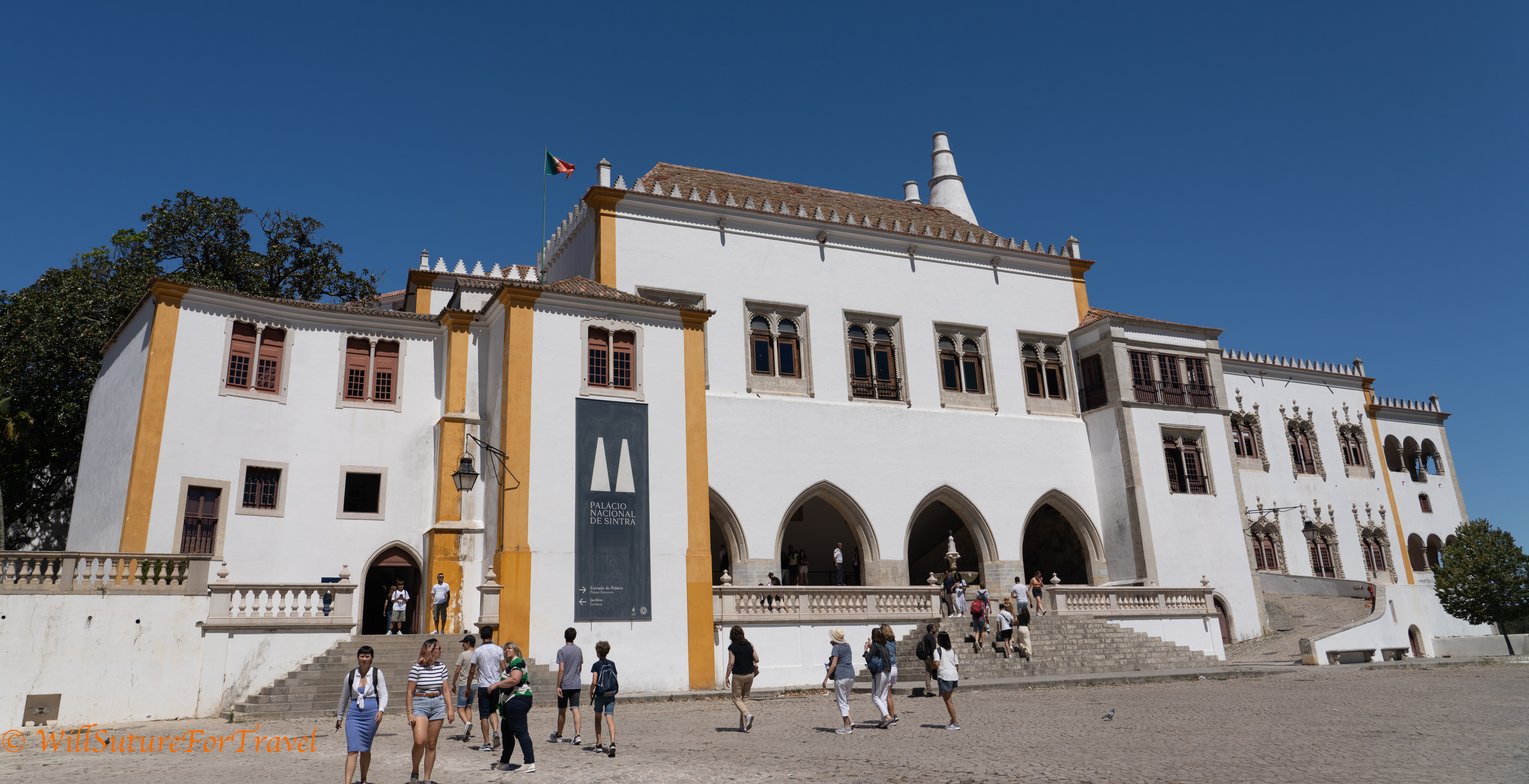
This is the National Palace of Sintra, which we did not have time to go through. It was another royal palace.
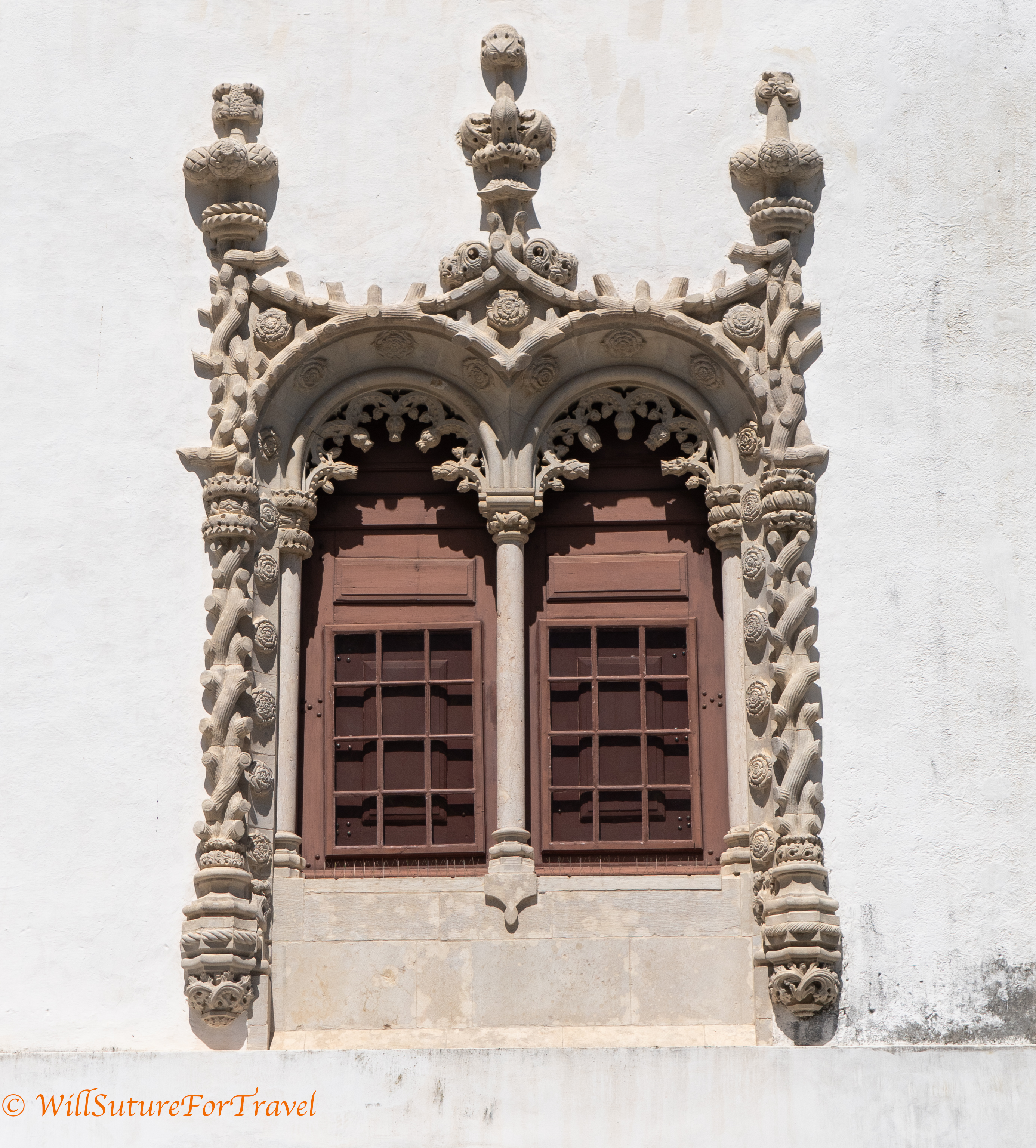
This window on the National Palace of Sintra is another example of Manueline architecture.
St Martin Church in Sintra.
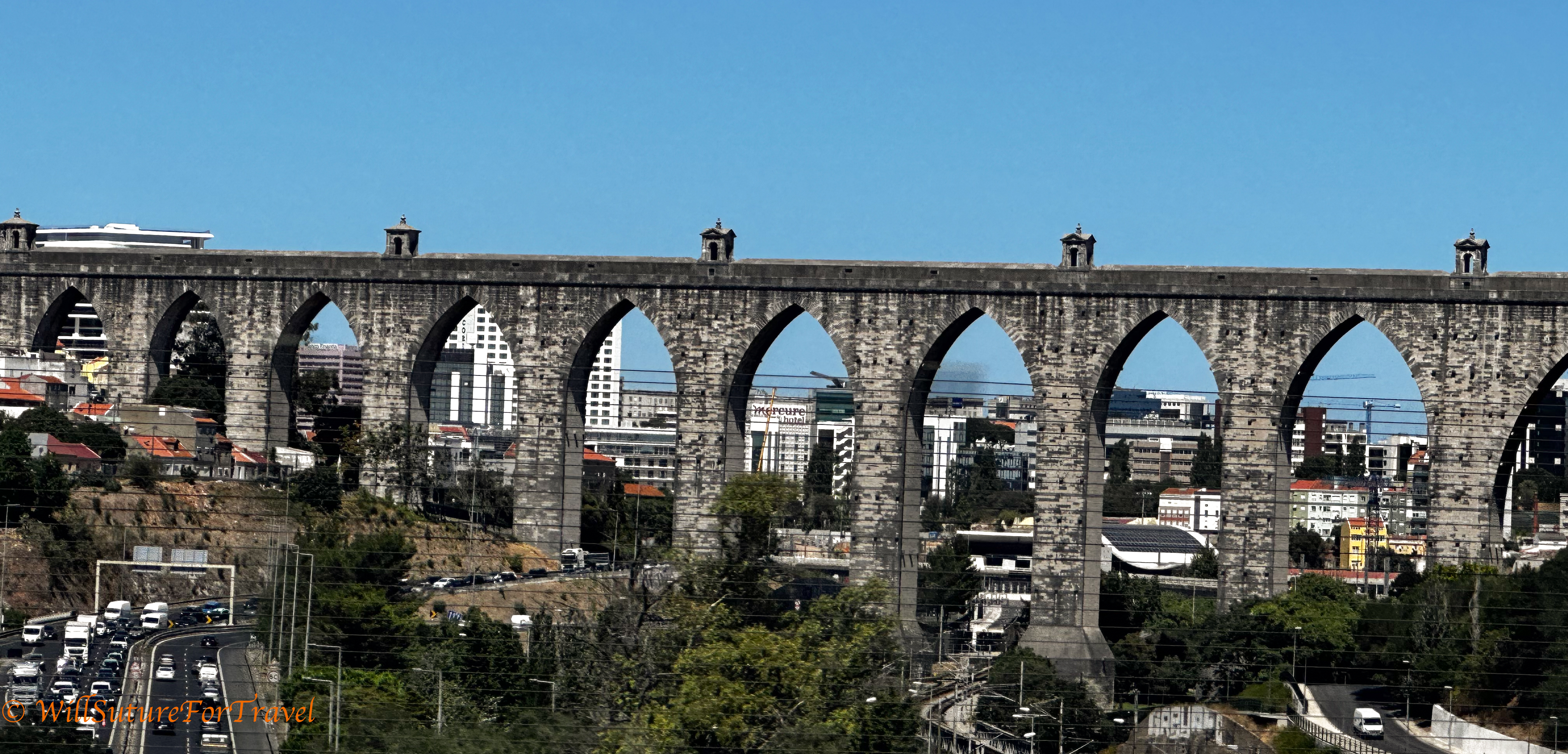
On the way back from Sintra we were able to see part of Lisbon’s aqueduct, the Águas Livres Aqueduct. This was built in the 18th century to provide water for Lisbon. It is 58 km in total and remained operational until 1967.
We returned to Lisbon and had some more time to explore the old town. We started out at the Carmo Convent or Convent of Our Lady of Mount Carmel. This convent was massively damaged by the 1775 earthquake. It was originally founded in 1389. There were minor repairs to the monastery after the earthquake, but it was never fully rebuilt. The building was used for military purposes and eventually donated to archaeologists who did restore part of the facade and some arches. It is now an archeological museum.
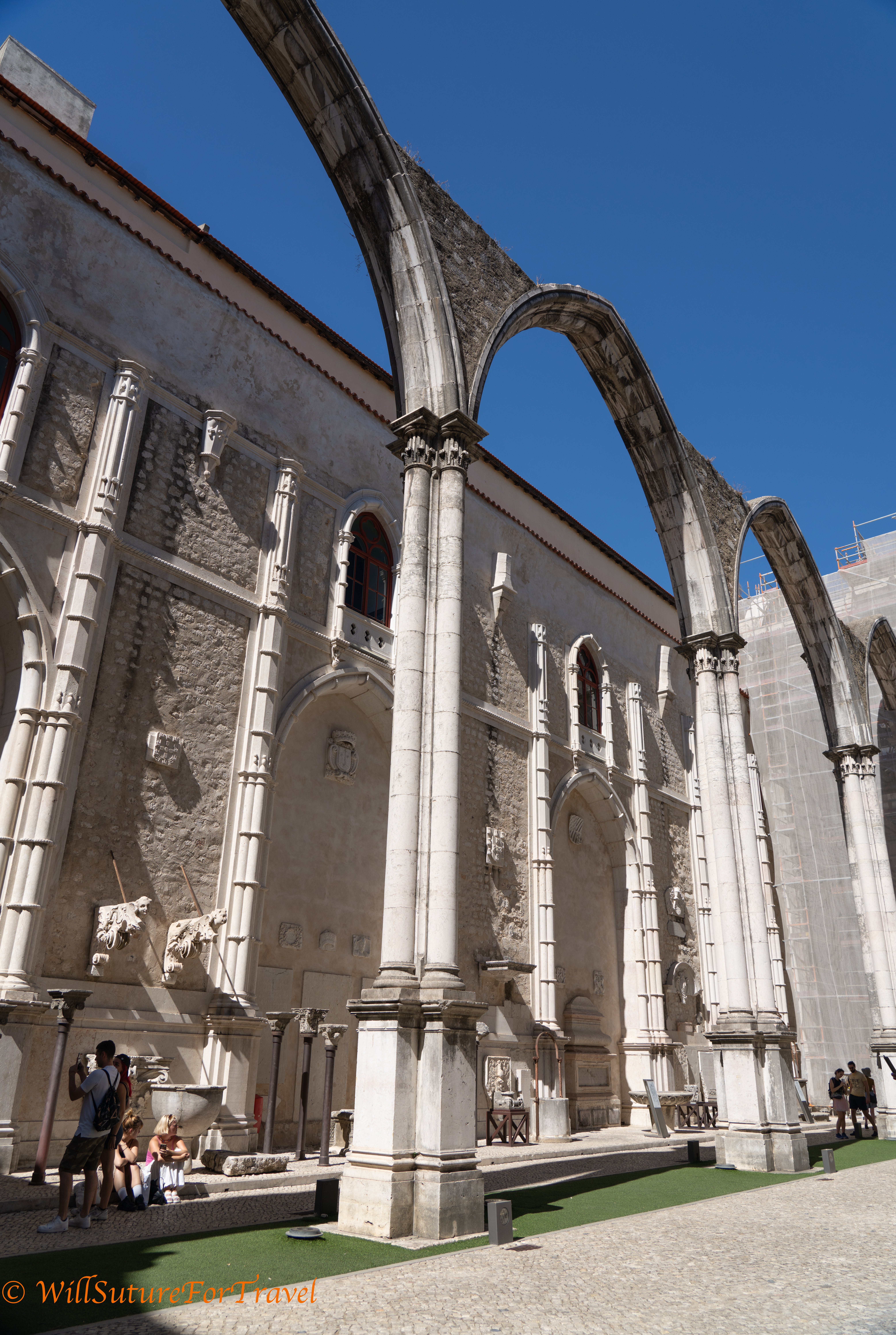
The main nave.
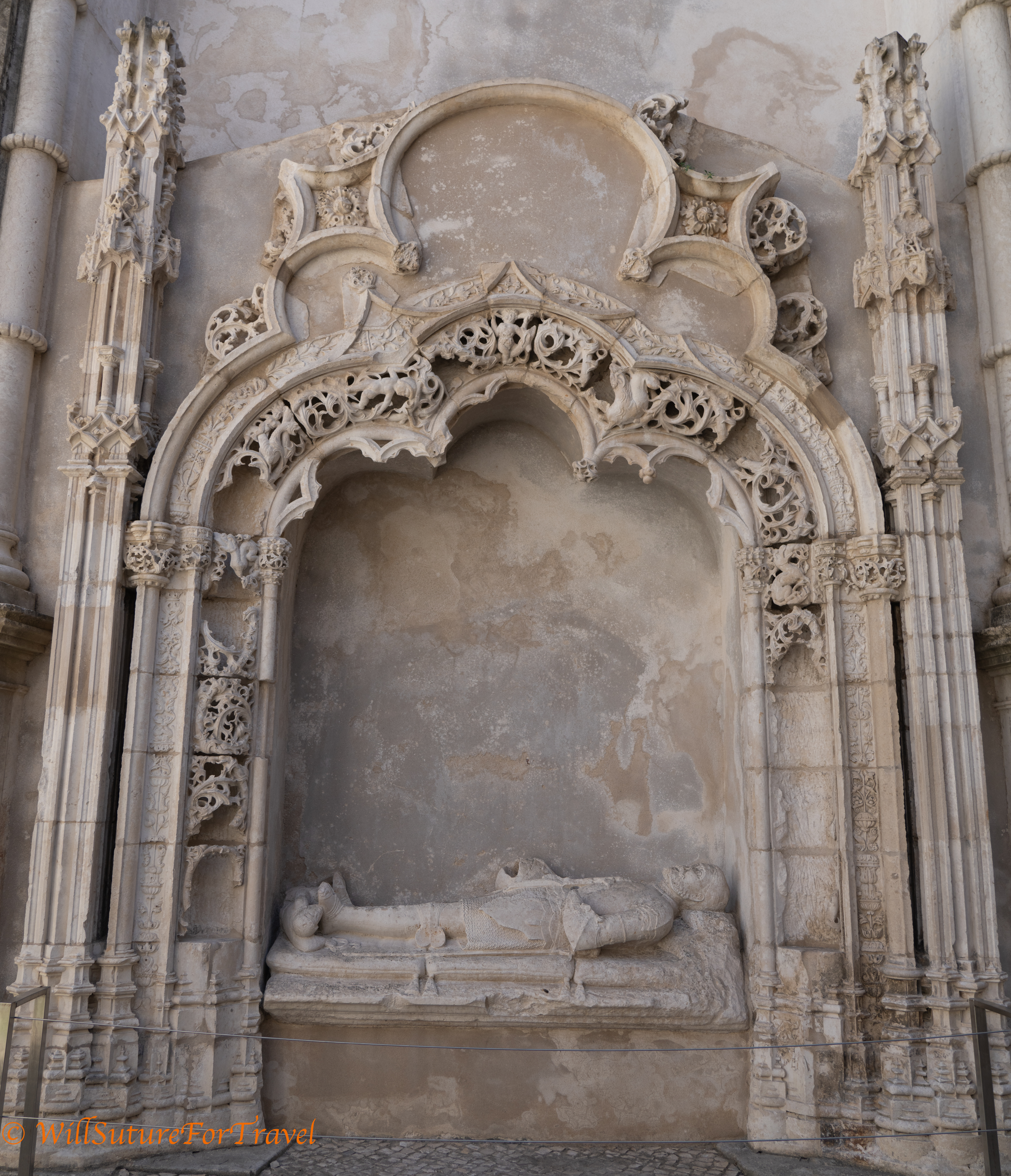
A knight’s tomb
Apse
A lion from the tomb of Queen Maria Ana of Austria. He is a good boy who clearly lets people pet his nose.
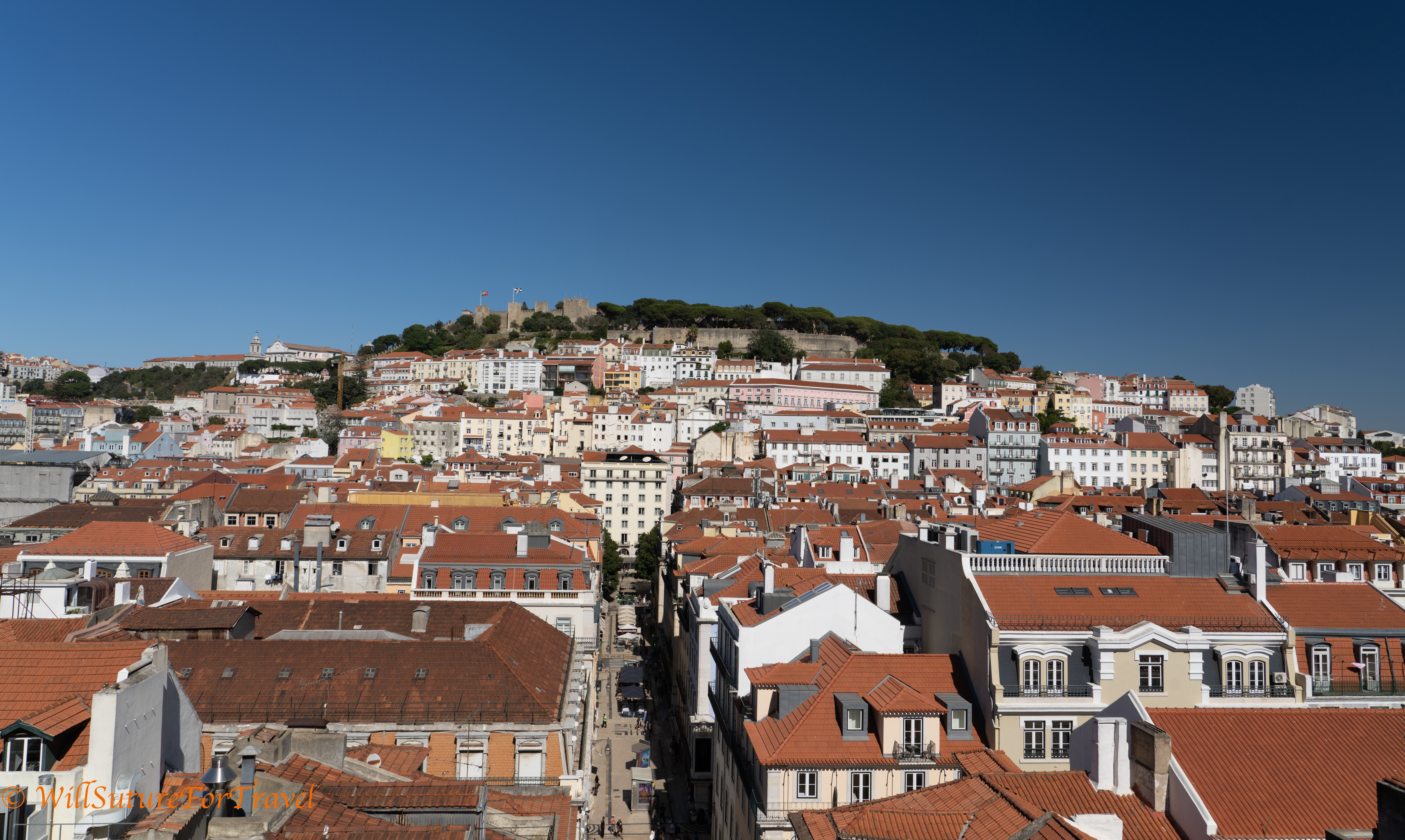
View of Lisbon and the castle from the convent (near the elevator)
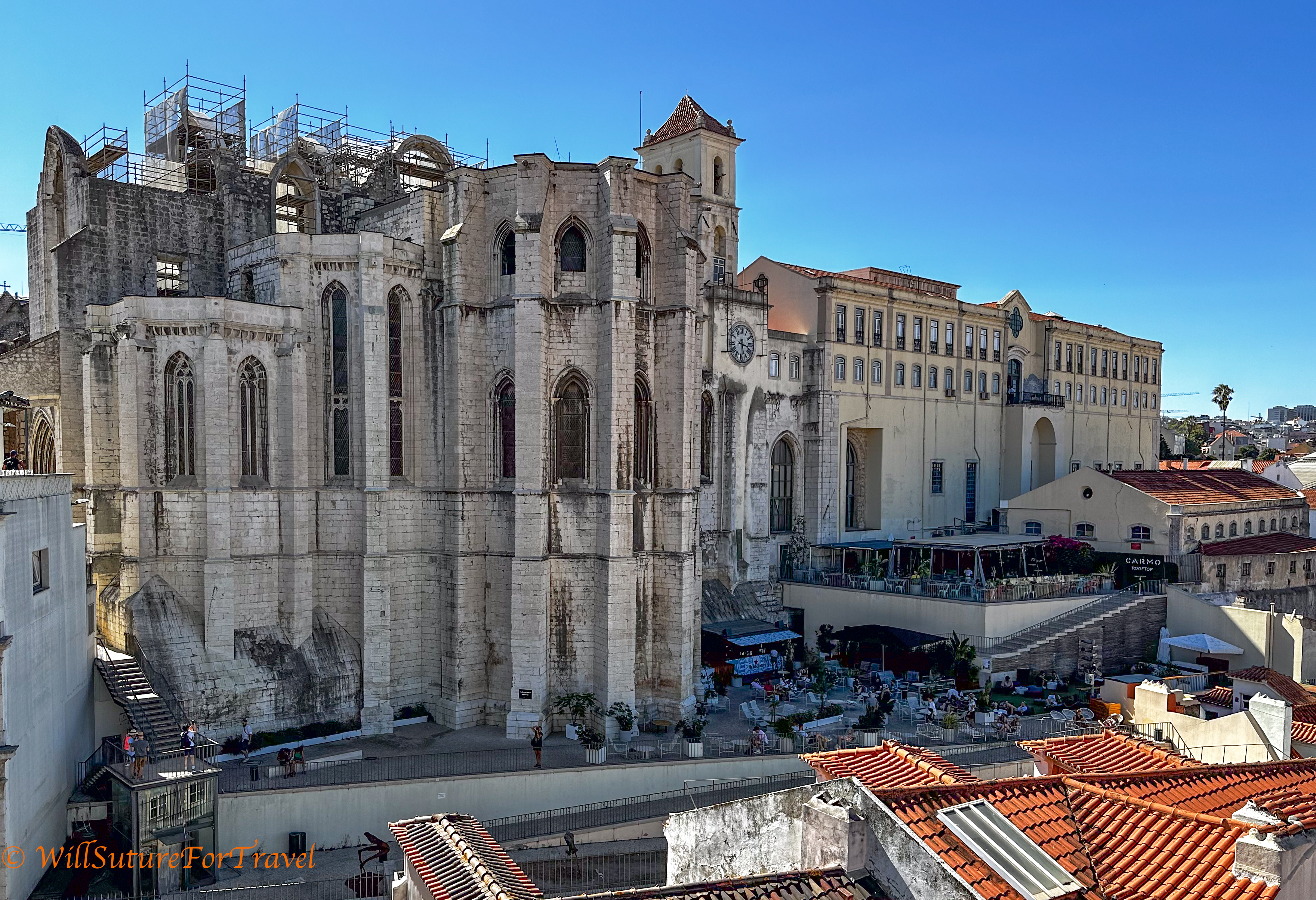
View of the convent from the elevator
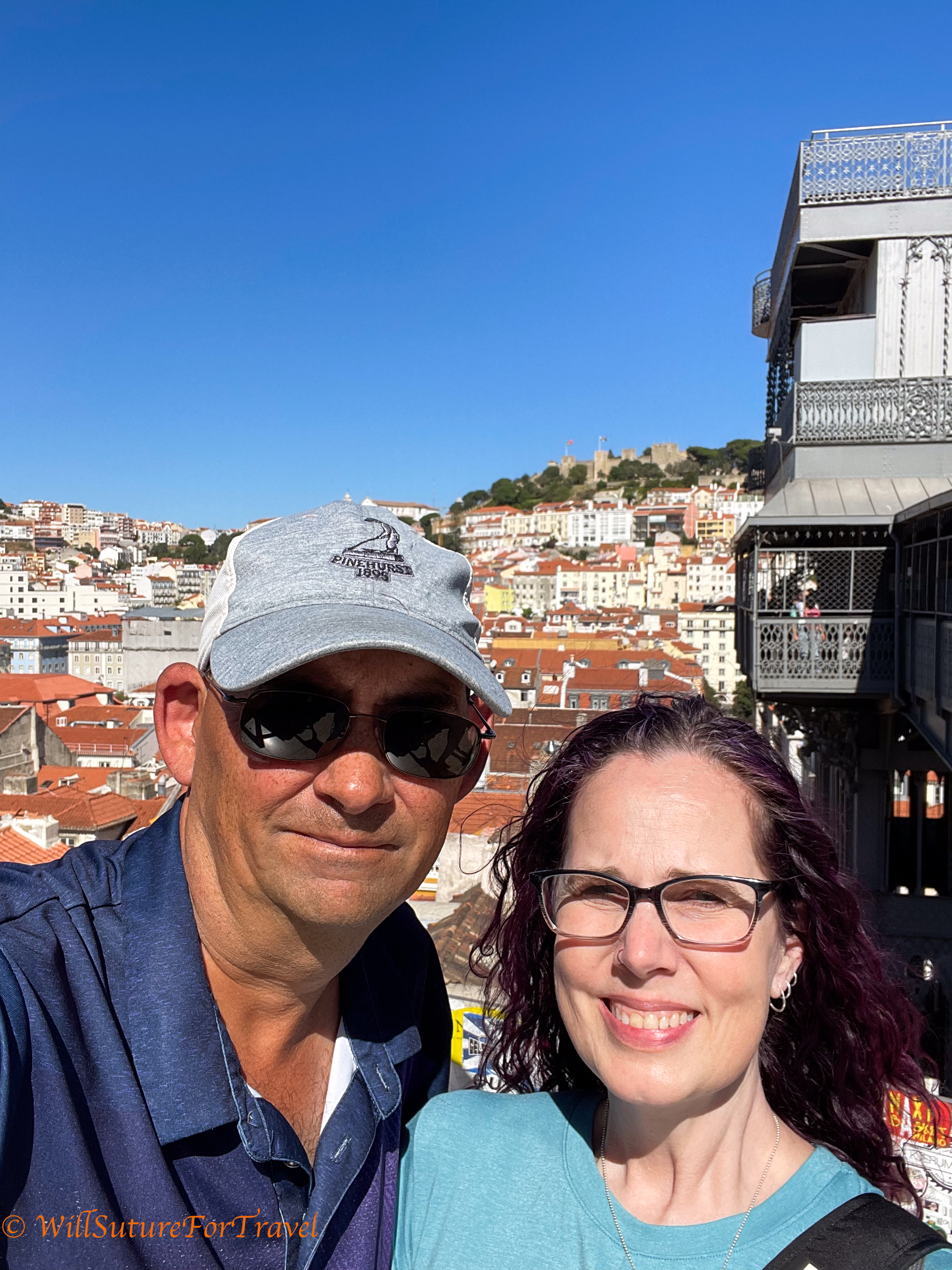
Lisbon, the castle, and the elevator behind us.
We also visited the Cathedral of St Mary Major, also known as Lisbon Cathedral.
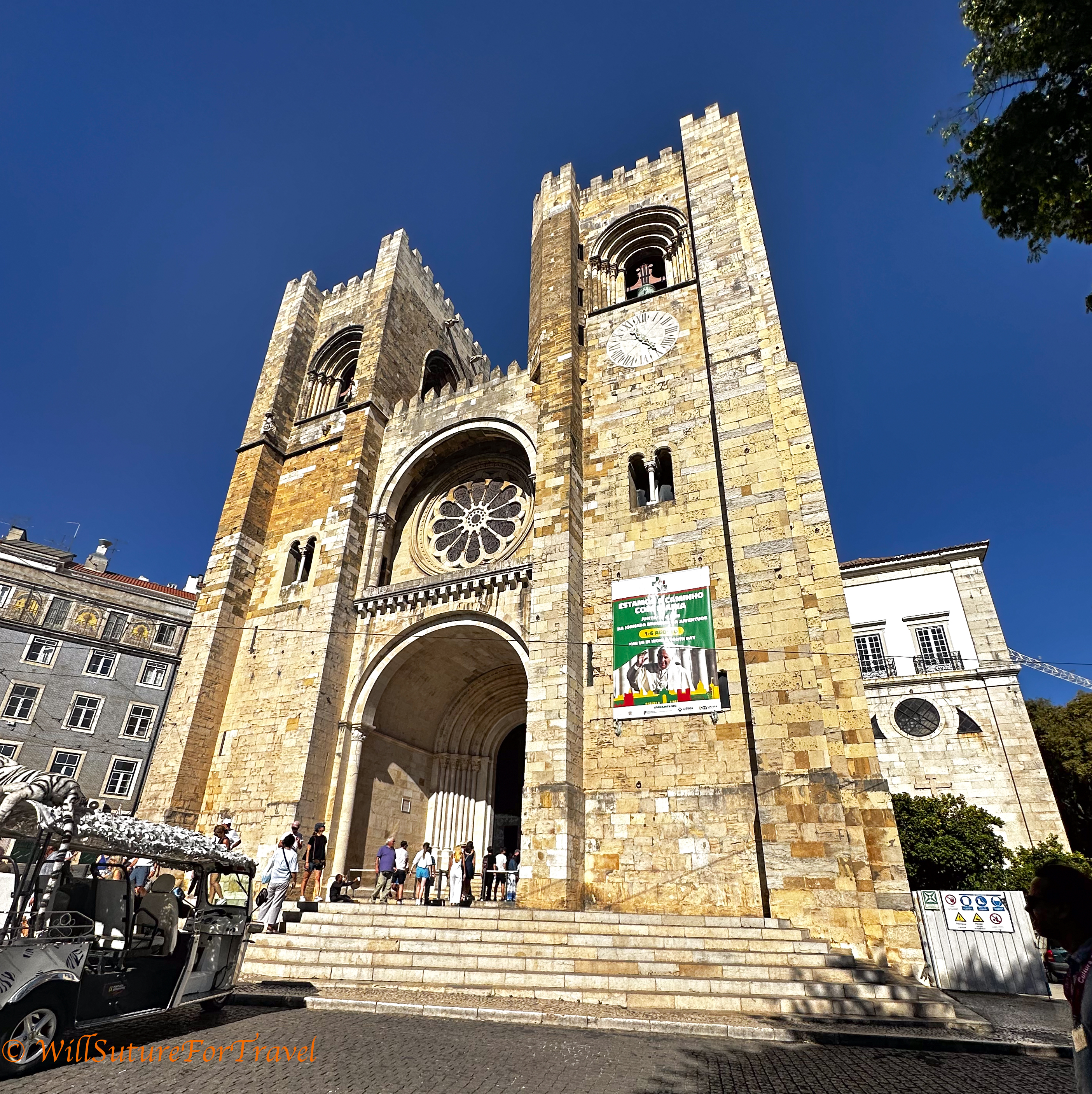
This was built in 1147 and has survived multiple earthquakes and been modified many times.
Lisbon Cathedral
Tomb of knight Lopo Fernandes Pacheco with his (happy) dog. His wife is right by him and she is spending eternity reading.
 Will Suture for Travel
Leave a comment