Today was at sea crossing the Drake Passage, the water between Cape Horn of Argentina and Chile and the South Shetland Islands of Antartica. It is named after Sir Francis Drake, the 16th century English explorer.
Sir Francis Drake was the first Englishman to circumnavigate the world and was know to be a bit rebellious. Queen Elizabeth I gave him command of an expedition to set up trading posts in the Pacific, but he planning on using this to also raid Spanish fleets. He ended up hailed a hero of England and considered a pirate in Spain. It is quite possible that Drake sailed the Magellan Strait rather than the Drake Passage when he circumnavigated the world.
The Drake Passage is known for being treacherous, although today’s technology mitigates some of this. It is known for being choppy, sometimes extremely so with 40 foot waves and hurricane force winds. These conditions are often referred to as the “Drake Shake.” Other times the Drake can be very calm and smooth which is referred to as the “Drake Lake.” How any passage goes is the luck of the draw.

We experienced 51 mph winds with 15 ft waves and were told this was a very average crossing, not the “Drake Shake.” It was wobbly, but not bad.
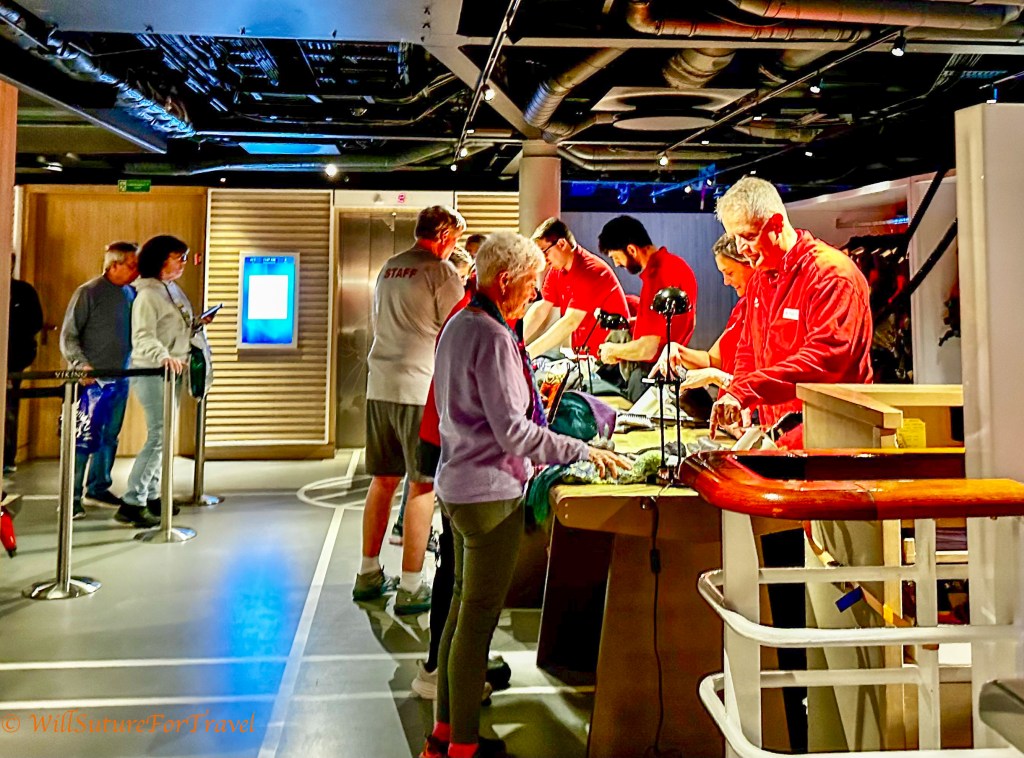
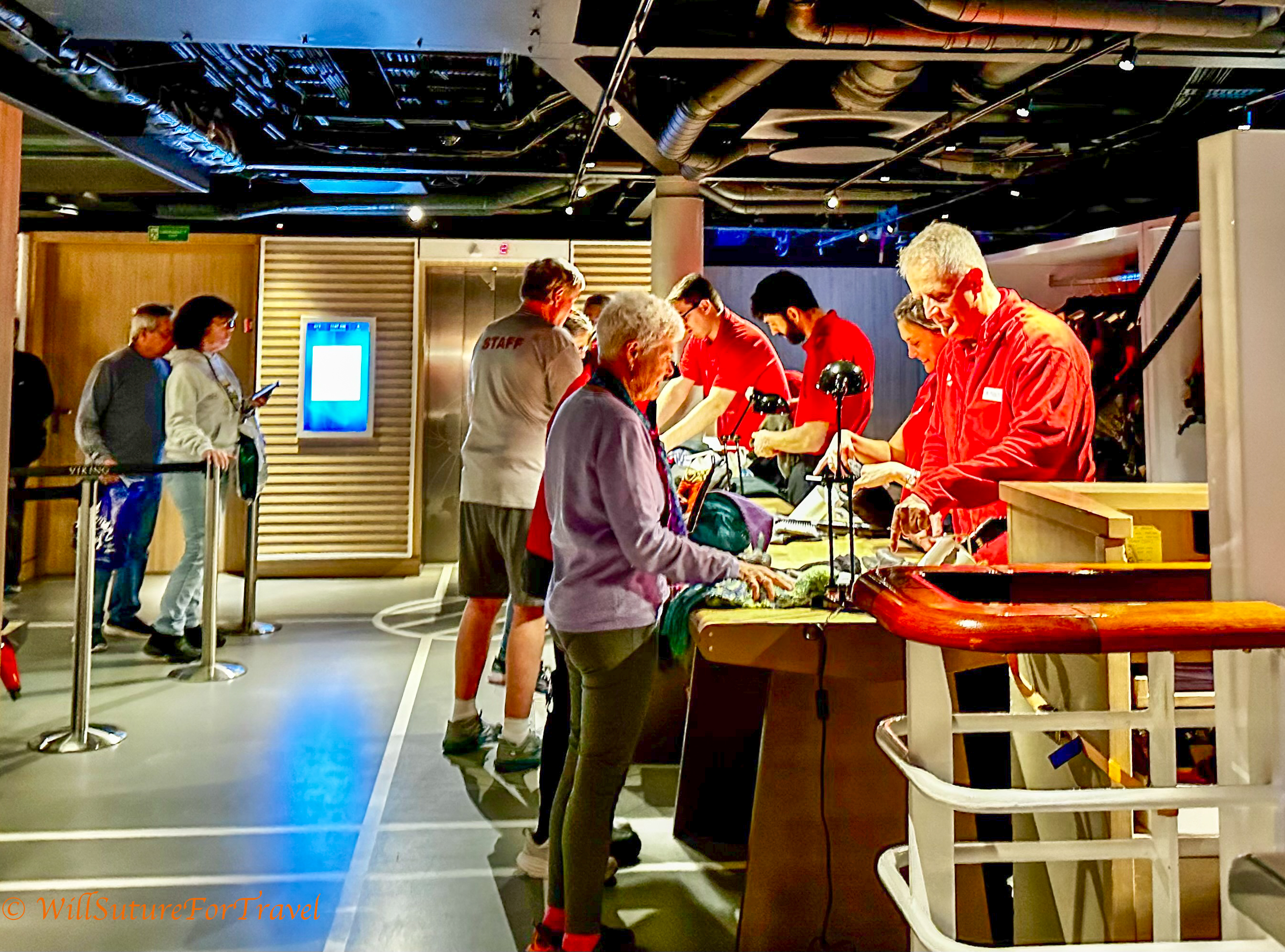
While crossing we had some time for preparation for Antarctica landing. Part of this time was taking our personal items for examination and cleaning. This included gloves, hats, scarves, etc. They were looking for things like seeds and micro plastics (pieces of tags), which would be extremely problematic if taken to Antarctica.

There also was a required informational lecture on safety and environmental requirements to land on Antarctica. This also included bird flu information, which is a significant concern.
There is an organization called IAATO which authorizes cruise and yacht vessels to travel to Antarctica for tourism. They set the rules to reduce environmental impact of tourism on Antarctica and the coordinate which ships go to which sites on a given day. There are limits on the numbers of visitors who can go to land per day and size ship which can send passengers for landings.
 Will Suture for Travel
Leave a comment