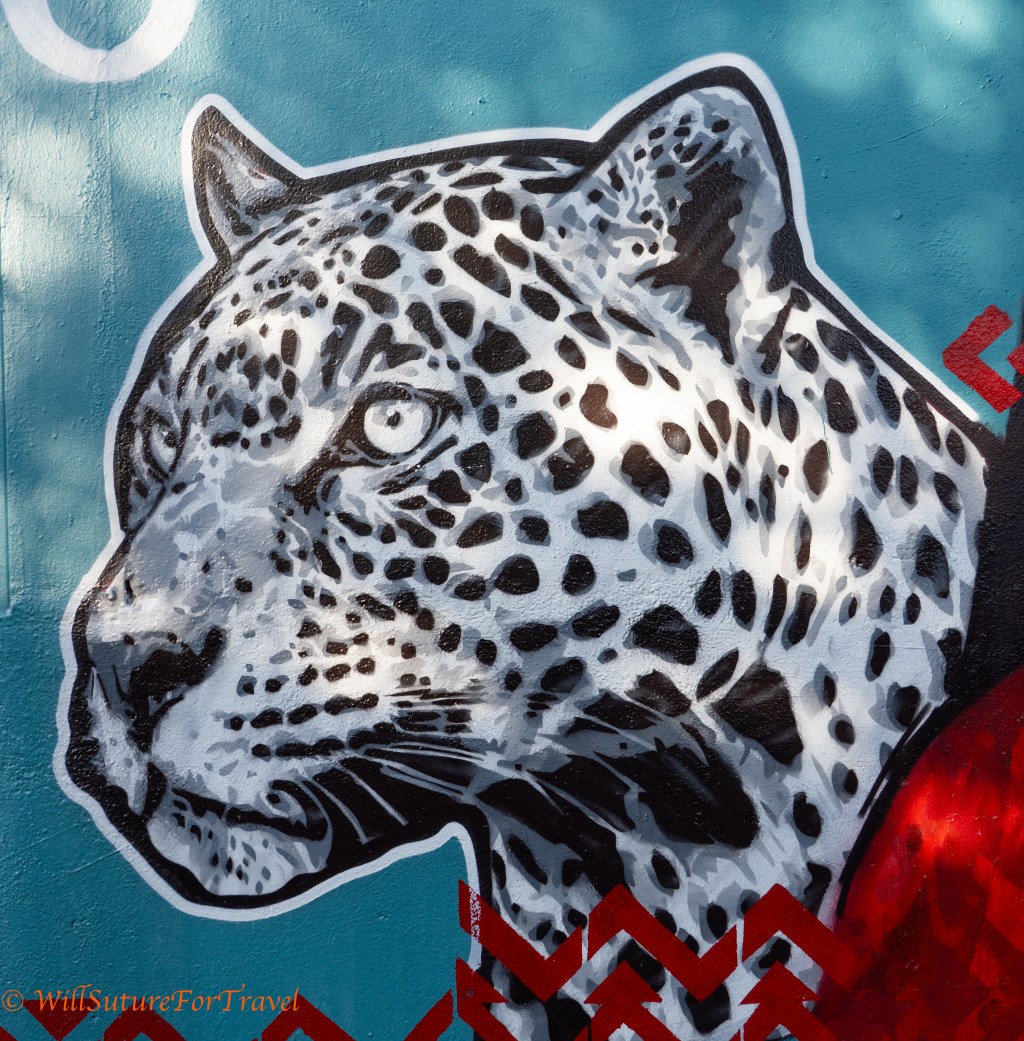
We are en route farther into Brazil, but had a partial day to spend in São Paulo. We managed to fit in a mini city tour and got to a steak house for dinner.
São Paulo is the fourth largest city in the world and the largest in the western and southern hemispheres. The city was founded by Jesuit priests at the end of the 16th century and grew during imperialism and the growth of trade.
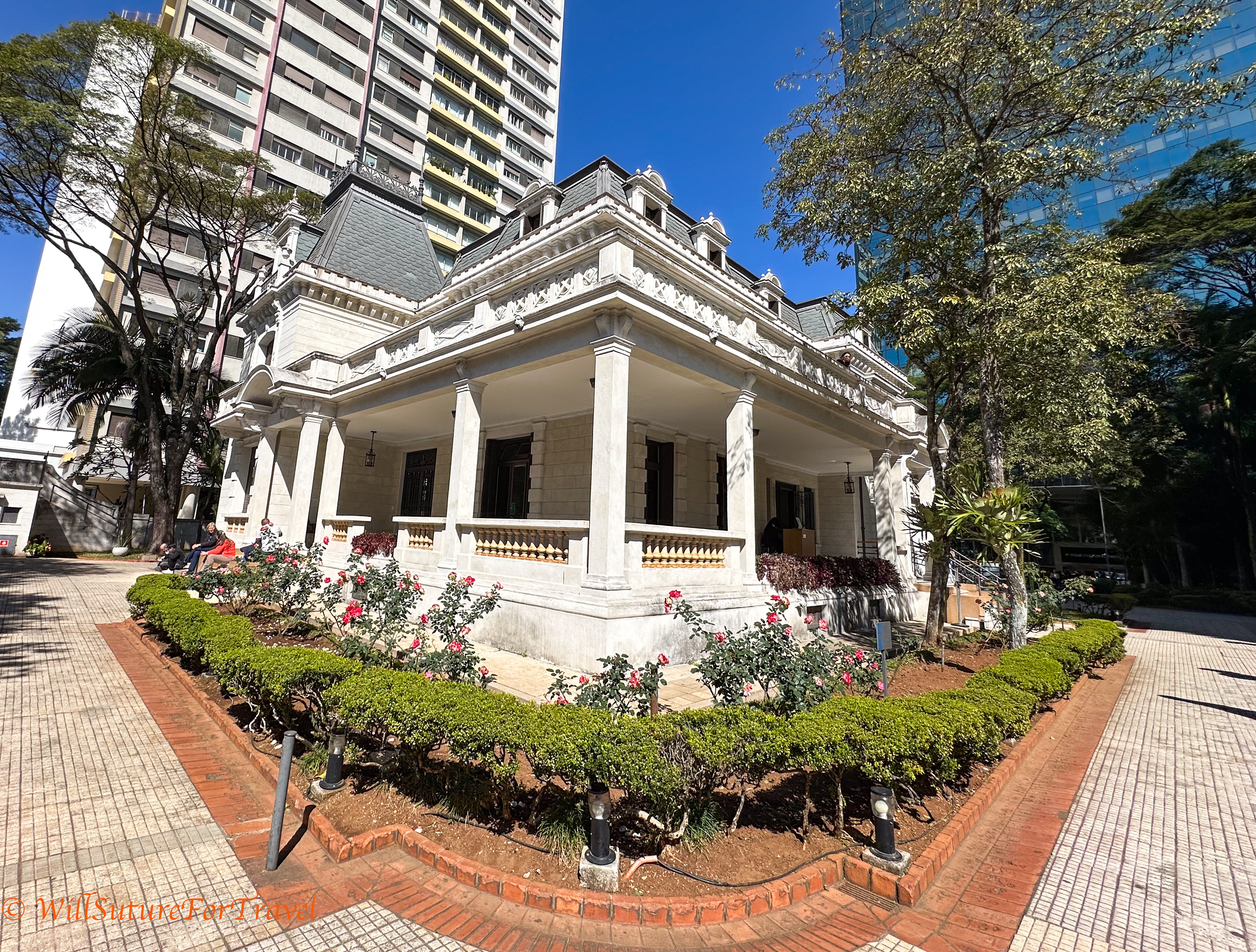
Our tour started off on Avenida Paulista, a main thoroughfare with things like corporate headquarters, shopping centers, and hospitals. In the 19th century this street was the high end residential area. Unfortunately, most of those homes have been demolished. One of the remaining ones is the home of Francisco de Paula Ramos De Azevedo, a famous Brazilian architect. Many of his buildings are still used today.
I’m always game for checking out a market, so we were off to the Municipal Market to see the local goods. This building was designed by Ramos De Azevedo, the architect whose house we saw above. This market has been open since 1933.
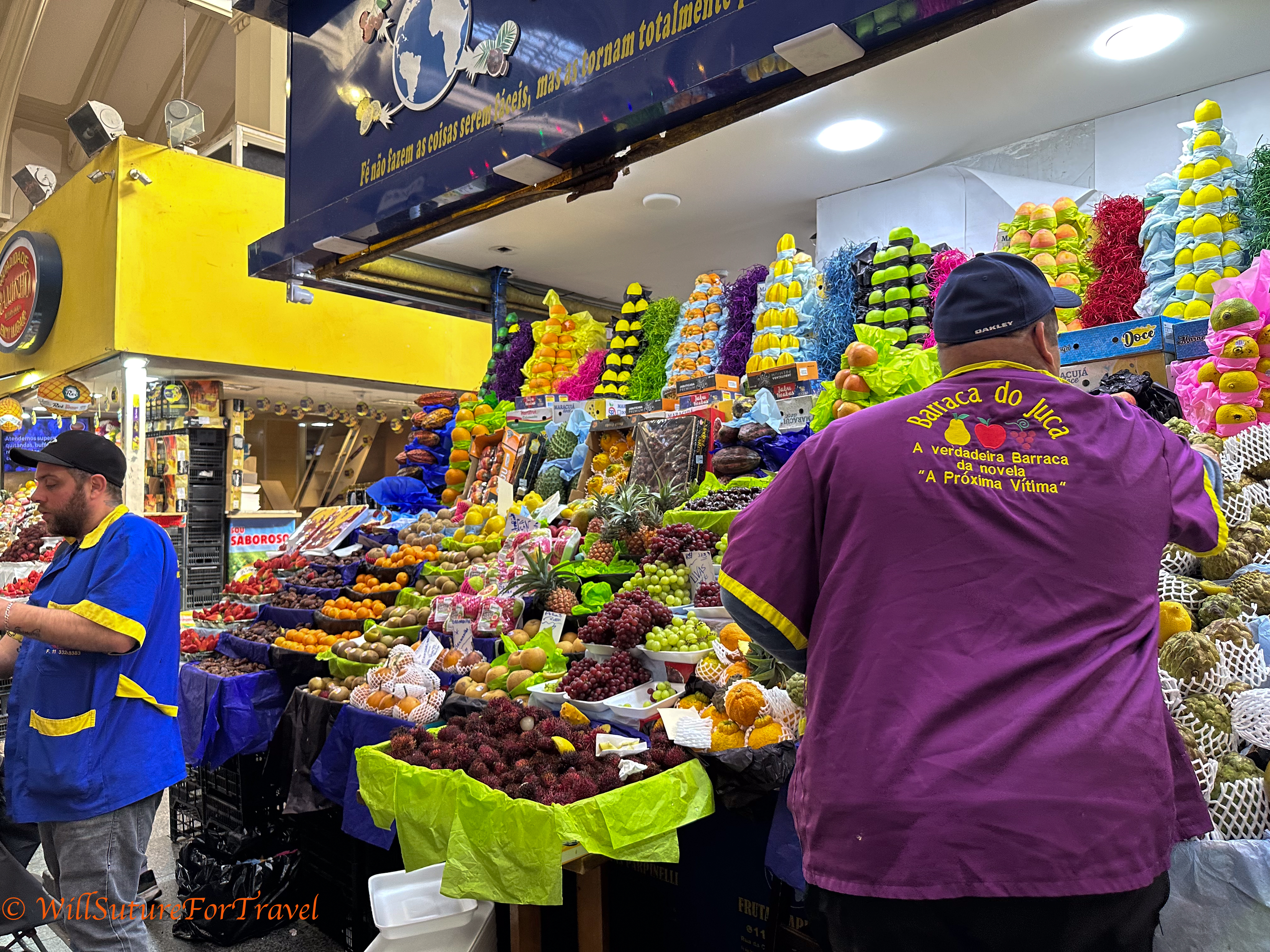
This gentleman in purple nearly force fed us fruit samples in an attempt to get us to shop. They were all tasty and there were a couple of fruit I had not eaten before.
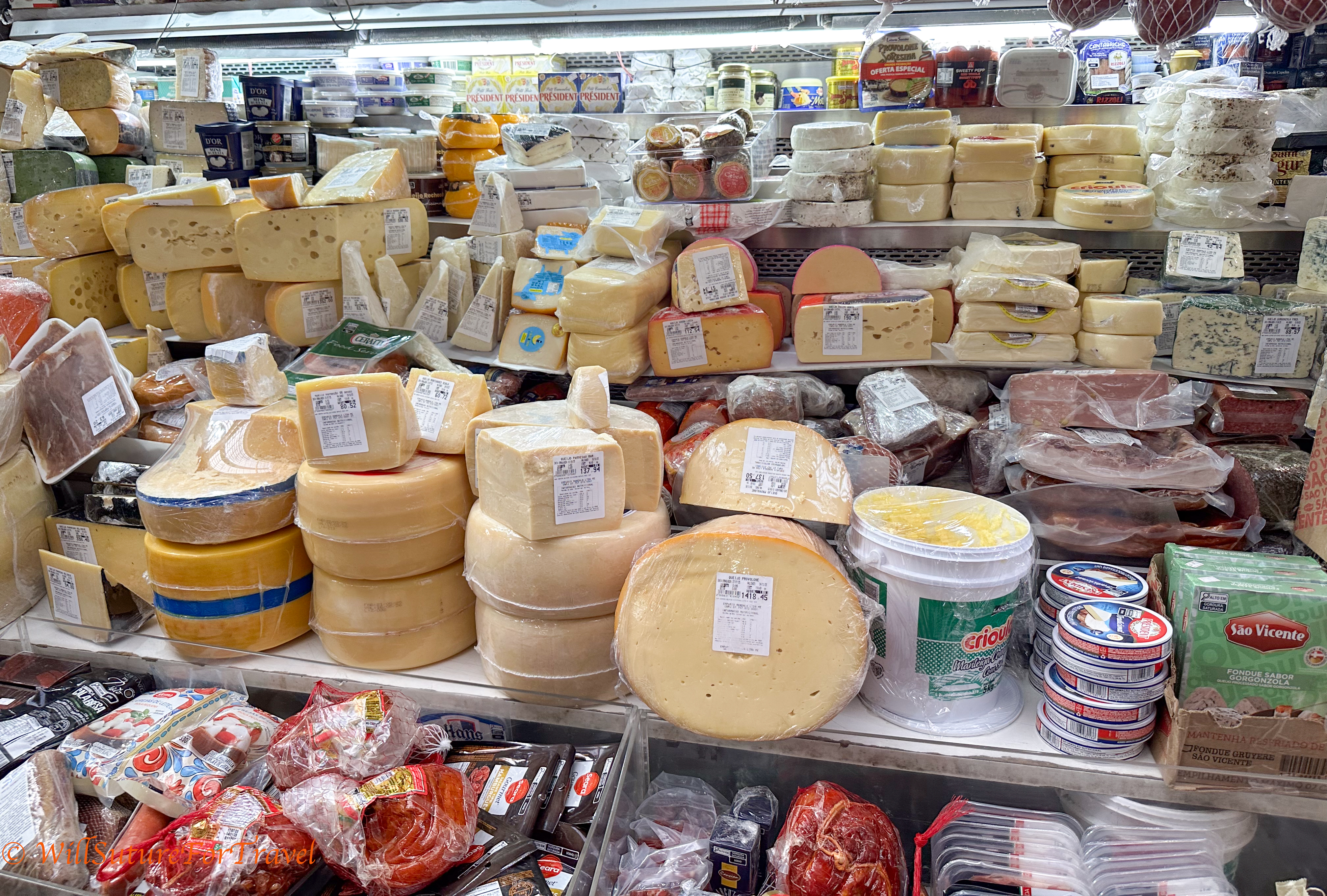
The cheese displays were impressive.
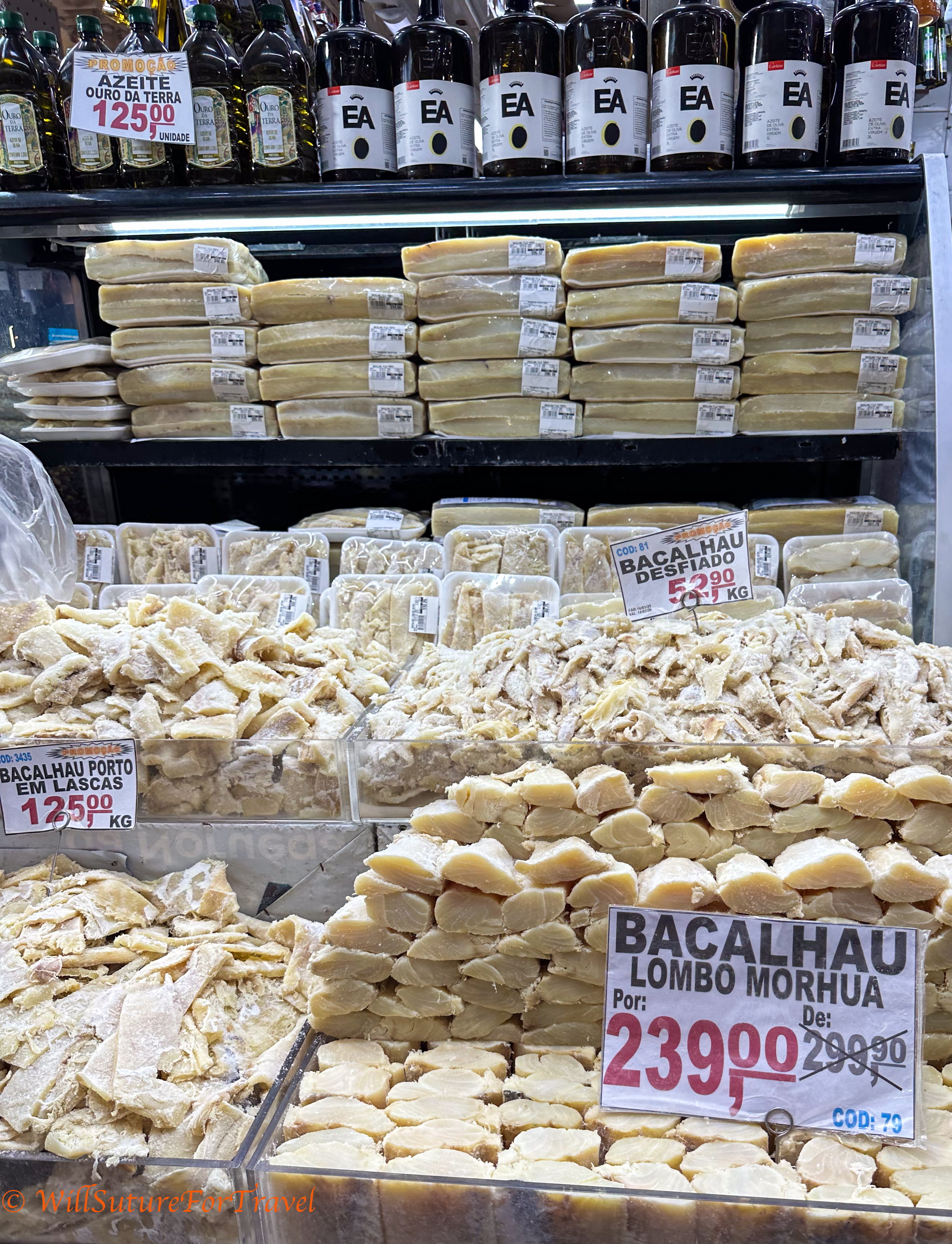
This is a bunch of dried cod.
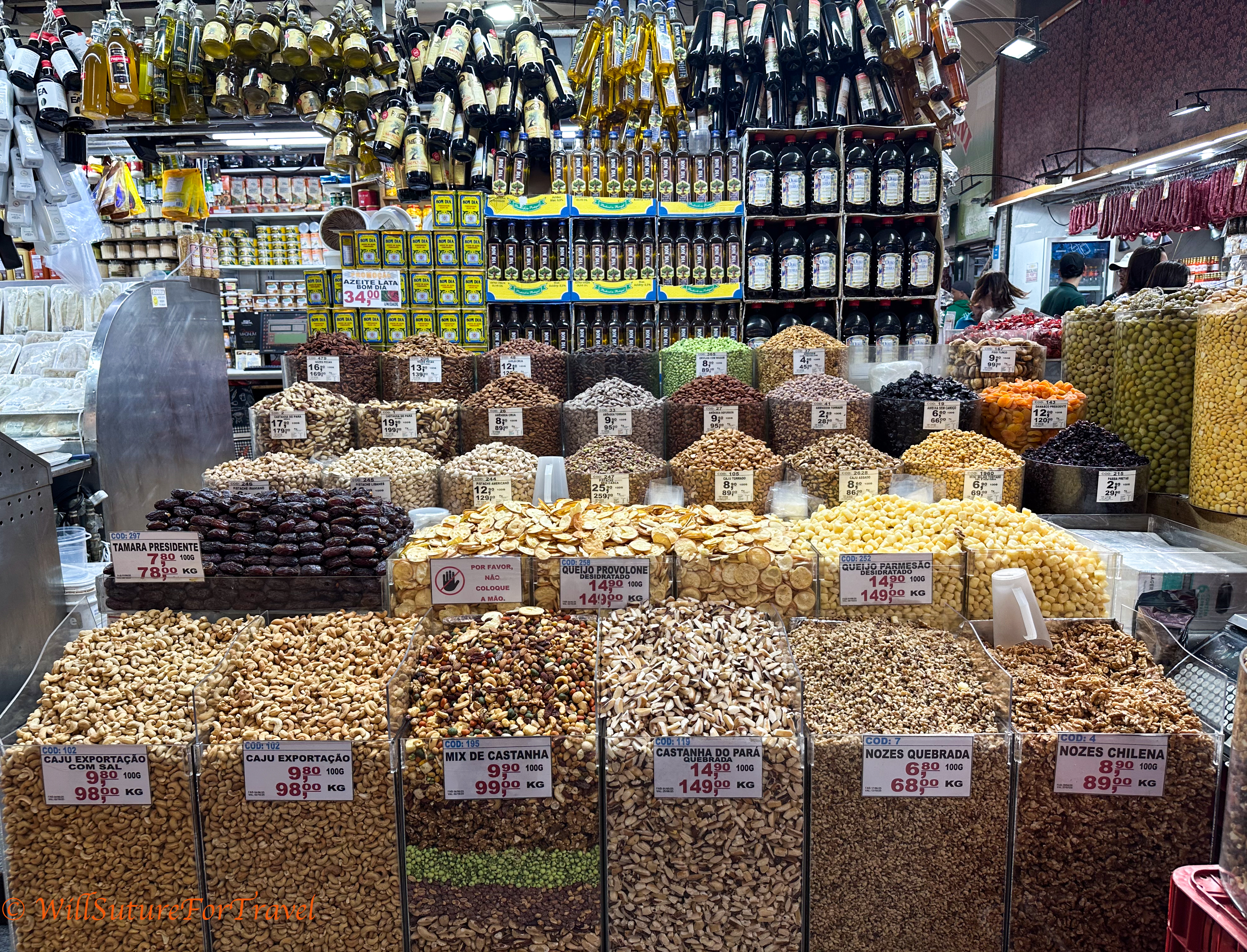
And nuts and dried fruit.
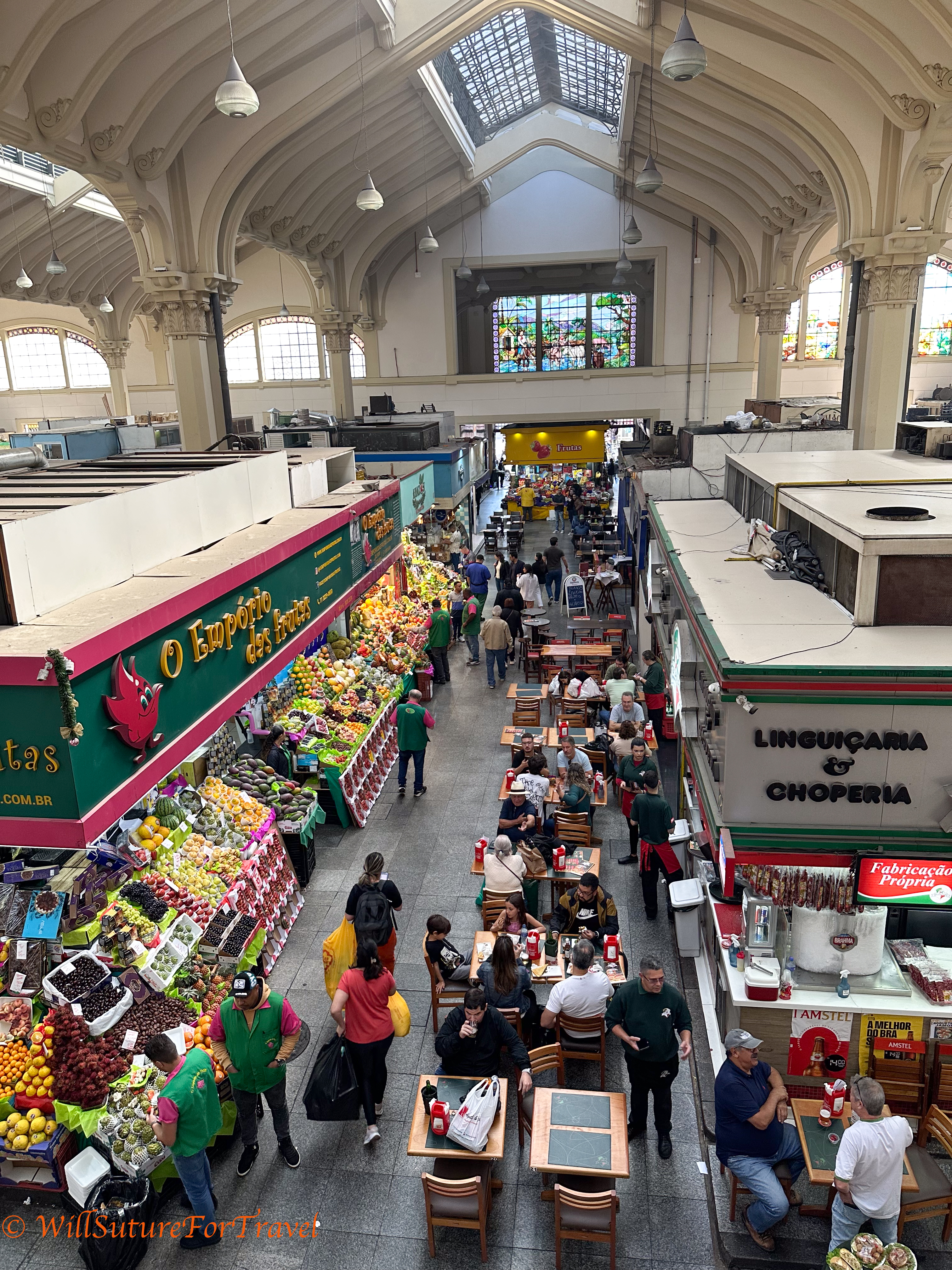
An overview from the 2nd floor.
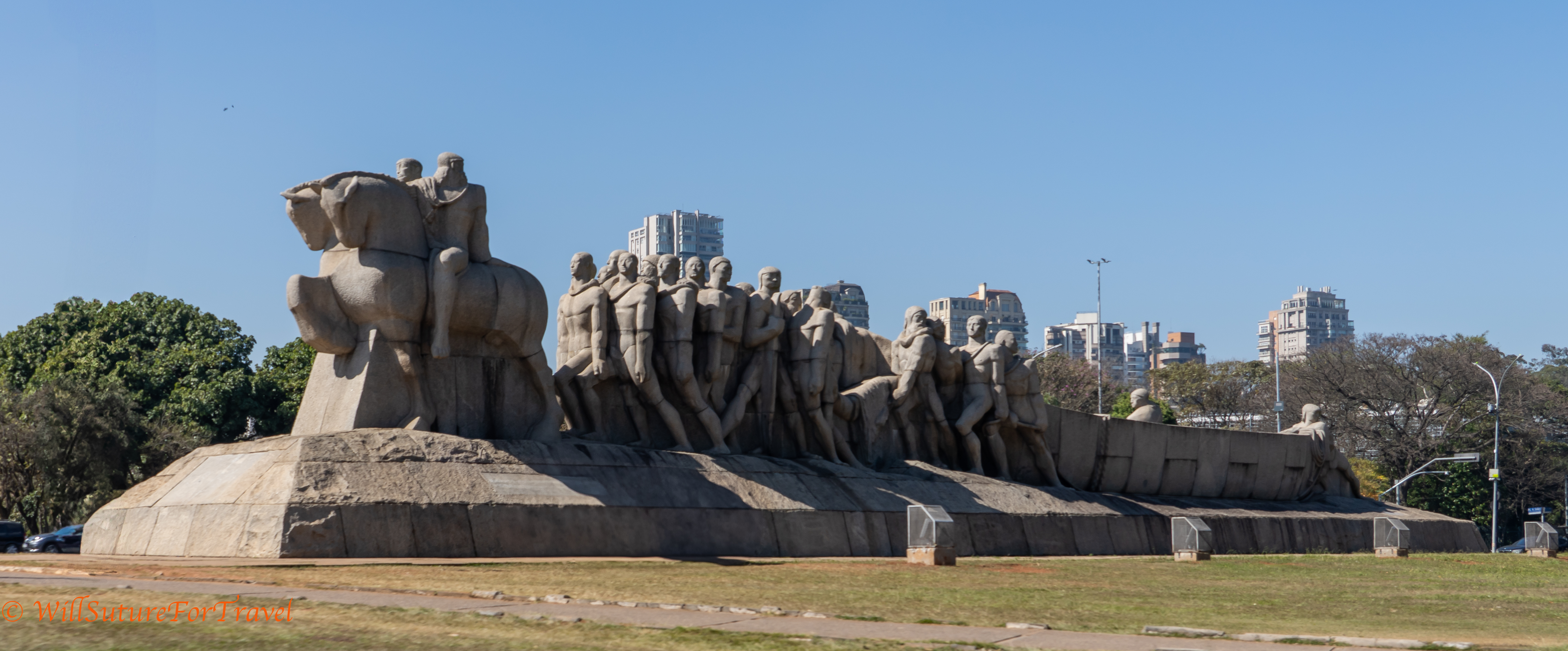
This is a monument to the Bandeiras celebrating the settlers of Brazil.
The rooftop of a contemporary art museum allowed us to get a view of the city.
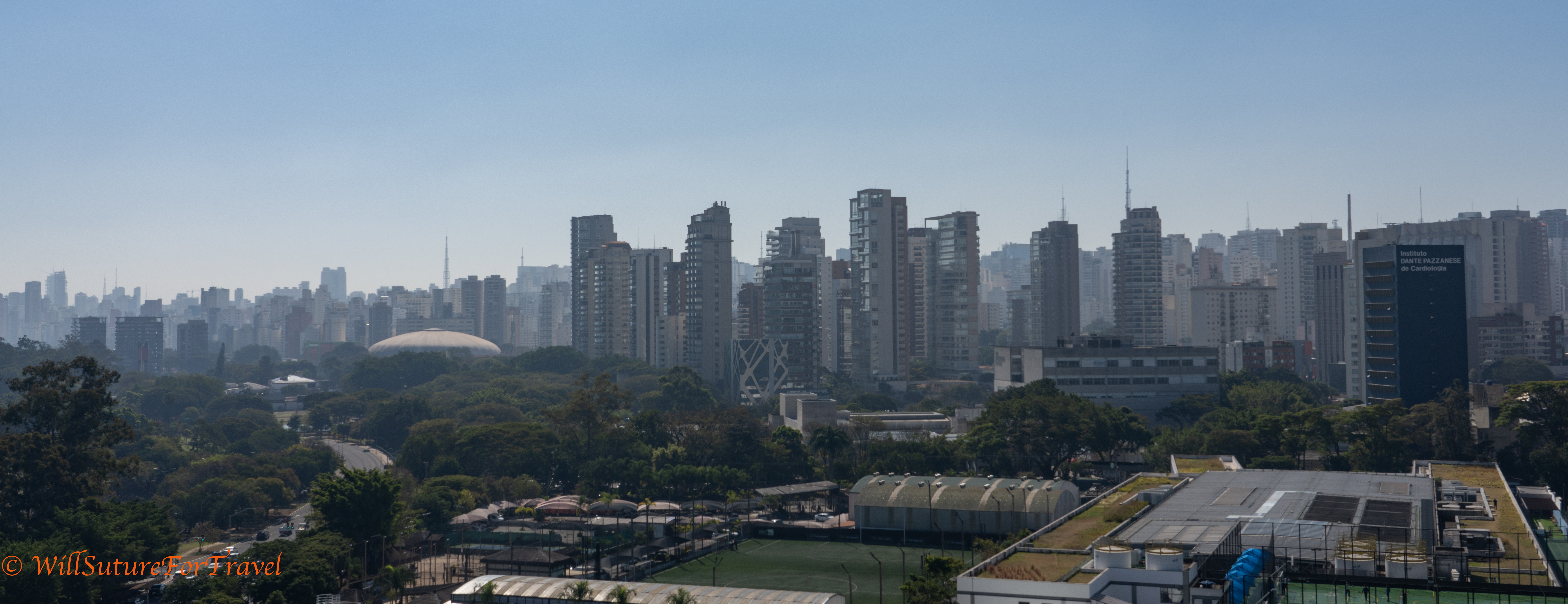
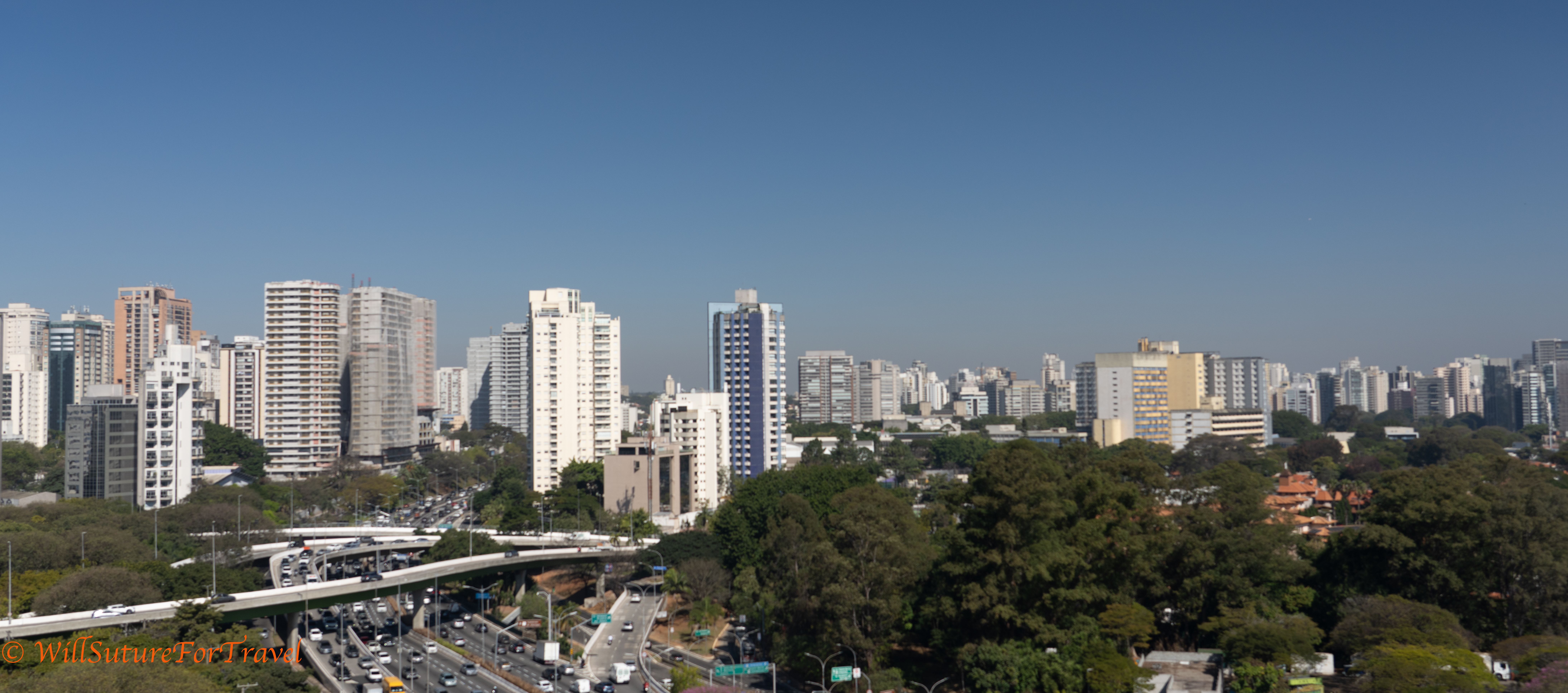
The other half of the city is over a ridge and not visible.
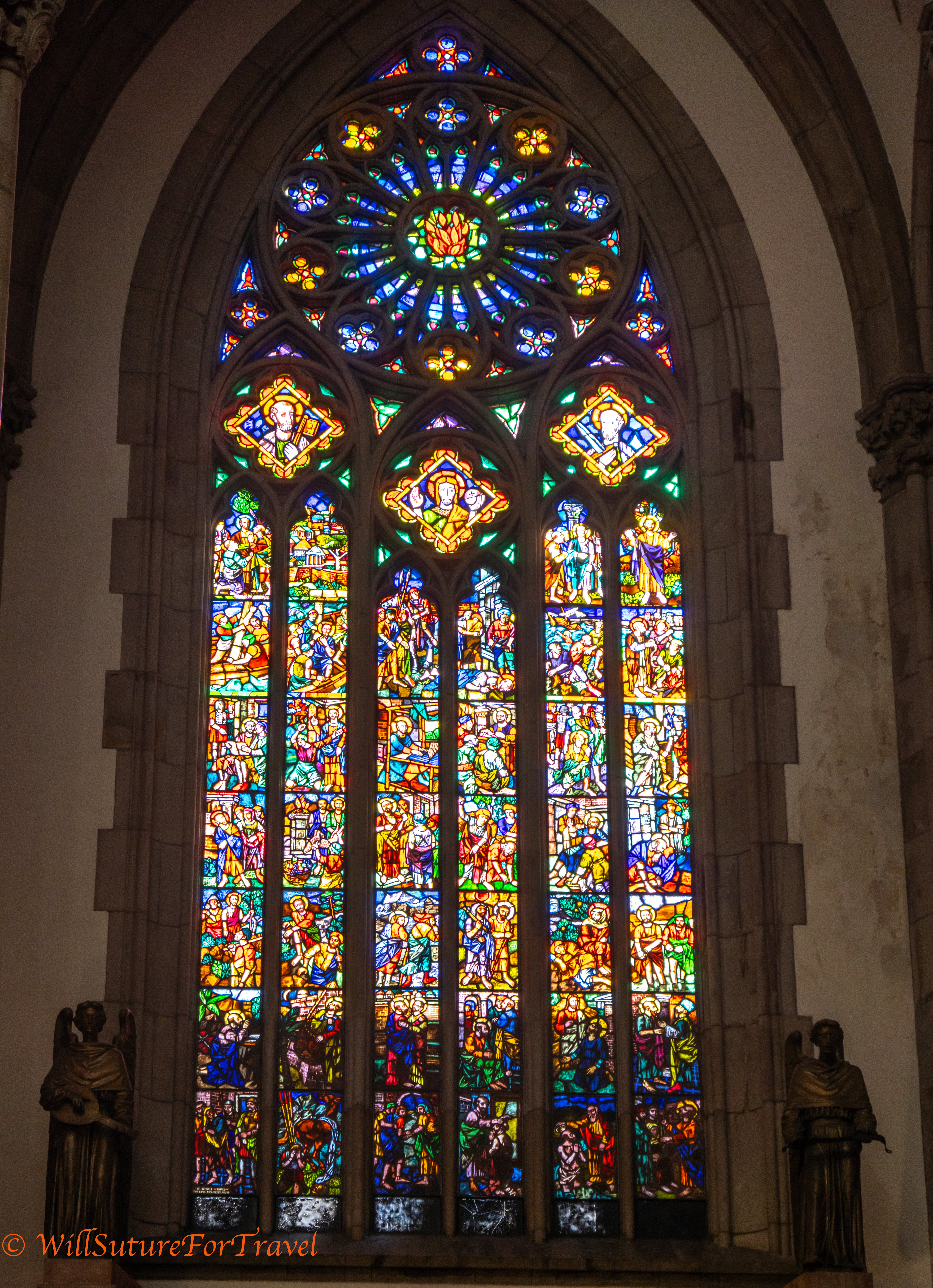
We went to see the São Paulo Cathedral, which is 20th century neo-Gothic. A church has been located on this site since 1589.
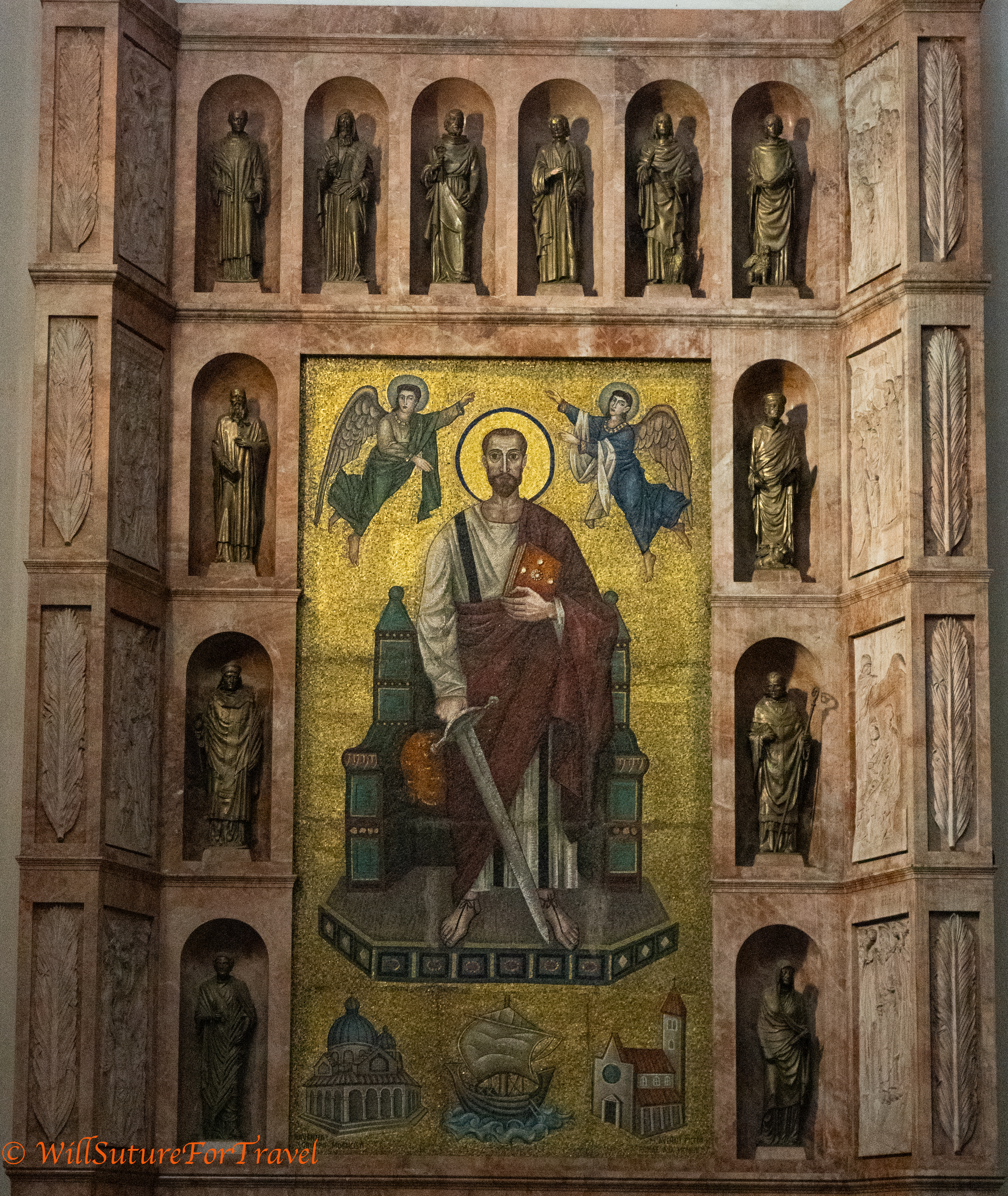
Statue in front of the Cathedral of Father José de Anchieta. He was a Jesuit missionary to the Brazilian colony in the later 16th century and helped found São Paulo.
We also went to the Church of Our Lady of Brazil, which we were told is “the” church to be married in, having a long waiting list for weddings. It is neo-Baroque in decor and incorporates Brazilian cultural references.
Nave: The ceiling has an interpretation of the Sistine Chapel.
Sanctuary: This ceiling has the stars of the southern sky. On the left is typical Biblical imagery. On the right are indigenous images including a jaguar to the right of center near the Virgin Mary and Jesus.
First time I’ve seen a religious stained glass window with an anteater. I love it!
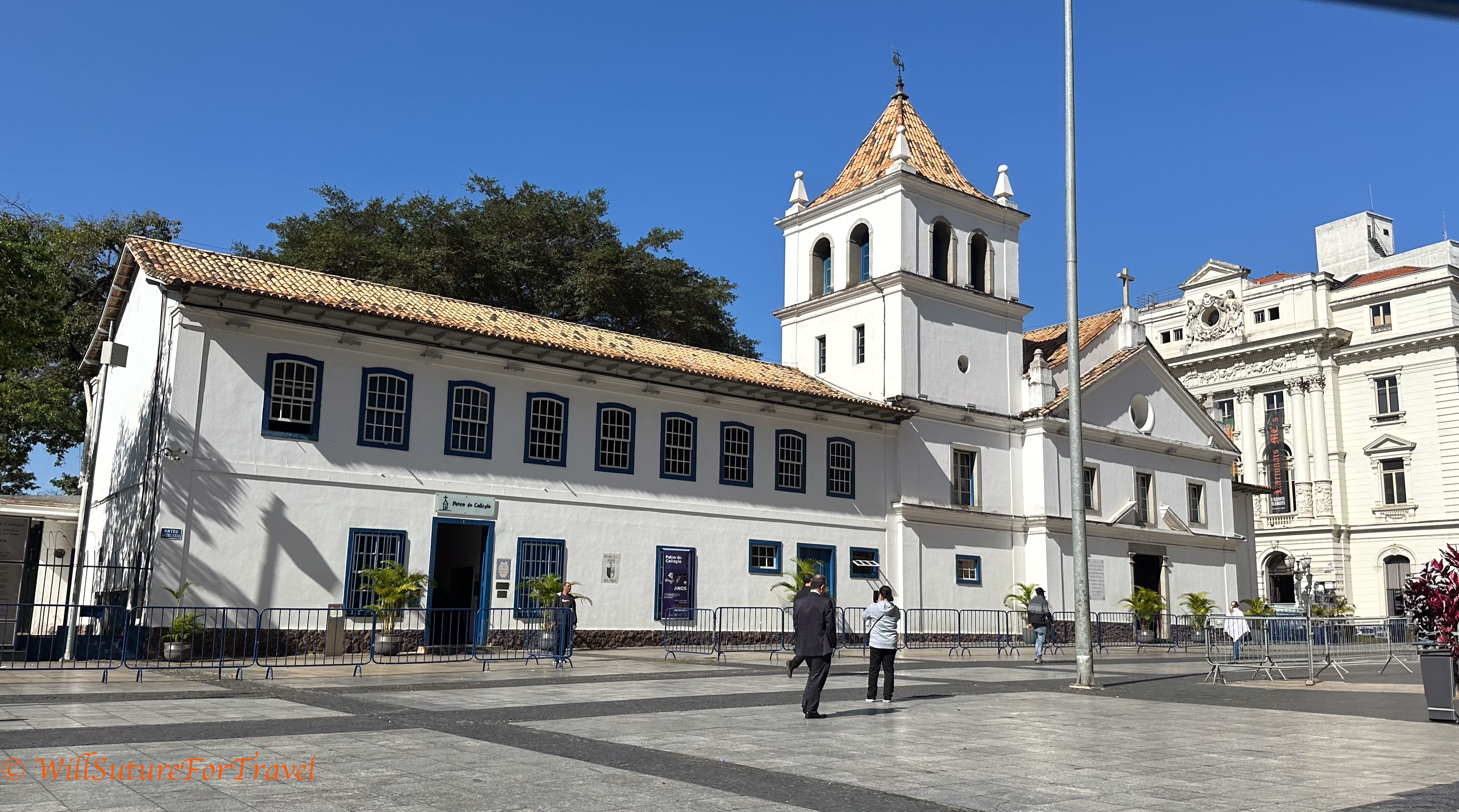
São Paulo started at this location, the Pátio do Colégio. This is a historical Jesuit monastery and school where the city was founded in 1554. The current building is much newer, but apparently there are some original or near-original foundations remaining.
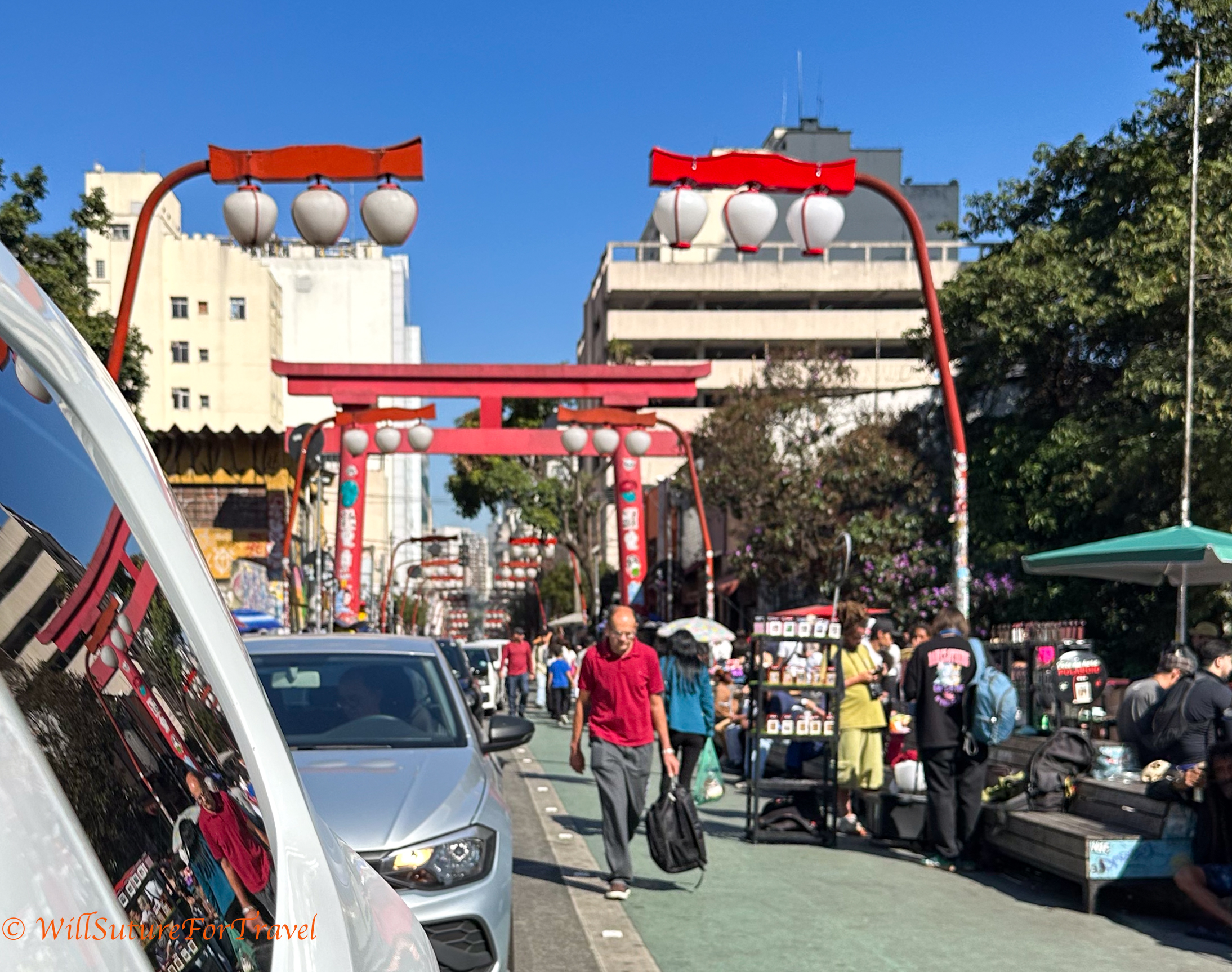
We drove, at walking speed” through the very busy Liberdade district, also known as Japantown. There is a large Japanese community in Brazil that began immigrating in the early 1900s and this is where many originally lived. It now is a bustling Japanese commercial area.
Historically, this area was used to execute slaves and convicts and was known as the field of gallows until the late 19th century.
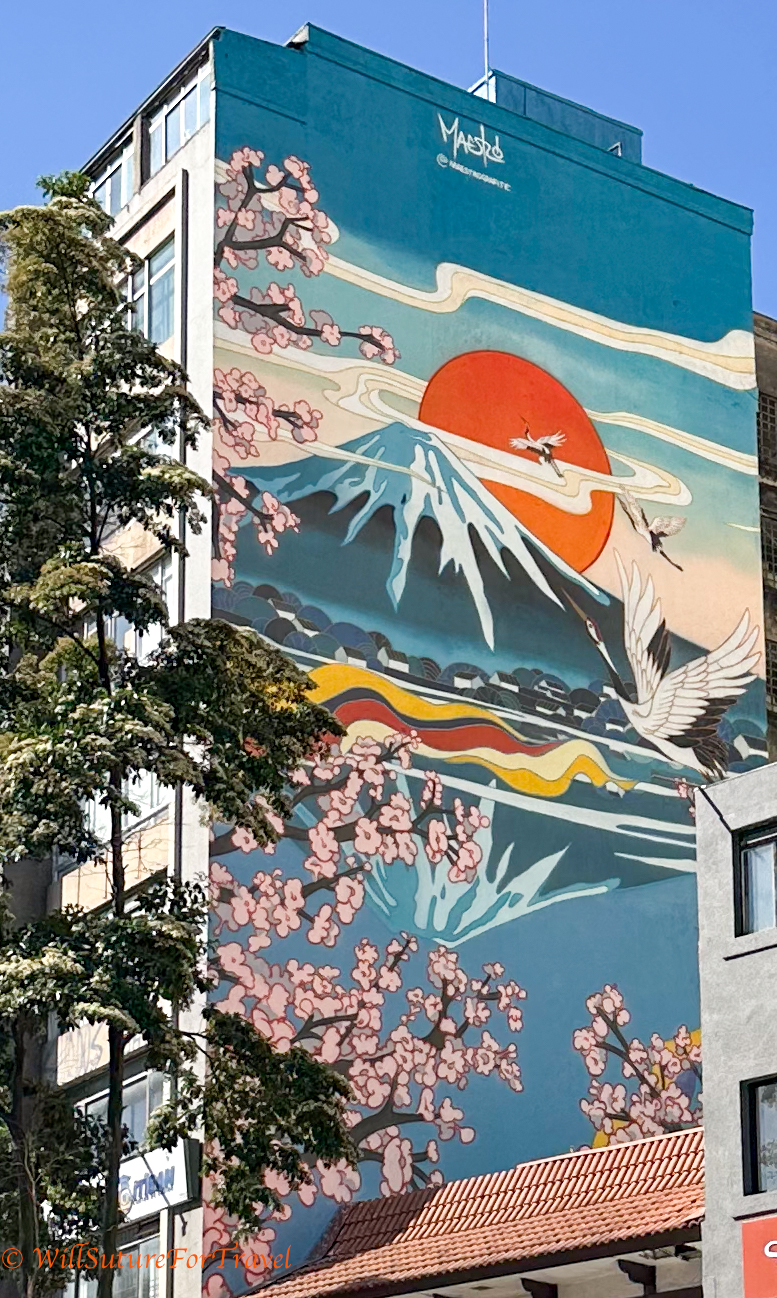
large street art in Japantown
Our other main stop was Beco do Batman, or Batman’s Alley.
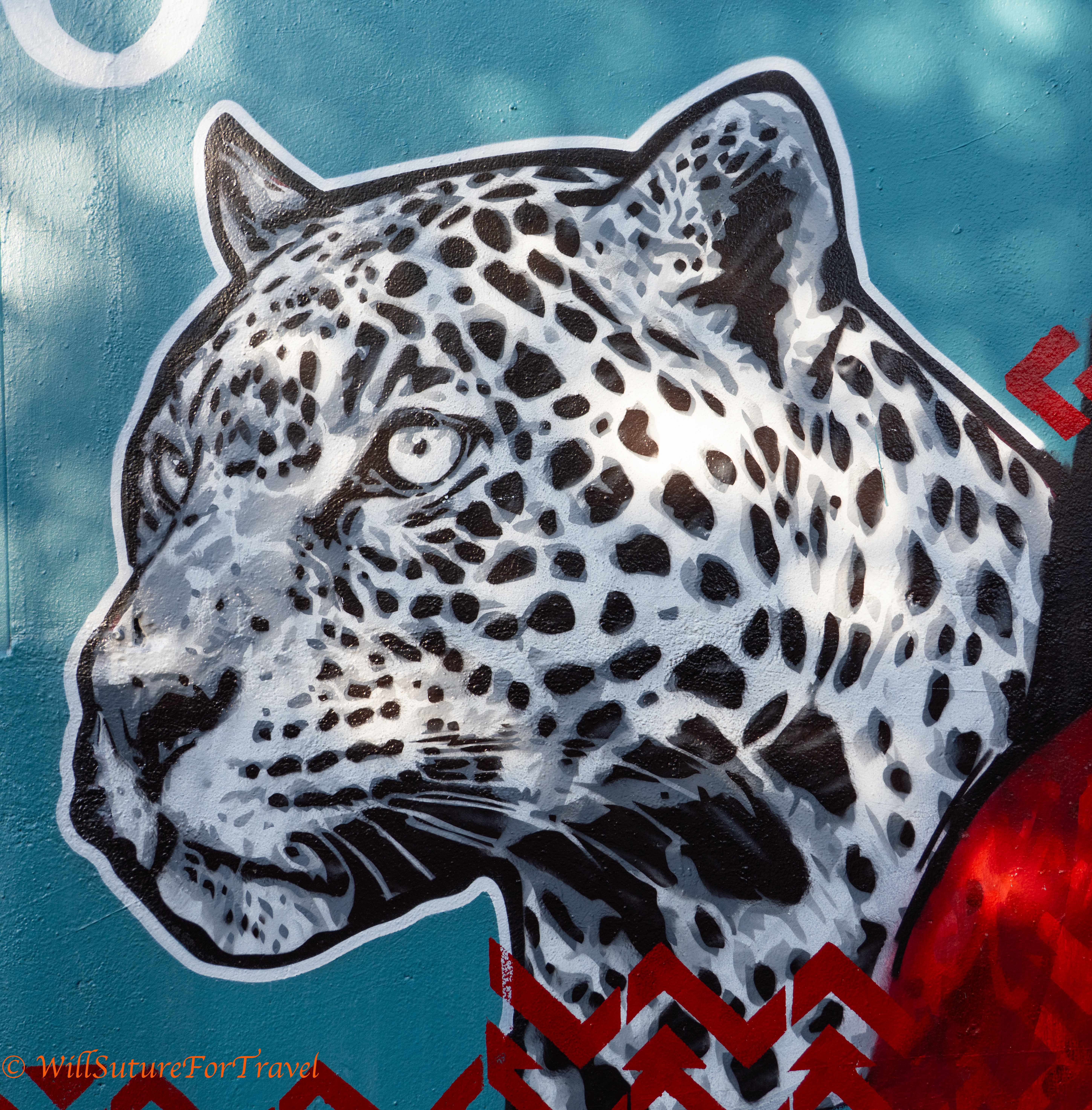
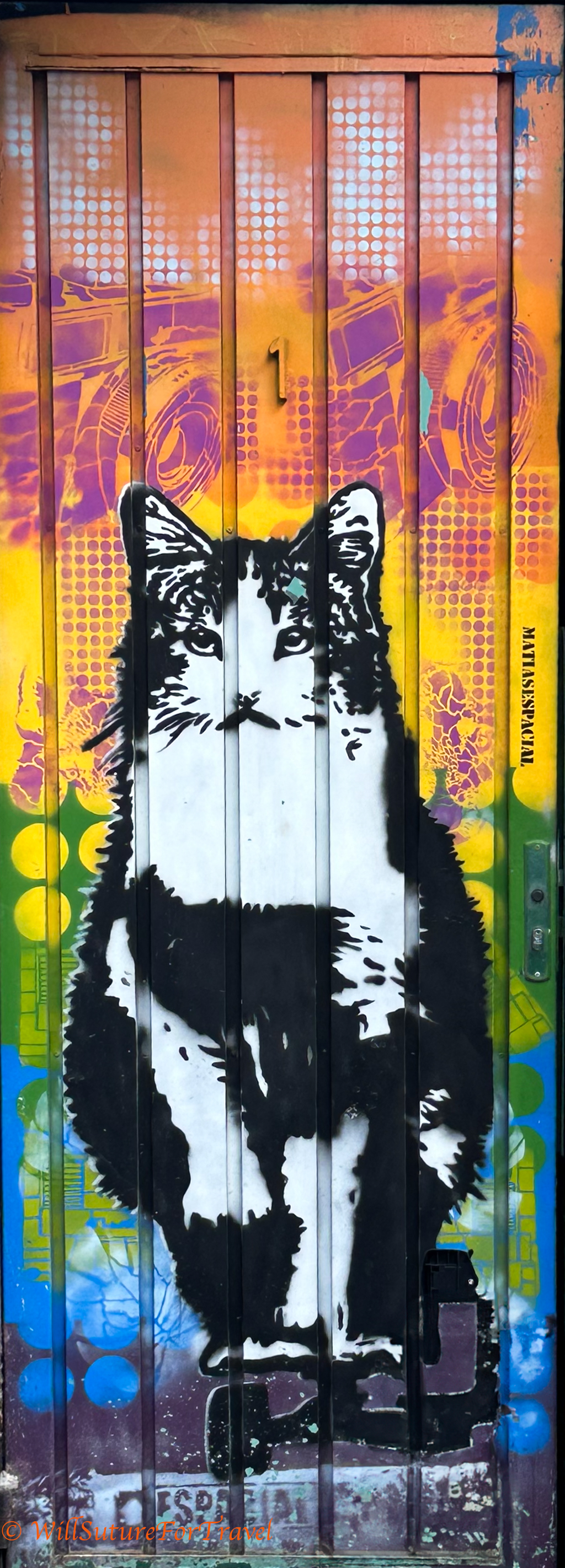
It is an alley lined with a collection of changing graffiti/street art, giving these artists opportunity to have their work displayed. There are also nearby shops and cafes.
The name apparently comes from the 80s when someone painted Batman on one of the walls. The walls have been changing since then.
These artists are trying to get their work seen and some have been able to do commissioned work.
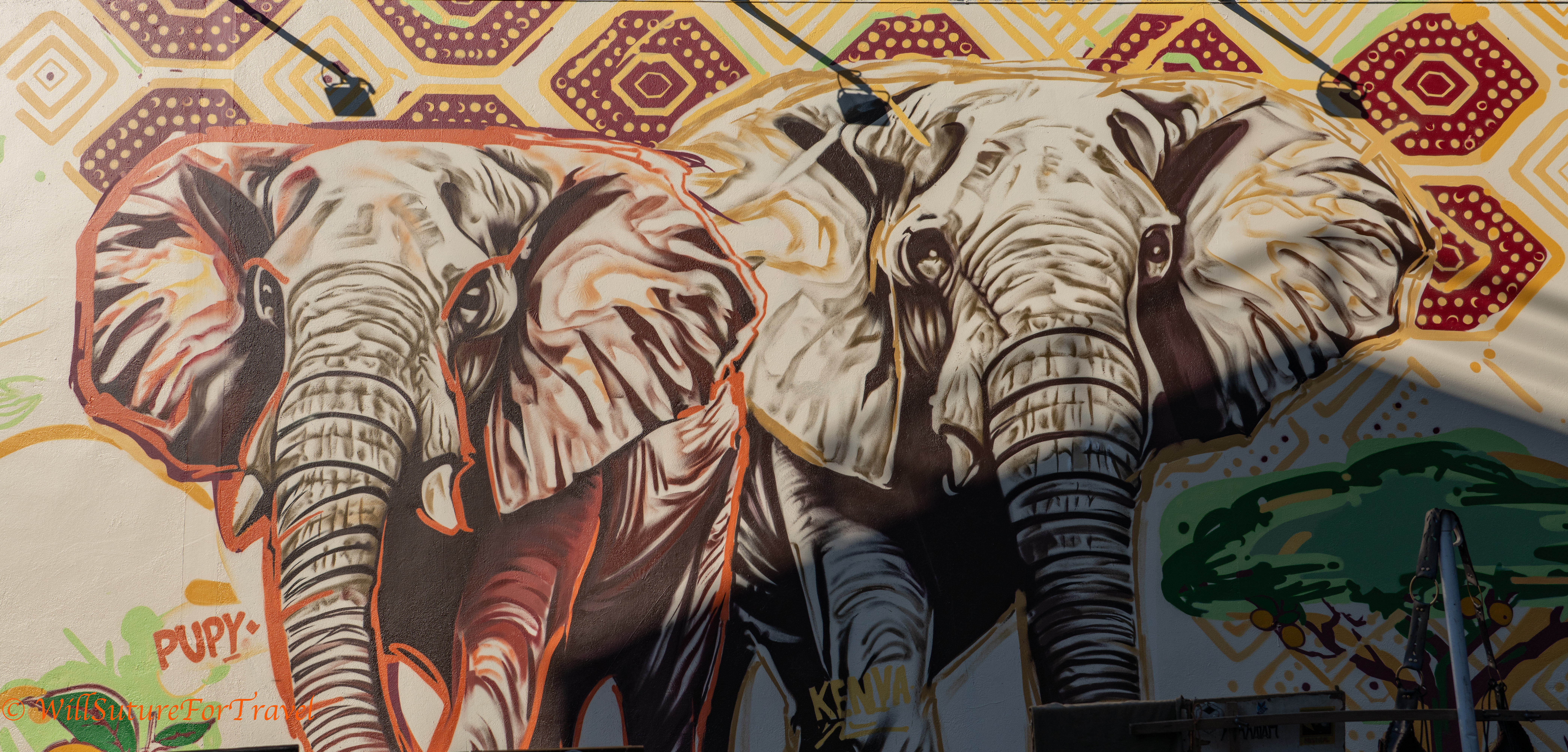
Our guide said these elephants weren’t there last week.
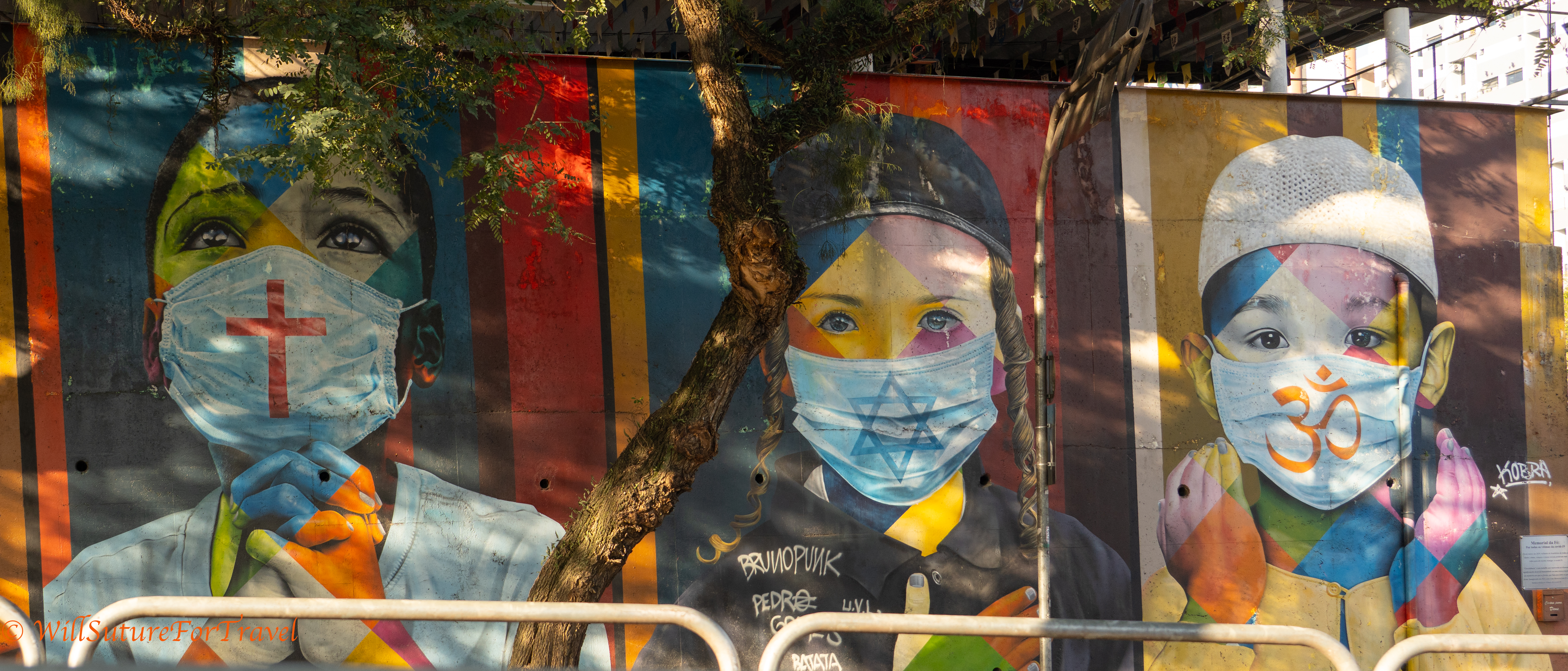
This is outside of Beco do Batman, but this is the work of São Paulo’s most famous street artist, Eduardo Kobra. He has developed into a successful and respected artist.
 Will Suture for Travel
Leave a comment