We docked overnight in Basel, Switzerland. I was hoping we would get a drive through tour of the city, but we didn’t have that option. We had to check out of the boat today and are continuing for a few more days of a land tour. We got ourselves loaded on the bus only to have the driver back the bus into a metal post. He thought things were ok, only to have the bus break down on the highway near Augst, Switzerland. Apparently the collision with the metal post caused an oil leak. Our tour-mates made the best of sitting on the side of the highway by having a contest to see who could most accurately guess what time we would actually get to drive off. The tour company managed to get us a new bus and we were off in about an hour with one fellow traveller $12 richer.
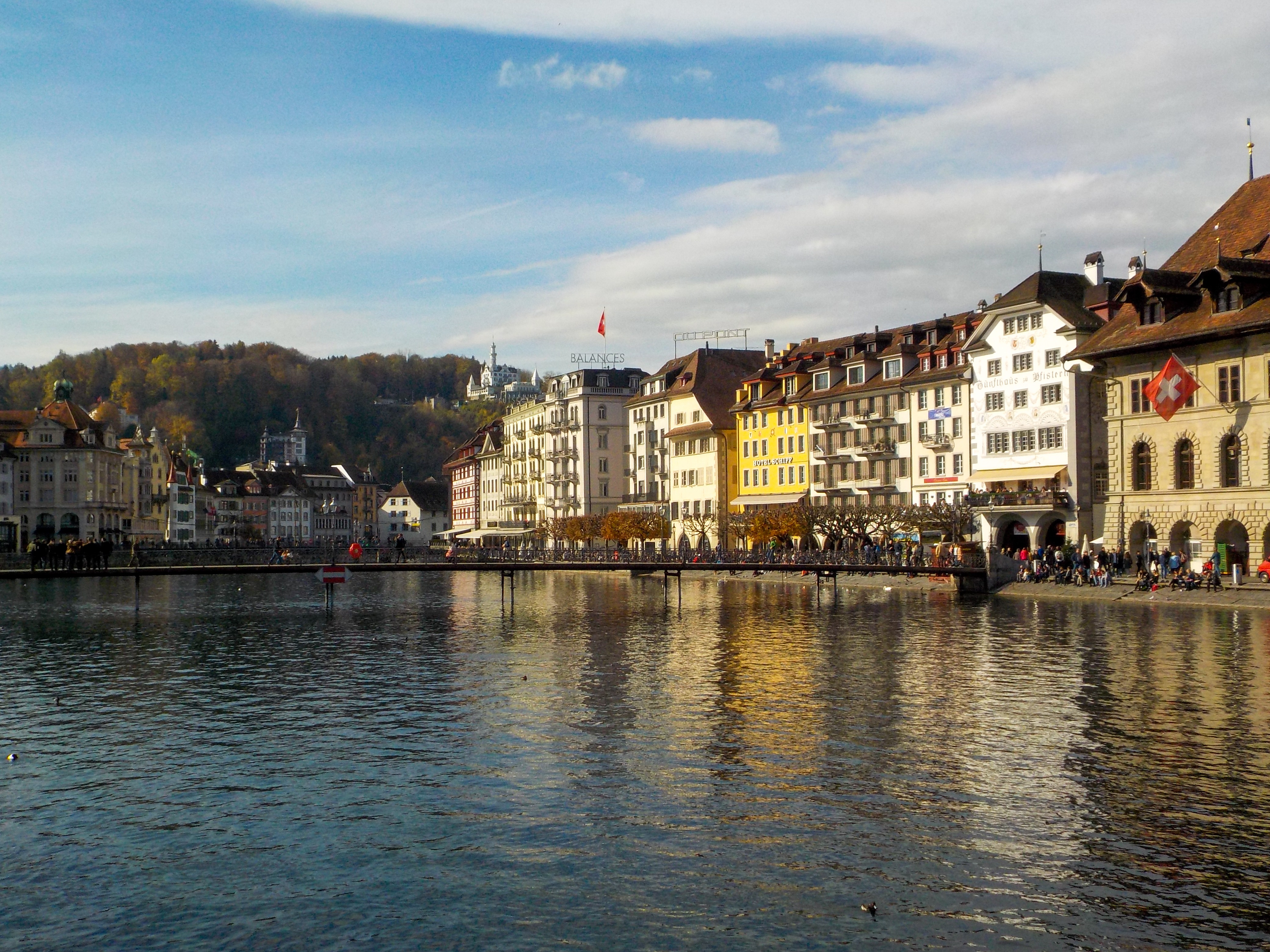
Old Town Lucerne along the Reuss
We spent the remainder of the day in Lucerne, Switzerland. I have been here once before, when I was 10 years old, and had fond memories of the lake and the green hills. It’s very pretty on Lake Lucerne and with fall colors starting to show up. The lake drains into the River Reuss. The area started with monasteries in the 700s and later developed into the city. The inhabitants fought against the Habsburgs, defeating them in 1386. By then it had joined what was known as the Swiss Confederacy. While most of what is now Switzerland became protestant, Lucerne remains Catholic. There is a Baroque Jesuit church along the Reuss, The Jesuit Church of St. Franz Xaver, which was built in the 1600s.
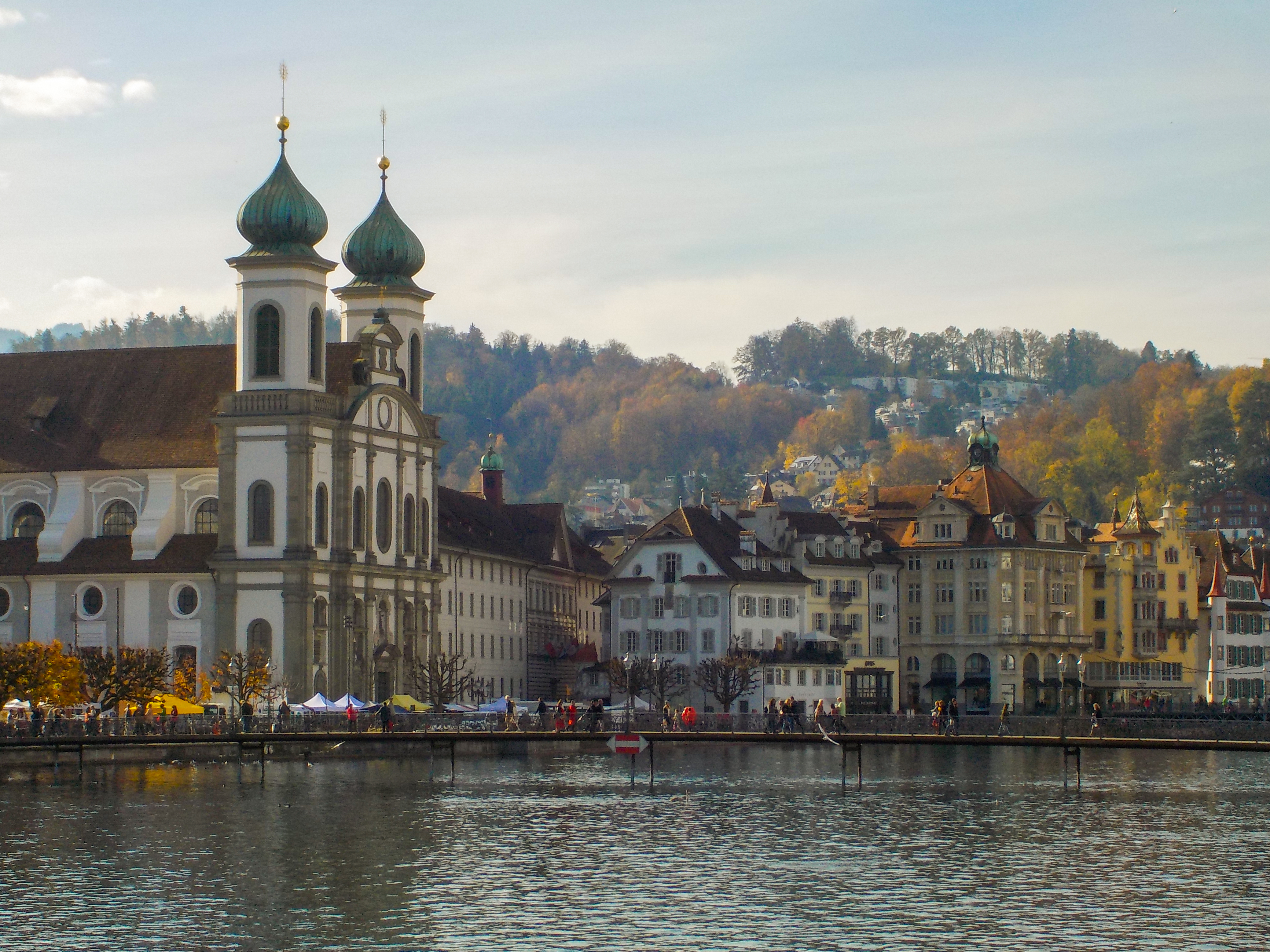
Along the Reuss with the Jesuit church on the left
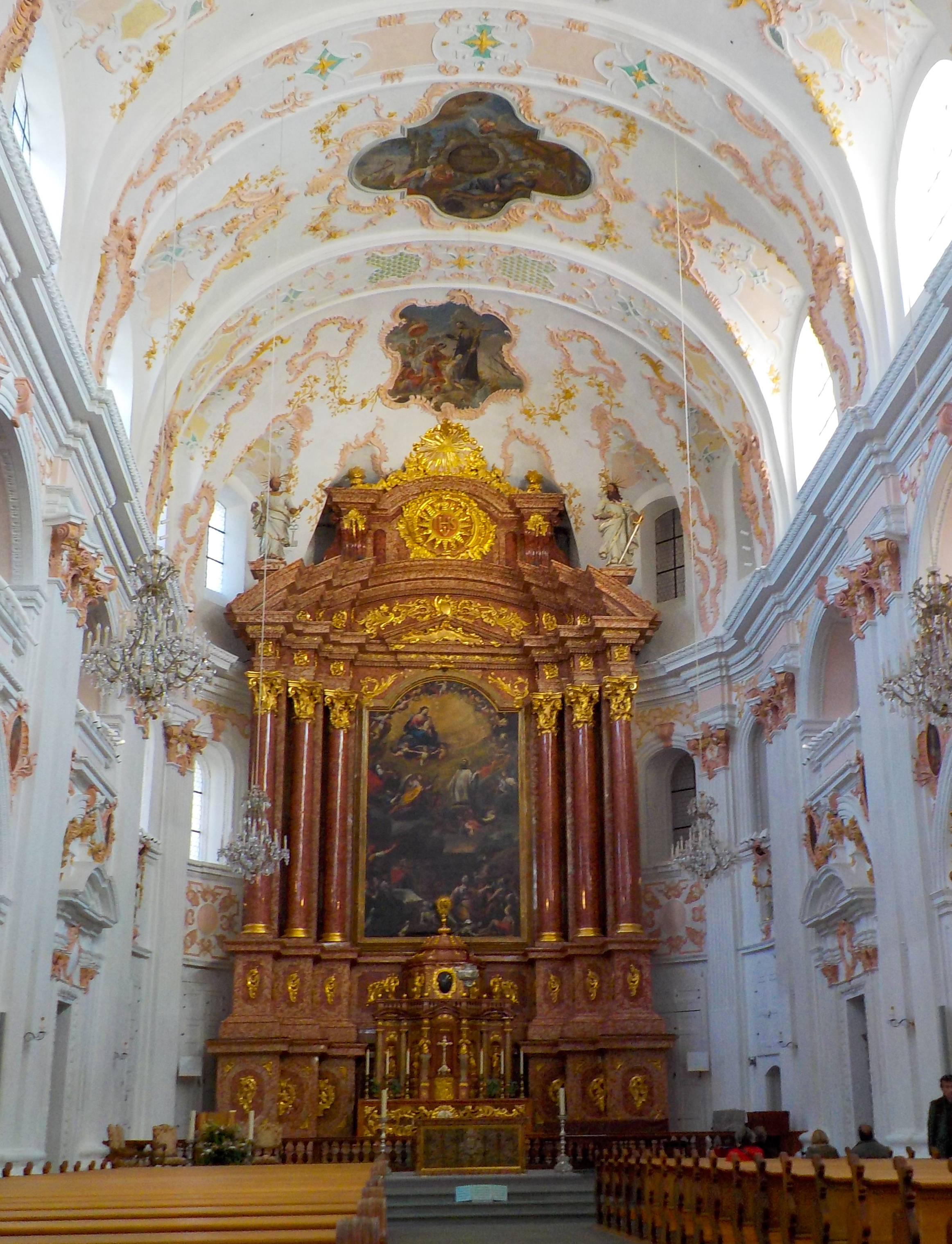
Baroque interior
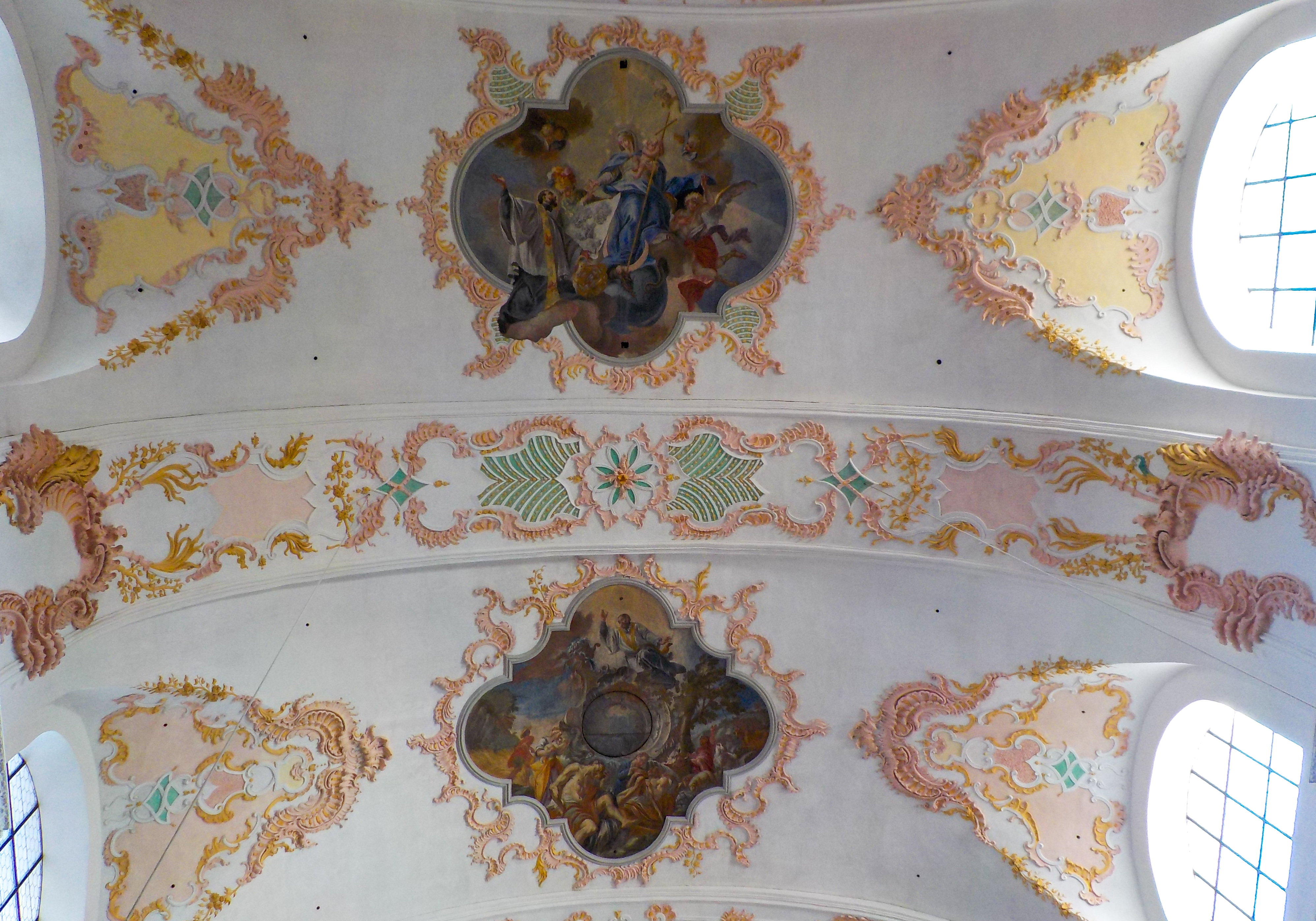
Ceiling
Lucerne has a number of bridges over the Reuss. The most famous is the Chapel Bridge (Kapellbrücke), a 669 ft long wooden covered bridge originally built in 1333, the oldest covered bridge in Europe, although much of it had to be replaced after a fire on August 18, 1993, allegedly caused by a discarded cigarette. Part way across, the bridge runs by the octagonal water tower (Wasserturm), a fortification from the 13th century. Inside the bridge are a series of paintings from the 17th century depicting events from Lucerne’s history. The bridge with its tower is the city’s most famous landmark. The other covered bridge is the Spreuer Bridge (Spreuerbrücke or Mühlenbrücke, Mill Bridge) which was constructed in 1408. It features a series of medieval-style 17th century plague paintings by Kaspar Meglinger titled Dance of Death. The bridge has a small chapel in the middle that was added in 1568. Remnants of the old town walls exist on the hill above Lucerne, complete with eight tall watch towers. An additional gated tower sits at the base of the hill on the banks of the Reuss.
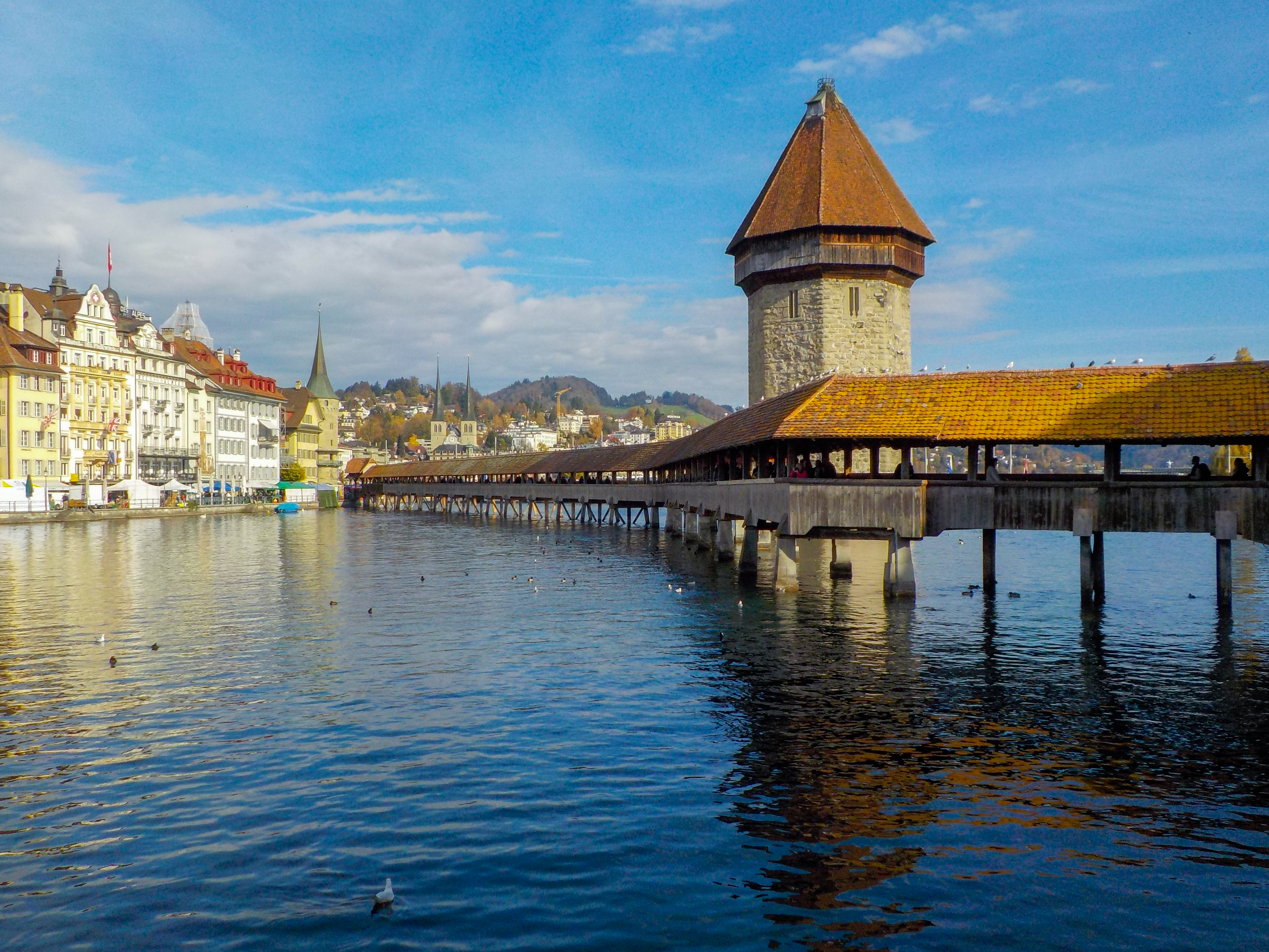
Chapel Bridge
.jpeg)
Spreuer Bridge
We went to see the Lion Monument, or the Lion of Lucerne, which is a rock relief in Lucerne, Switzerland, designed by Bertel Thorvaldsen and made in 1820–21 by Lukas Ahorn. It commemorates the Swiss Guards who were massacred in 1792 during the French Revolution, when revolutionaries stormed the Tuileries Palace in Paris. I had heard of this monument before and thought that it was a piece of stone that was carved. It actually is a carving in a large stone hill. It is definitely dramatic.
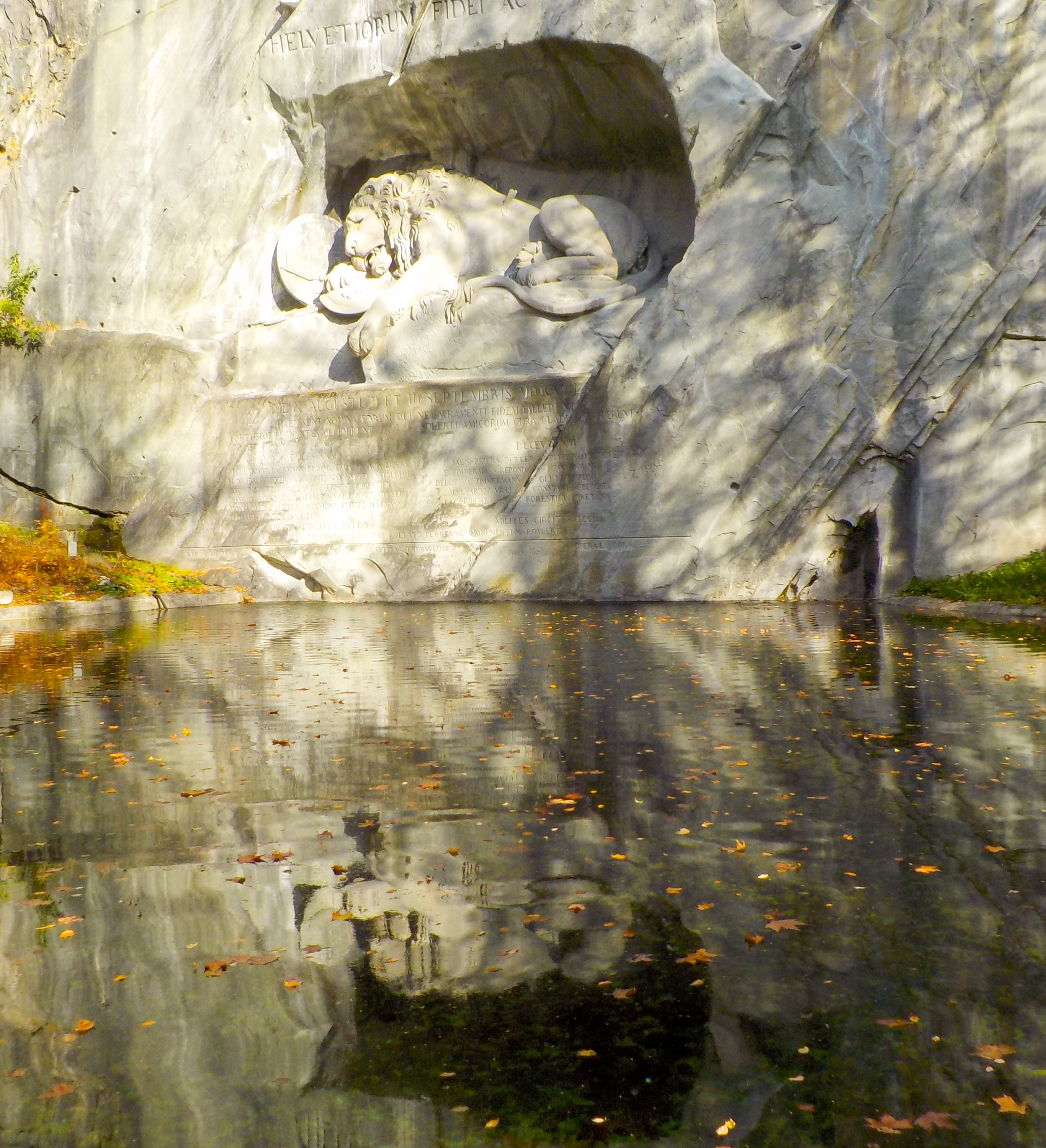
Lion of Lucerne
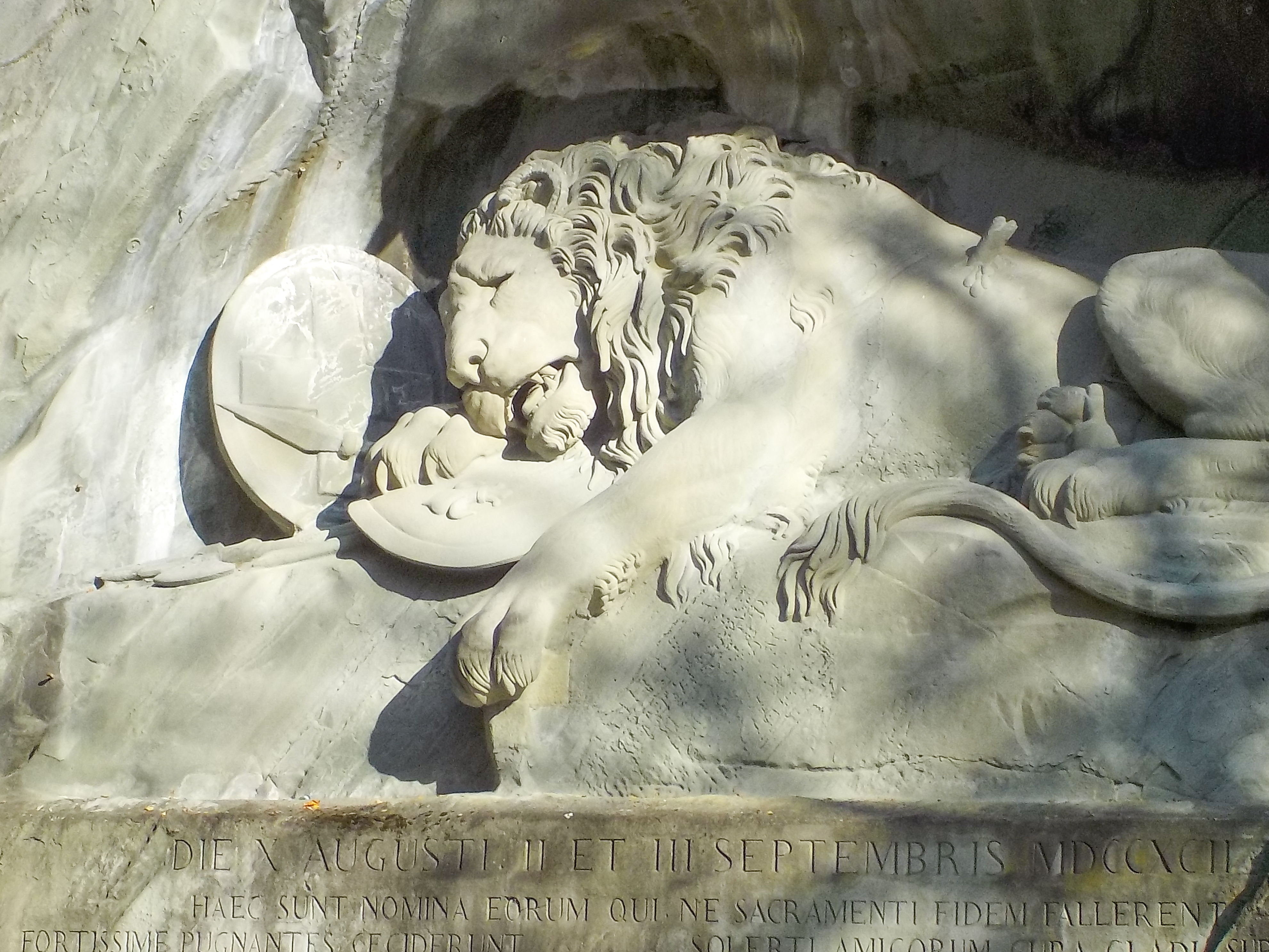
closeup
We took a walking tour of the old town and later went and explored some more. We walked up to the old city wall (which is mostly along a hilltop), but couldn’t go inside the towers or on the wall as it was evening. Parts of the wall (still standing) date back to the 1300s!! One of the towers has the oldest city clock, from 1535. It, I guess in honor of it’s age, is set to chime 1 minute before any of the other towers in the city.
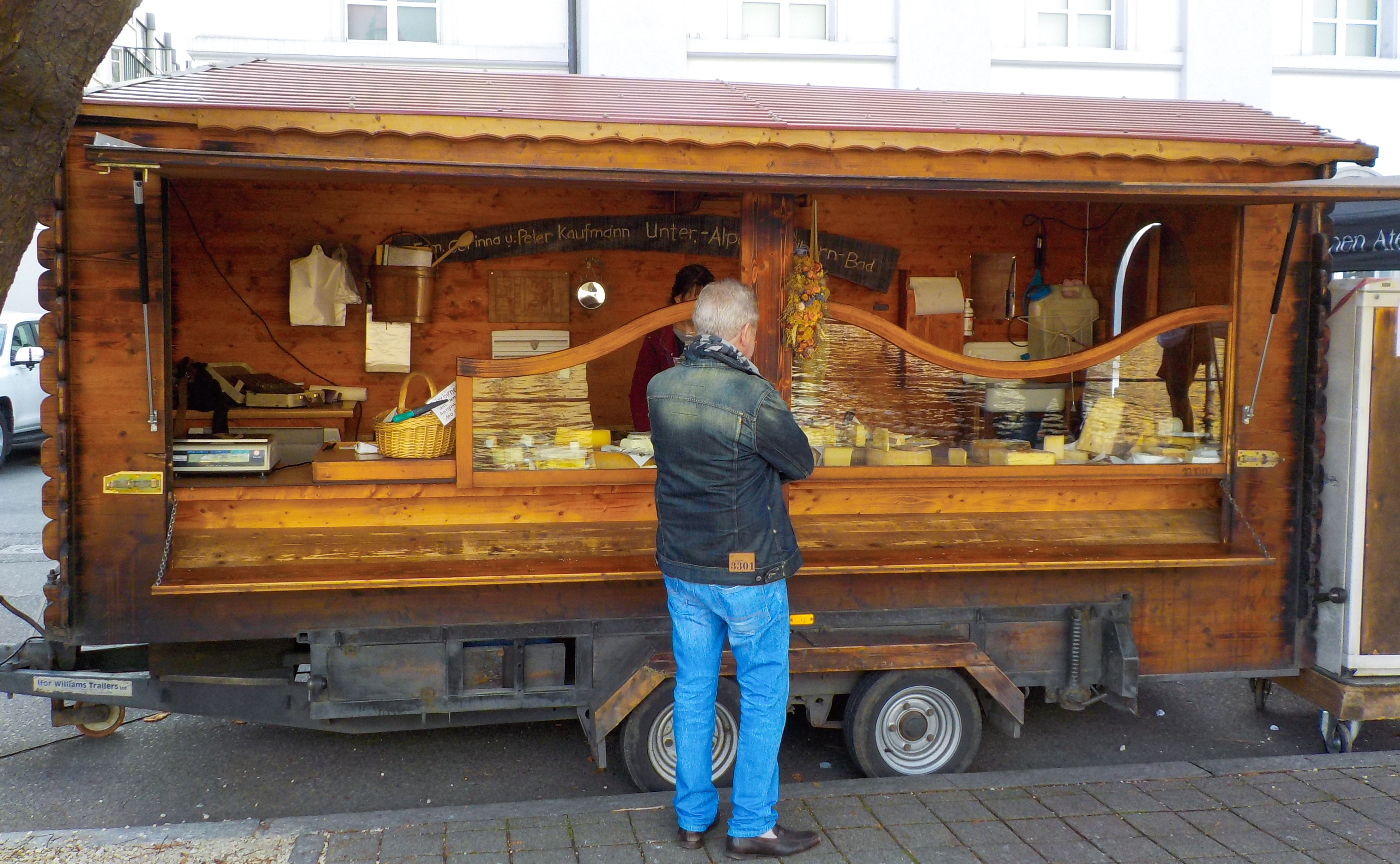
Cheese vendor
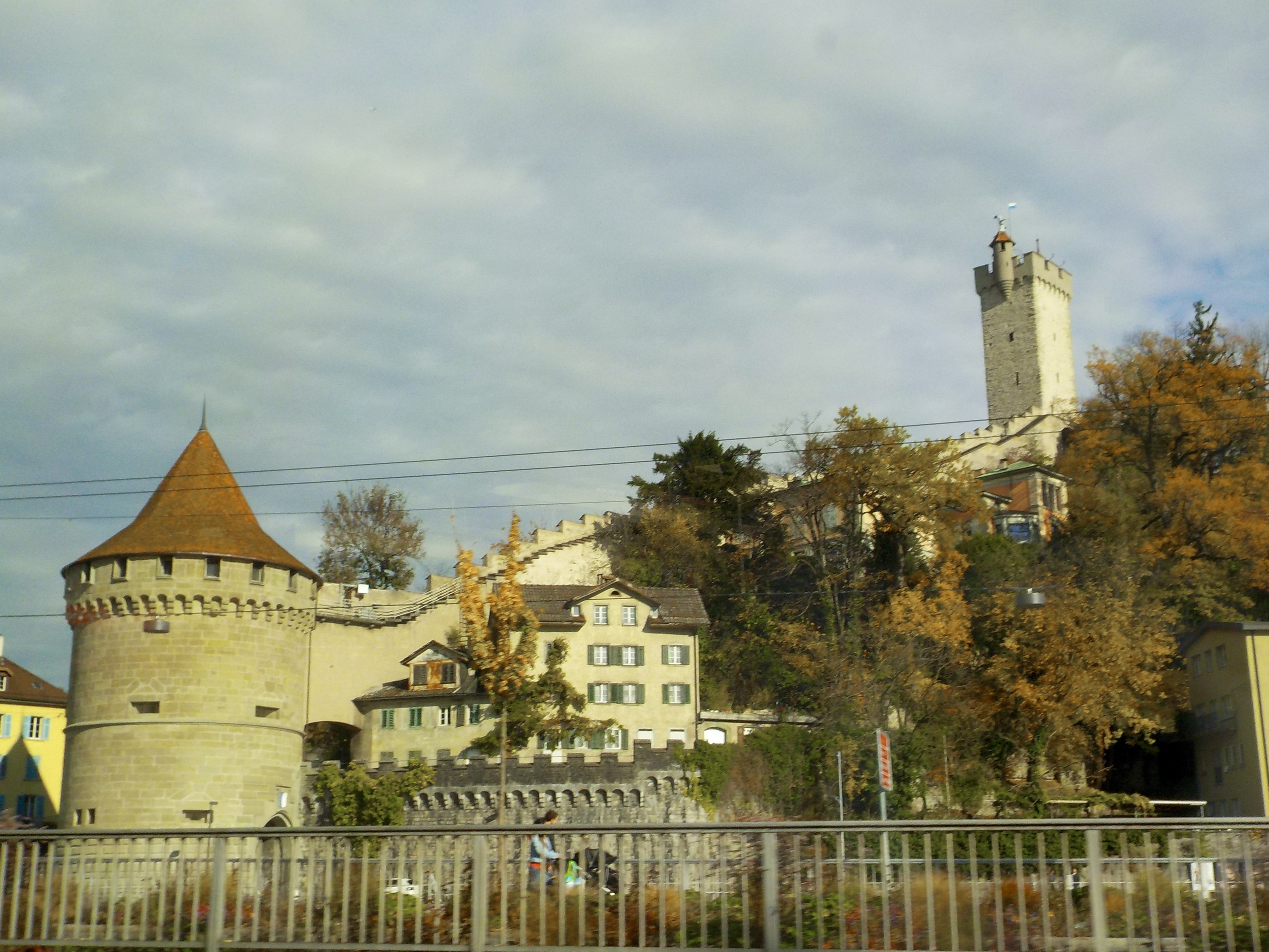
City wall
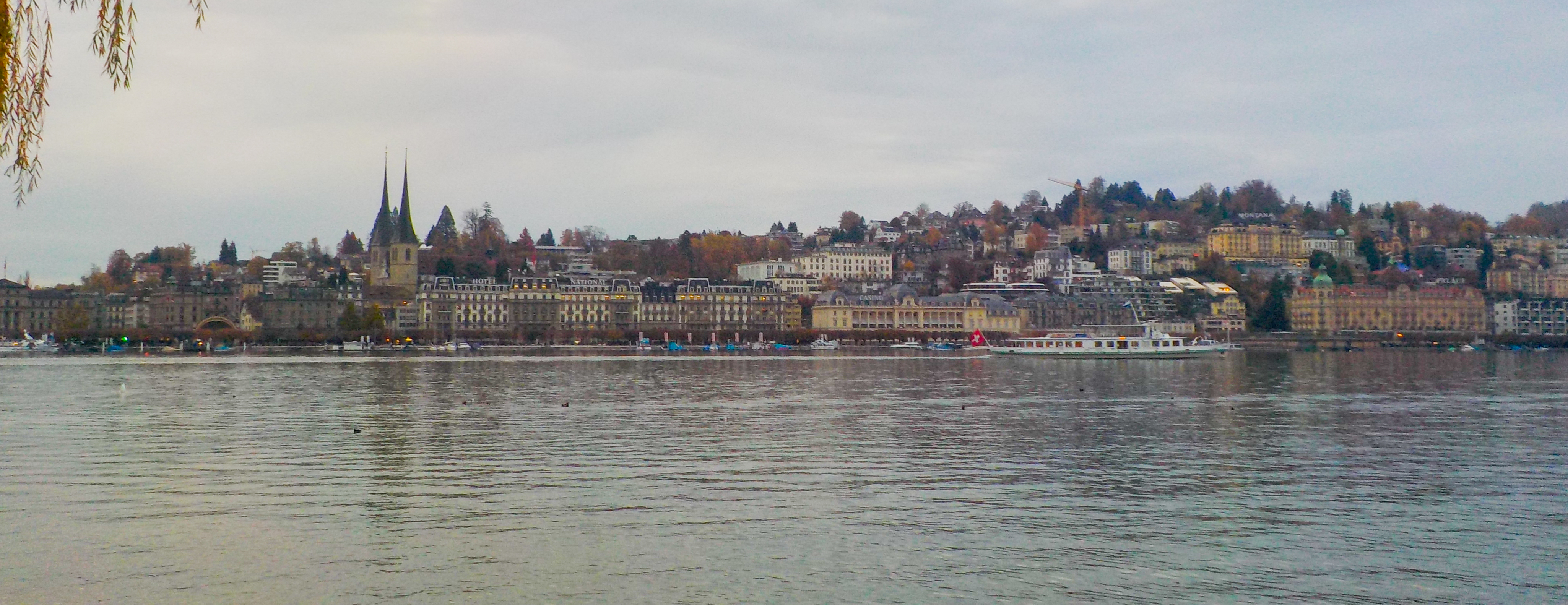
Across the lake at twilight
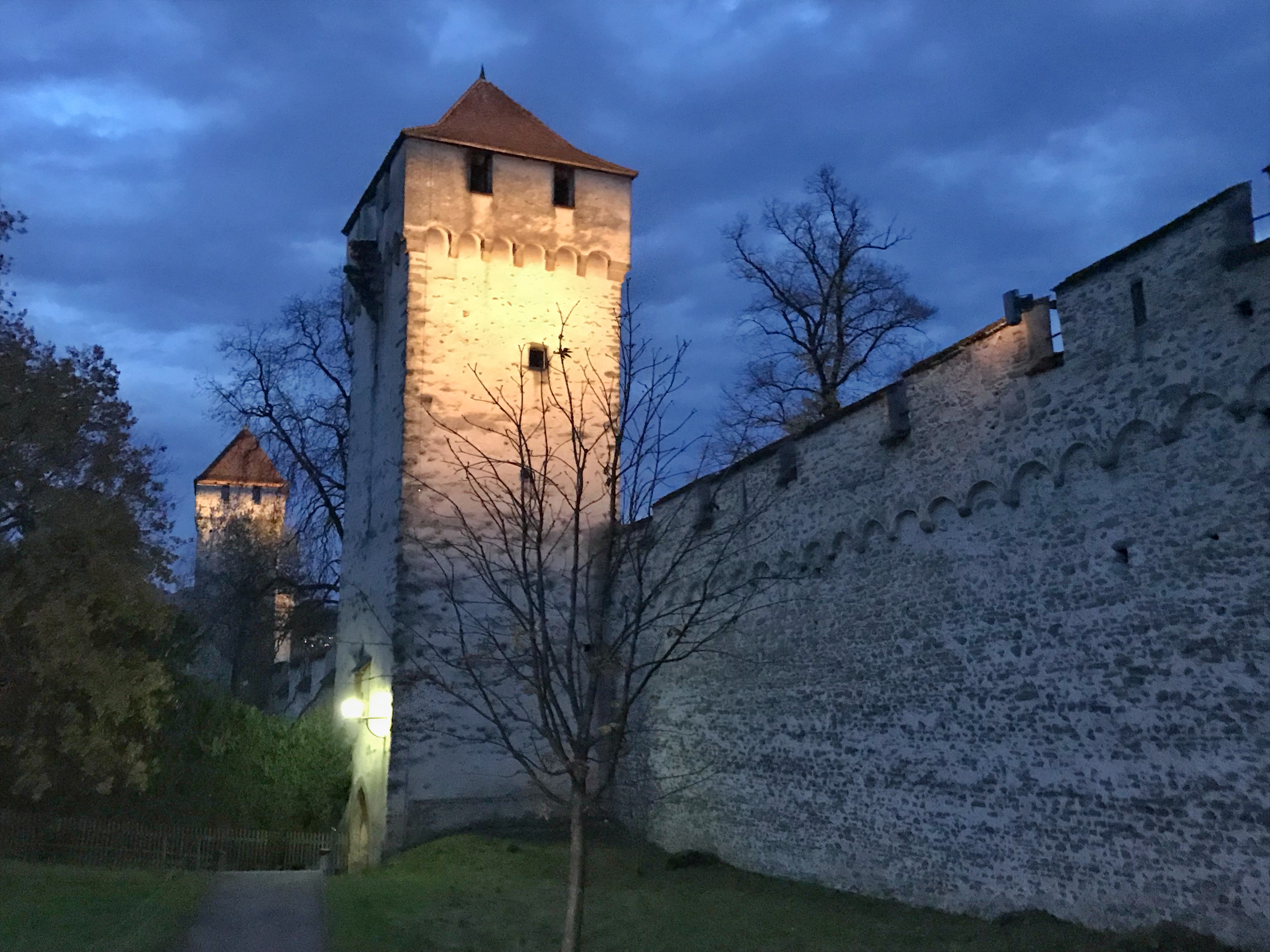
City wall at night
.jpeg)
Rathaus (City Hall) at night


Leave a Reply