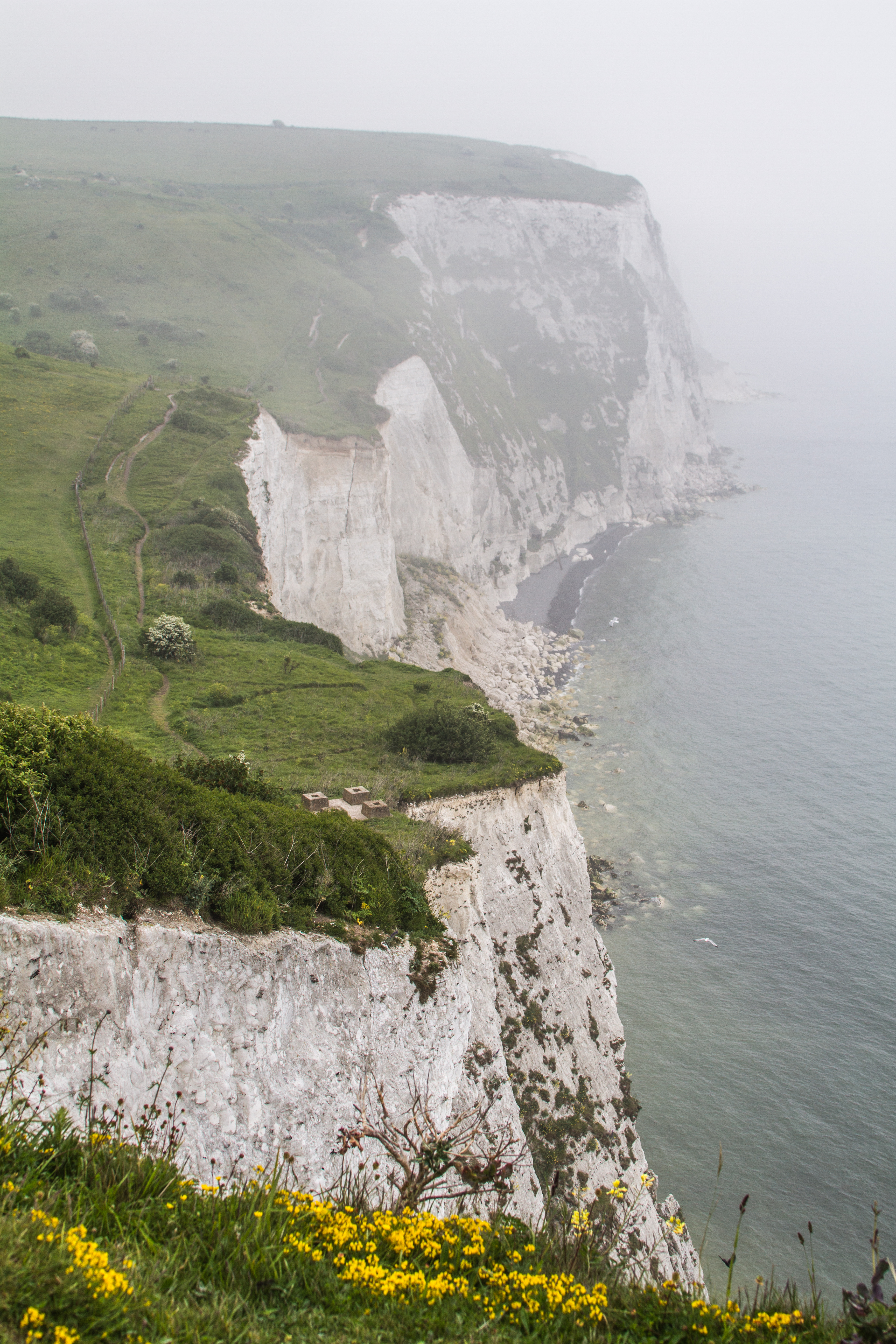
White Cliffs of Dover
Today we took a day trip from London to Dover and Canterbury. This involved taking a train from London to Dover and back again, via Canterbury.
We started off taking a walk along a coastal route so that we could see the white cliffs. These are composed of chalk and extend for about 8 miles around the town of Dover. There are similar ones across the channel in France known as the Alabaster Coast of Normandy. The area was really overcast and foggy…pretty even if it wasn’t sunny. We passed other walkers from time-to-time, but basically had the path to ourselves.
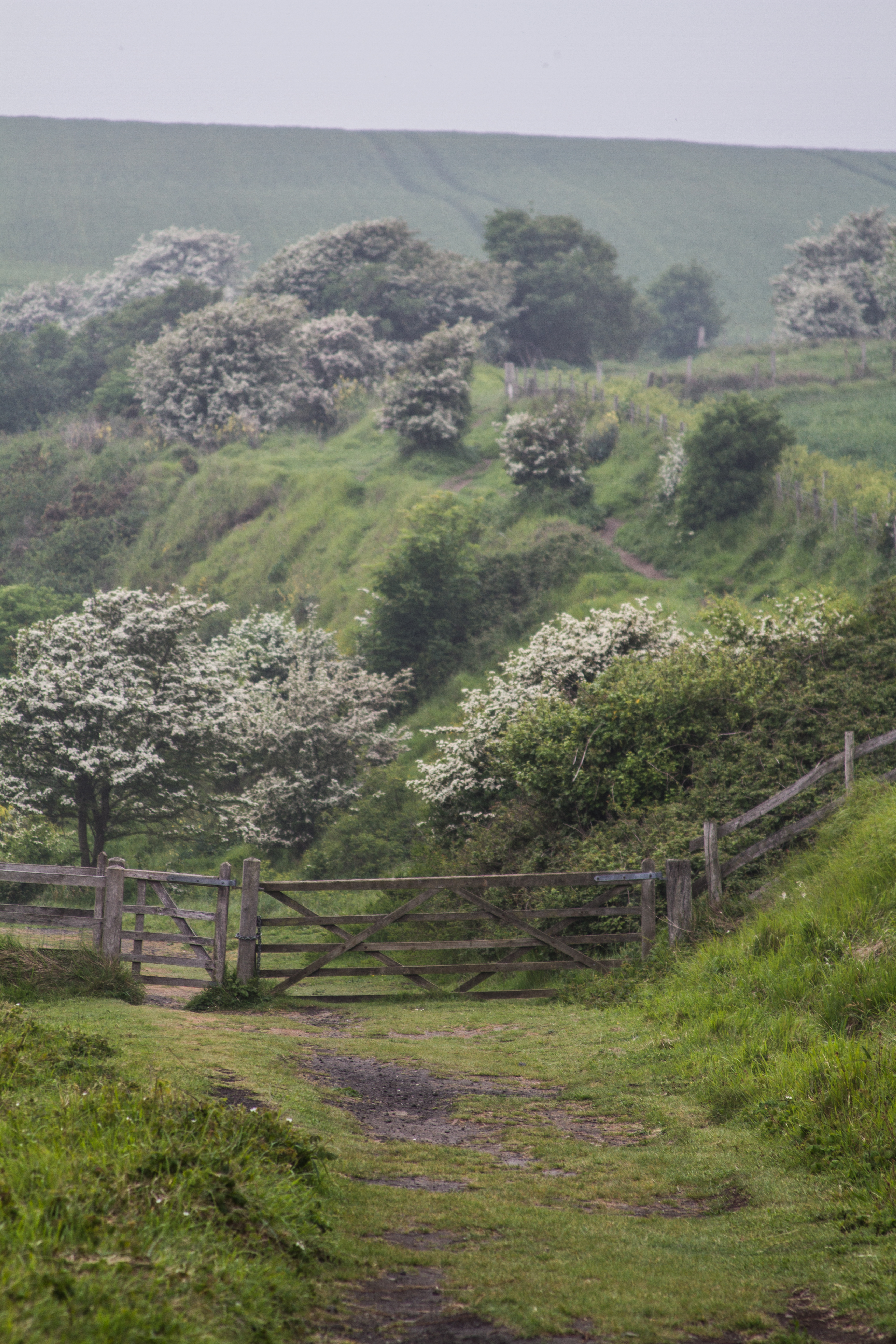
Walking Path
After our walk we headed over to Dover Castle, which was founded in 1066 by William the Conquerer, although it may have been built over a Saxon fort. The current castle was built by Henry II in the 1180s. A number of additions were made over time, notably tunnels added in Medieval times. The castle was important many times in British history including in the Napoleonic Wars. During WWII the tunnels were used as a secret military command center, air raid shelter, and even a military hospital. Parts of the evacuation of Dunkirk were coordinated from there.
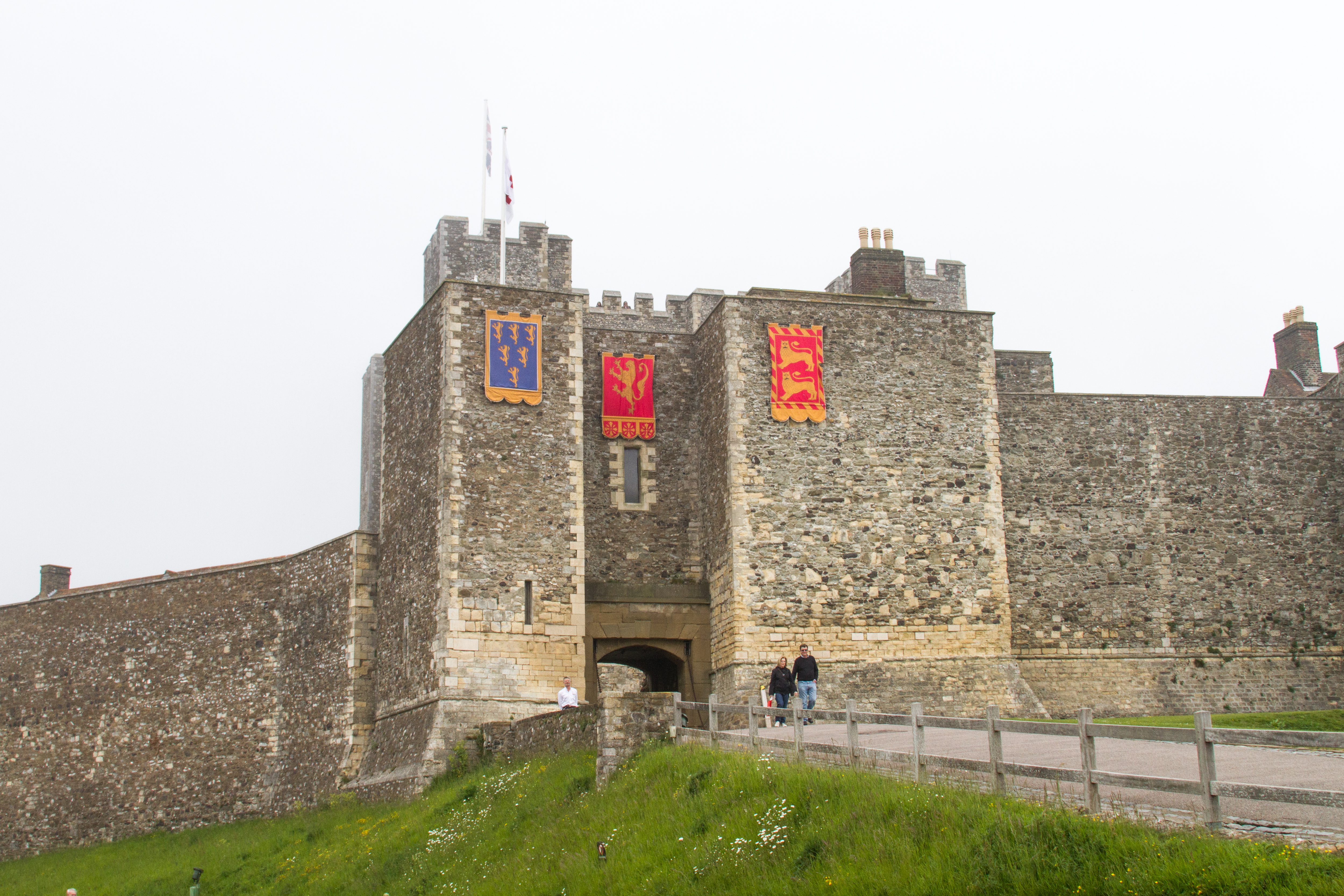
Dover Castle
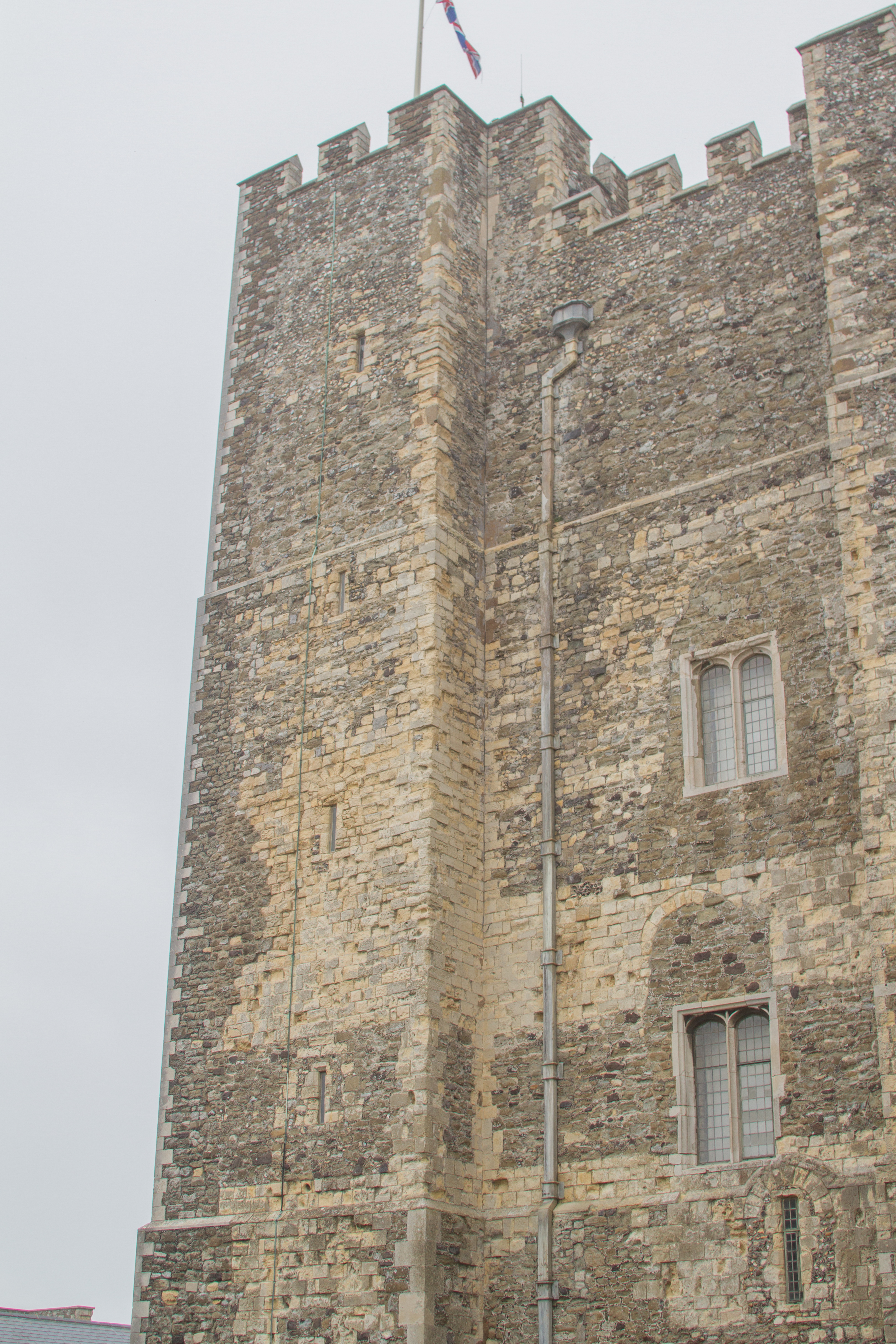
Dover Castle
There’s more than just the castle there. A Roman lighthouse from the first century is still standing at the castle site. There is also a small church, St Mary in Castro, that is originally a Saxon structure, there. It was probably built somewhere between 600-1000 AD. It has been rebuilt and restored many times since then, but some original parts remain and/or have been excavated.
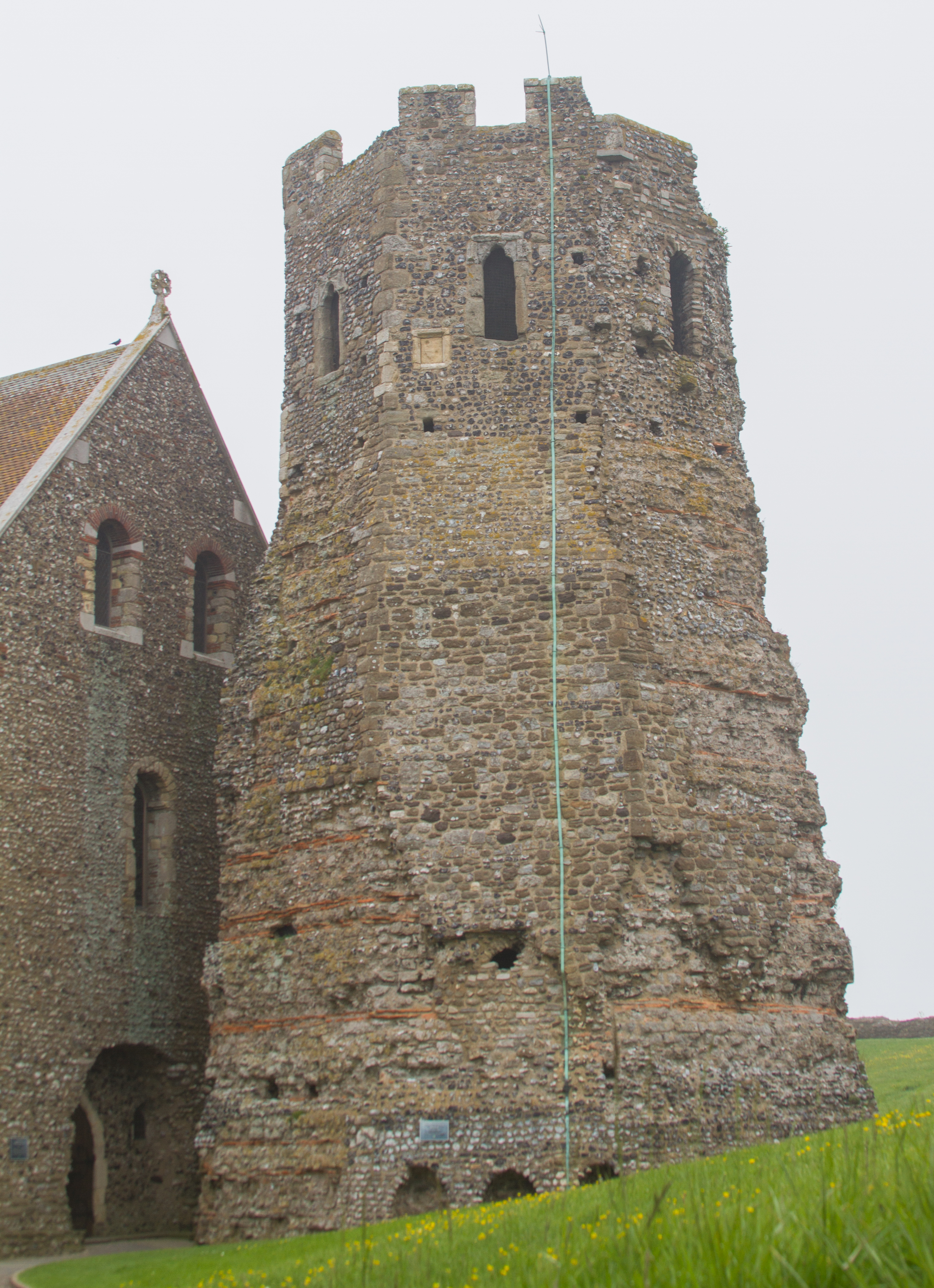
Roman Lighthouse
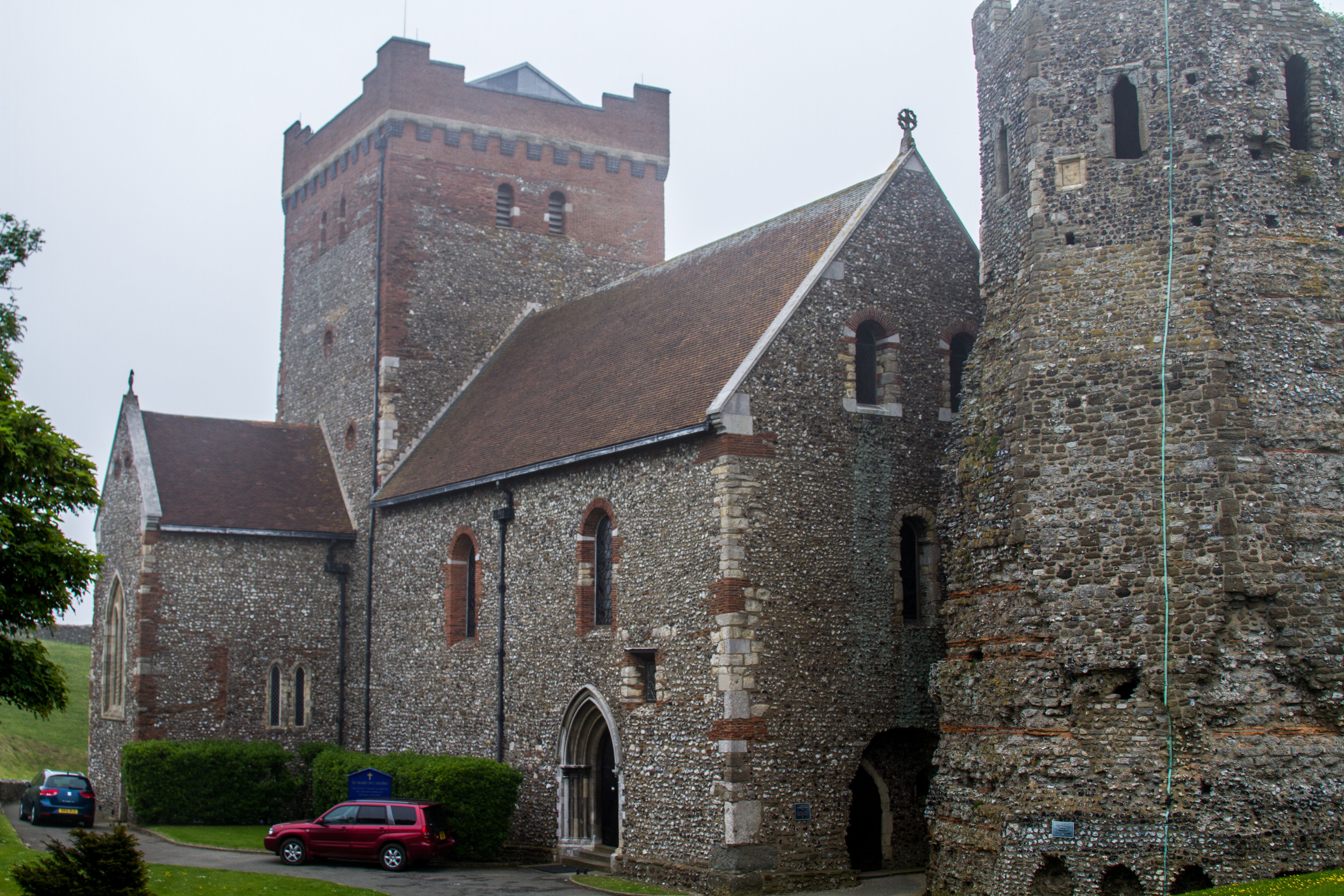
Church of St Mary in Castro
After Dover we headed to Canterbury to see the Cathedral. The current nave of the cathedral was built in the 1300s but the Trinity Chapel at the front of the Cathedral was built from 1180-1184 to house the shrine to Thomas Beckett. Prior there had been a Norman Cathedral. Thomas Beckett was the Archbishop of Canterbury who was murdered in the Cathedral by supporters of King Henry II. There is dispute over whether the King ordered the assassination or not. Either way, the martyrdom of Beckett led to his sainthood and to essentially a cult-following with pilgrims coming to see his shrine for centuries. King Henry VIII eventually destroyed the shrine and Beckett’s bones in 1538.
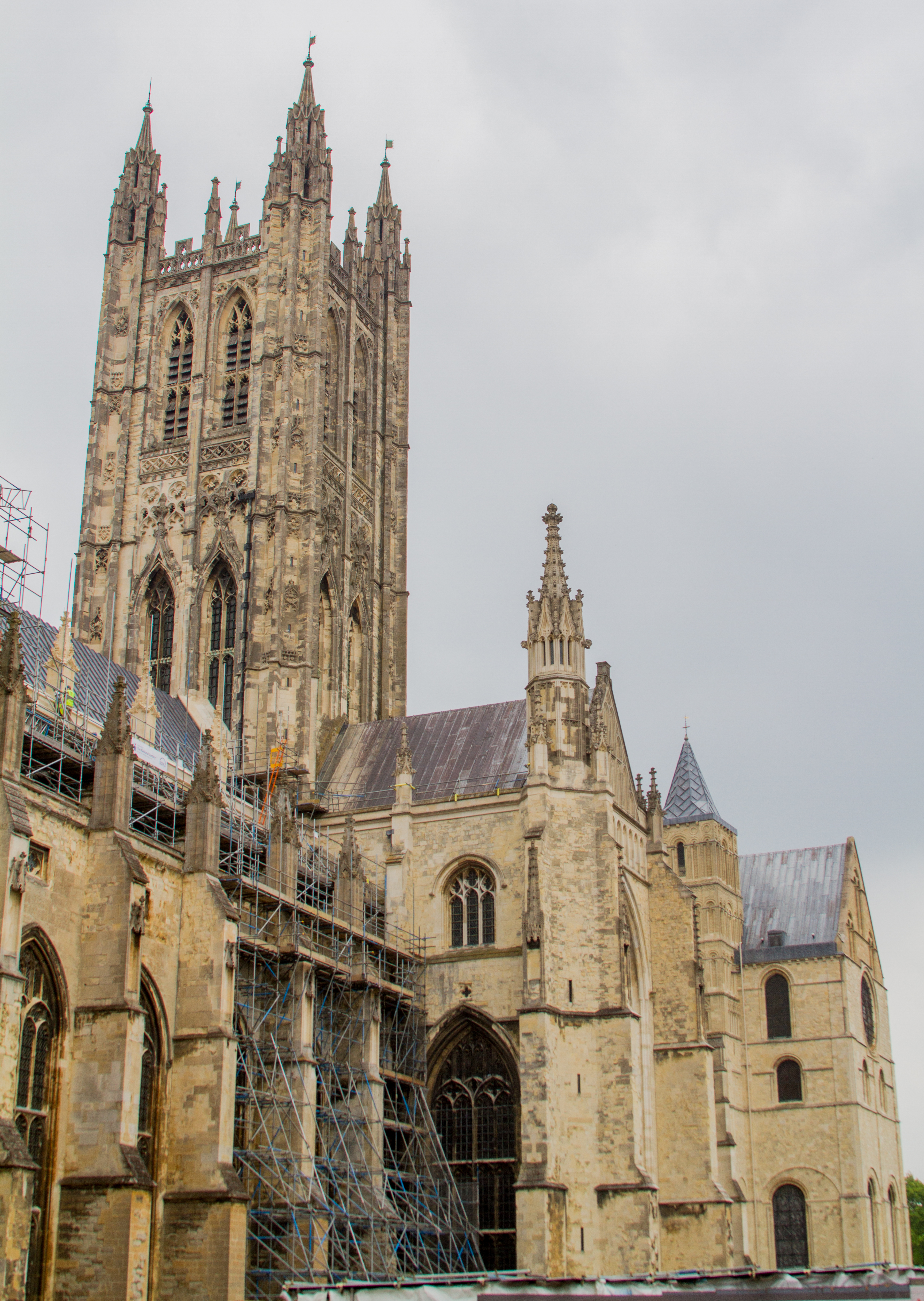
Canterbury Cathedral
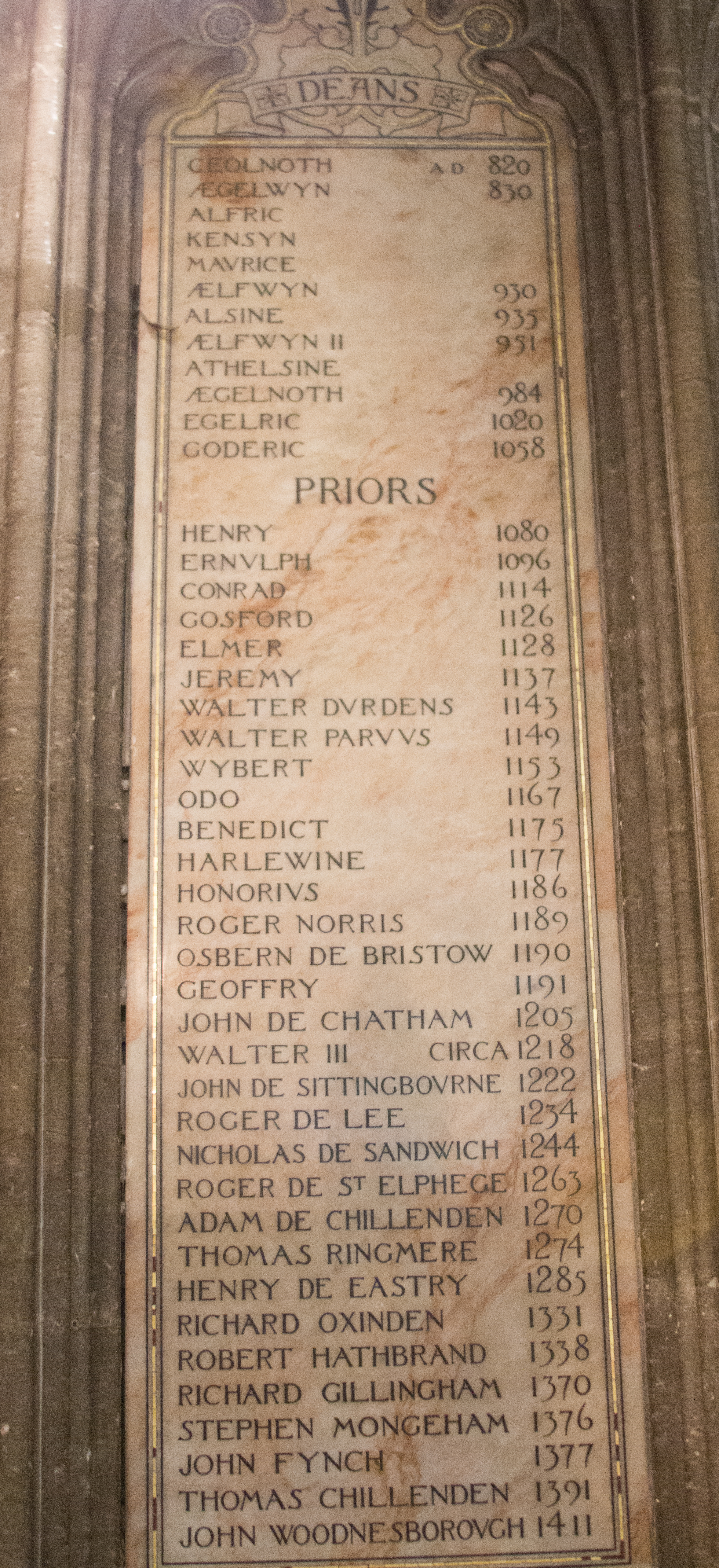
Deans and Priors of Canterbury
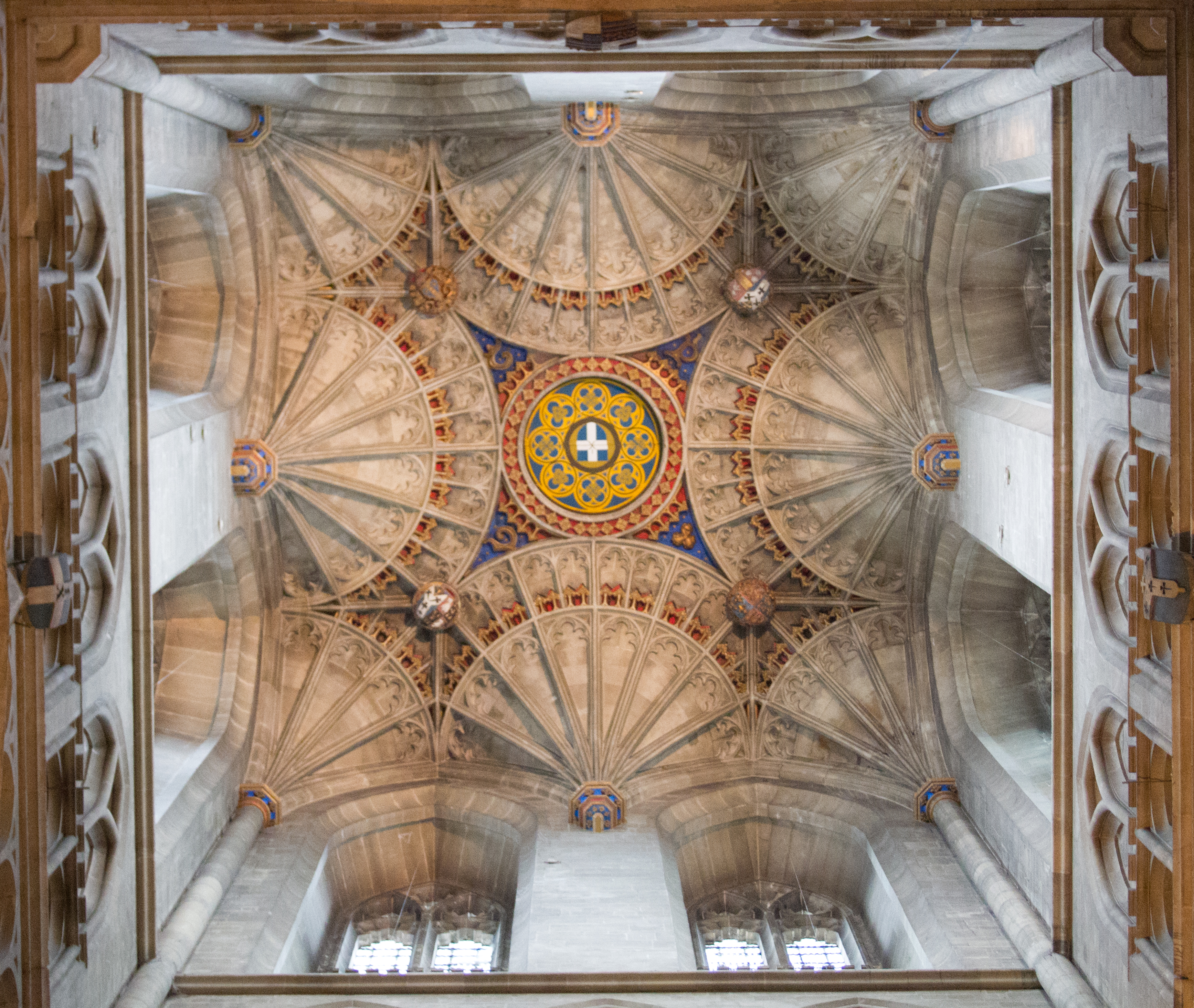
Inside the Tower of the Cathedral
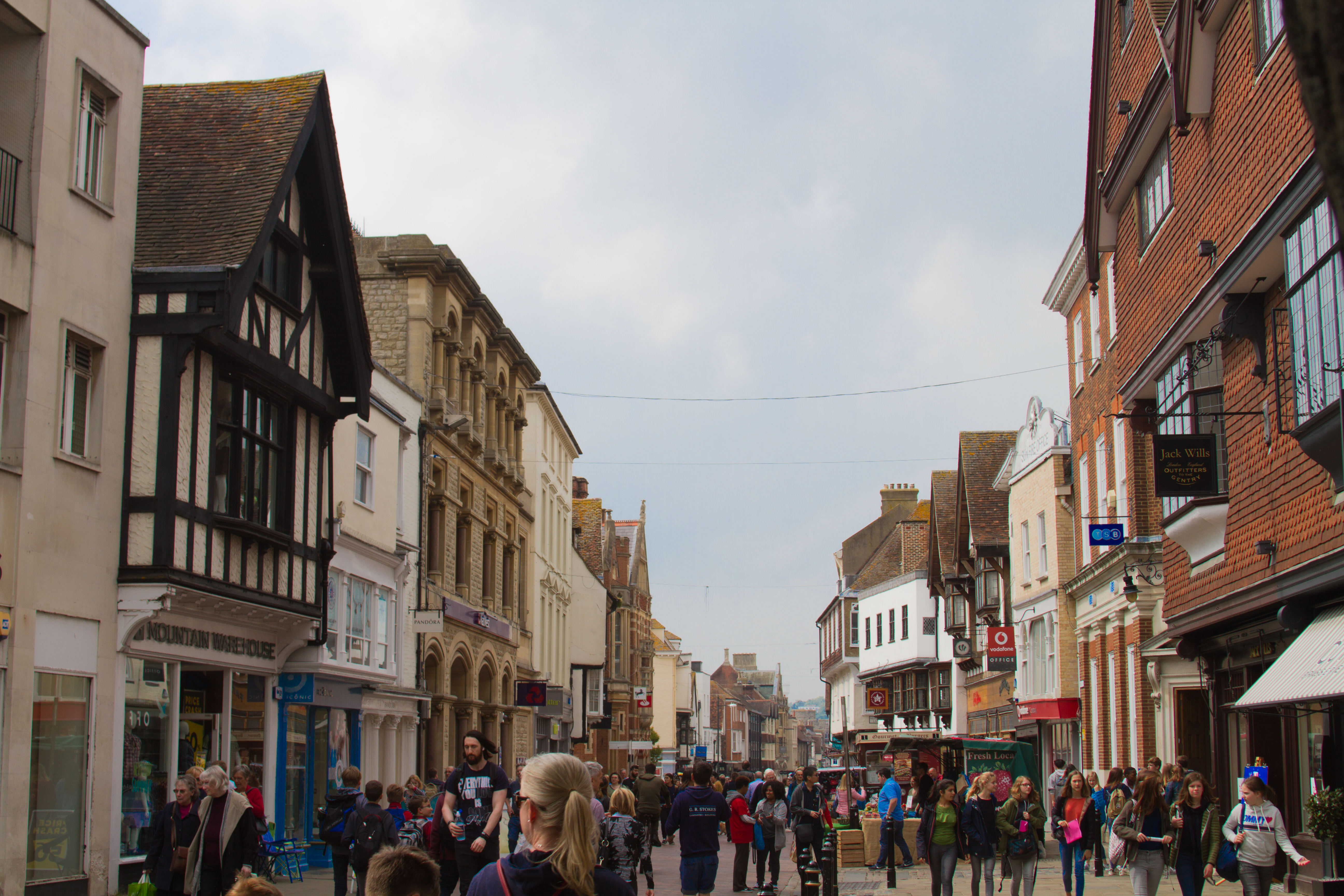
Canterbury
We took the train back to London and headed over to Covent Garden for dinner. This is a glass covered marketplace that now has restaurants and trendy craft vendors. It is definitely a place to be on Friday night!


Leave a Reply