Today we drove to Ica, a 4 hour drive south of Lima, so that we could fly over the Nazca Lines. This drive was mostly along the coast through a desert. Nothing much to see. The morning was very overcast, which didn’t affect our drive, but did interrupt us later in the day. The haze delayed the morning Nazca flights which set back all of the flights for the entire day. Our 11 am flight became a 1 pm flight, which meant we sat at the airport for 2 hours. They did provide a good 1 hour video on the Nazca people and the Nazca lines for us to watch, but it still was a long wait (without explanation for most of the time) without lunch. It was worth the wait.
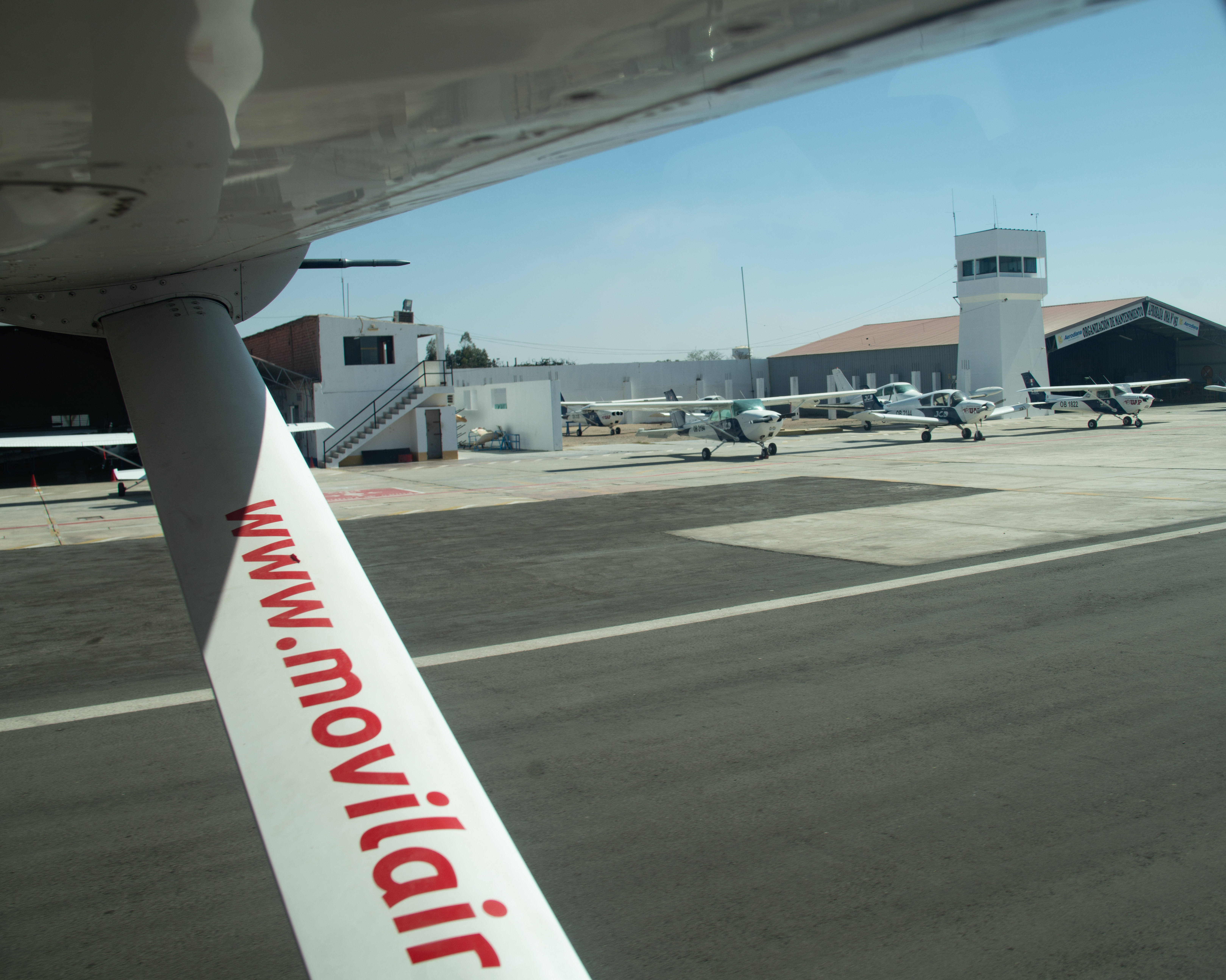
Taking off
The Nazca lines are essentially lines scraped into the ground and they are formally called geoglyphs. They were made between 500 BC and 500 AD by the Nazca people in the Nazca Desert. They depict various things like plants and animals and are quite large. The lines themselves are usually 4-6 inches deep and the images are .2 to .7 miles long. The width of the lines vary, but many are about a foot wide. By removing the top layer of soil they exposed a different colored subsoil. They cover an area of about 19 square miles, but the total area they are in is 170 square miles. In 1994 they were made a UNESCO World Heritage Site. They can be viewed from ground but are best viewed from the air, so that is what we did.
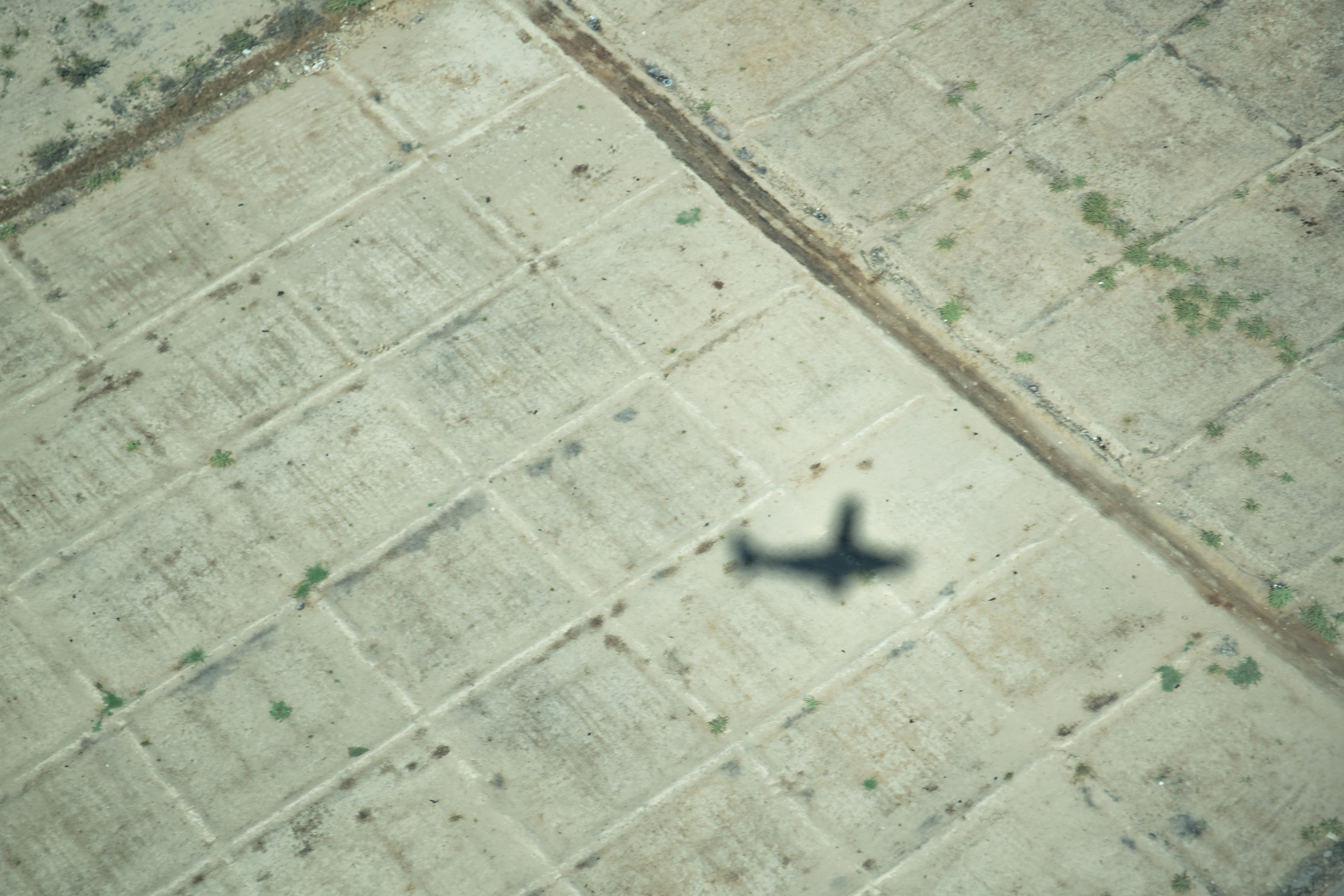
That’s us
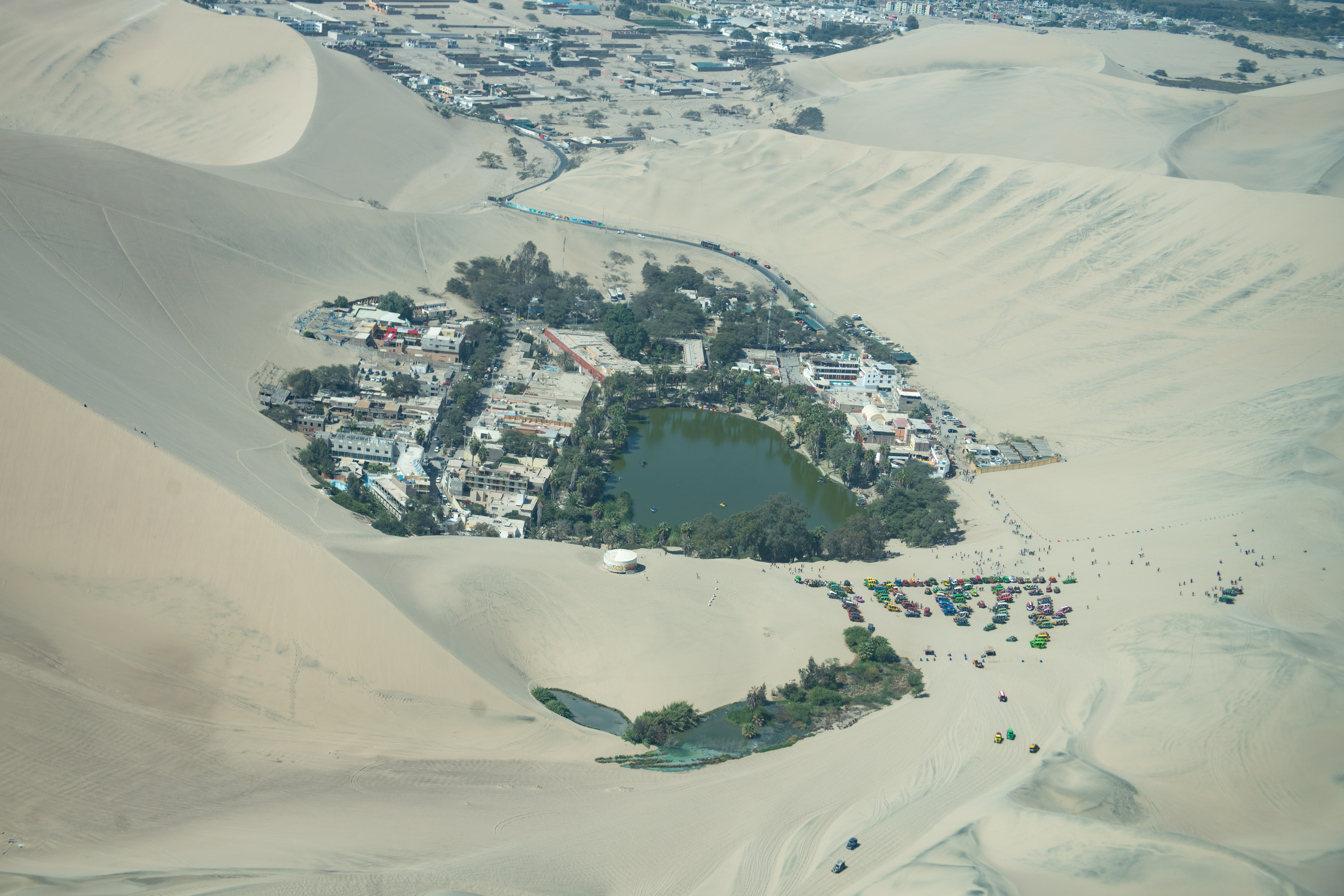
Nearby Oasis of Huacachina
Each of the drawings is usually made from one continuous line. There are hundreds that are geometric shapes, but there are over 70 that are animals including a hummingbird, monkey, lizard, spider, dog, and human. This is a very dry desert, which has helped preserve these images. It is unknown why the Nazca made these images, but one theory is that they made them for the gods to see from the sky. Another theory is that the images represented constellations or an astronomical calendar. There are many other theories, some quite far-fetched. Apparently, the most accepted theory is that they were worship sites and possibly used as sites to sacrifice to the gods in times of famine and drought.
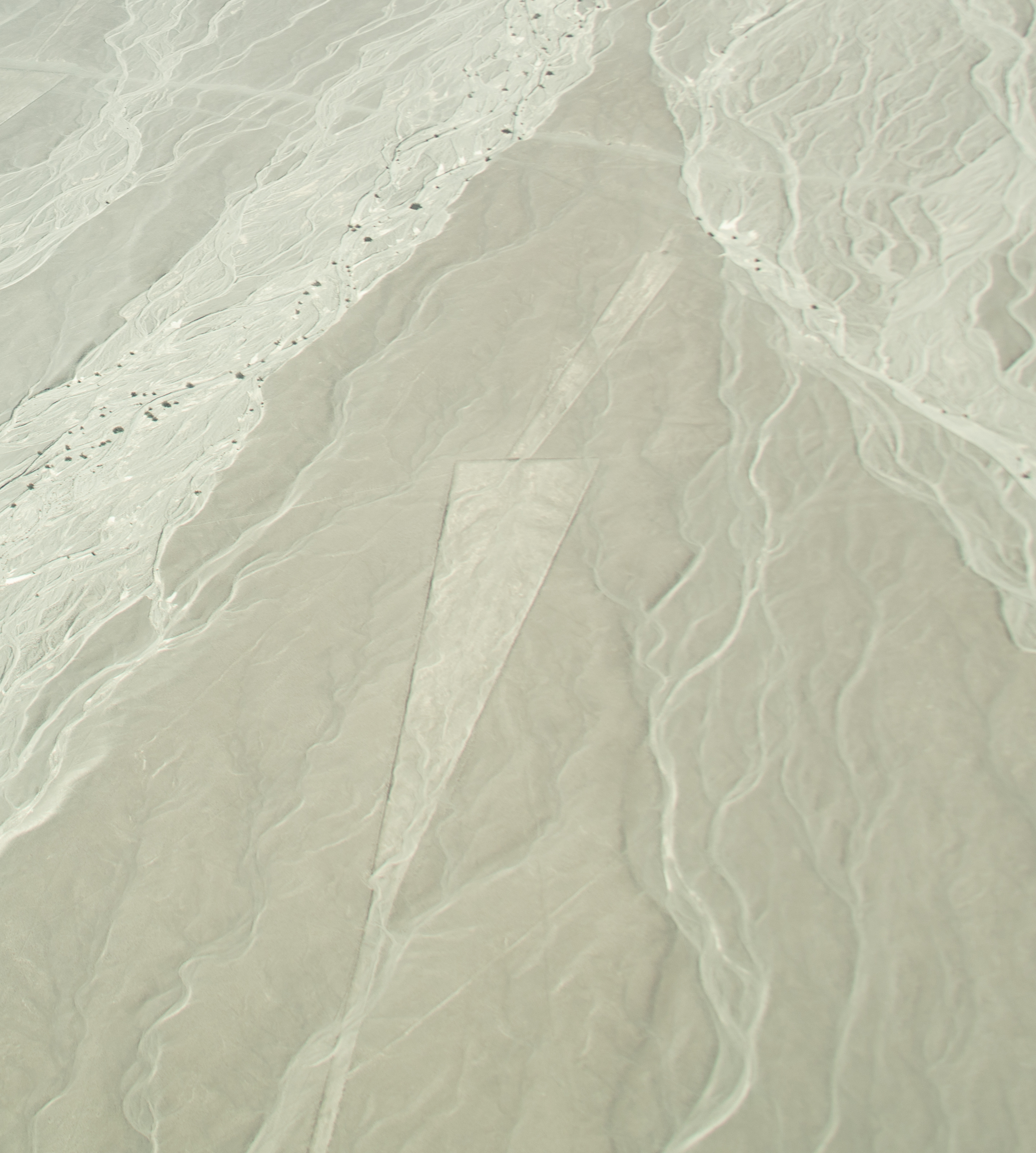
triangle and rectangle
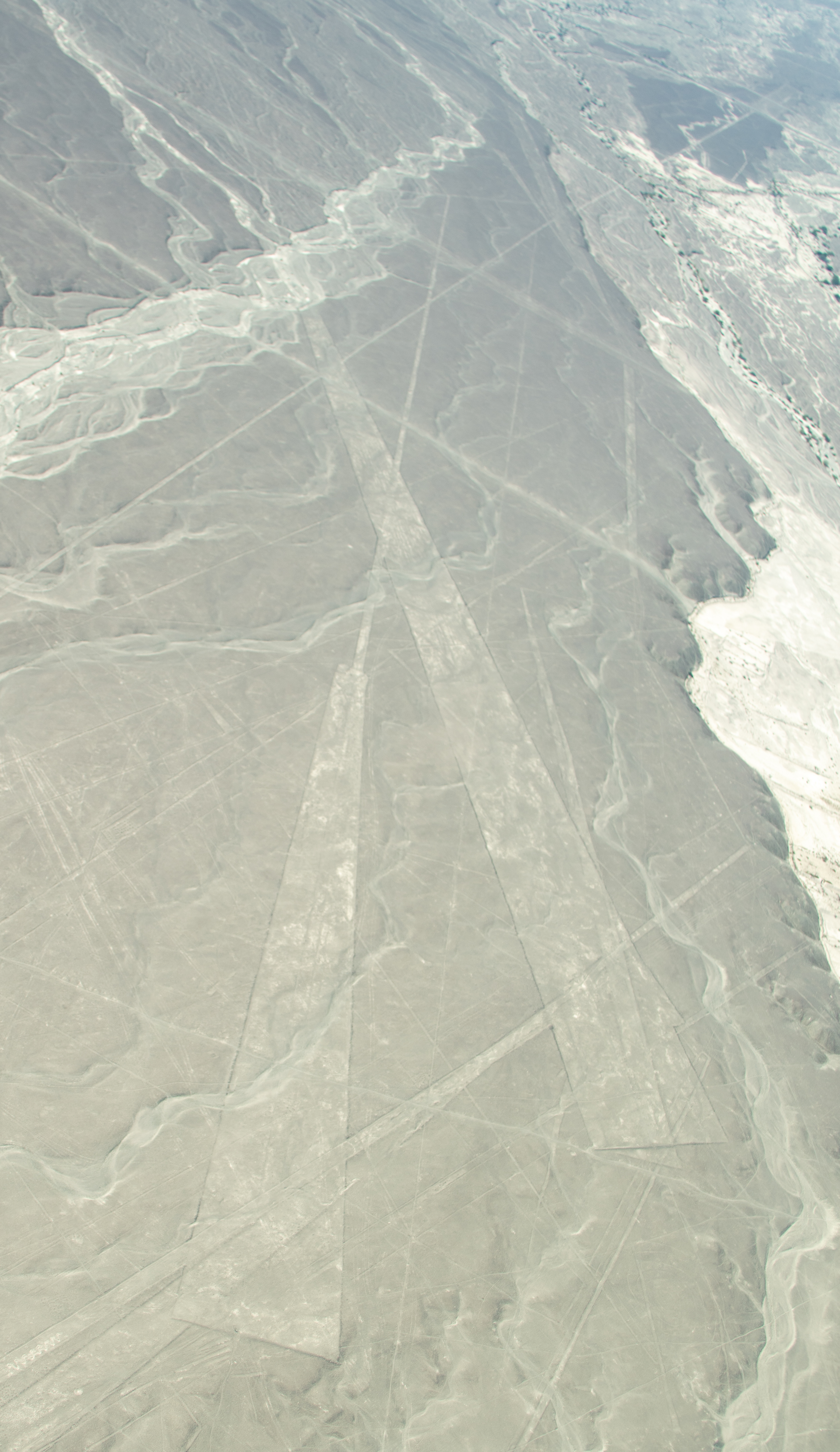
triangles
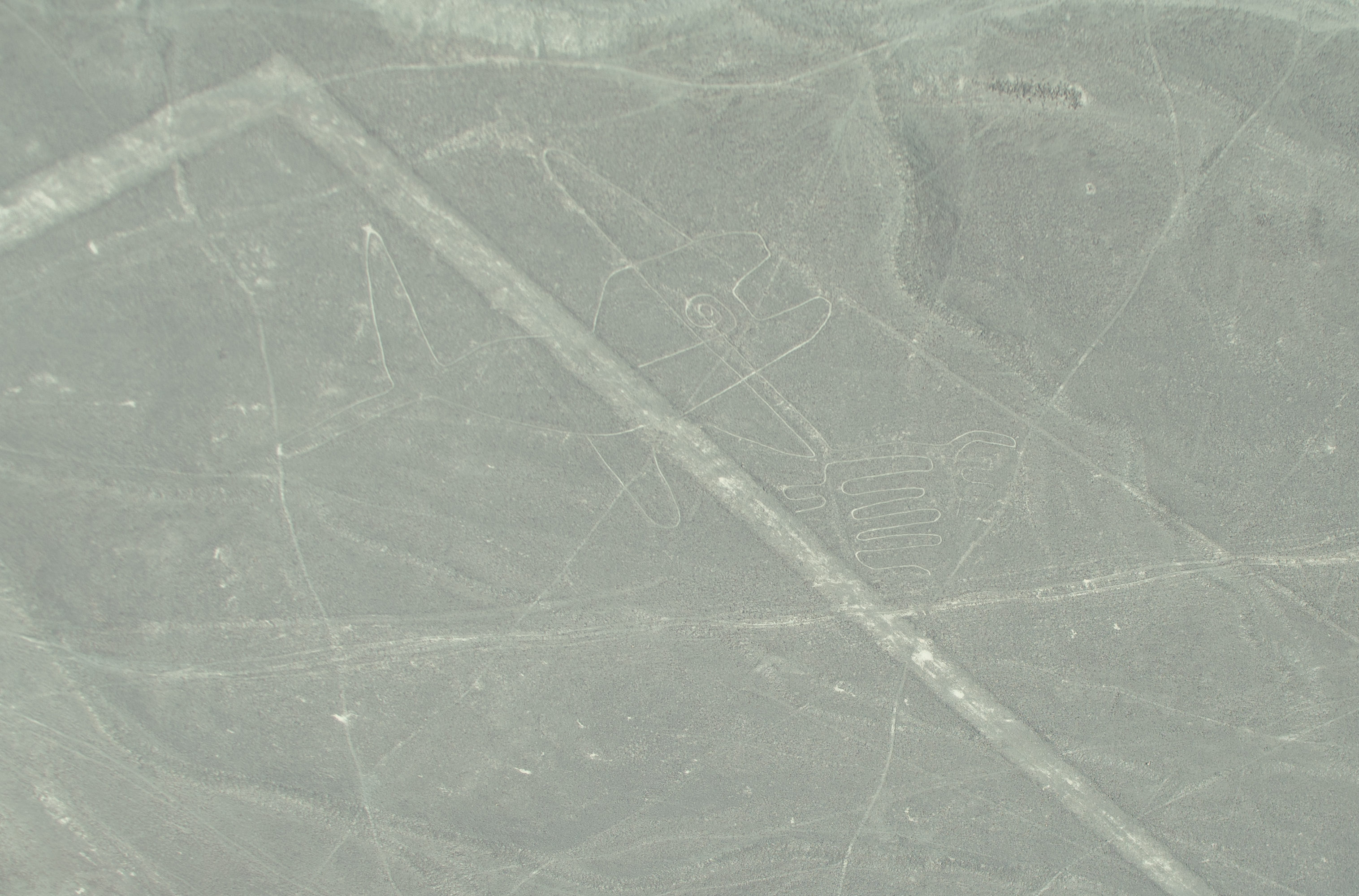
Whale
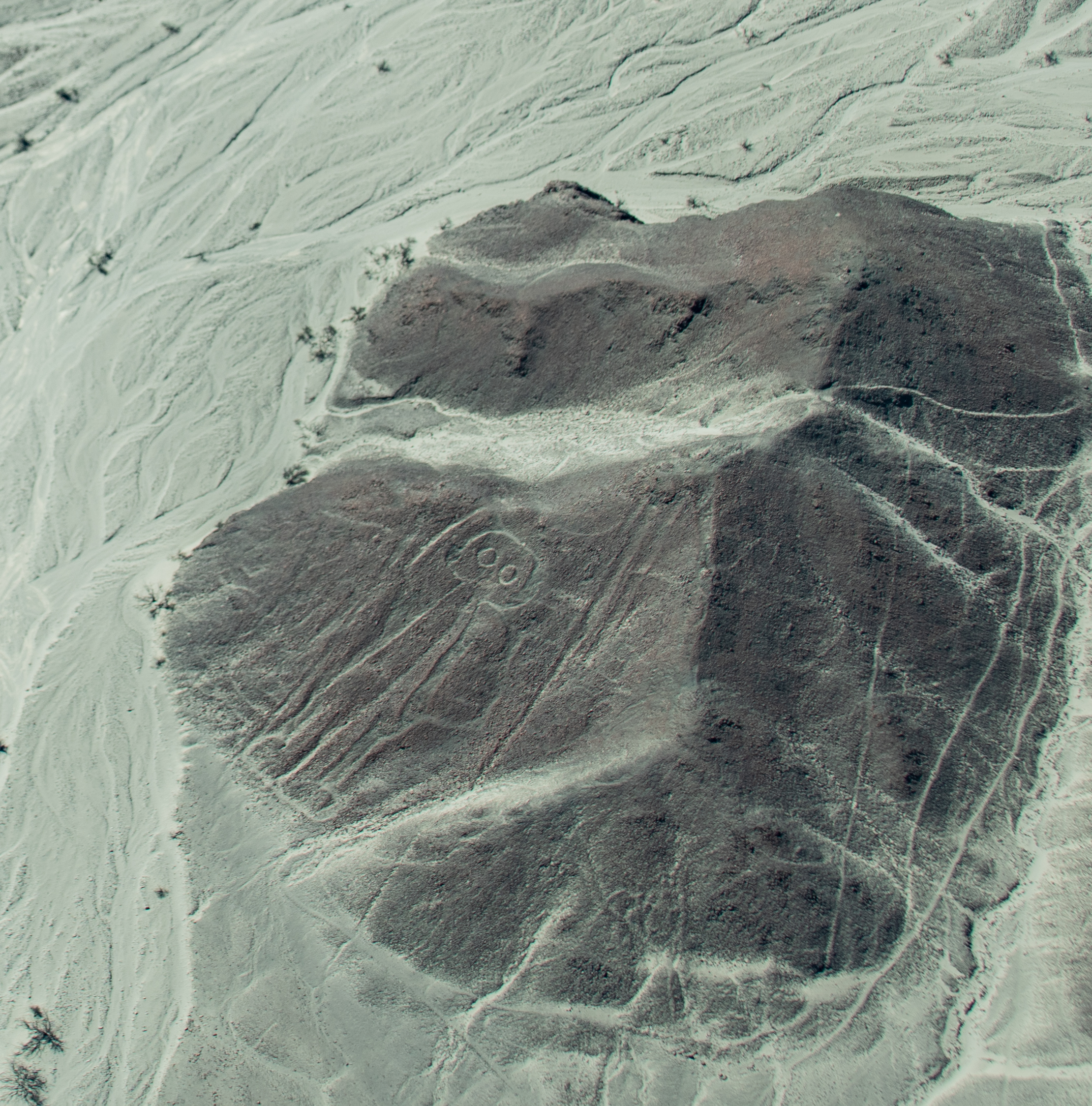
“astronaut”
So, what was this flight like? It was a small 12 passenger plane. When we would get to one of the geoglyphs they would tilt the plane 30-60 degrees to one side. Then they would tilt the plane 30-60 degrees to the other side so the other half of the plane could see. Sometimes we would have to make a tight turn before tilting to the other side. Basically, this was not a flight for anyone who gets motion sick easily. I was right under the wing, so I had to work around the strut when taking pictures, which made it a bit of a challenge. Also, some of the geoglyphs were very obvious from the air while others were a challenge to see quickly.
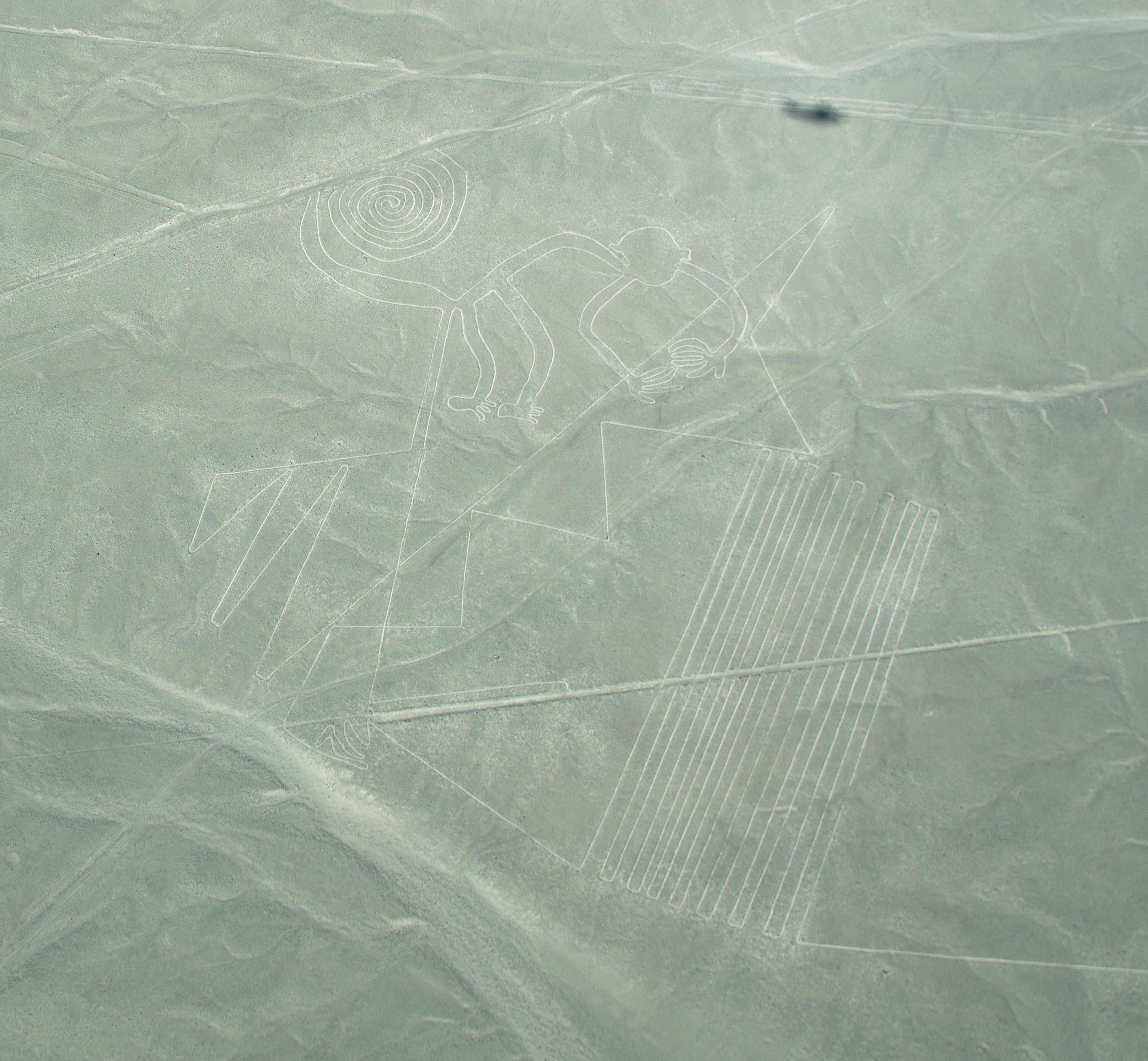
Monkey
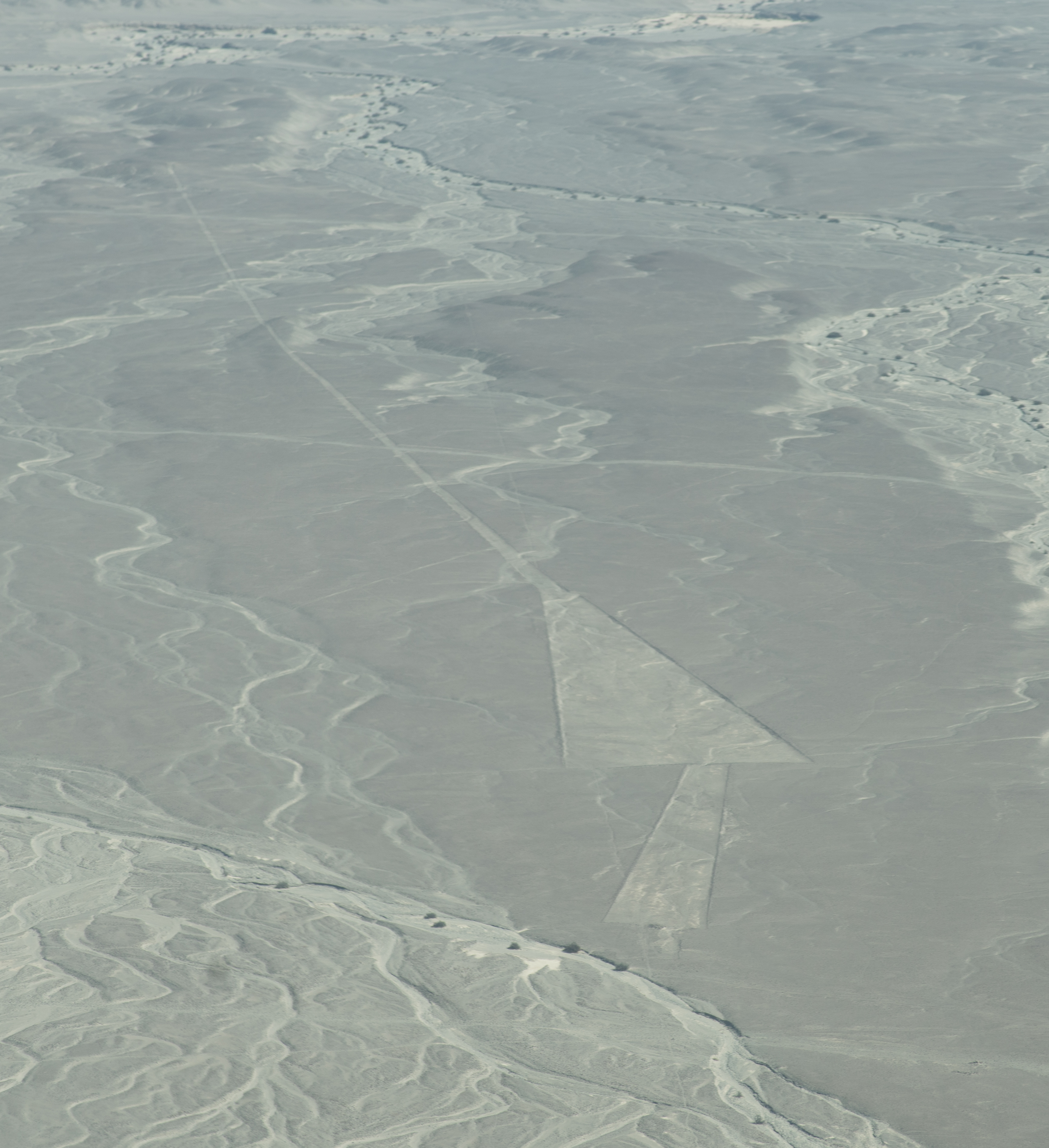
more triangles
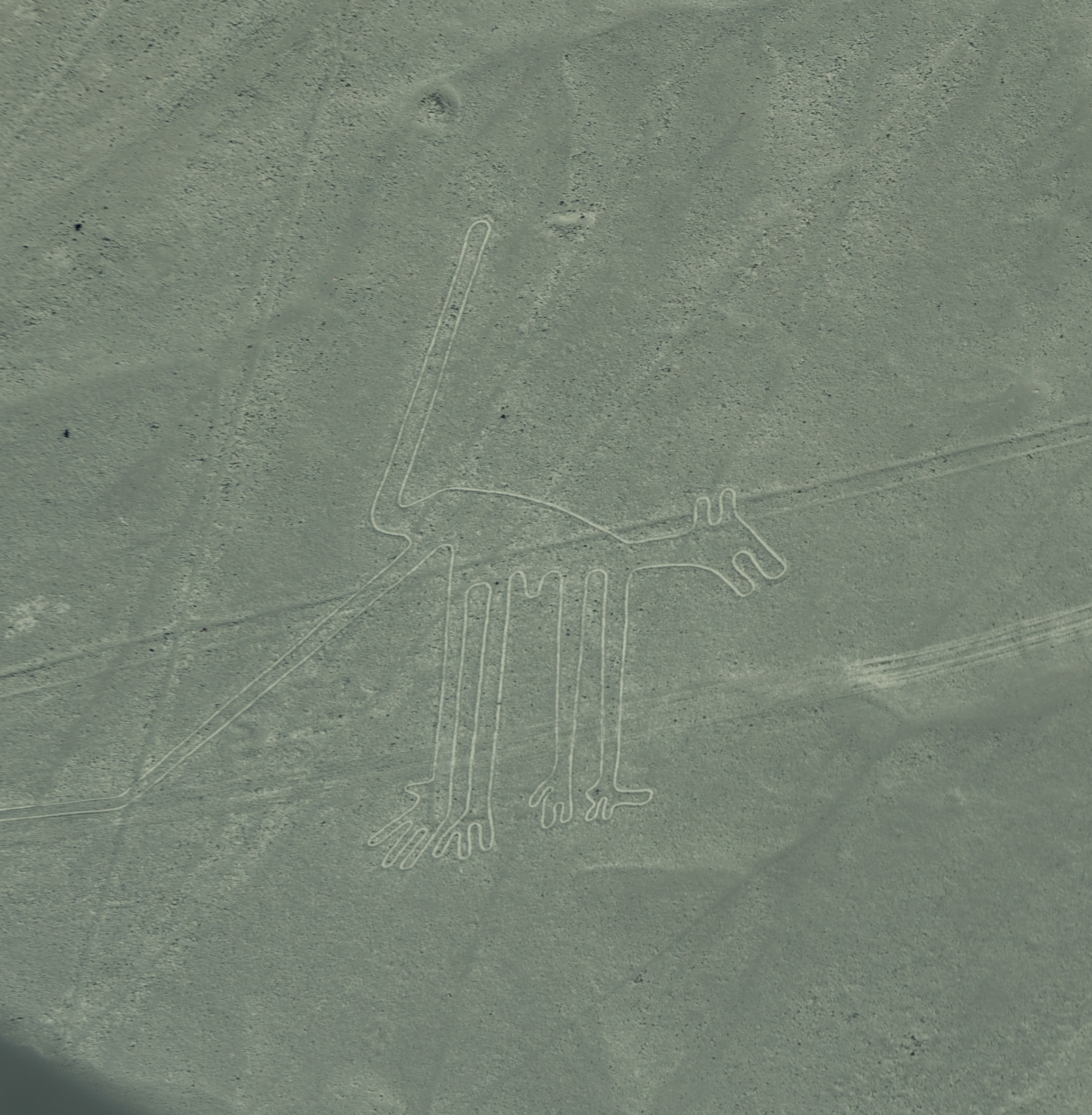
dog
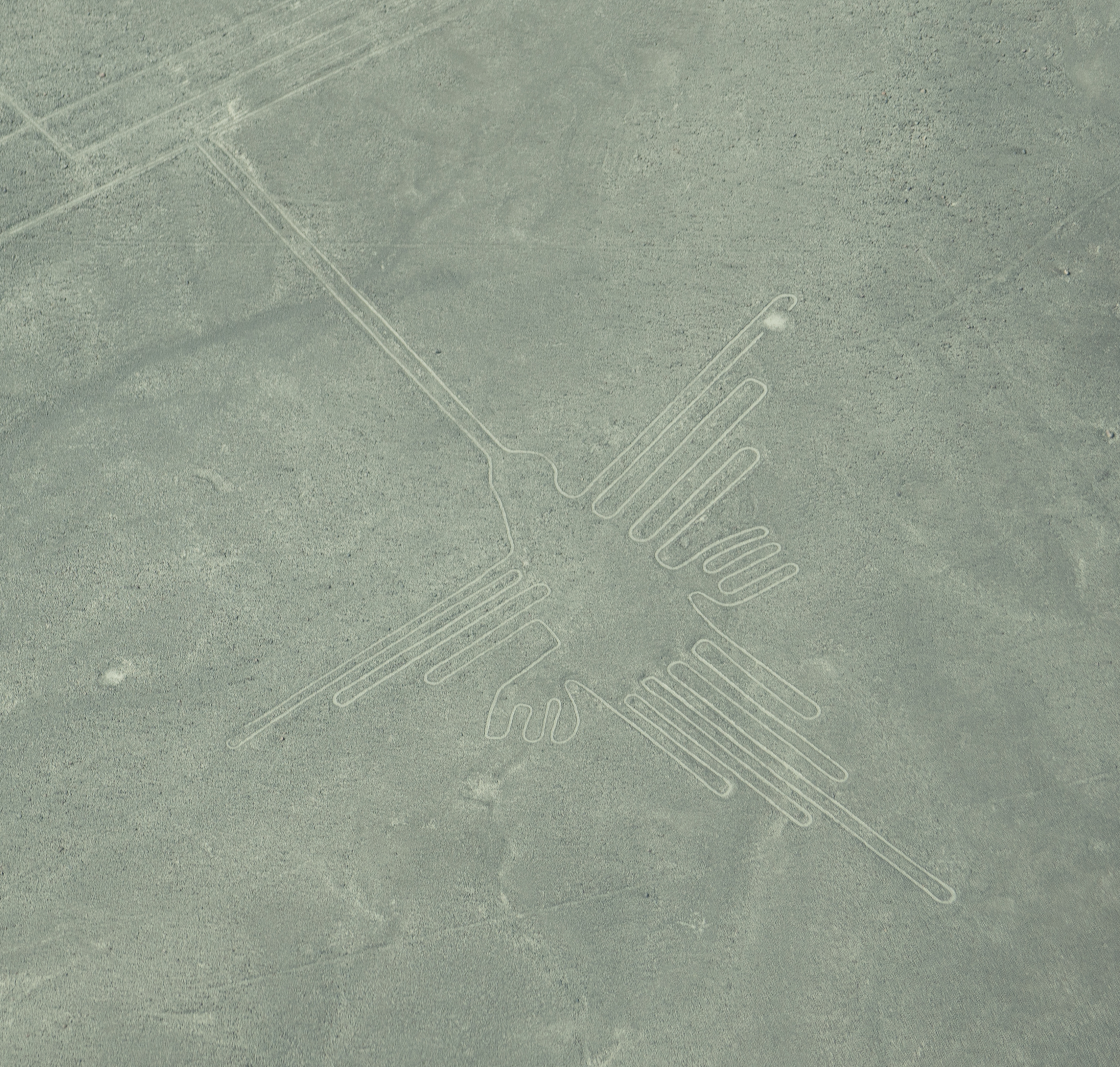
hummingbird
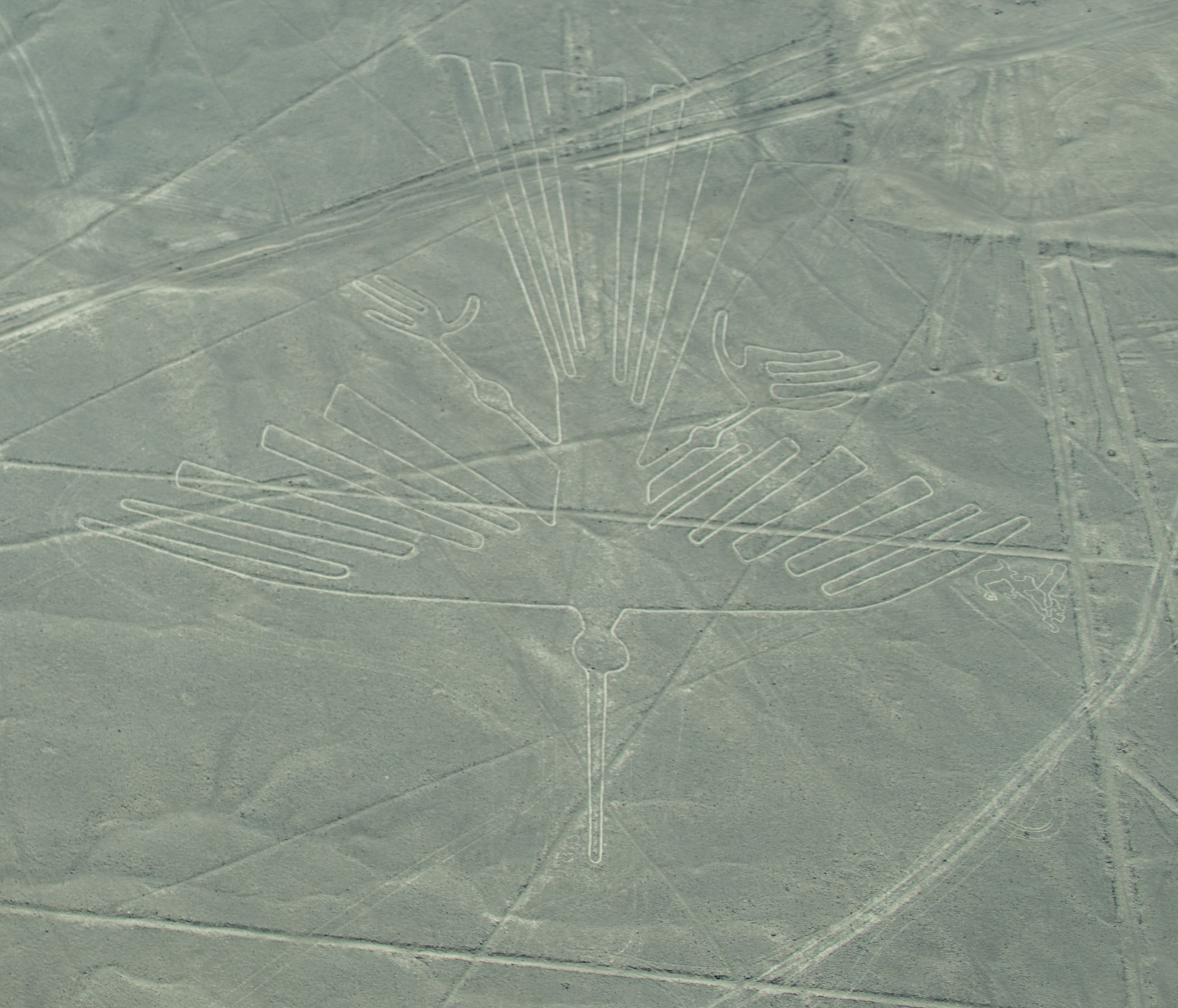
condor
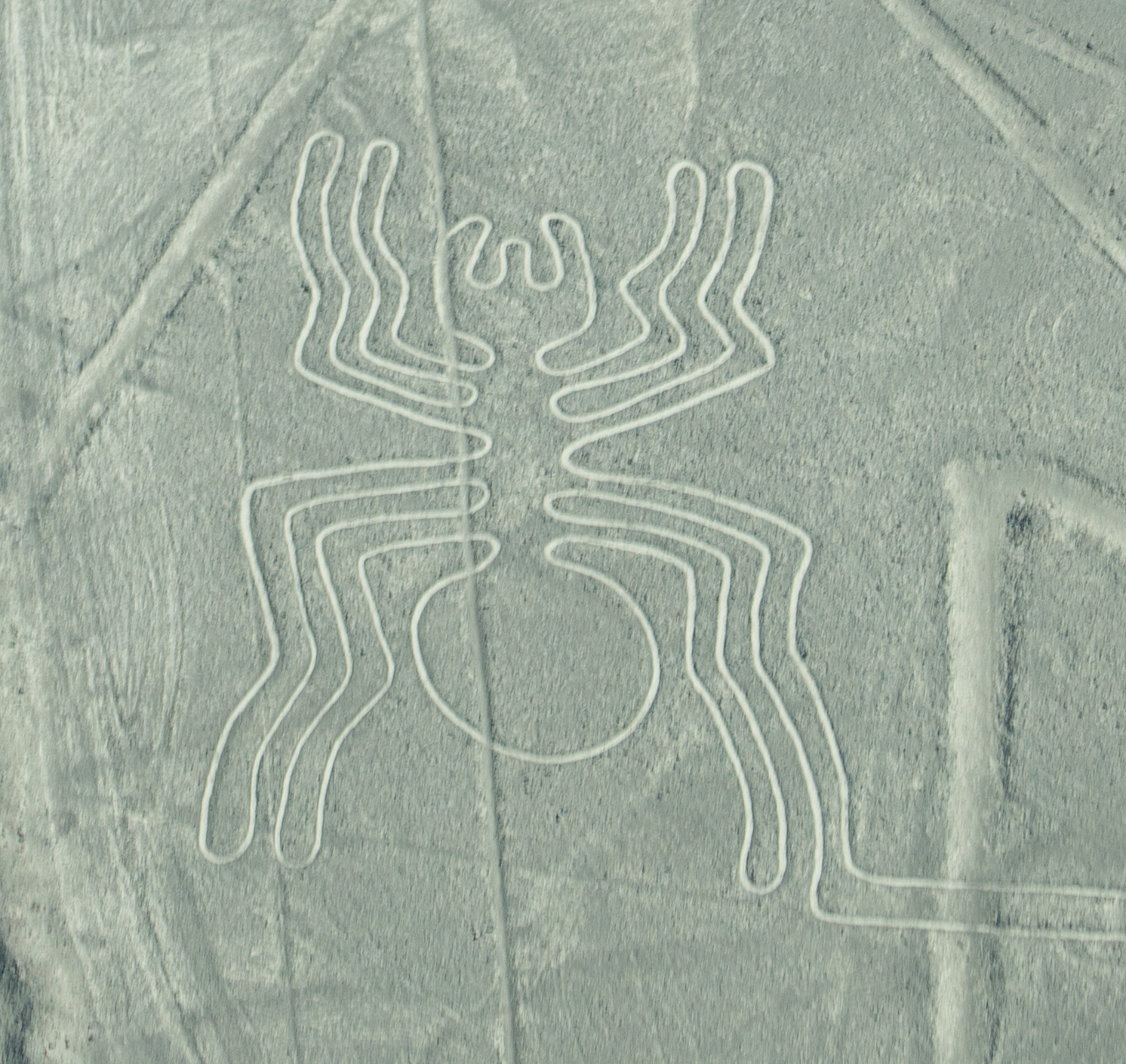
spider

spiral
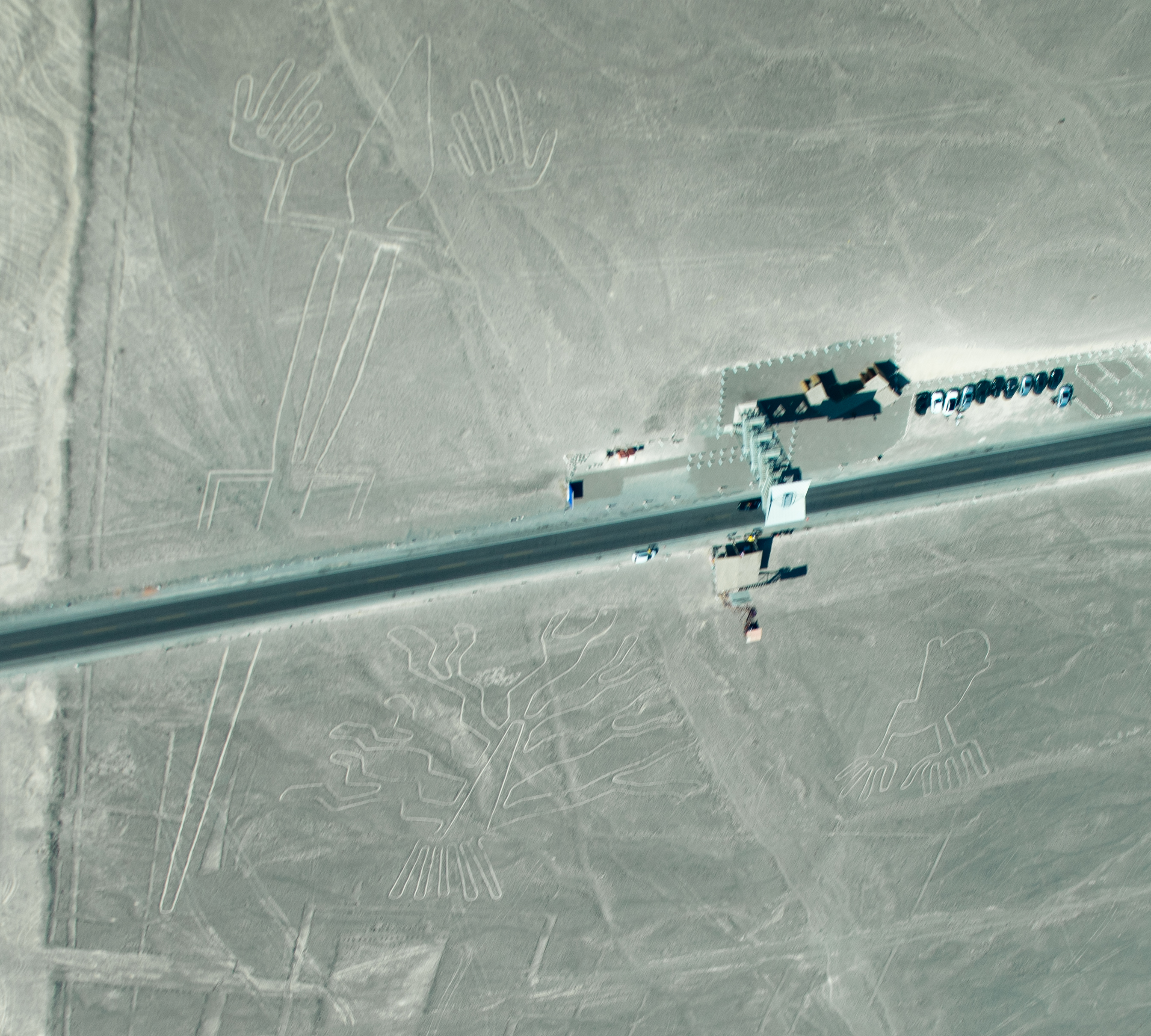
left to right: iguana, tree, and hands
So after landing back in Ica we headed back to Lima, another 4 hour drive through the desert. Seriously, we made an eight hour drive through the desert and waited 2 hours in an airport for a 70 minute flight to see some ancient scrapings in the sand. Sounds crazy, but totally worth it!

 Will Suture for Travel
Leave a reply to Mom Cancel reply