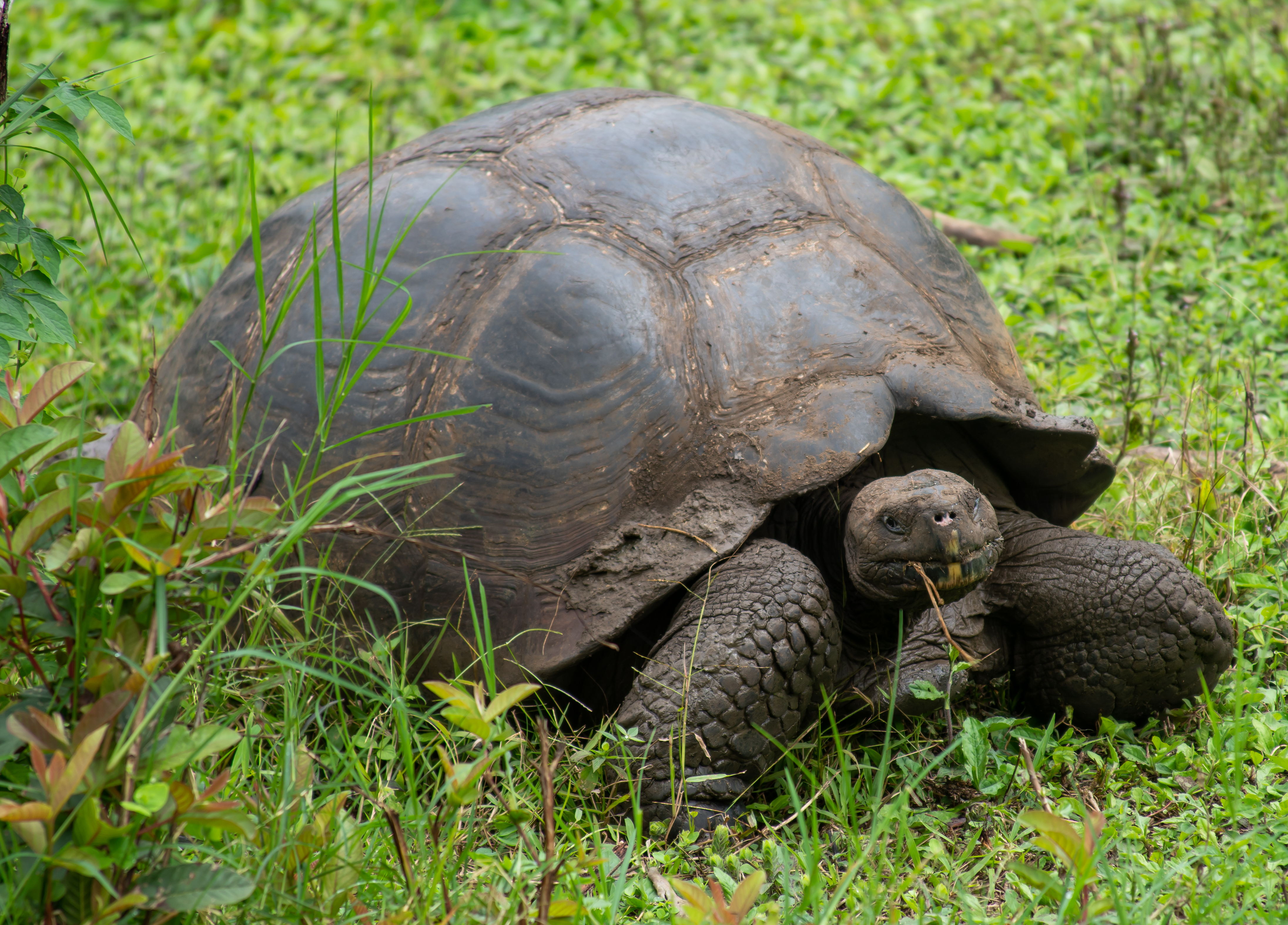
Galapagos Tortoise
Today we flew from Guyaquil to the Galapagos Islands. This was way more of an adventure than it should have been. We had a very helpful driver who took us to the airport, but who did not speak much English. He directed us to a desk where we had to pay a fee of $20 each to get a certificate to enter the Galapagos. They also inspected our luggage for “contraband,” which included things like plastic bags. A group in front of us had quite a few confiscated…they had everything in their luggage contained in ziploc bags. We had a couple of trash bags for dirty laundry which we were allowed to keep. I have no idea what the criteria were for what was and was not allowed as the sign said no plastic bags at all. We were a little annoyed to not have been told about the entry fee by our travel agency as they had been very good about forewarning us about entry fees on previous days, usually days in advance. Fortunately we had the cash on us.
Unfortunately, our travel process would not get better. When we went to check in for our flight, it turned out that our tickets were entered in wrong by the travel agency with our names and passport numbers being mis-matched. They couldn’t fix it at the checkin desk, we had to completely change our tickets. We called the travel agency, who said they really couldn’t help us other than to refund any change fee. Fortunately, we had arrived early enough at the airport to have time to go to another desk, get new tickets, go back to the check in line again, and finally check in for our flight. Fun times. If only that were all.
Turns out that fee we paid when we checked in at the airport wasn’t the only entry fee for the Galapagos, just the first one. When we arrived at Seymour Airport on Baltra Island we went through customs and then were directed to a 2nd desk where we were told that we had to pay another $100 per person entry fee. Again, not told by our travel agency. We literally scrounged through all of our bags and barely had that on us. Needless to say, we weren’t happy with our travel agency. They got their 2nd phone call from us and still weren’t concerned and had no explanation. But at least we were finally at the Galapagos! (and if you plan on going, you know you need a bunch of cash on hand!!)
Before we move on, there is some history behind Baltra Island and Seymour Airport. During WWII it was a US Air Force base to provide protection for the Panama Canal. After the war, the island was deeded to Ecuador. By the mid 1950’s, the Galapagos Iguana was extinct on the island, largely due to airmen shooting them for sport. Fortunately, an American, Captain G. Allan Hancock, had taken about 70 of them to another Galapagos Island (where they had not previously lived) in the 1930s. In the 1990s some of them were repopulated on Baltra. Today, there is a large population there. Outside of the airport and an Ecuadoran military base, there is nothing else on Baltra Island.
We had a guide meet us at the airport and a father-daughter pair from Chile were with us for the remainder of the day. We took a ferry from Baltra to the island we are staying on: Santa Cruz Island. The ferry landed on the opposite side of the island from where we are staying so we immediately drove across the entire island. It was really interesting as we went from a desert environment to near cloud-rainforest in a very short time period…and this isn’t a large island!
We first went to Rancho Primicias, which is a private tortoise farm where they have Galapagos Tortoises roaming around. You can walk amongst them, which is really great. Things you learn:
Tortoises are muddy.
There is lots of poop.
Tortoises hiss if they don’t want you around.
They mostly don’t care because they’ve seen a million of us and are unimpressed.
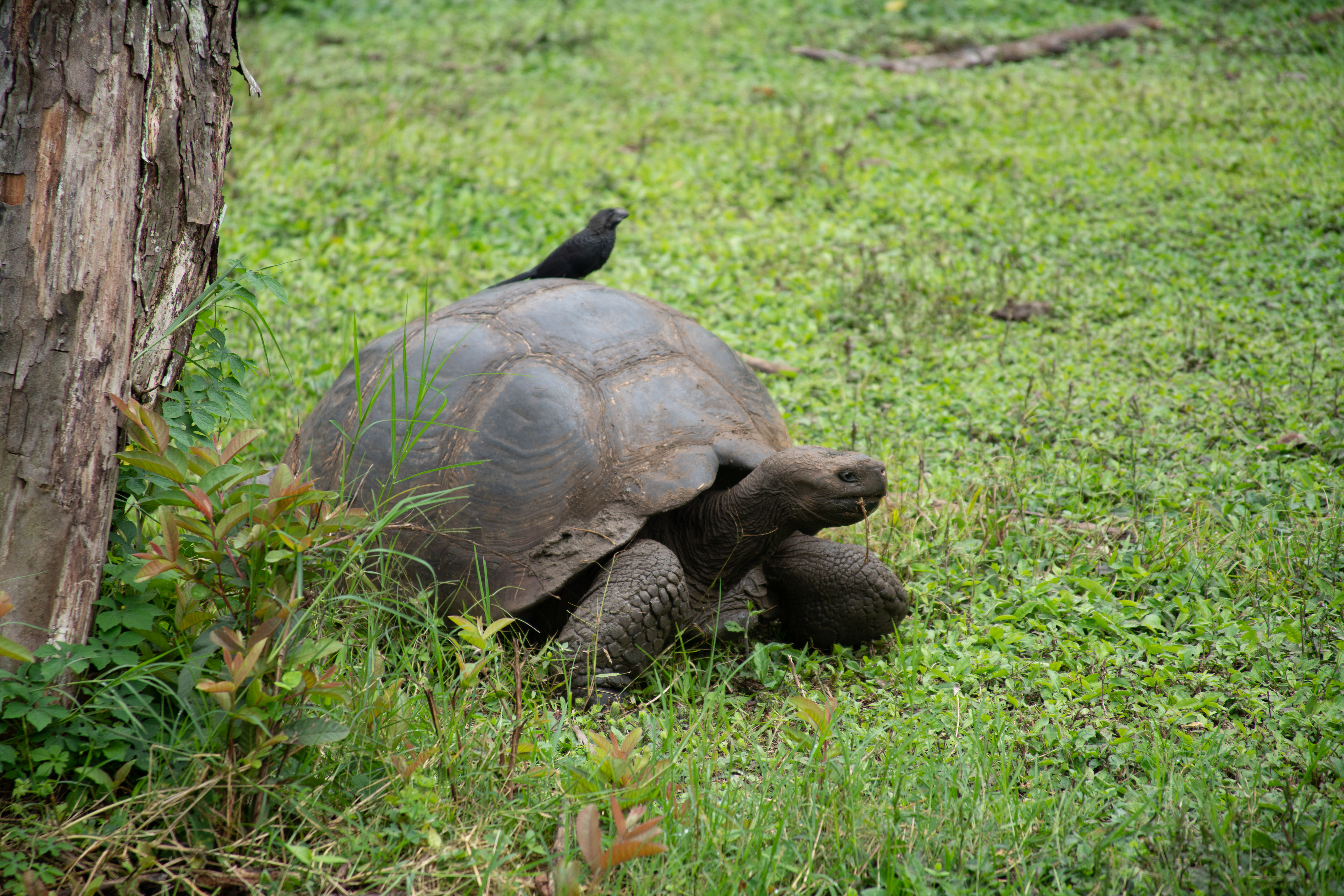
Tortoise
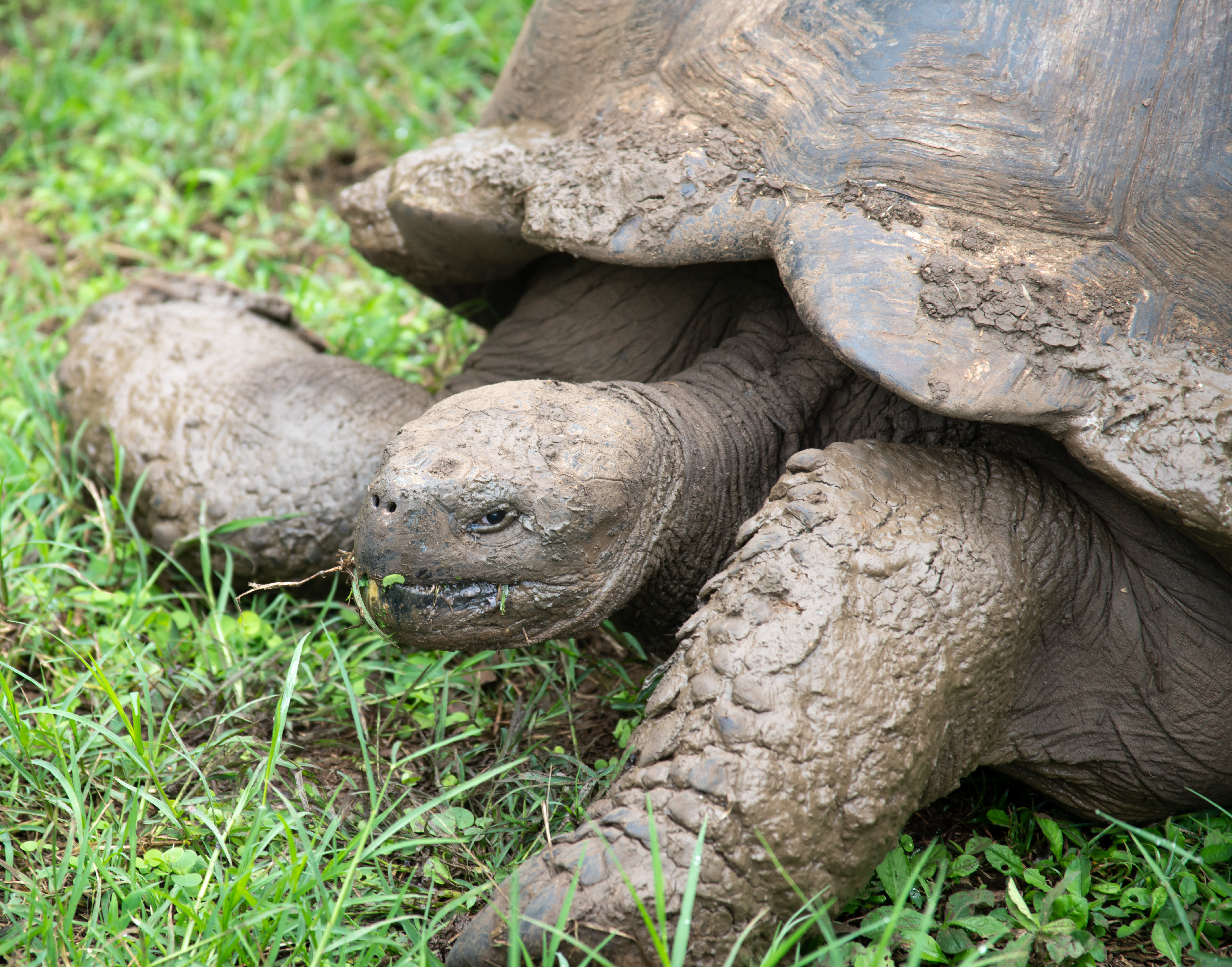
Don’t bother me, I’m eating
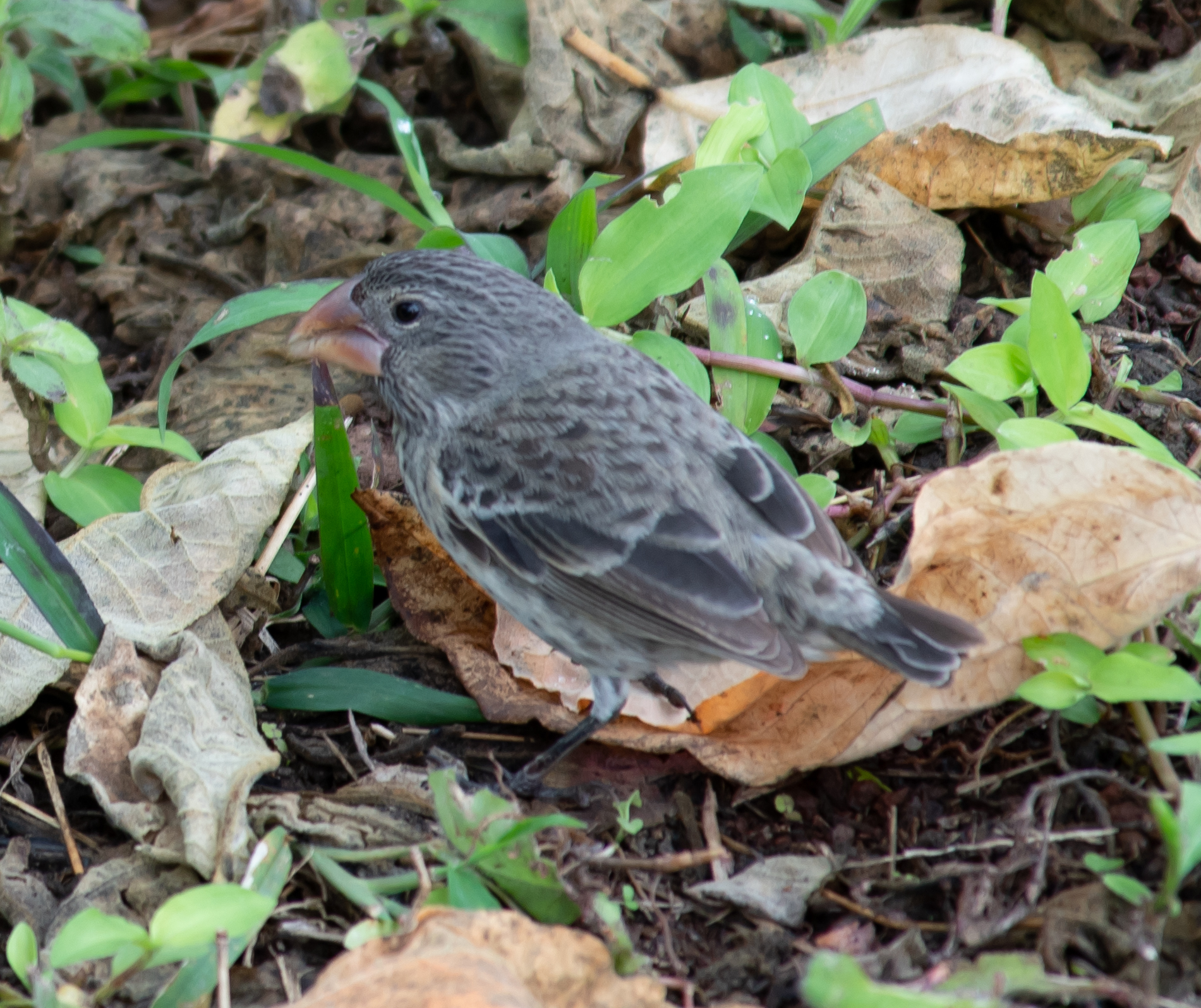
Galapagos Ground Finch
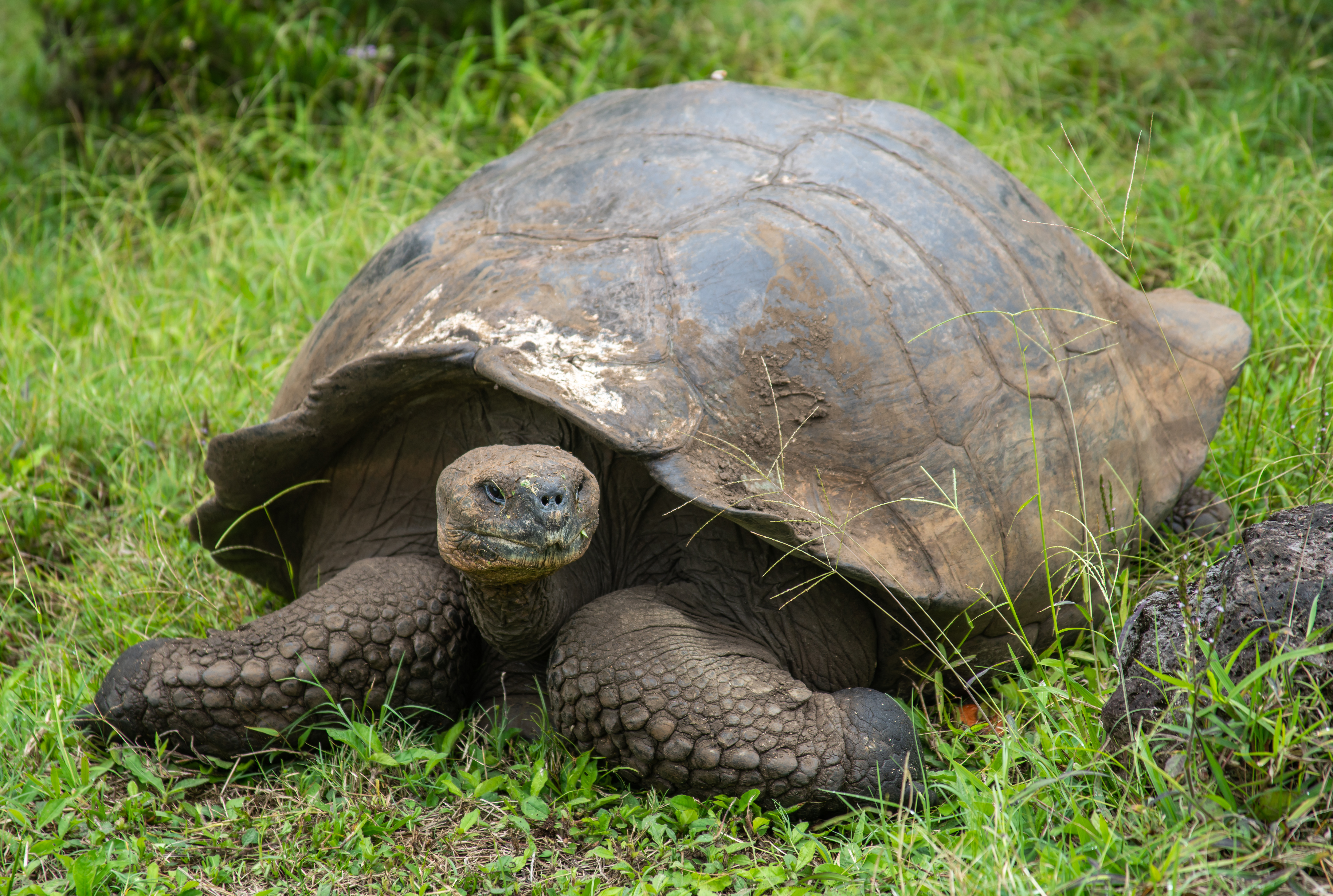
These guys are huge…and 80-100 years old!
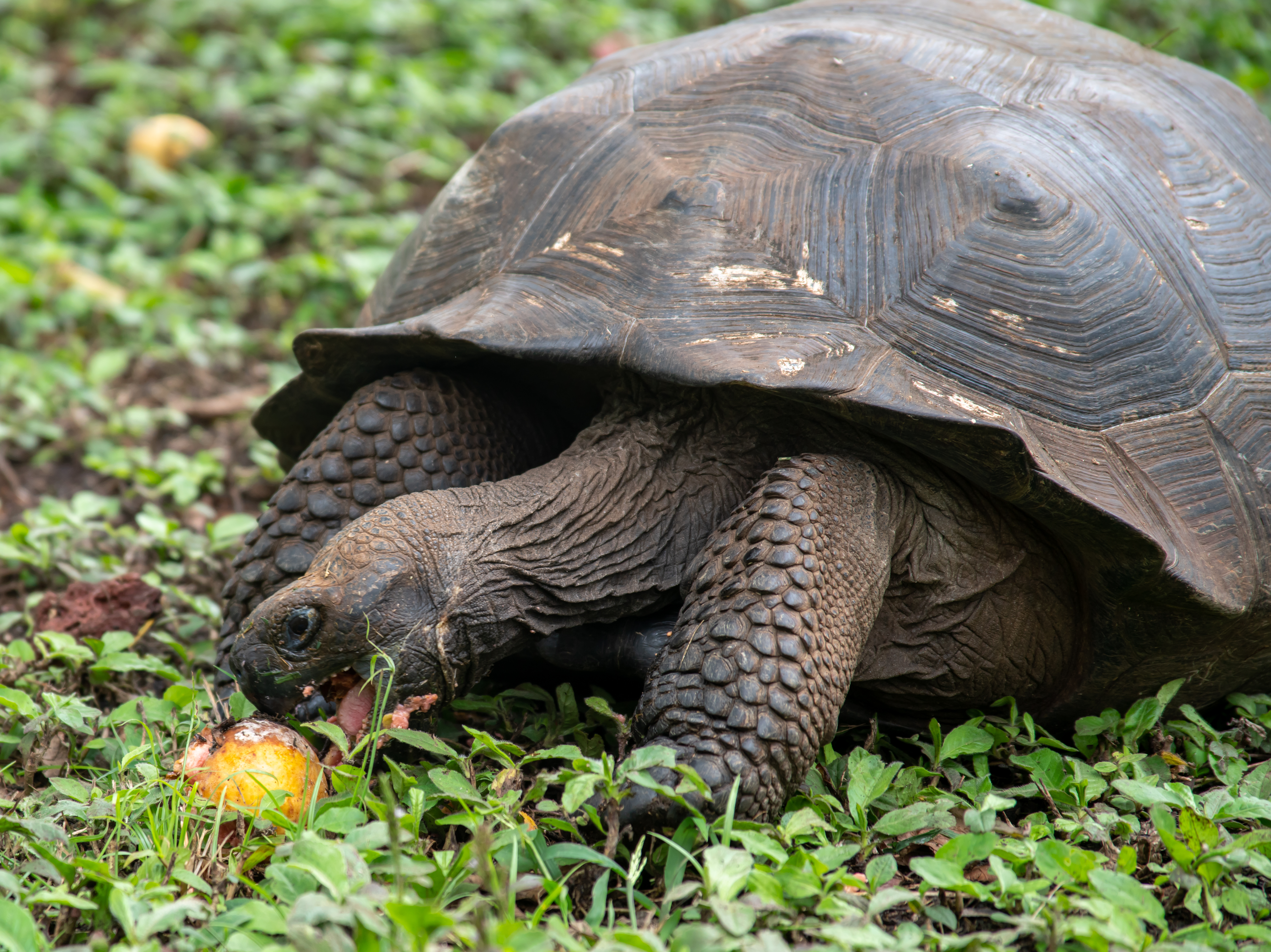
Going for some fruit
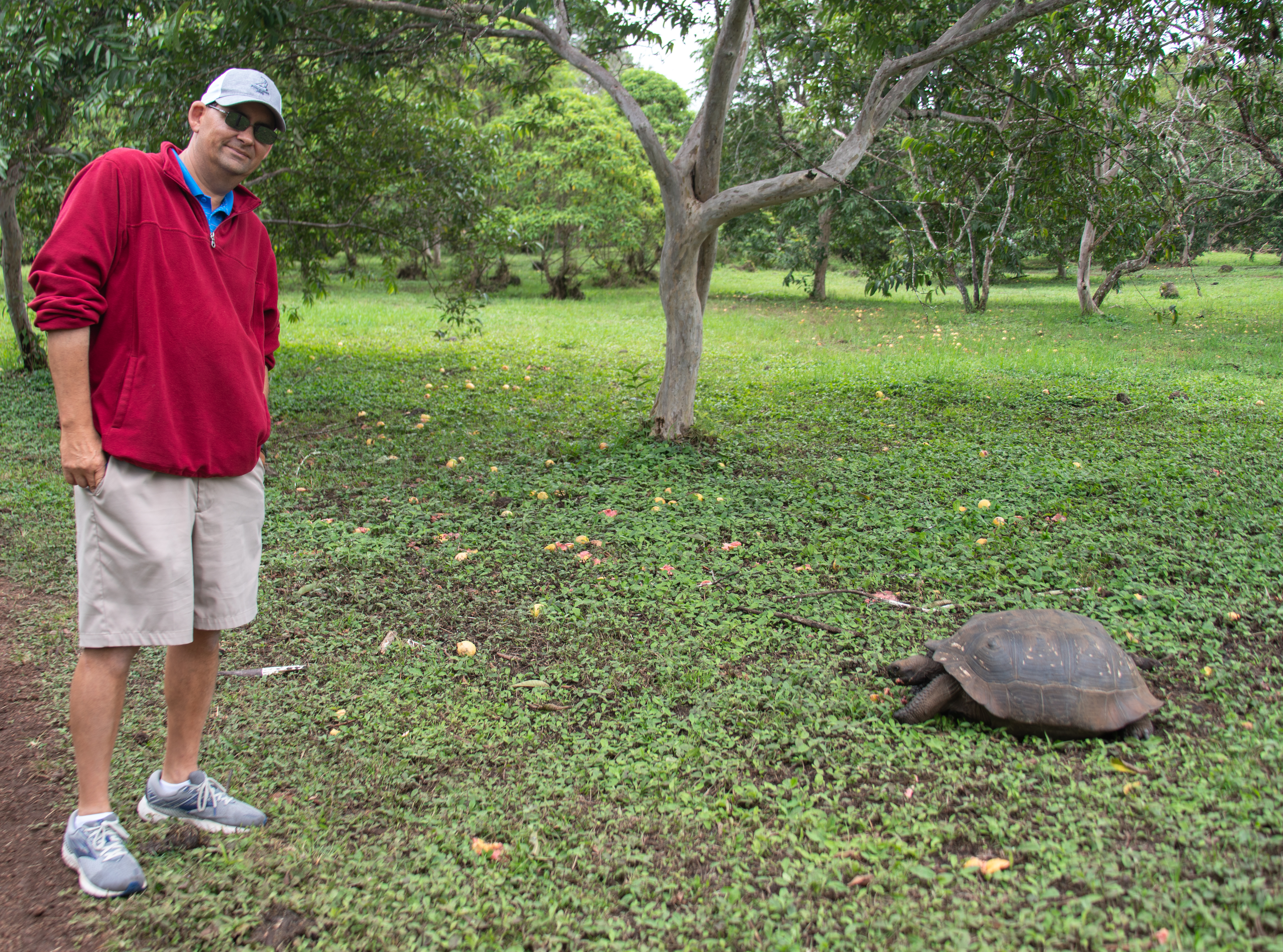
Paul by a “baby.” We counted the rings on it’s shell and it was 25-30 years old.
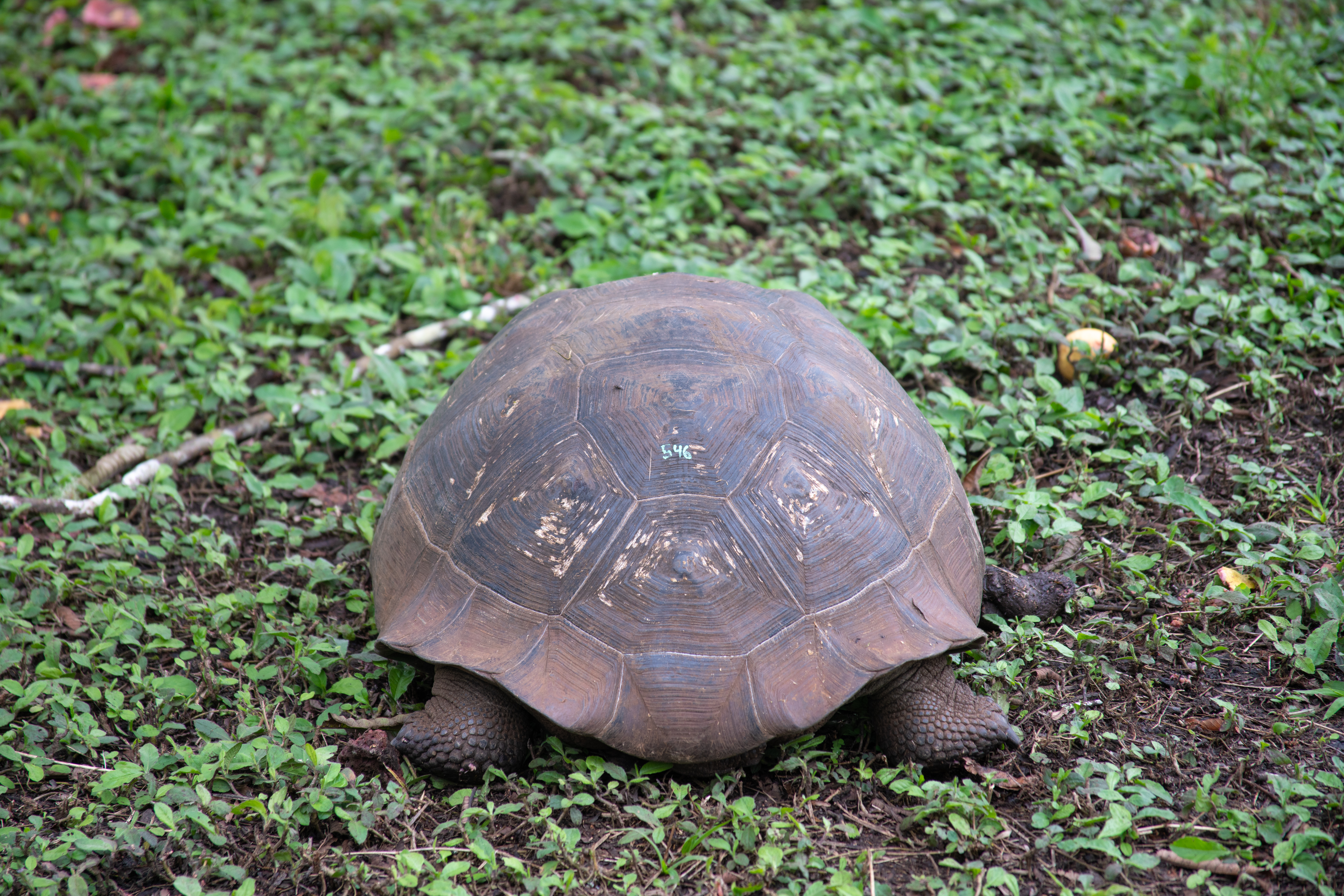
Back end of the “baby.” They are all numbered.
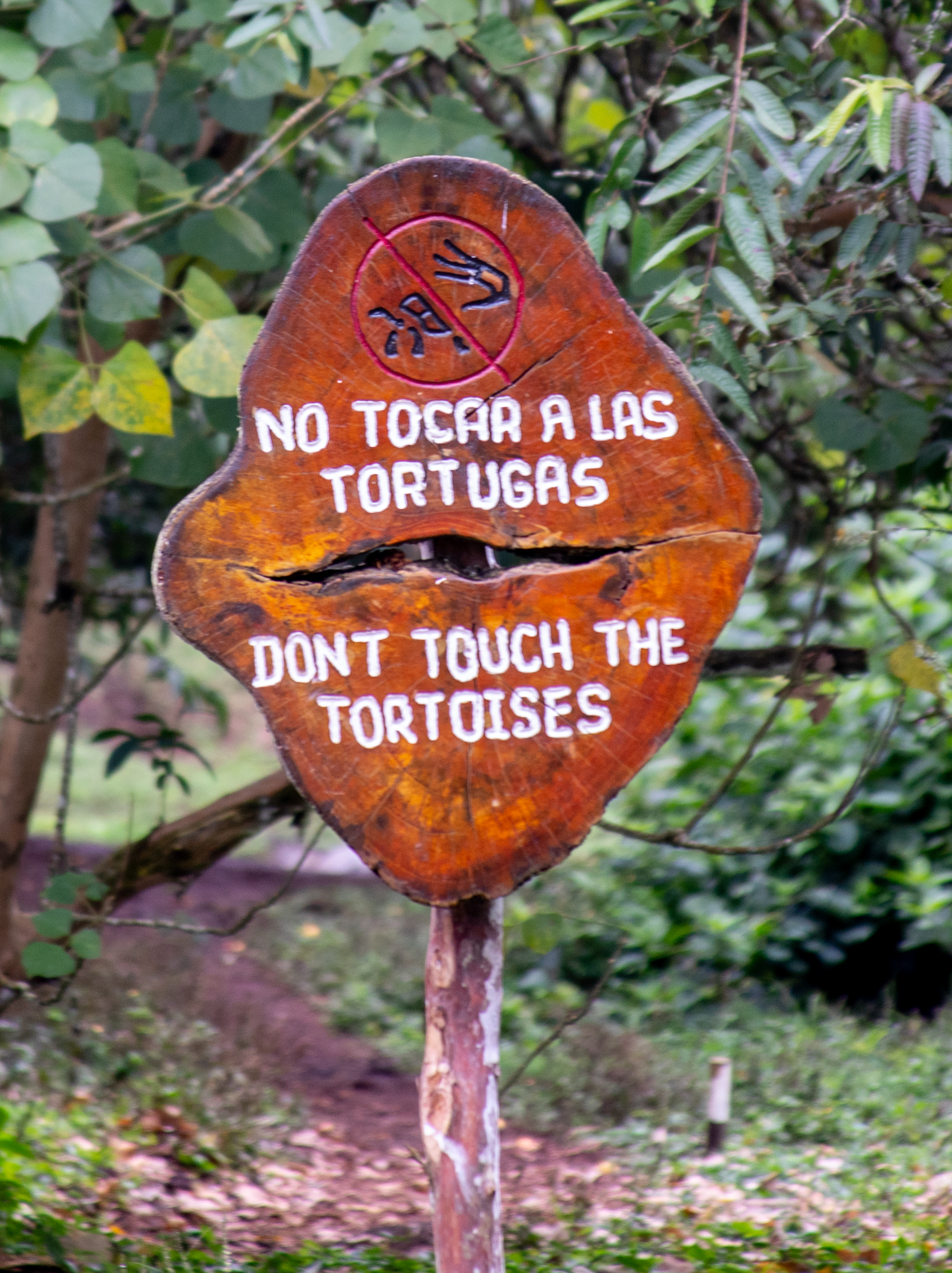
Self explanatory. We have to stay a minimum of 6 feet away from all of the animals on the Galapagos.
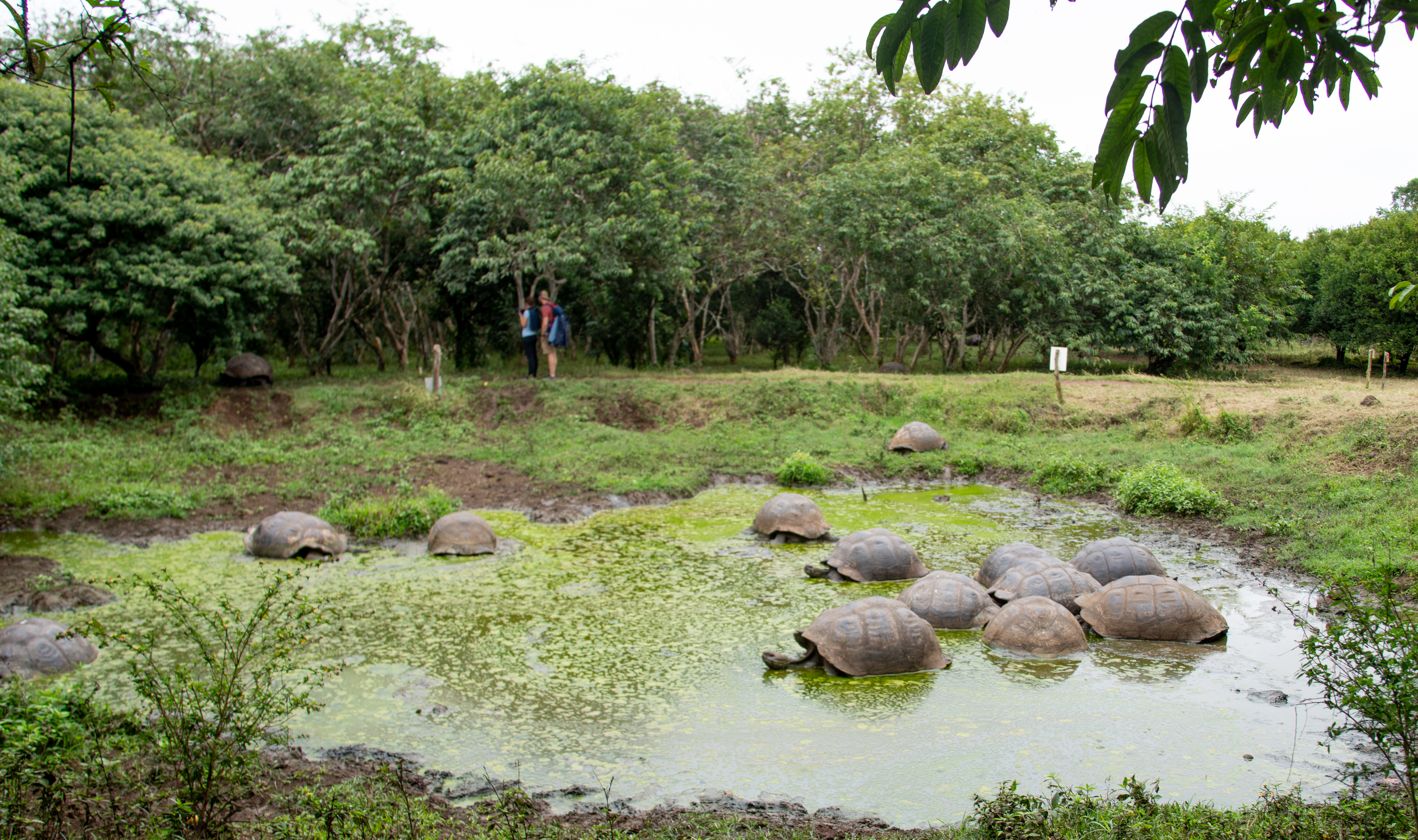
Pond with a bunch of old tortoises
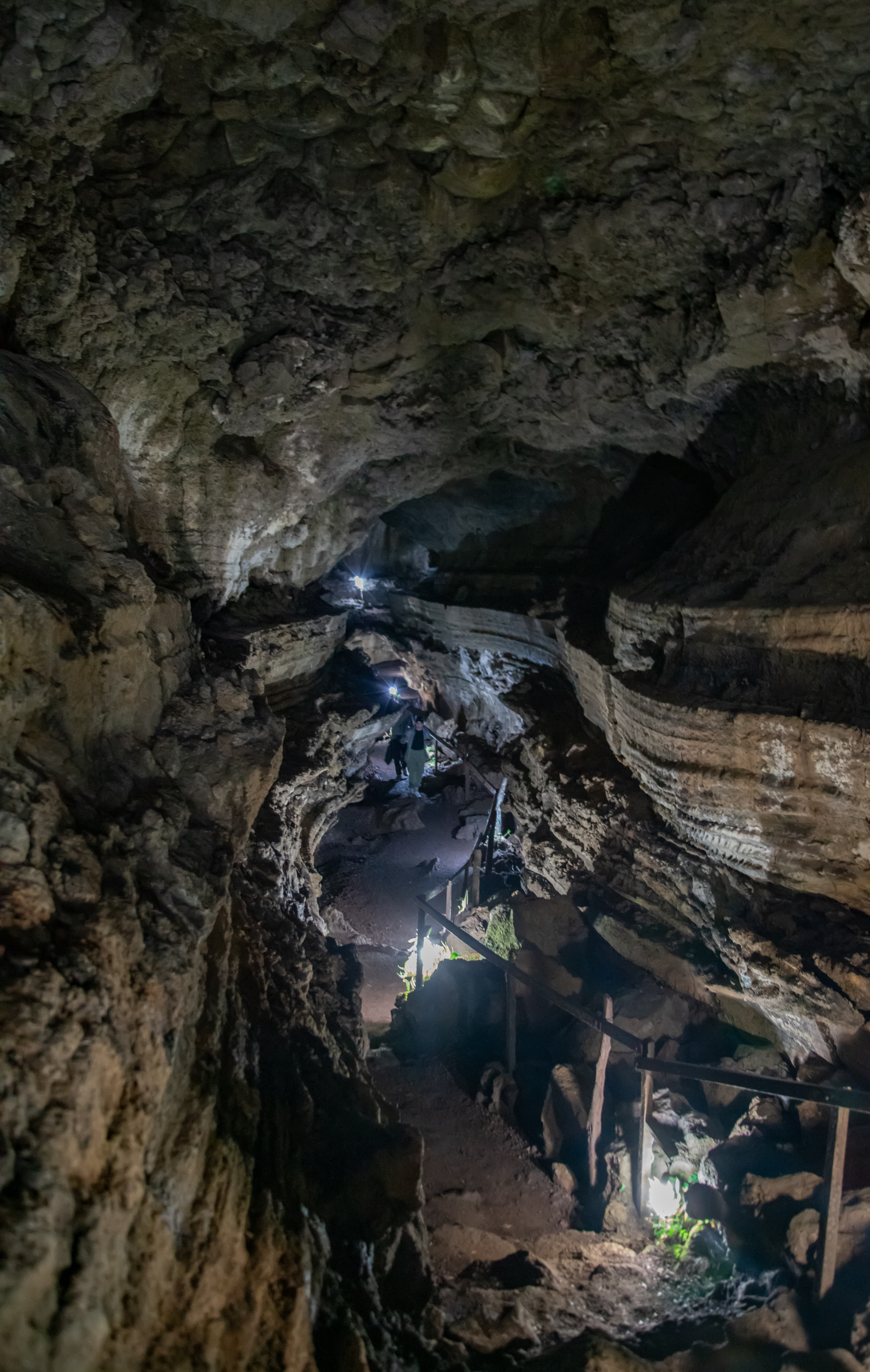
We went through a lava tube cave
Next we went to the Charles Darwin Research Station. This is a biological research station operating under UNESCO and funded by the Charles Darwin Foundation. They do conservation research along with specific ecological and conservation management of the Galapagos. They have an active breeding program for the Galapagos Tortoises, which we got to go tour.
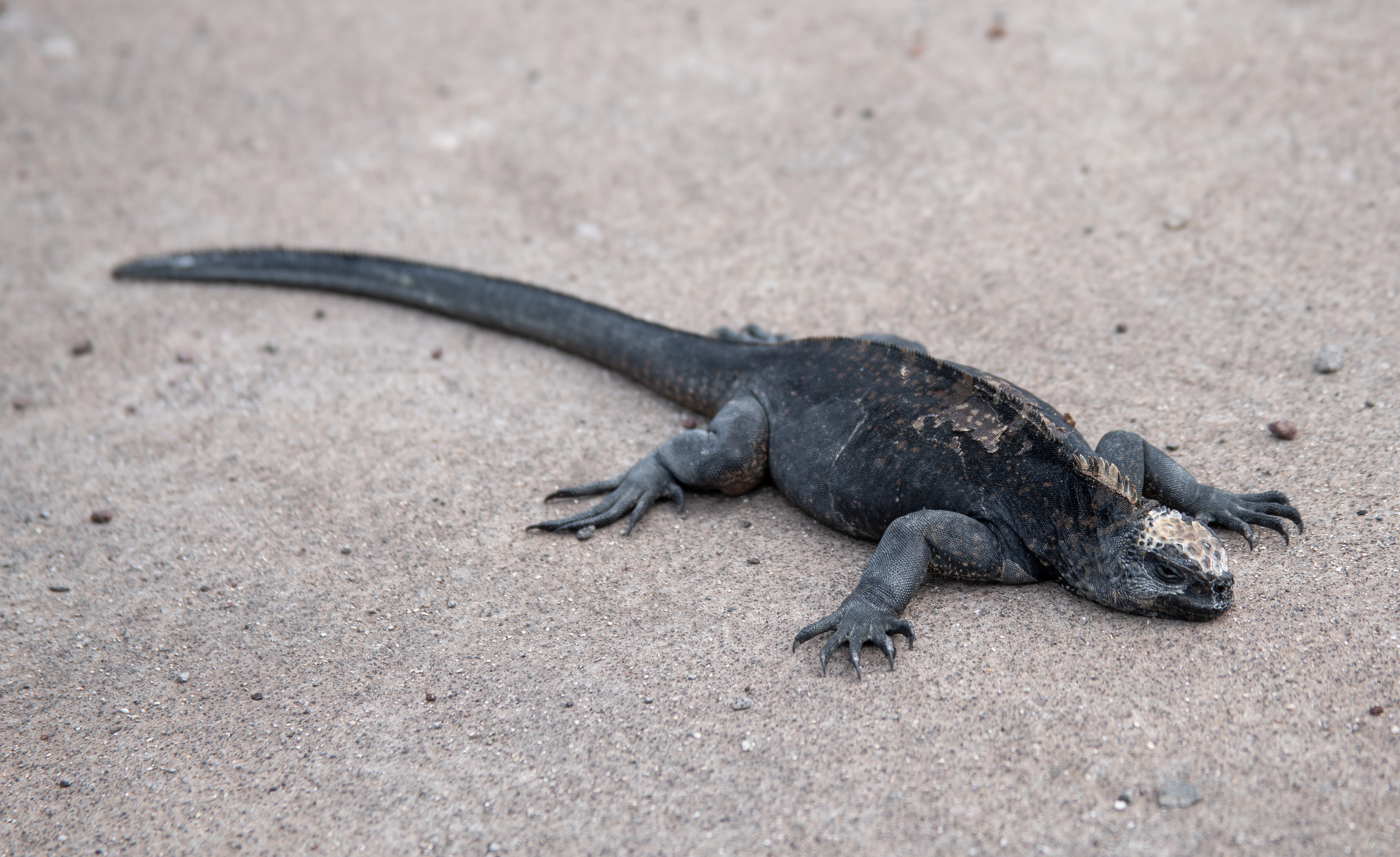
Galapagos Marine Iguana sunning itself. This was a little one.
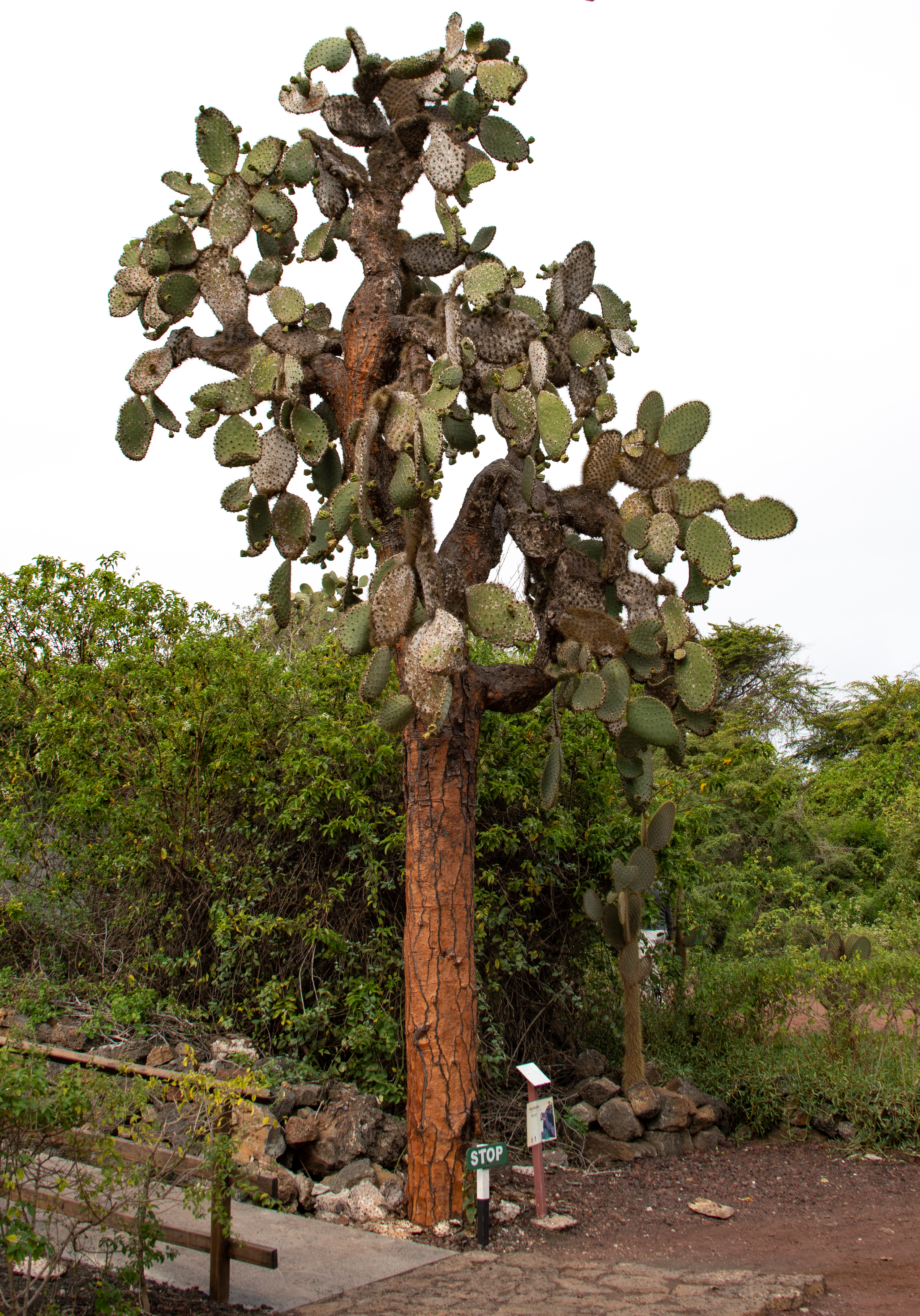
Prickly Pear Cactus: on this island it grows into a tree with a woody trunk, likely a defensive adaptation to keep it from being eaten by the tortoises.
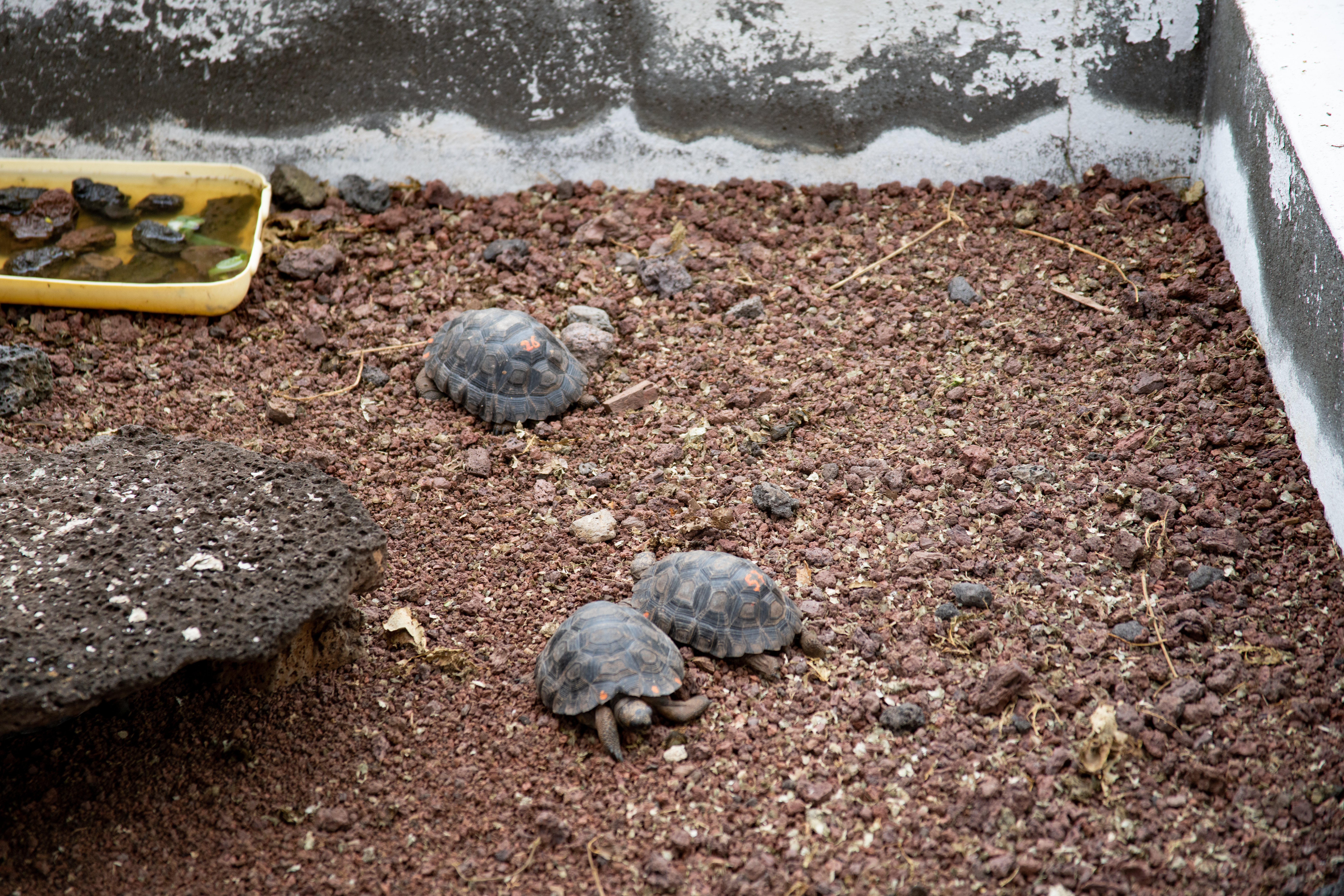
Baby tortoises in the breeding program
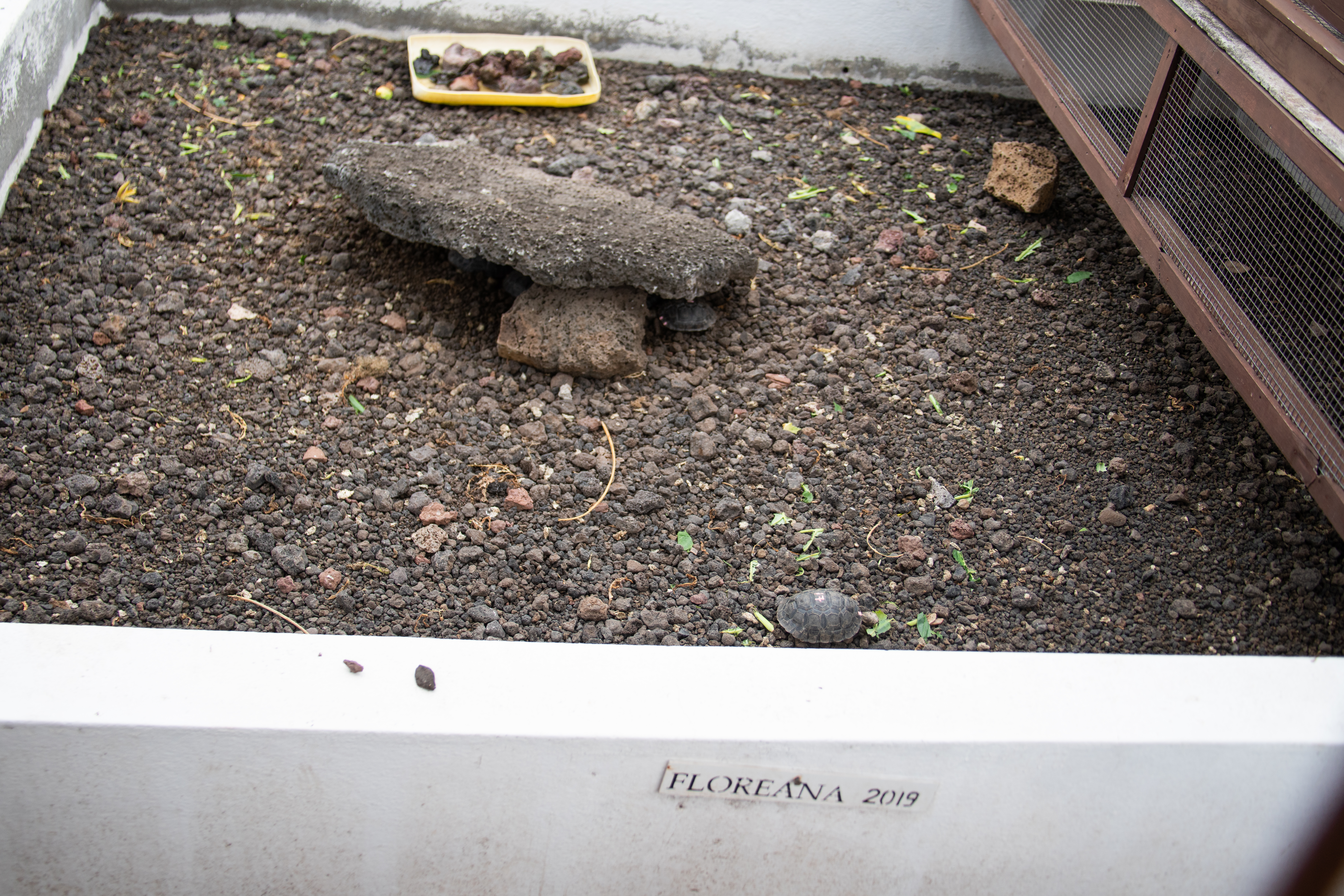
They separate and label the babies by the island they are from and the year they hatched.
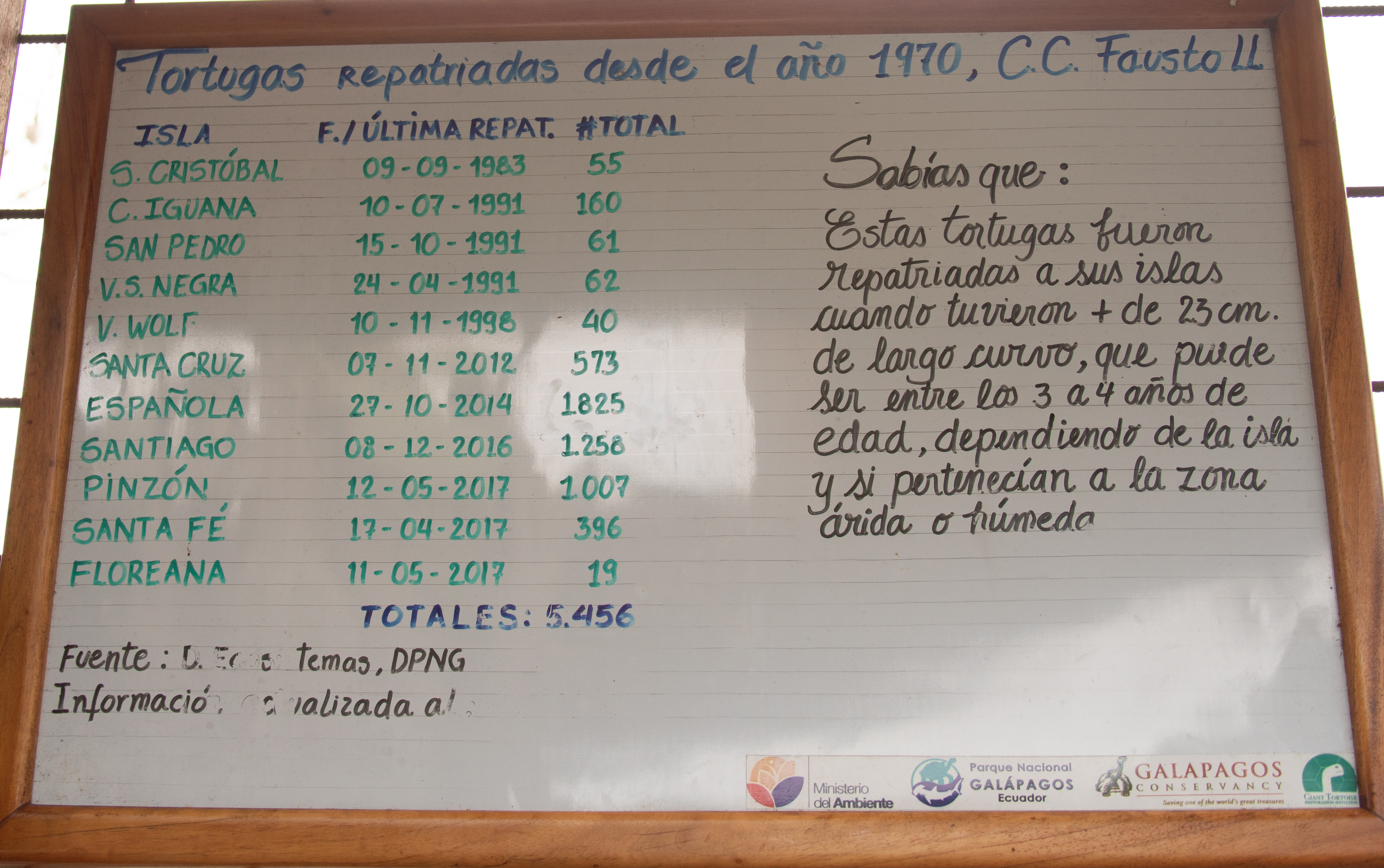
This is the list of the tortoises they have successfully released back to various islands from this breeding program.
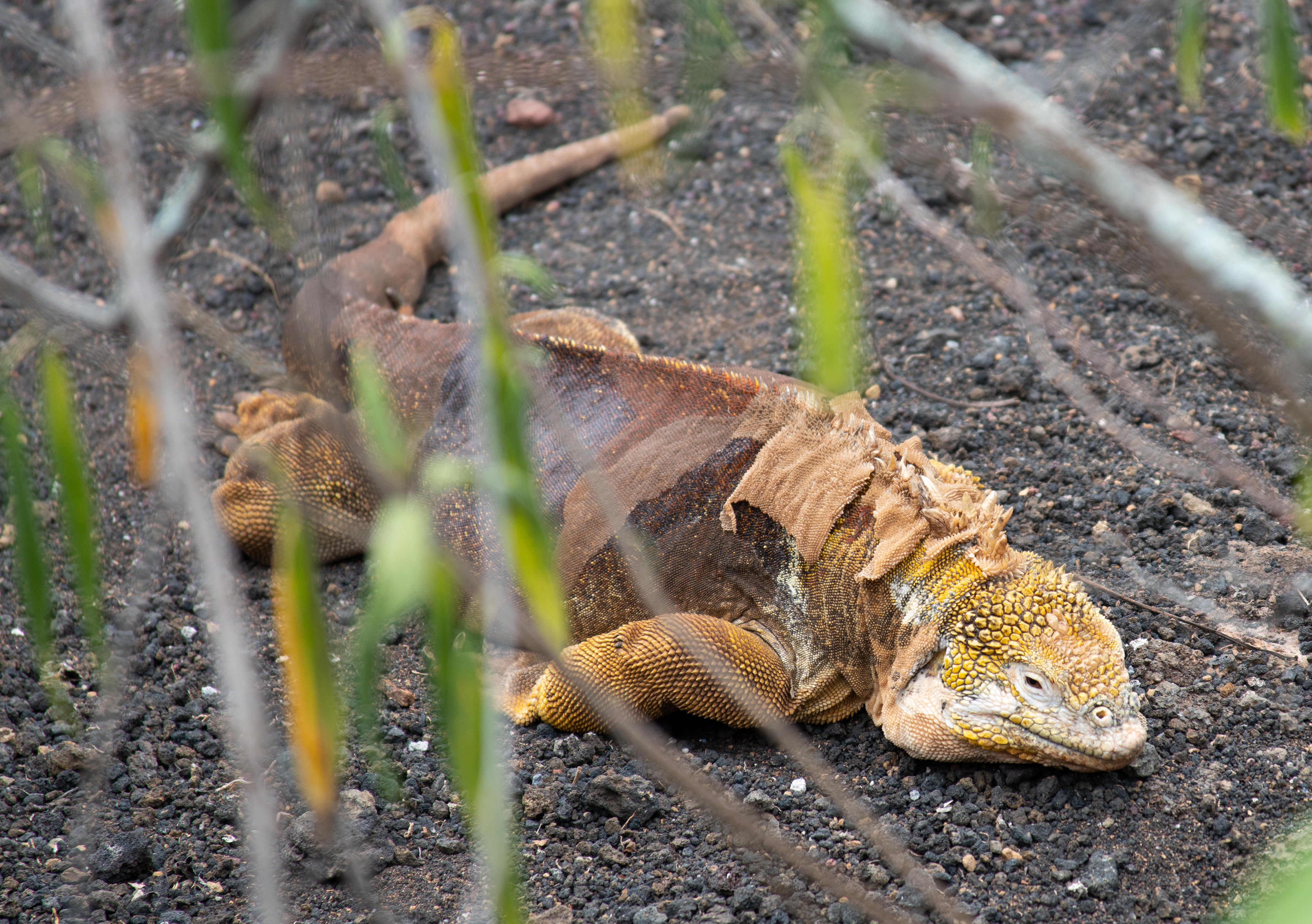
Galapagos Land Iguana
After our tour, we got settled in our hotel and went into Puerto Ayora for dinner. It’s a little tourist town overlooking an active fishing port. This attracts a bunch of pelicans as well as sea lions. In the evening there were fishermen selling what they had caught that day…with the birds and sea lions waiting for scraps.
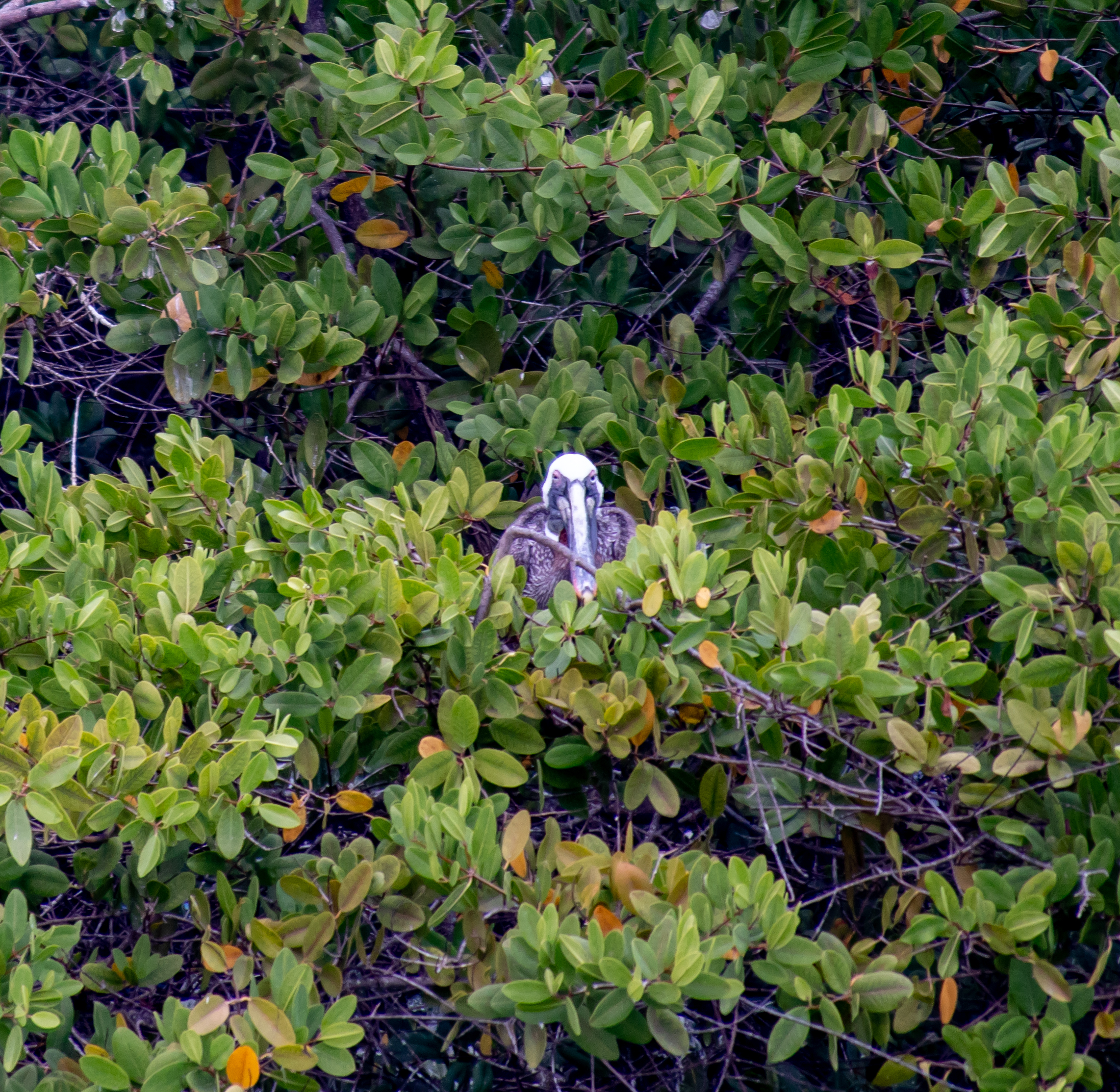
Pelican
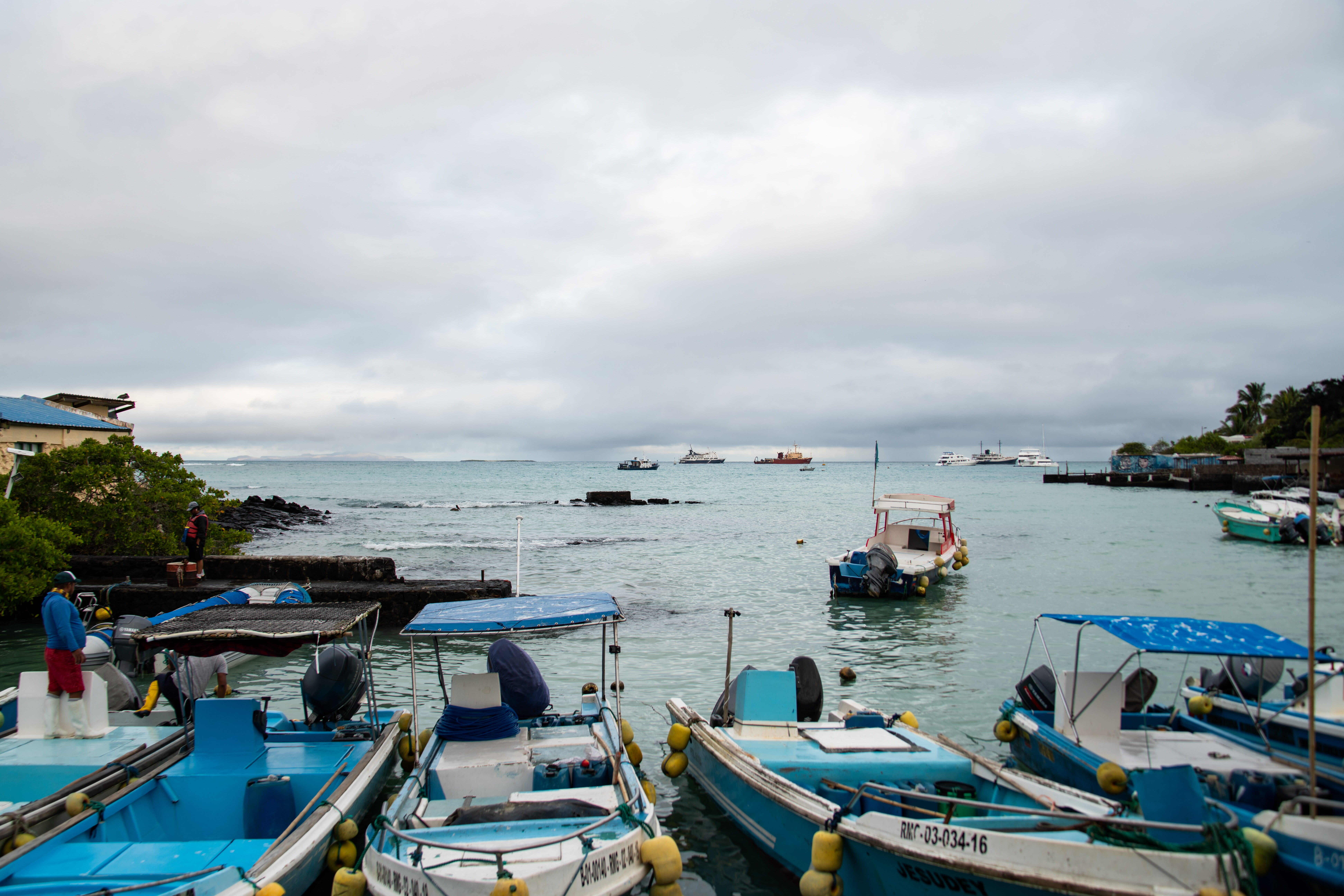
Puerto Ayora
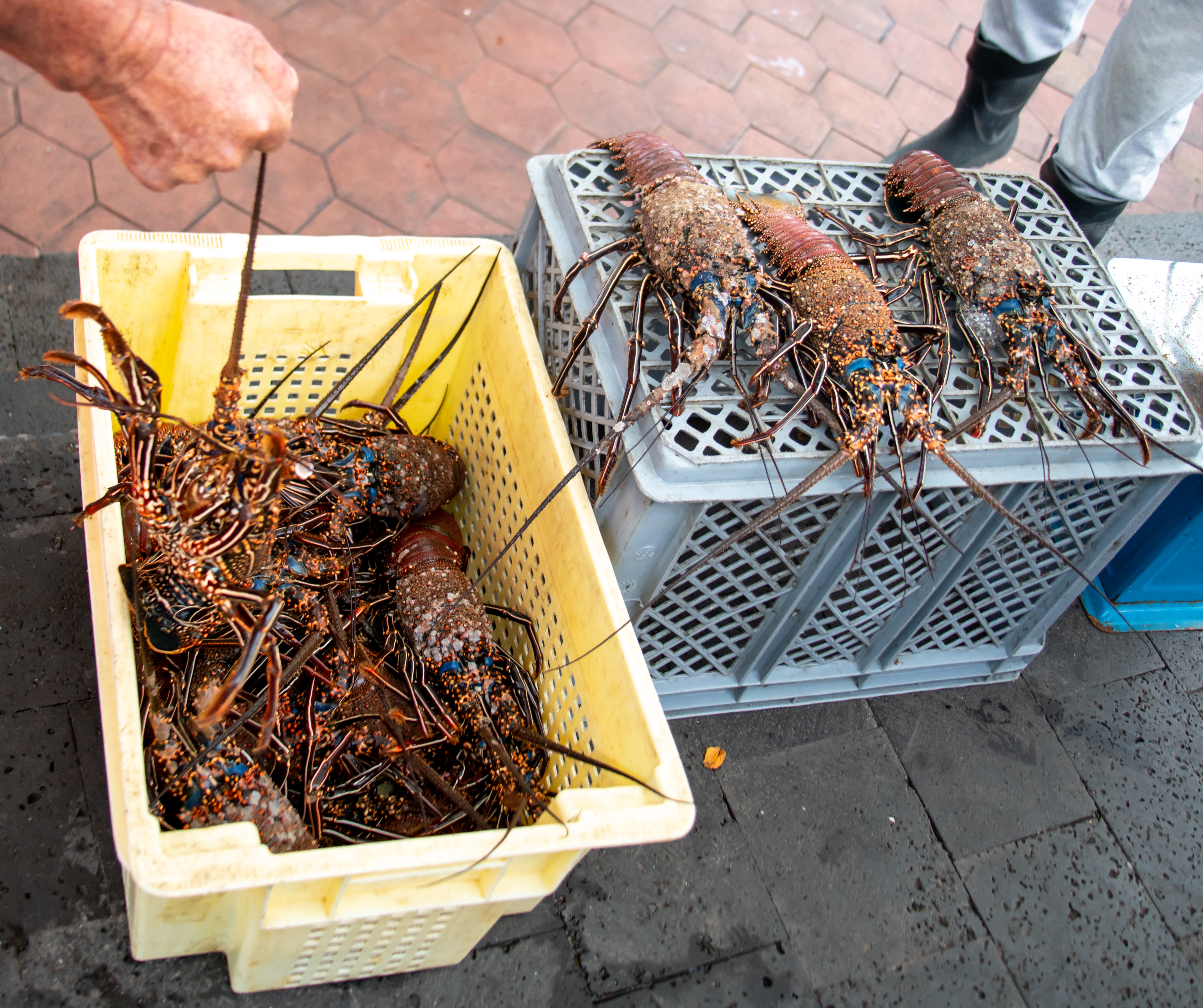
Fresh lobster…still snapping!
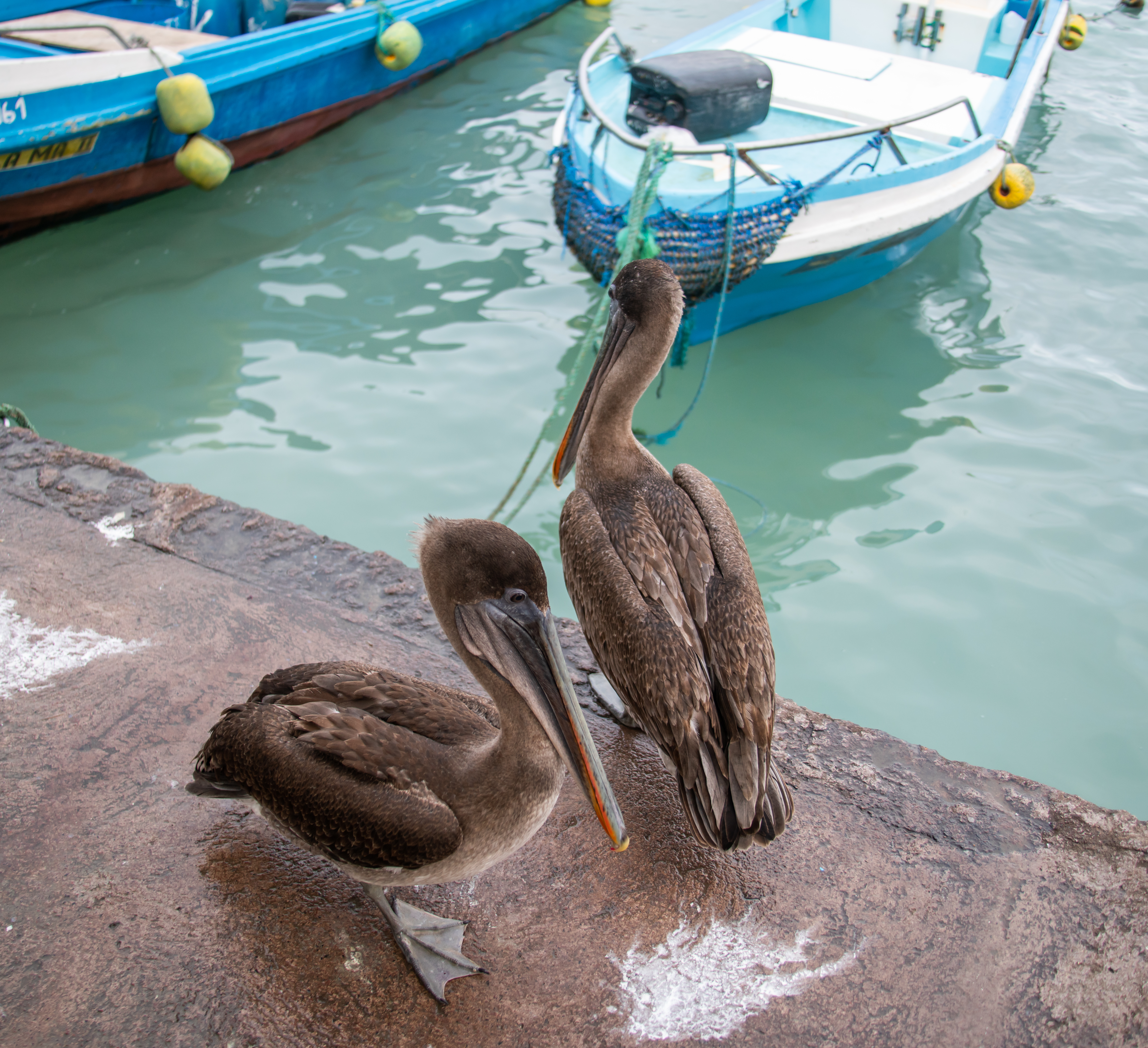
Waiting for some handouts
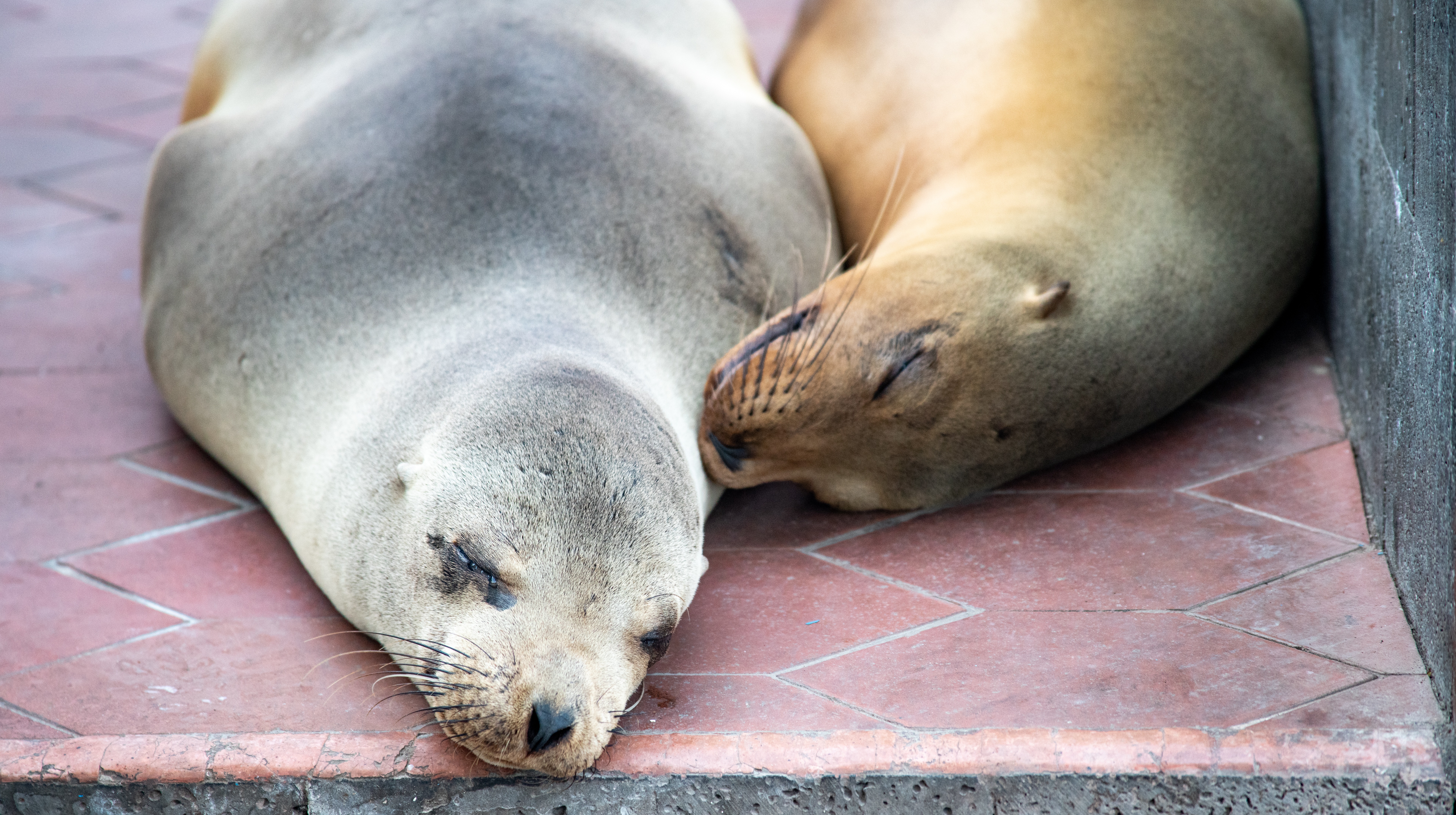
Sea lions lounging in Puerto Ayora


Leave a Reply