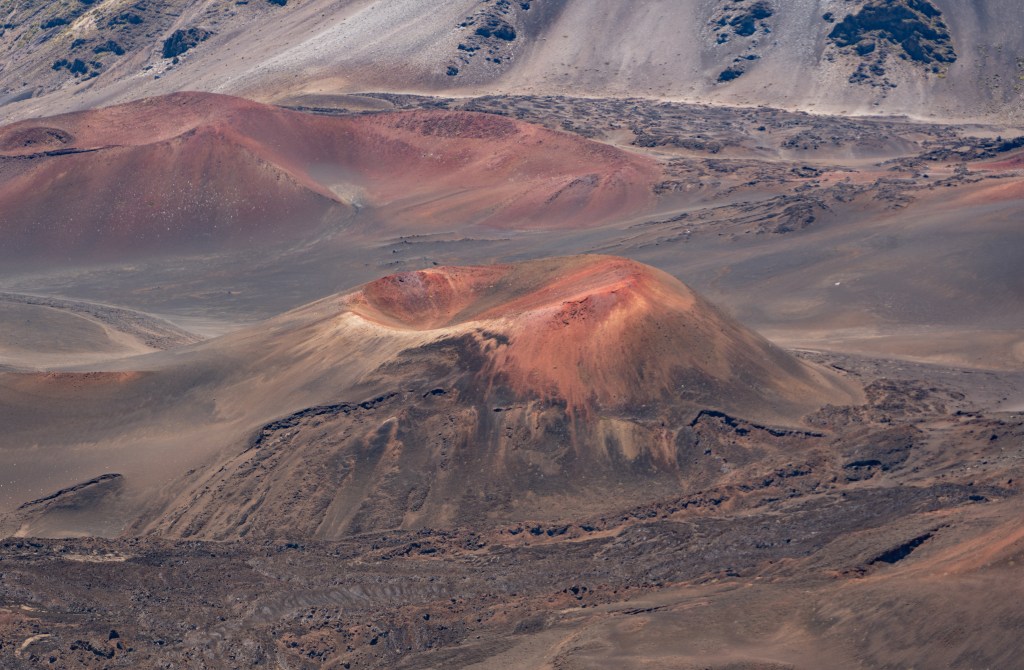
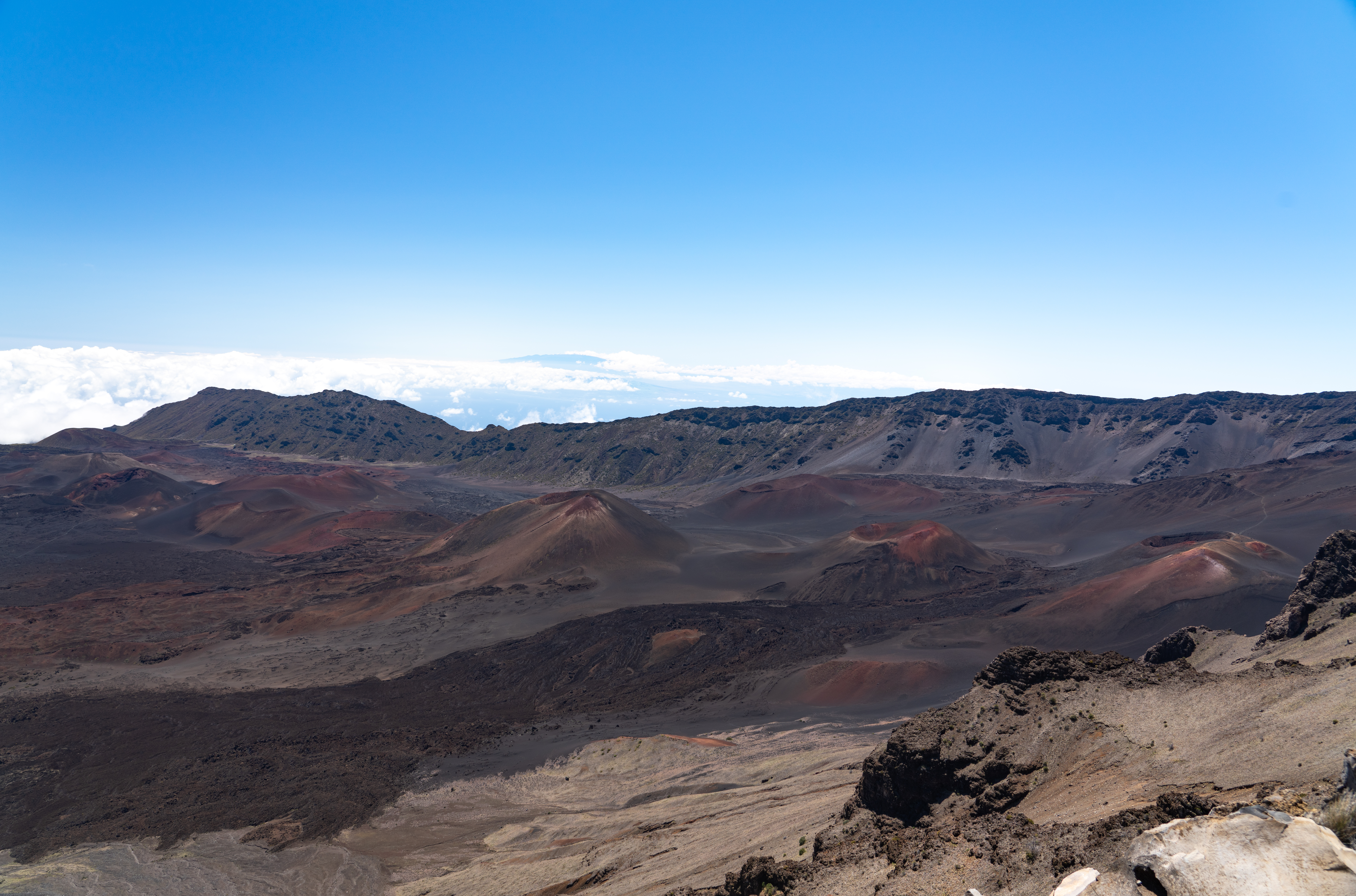
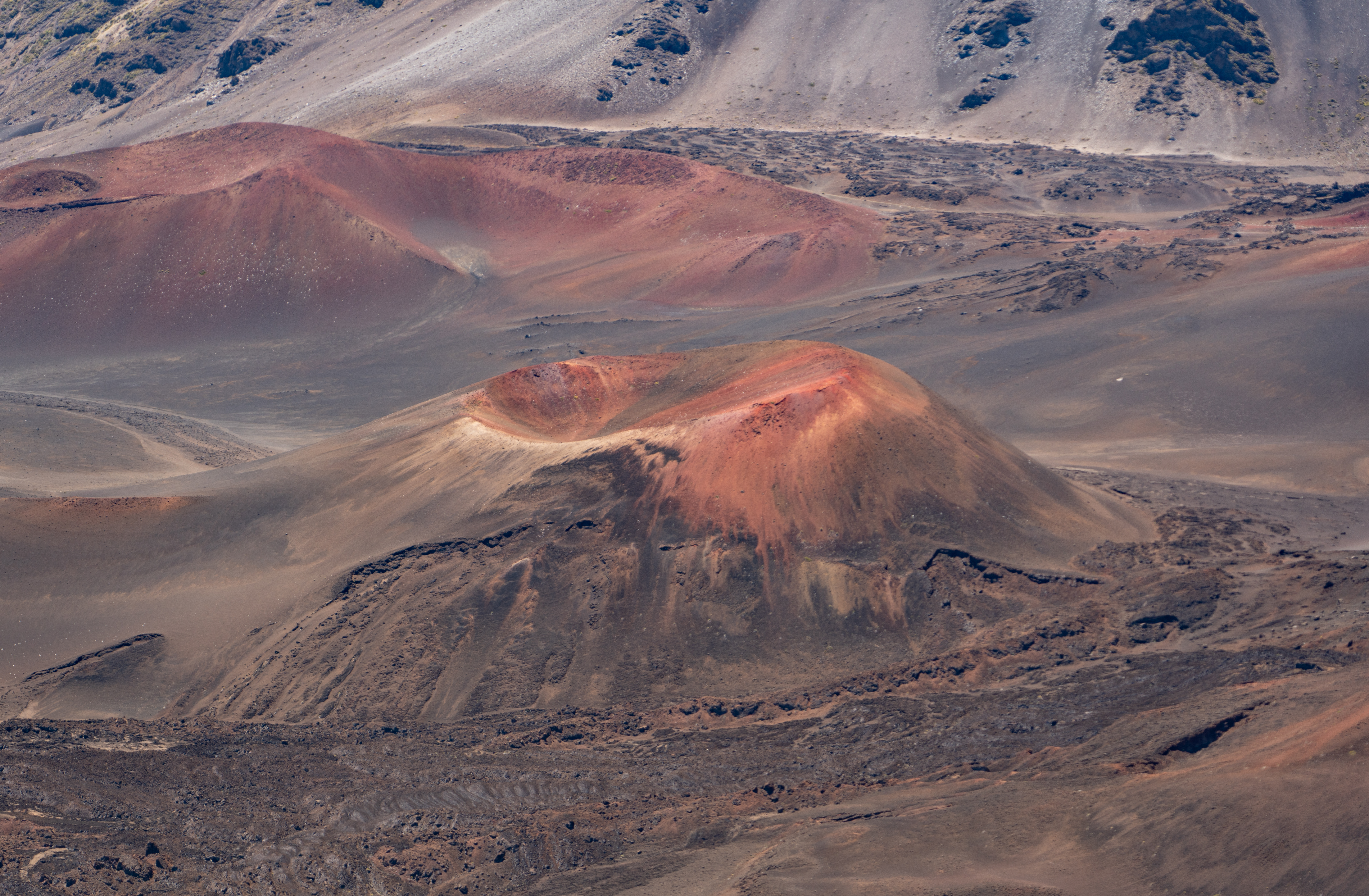
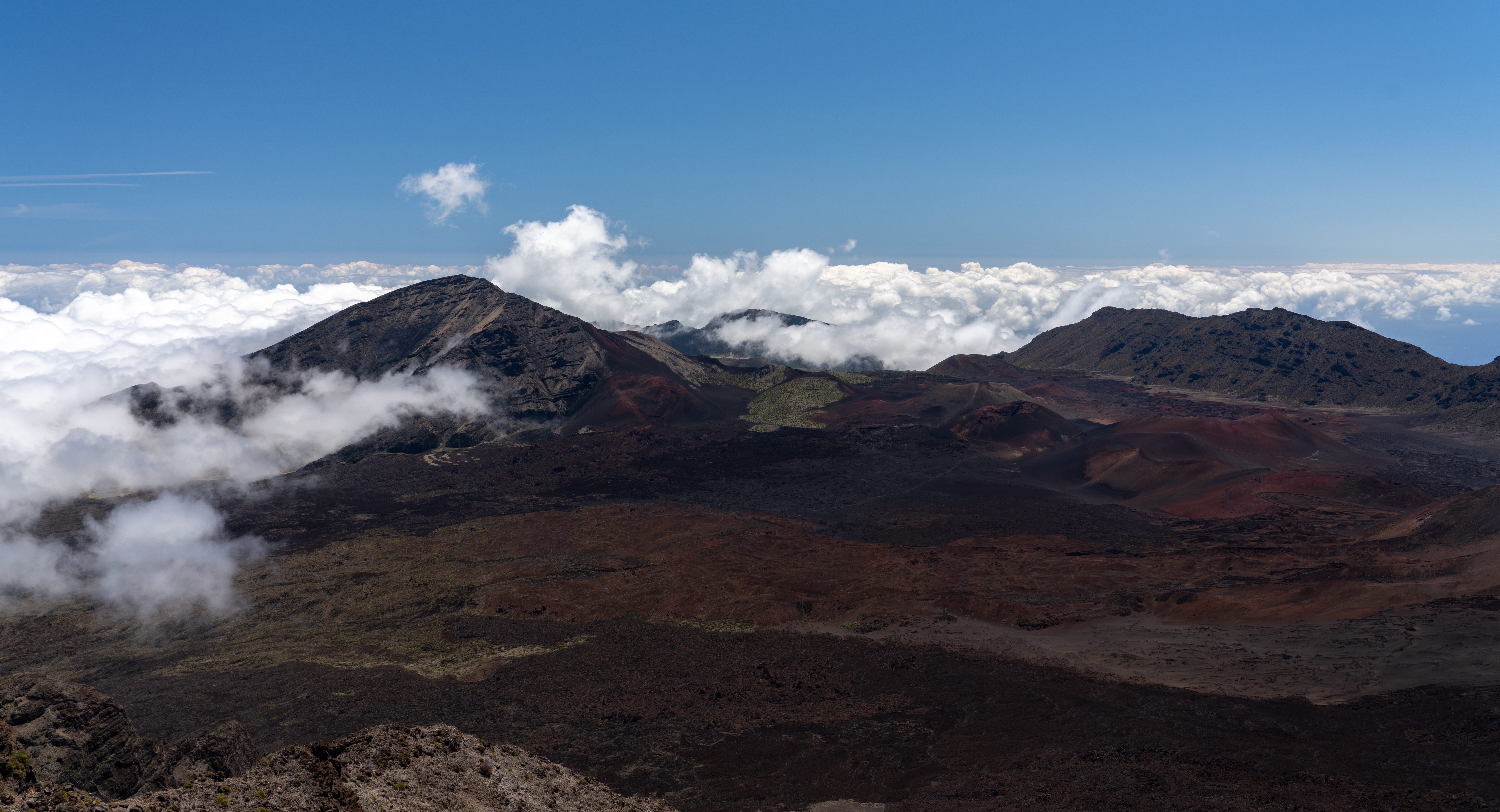
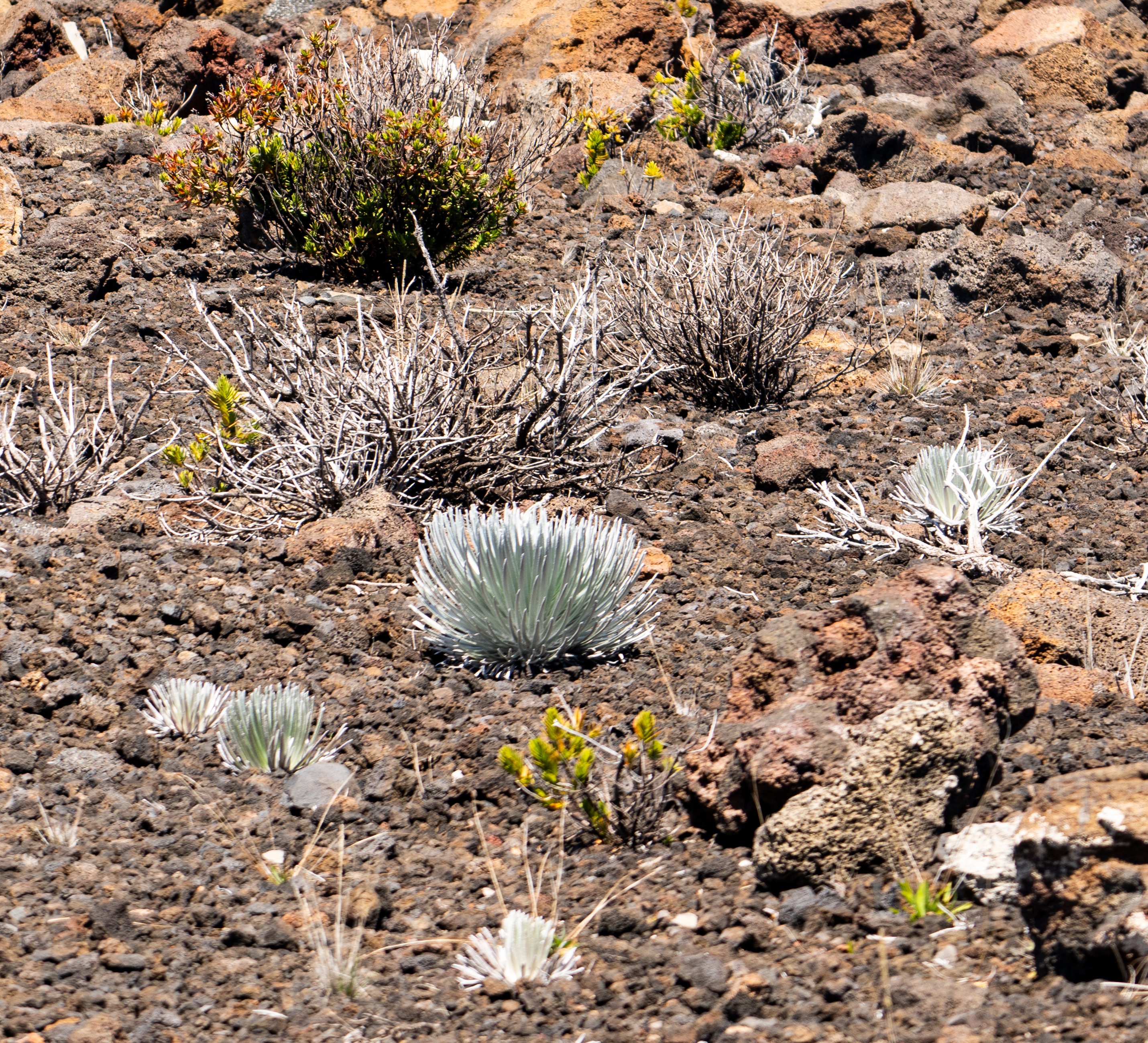
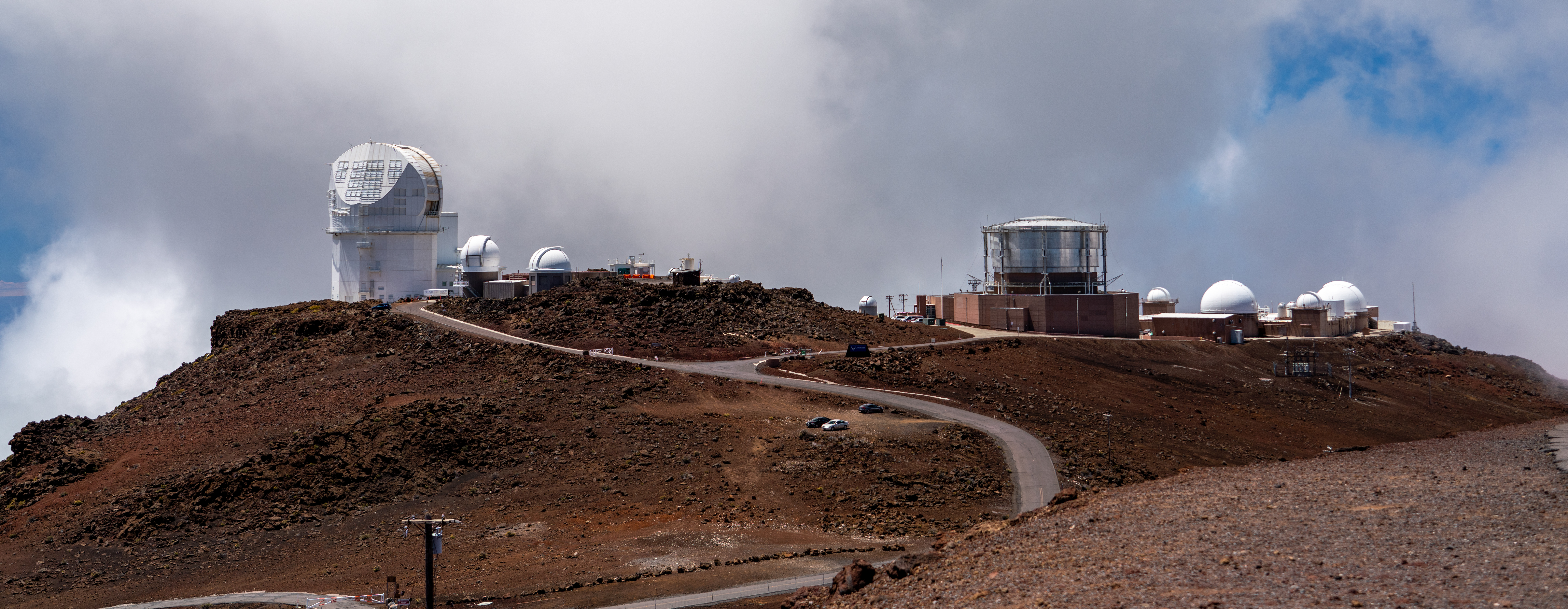
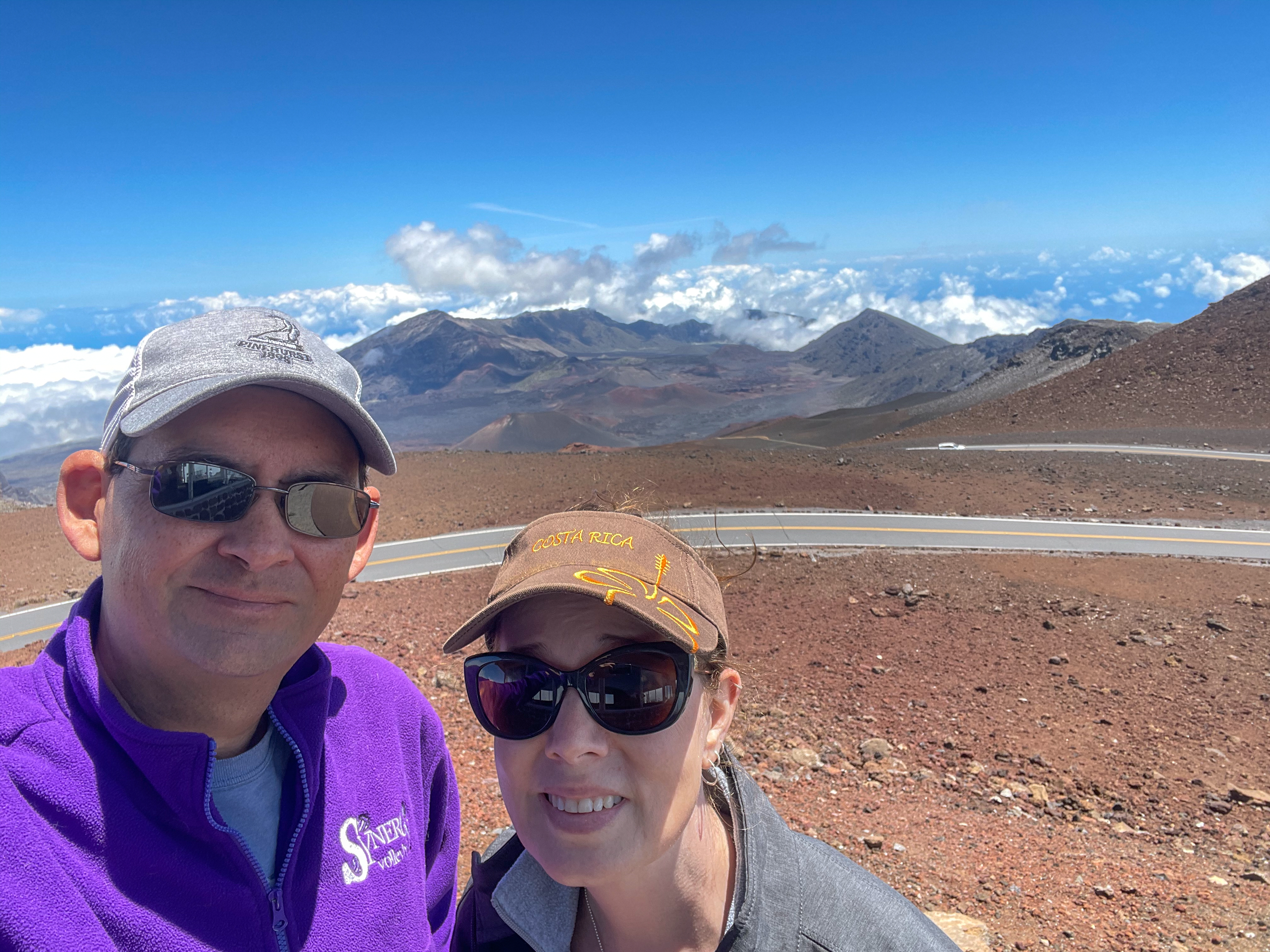
This morning we drove up Haleakalā, the larger volcano on Maui. This volcano is currently dormant, likely having last erupted in the 17th century. It is a shield volcano with a large caldera containing multiple cinder cones. The top of the volcano is at 10,000 feet. The site is a national park. We had originally planned on viewing the sunrise here, but we did not get any of the allotted tickets for the day, despite being on the website as they were released. Oh, well.
We made a few stops on the way up to the summit as there were some trails and view points, but the main goal was the top.
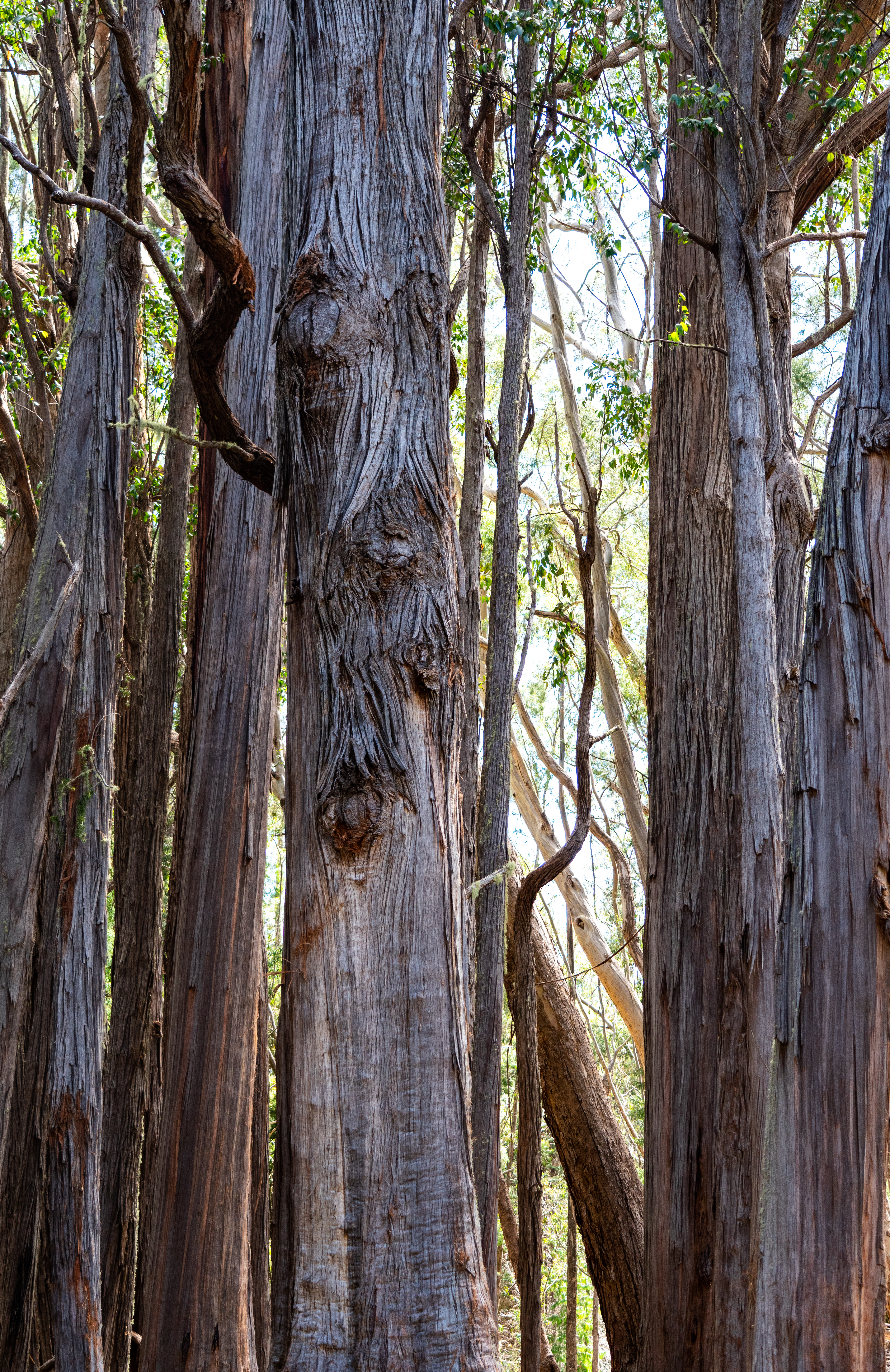
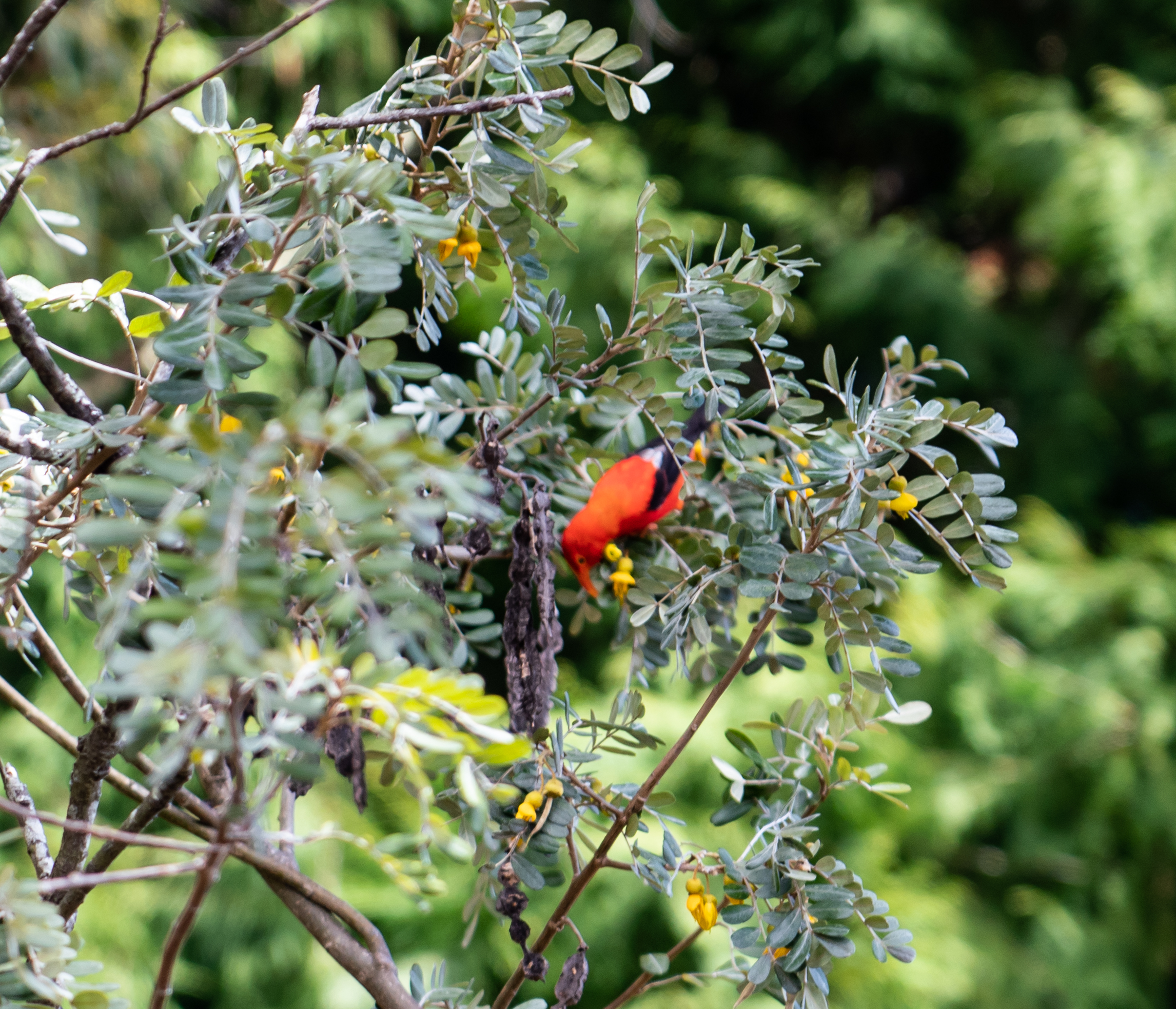
We walked the trail at Hosmer Grove. This is an area where the native sandalwood trees had been deforested, so an American was brought in in the early 1900s to replenish the area. He chose to do so with economically beneficial trees, rather than replacing native species. He also wanted to experiment with what would grow in the area. There are a bunch of eucalyptus and pine, which are now closely monitored so that they do not overrun the native plants. While we were here, we saw 2 ‘i’iwi, or scarlet honeycreepers. They are beautiful little red birds with long, curved beaks. I tried to get good pictures of them, but they would not stay still long enough for me to focus on them, so you get one almost-focused picture so that you can get an idea of what they look like. They’re beautiful!
After Haleakalā, we drove out along the coast to the town of Lahaina to shop and have dinner. Tonight is our last night here. We leave in the afternoon tomorrow. Just plan to pool and beach it tomorrow, so this is the end of this trip’s blog.


Leave a Reply