Our cruise ended today and we were on our own in Nuremberg.
The city of Nuremberg goes back to sometime before 1050, as the castle was already established by then. It was important to the Holy Roman Empire during the middle ages, being used for administrative purposes. Nuremberg was very involved with the German Renaissance and with the Protestant Reformation.
In the 1920s and 30s, the Nazi Party chose Nuremberg for the site for large conventions known as the Nuremberg Rallies. In 1935, Hitler ordered the passage of the Nuremberg Laws which included removal of citizenship for Jews and other non-Aryans.
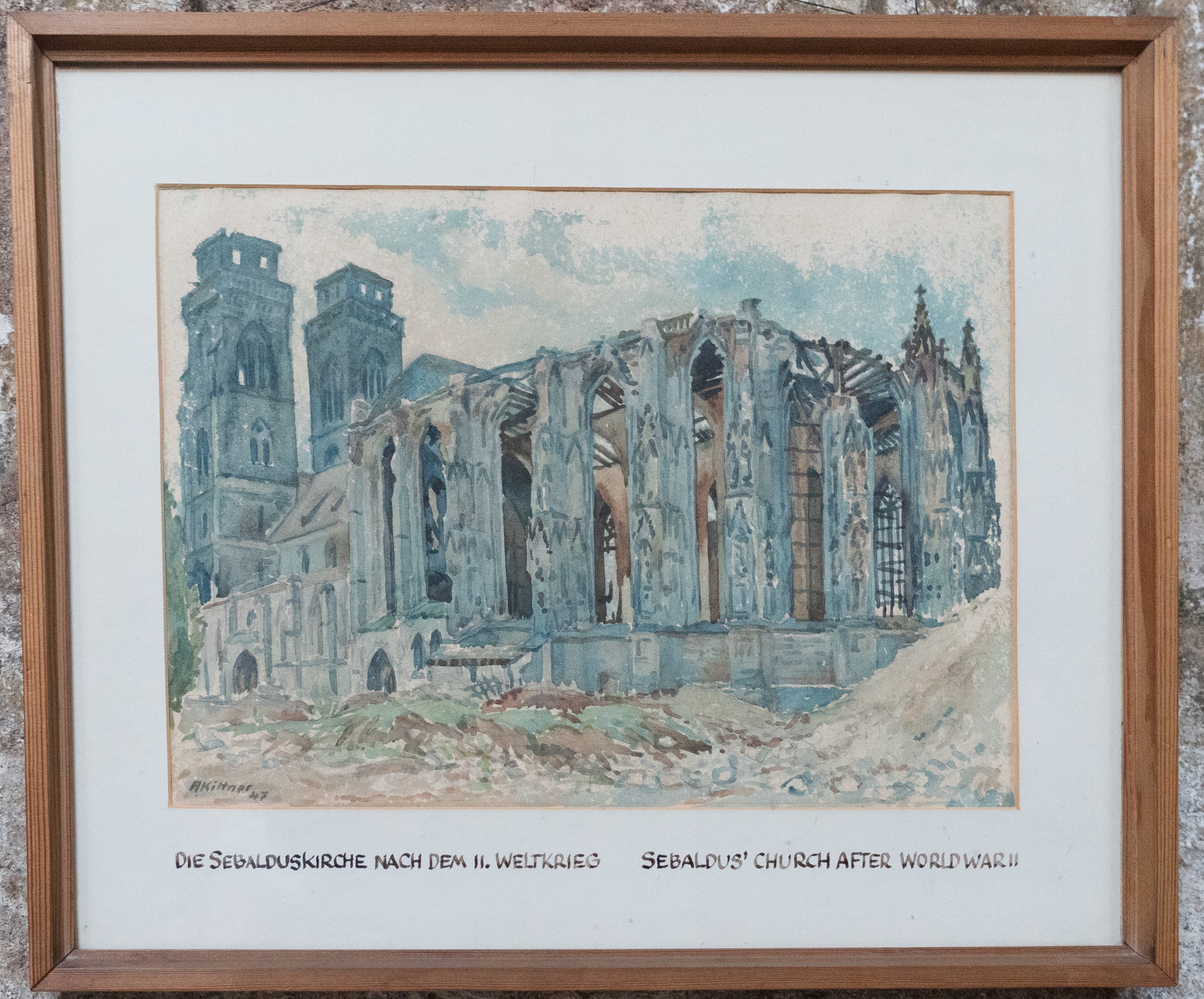
During WWII, Nuremberg was the location of a large military headquarters and weapons production site. For this reason, along with the symbolic reasons tied with the Nuremberg Rallies and Nuremberg Laws, the city was a major target for bombing in WWII. The old town was nearly completely destroyed. A group called the Old Town Friends of Nuremberg worked to restore as much of the medieval part of the city as possible.
We walked around the old town today.
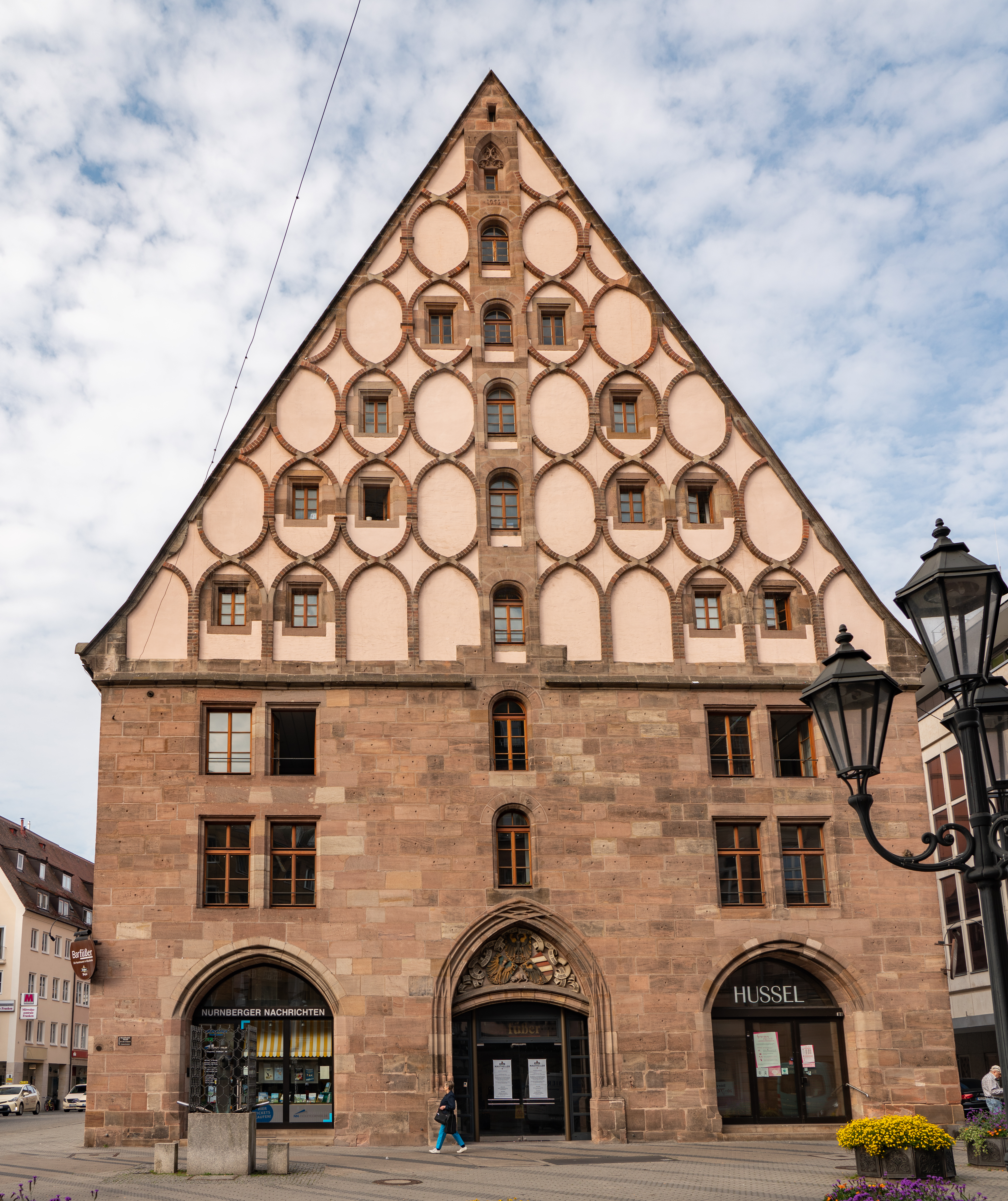
The granary and toll hall was built in about 1500 to store grain for the townspeople. This also was used for customs and scales. During WWII it was bombed 3 times, during the roof and half of the building.

St Lawrence Church was originally built in 1250. In 1525 it became on of the first German churches to join the Reformation. Much of the stonework of the church was damaged in WWII, but much of the artwork was preserved.
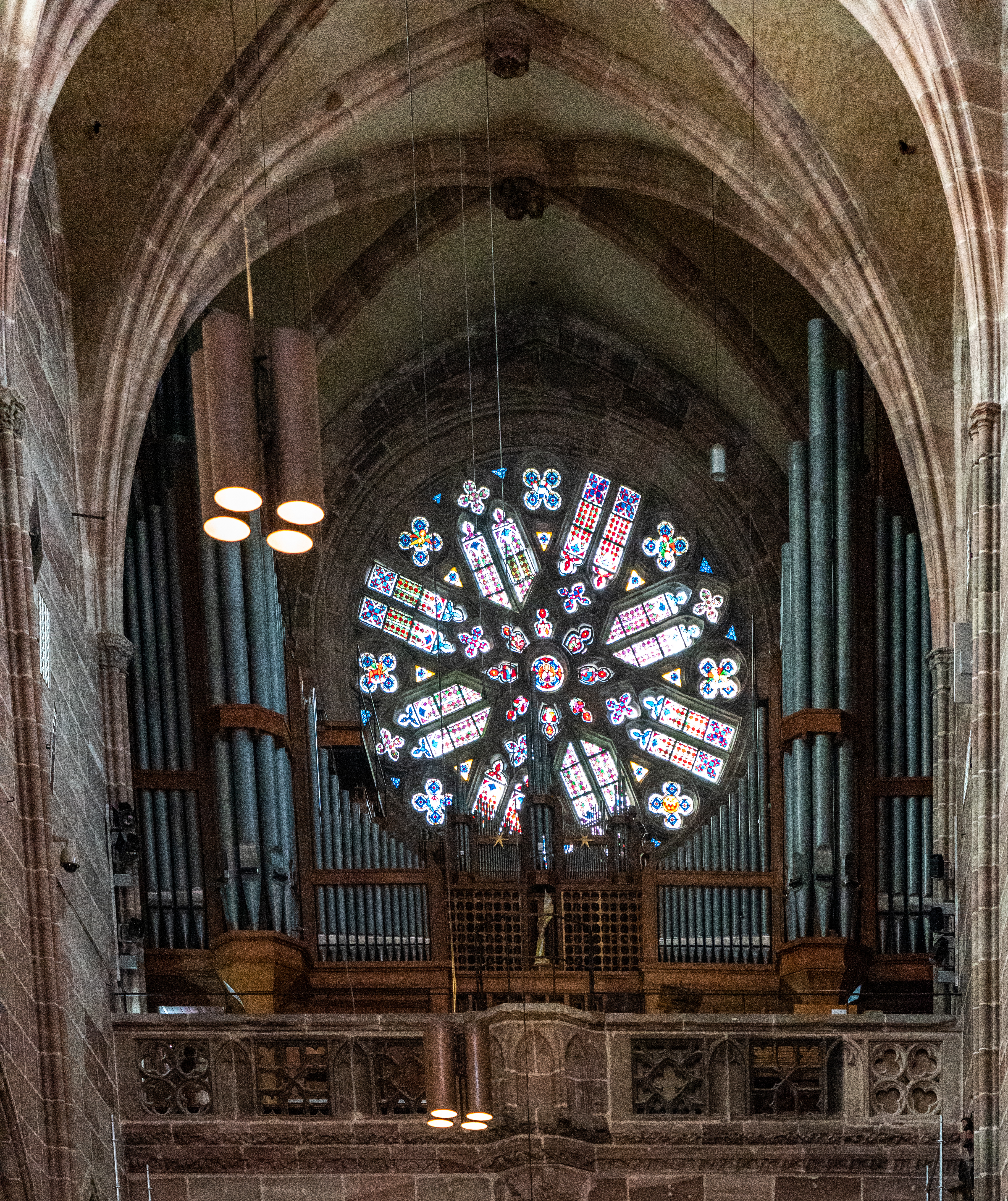
The church has a 30 foot wide rose window.
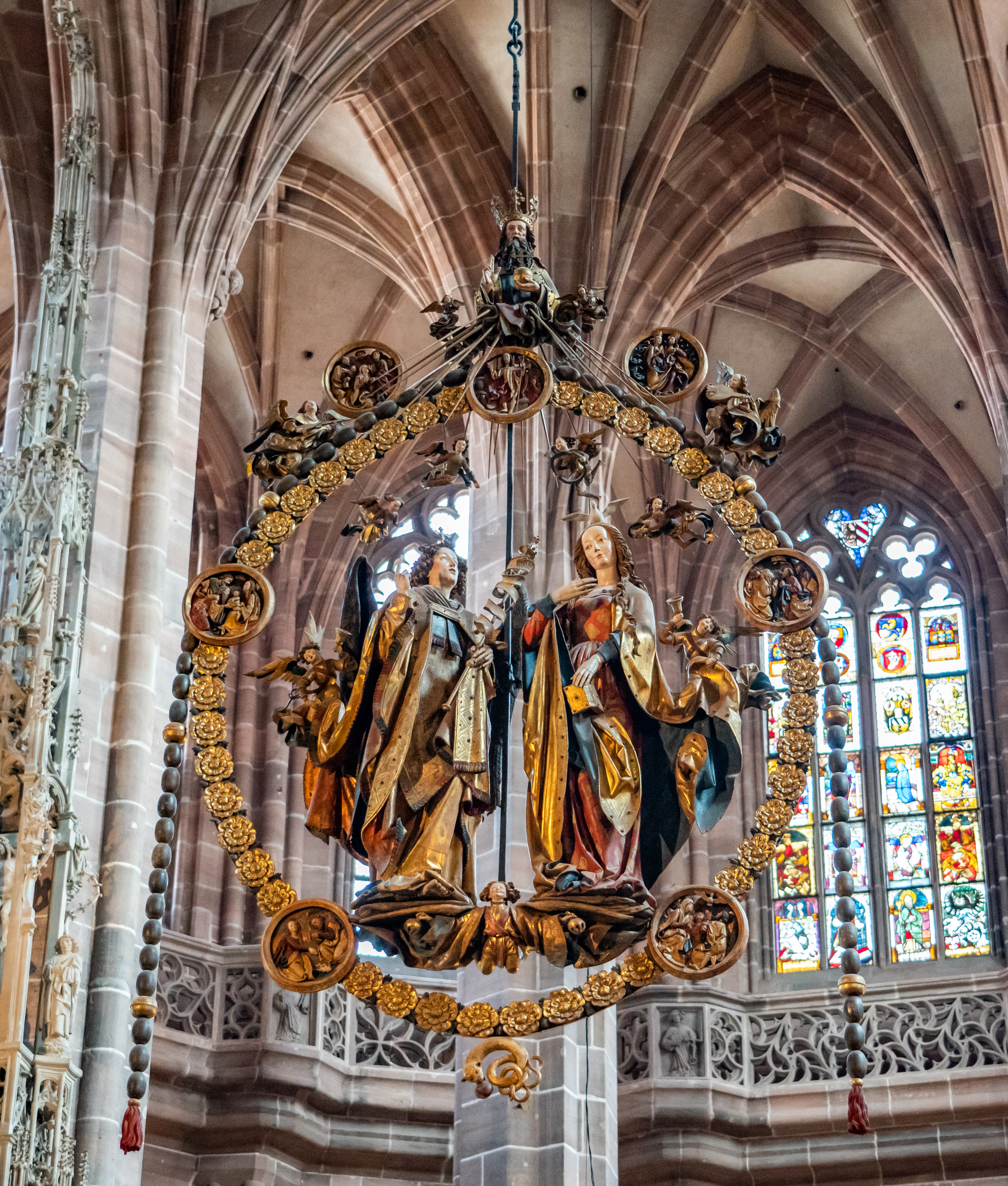
There is a large hanging pendant in the choir of the church showing the Archangel Gabriel telling Mary that she will become pregnant. This was carved from lime wood in 1518. This is quite large and impressive.
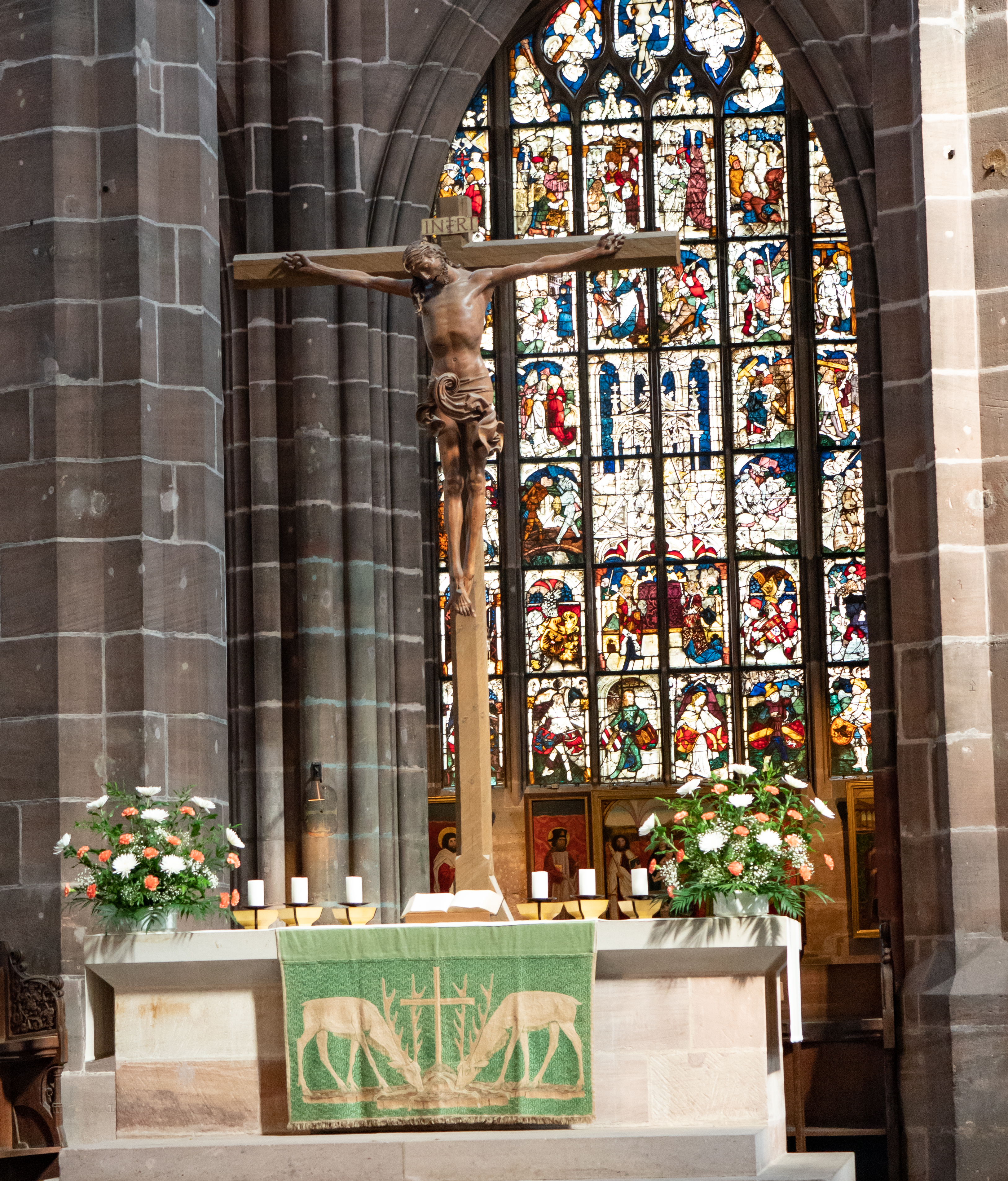
The crucifix was carved in 1520 from a single tree and is life-sized.
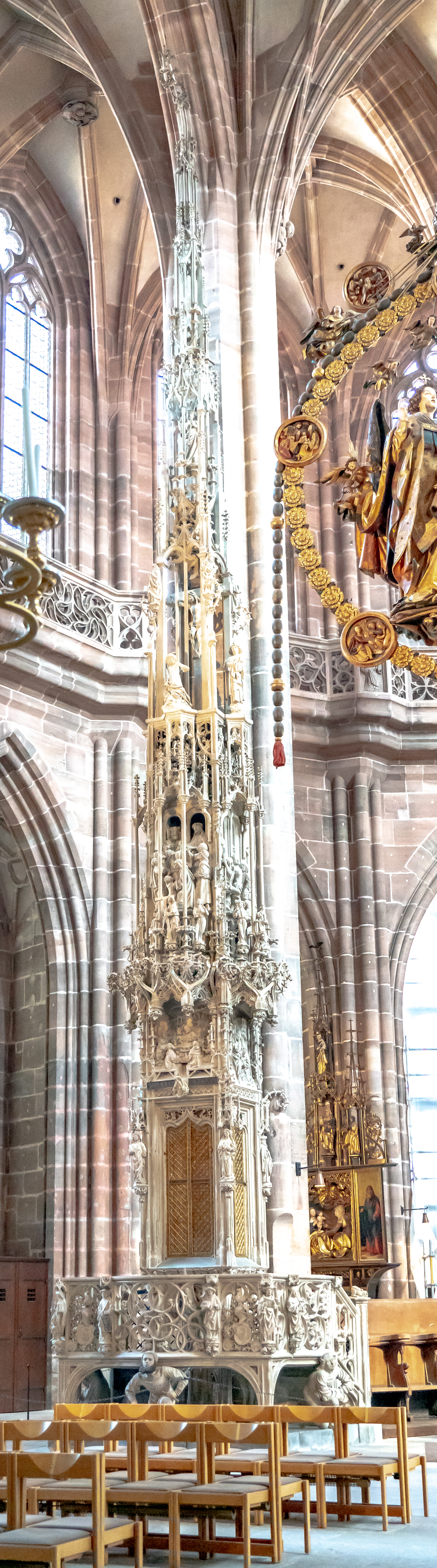
The Tabernacle was carved from sandstone in 1496. The stone mason carved himself holding it up (bearded man at the bottom). This is 61 feet tall, making it a challenge to photograph.

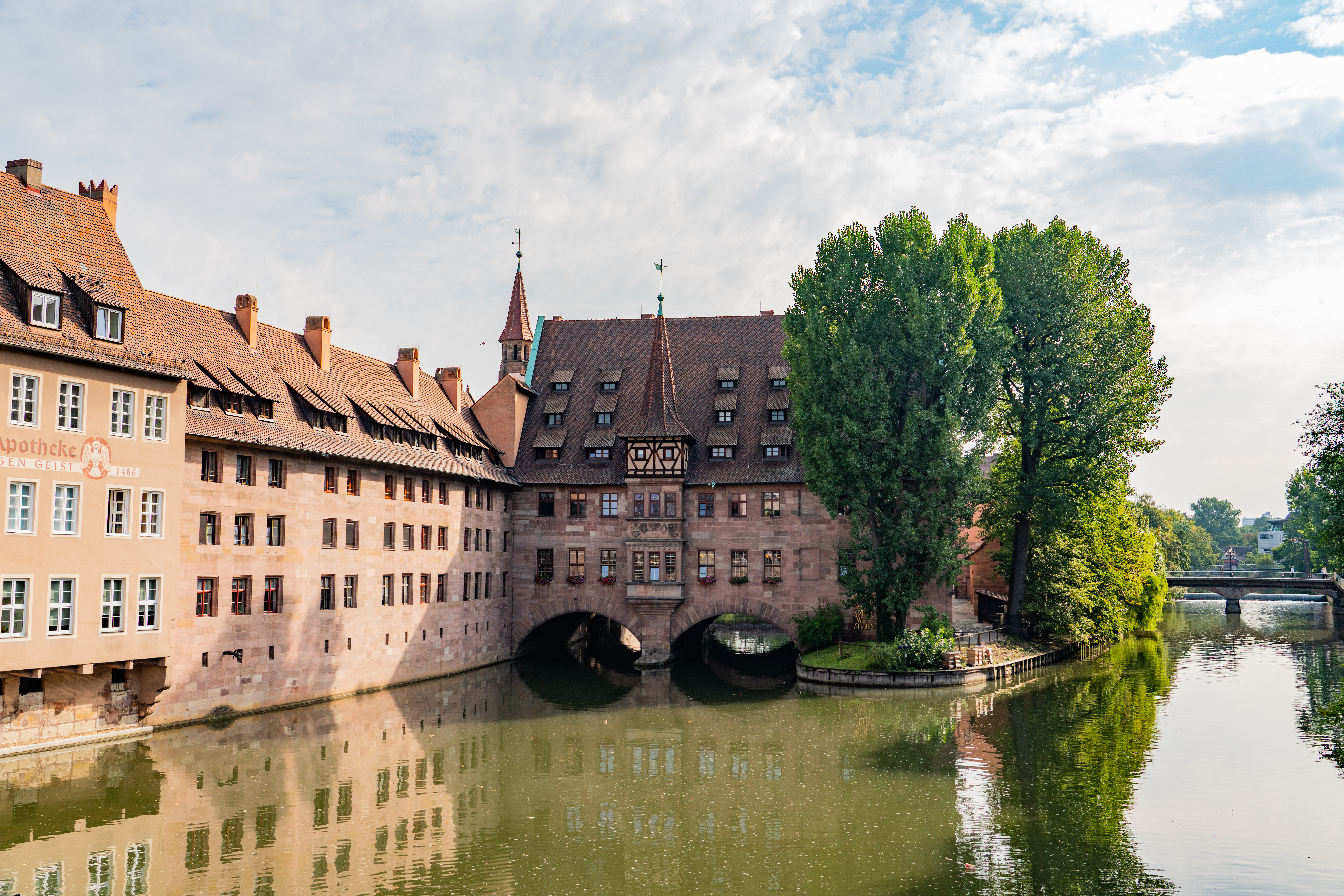
The Holy Ghost Hospital (left lighter building) was built in 1332. It is where the jewels and crown of the Holy Roman Emperor were stored from 1424-1796. It is on the Pegnitz River.
Right next to it is the Butcher’s Bridge, built in 1598. It is meant to look like the Rialto Bridge in Venice.
Nuremberg’s main market square is originally where the Jewish community of the area lived. Over time, Jewish properties were taken and in 1349 all remaining Jewish properties were officially seized by Emperor Charles IV. There were a series of pogroms, organized ethnic persecutions, where large numbers of Jews were killed. These mostly occurred prior to the land seizure. This former Jewish settlement was turned into the market square that it still operates as today.
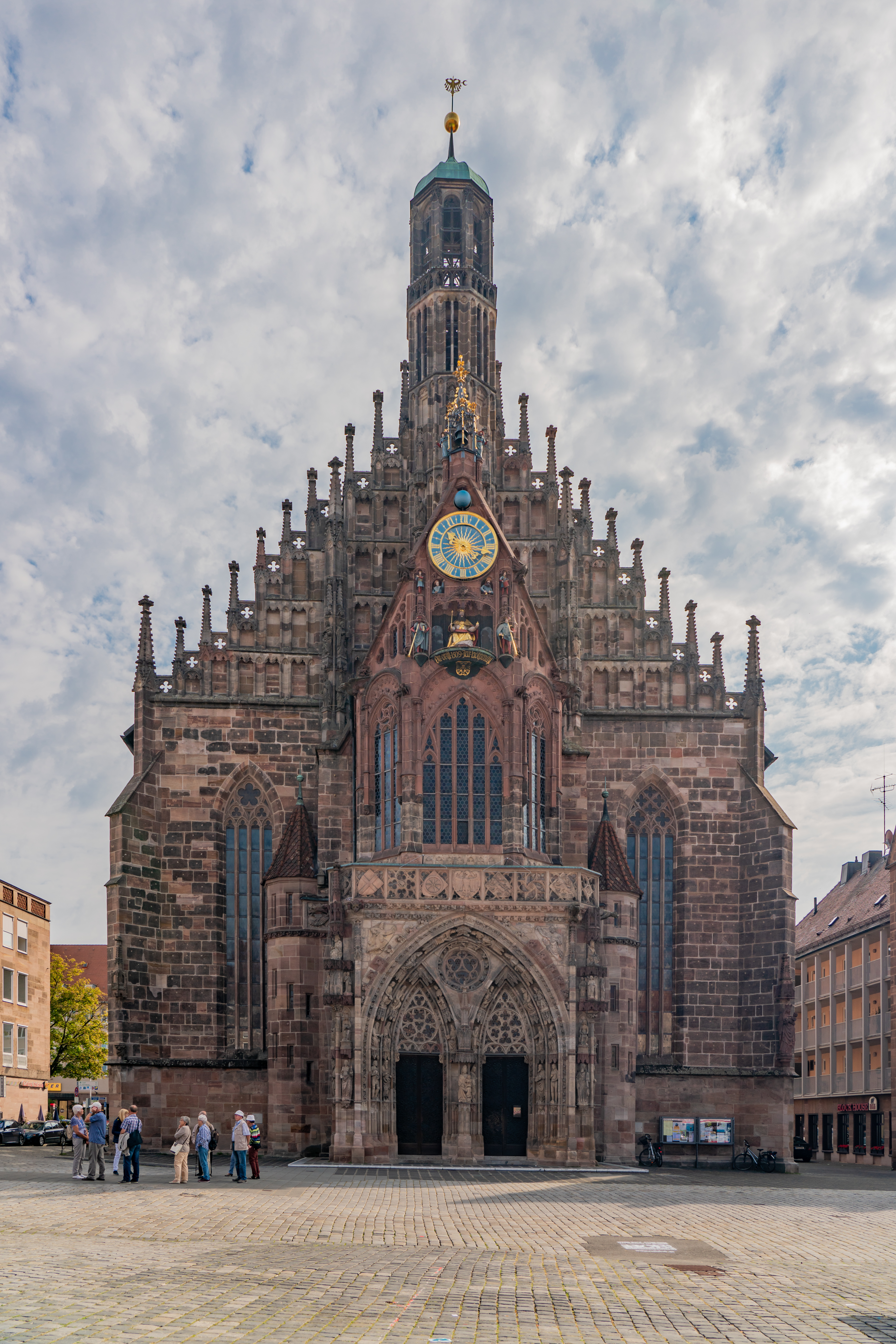
On the square is the Church of Our Lady. This is the first gothic church in the Franconia region, being built from 1352-1362. It was built on the foundations of a Jewish Synagogue. In remembrance of the Pogrom of 1349, there is a Star of David inlaid in the floor, along with at least one more worked into artwork in the church. There also is a mix of protestant and catholic artwork as the church has gone from catholic to protestant and back to catholic over the years.
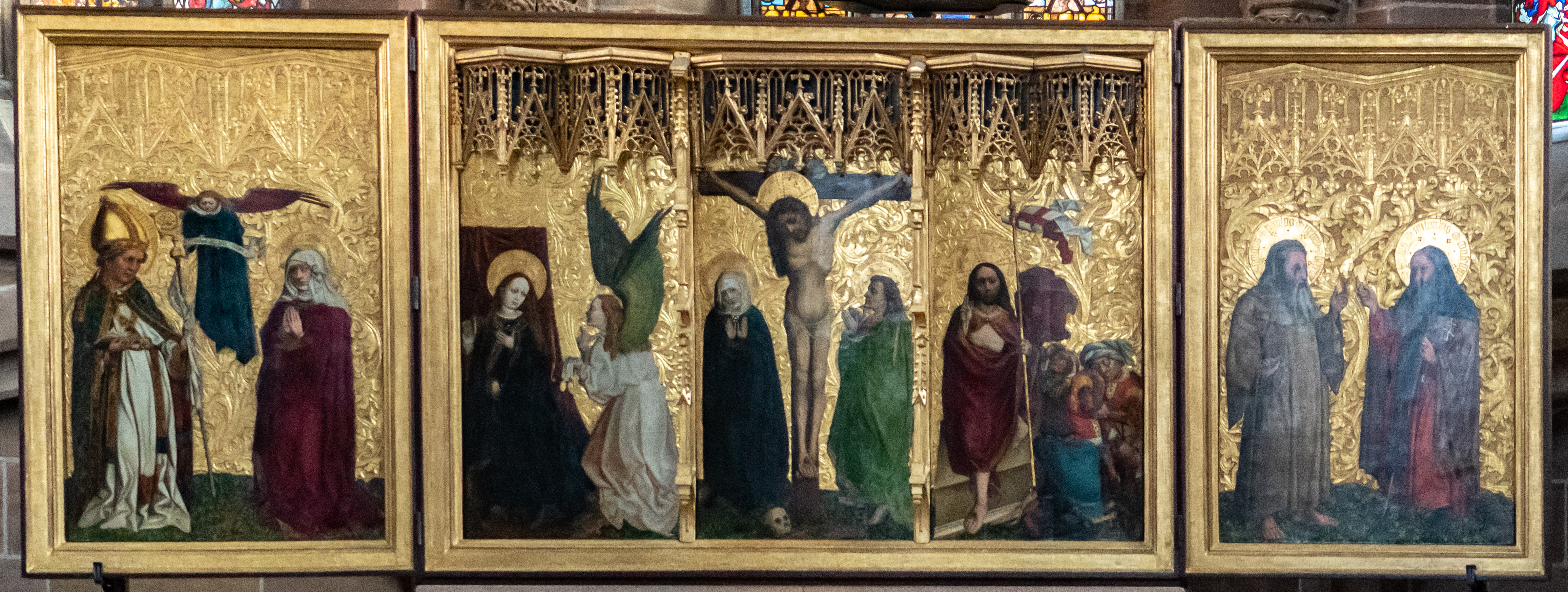
artwork inside the church
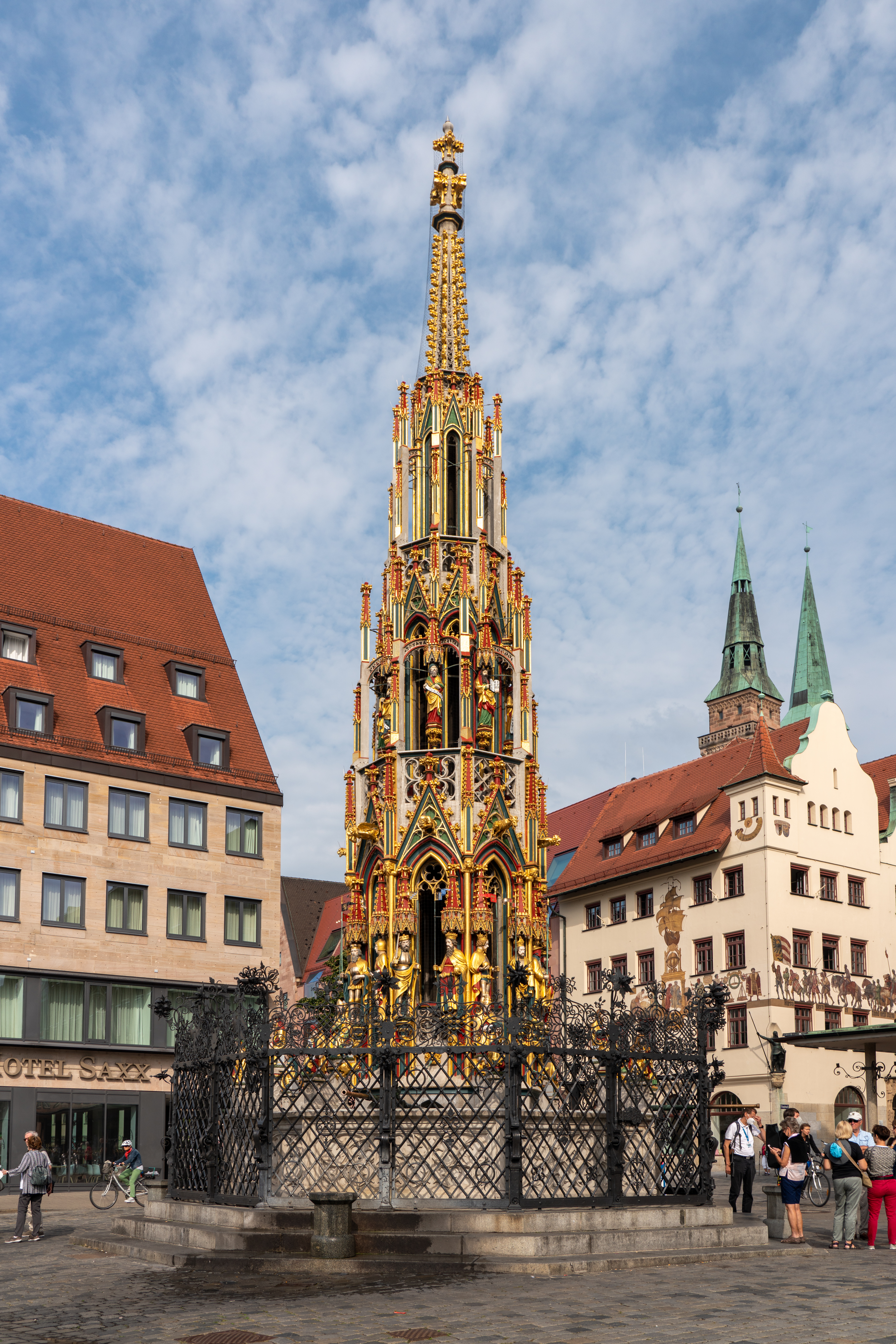
Also on the market square is the Beautiful Fountain, a 42 foot tall gothic-style spire fountain made from 1385-96. it is meant to represent the worldview of the time. The fountain has been recast multiple times, with the current version being from 1902. Notably, it survived the bombing of WWII. There is fencing around the fountain that has 2 movable rings. It is said that if you turn the golden ring clockwise 3 times you will have good luck and if you turn it 3 times counterclockwise you will get pregnant. The golden ring apparently only works for locals. There is a similar iron ring on the other side that is supposed to bring good luck to foreigners, but it blends in with the ironwork and is “hidden.”
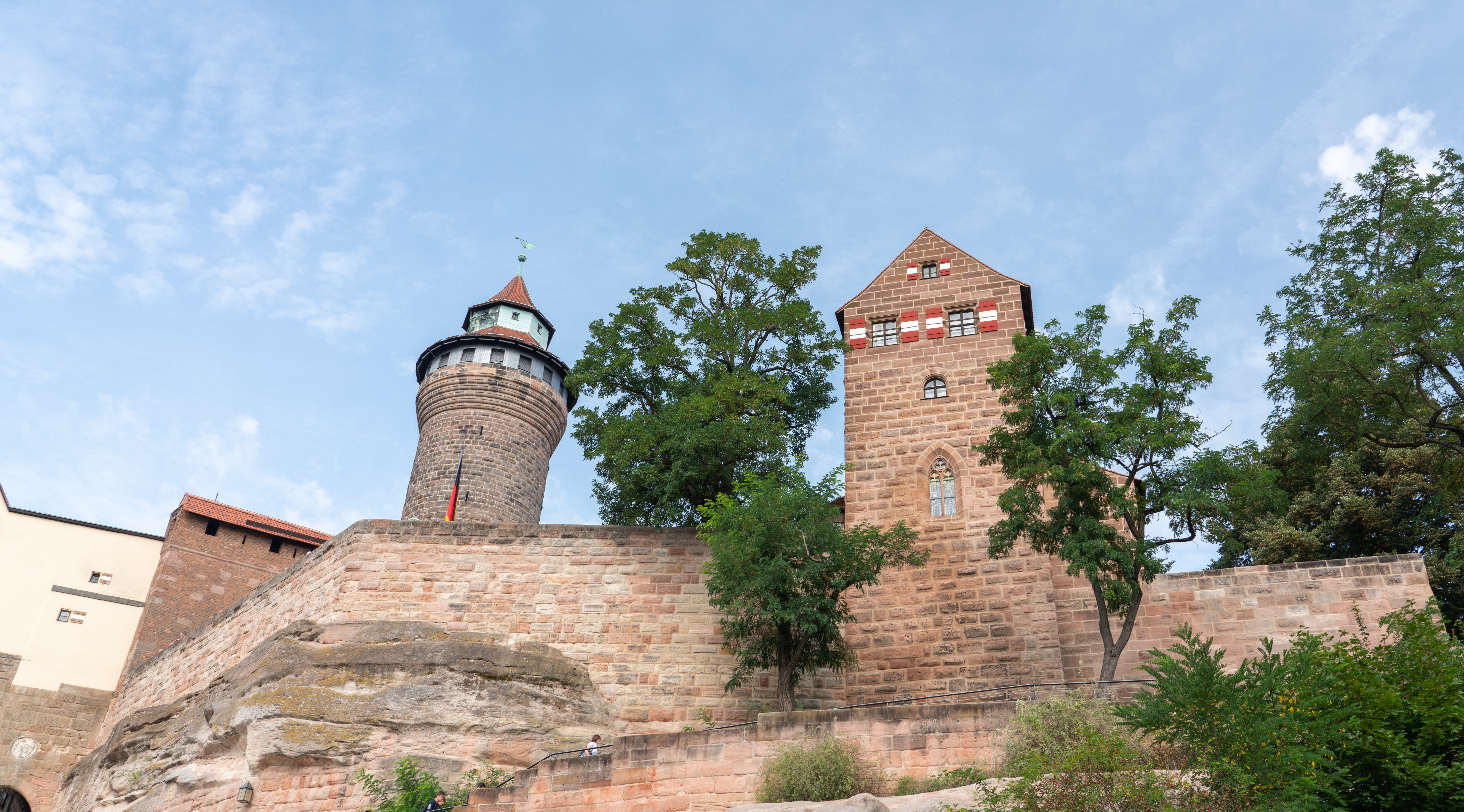
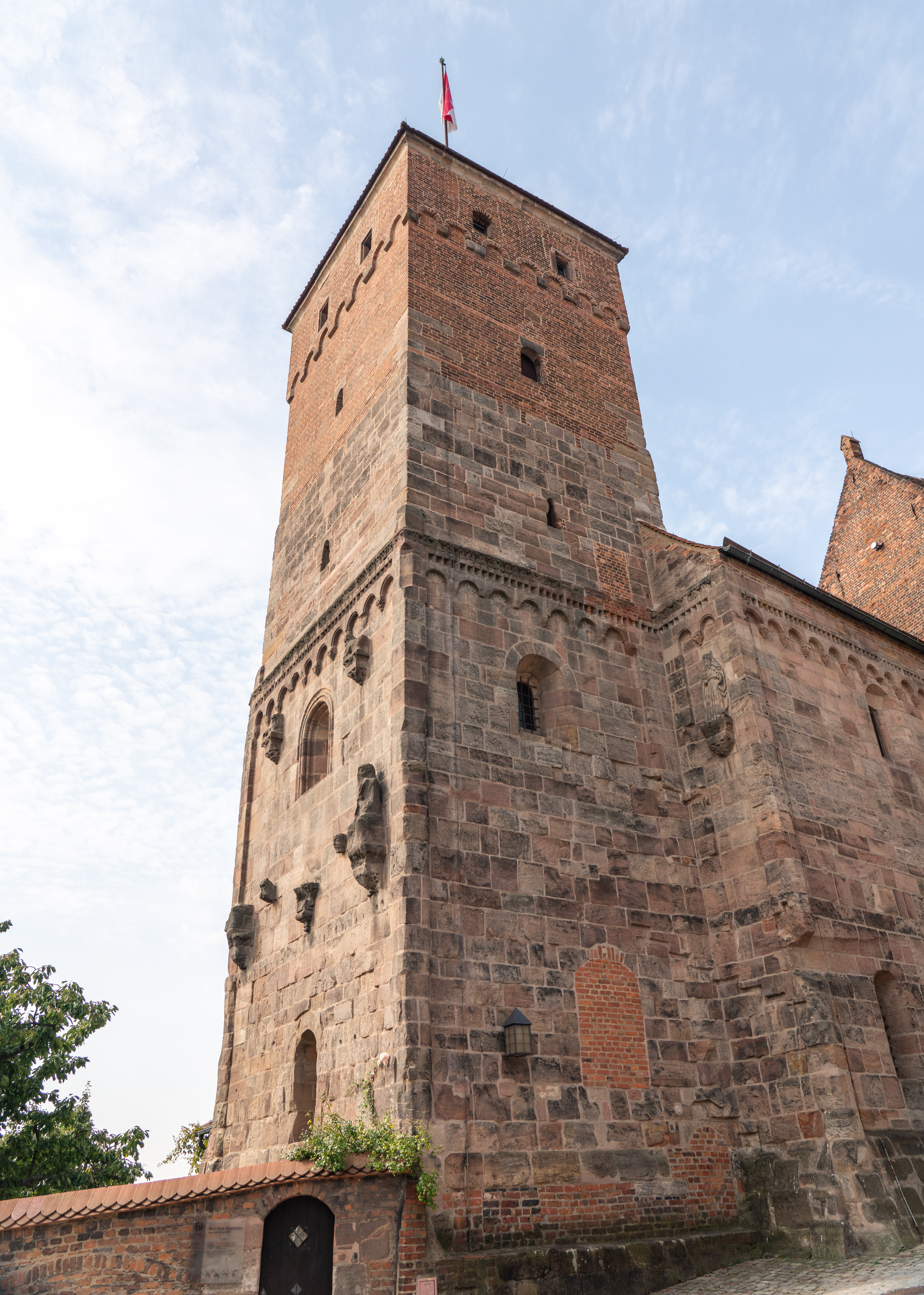
We next went to the castle, known as the Imperial Castle of Nuremberg, as it was used by the Holy Roman Emperors. The castle site dates back to approximately 1000. Its prime era was the middle ages. It fell out of importance after the Thirty Years War, but was renovated during the Nazi period. During WWII it was heavily damaged and was not fully repaired fo 30 years.
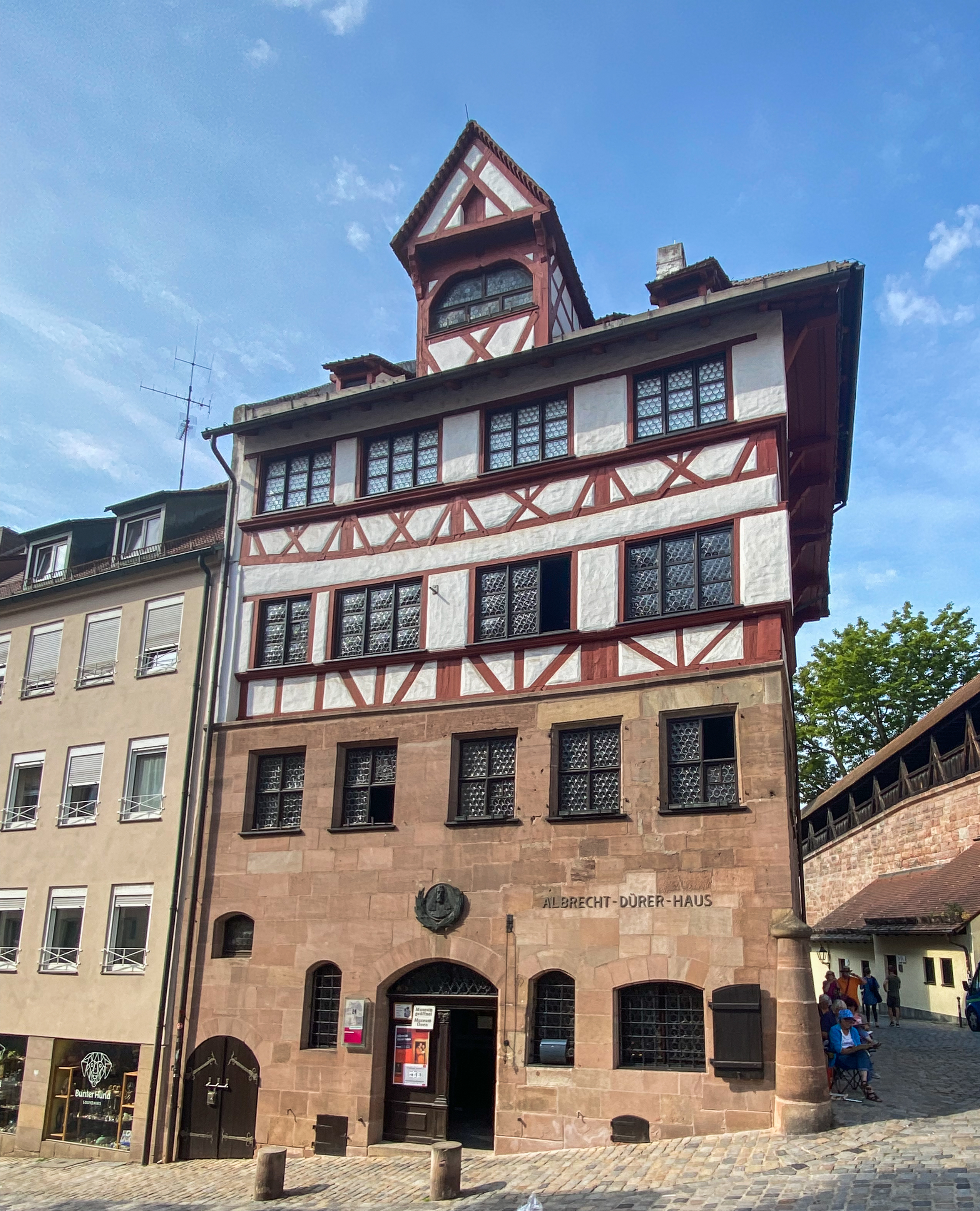
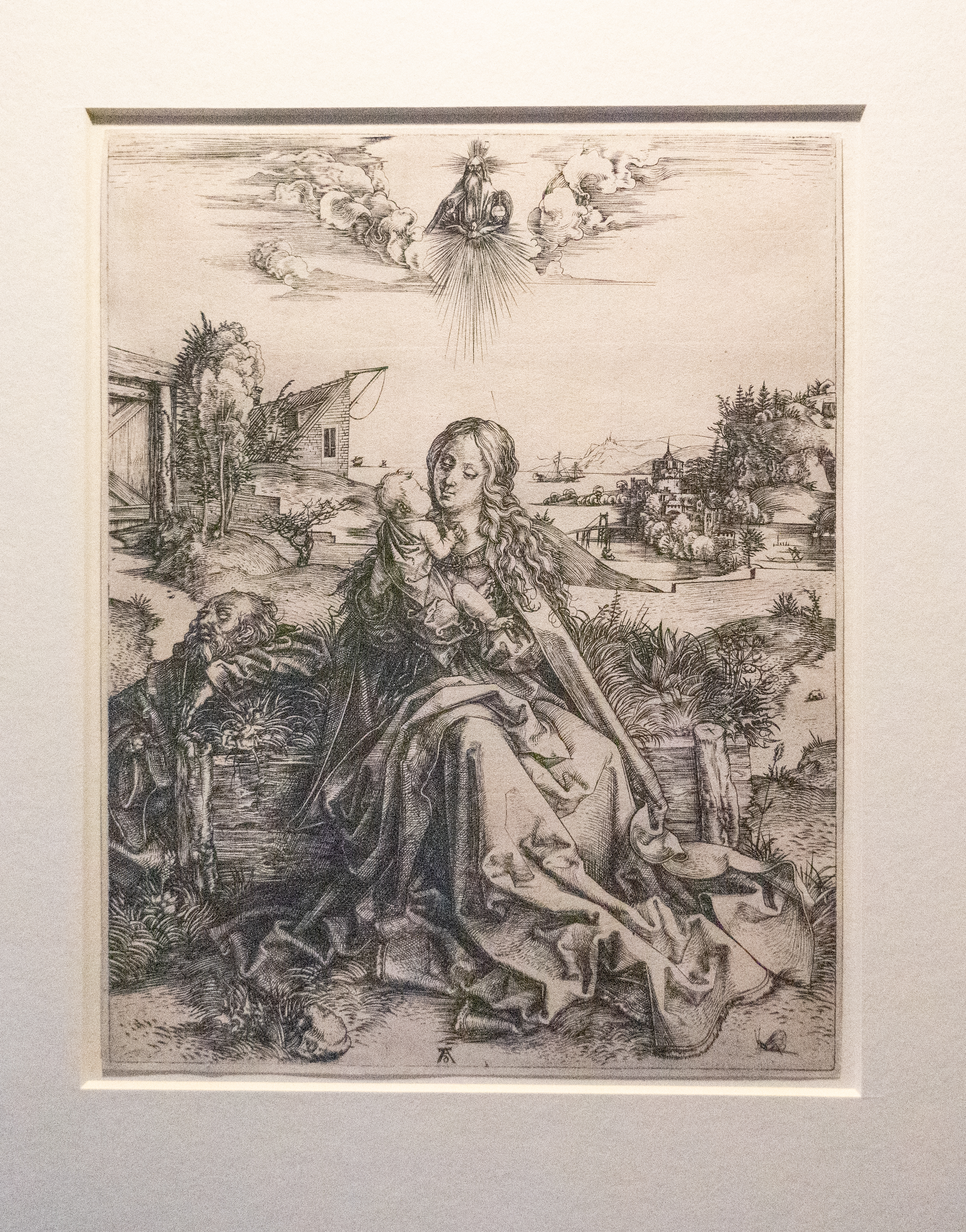
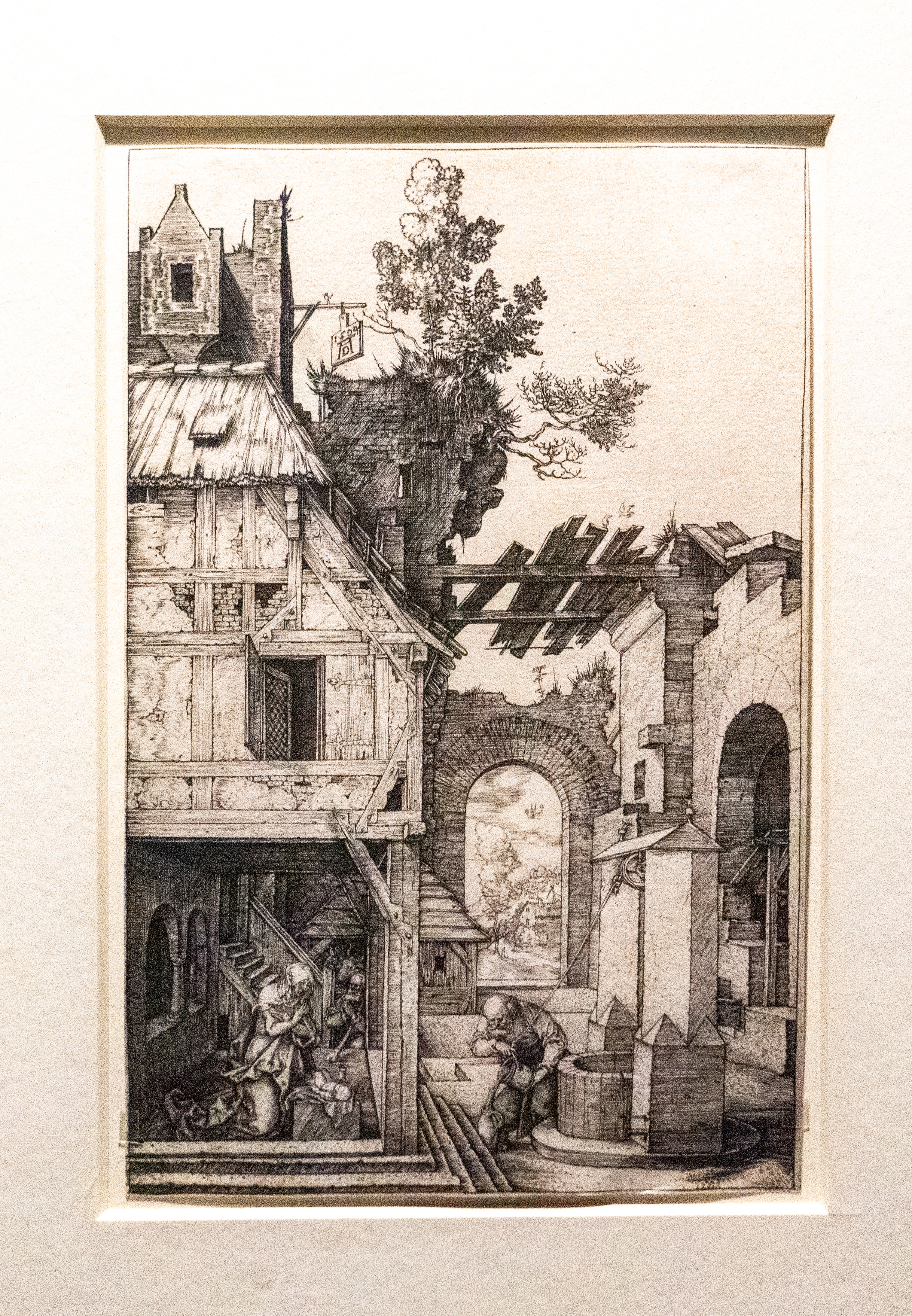
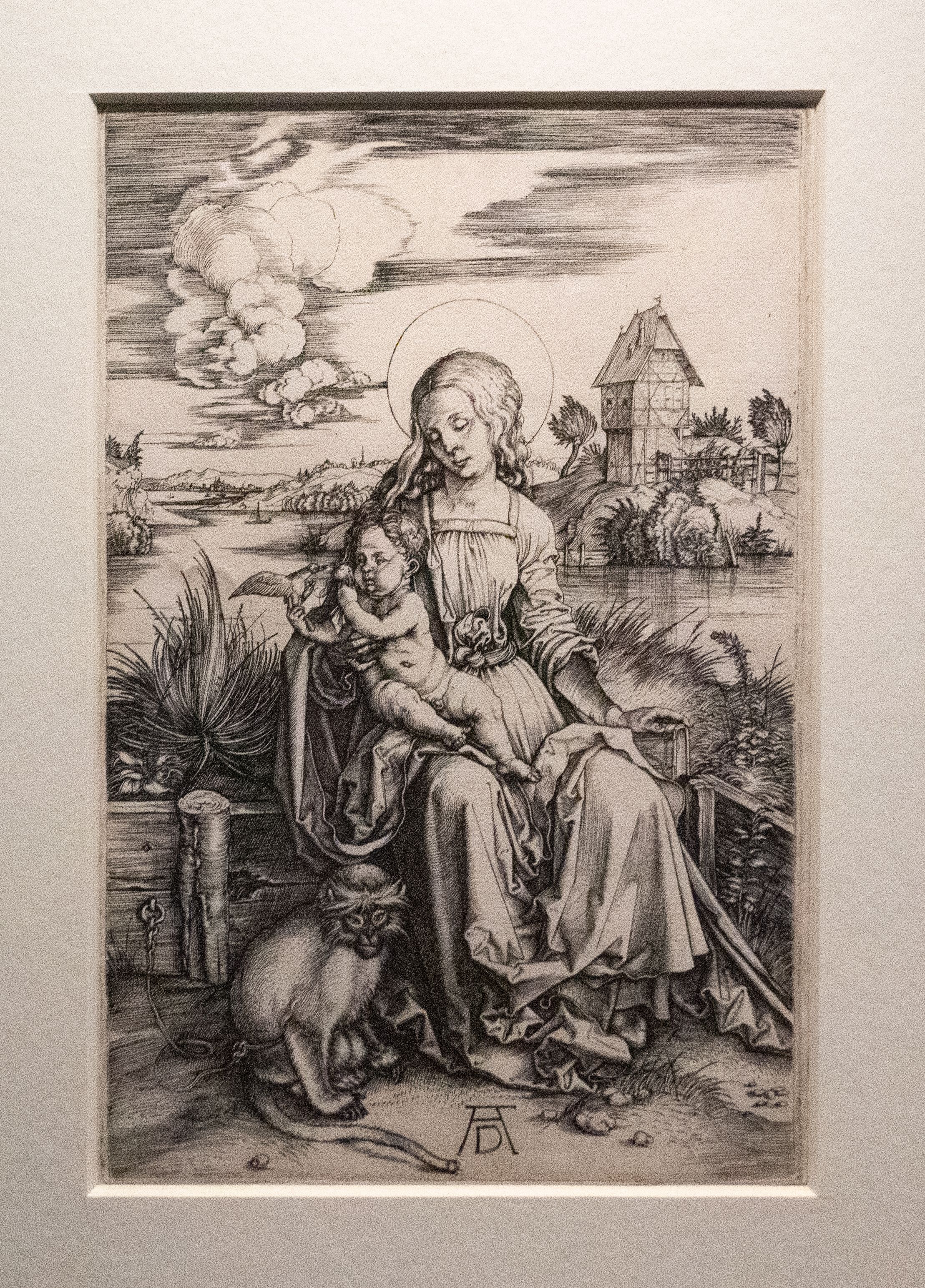
Albrecht Dürer, the renaissance artist, lived and worked in Nuremberg. We went to his home, which is now a museum. Dürer is know for paintings, drawings, etchings, engravings, and printing. The museum has a few of his origins drawings/printings, but they have a number of replicas of his work that have been done over the centuries. I have included his originals.
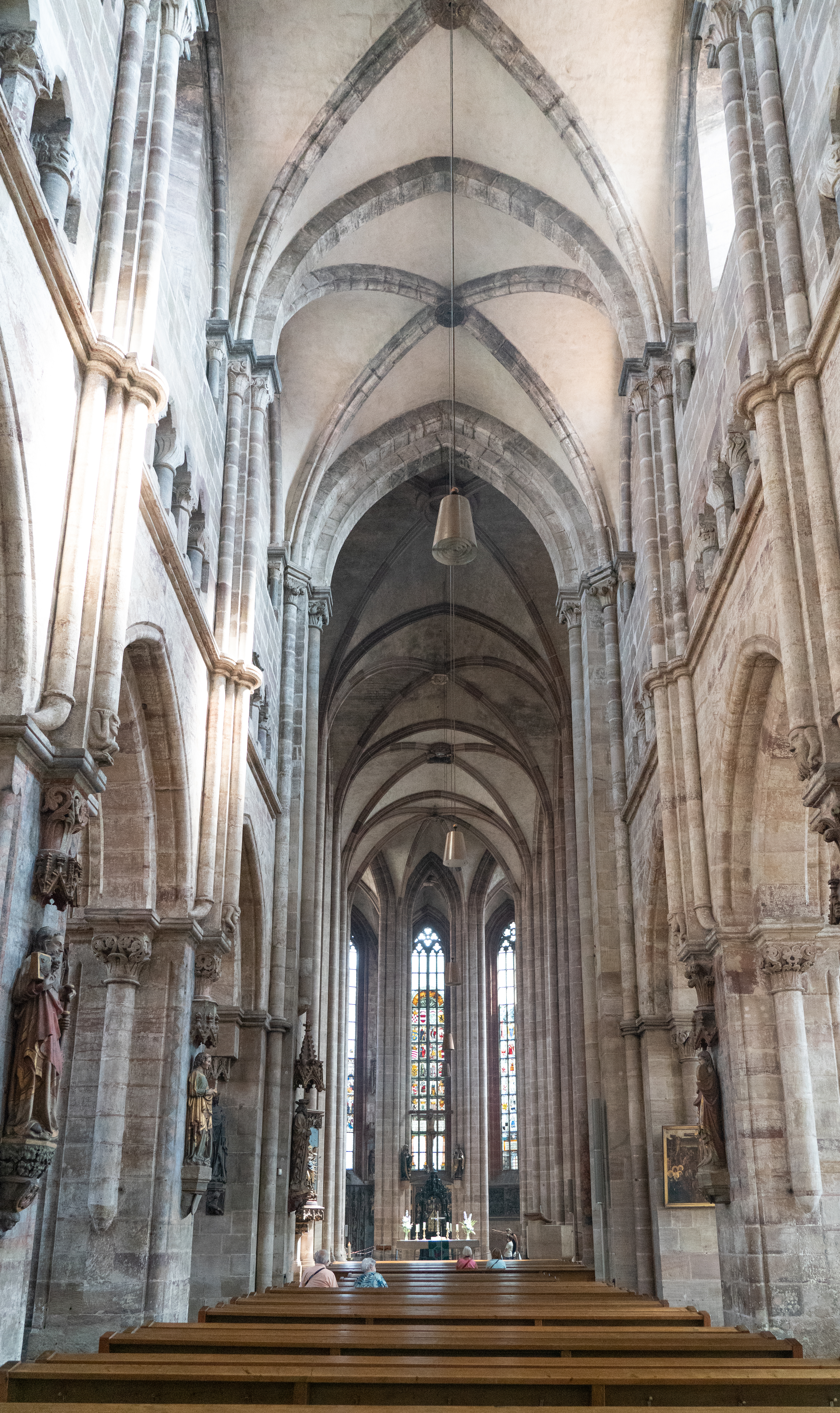
St Sebald Church is a romanesque church built in 1225. It became an important church here when the Emperor Charles IV had his son Prince Wenzel (the future king of Bohemia) baptized here in 1361. Among the relics of this church are the bones of St Sebaldus, who was a hermit who had a following in Nuremberg. In the early 16th century a bronze tomb was made to hold St Sebaldus and this is in the main aisle of the church. This tomb is considered to be a German Renaissance Masterpiece.
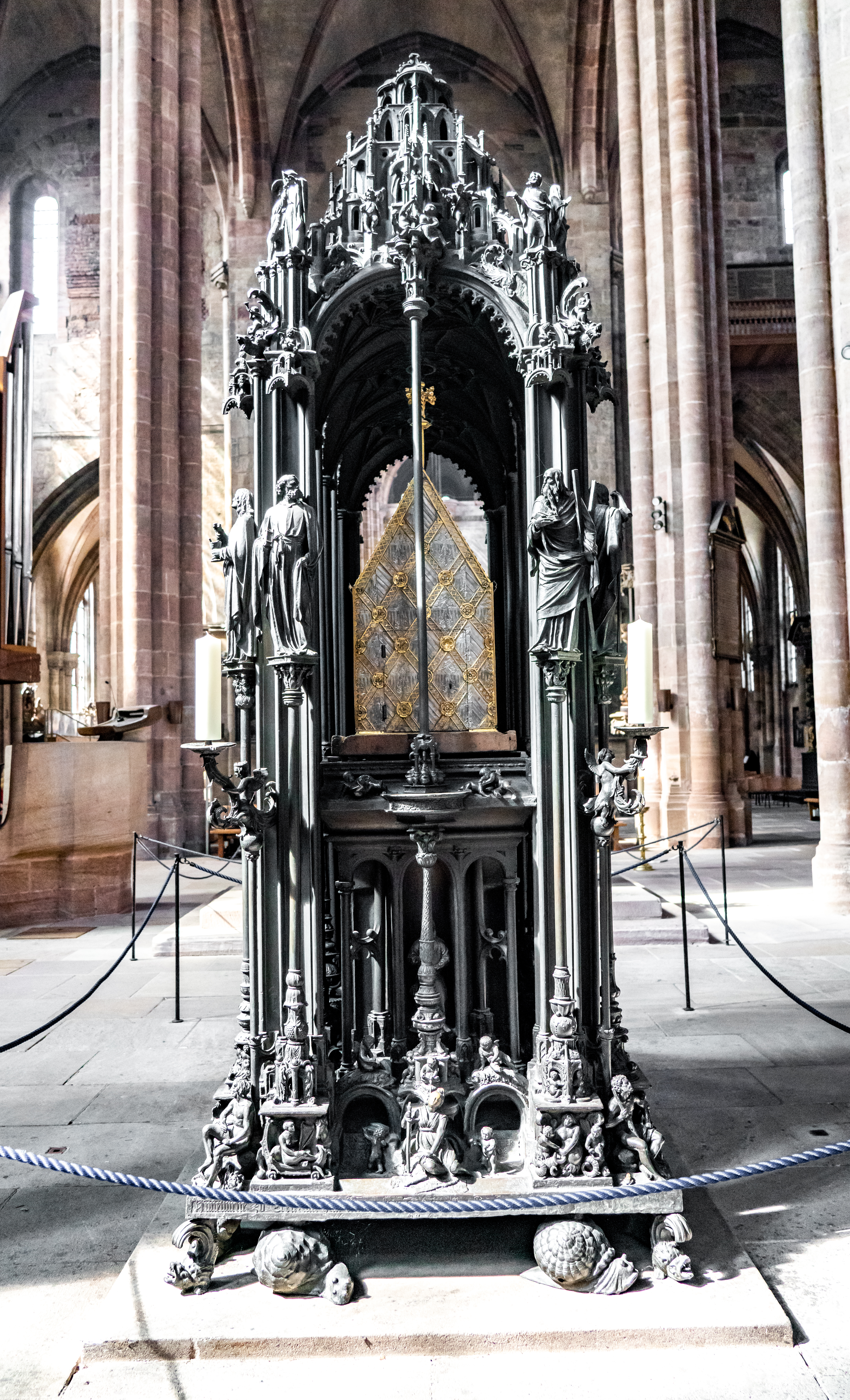
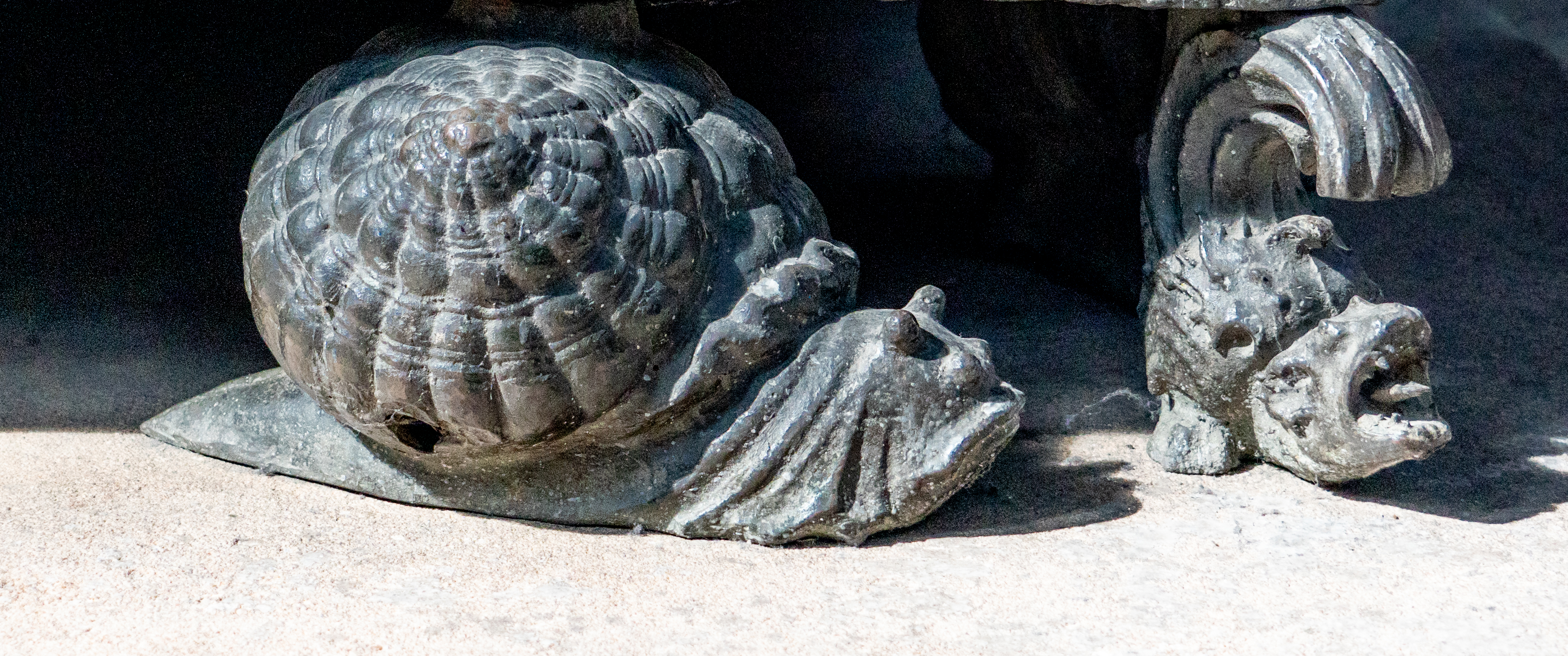
My favorite part is the big snails holding him up.
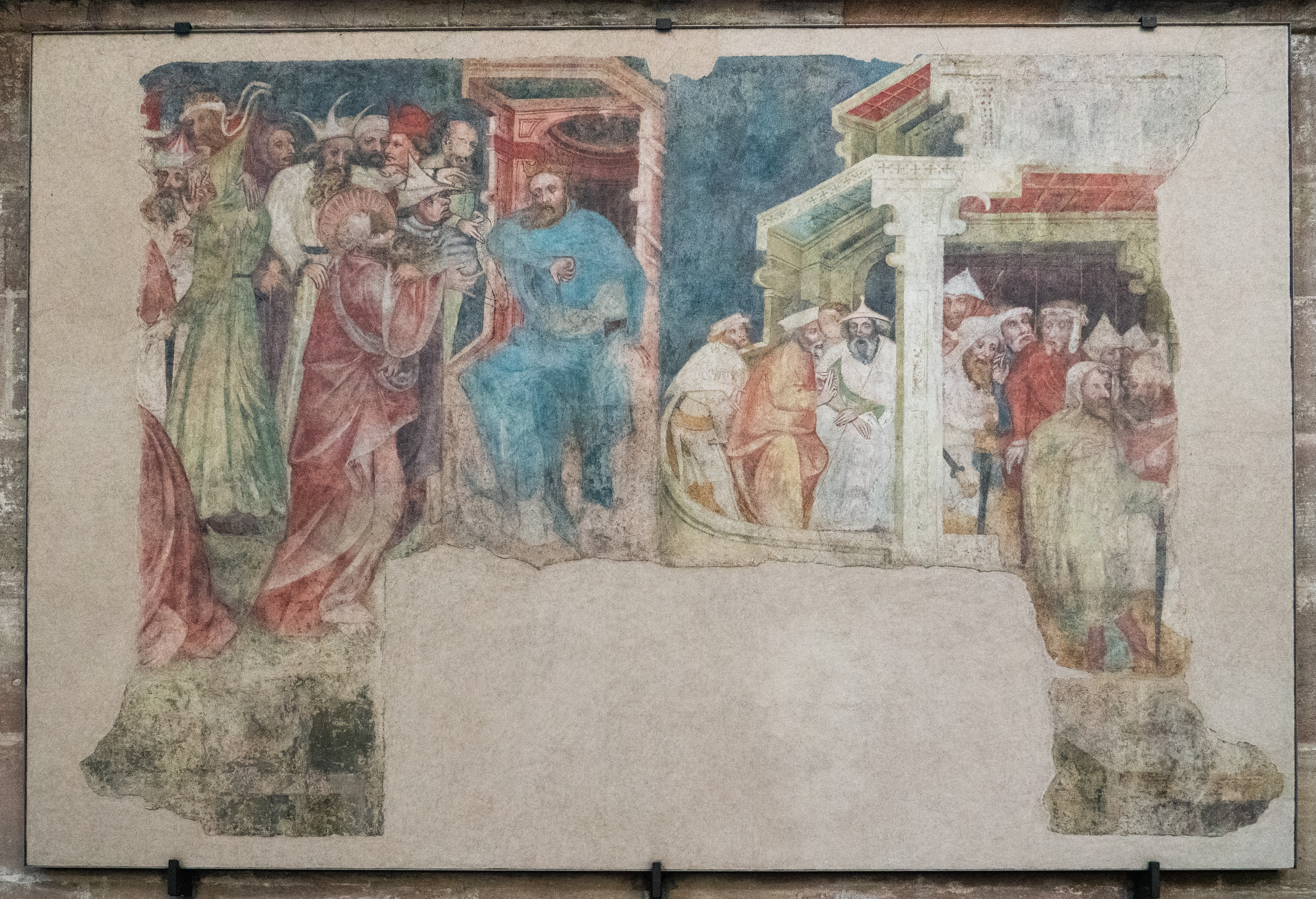
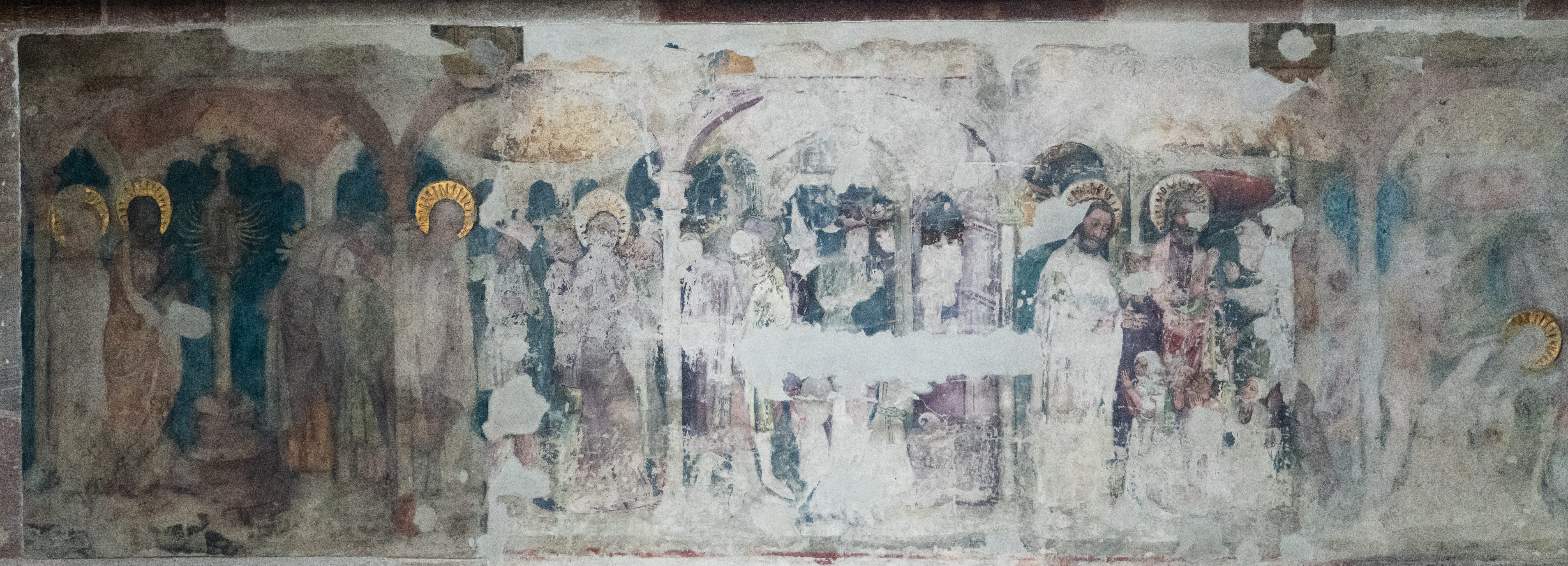
Frescoes that have been uncovered.
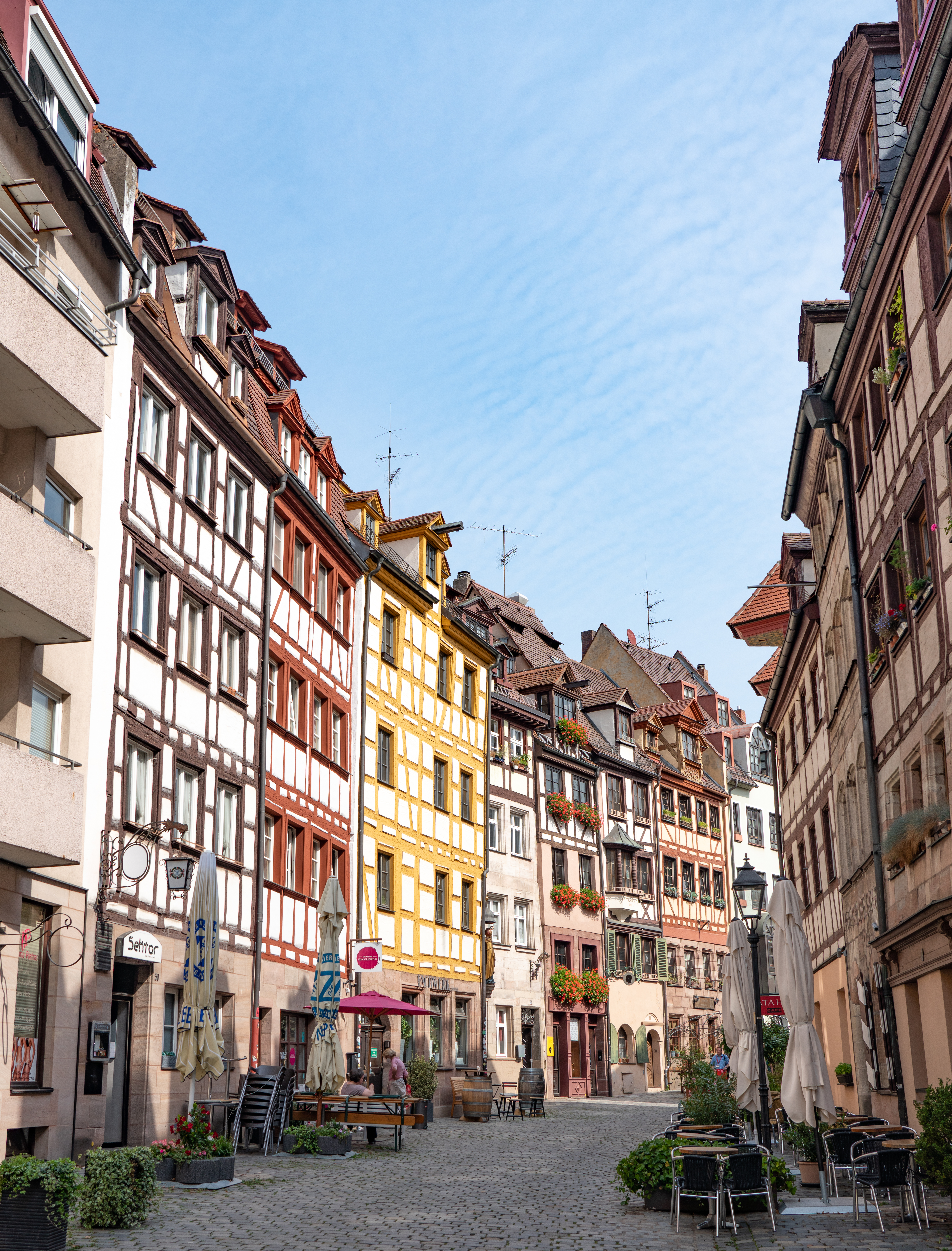
White Tanner’s Lane is a street of pretty half-timber homes that survived WWII. The name comes from the white alum powder that used to be used by craftsmen there to make leather. The tanning process did not create pleasant odors, so this street is on the edge of the old town.
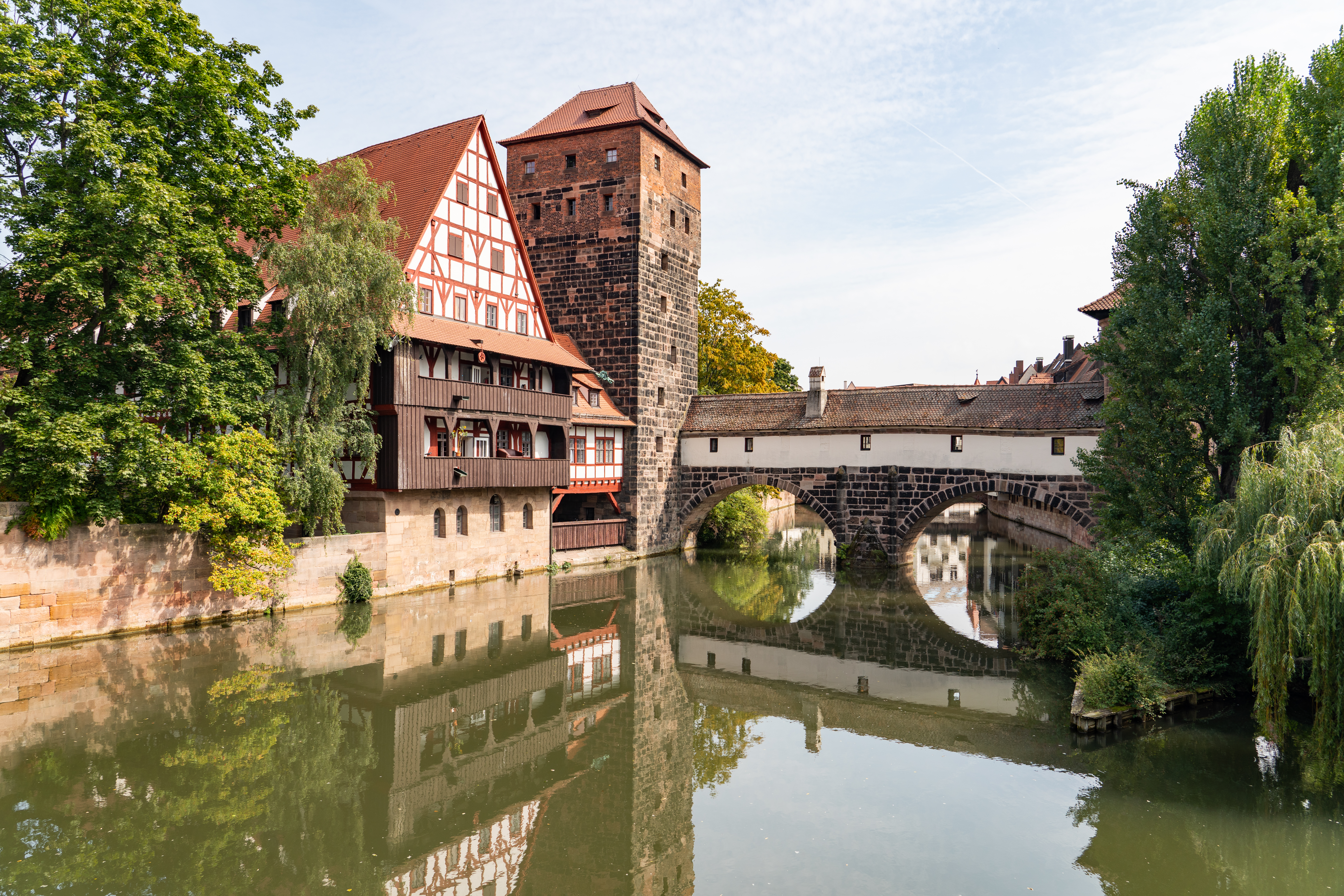
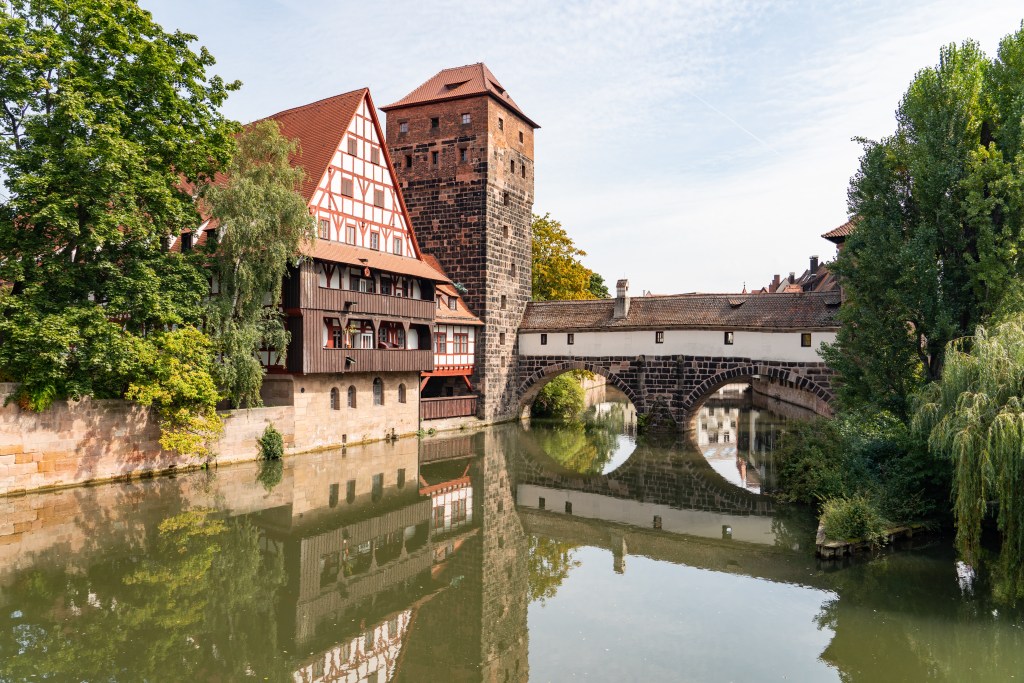
On the left is the wine depot, a large half-timber building. It was built in the mid-15th century to house lepers. Later it was used to store wine.
On the right is a beautiful bridge over the Pegniz River is the Hangman’s Bridge. Hangmen were not allowed to live with the rest of the city and the hangman lived in the stone tower you see. When he came into town to do his job, he would cross the Hangman’s Bridge.
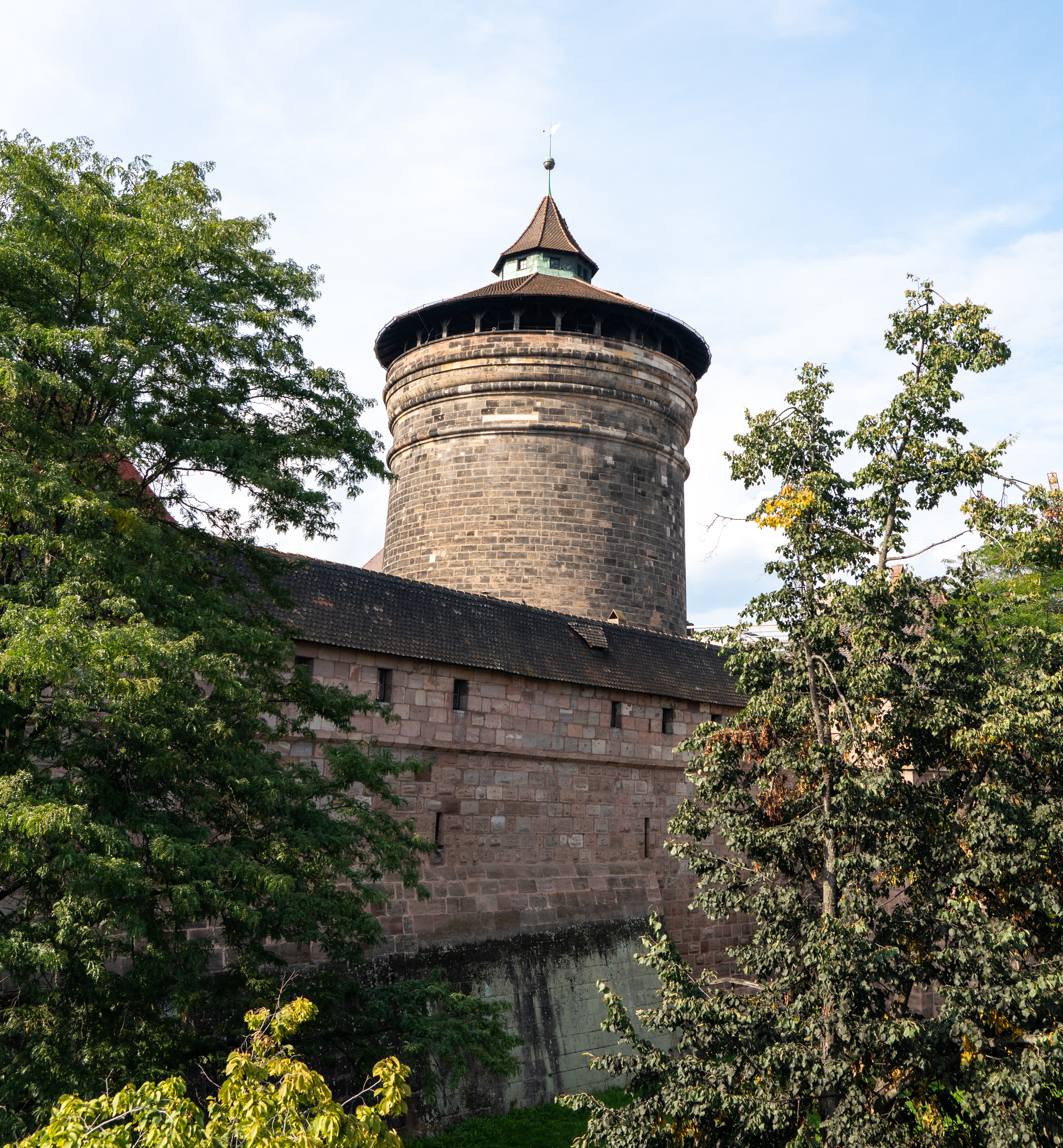
This is the Nuremberg city wall and moat, along with the Tower of Our Lady. The majority of the city wall has been rebuilt since WWII. The tower was one of 160 that surrounded the city during its peak.


Leave a Reply