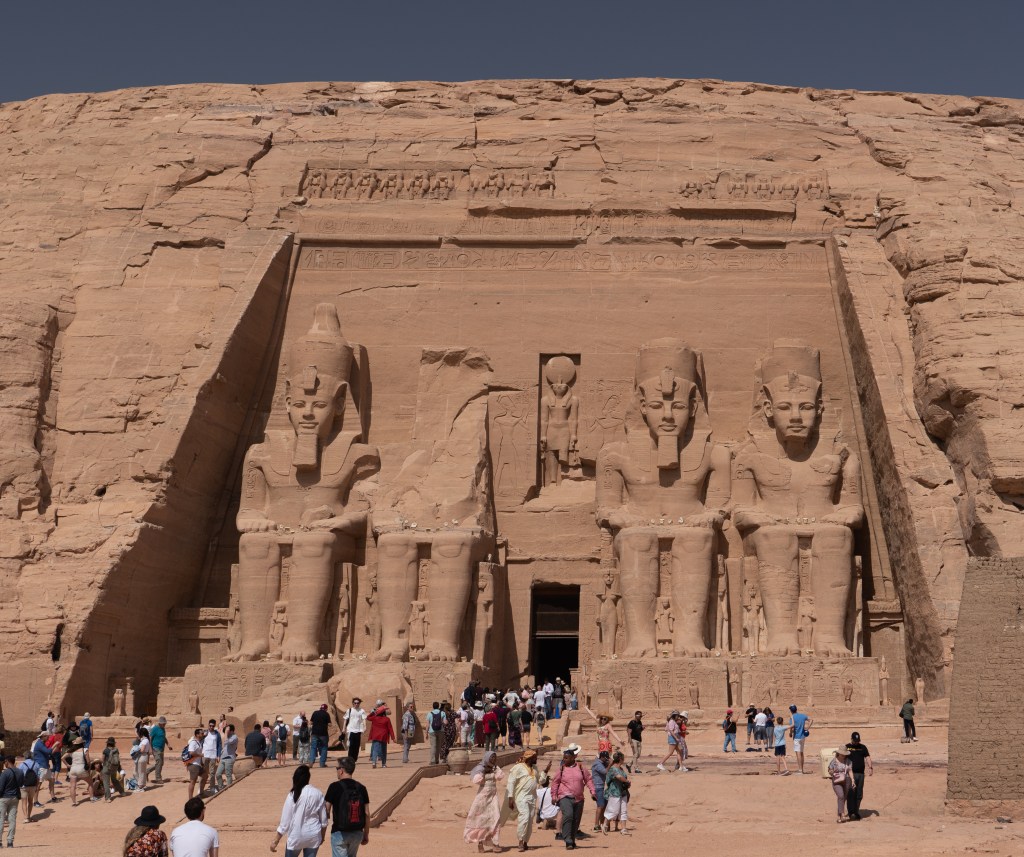
Today started out very early. We had a flight from Aswan to Abu Simbel around 7 am (after an hour drive to the airport).
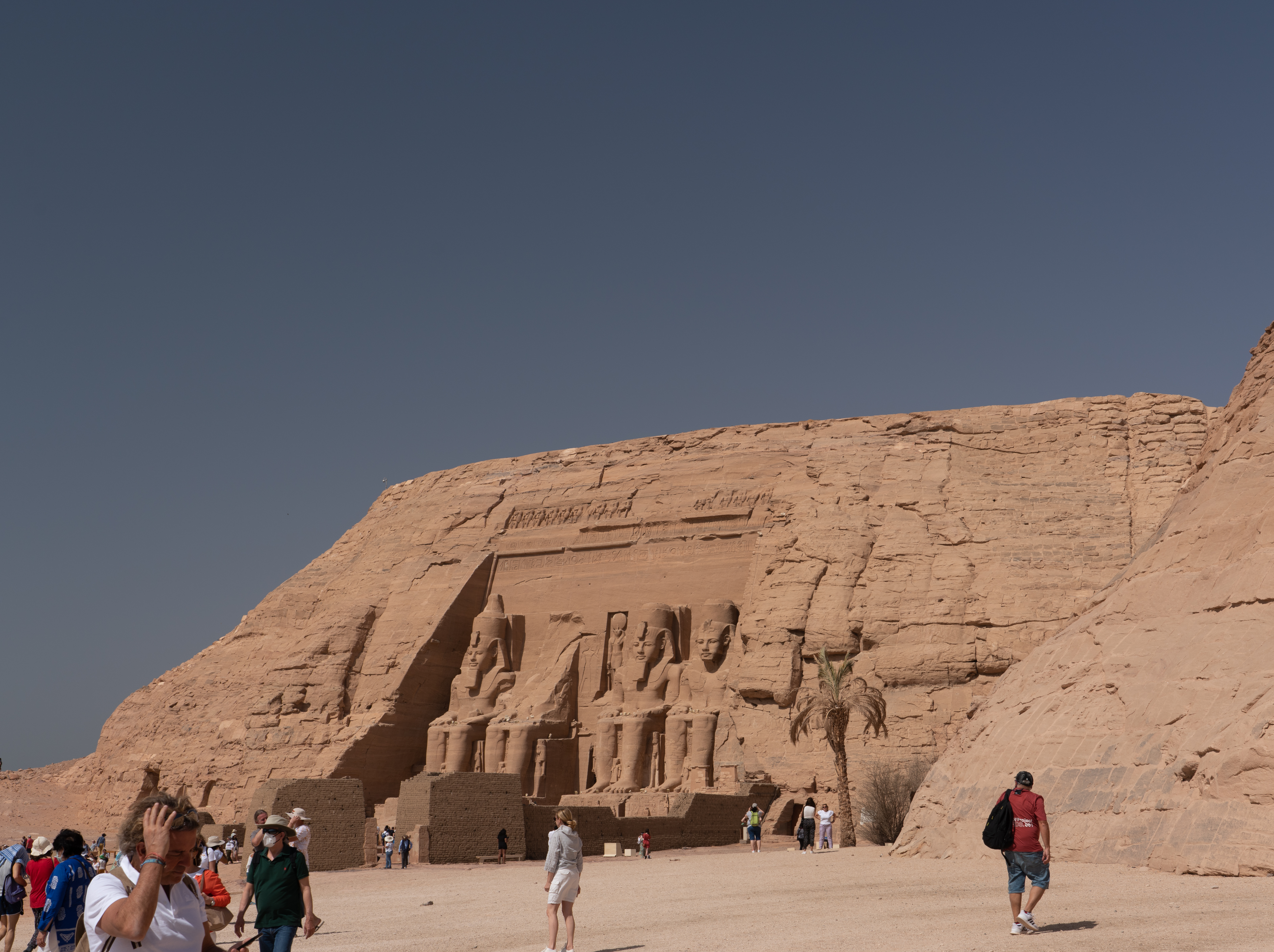
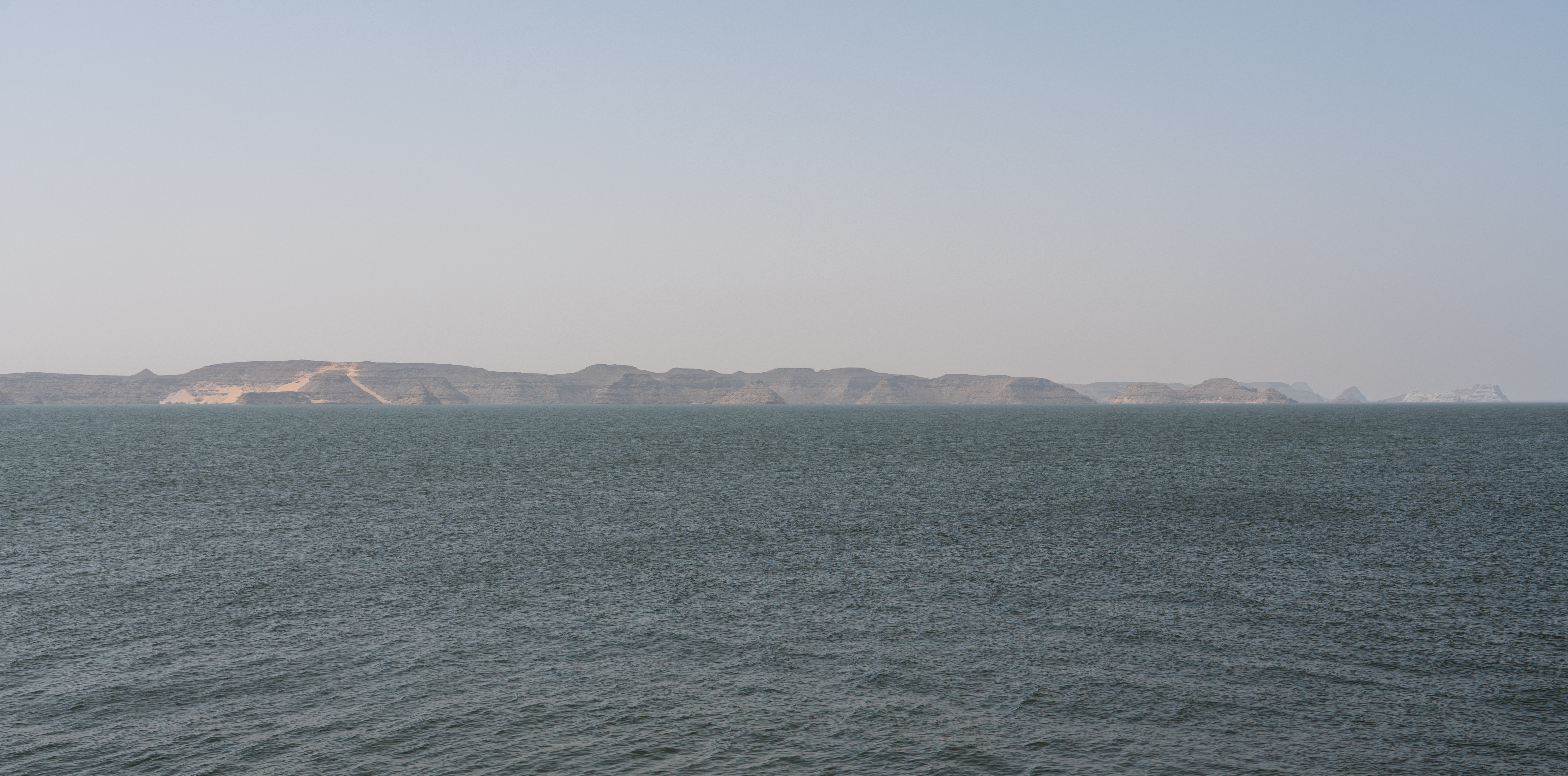
Abu Simbel is the city where you find the Abu Simbel Temples. These are 2 large temples that were carved out of rock during the reign of Ramesses II in the 13th century BC. They were originally located along the Nile River, but they were completely relocated between 1964-1968 due to rising waters in the new Lake Nasser formed from the Aswan Dam, which was being built. They were cut apart, the pieces numbered, and then reassembled approximately 215 feet higher and 650 feet farther back than they were.
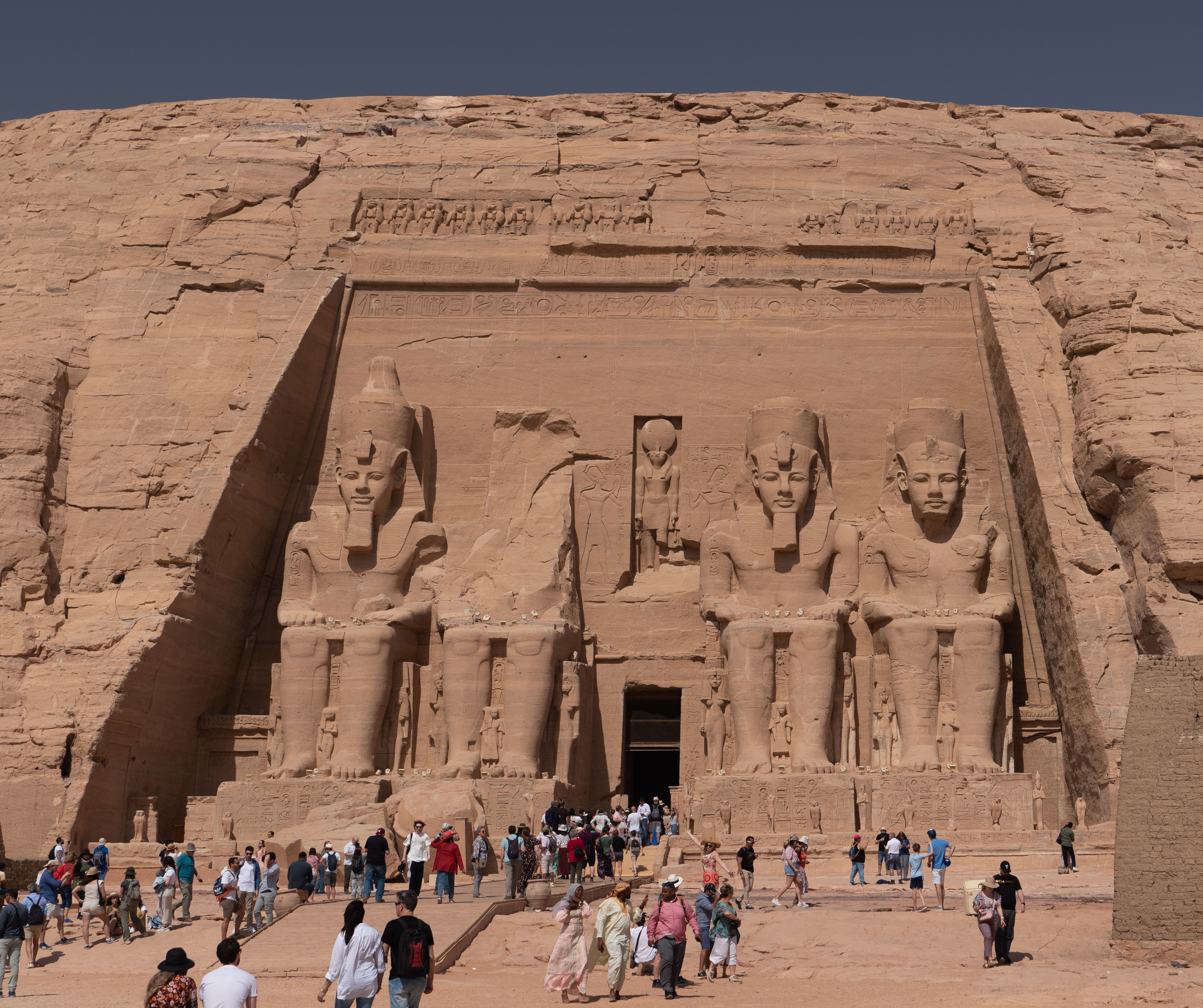
The Great Temple has four 66 foot tall statues at the entrance: Each depict Ramesses II on a throne wearing the double crown of Upper and Lower Egypt. The one that is second from the left was damaged in an earthquake. Next to Ramesses’ legs are smaller statues depicting family members: his chief wife, Nefertari, his queen mother, his first two sons, and his first six daughters. The top has 22 baboons worshiping the rising sun and a frieze depicting Ramesses’ marriage to a Hittite princess which sealed a peace agreement.
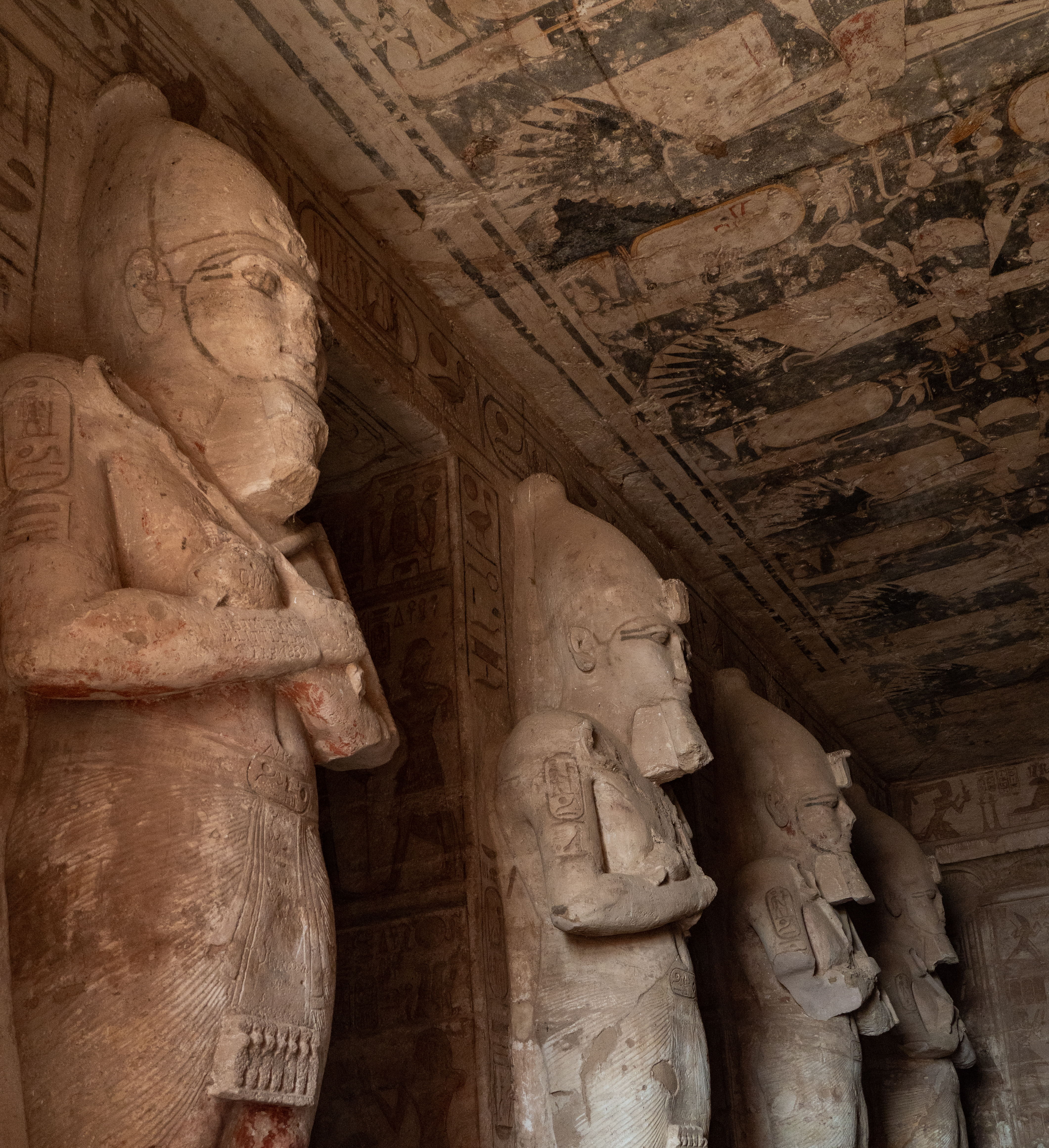
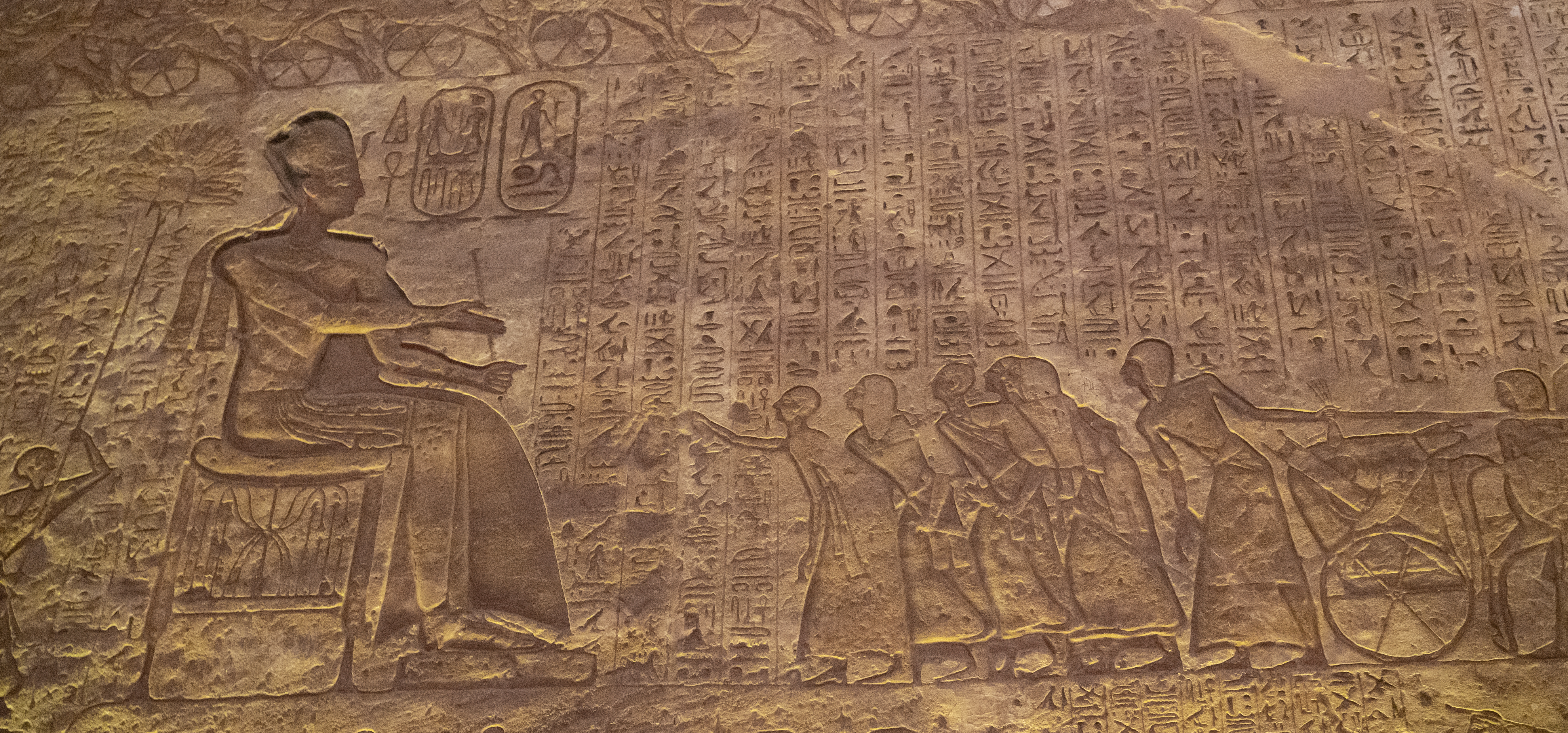
Inside there are statues of Ramesses depicted as a god. The walls are covered with bas-reliefs of battle scenes among other things.
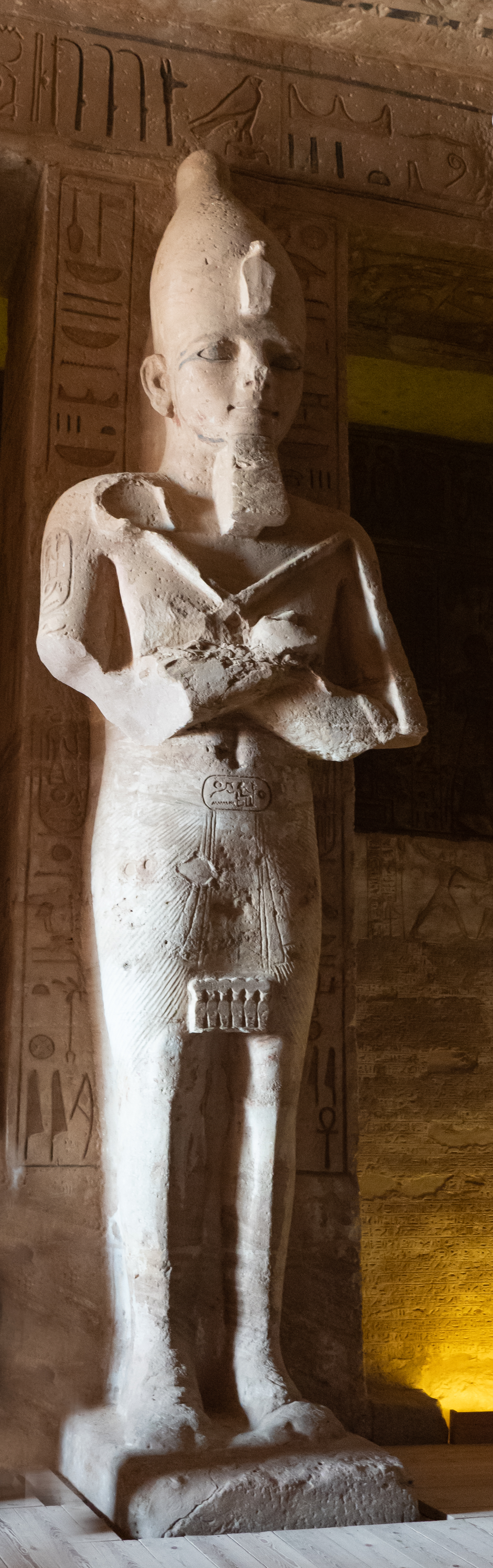
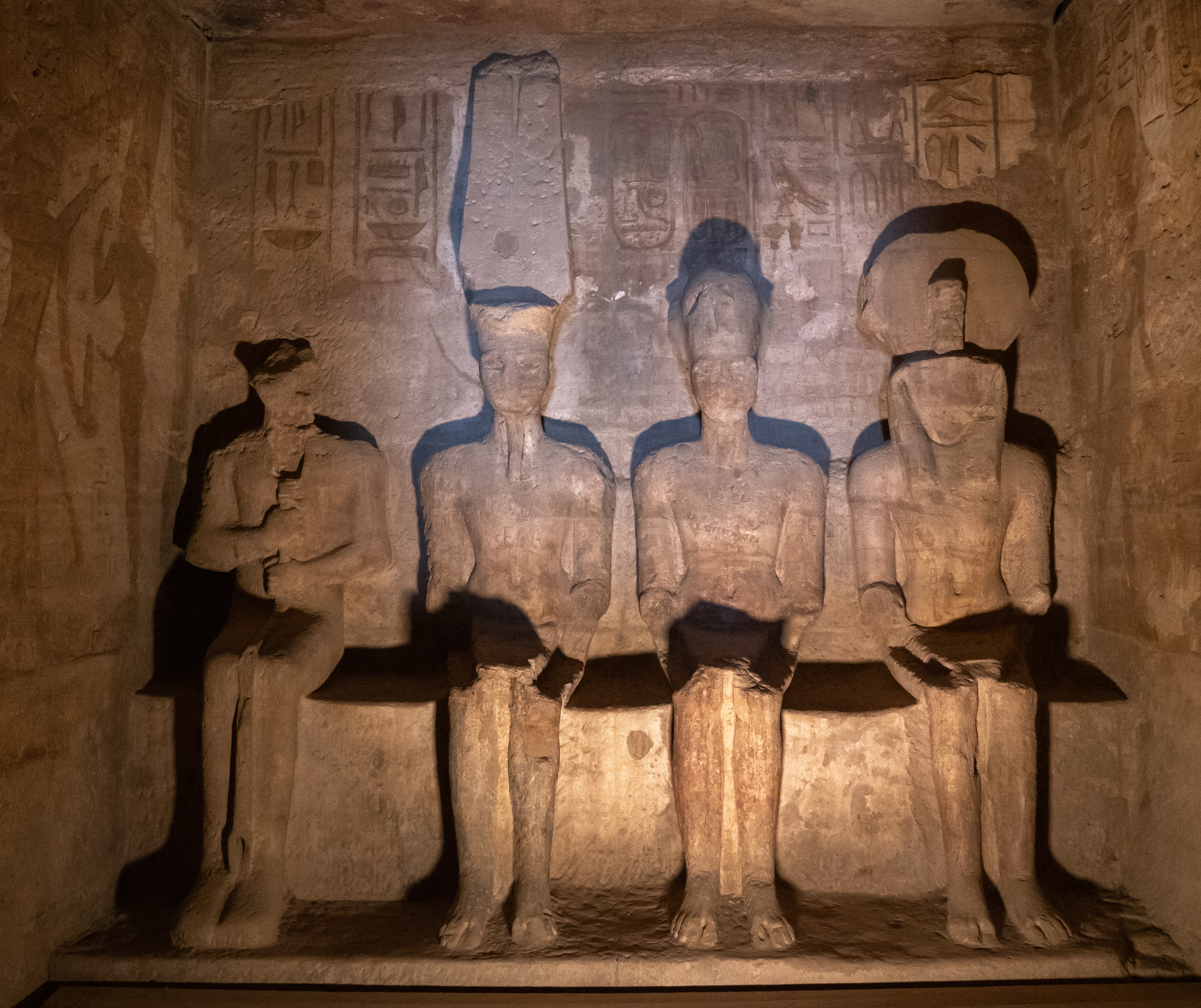
At the back of the temple, there is a room with 4 statues. Apparently on the King’s birthday and coronation day the light shines in on this room to light up 3 of the 4 statues (all but Ptah, the god of the dead).
The small temple is the Temple of Hathor and Nefertari. This has six 33 foot tall statues of Ramesses and Nefertari at the entrance. It is notable that the statues of the king and queen are the same height, as that was unusual. This has much more feminine artwork in it and is smaller overall.
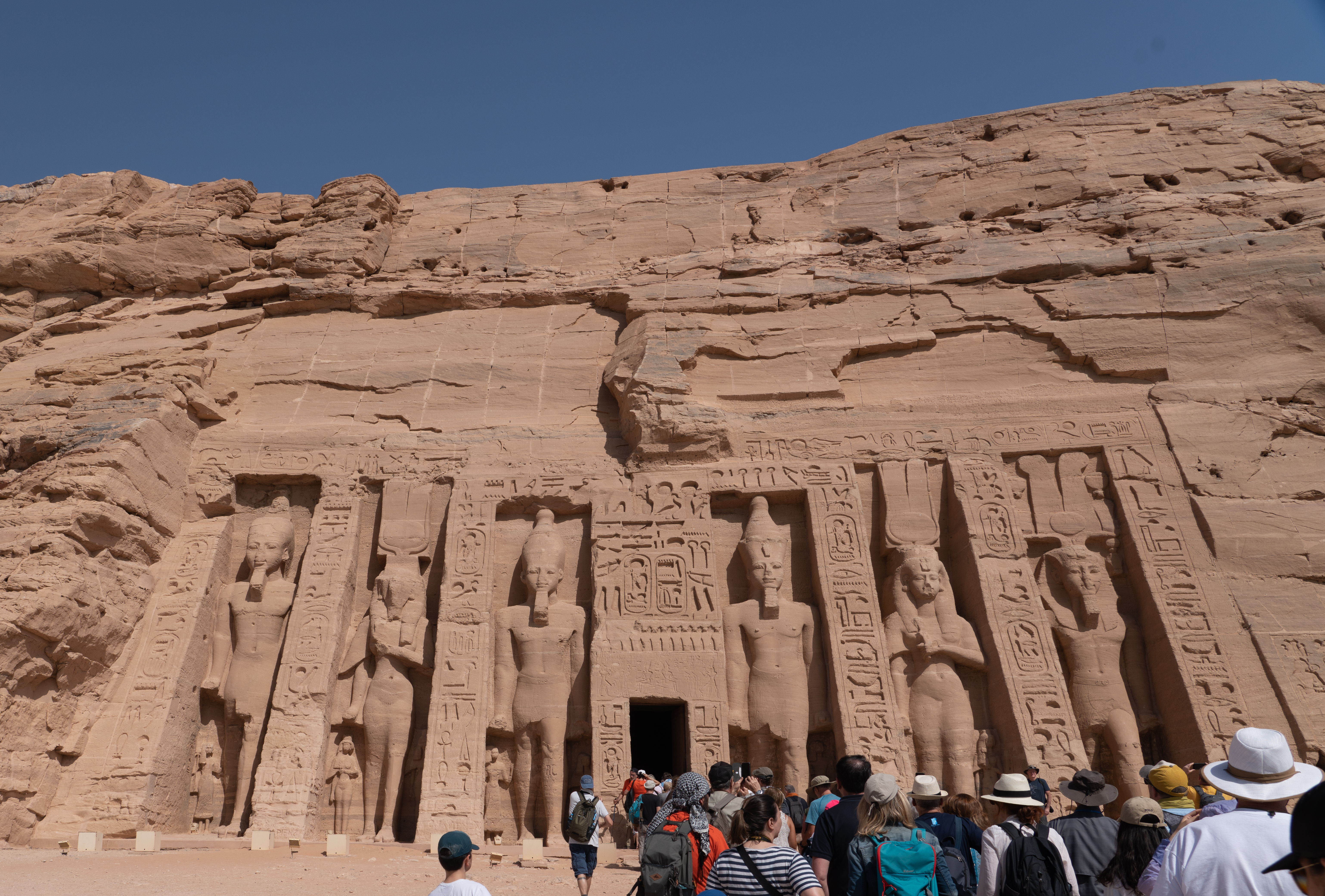
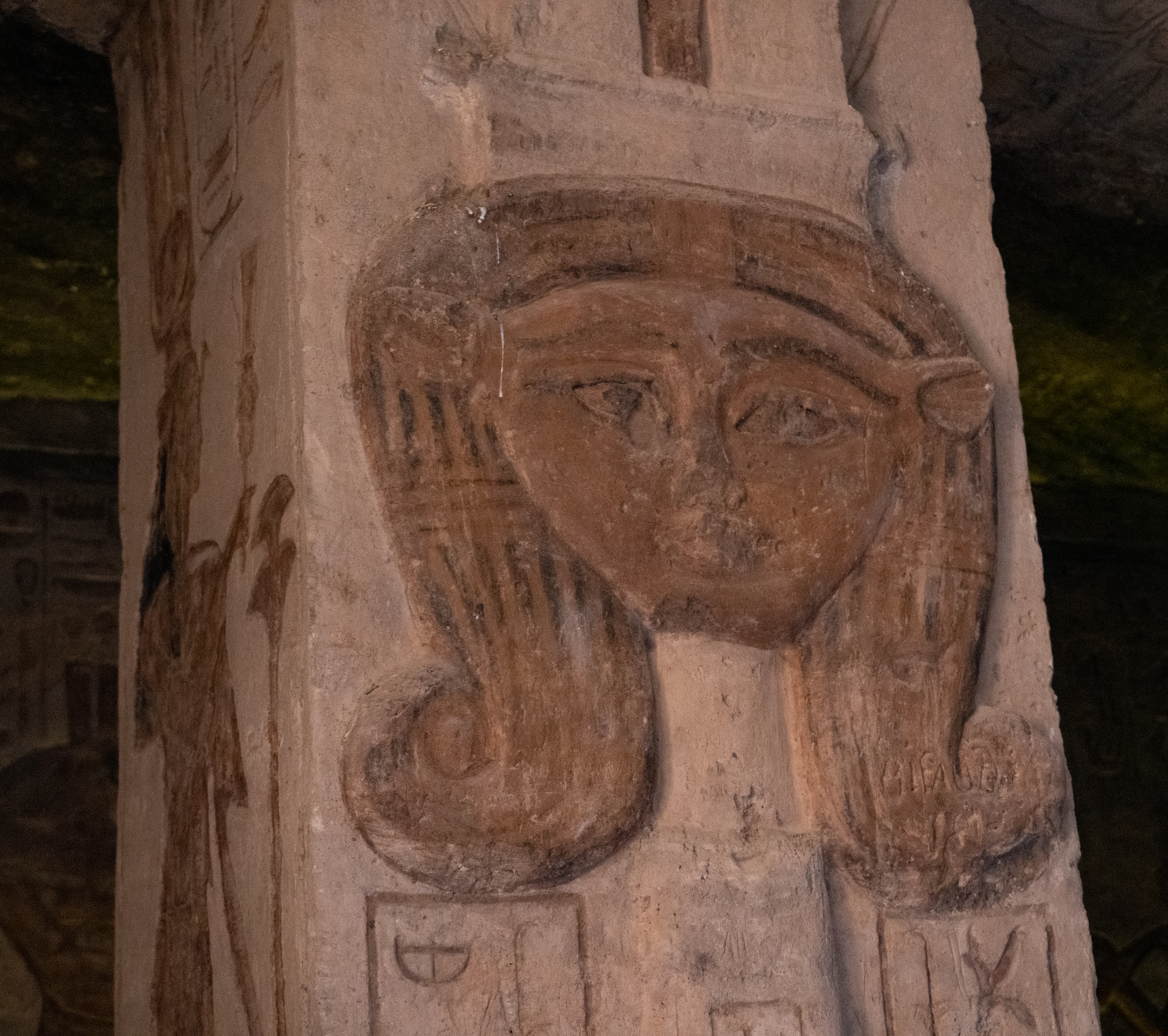
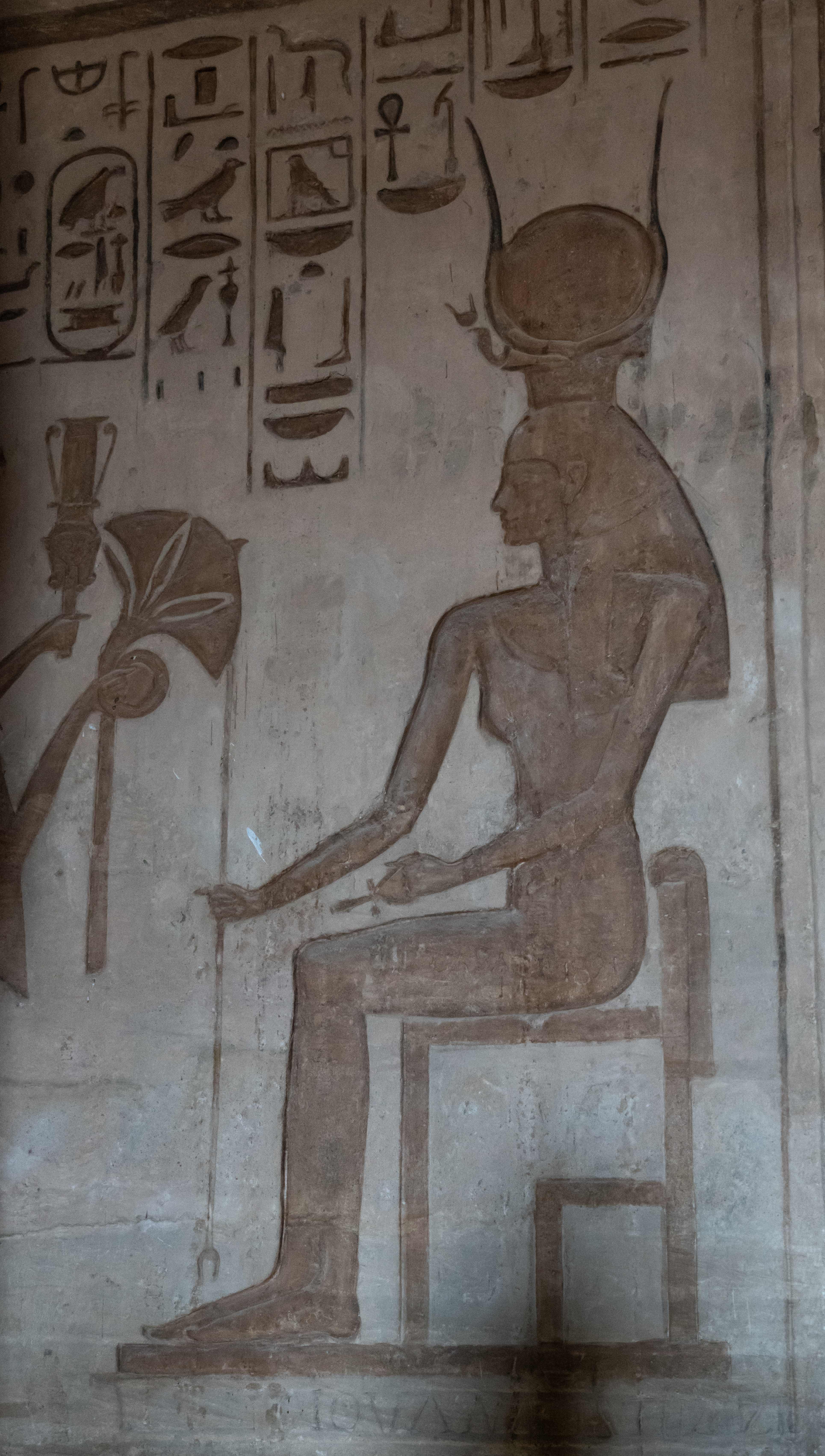
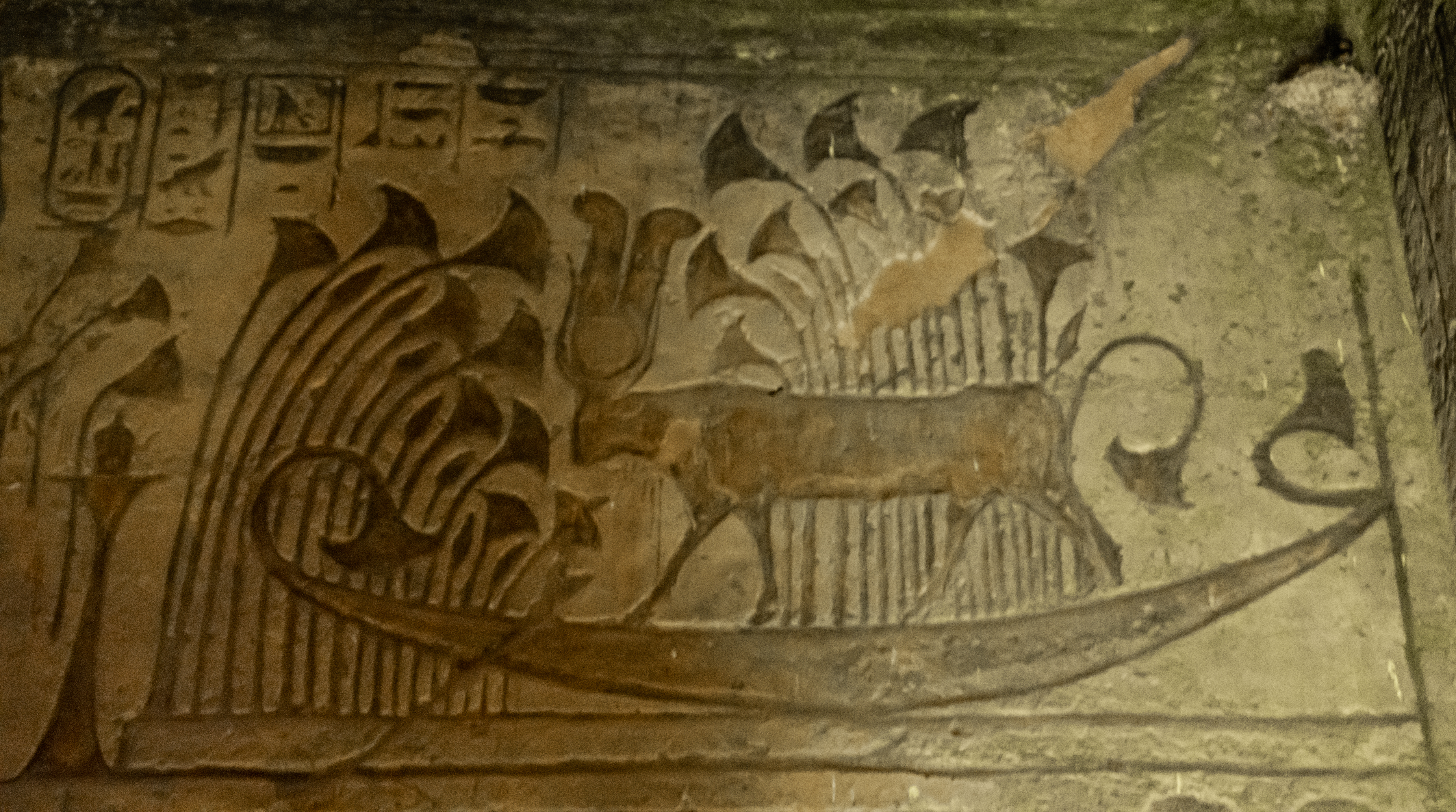
These temples fell into disuse over time and the statues became covered by sand to their knees by the 6th century BC. The temple was forgotten over time and was rediscovered in 1813 when the top frieze of the main temple was found by a Swiss researcher. It was excavated and eventually entered in 1817.
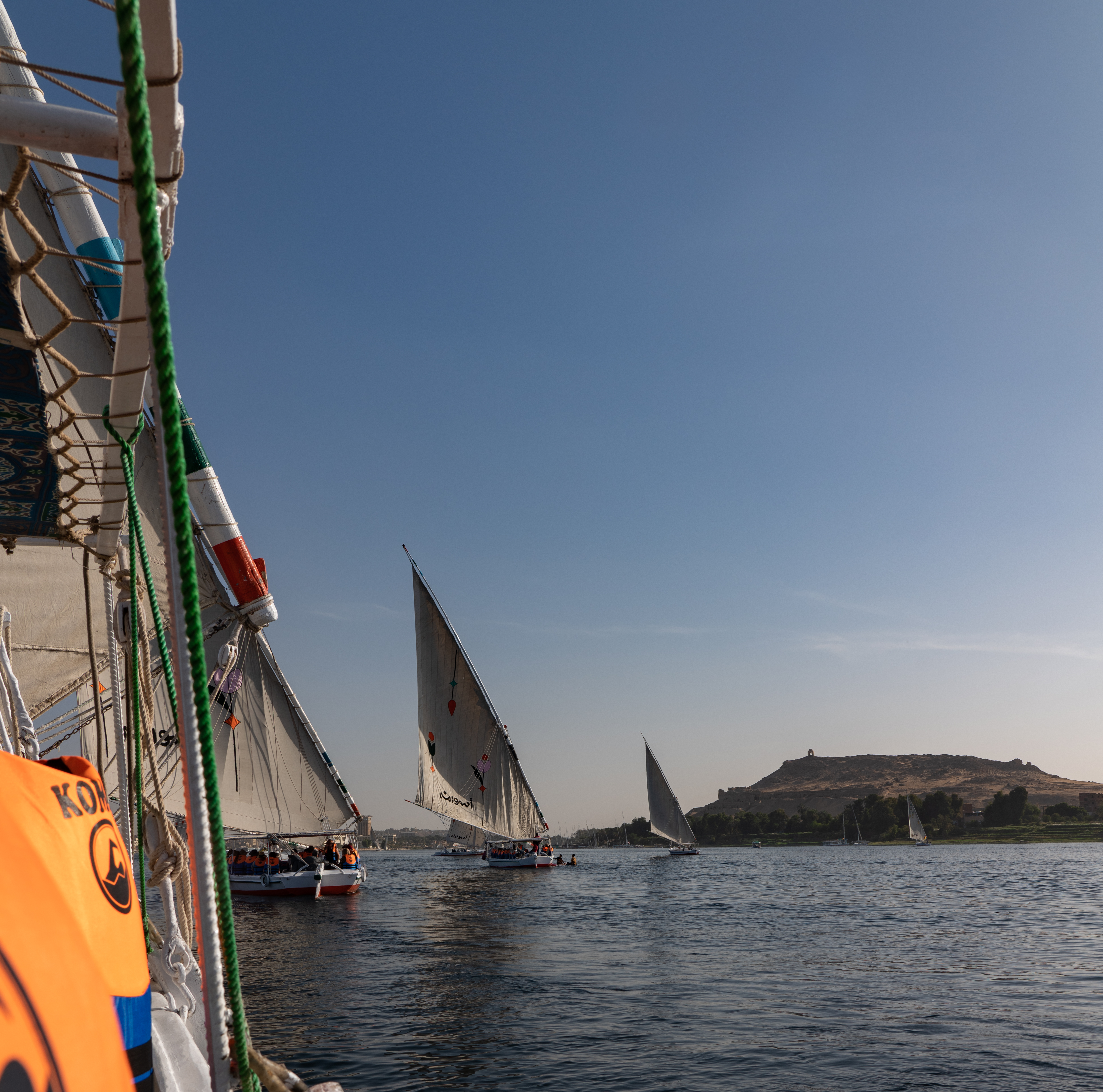
After touring the complex we flew back to Aswan. In the afternoon we sailed on the Nile on a felucca, a traditional Egyptian sailboat.
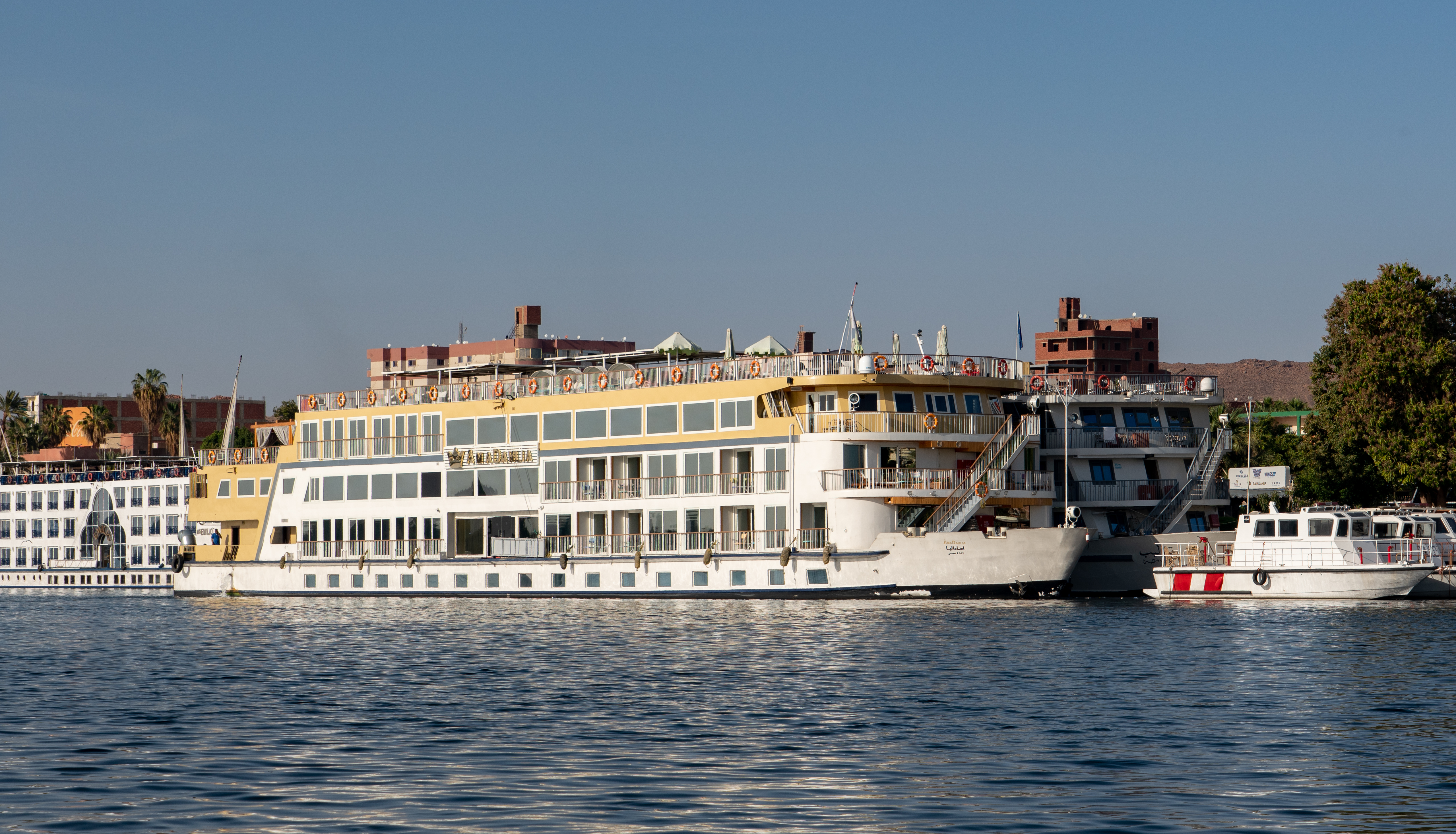
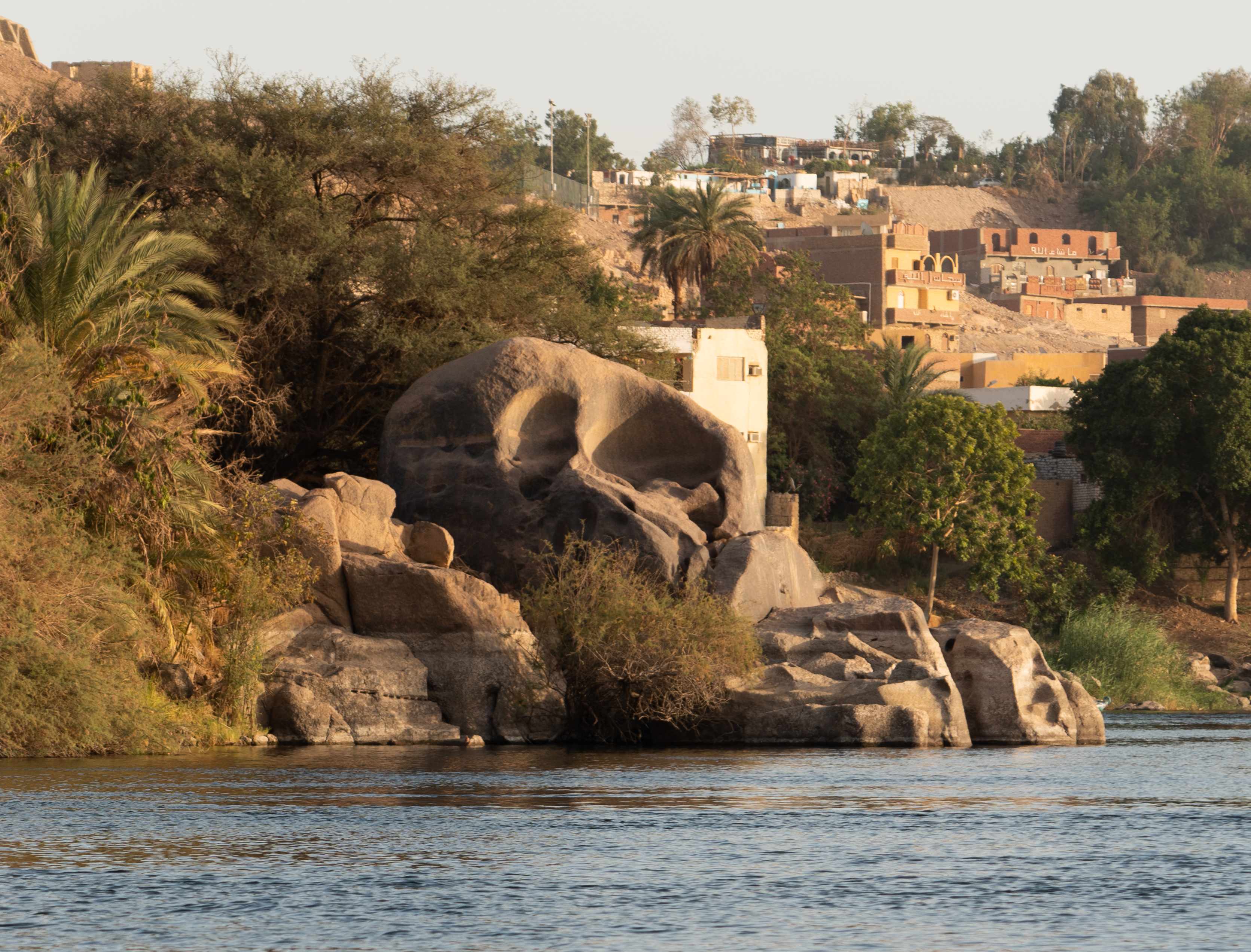
Elephantine Island: some of the rocks look like elephants
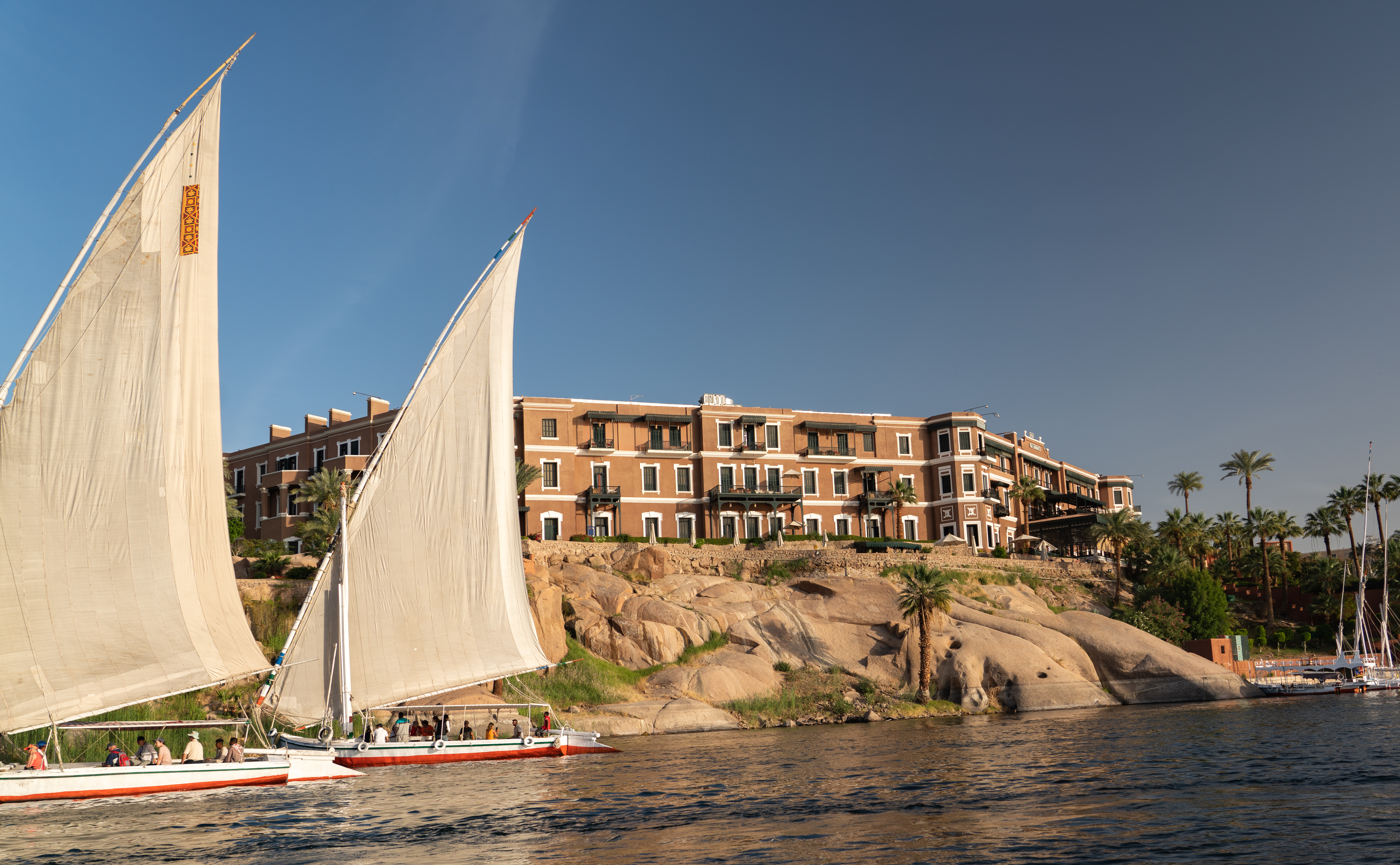
Old Cataract Hotel: A historic British colonial hotel. Many famous people have stayed here and Agatha Christie wrote part of “Death on the Nile” while here.
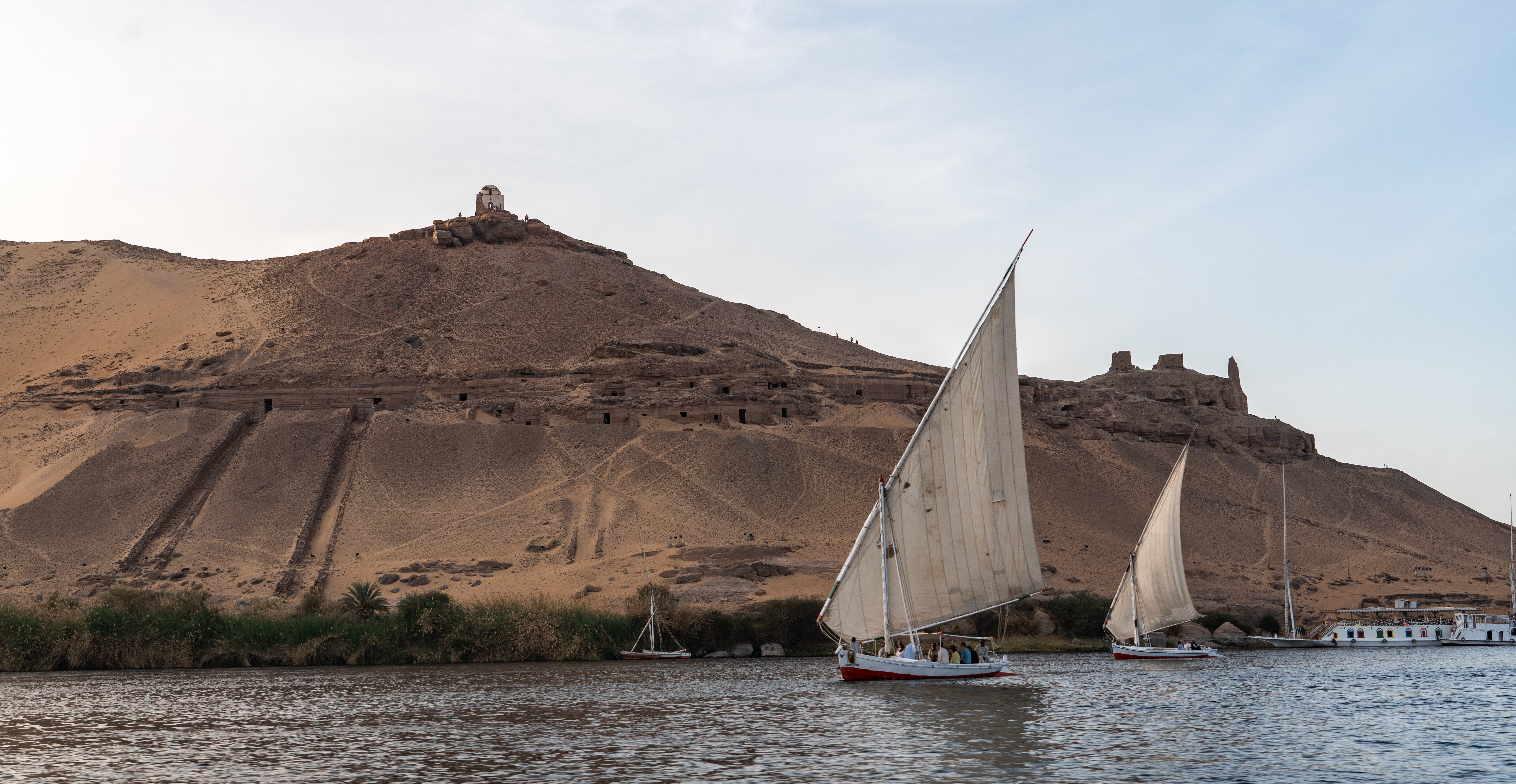
Mausoleum of Aga Khan: the mausoleum of Aga Khan III, Sir Sultan Muhammed Shah, who died in 1957. He was an imam who worked to protect Muslim rights in British ruled India. He served as the president of the League of Nations in the 1930s.


Leave a Reply