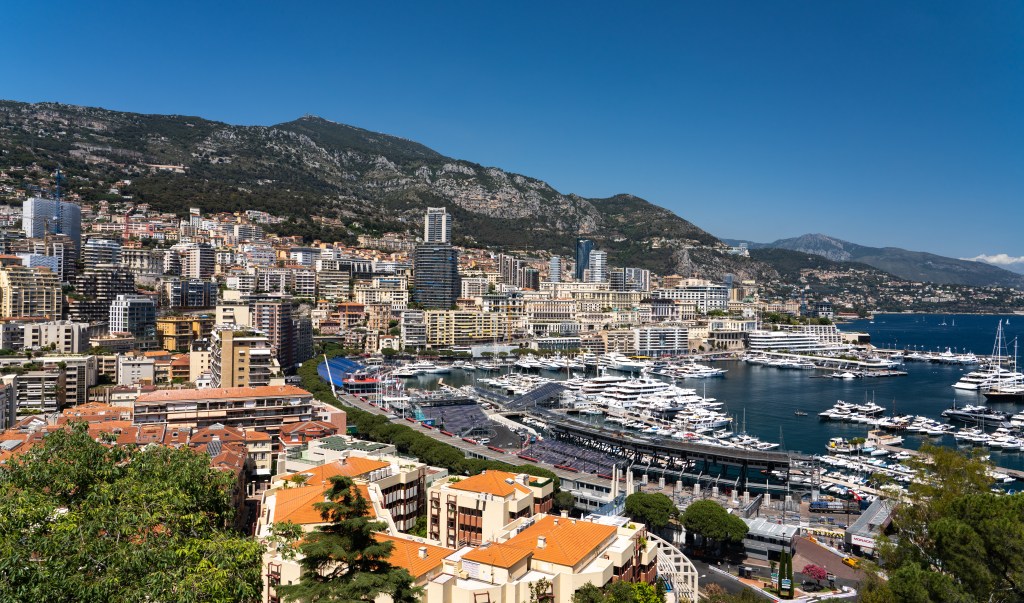
We took the train from Avignon to Nice this morning. We dropped our luggage off at our hotel and headed to Monaco.
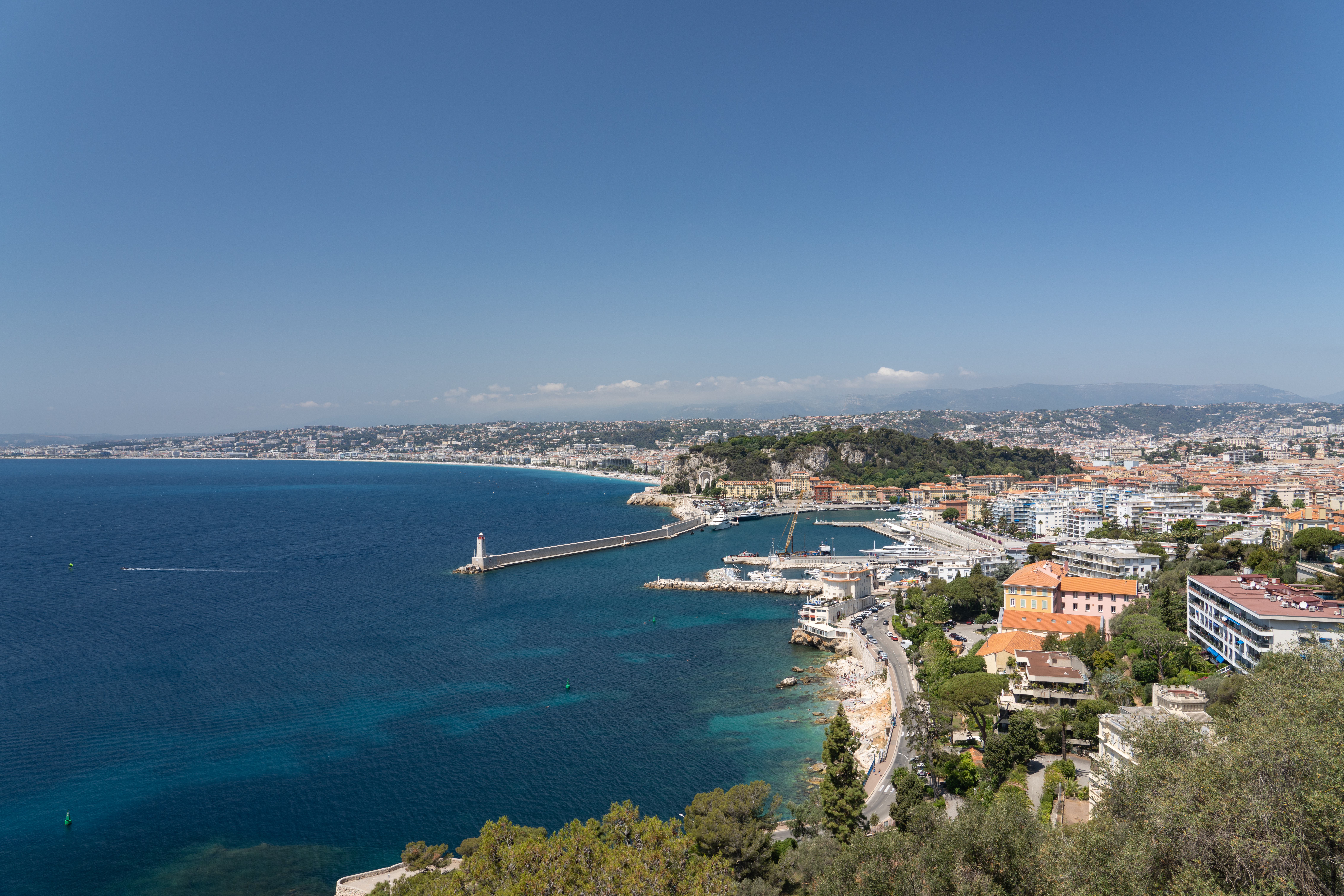
We drove along the coast, which gave us a lovely view back towards Nice.
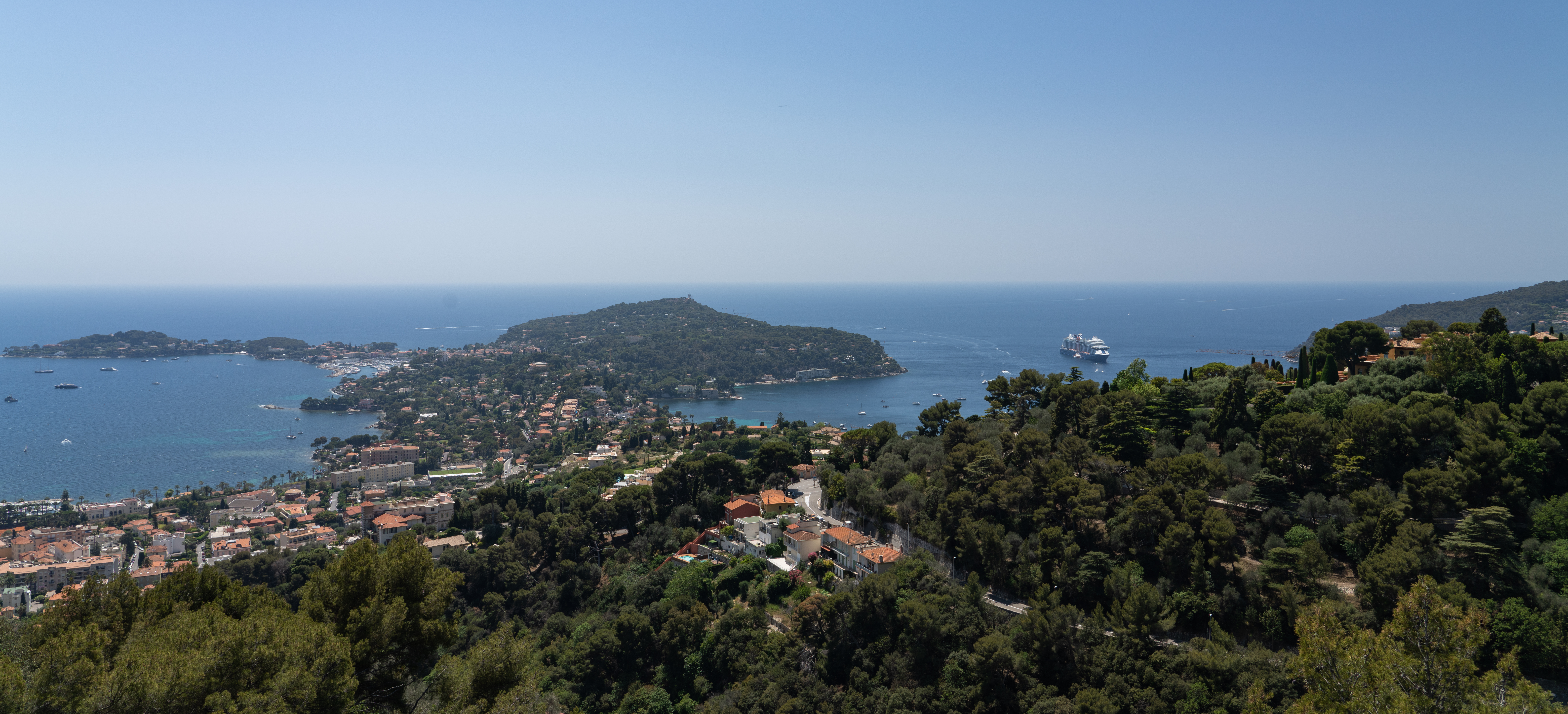
Coastal view.
On the way, we stopped in the village of Eze. This is a small medieval village up on the top of a hill. It had a castle and city walls which were destroyed in the 18th century during the war of Spanish succession. The village is compact with narrow streets, but does have gardens along with a cemetery perched near the top.
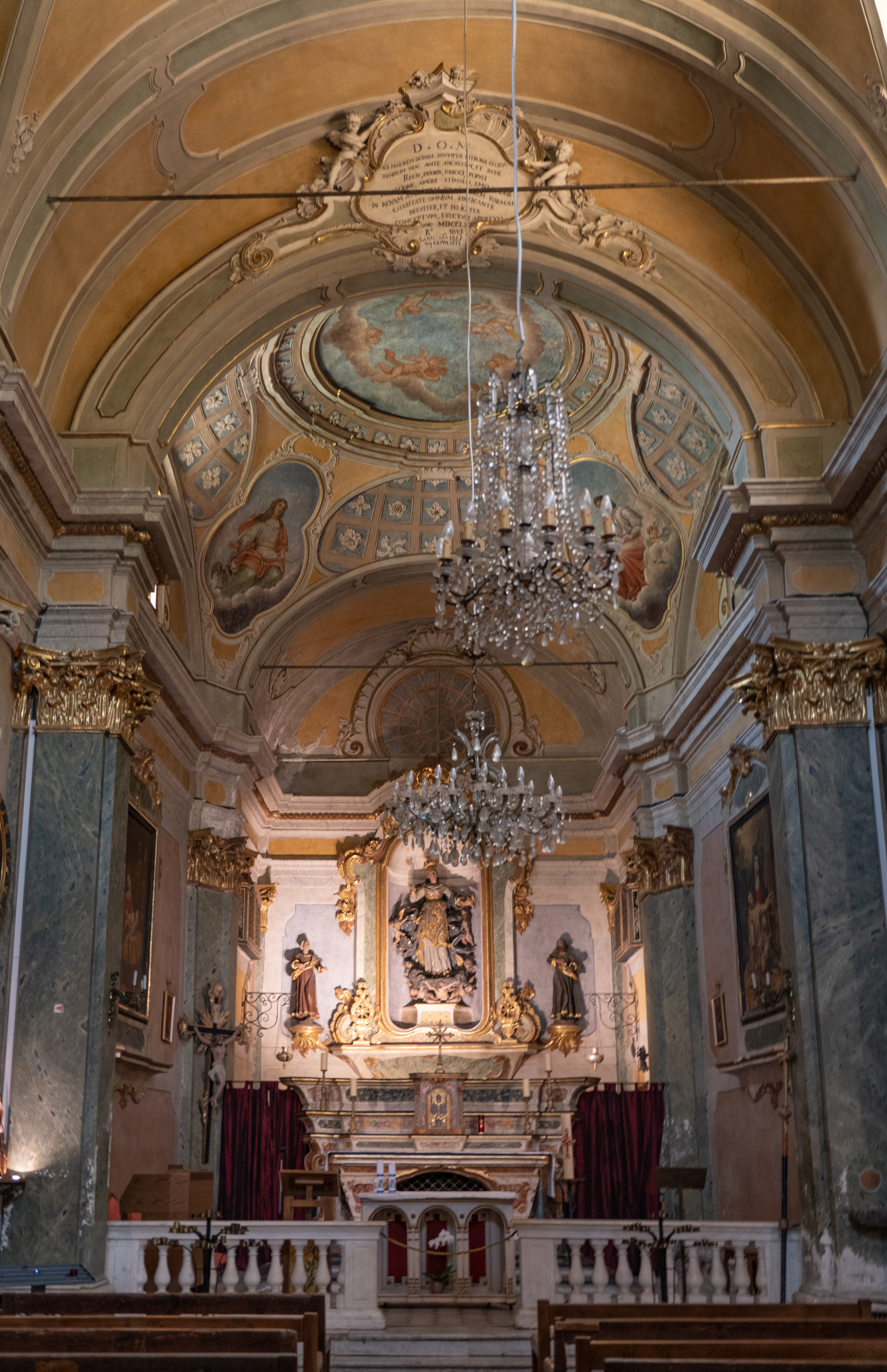
The Church of Notre Dame de l’Assomption dates back to the 18th century and has a very dramatic Baroque decor.
Nietzsche spent time in Eze from 1844-1900. He reportedly would take a 60-90 minute hike daily to find inspiration. Many people come here to follow in his footsteps. We did not take the reportedly steep and rocky trail.
Monaco is the second smallest sovereign nation in the world behind Vatican City. It consists of 0.81 sq miles and, as of 2019, approximately 38,000 people live here. Monaco has been ruled by the same family, the Grimaldis, almost continuously, since 1297. It is a constitutional monarchy with Prince Albert II as the current monarch with a Prime Minister and National Council. The Prime Minister can be a citizen of France or Monaco.
View of Monaco
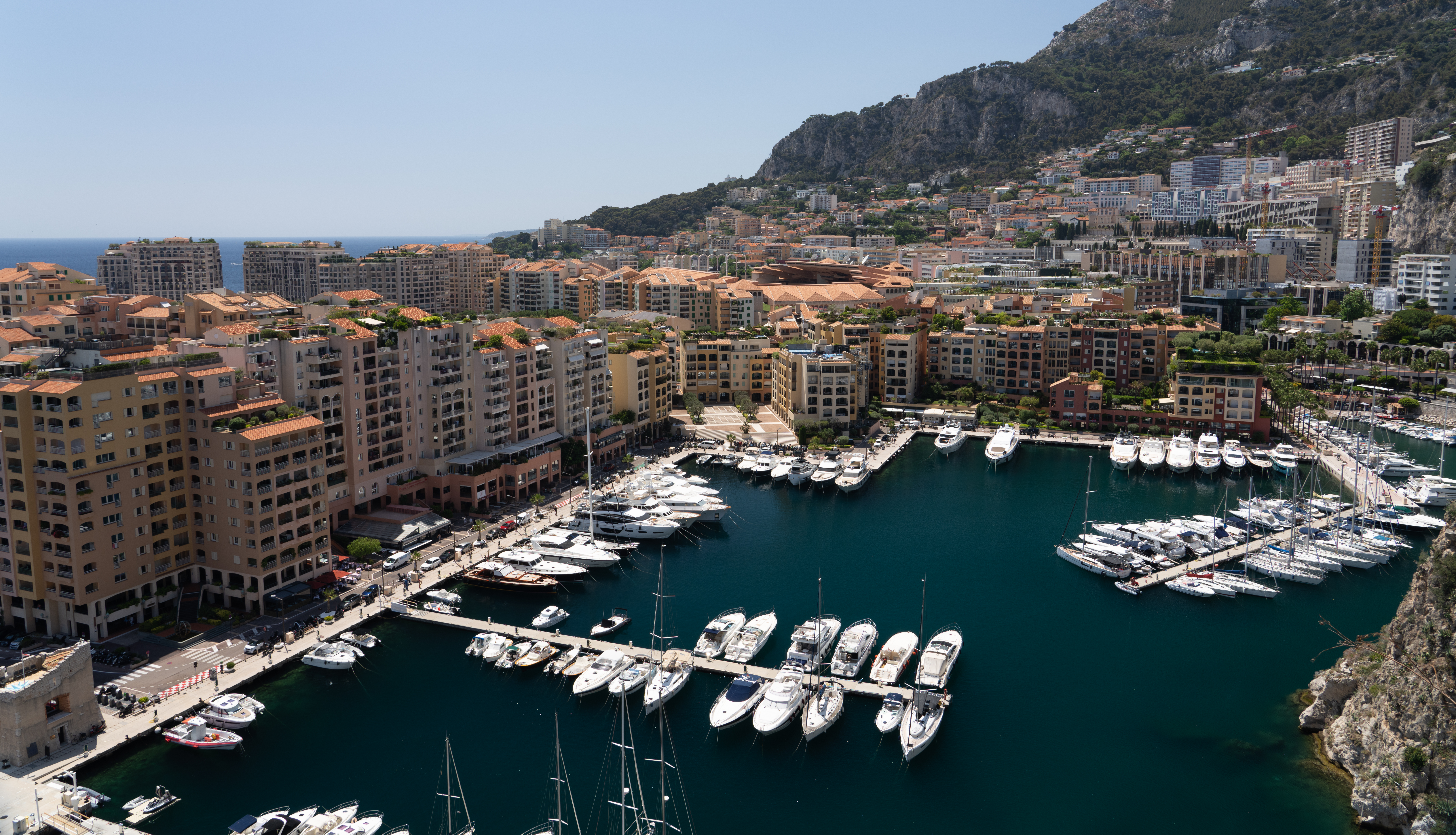
Harbor
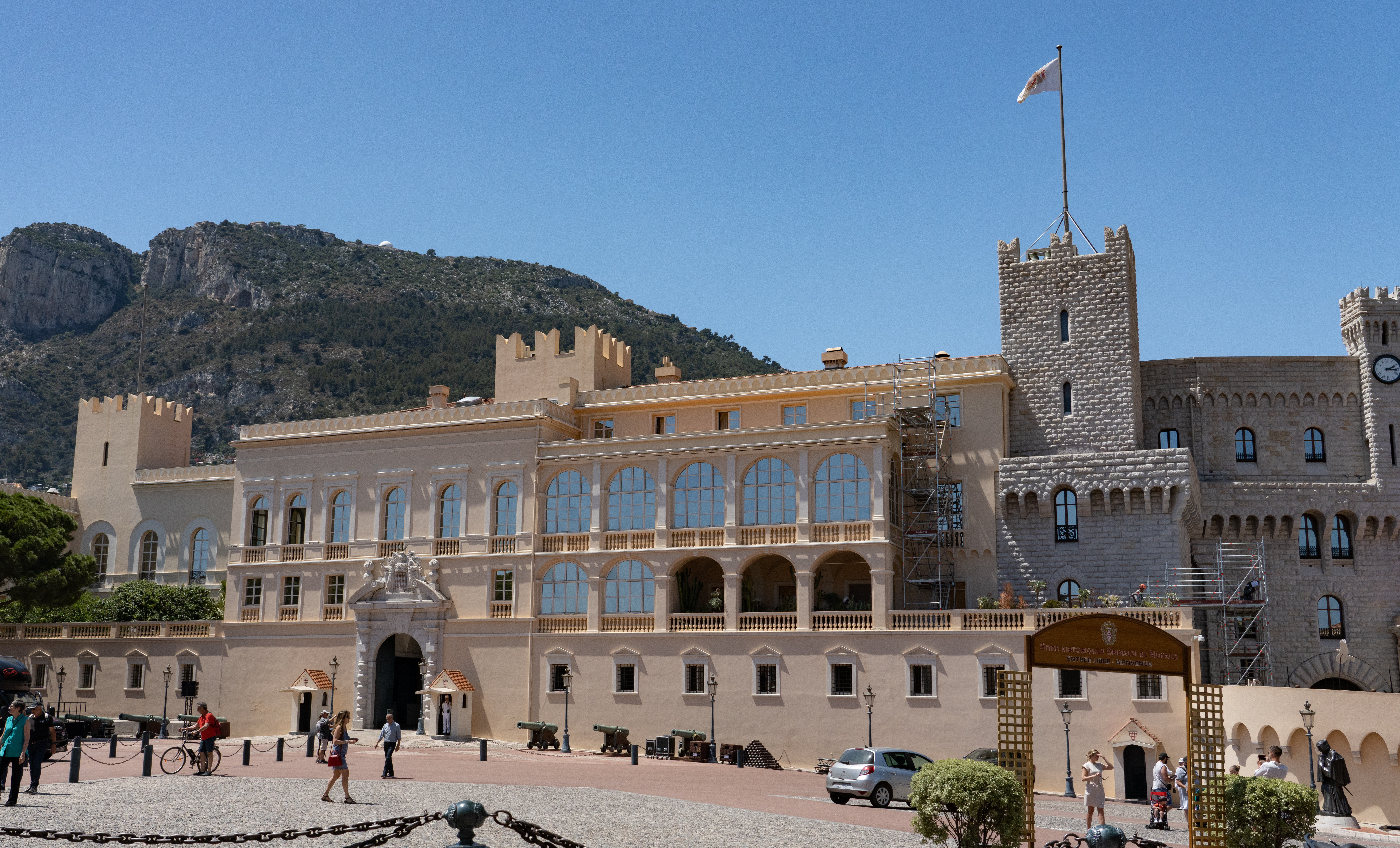
Palace of Monaco. This was initially built in 1191 with the state apartment laid out starting in the 16th century with frequent renovations. The palace is built like a fortress and, since the country is so small, the royal family does not have alternate palaces. While the palace is a tourist attraction, it is the home to Albert II and a fully-functioning palace.
Of course, one of the many associations with Monaco is Grace Kelley, who married Prince Ranier III in 1956. We visited her grave, along with multiple other Grimaldi graves, at the Cathedral of Our Lady Immaculate, which is near the palace. This is also known as Saint Nicholas Cathedral and is where she and Prince Ranier were married.
Cathedral of Our Lady Immaculate/Saint Nicholas Cathedral: There is a reason for the 2 names. The Cathedral of Our Lady Immaculate is the name of the current building which was constructed from 1875-1903. Saint Nicholas Cathedral is the name of the church that was previously on this site. It was demolished in 1874.
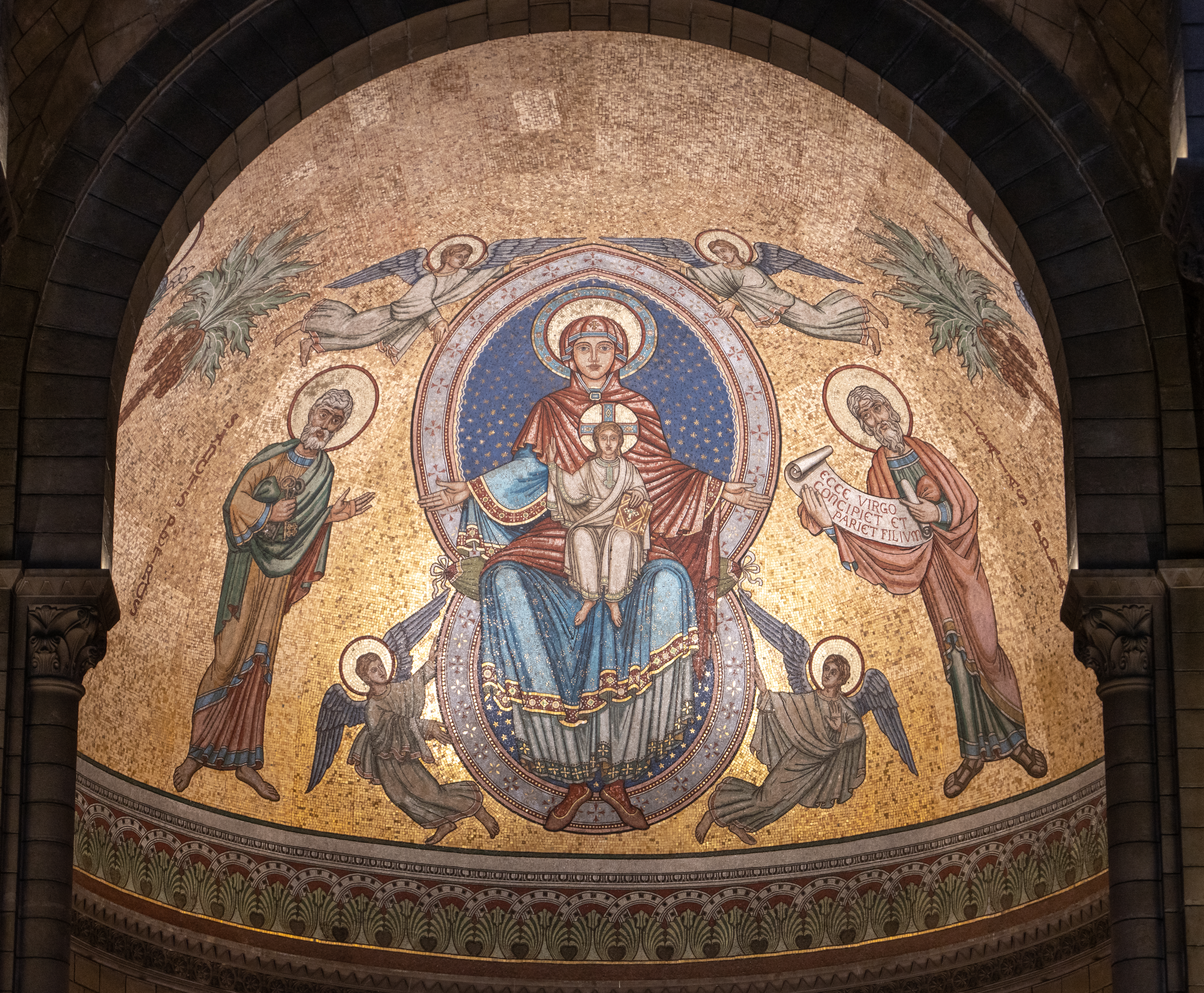
Princess Grace’s grave.
Monaco is also well known for 2 other things: gambling and Formula One racing. We did not go gambling, but we did get to (slowiy) experience the Grand Prix course.
This year’s Grand Prix race was the weekend before our visit, so they had not dismantled much yet, so the viewing stands and the start/finish line were still present. Our guide said it takes 2 months to everything up and 1 month to take everything down each year. The course circuit length is just over 2 miles with 78 laps. It is on the narrow streets of Monaco with tight turns and a tunnel. Its actually amazing that they can race there.
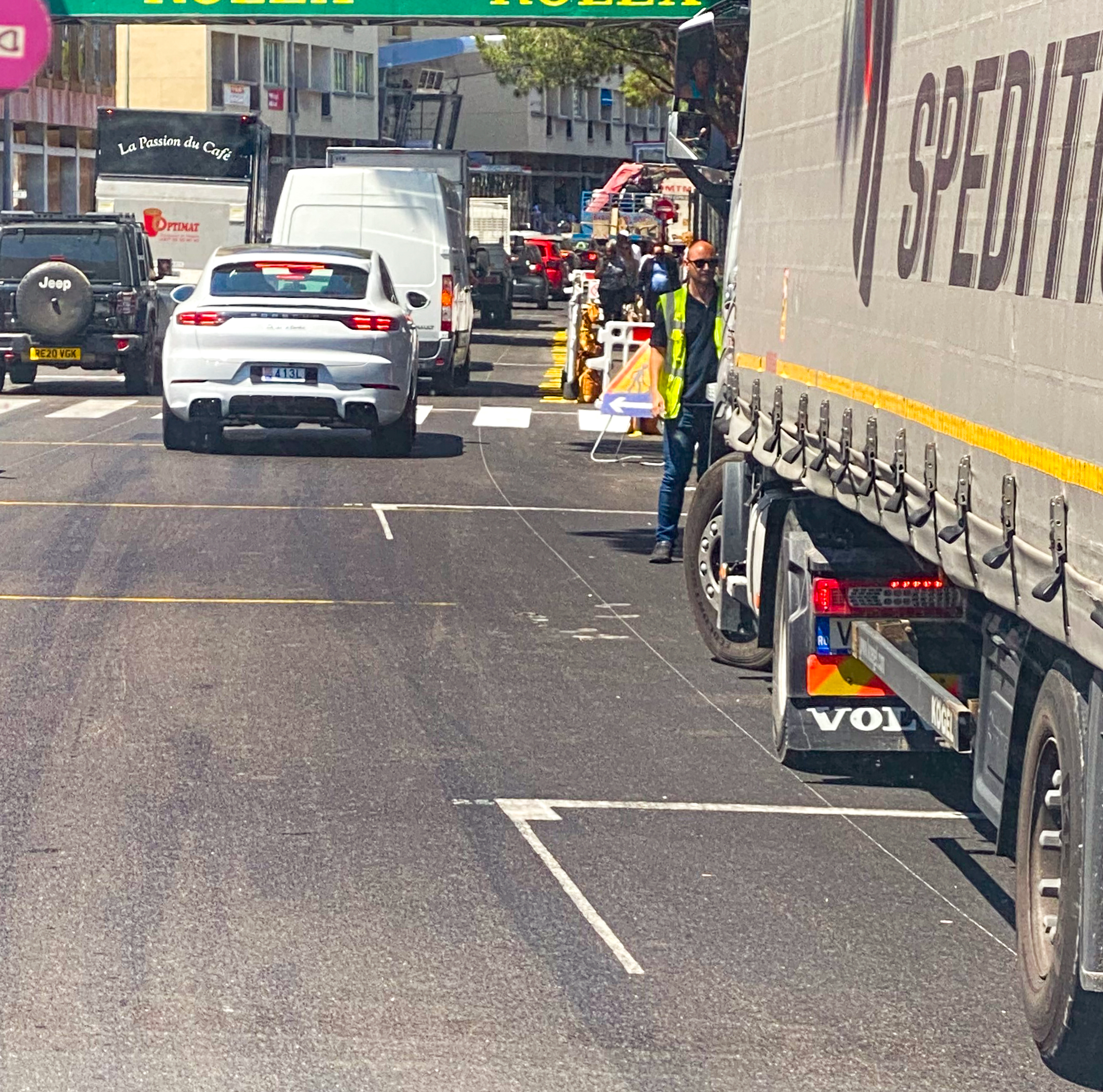
The squared-off lines are where they line up to start the race.
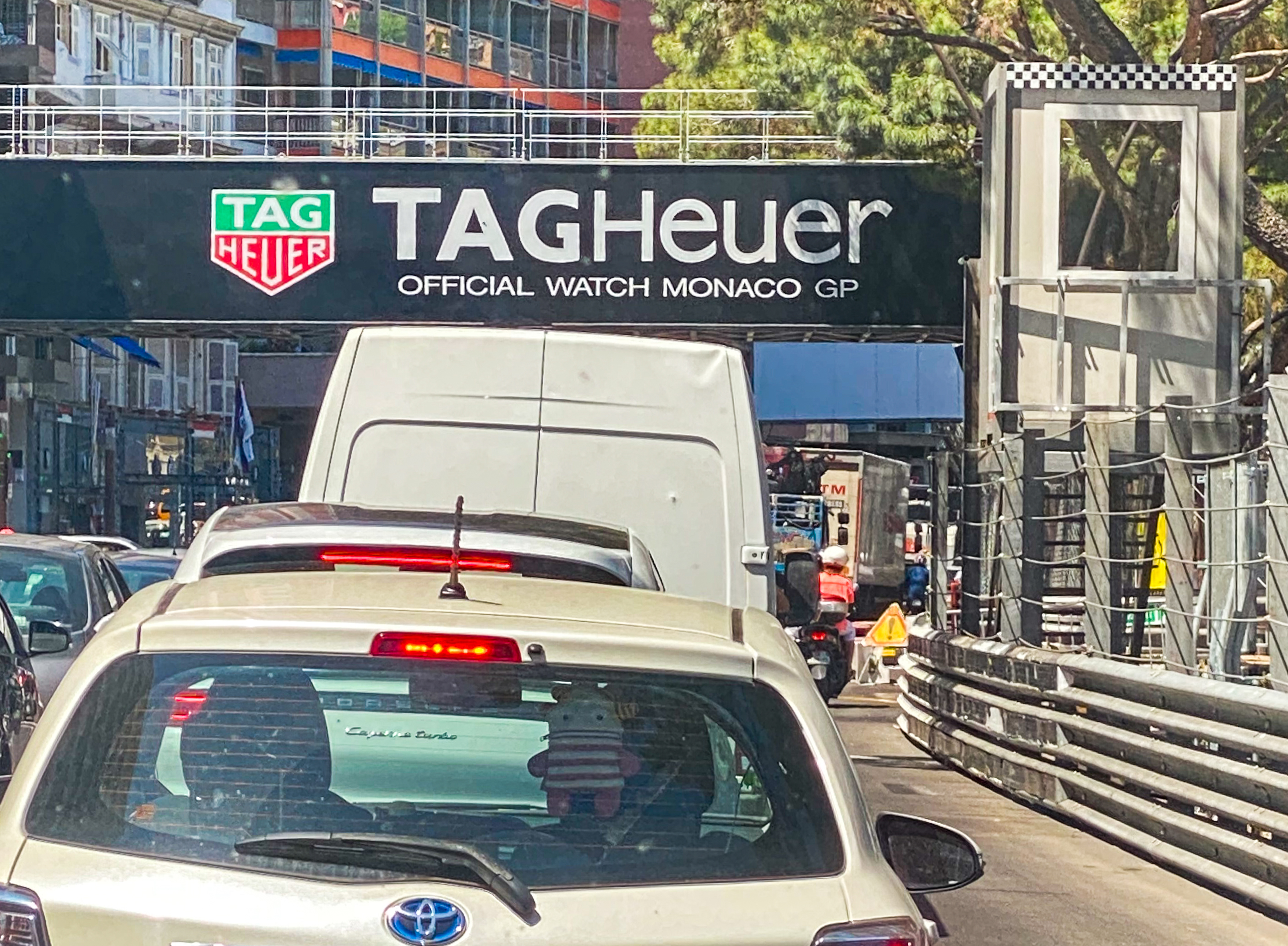
The start/finish line for the race.
After we left Monaco, we went to another French hillside medieval village called Saint-Paul-de-Vence. The town officially dates back to 1388. The ramparts were erected during the second half of the 14th century. Further city wall fortifications were added in 1538. It is a quaint town that today houses many artisans. Historically, Picasso, Matisse, and Chagall spent time here.
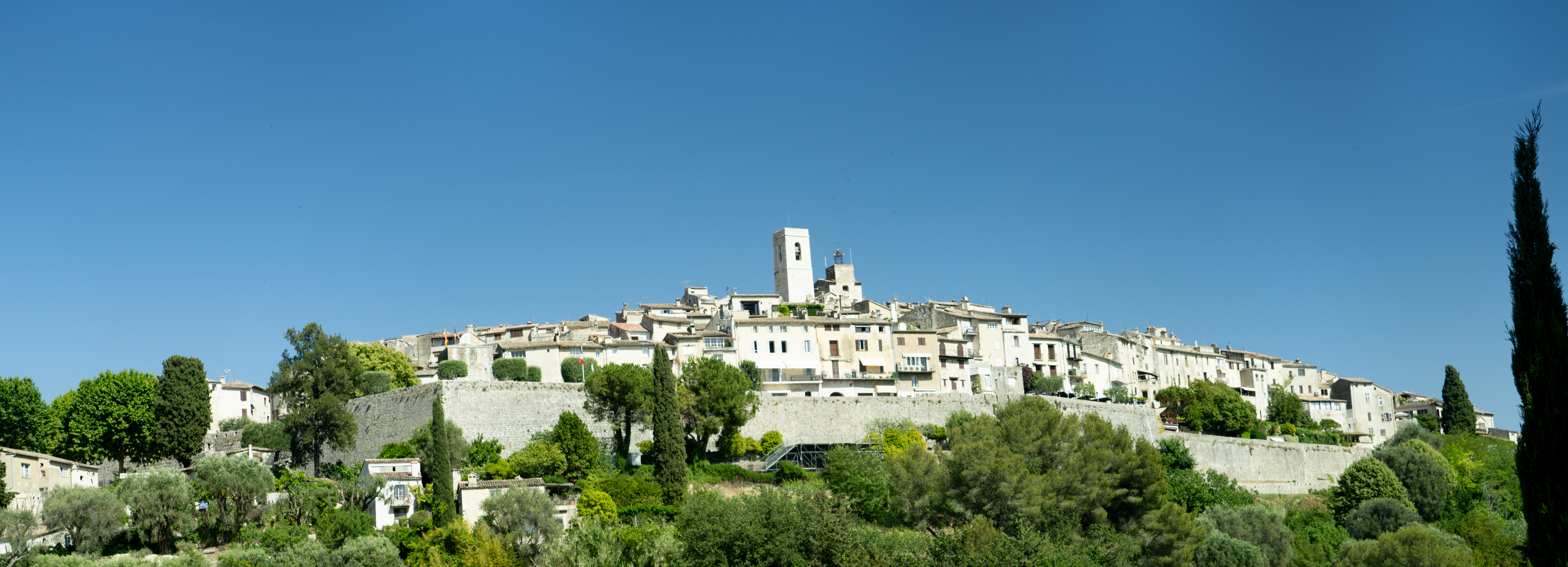
Saint-Paul-de-Vence
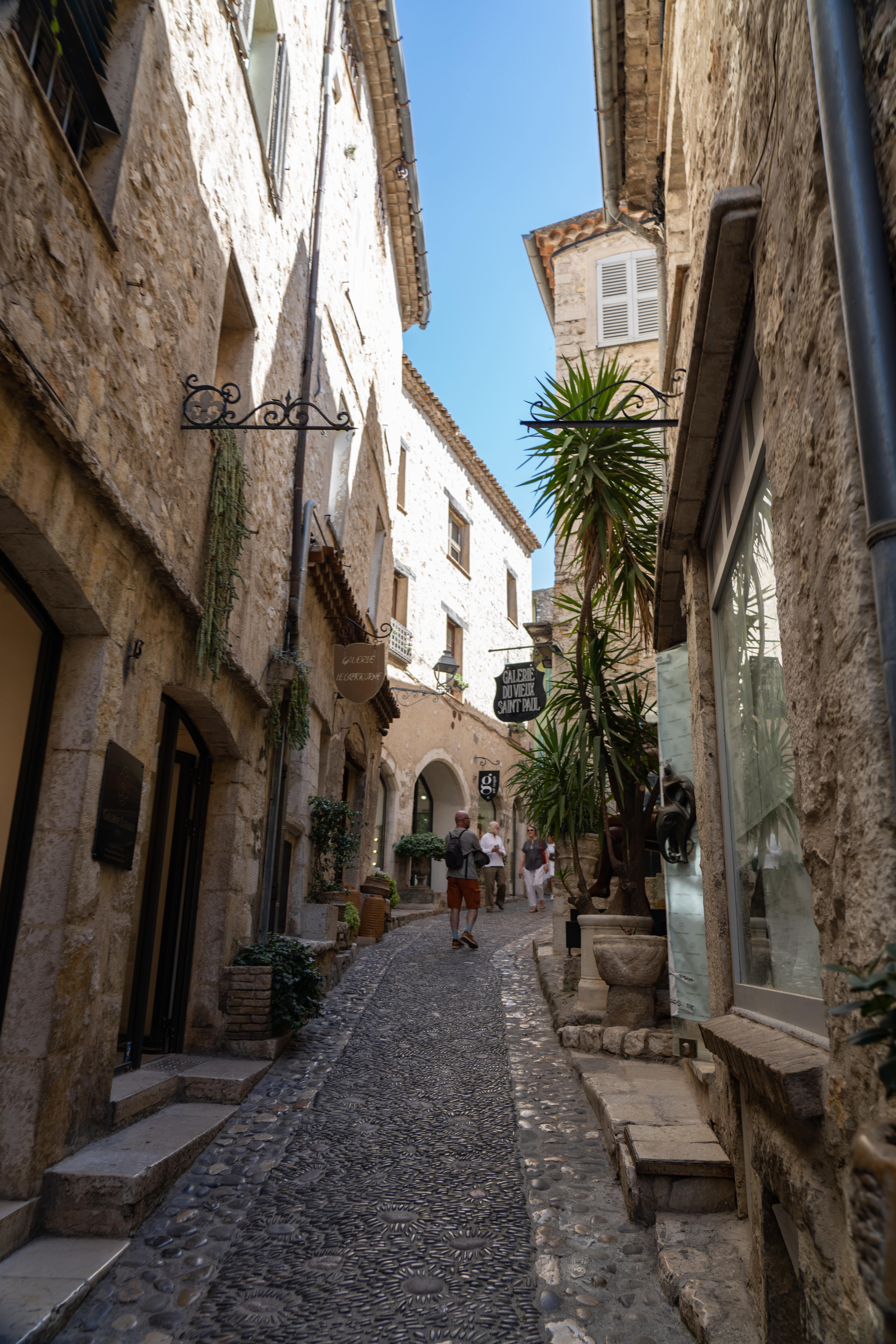
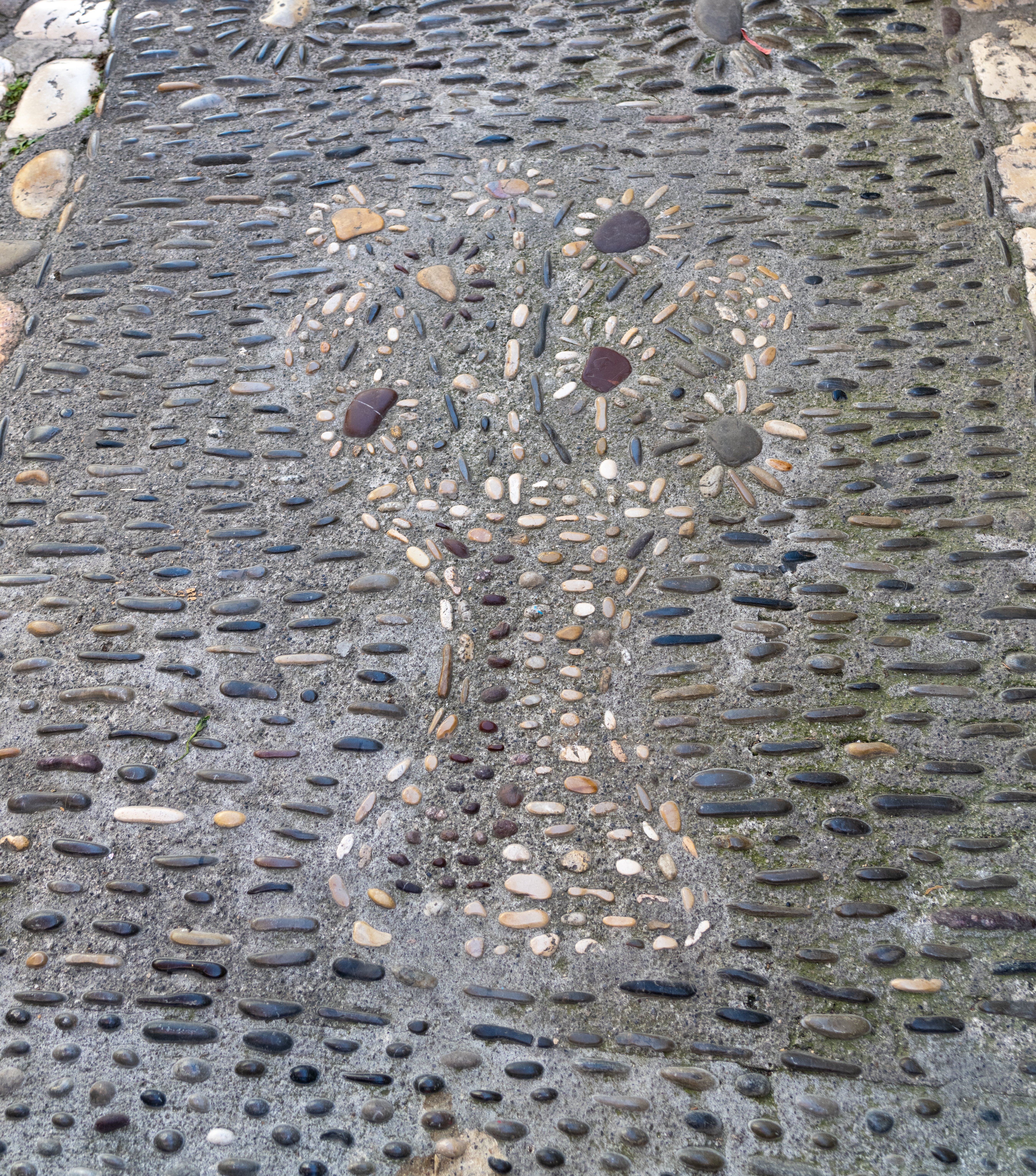
Decorative cobblestones. These were placed in the 1950s.
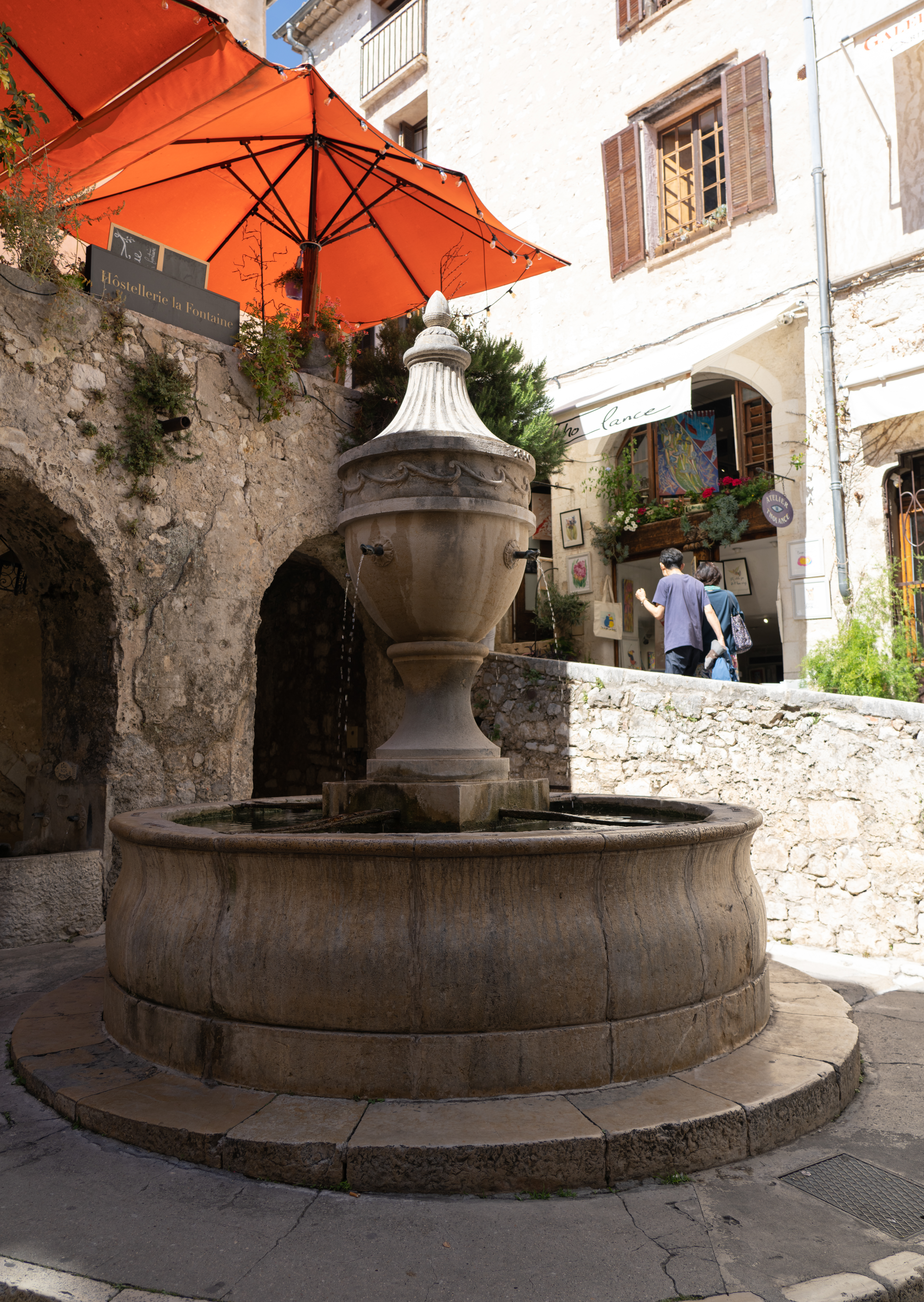
Fountain
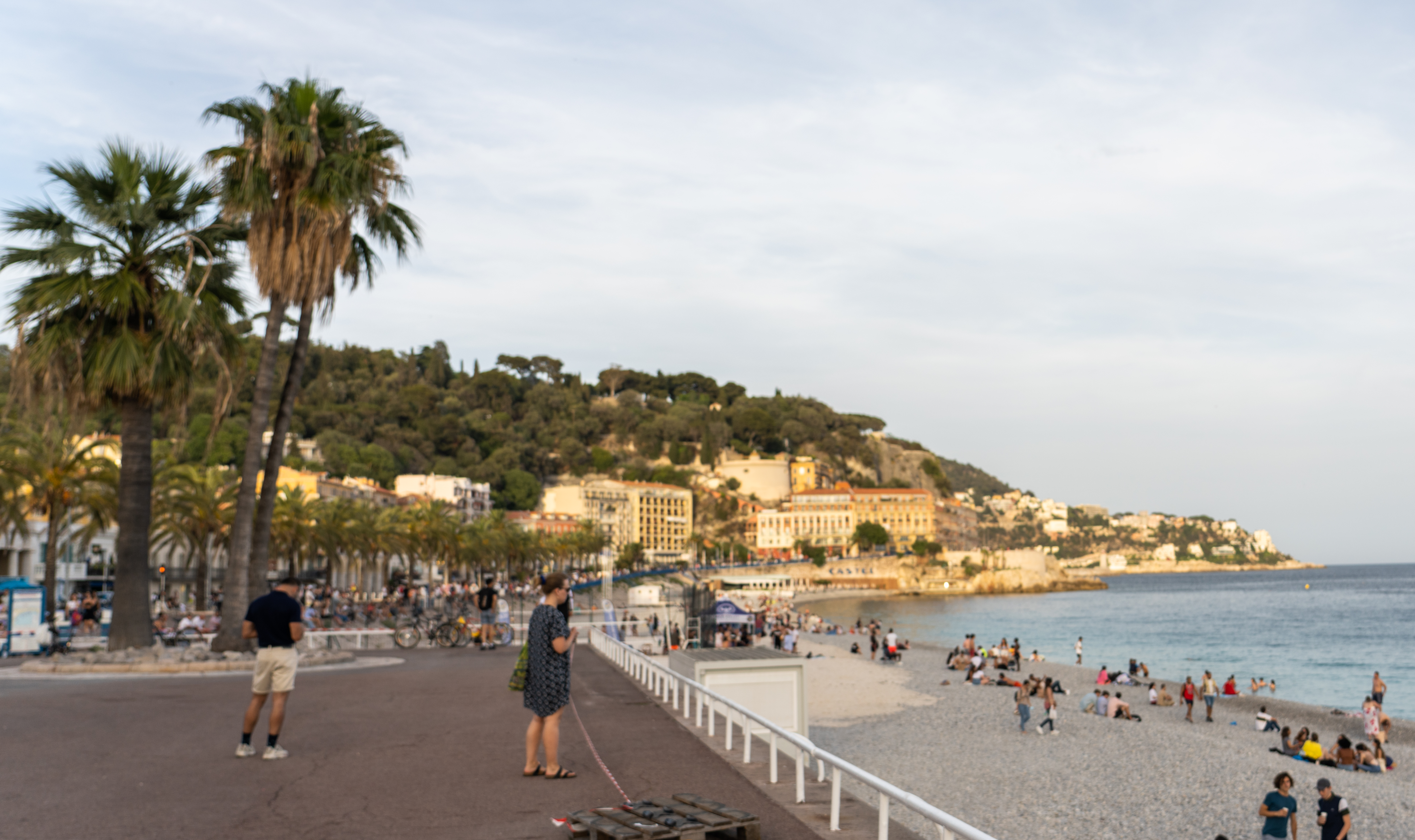
Back on the beach in Nice


Leave a Reply