Today we drove from Amman to Petra (or rather Wadi Musa) with multiple stops along the way.
Our first stop was Mount Nebo. In the Bible, Mount Nebo is mentioned as the place where Moses was shown the promised land before he died. It is also the place where Jeremiah hid the tabernacle and ark of the covenant in a cave.
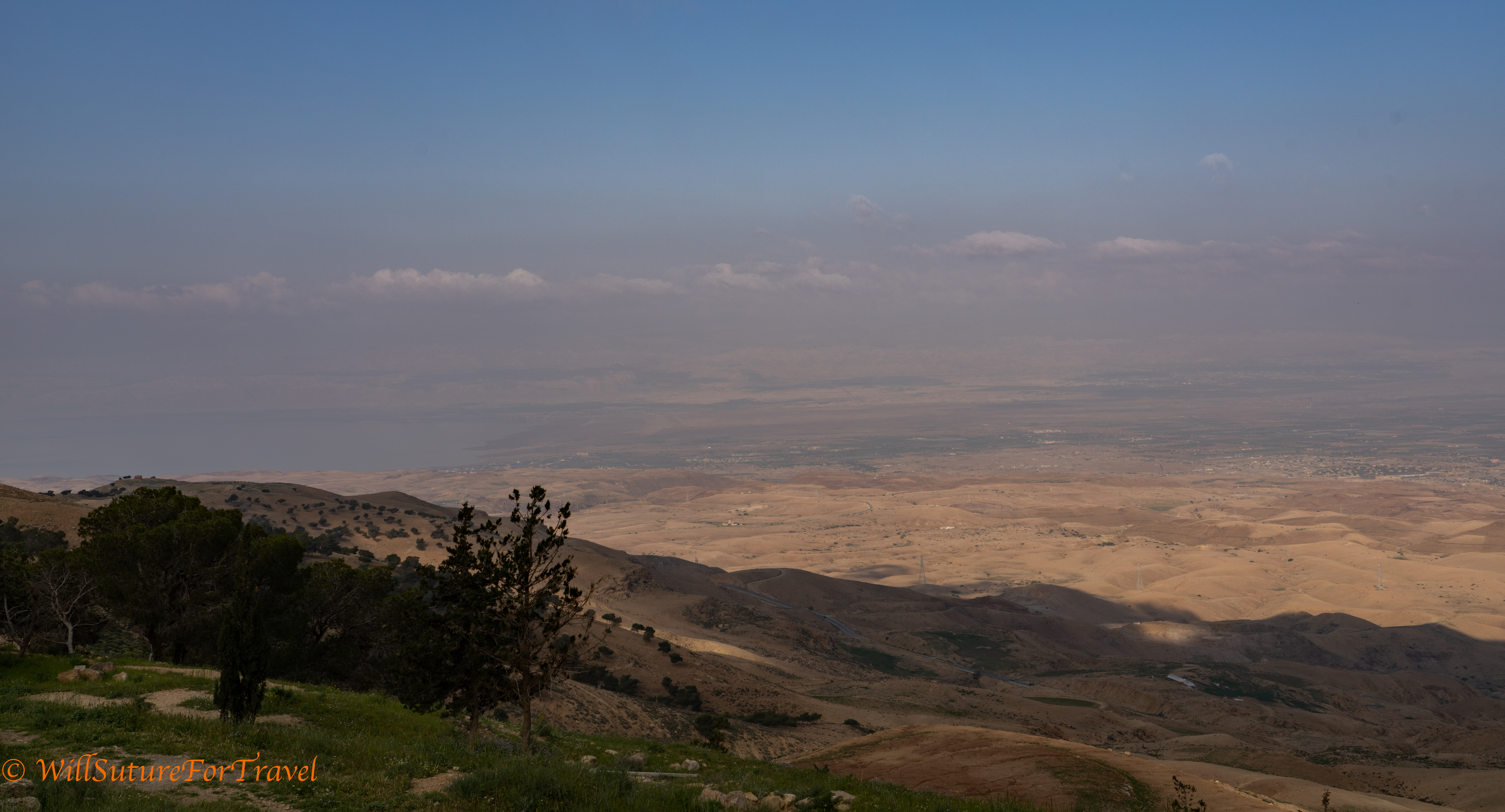
View from Mount Nebo. You can see the Dead Sea on the left.
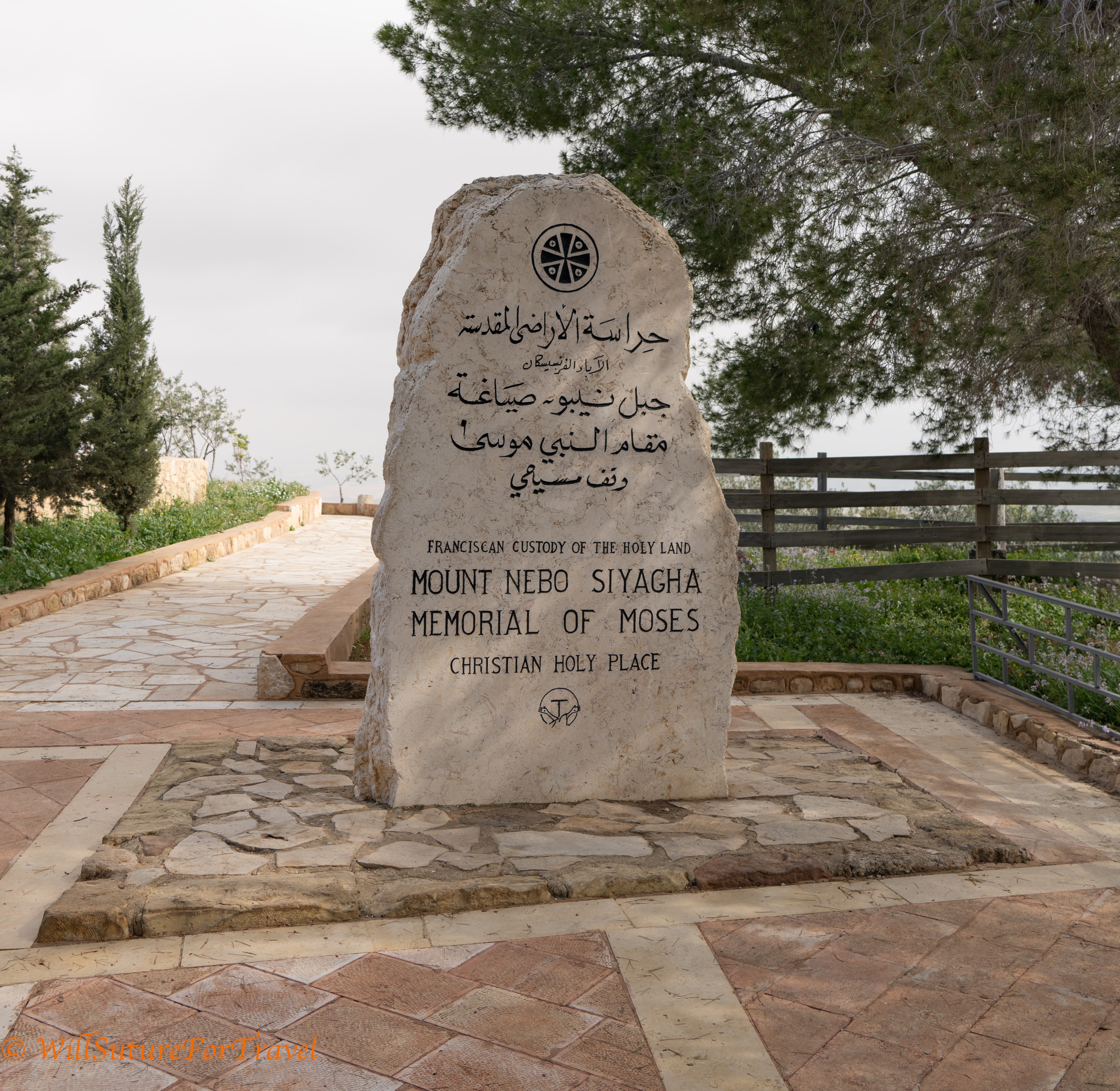
There has been a church here since the Byzantine era. The mosaic floors remain, with a more modern church, the Memorial Church of Moses, on the same site. This has been a pilgrimage site since the 4th century.
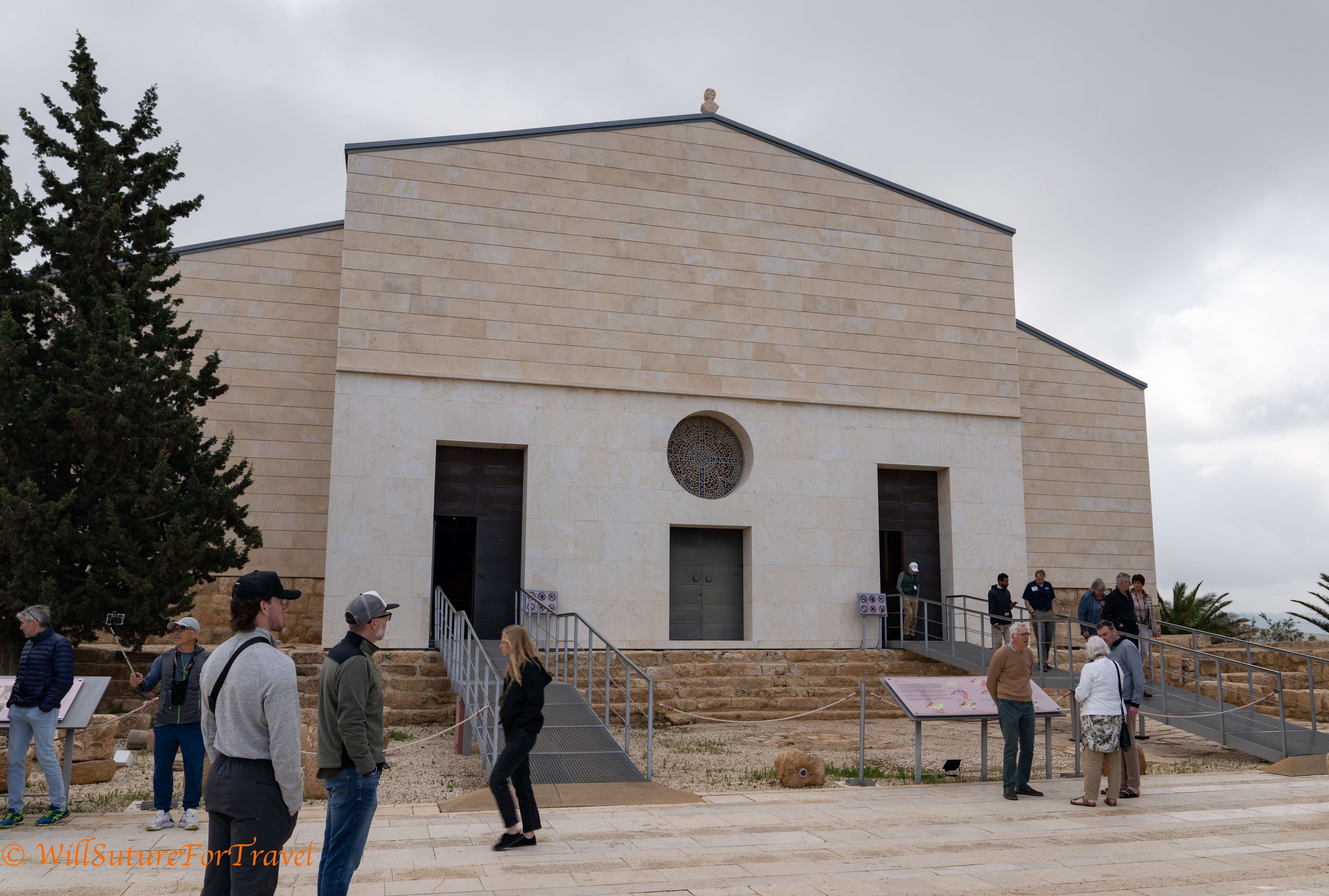
The Memorial Church of Moses
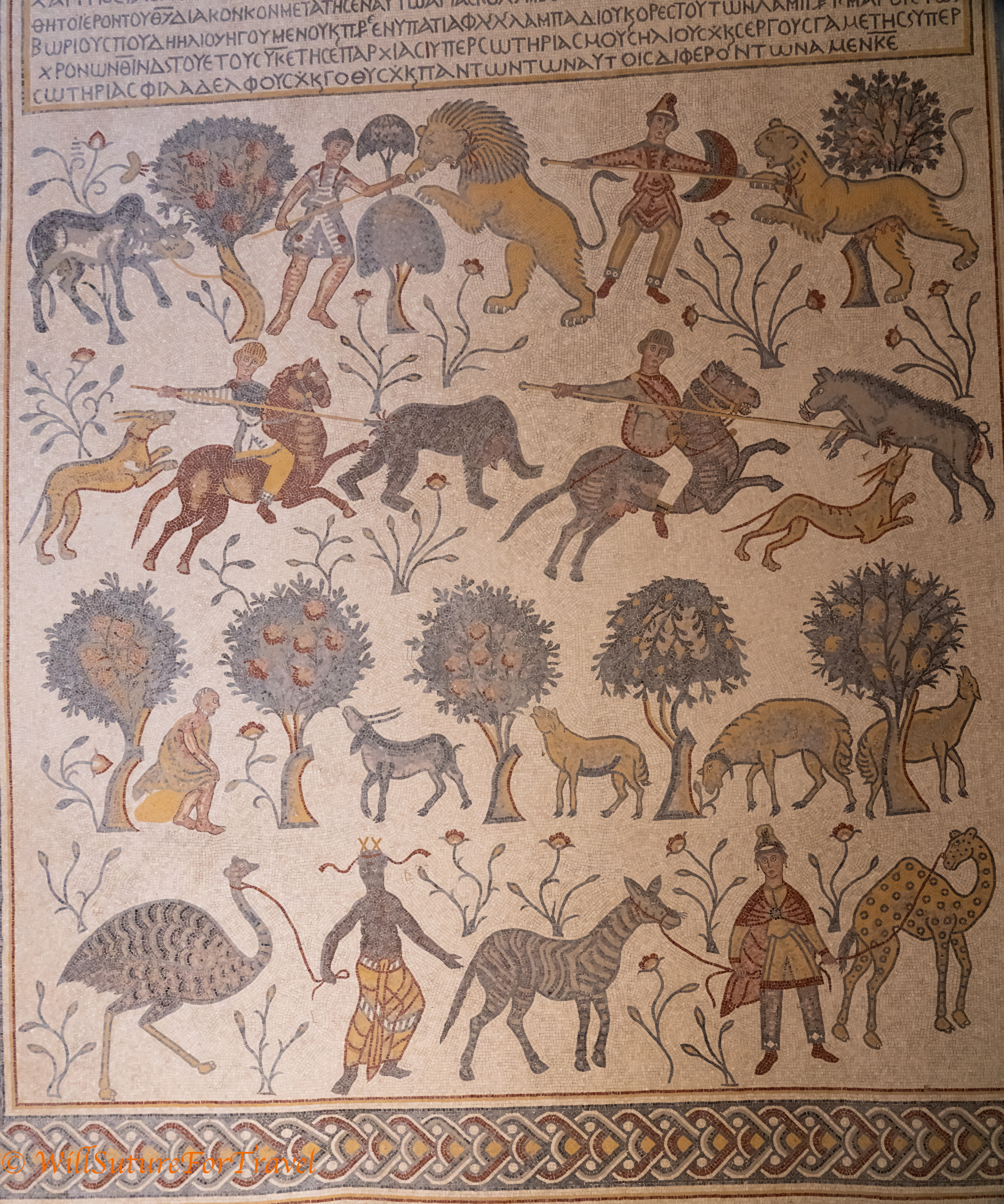
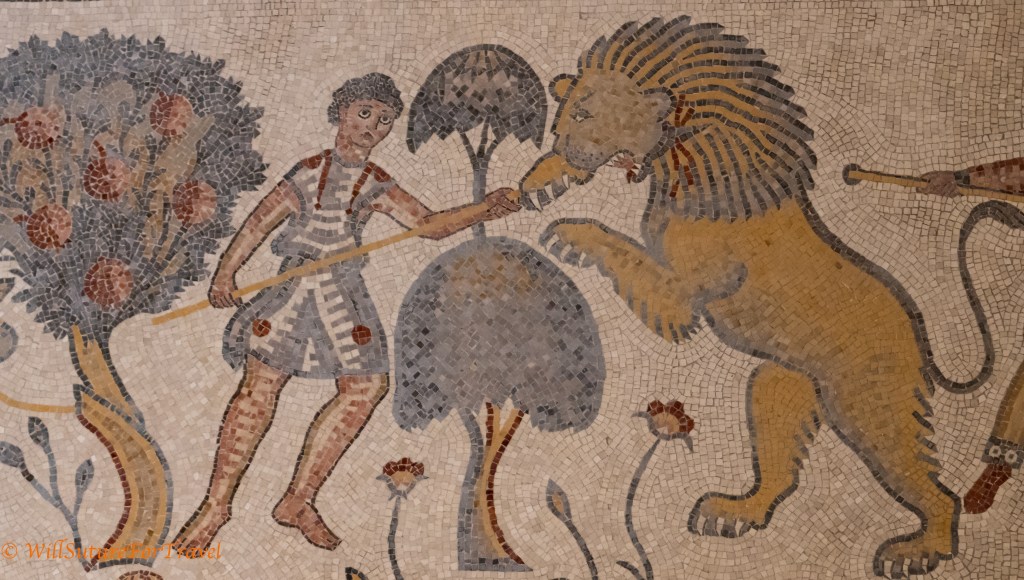
Mosaics in the Diakonikon Baptistery showing animals.
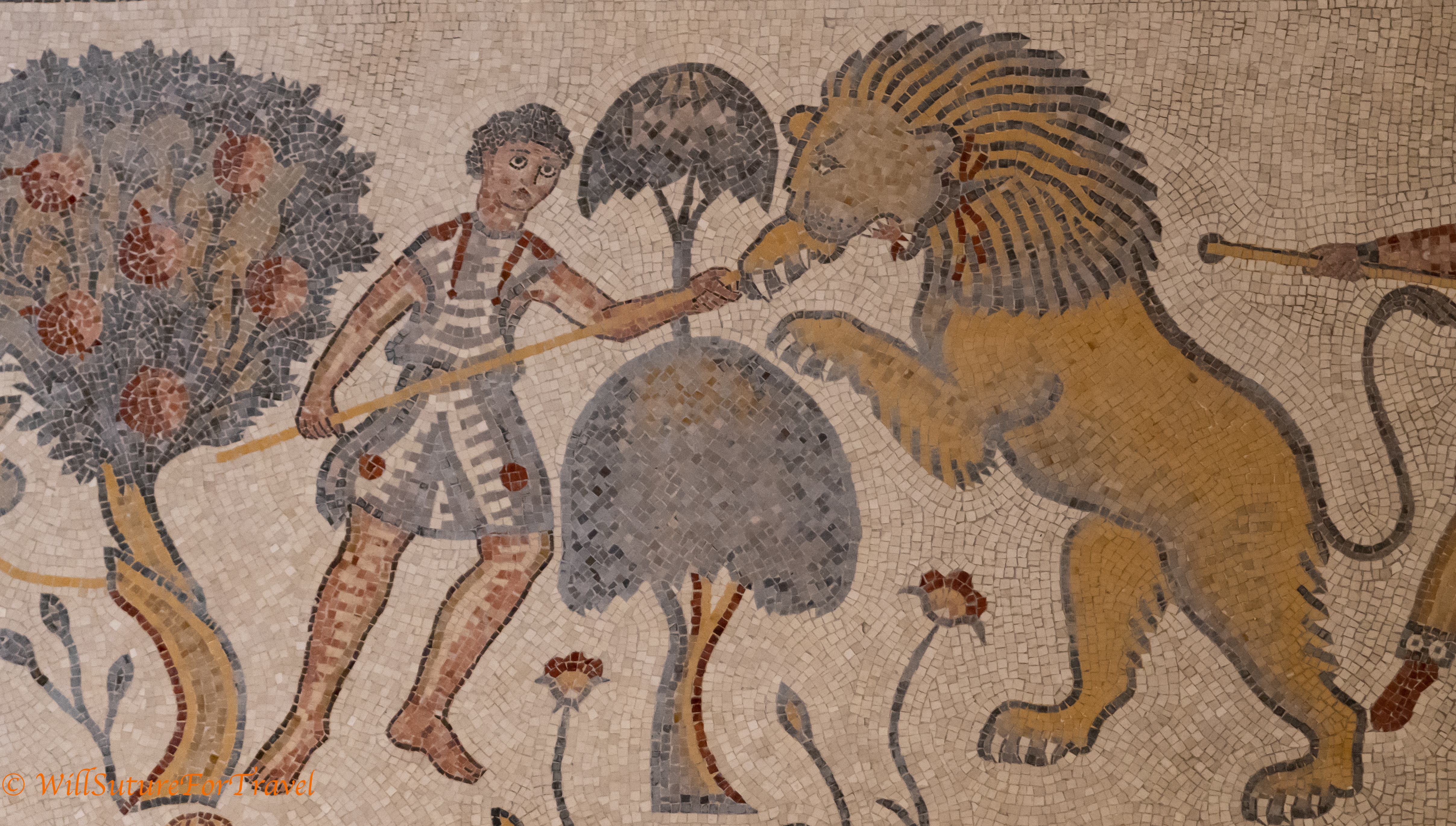
Closeup of part of the mosaic.
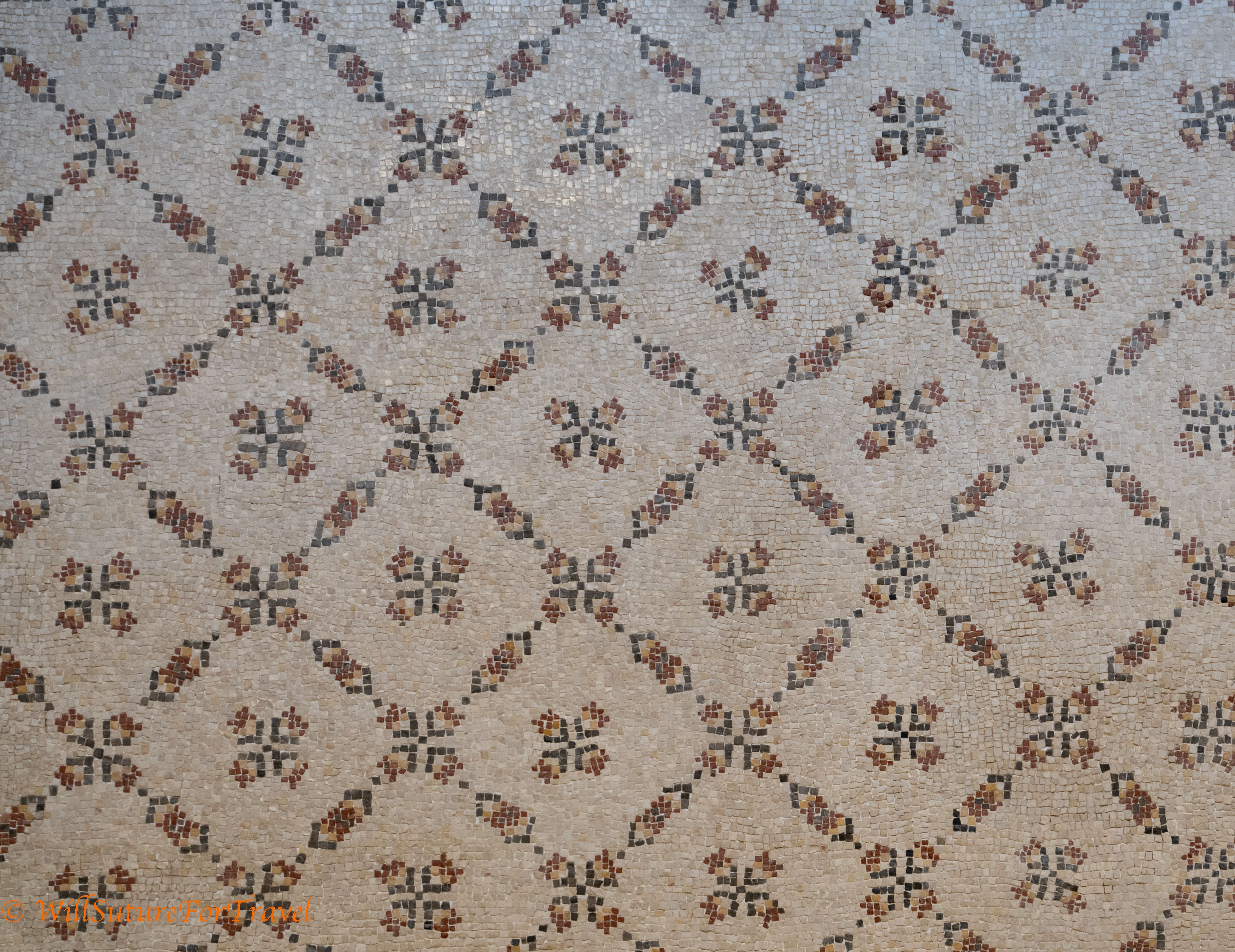
Wall mosaics in the southern baptistry.
Columns in the central nave.
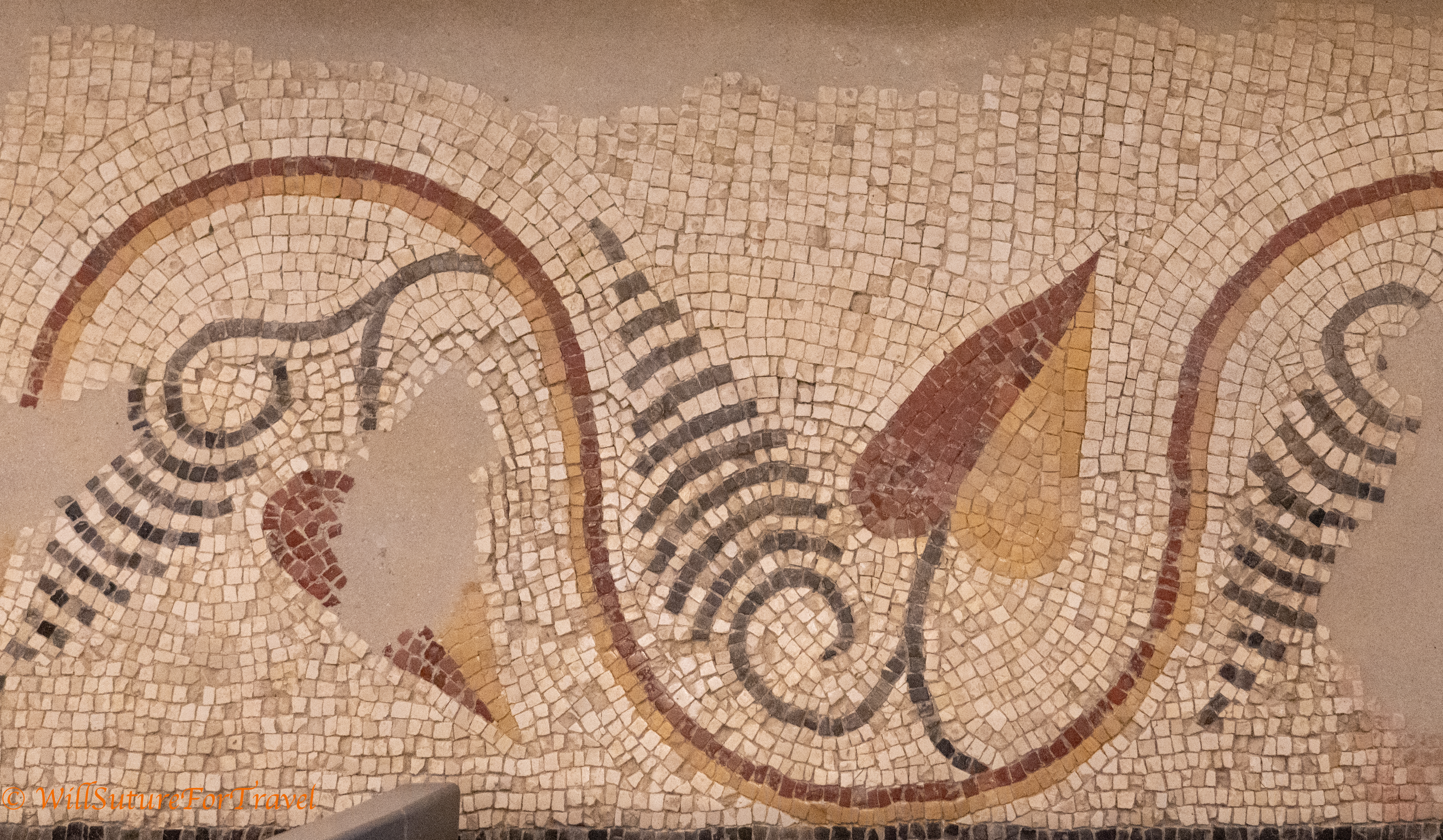
Mosaics near the southern baptistry
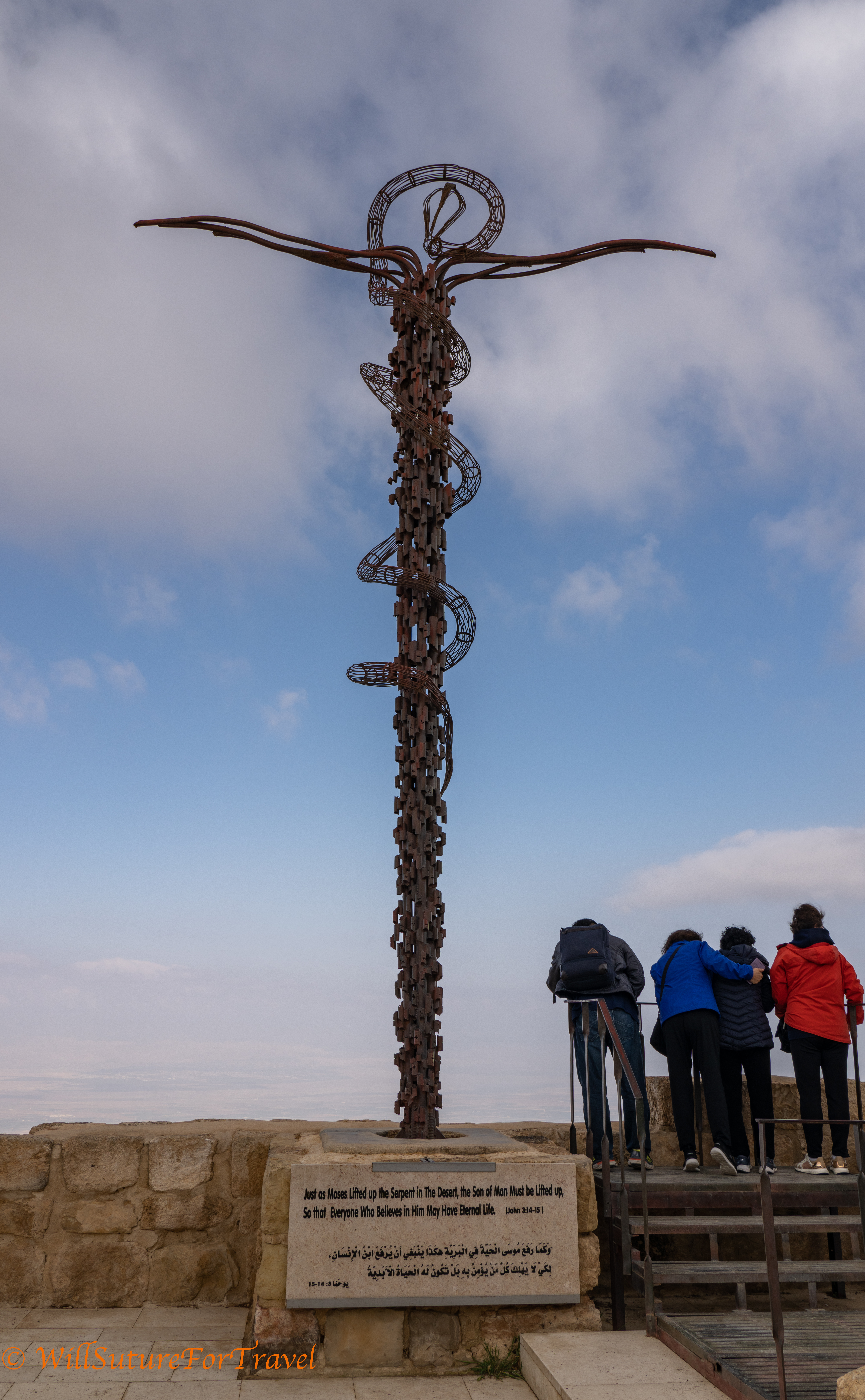
Brazen serpent sculpture. This represents the bronze snake that Moses made, as directed by God, to protect the Israelites from venomous snake bites. It also represents the crucifixion cross.
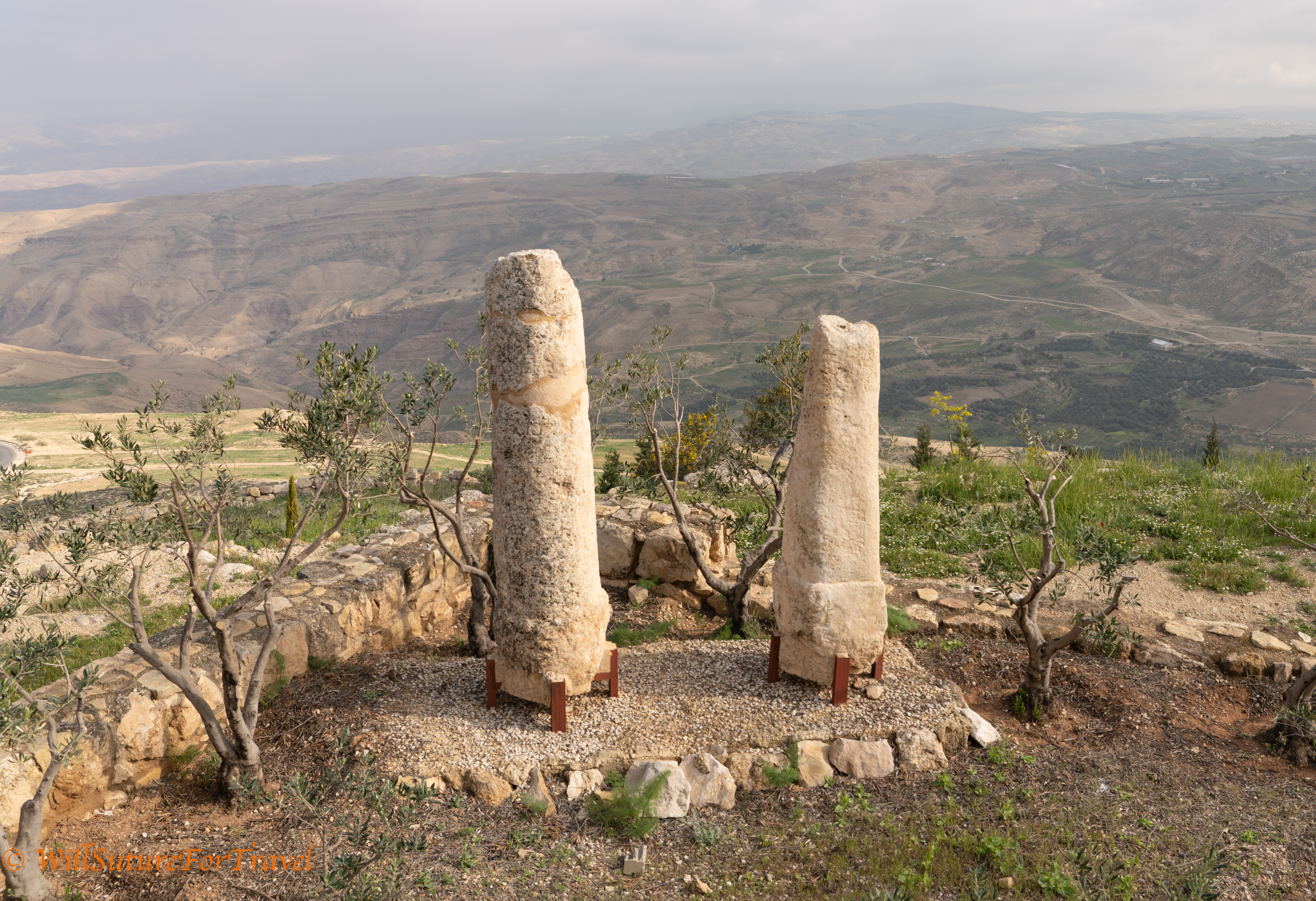
Since this was a pilgrimage site, these are Roman milestones marking the road to Mount Nebo.
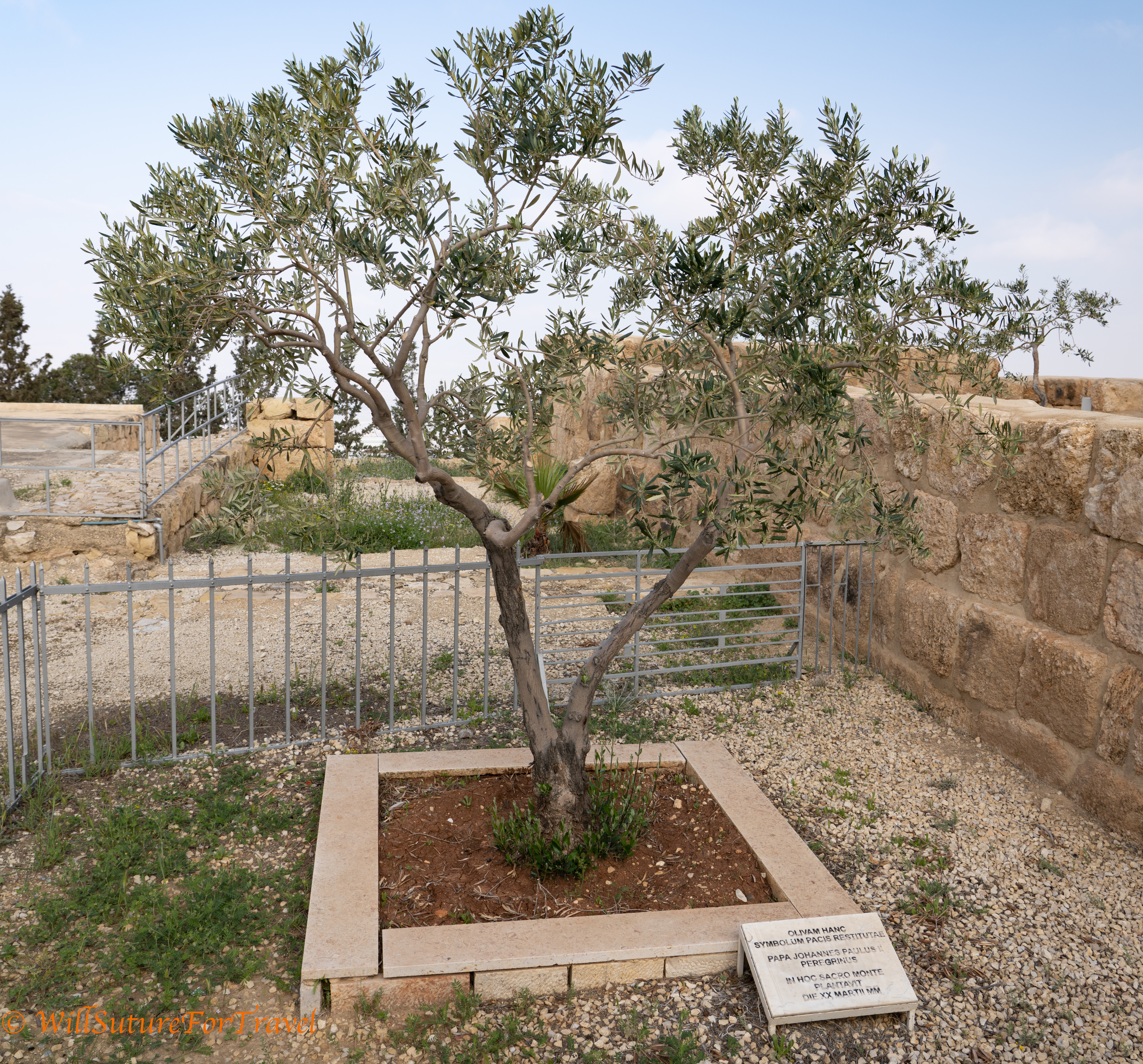
In 2000, Pope John Paul II visited Mount Nebo and planted this olive tree.
Another view from Mount Nebo
Our next stop was Mandaba where the Byzantine Church of St George has a mosaic map of the Holy Land. It is the earliest surviving map of the area, dating back to the 6th century. It is also the oldest known geographic floor mosaic. Large portions of the map have been destroyed, but it is still a large mosaic.
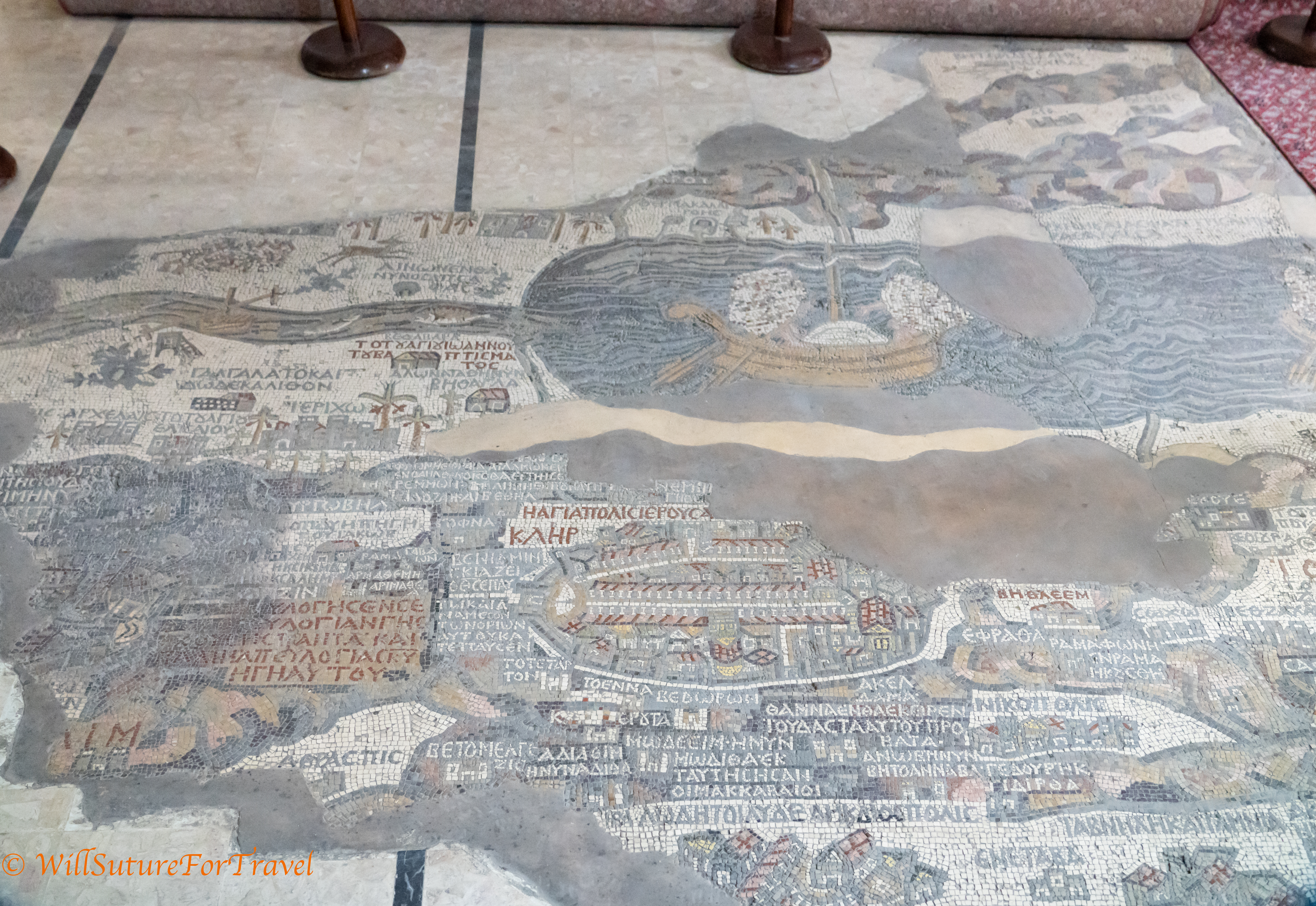
Part of the map
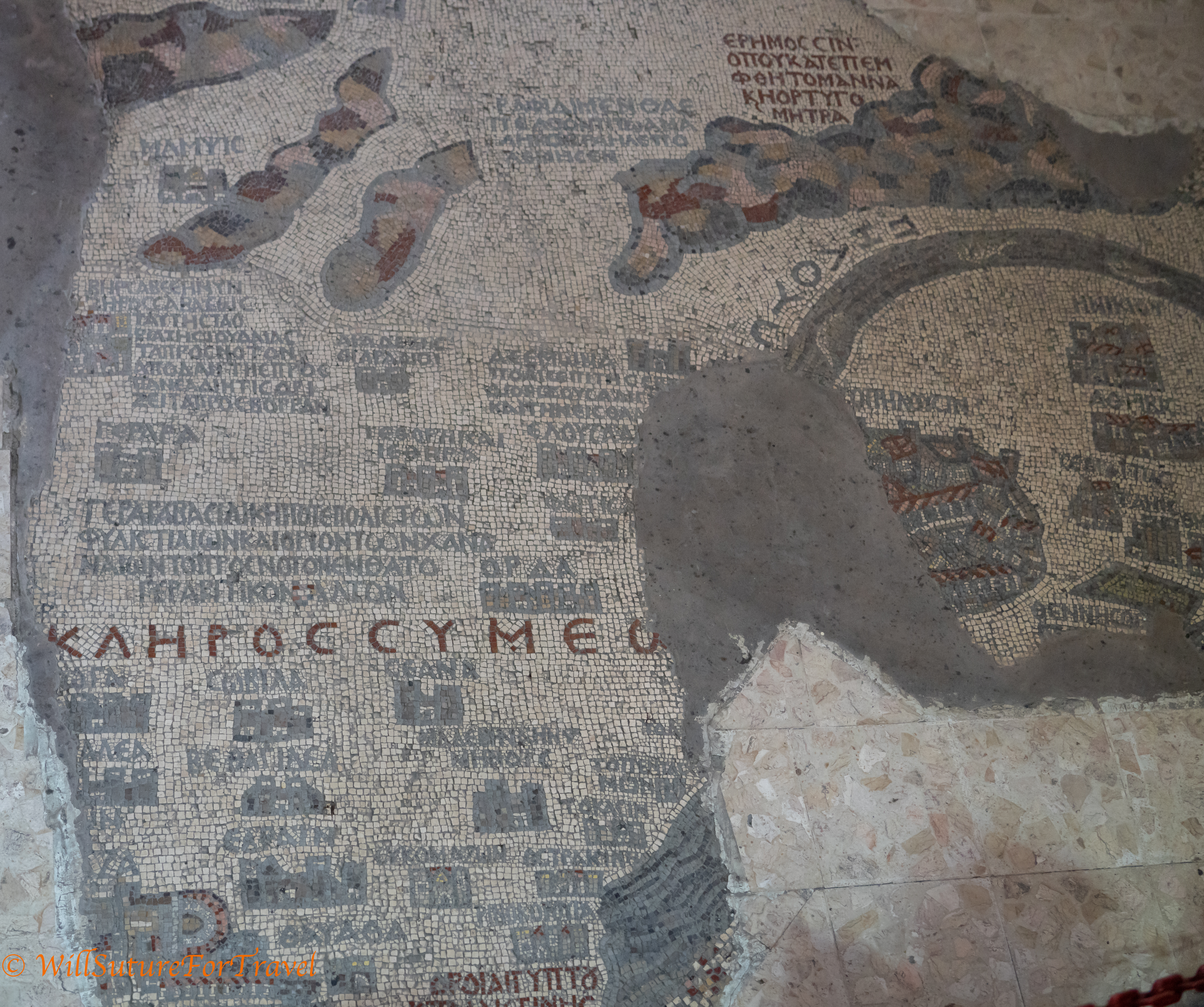
Another part of the map.
From there we went to Mukawir. Here are the ruins of the Fortress of Machaerus. This was a hilltop palace/fortress originally built around 90 BC by a Hasmonean king. It was destroyed by the Romans and rebuilt by Herod the Great. According to the historian Josephus, this is where John the Baptist was imprisoned. It is also where it is believed that Salome asked for John the Baptist’s head.
Ruins of the Fortress

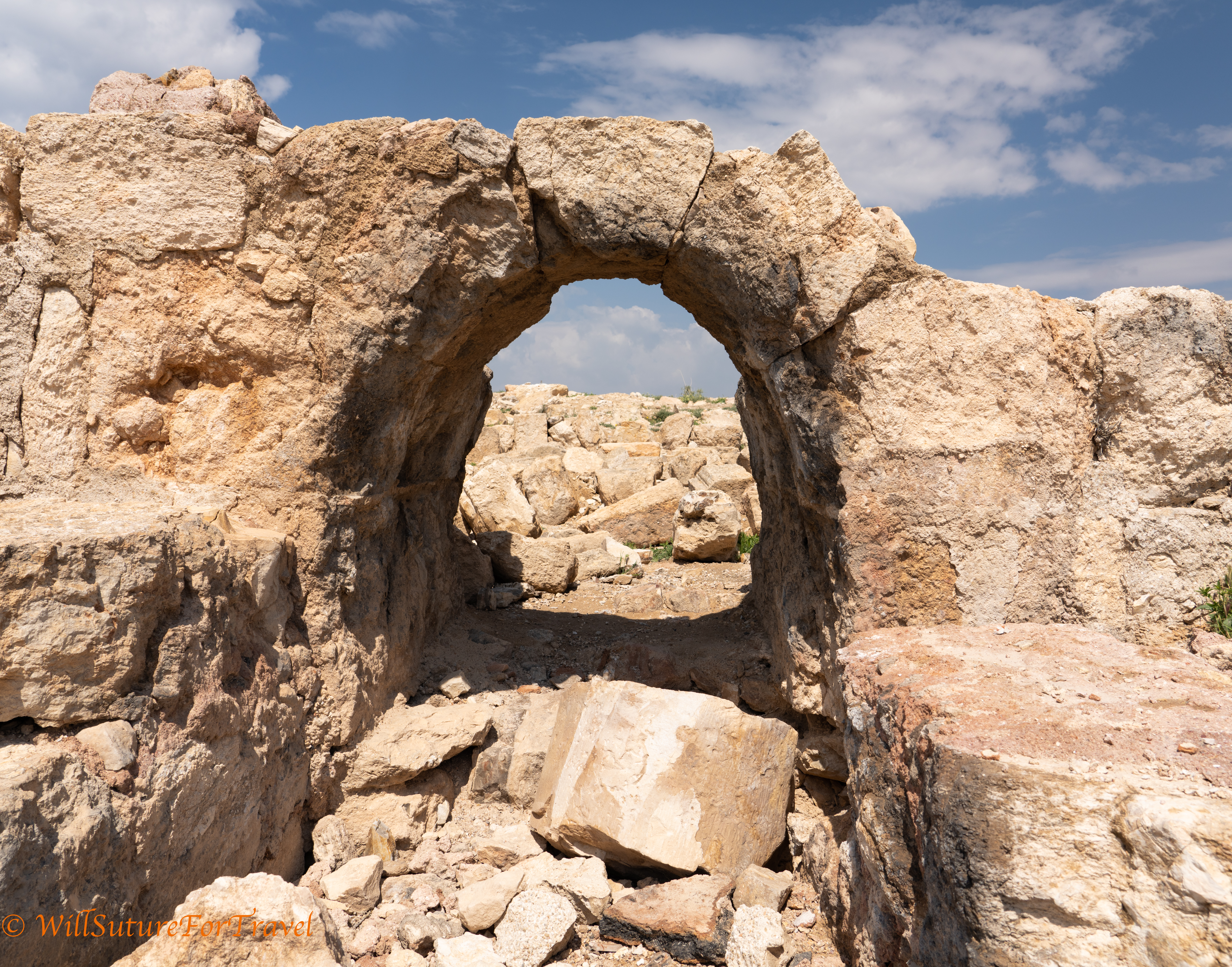

To get to the ruins you have to walk down one large hill and up another. It was a decent walk, but literally was uphill both ways.
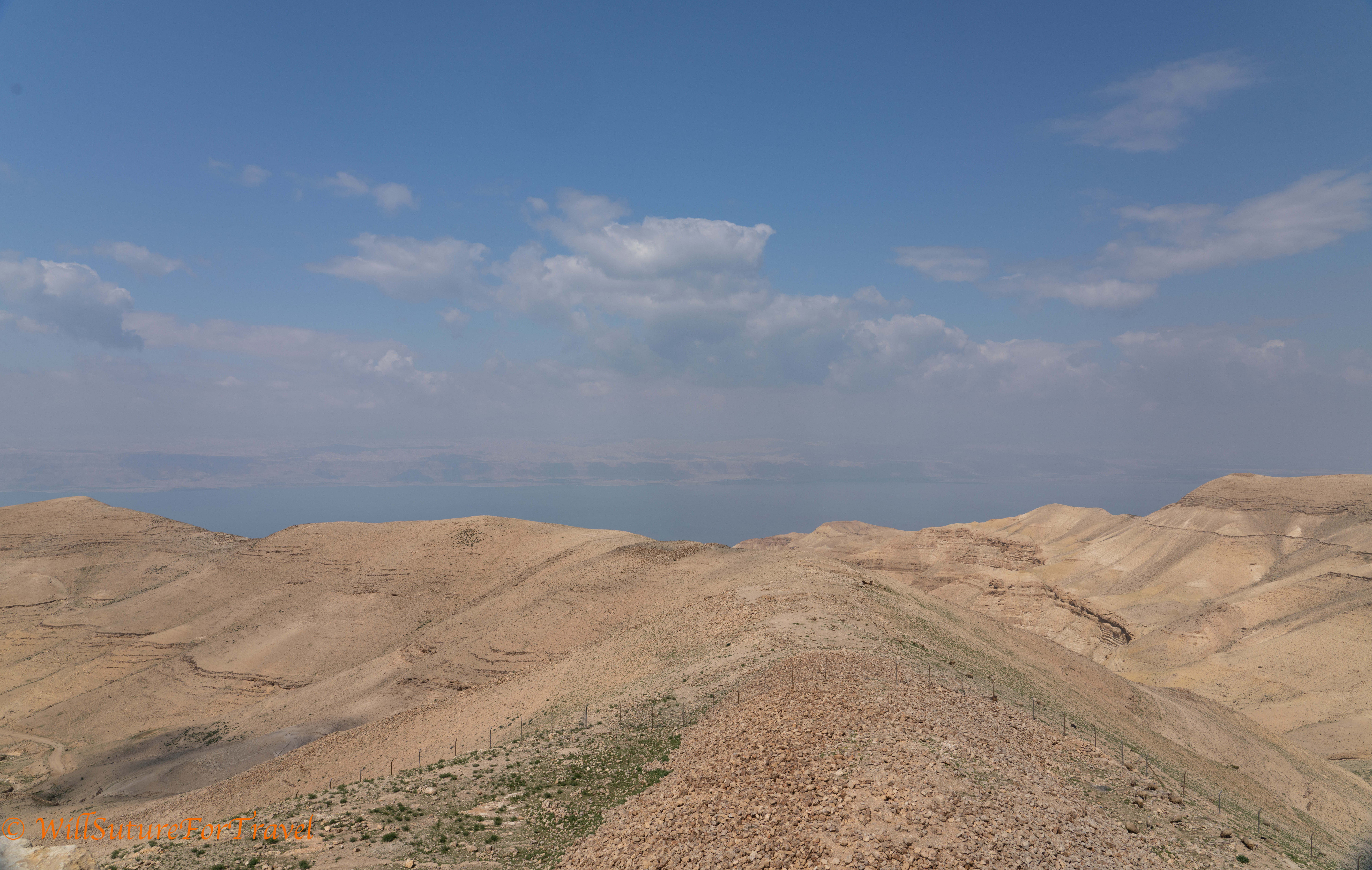
We did get some good views. You can see the Dead Sea.
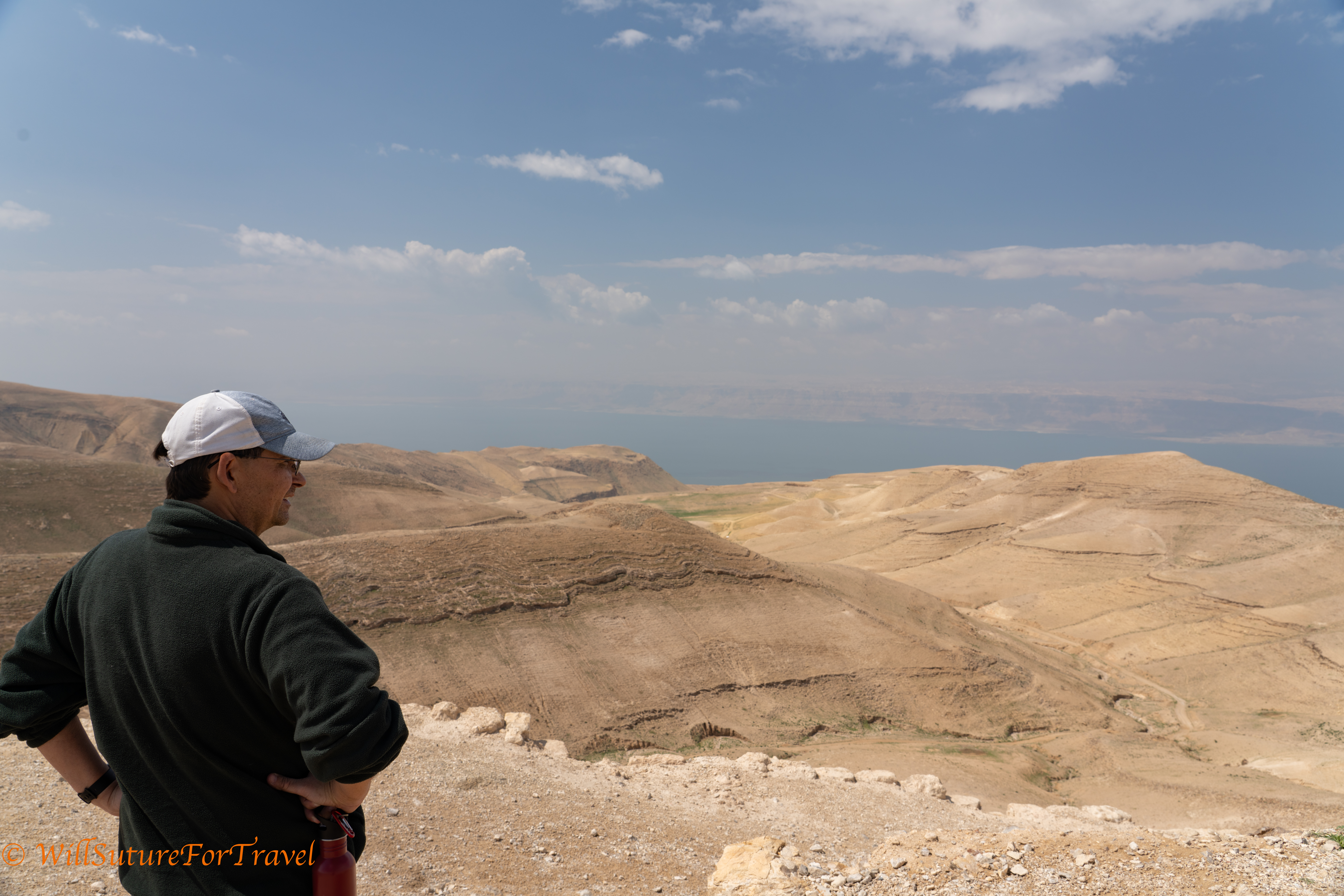
Paul and the Dead Sea.
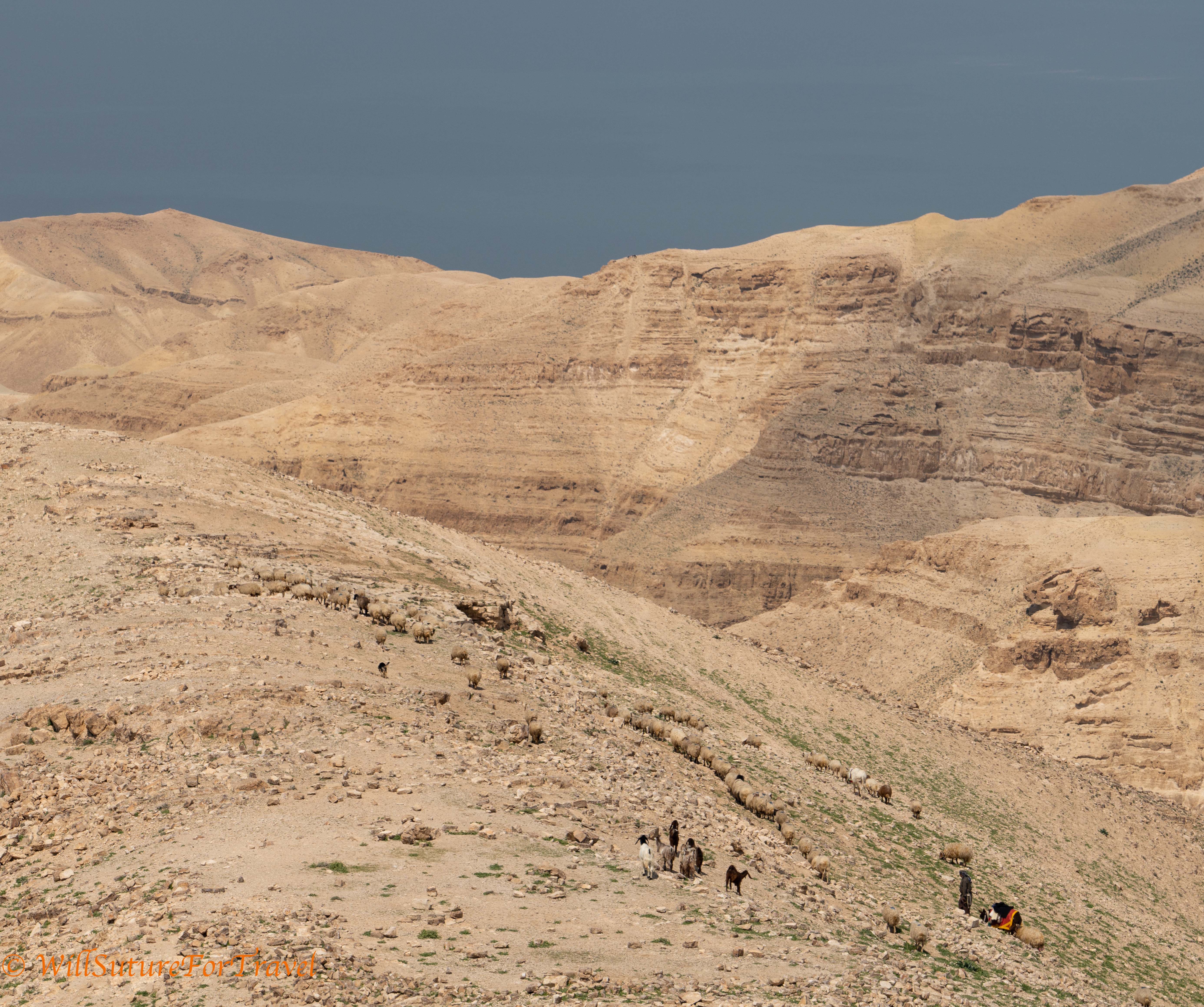
Shepherd with his sheep and goats.
Rock layers
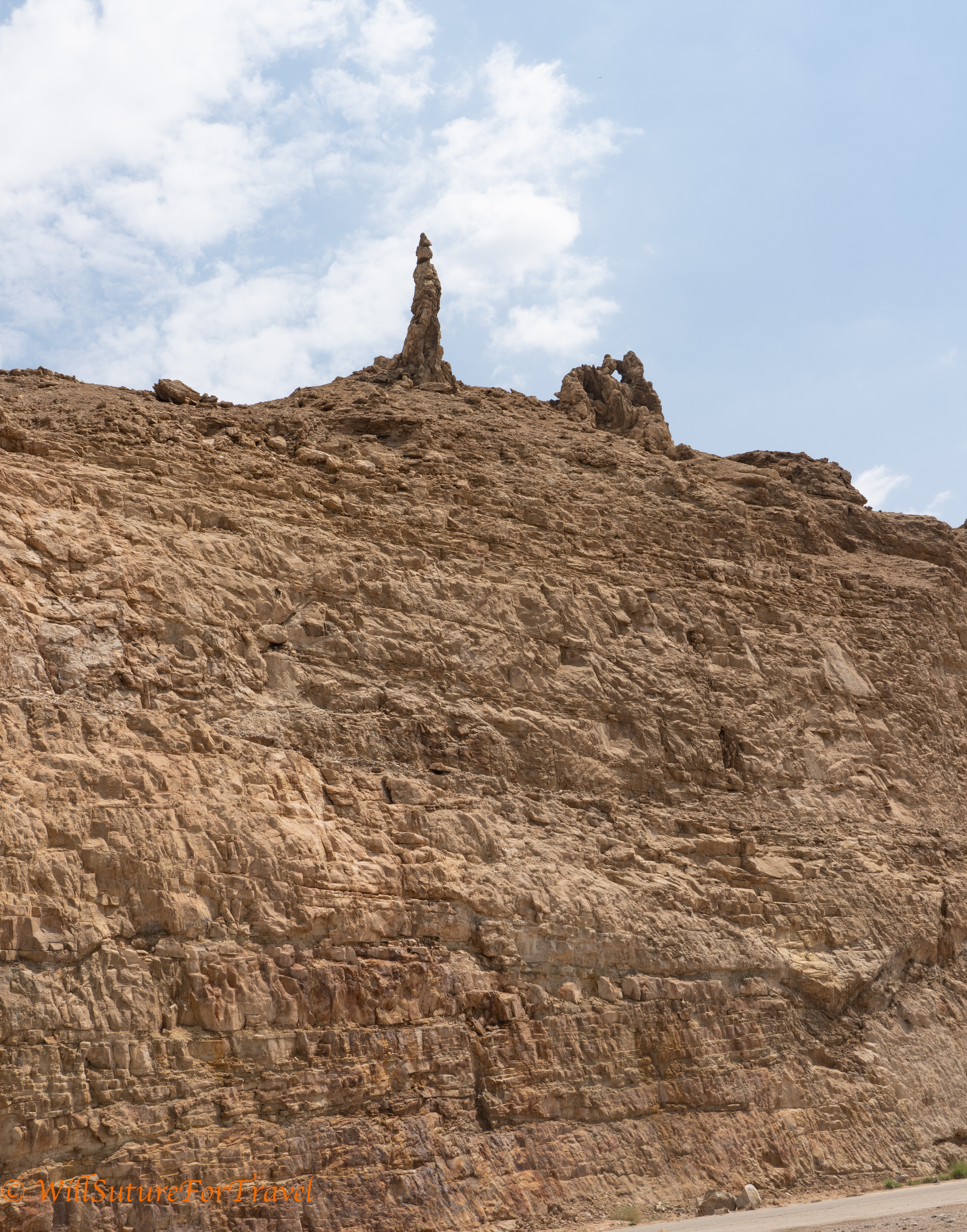
On our way to the next site, we stopped by the Dead Sea to see this salt formation. Our guide said it’s Lot’s wife.
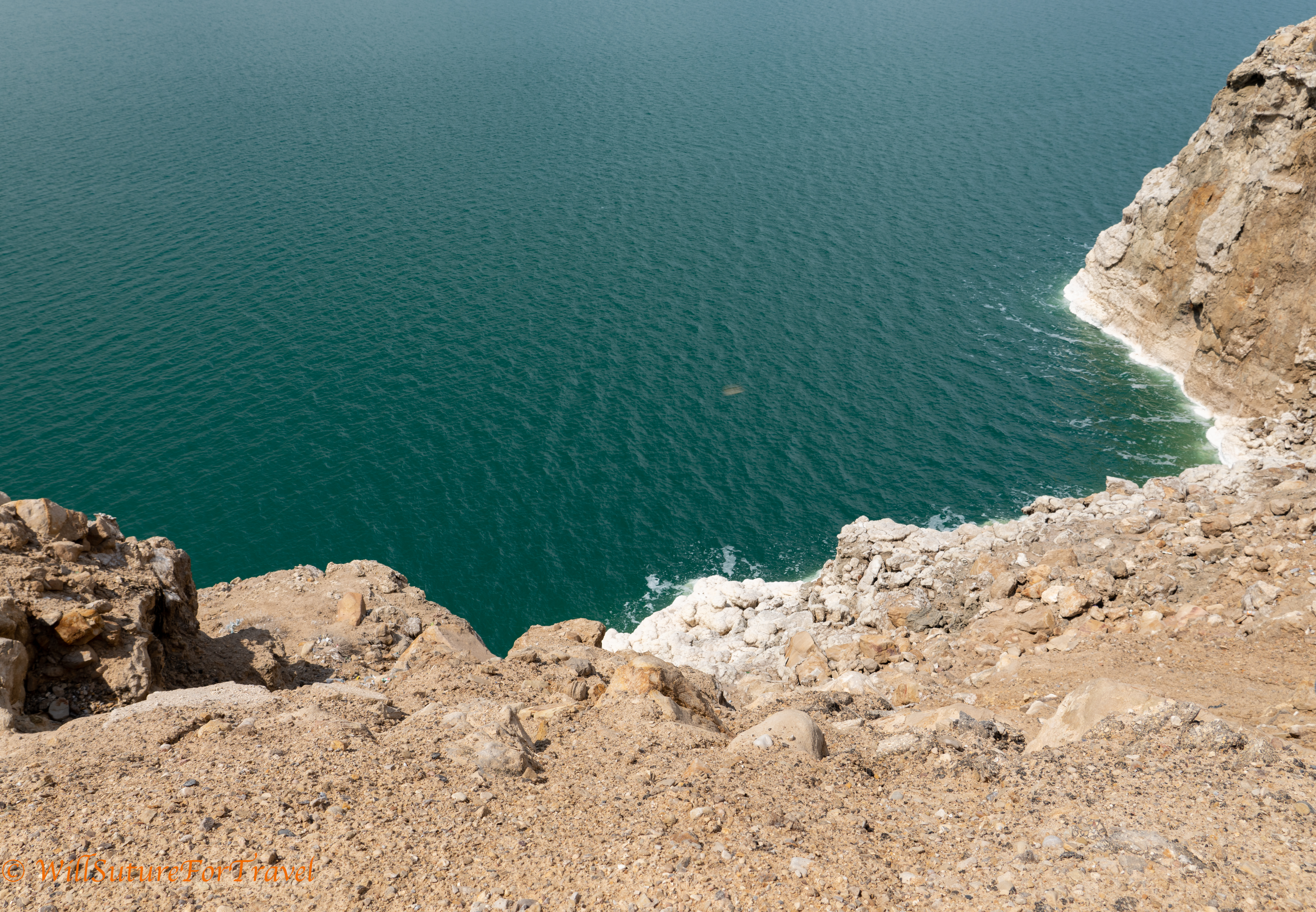
Dead Sea. You can see the salt collecting on the shore.
Next came Kerak Castle, a medieval crusader castle. This was built in the 1140s and was a center of power for the crusaders. Saladin, the founder of the Ayyubid dynasty, held siege to the castle in 1183 and 1184. His nephew eventually overtook the crusaders.
One of the intact portions of the castle. It was very cold and windy up here and we were happy to get indoors. Most of the castle was either plain rooms like this or in ruins (out in the cold wind).
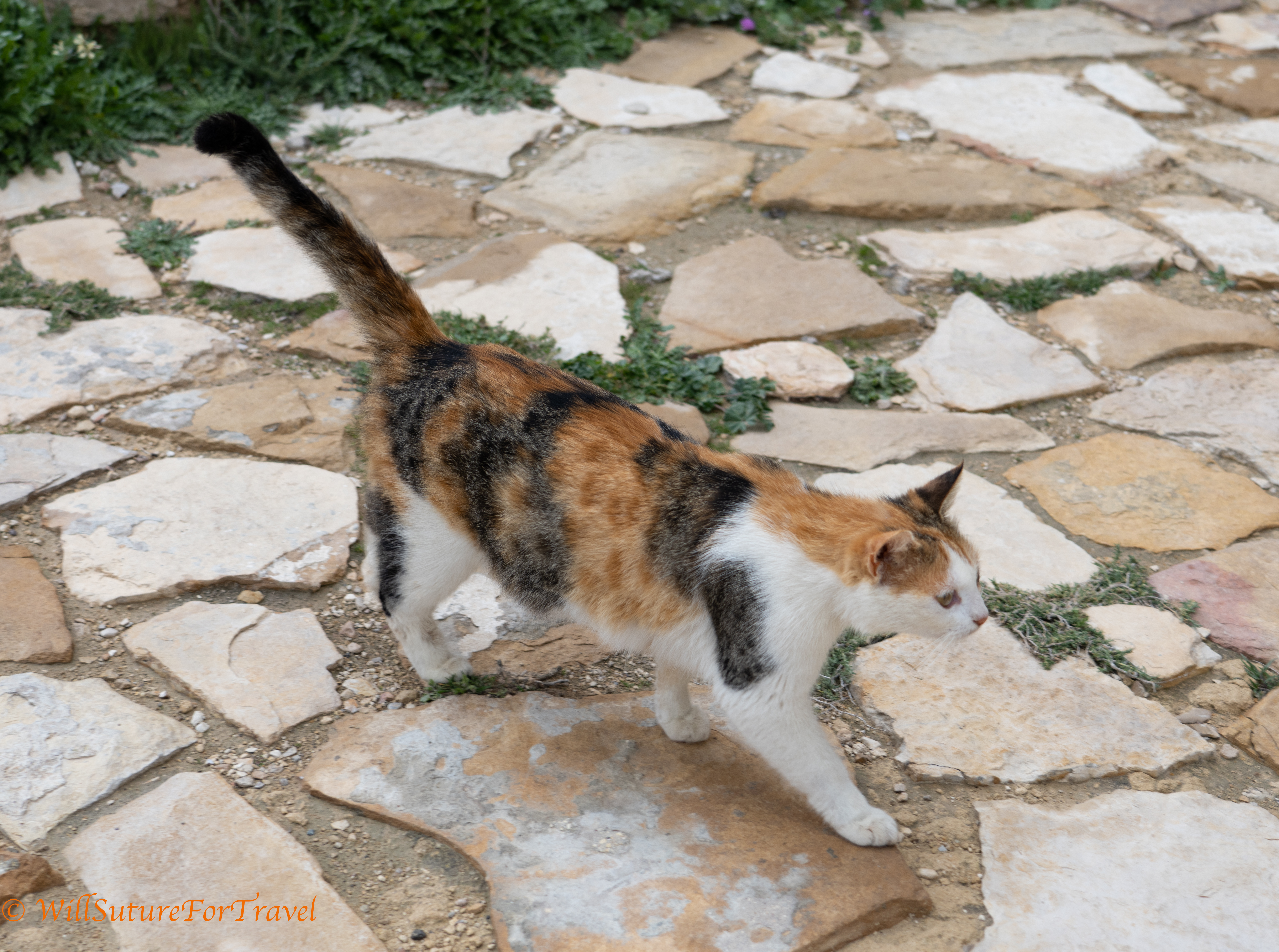
This cat followed us around for a while.
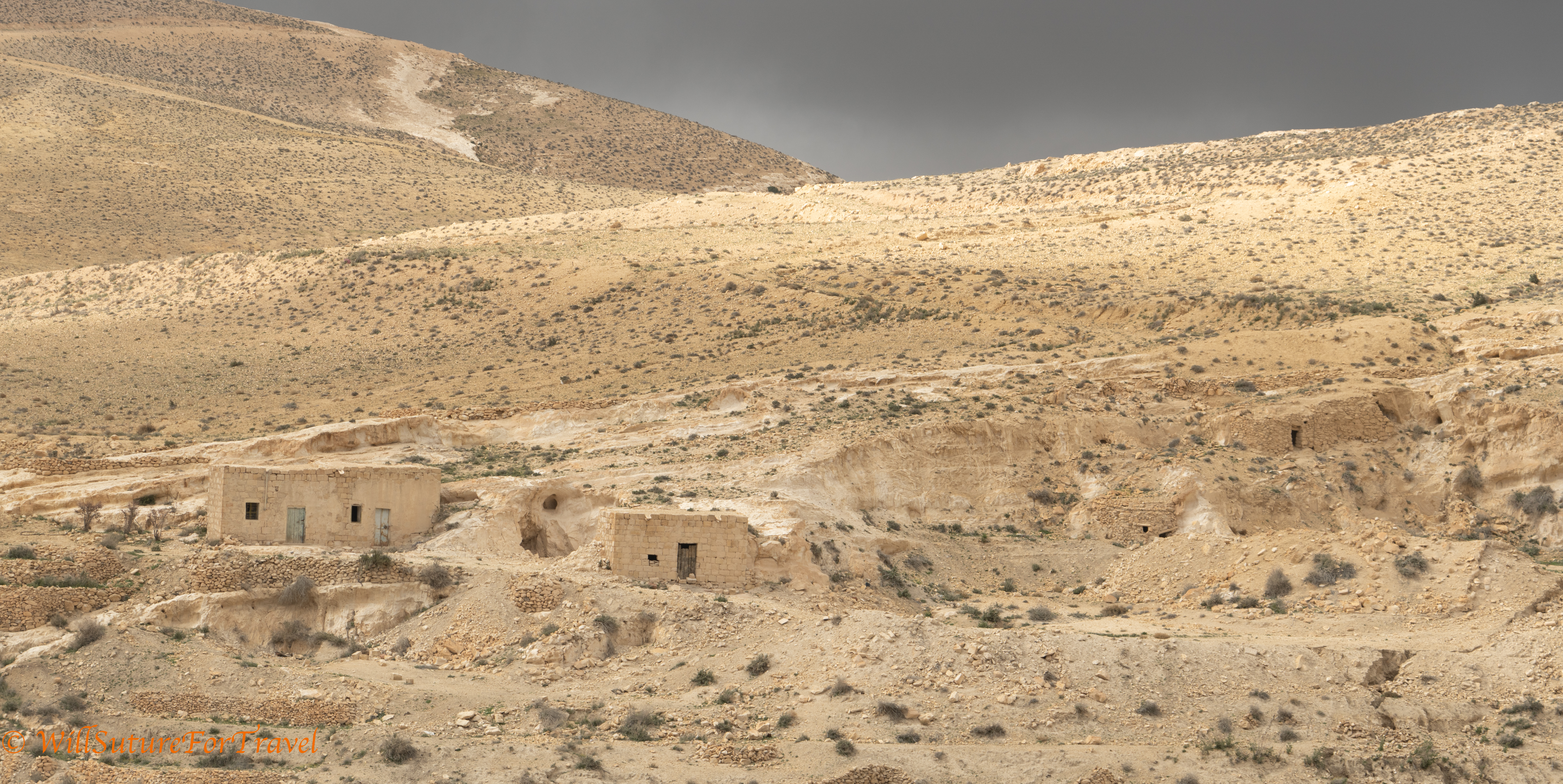
Landscape and homes along the way.
Our next stop was at another crusader castle, Shobak or Montreal Castle. This was built in 1115 by Baldwin I of Jerusalem. The castle was strategically important due to the fact that it also dominated the main passage from Egypt to Syria. This, too was besieged by Saladin in 1187. This lasted 2 years. Reportedly the women and children were sold off for food during this time.

Much of the castle is in ruins, but there are some areas mostly standing.
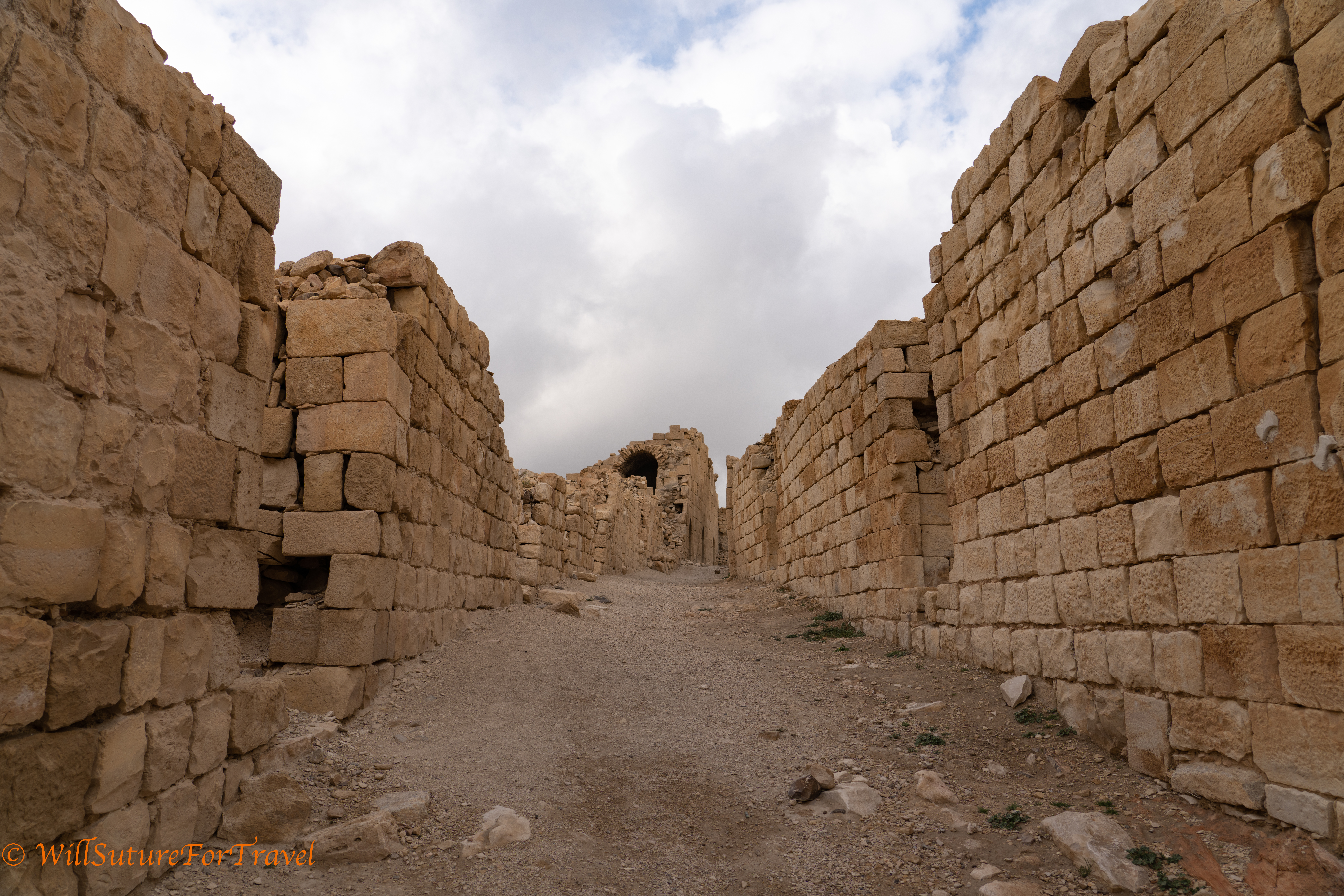
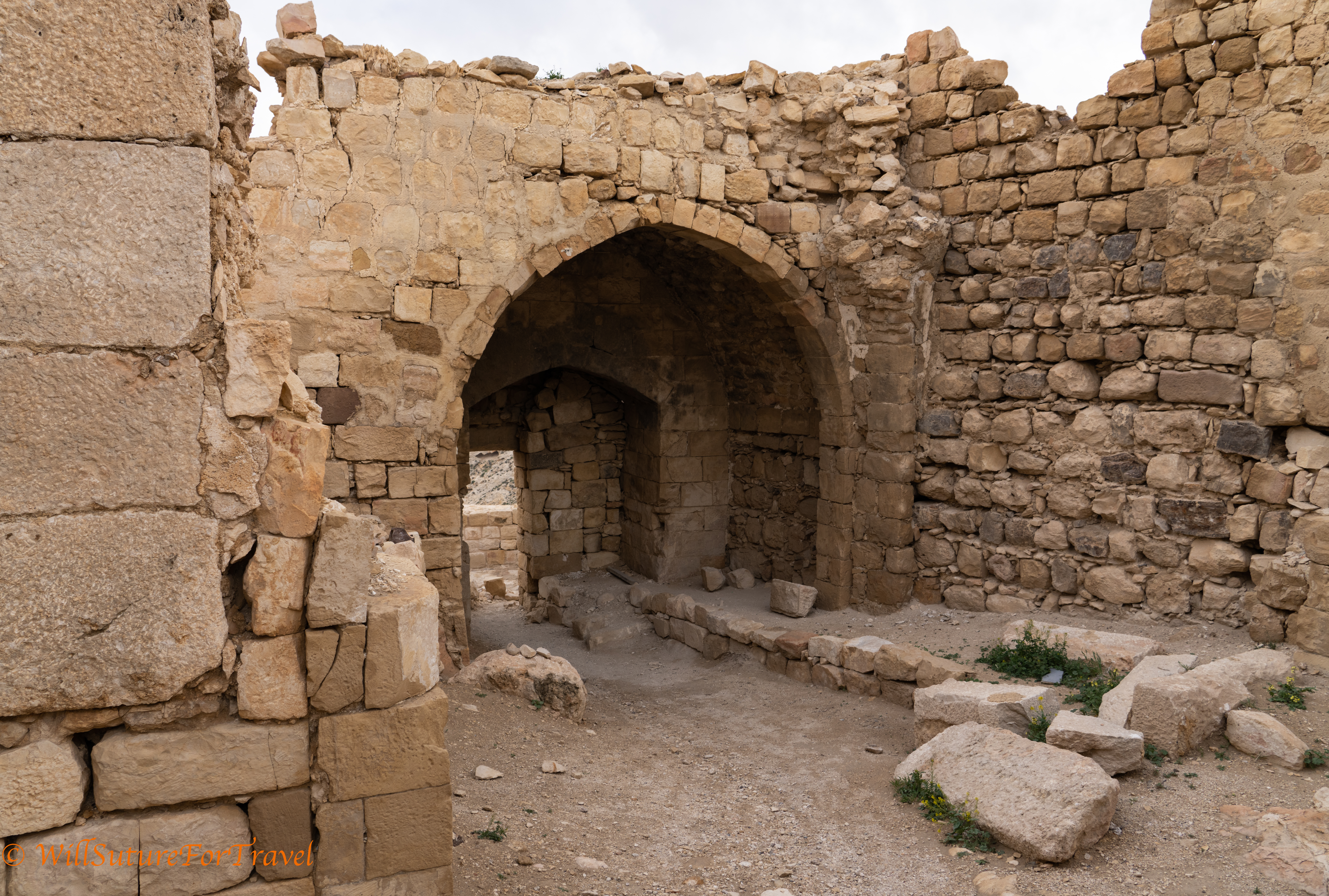

Tower which was built or rebuilt when under muslim control.
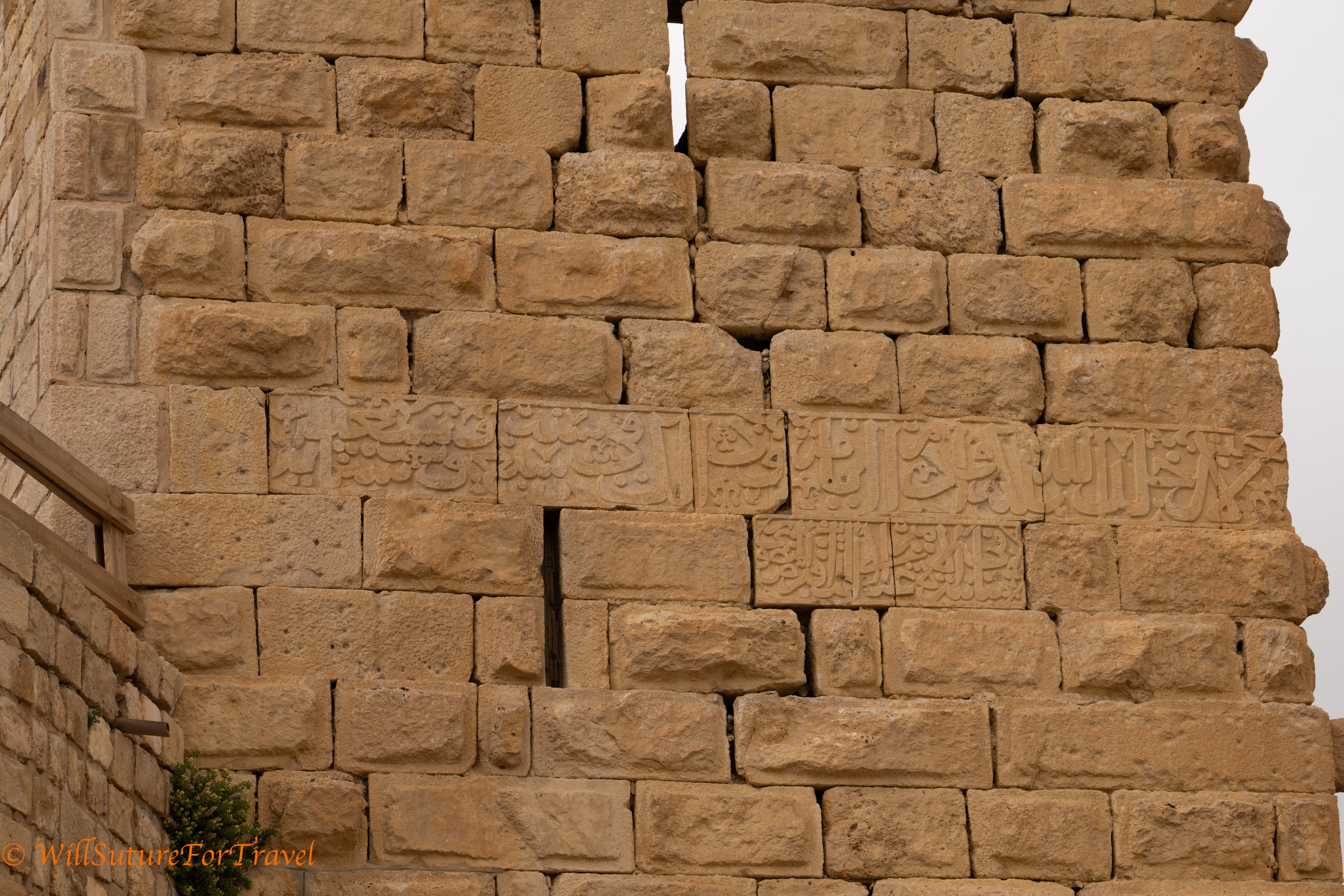
Arabic script is incorporated.
View from below.
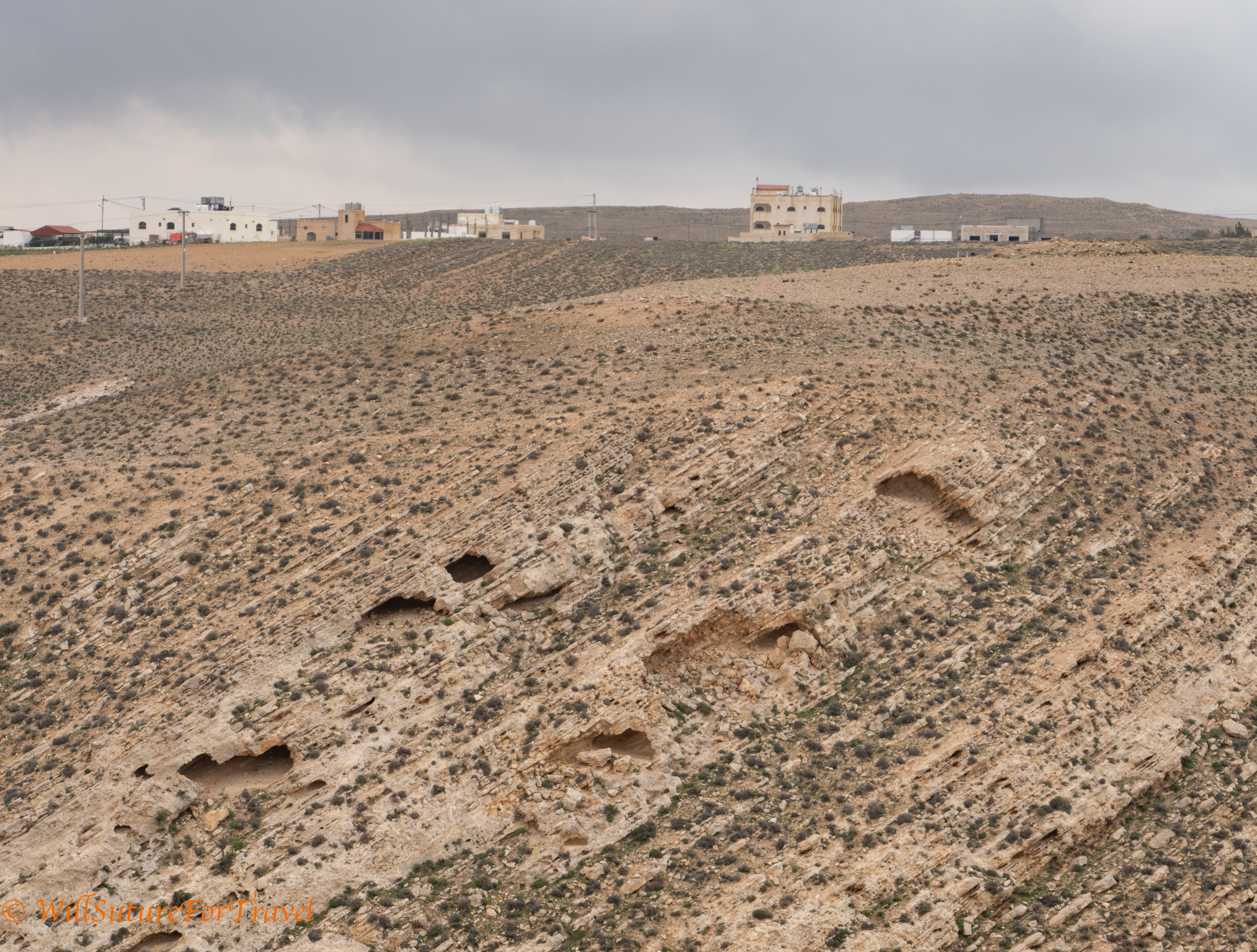
Nearby landscape.
This was a long day, but we managed to combine a drive and sightseeing pretty efficiently.


Leave a Reply