Today was a big day as we went into Petra. I have wanted to see Petra since I was 6 or 7 after my grandfather went and I saw all of his pictures.
Petra is the best known city and capital city of the Nabateans. The area around Petra has been inhabited from as early as 7000 BC, and the Nabateans might have settled here as early as the 4th century BC. The Nabataeans were originally nomadic bedouins who became wealthy as incense traders from the east to Rome, Egypt, and parts of the Mediterranean. Eventually they came under the control of Rome and later Petra became the capital of the Byzantine region of Palaestina. It was also used by Crusaders, but it eventually was abandoned.
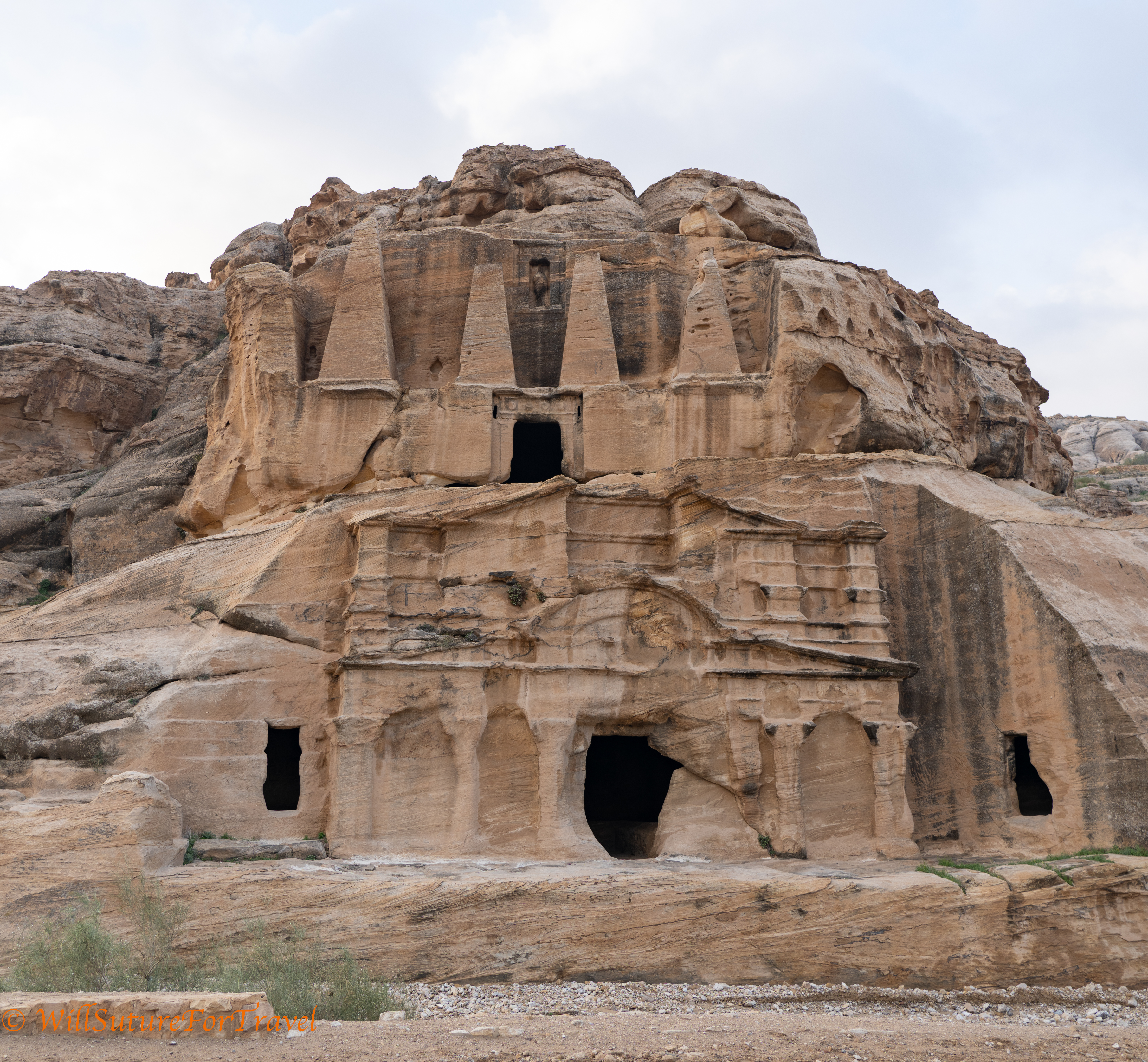
Obelisk Tomb (top) and Bab as-Siq Triclinium (bottom).
The Obelisk Tomb is considered to be an eclectic example of Nabatean architecture as it has some Egyptian components. It is likely from the 1st century BC.
A triclinium is a dining room with three benches (or sofas) on which the guests reclined while feasting. This is one of many in Petra. It was built around the same time as the Obelisk Tomb.
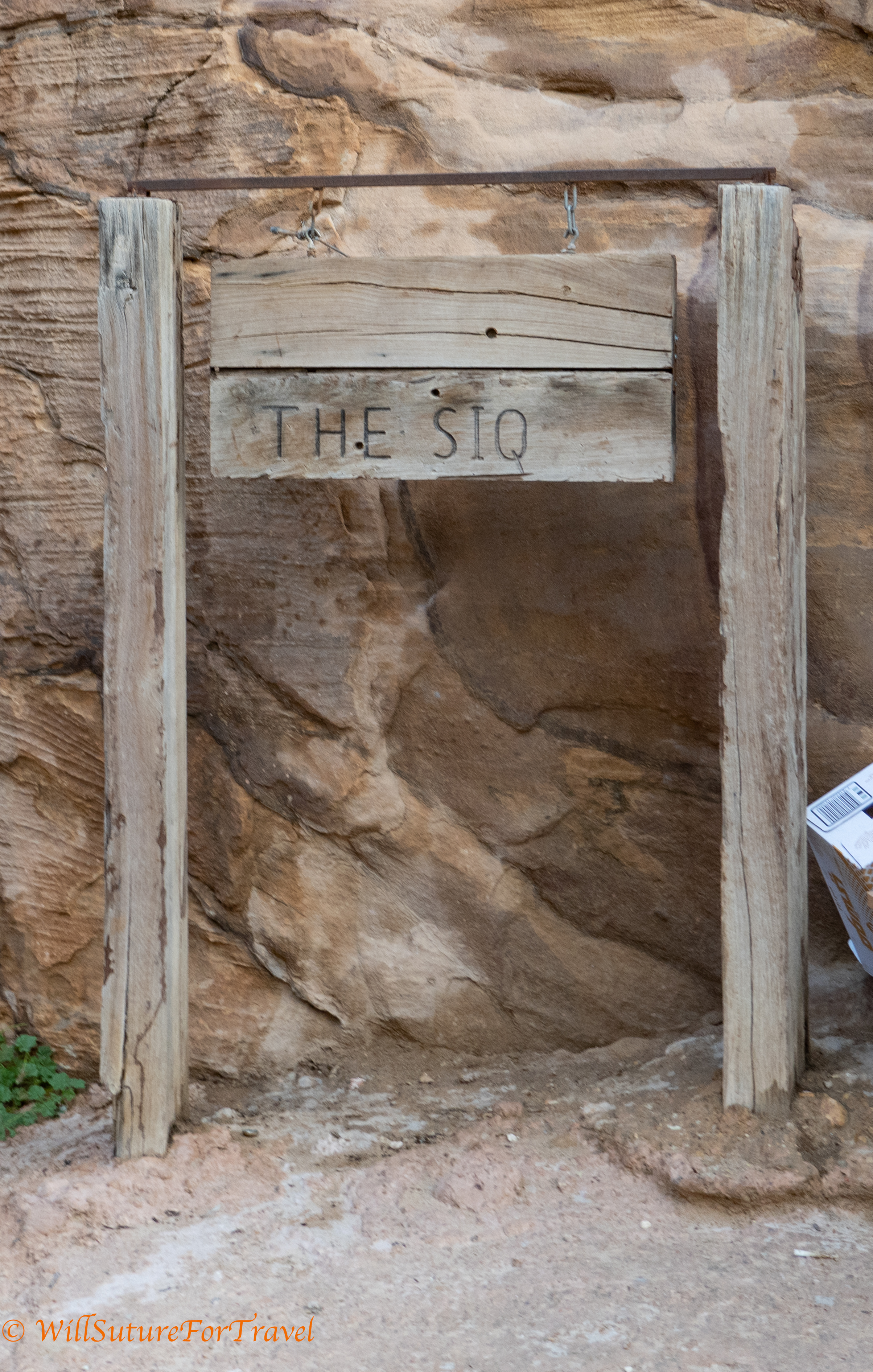
Sign at the entry of the Siq. The Siq is a narrow gorge that serves as the entrance to Petra. It is 3/4 of a mile long and ends at the Treasury
Part of the drainage/water system in Petra. They had an extensive system to collect and store water, as this is a very dry area. You can see part of the original pipe.
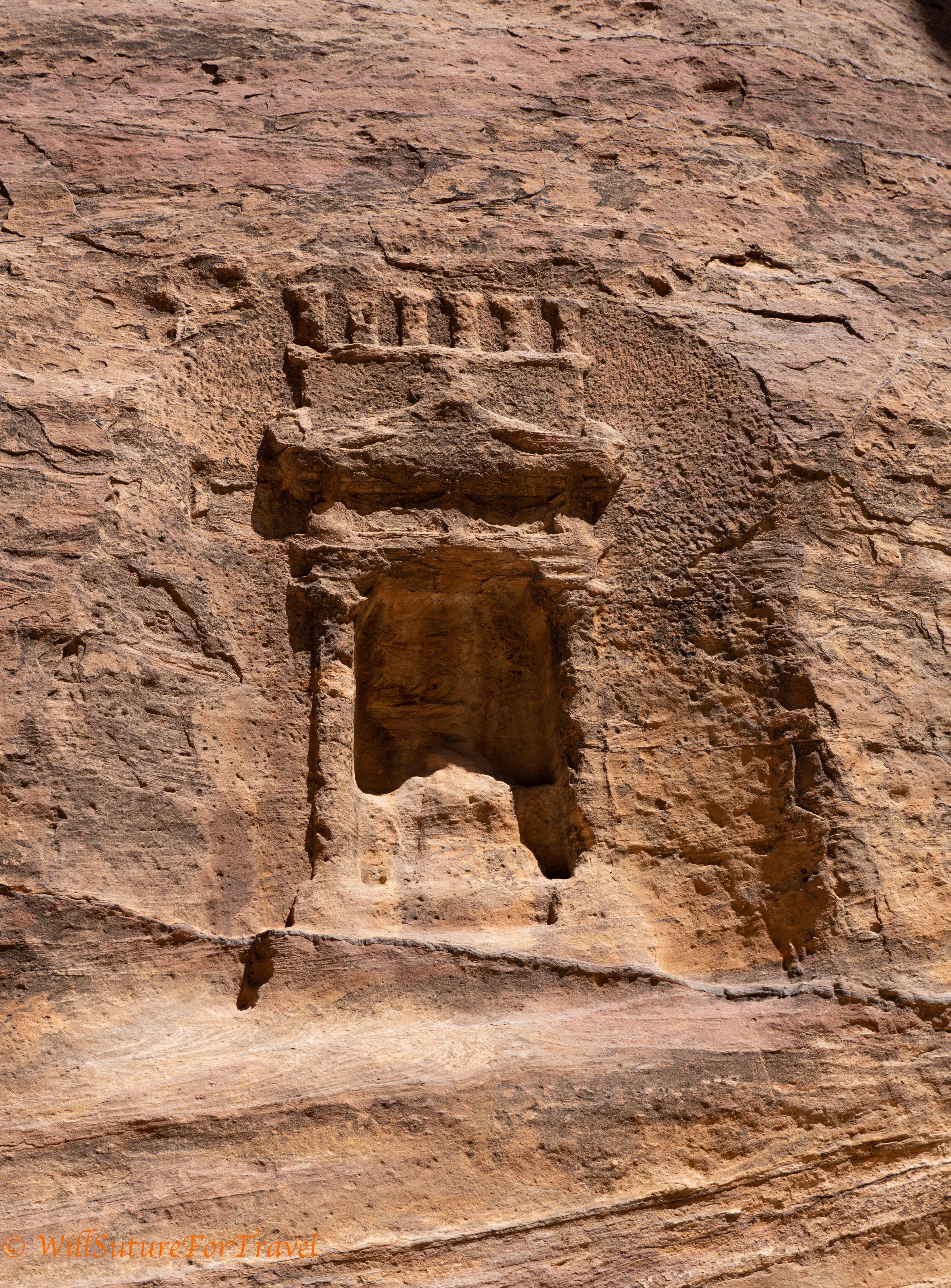
A niche. It would have had a statue.
These are hand and footholds carved into the stone. These ones lead up to part of the water system, allowing it to be monitored and repaired, but there are many others around.

A huge stone that looks like an elephant. This is due to erosion, not carving.
The Siq and our guide. It gets as narrow as 10 ft wide.
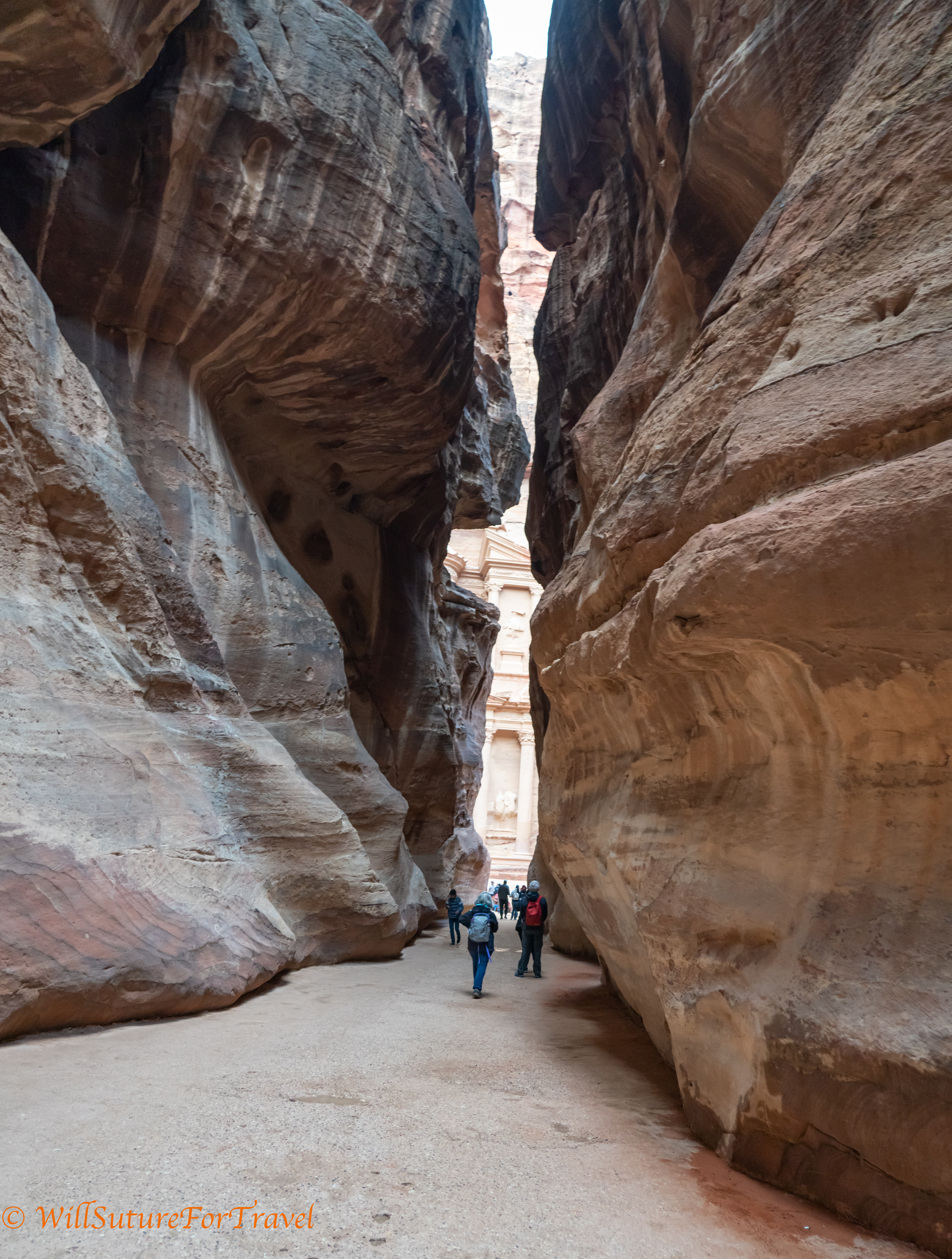
Almost to the Treasury.
Closer.
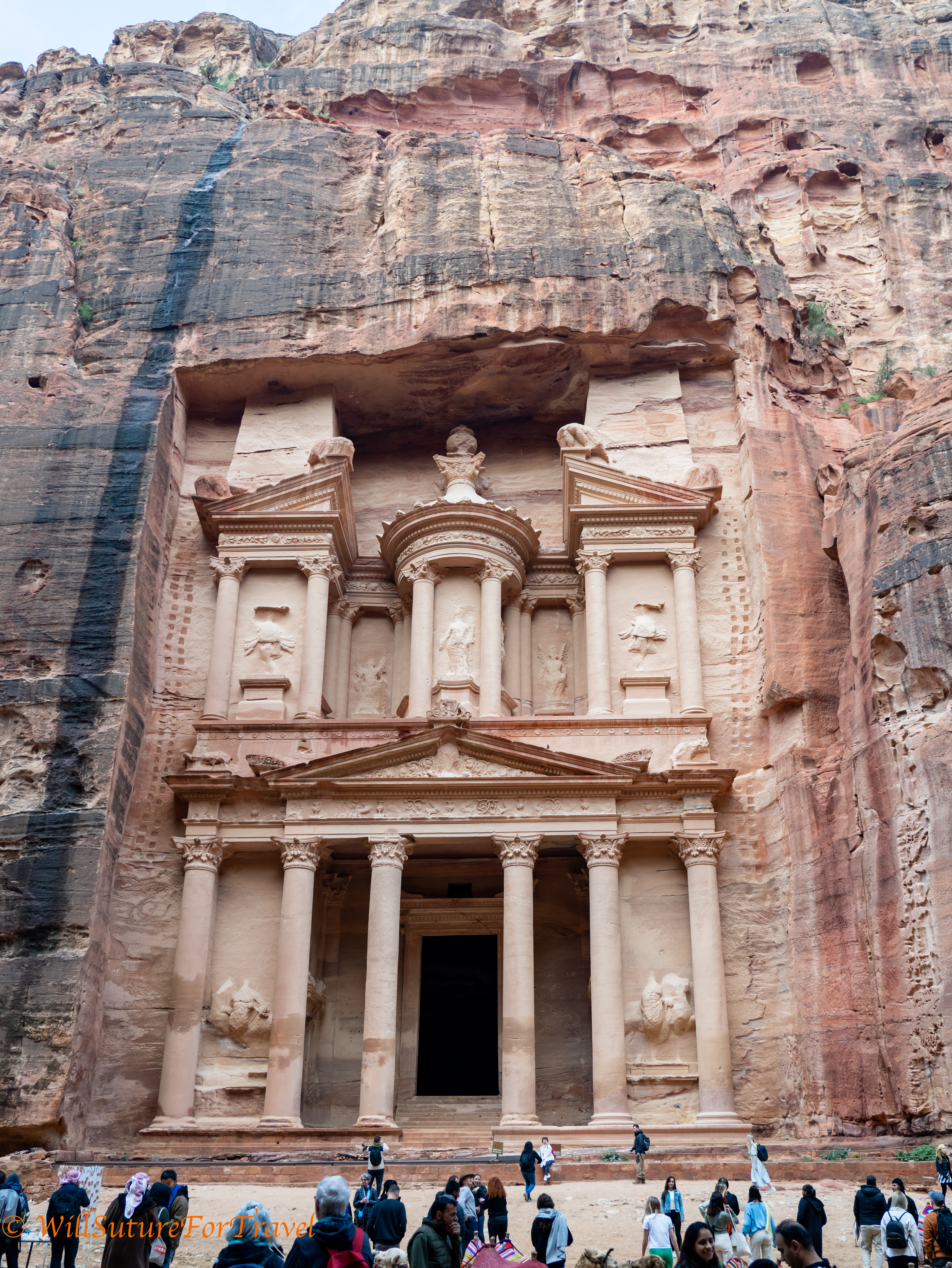
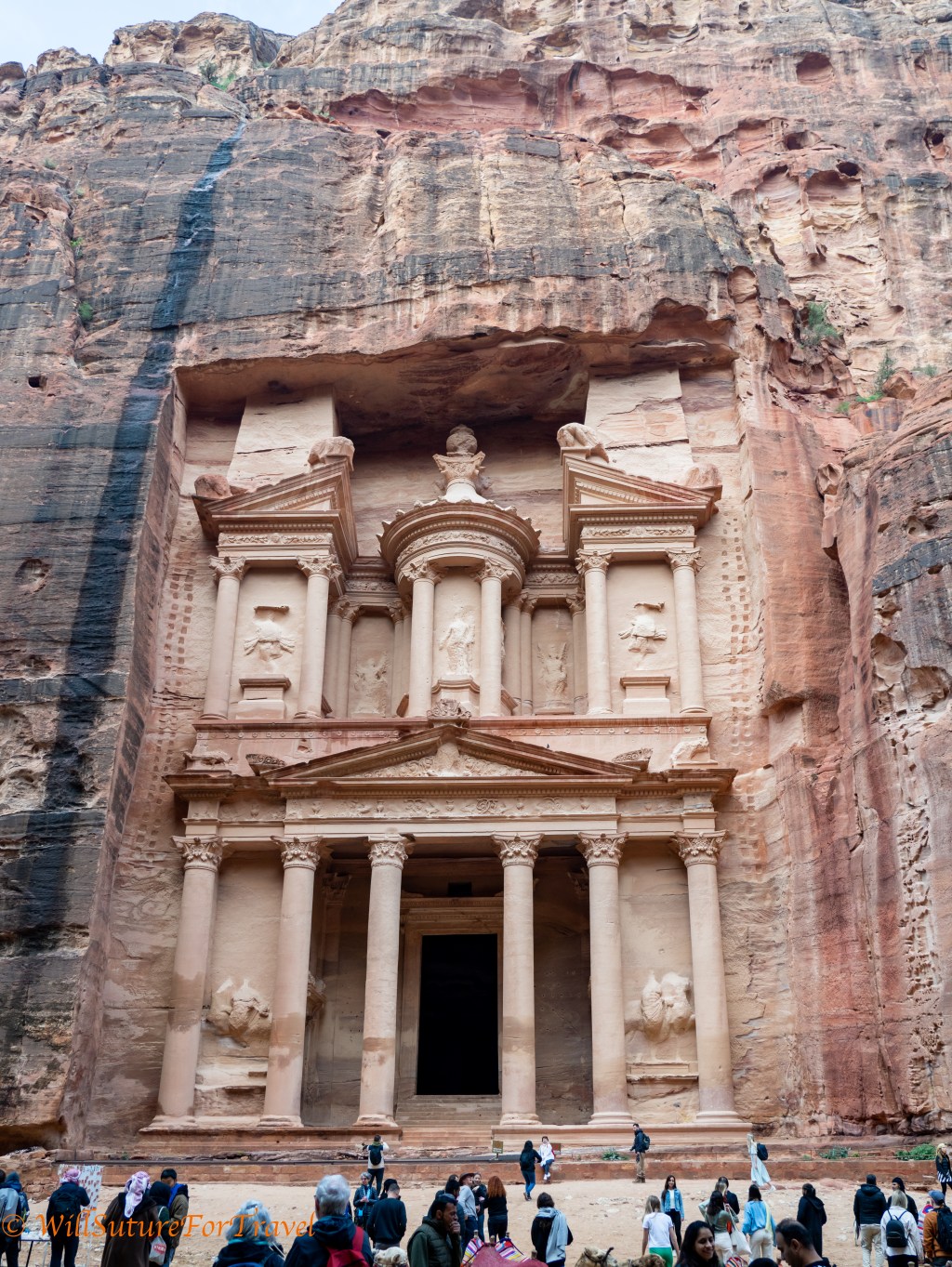
The Treasury, or Al-Khazneh Firaun. This is the best-known structure in Petra, thanks to “Indiana Jones and the Temple of Doom.” The treasury was not actually a treasury, but rather the mausoleum of the Nabatean king, Aretas IV. It dates back to the 1st century AD. The name is derived from legends regarding the decorative stone urn high on the second level, which in reality is solid sandstone. This is quite impressive!
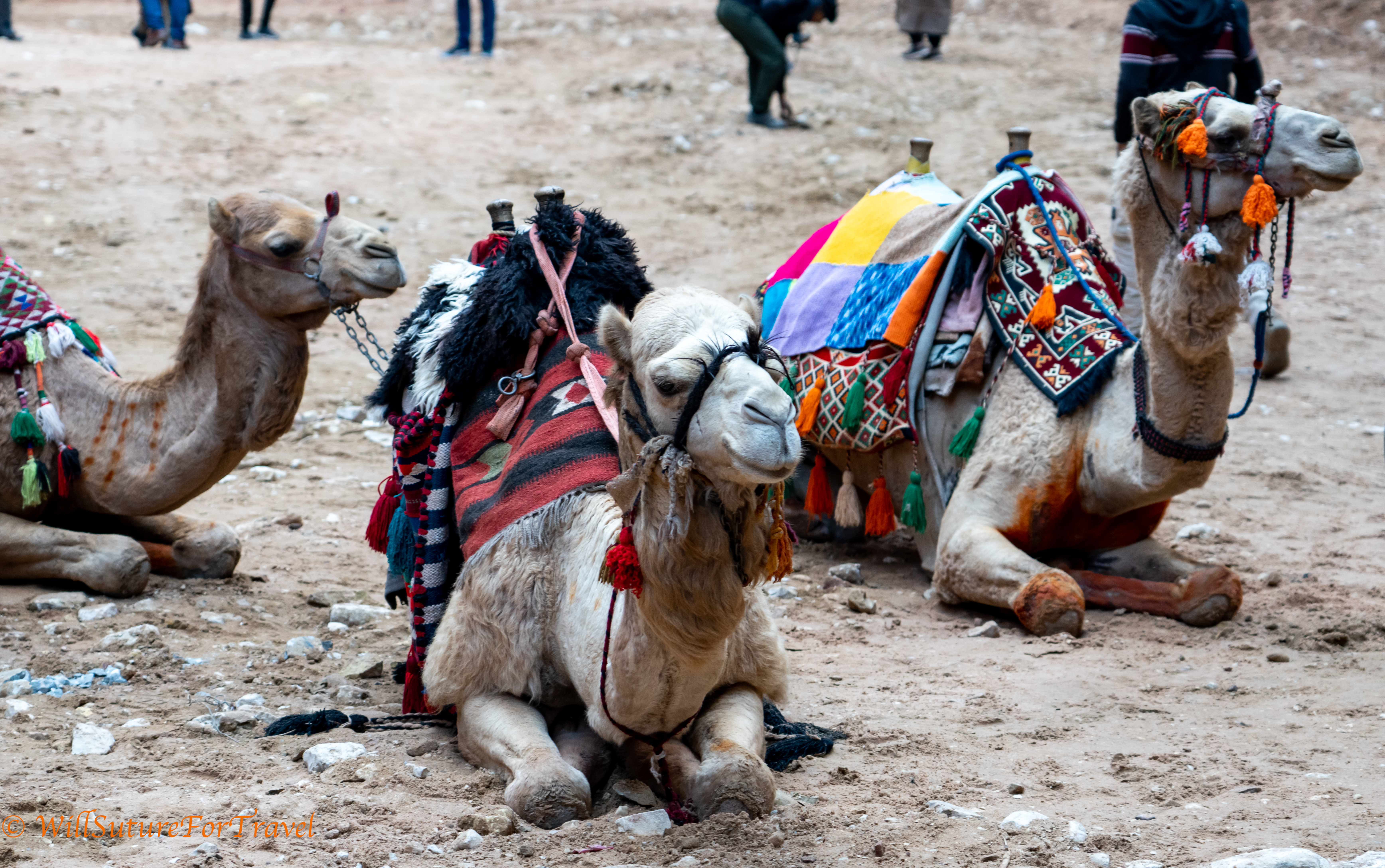
Camels in front of the Treasury.
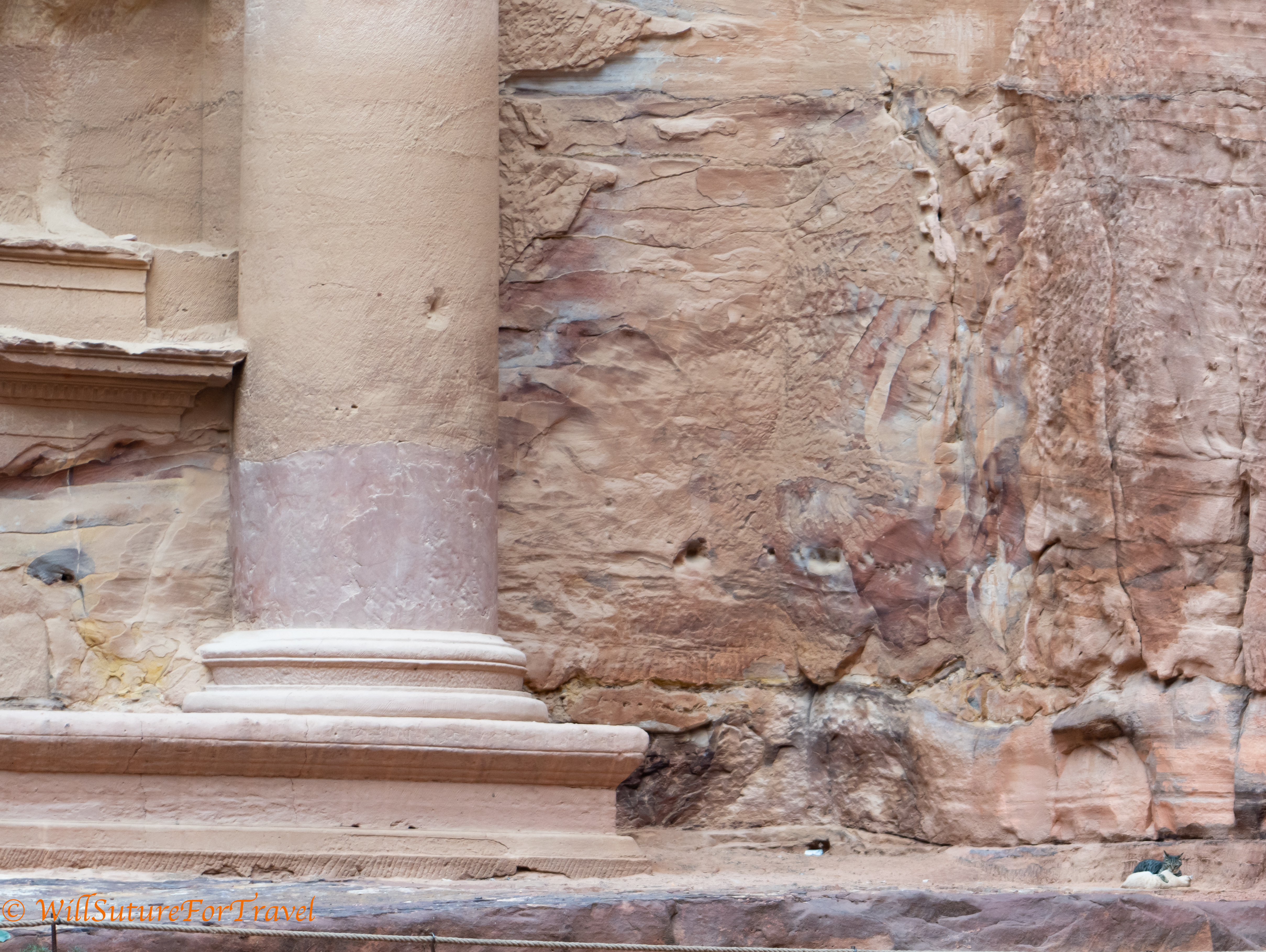
These little kittens were rough and tumbling on the Treasury entrance.
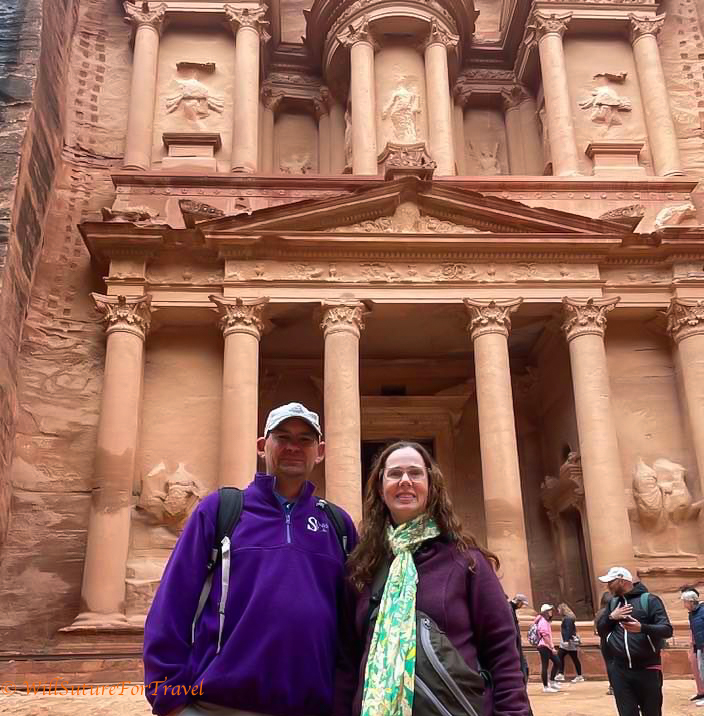
Proof we were there.
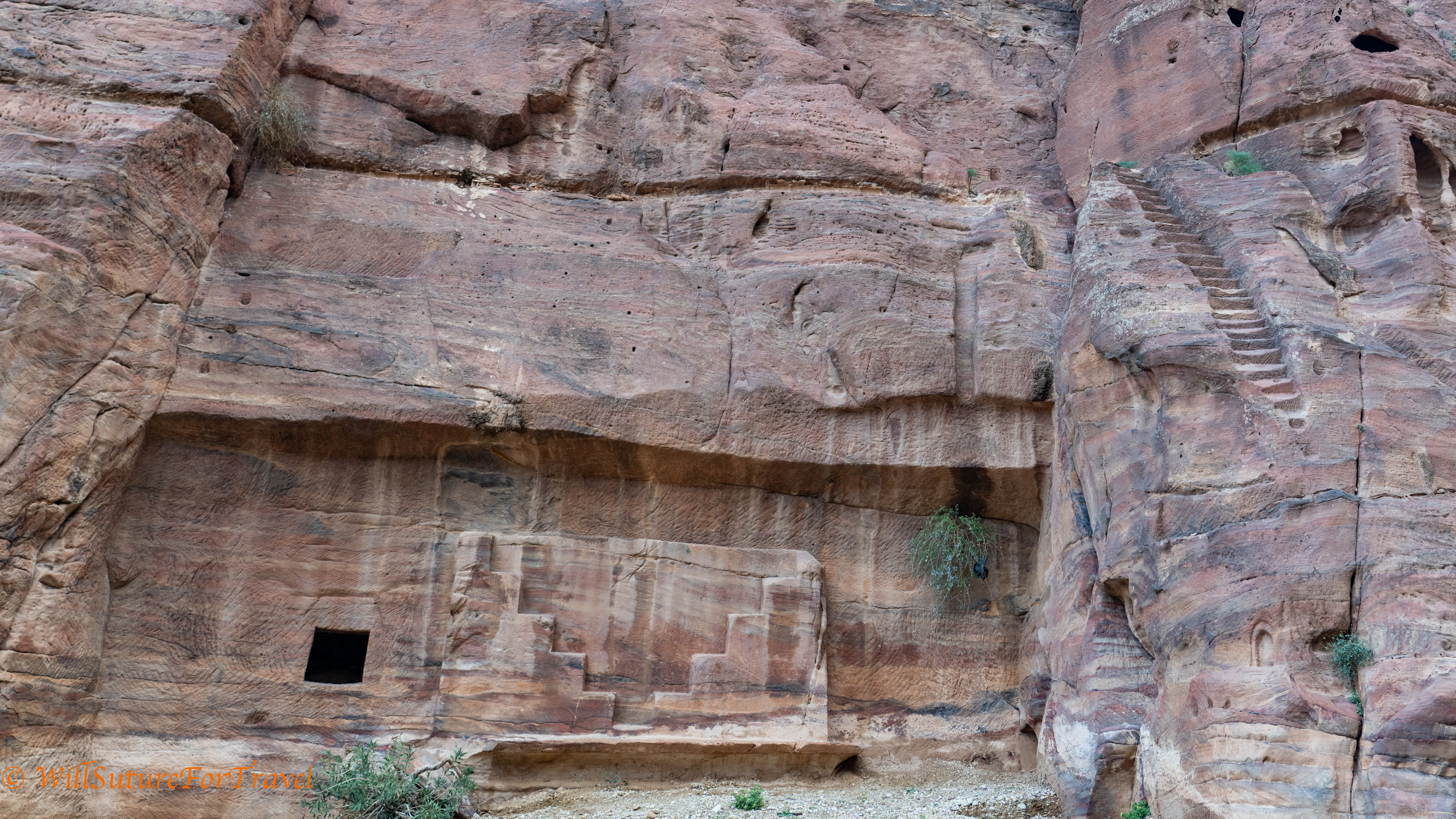
This is opposite to the Treasury. It looks like the top of a partially buried tomb.
Leaving the Treasury you walk along the valley. There are tons of things along the way.
The Street of Facades. This is down the trail from the Treasury. These are multiple tombs, likely of non-royalty upper class.
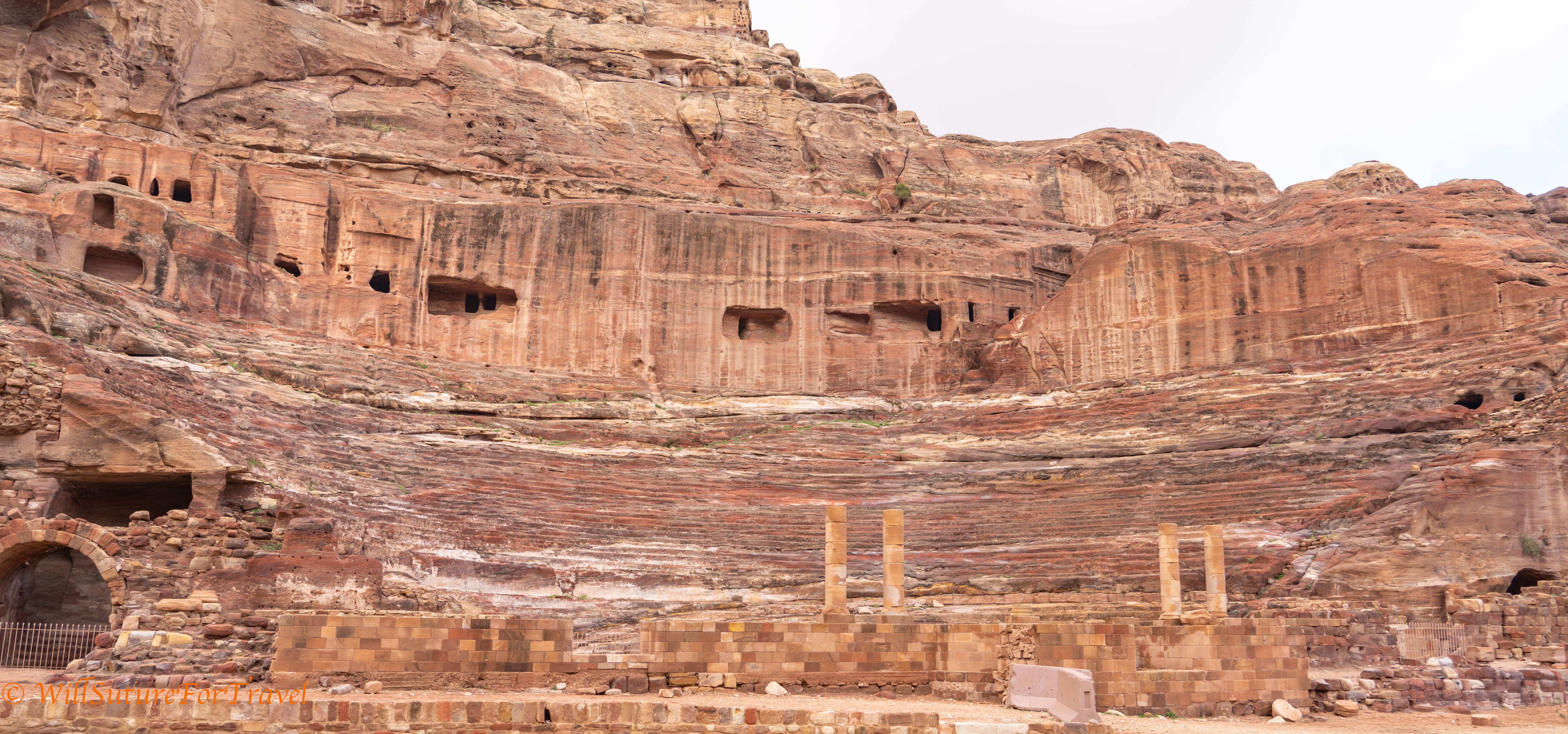
This is an amphitheater. It is the only one that is carved into stone rather than built from stone. This was probably built during the reign of King Aretas IV, which was before Roman occupation. It was renovated by the Romans later.
Pretty stone striations.
More tombs.
Now I have shown a bunch to tombs so far. This really was an inhabited city. The majority of the homes were free-standing and destroyed by earthquakes. There are some existing cave homes.
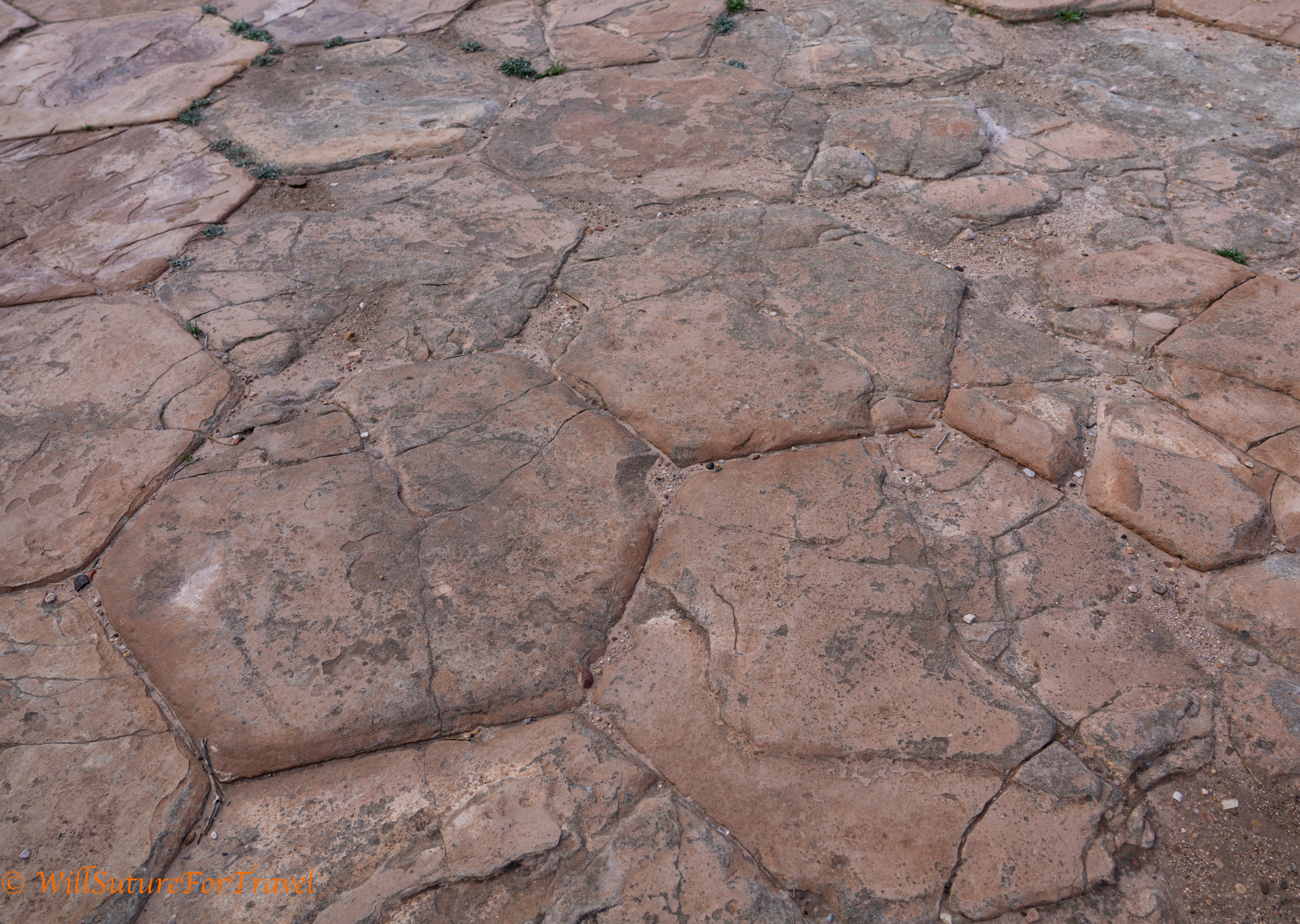
Hexagonal flooring in the great temple.
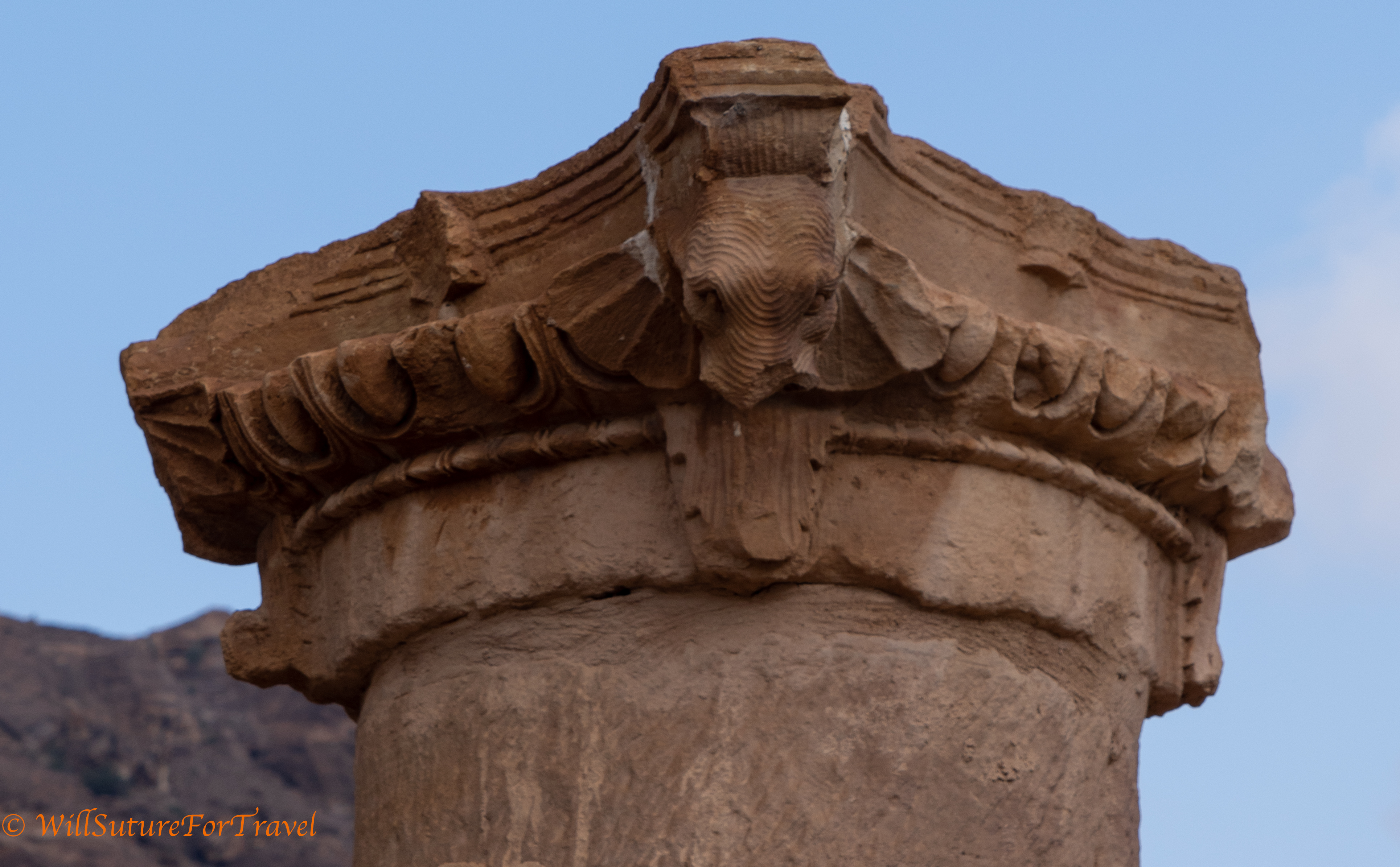
Elephant head (minus trunk) capital on a column in the Great Temple.
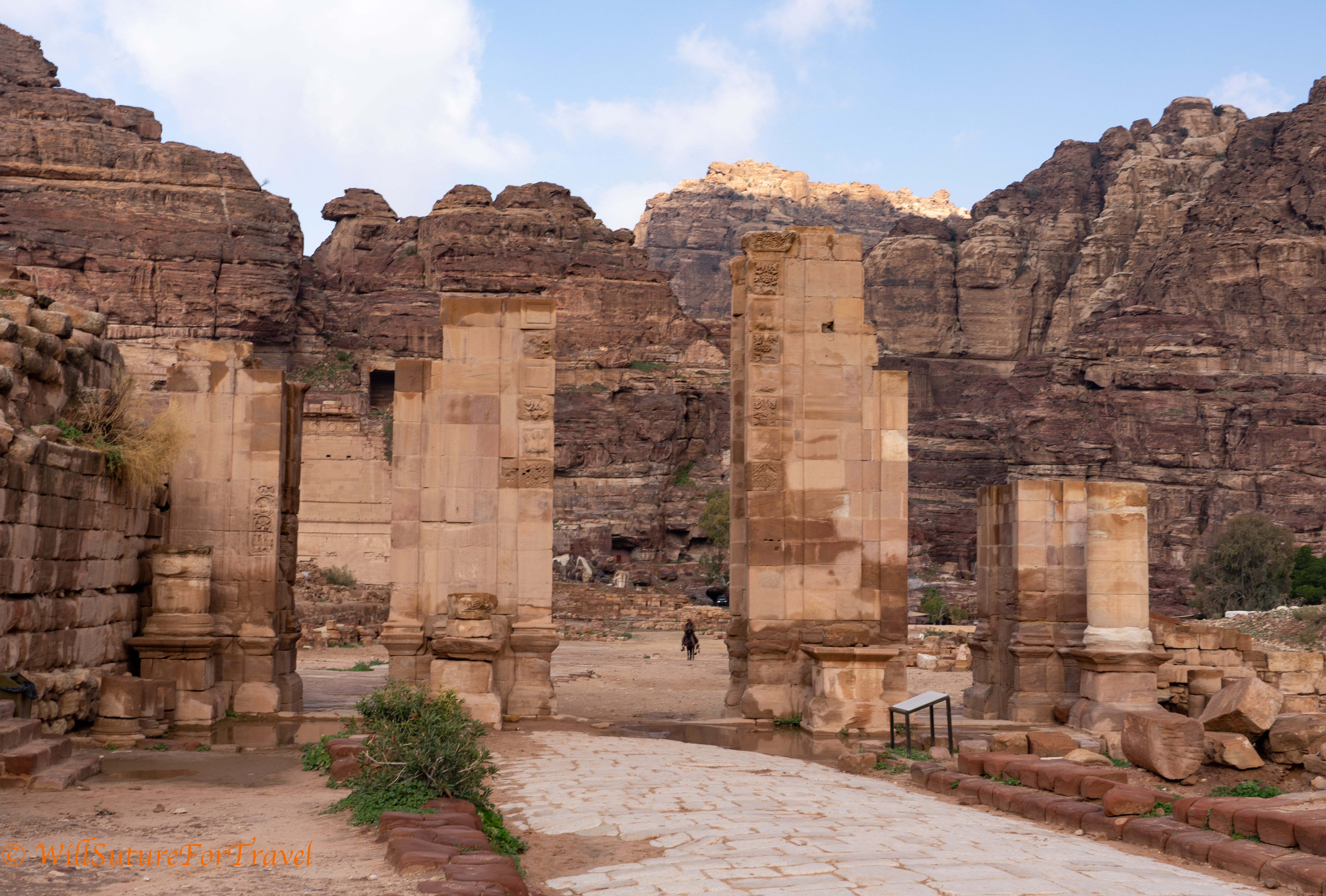
The arched gate, obviously missing said arches. Probably built near the beginning of the 2nd century AD.
The Castle of the Pharoah’s Daughter or Qasr al-Bint Firaun. This was not a castle and is only associated with a pharoah’s daughter via a bedouin legend. It was a temple and was built in the 1st century BC. This is the only freestanding building that essentially survived earthquakes in the region. This building is made of sandstone blocks with intermittent wooden beams, which are why it withstood the earthquakes.
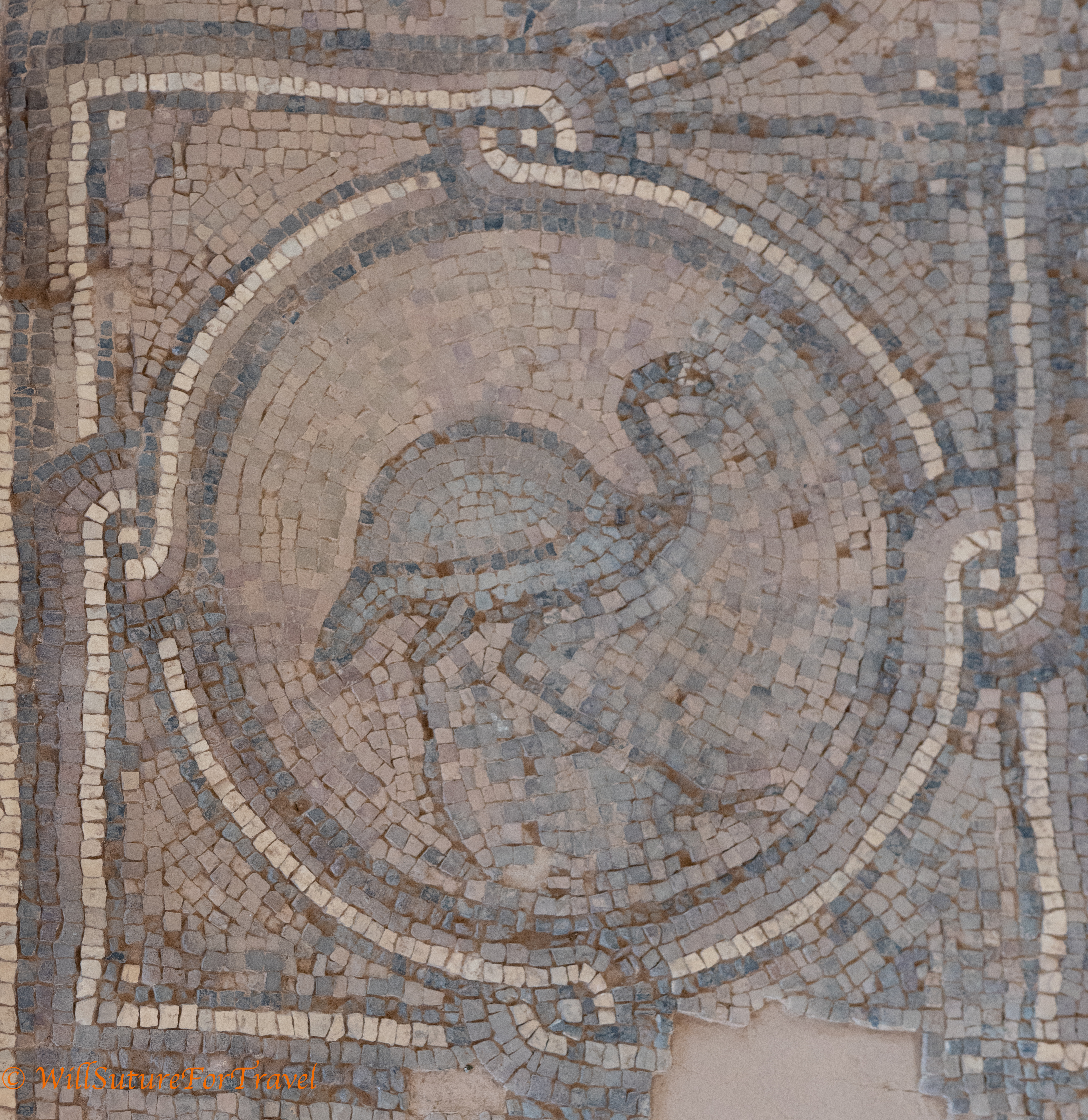
Mosaics from the Petra Church. These ruins are from the Byzantine period.
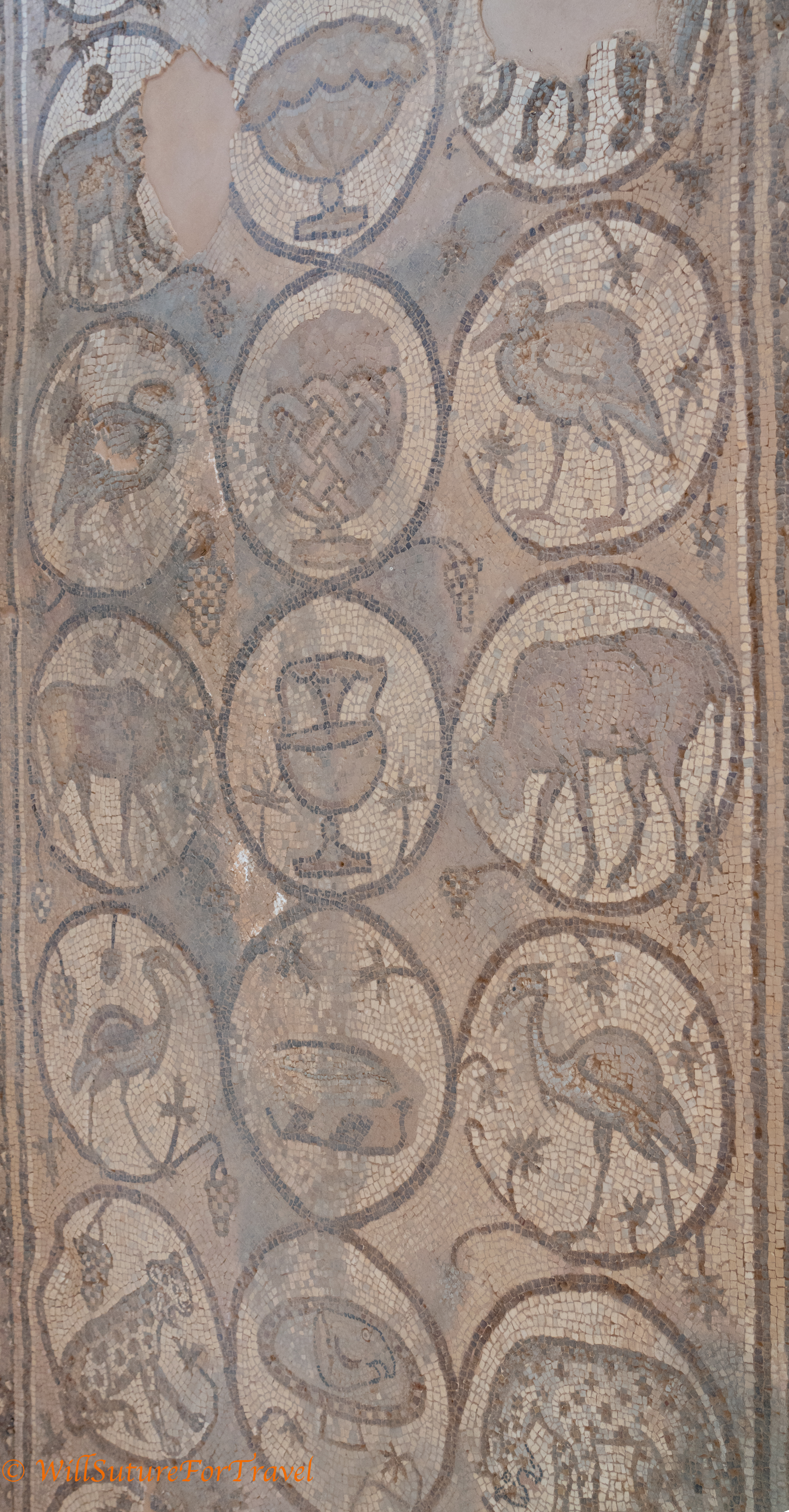
More mosaics.
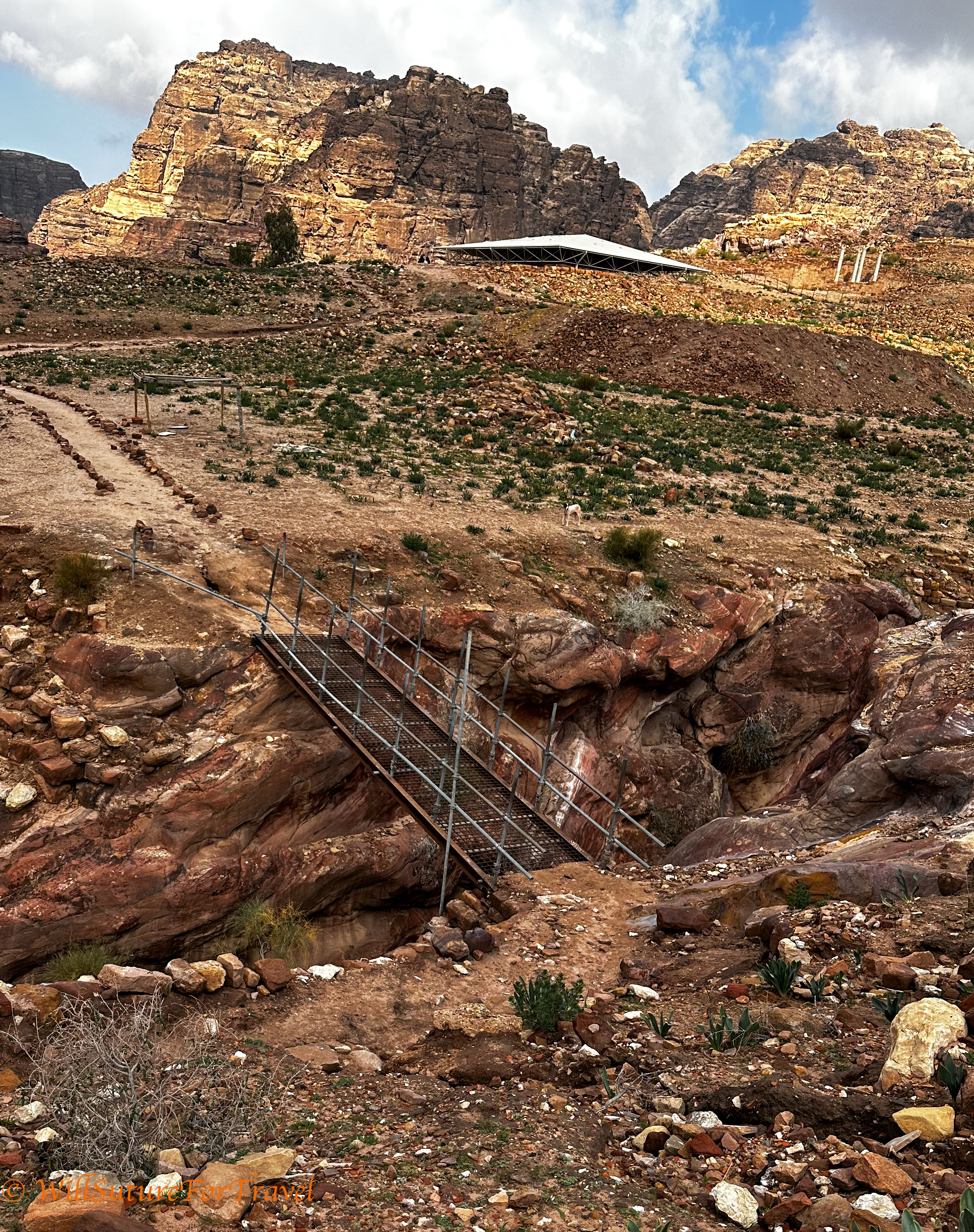
Next we climbed up to some larger tombs. We had to cross this rickety rebar bridge.
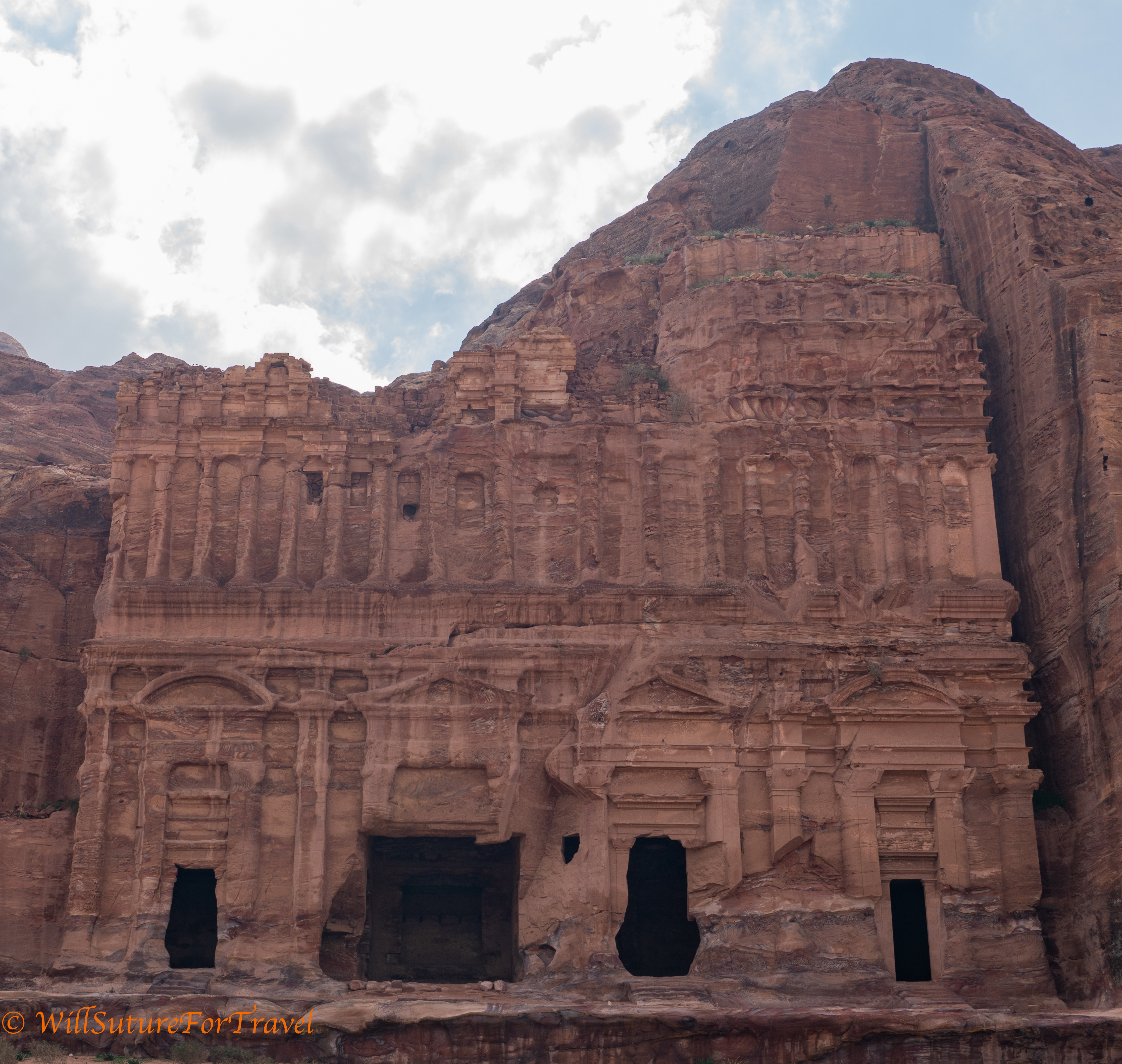
Palace Tomb. This was built in the 1st century AD. This is one of the largest structures in Petra.
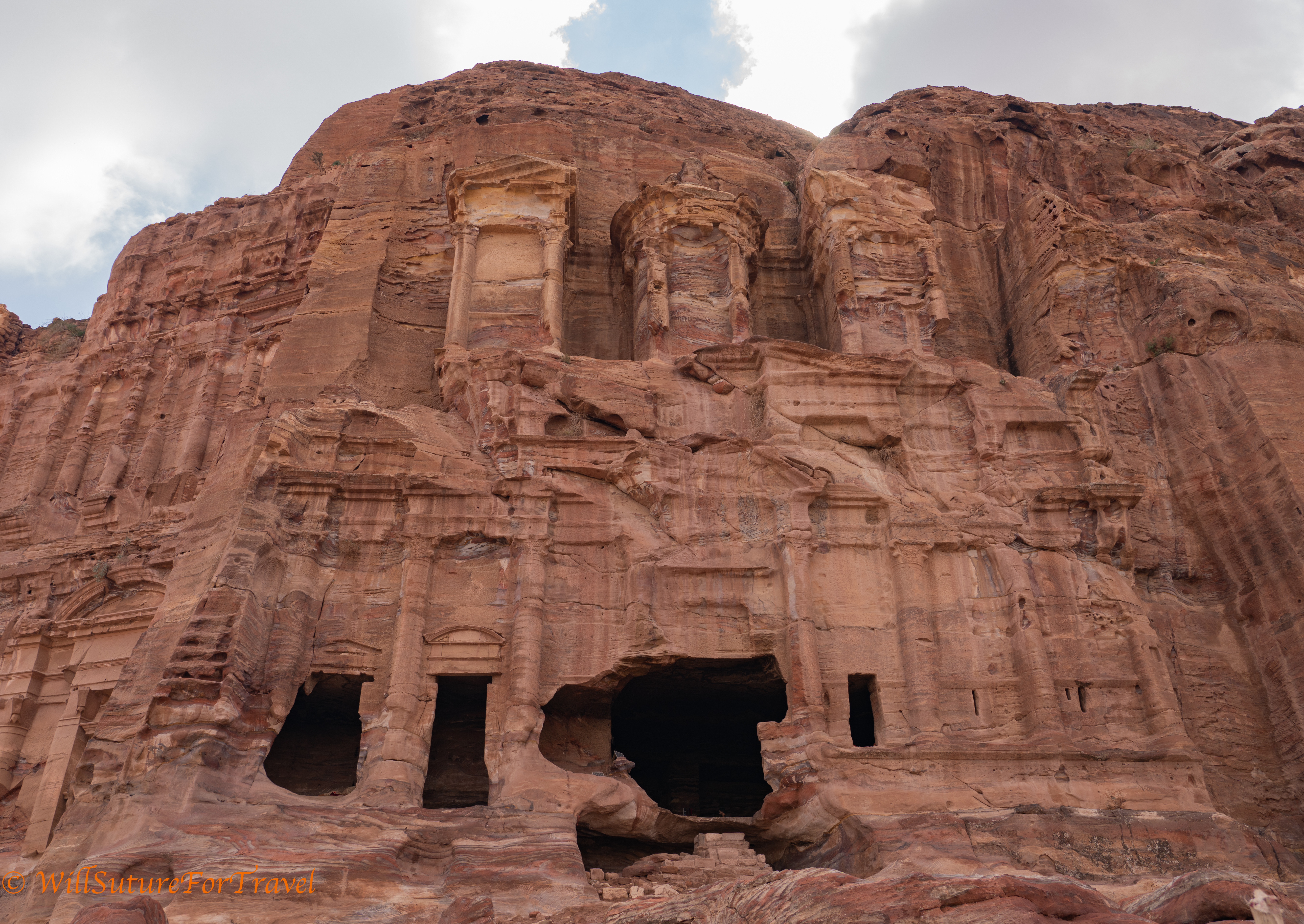
Corinthian Tomb. This is likely the tomb of King Malichus II, who died in 70 AD.
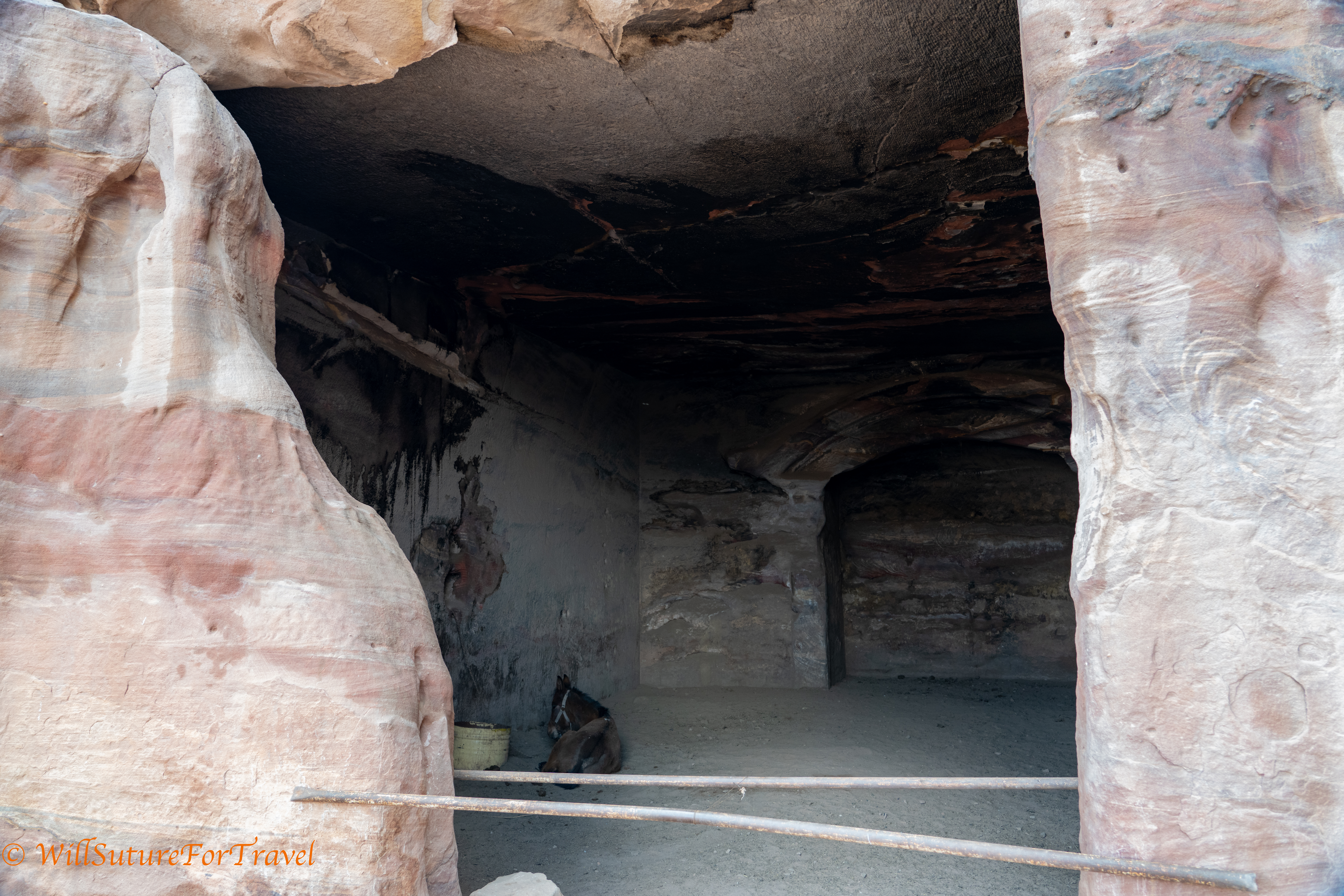
Inside of a tomb. And a donkey.
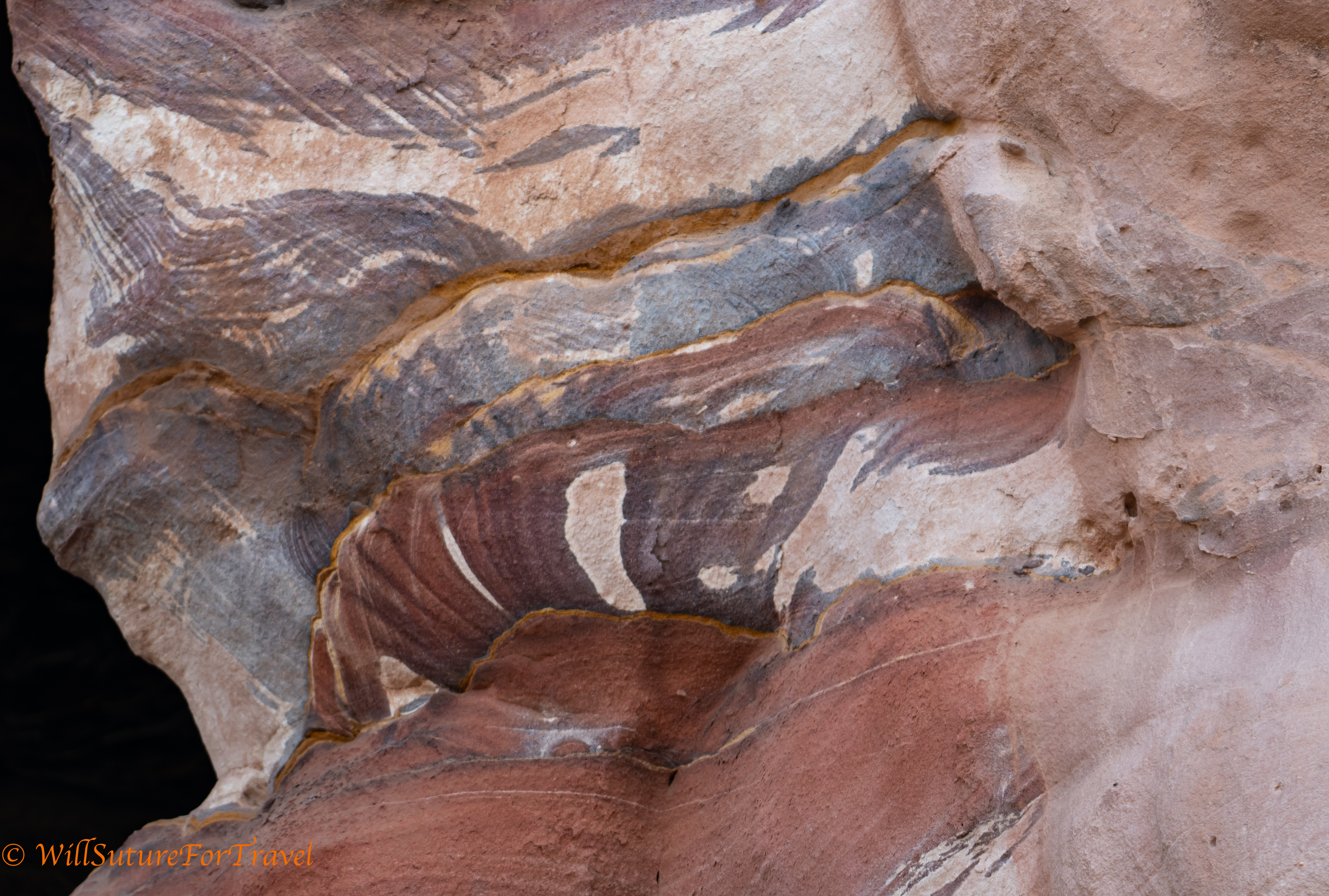
More pretty stone.
View of Petra from up by the Corinthian Tomb
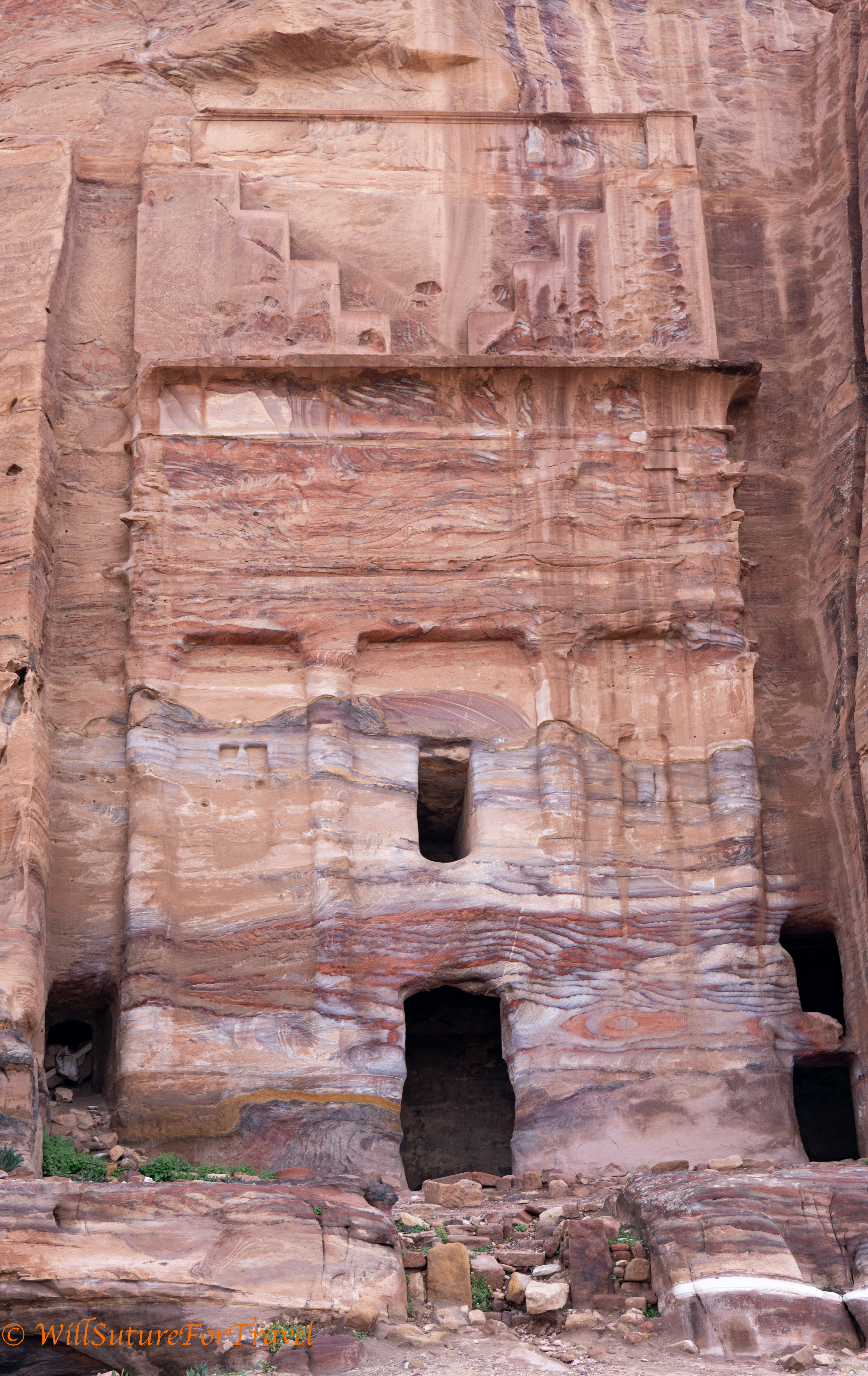
The Silk Tomb. This has beautiful stone. This was built in the 2nd half of the 1st century AD and was likely the tomb of a high-raking official.
Ceiling of one of the tombs.
The Urn Tomb. This may have been the tomb of Aretas IV, based on the timeframe and intricate and large design.
Looking out at Petra from the Urn Tomb. Locals set up shop in any space they can find here.
This ramp and ladder don’t look sketchy at all.
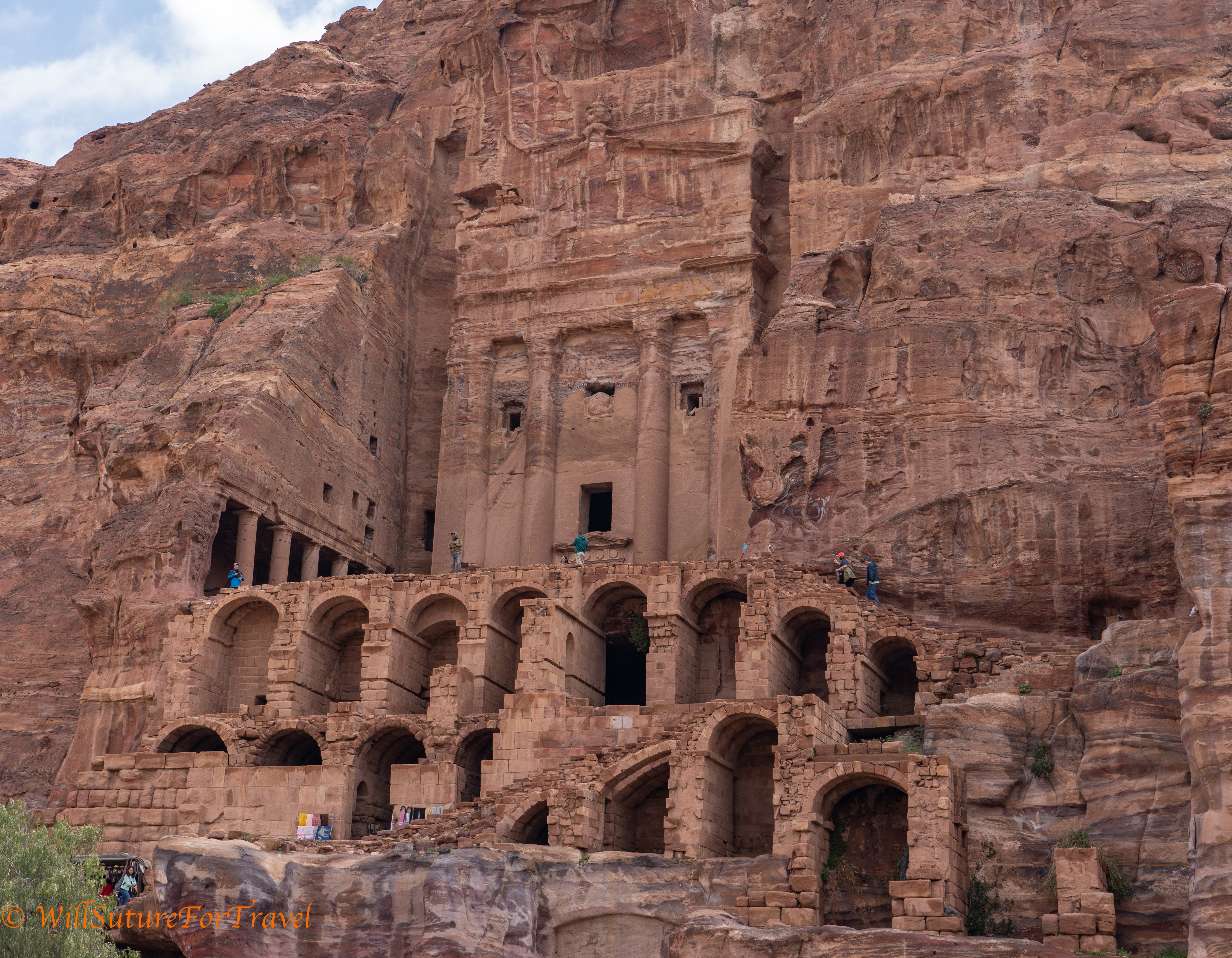
The Urn Tomb with niches underneath.
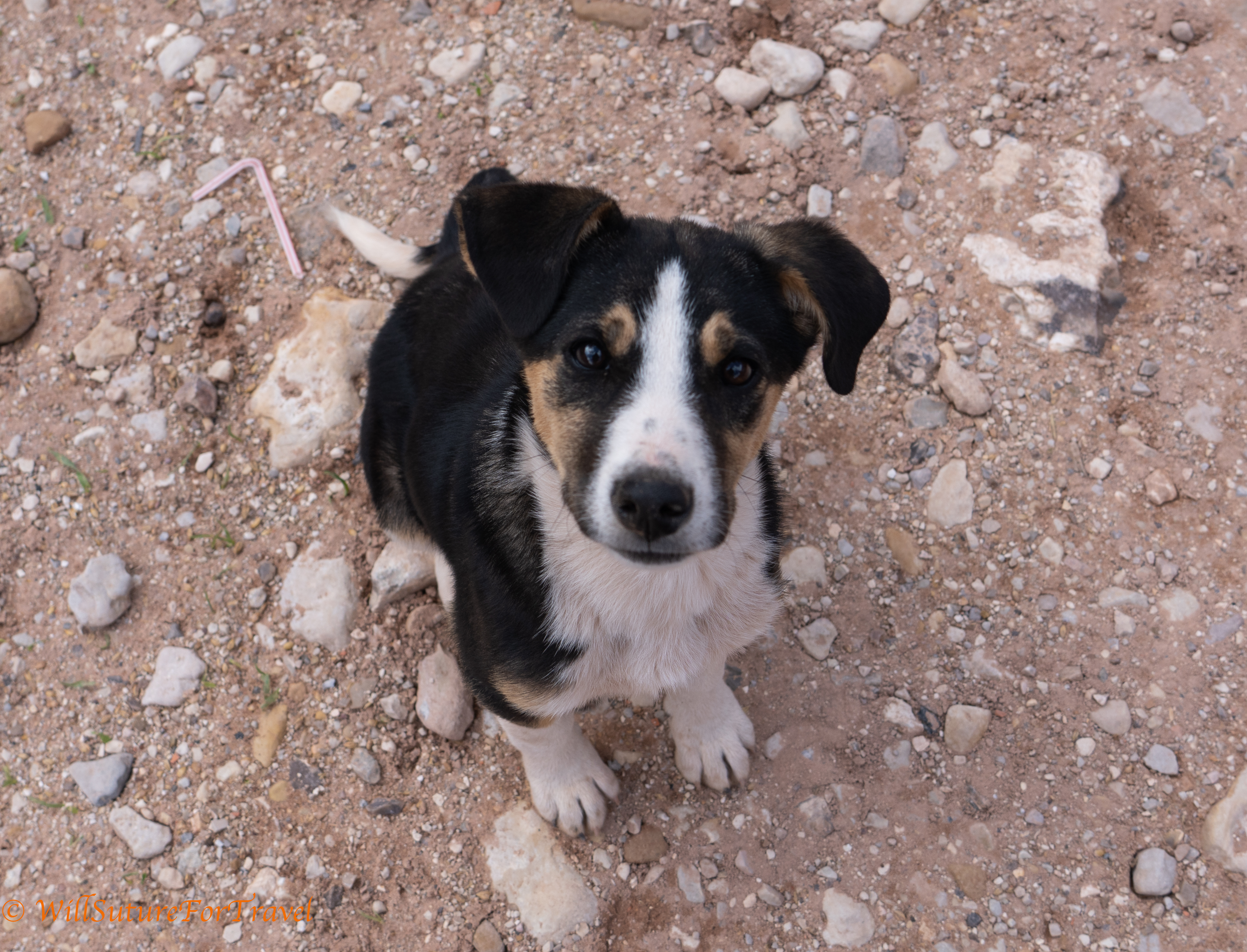
Cute puppy. There are a lot of feral, but friendly, dogs and cats here.
One end of the Al-Khubtha trail.
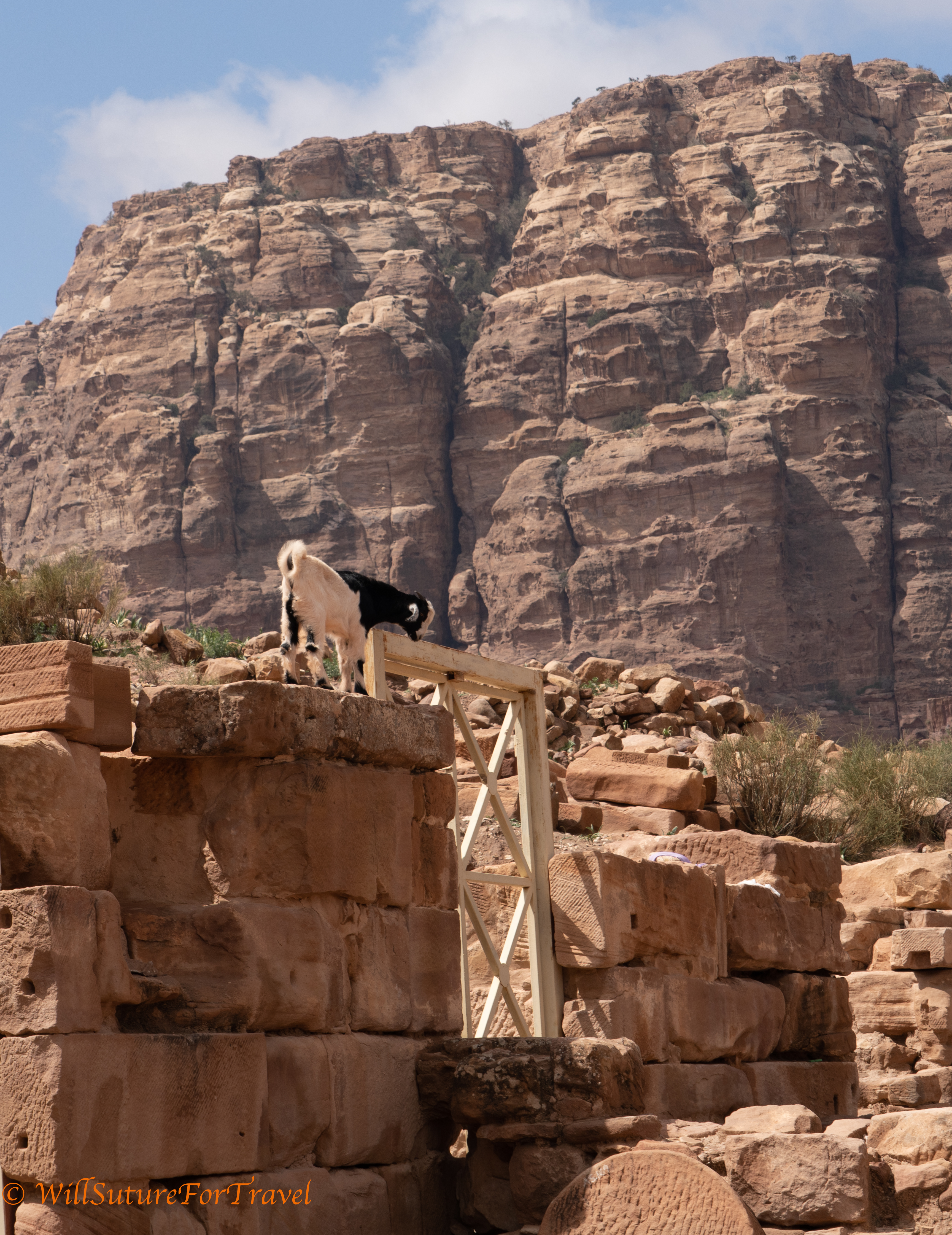
A goat on the walls of the market area.
The Treasury in the afternoon. Its color changes with lighting changes.
After lunch and a break from walking we went to the Petra Museum, which houses some of the archaeological artifacts from Petra. Here’s a bit of what we saw.
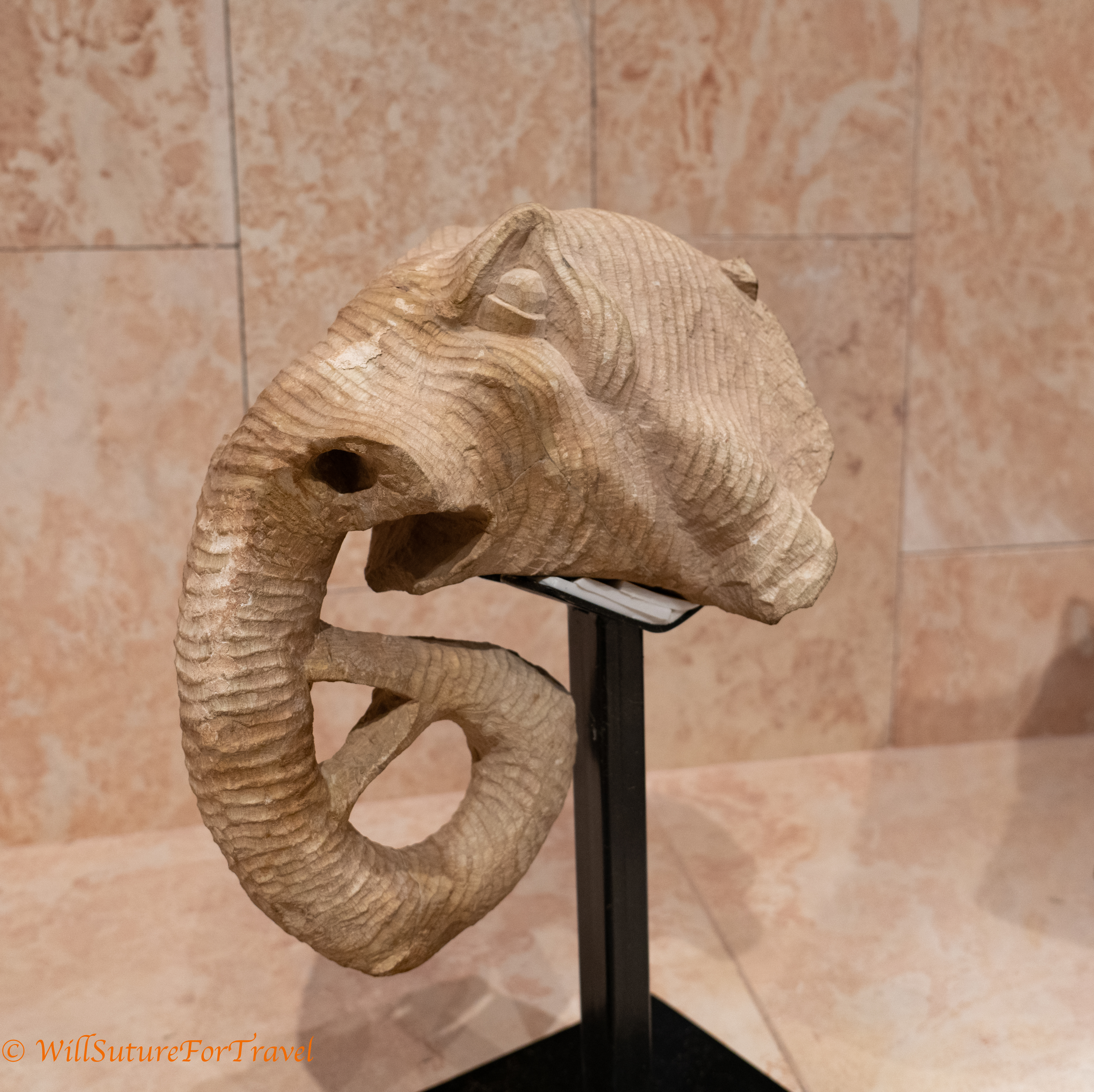
A more complete elephant capital than what we saw in the Great Temple.
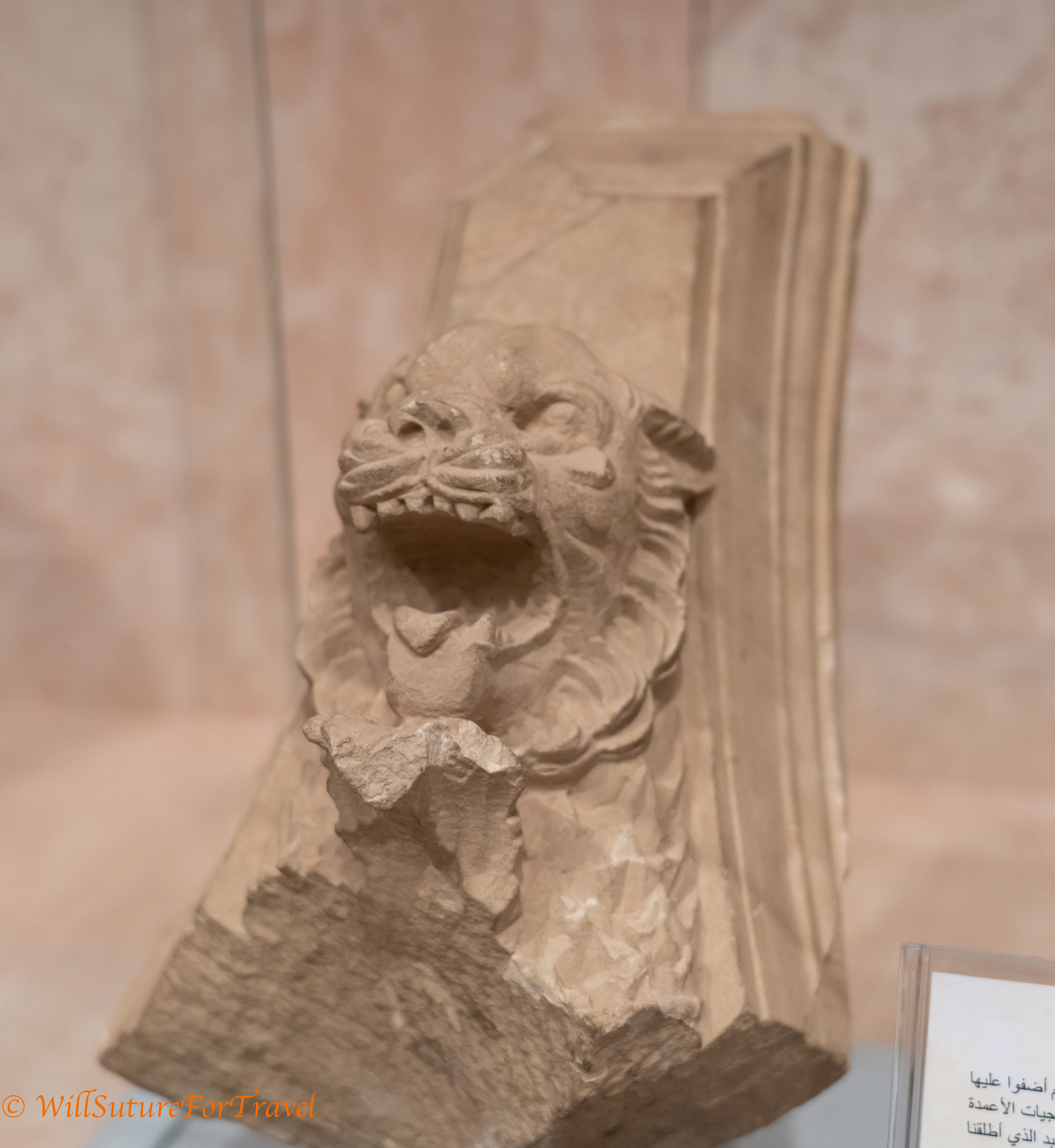
Lion capital from the Temple of the Winged Lions (which I have no pictures of as it is largely rubble).
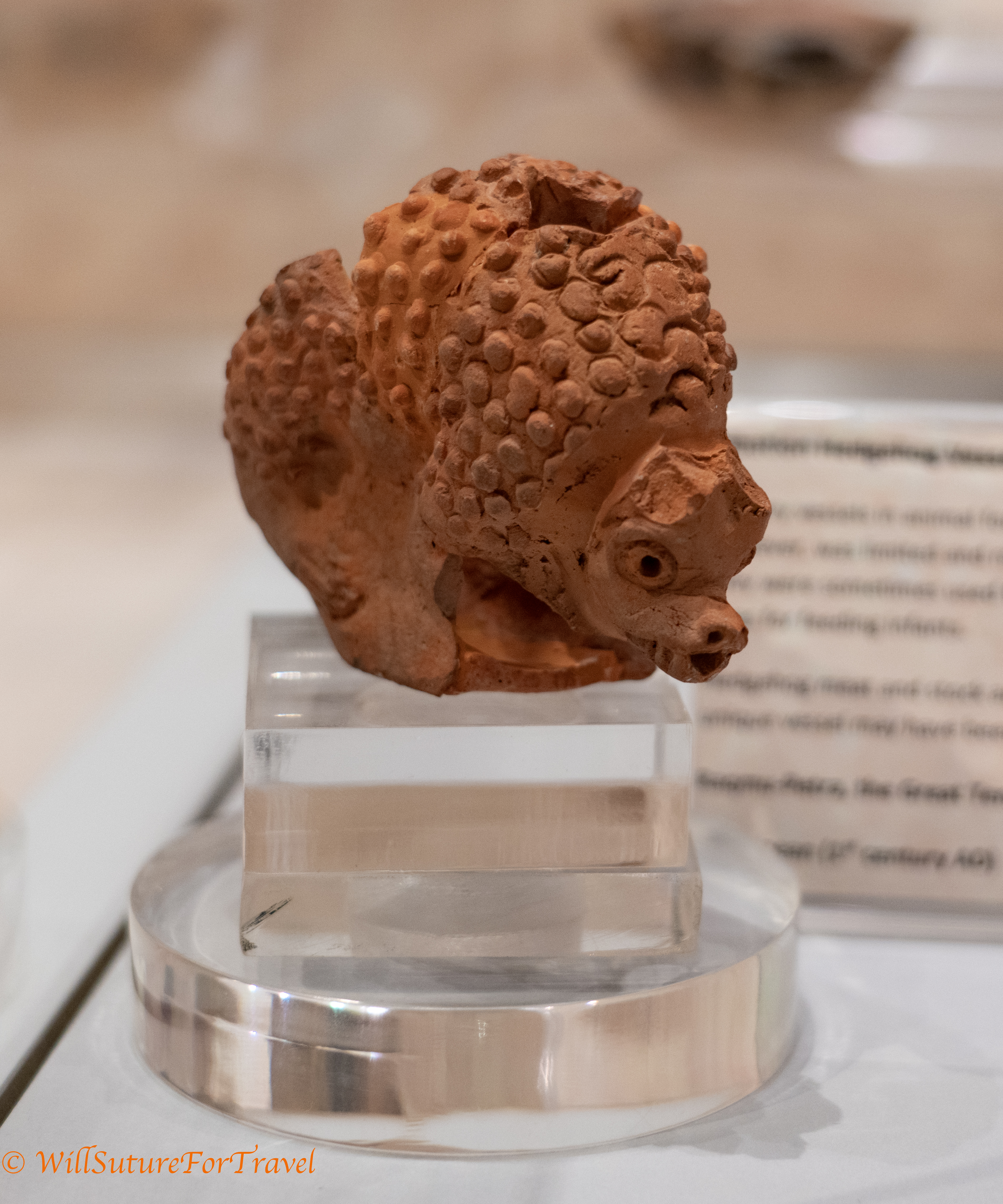
Pottery hedgehog (they have wild ones here) to hold liquids, likely medicinal. Hedgehog meat and stock were used for medicinal purposes.
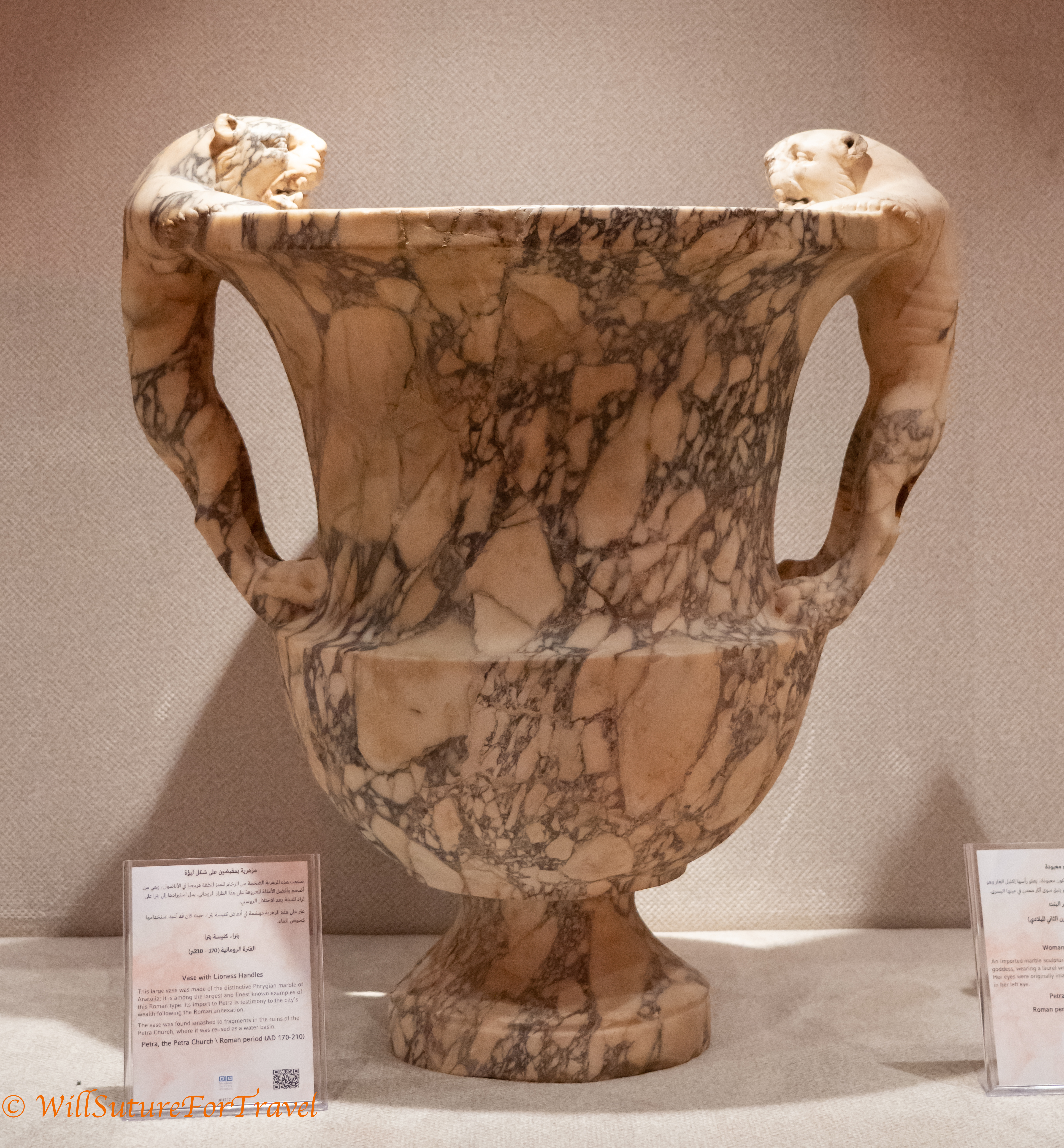
Vase with lion handles. This is from the Petra Church and dates to Roman times.
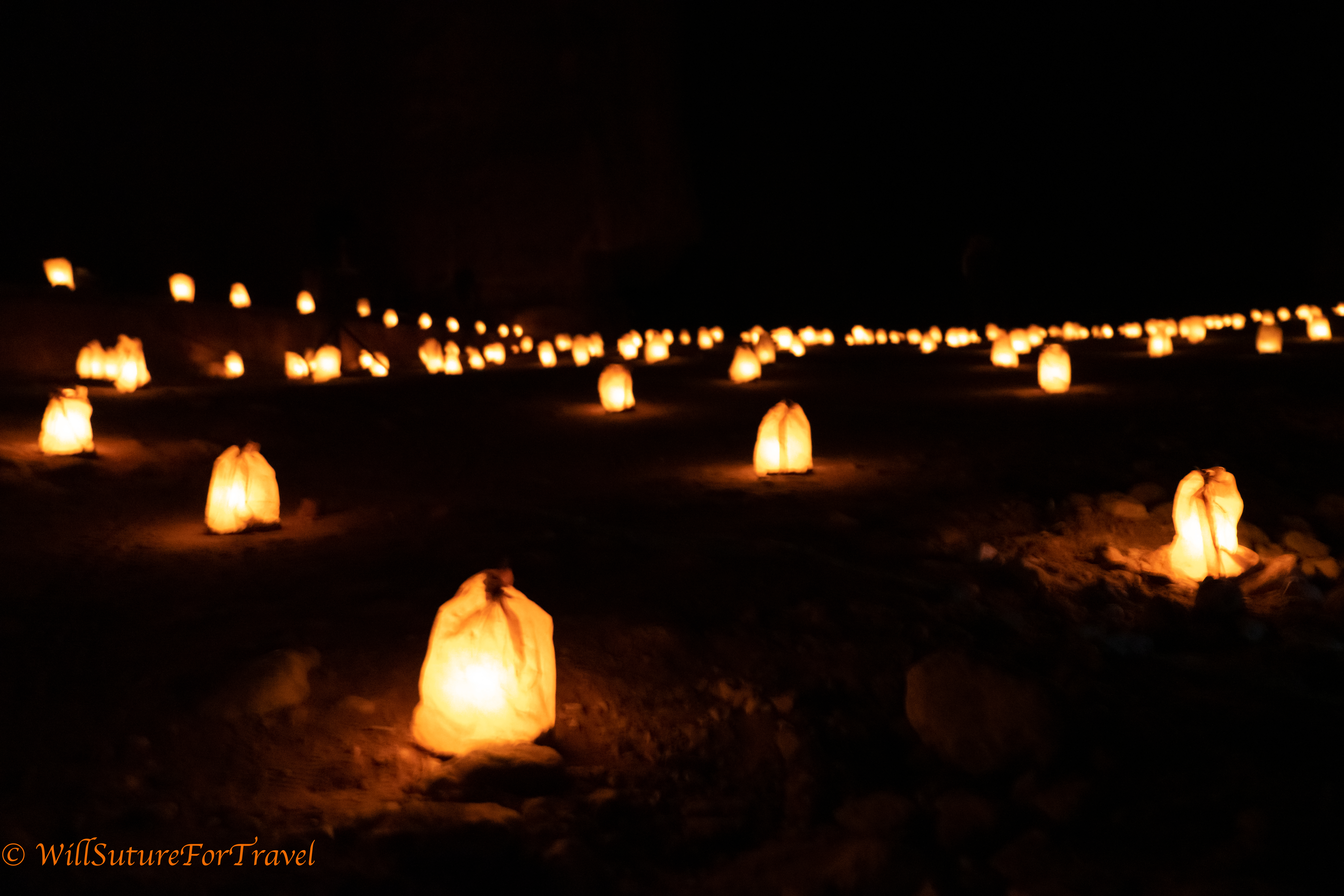
In the evening we went back down the Siq to the Treasury for their night program. They set out hundreds of candles along the path and in front of the Treasury and do a cultural program. It was very crowded, but we managed to get there early enough to be in the front row and get good pictures.
Good view of the stars.
This was a long day (7am-9:30 pm), but was well worth it.


Leave a Reply