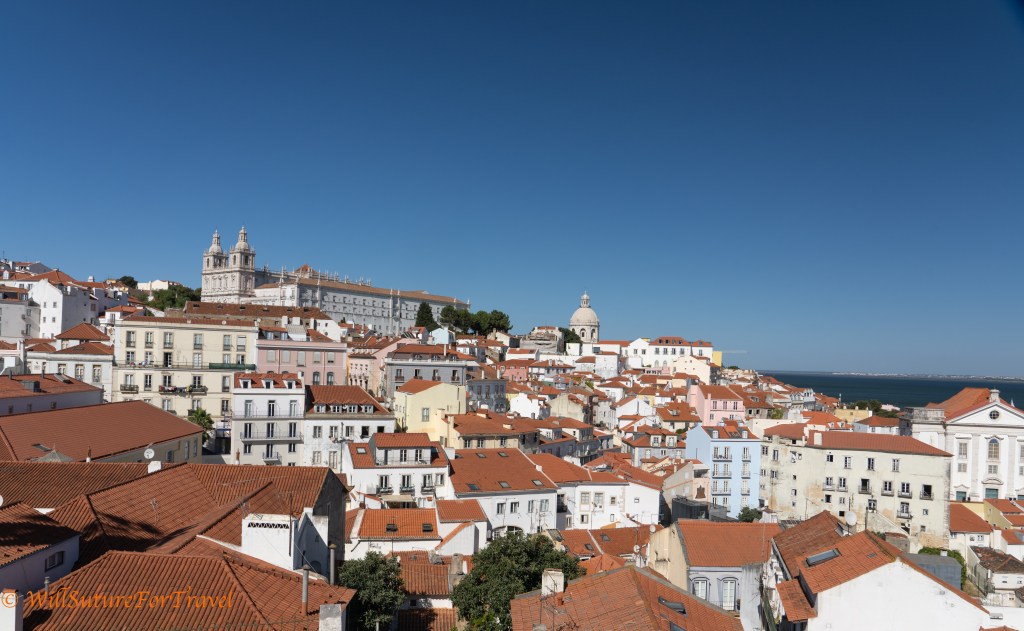
We got to Lisbon this afternoon and hit the ground running. We met our local guide and took a walking tour of the historical part of town.
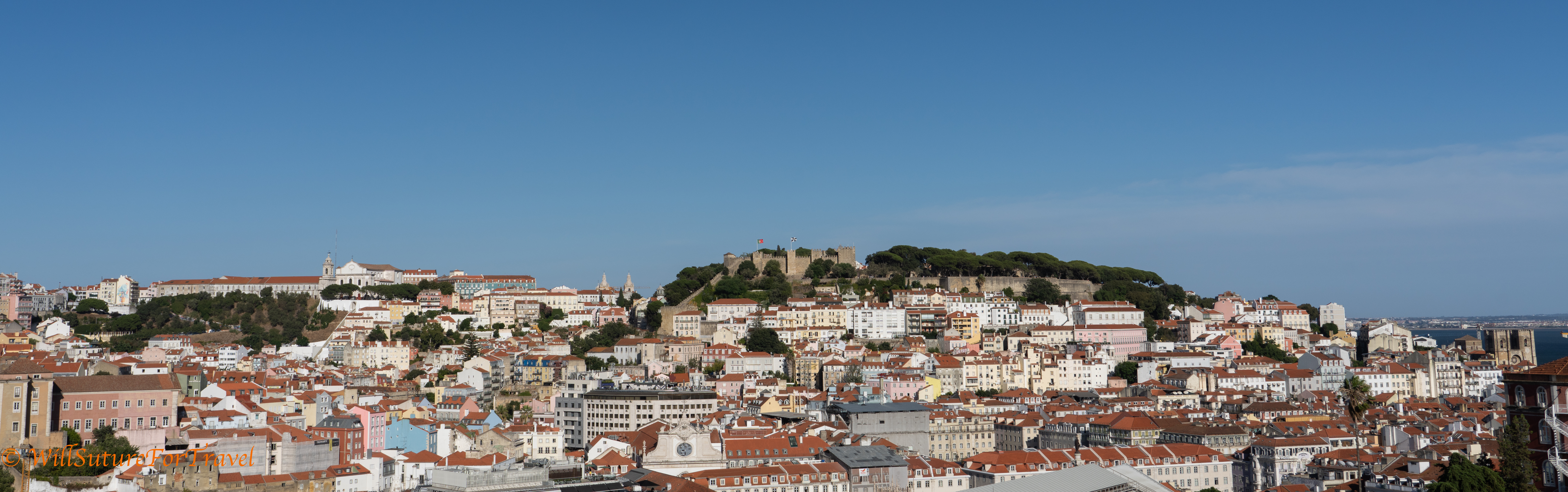
View of Lisbon including the castle
First a quick, little overview history. Lisbon, like much of Europe, was occupied/inhabited by the Romans. Its native inhabitants were the Celts and the Iberians. They later were invaded by the Moors. This was followed by Christian crusades. Lisbon developed, changed, and grew over these periods and then was hit by a devastating earthquake and tsunami on November 1, 1755. This was at least 7.7 on the Richter scale, but may have been as much as 9. This was All Saints Day, so most of the city was in mass. Many candles were burning, causing many subsequent fires. There also was a large tsunami wave that damaged much of what was left of the city. Approximately 1/3 of the population of Lisbon died. Once all of this was over, there was an organized effort to have a planned rebuild of the city and to build structures to withstand subsequent earthquakes. Because of this there is a distinct difference between the rebuilt part of the city and the older parts that remained. There also was an effort to understand earthquakes and study them and the some of the earliest beginnings of the science of seismology began out of this.
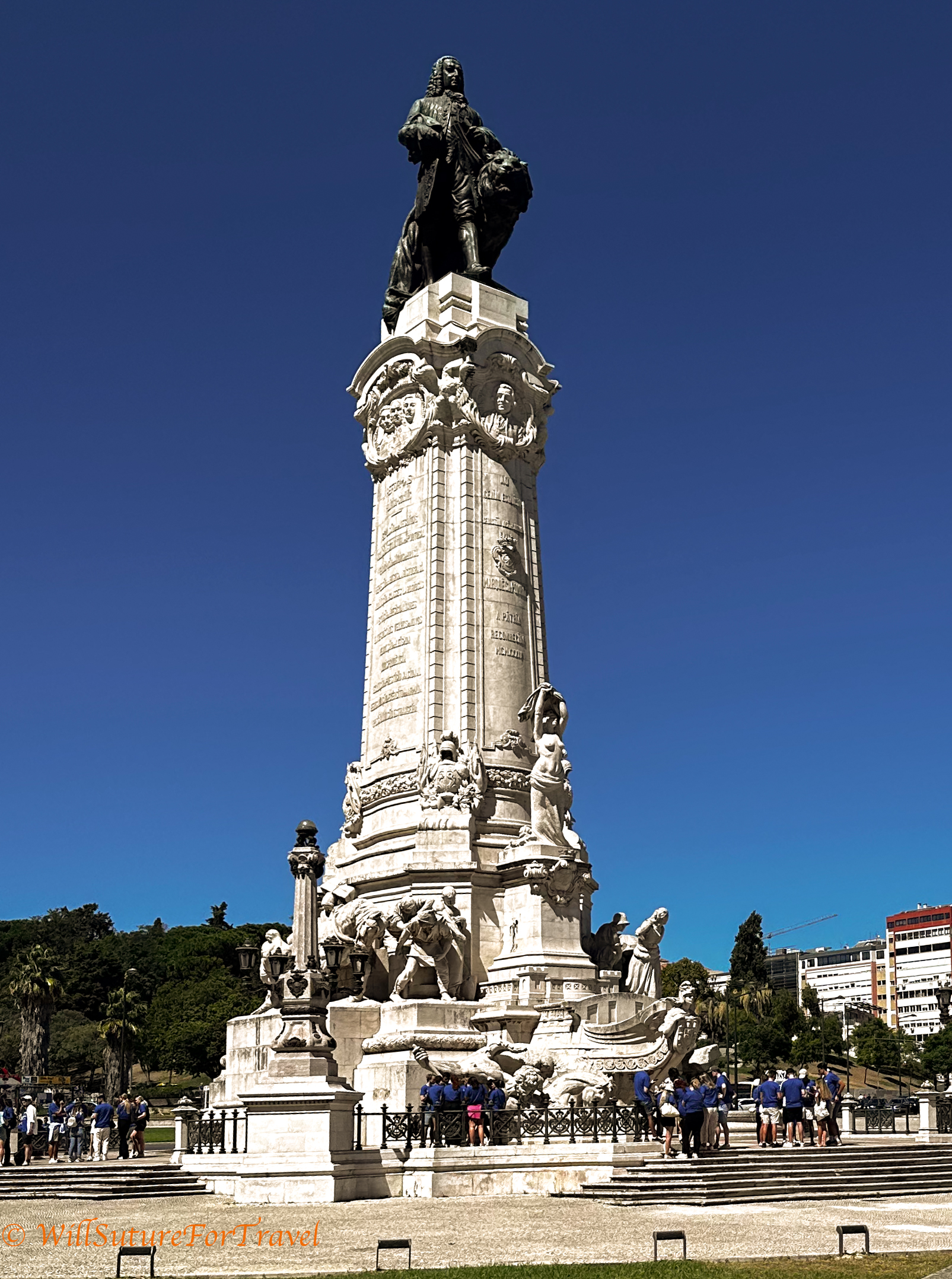
A statue of the Marquis of Pombal who who effectively ruled the Portuguese Empire from 1750 to 1777 as chief minister to King Joseph I. He is the main architect of the rebuilding of Lisbon after the 1755 earthquake. The square where this statue is located is at the beginning of Liberty Avenue, the Lisbon equivalent to Champs-Élysées in Paris.
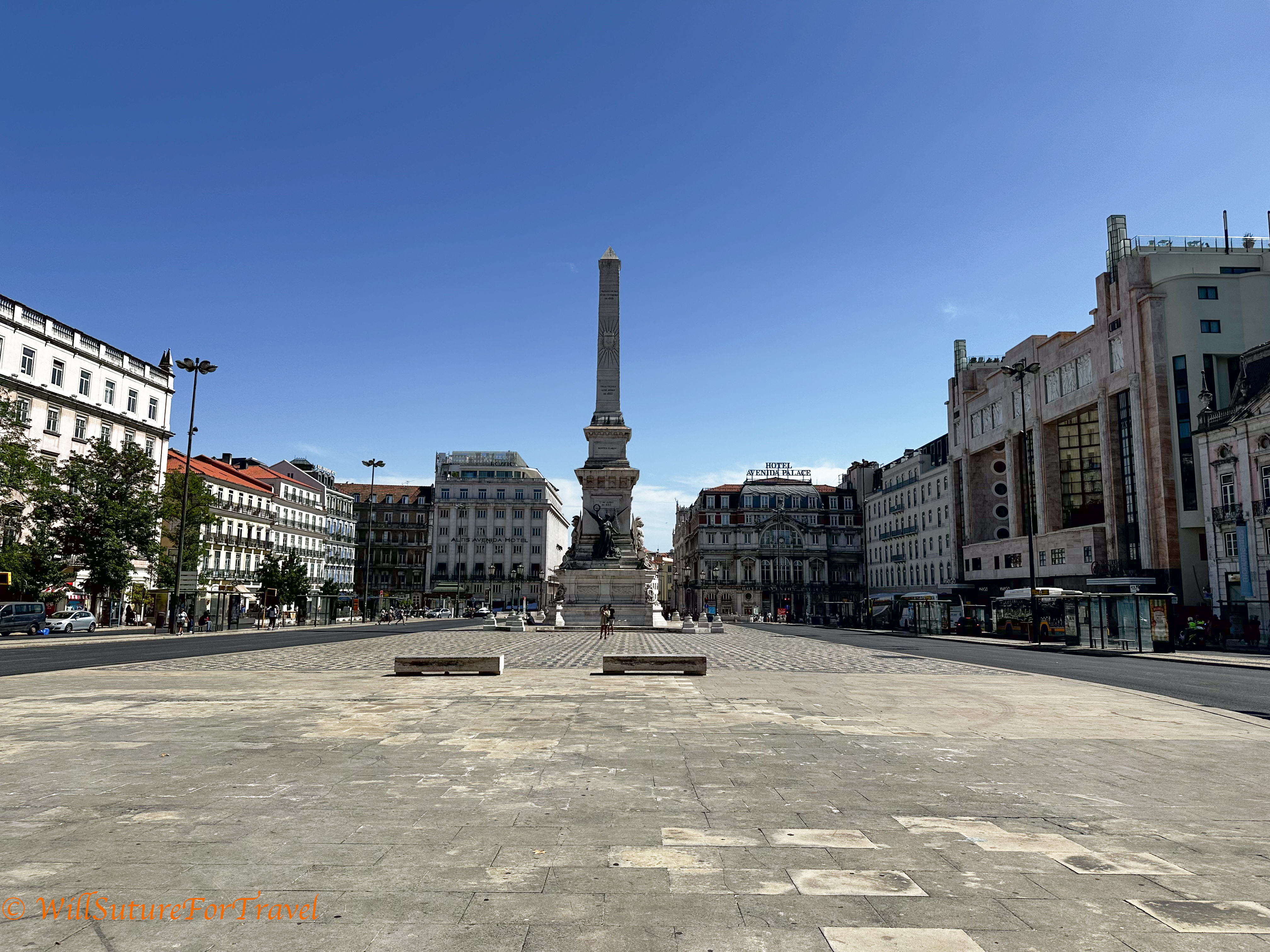
Praça dos Restauradores : This square and the obelisk monument is to commemorate the liberation of Portugal from Spain in 1886
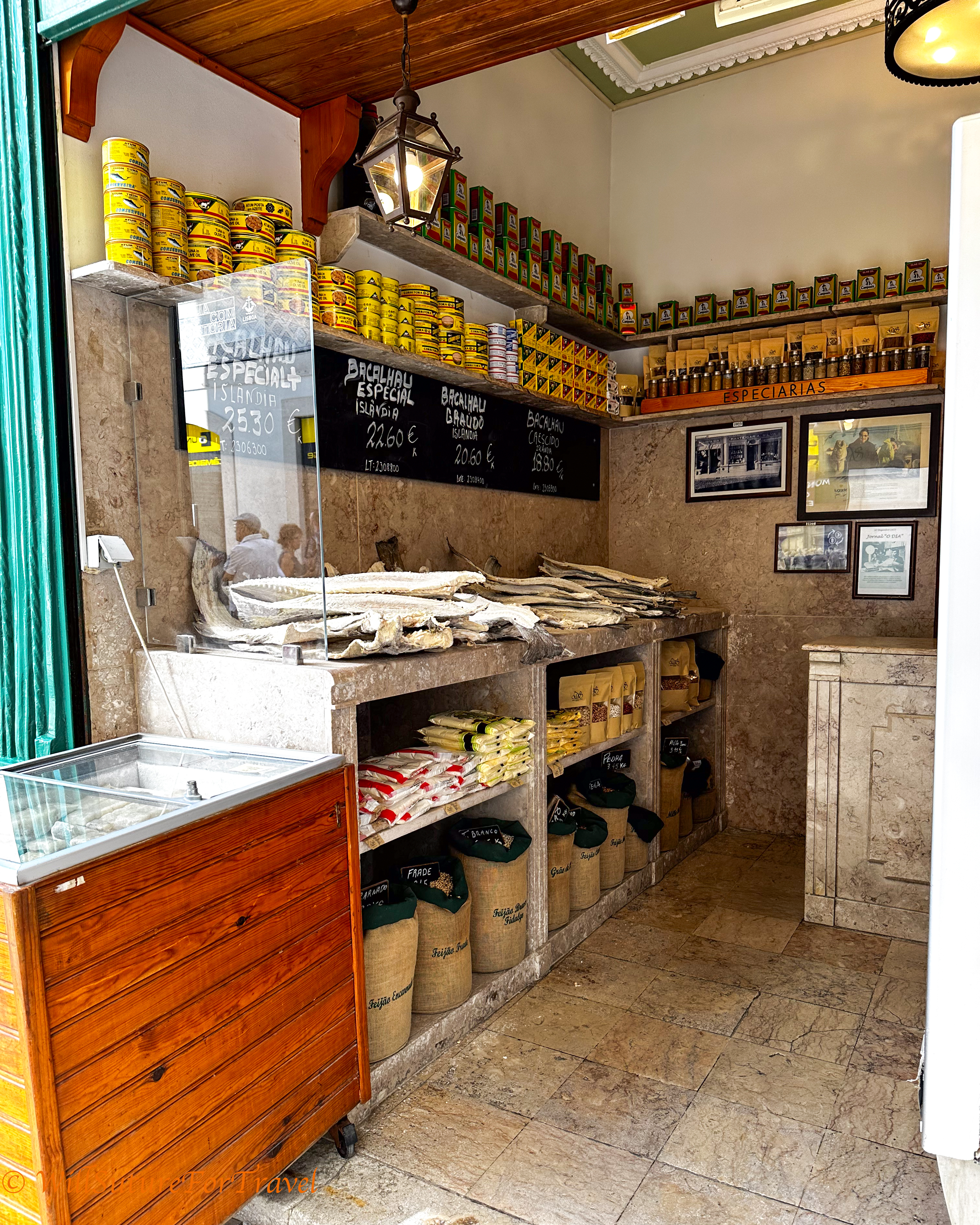
This is a historical dried cod shop. There are various stores that are marked as historical. They have to have been open for a certain amount of time and not have significantly changed.
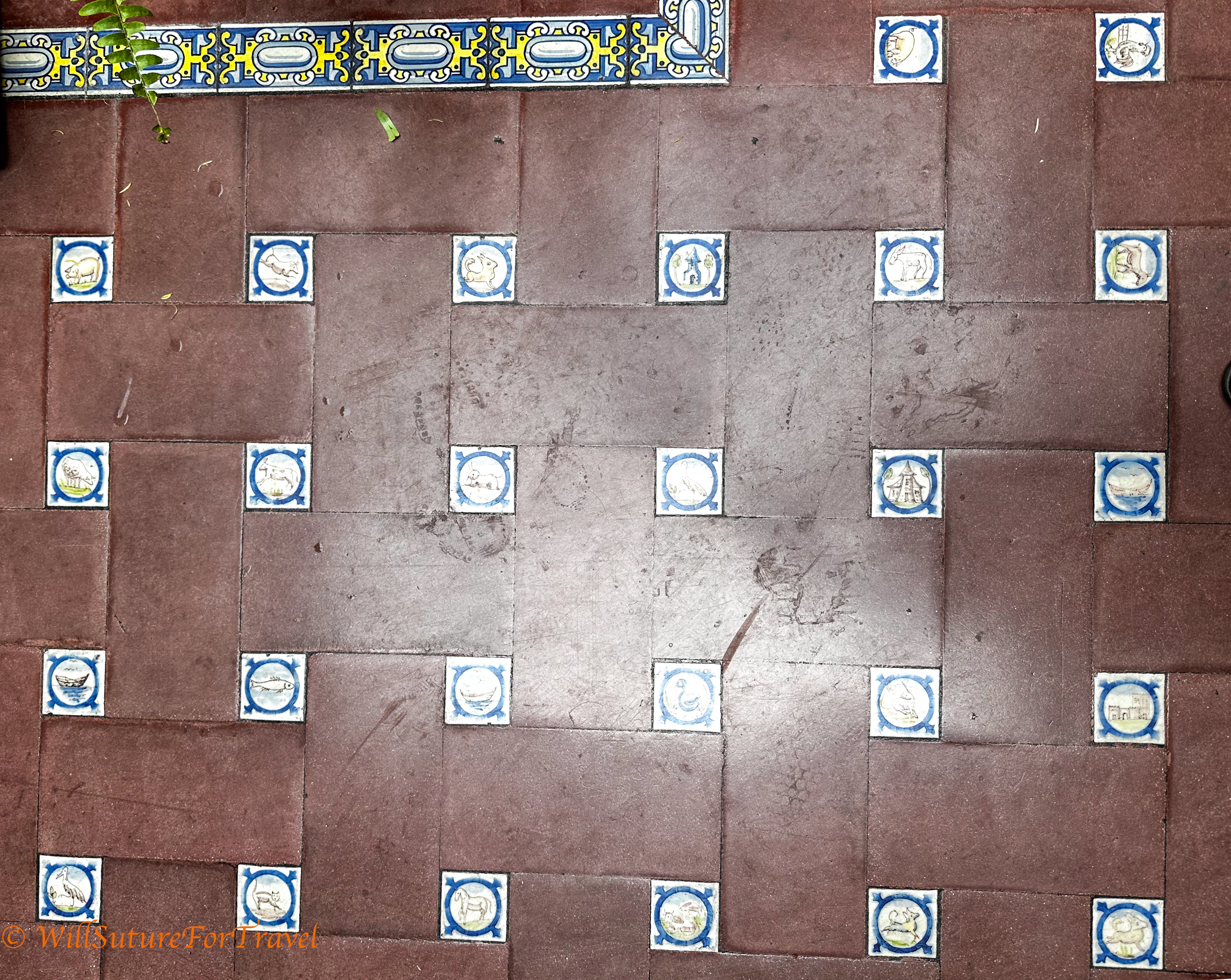
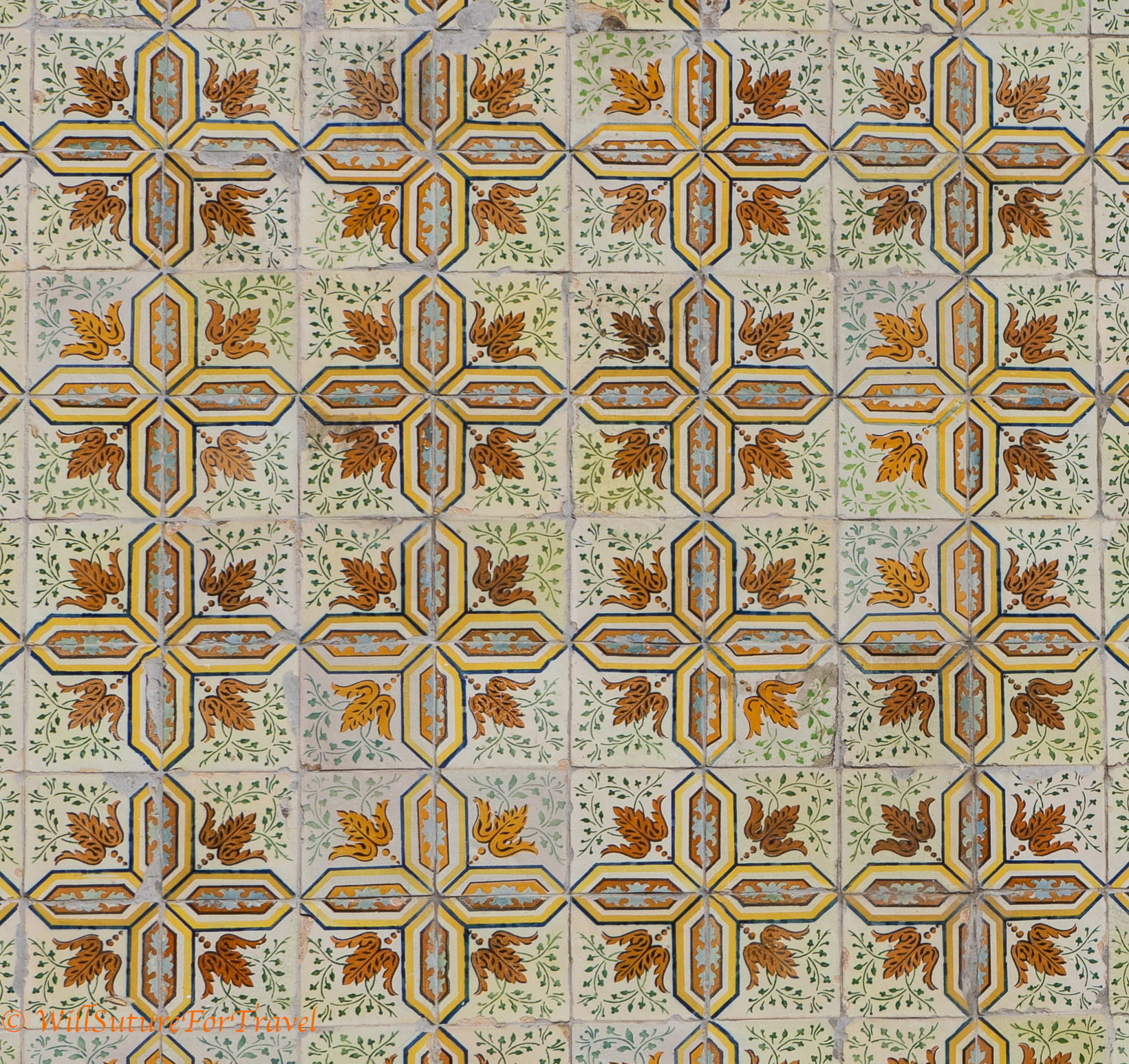
ceramic tile in a Moorish building
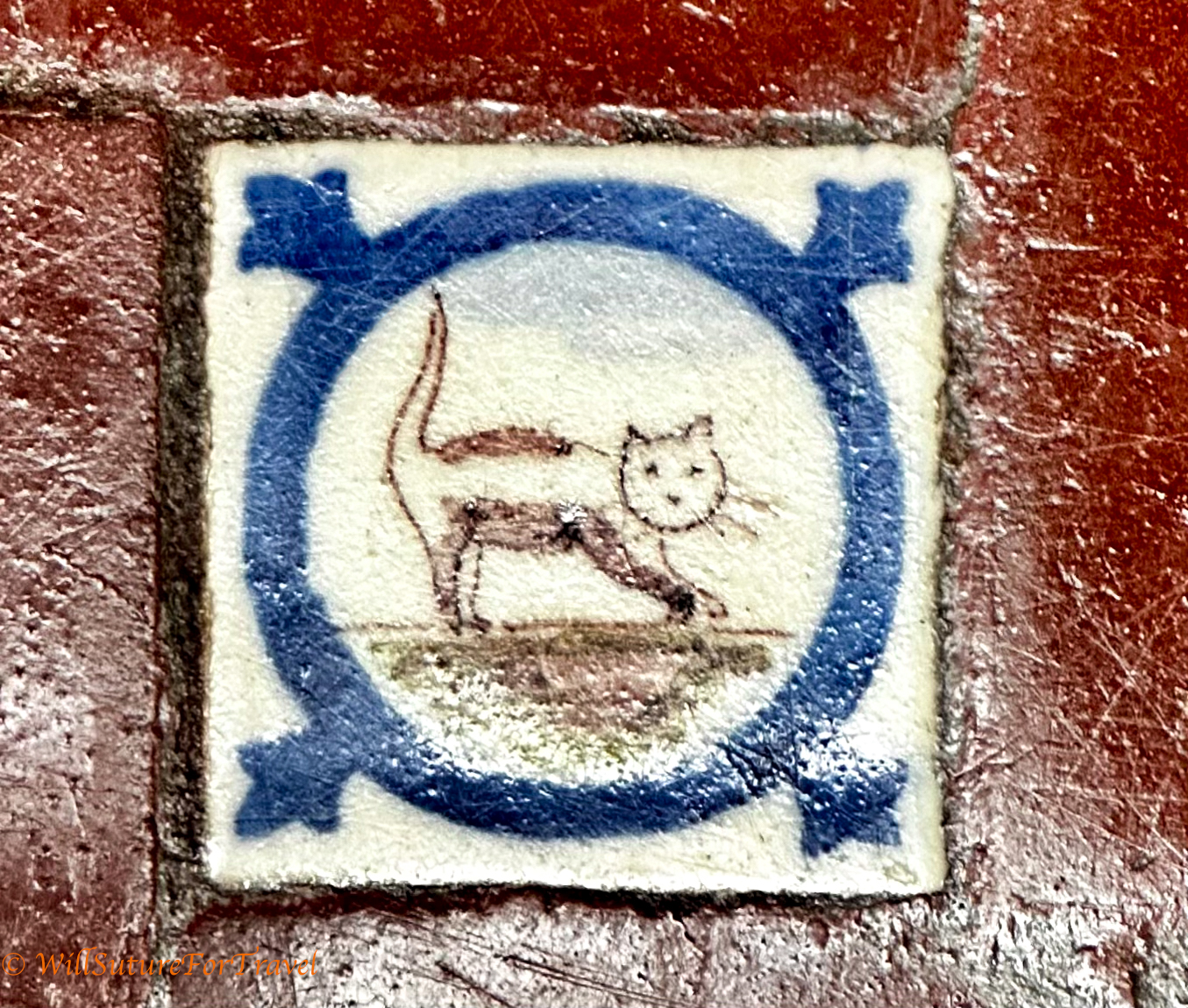
closeup of one tile
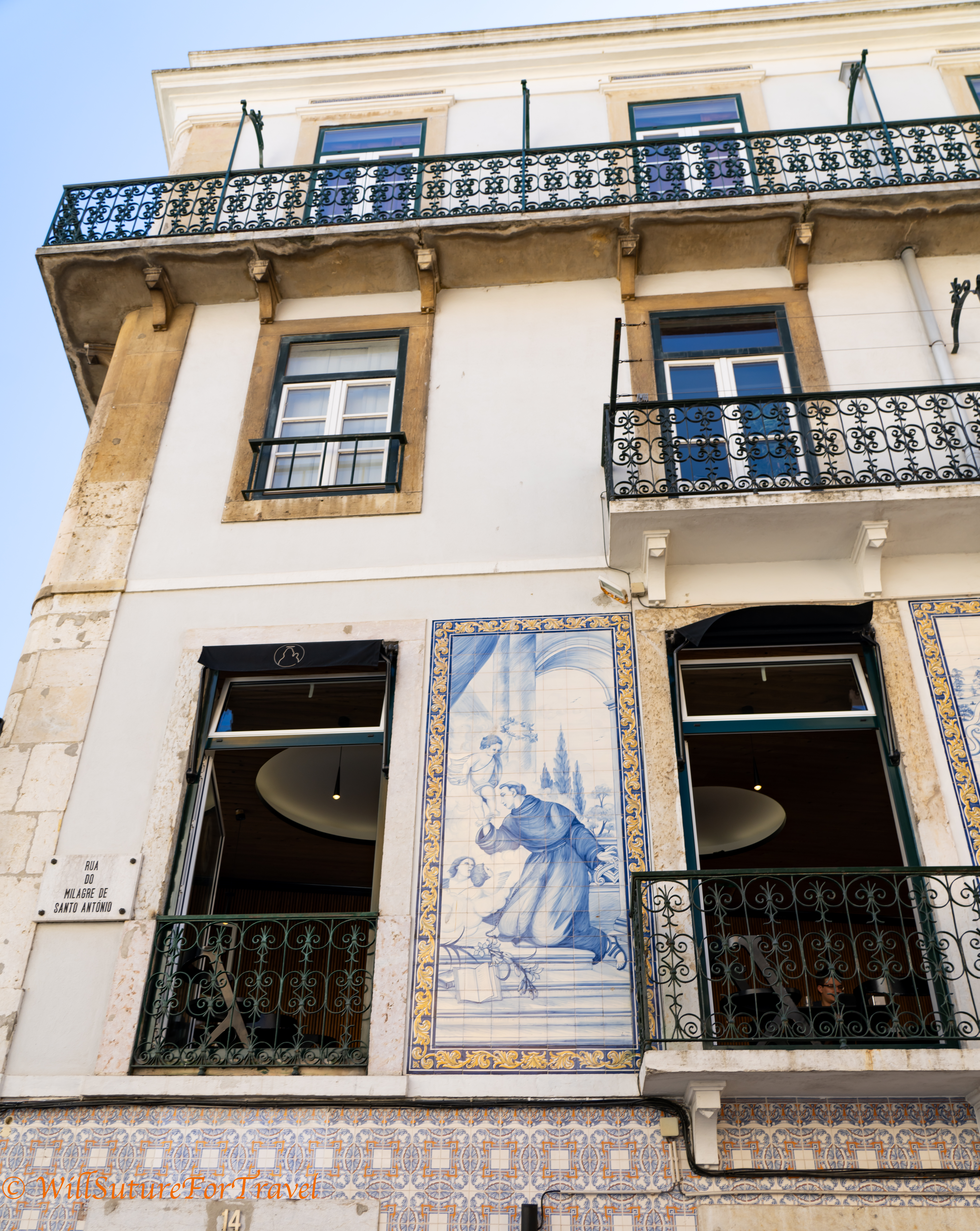
They use tile to decorate the outside of buildings, too
The outside of another building.
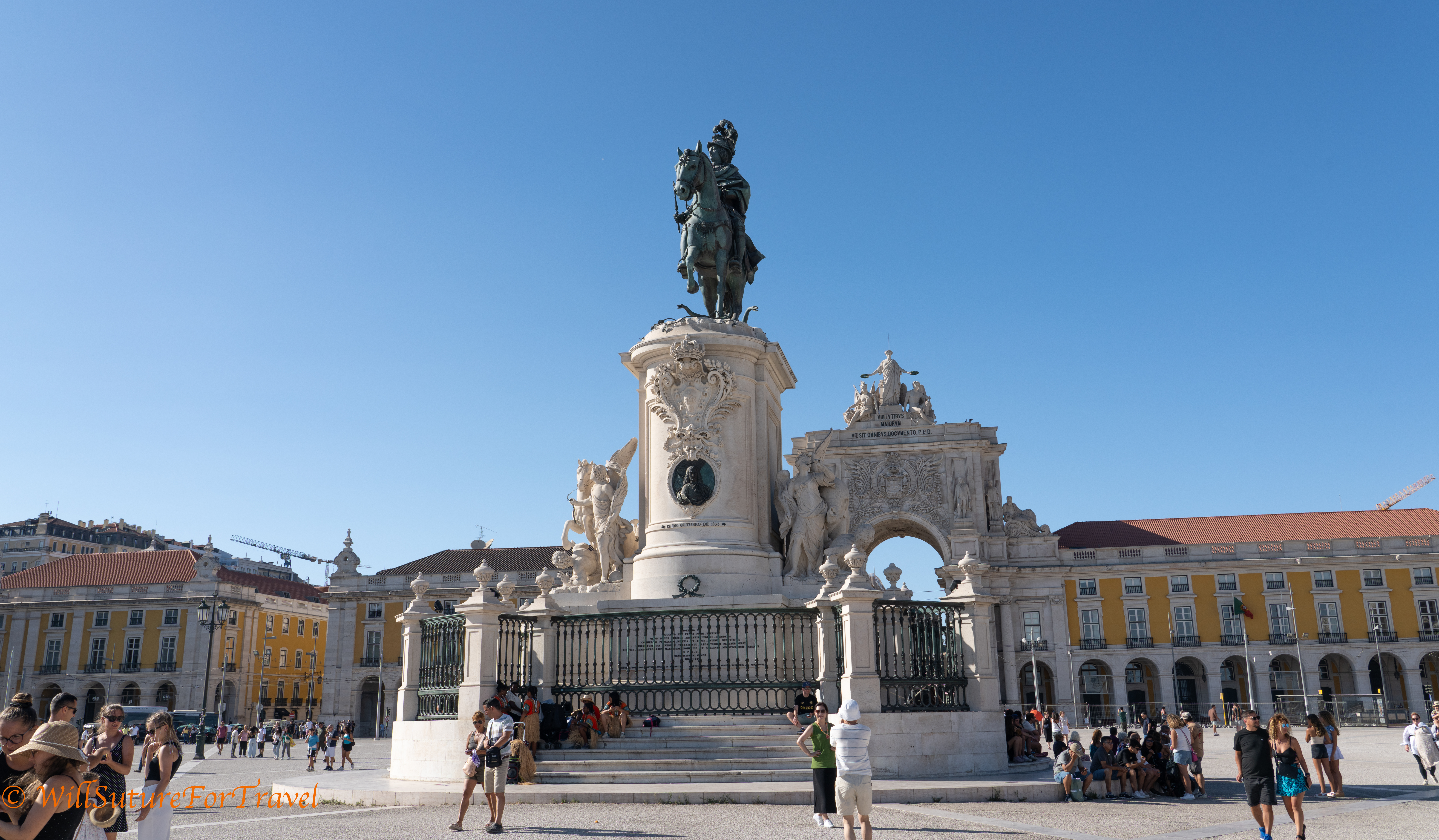
Praça do Comercio: This square is by the Tagus River and is an area that used to be exclusively used by the king. The area has been public use for a while now, as evidenced by the cafe that has been in operation for over 200 years. The next to last Portuguese king and his oldest son were assassinated on this square in 1908, leading up to the revolution and dissolution of the monarchy in 1910.
The statue in the center is of King Jose I and dates back to 1755. In the background you can see the Rua Augusta Triumphal Arch. This dates from 1875 and was built to commemorate the city’s rebirth after the 1755 earthquake.
There are multiple viewpoints, called miraduros, in Lisbon. We went to multiple today, the most notable being Santa Luzia.
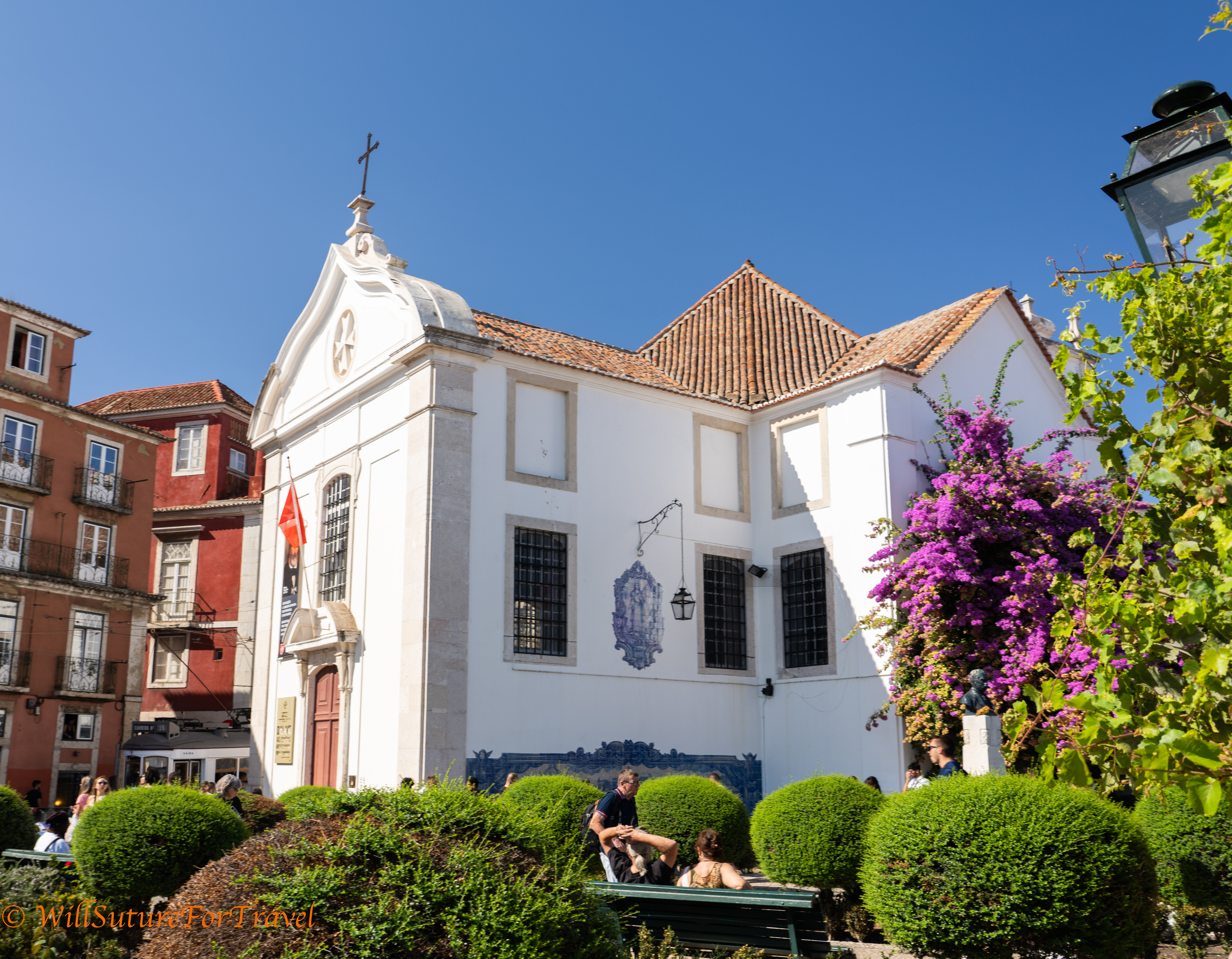
Church of Santa Luzia
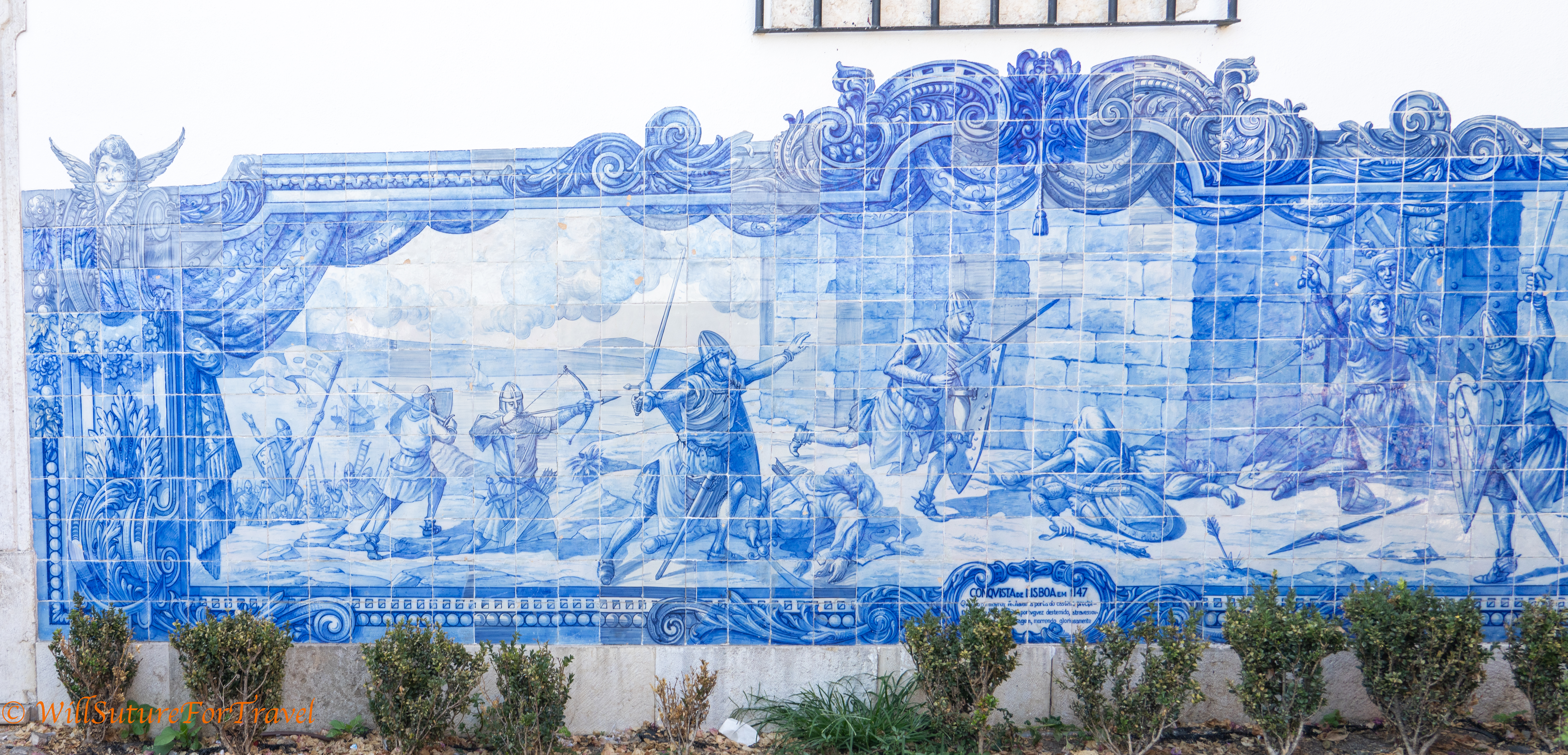
Tile panel on the church
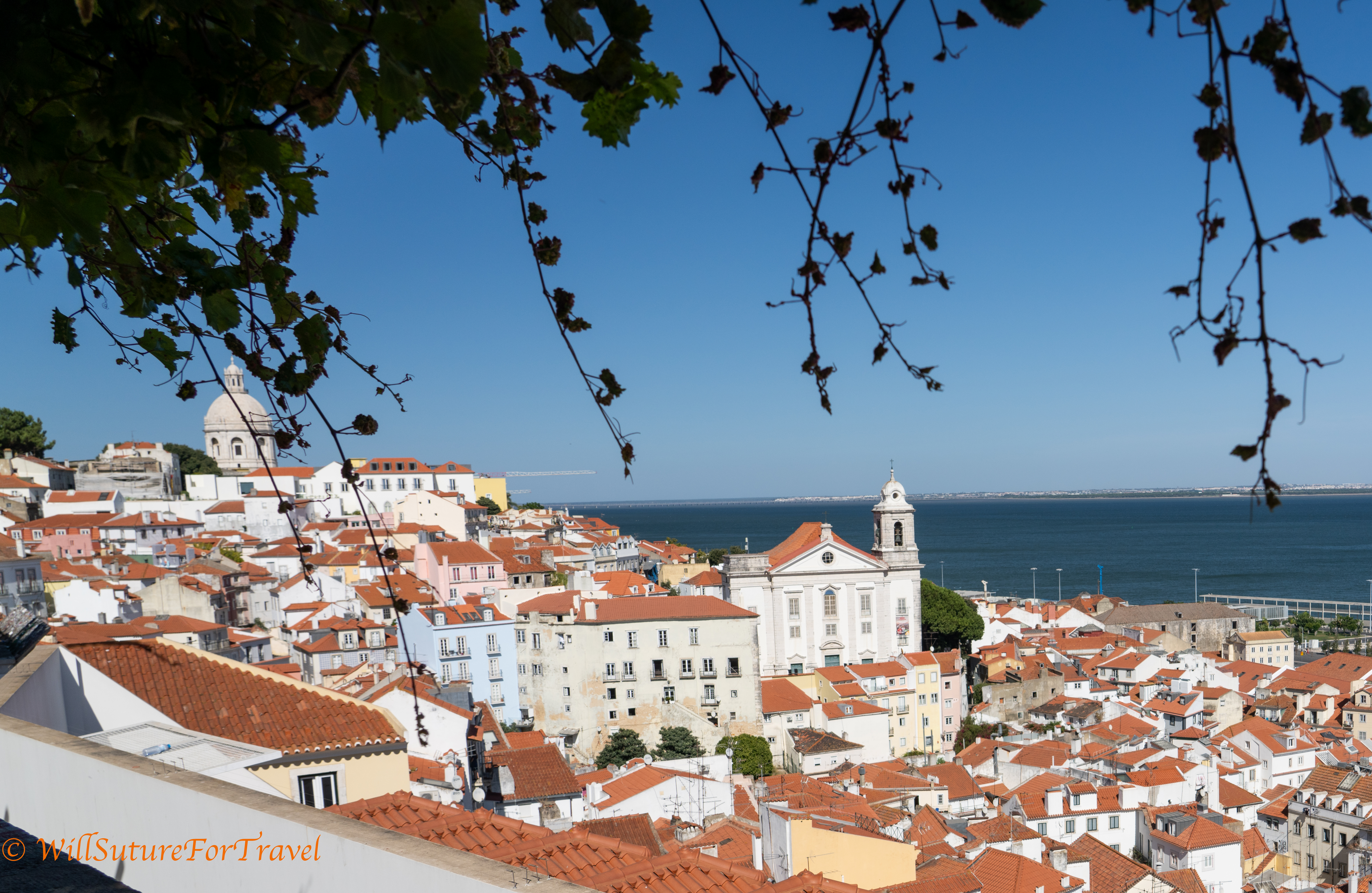
view from Santa Luzia

This is a view looking out to Aflama, the oldest part of Lisbon which survived the 1755 earthquake. This has medieval narrow, winding streets whereas the newer areas have wider, straight streets.
another view of Alfama.
This is the inside of the Church of St Dominic. It was originally dedicated in 1241, damaged in a 1531 earthquake and nearly destroyed in the 1755 earthquake. It was subsequently rebuilt. In 1959 it was gutted in a fire. It was rebuilt, but they left the fire-damaged stone in place and essentially just put in a ceiling. It is actually very moving.
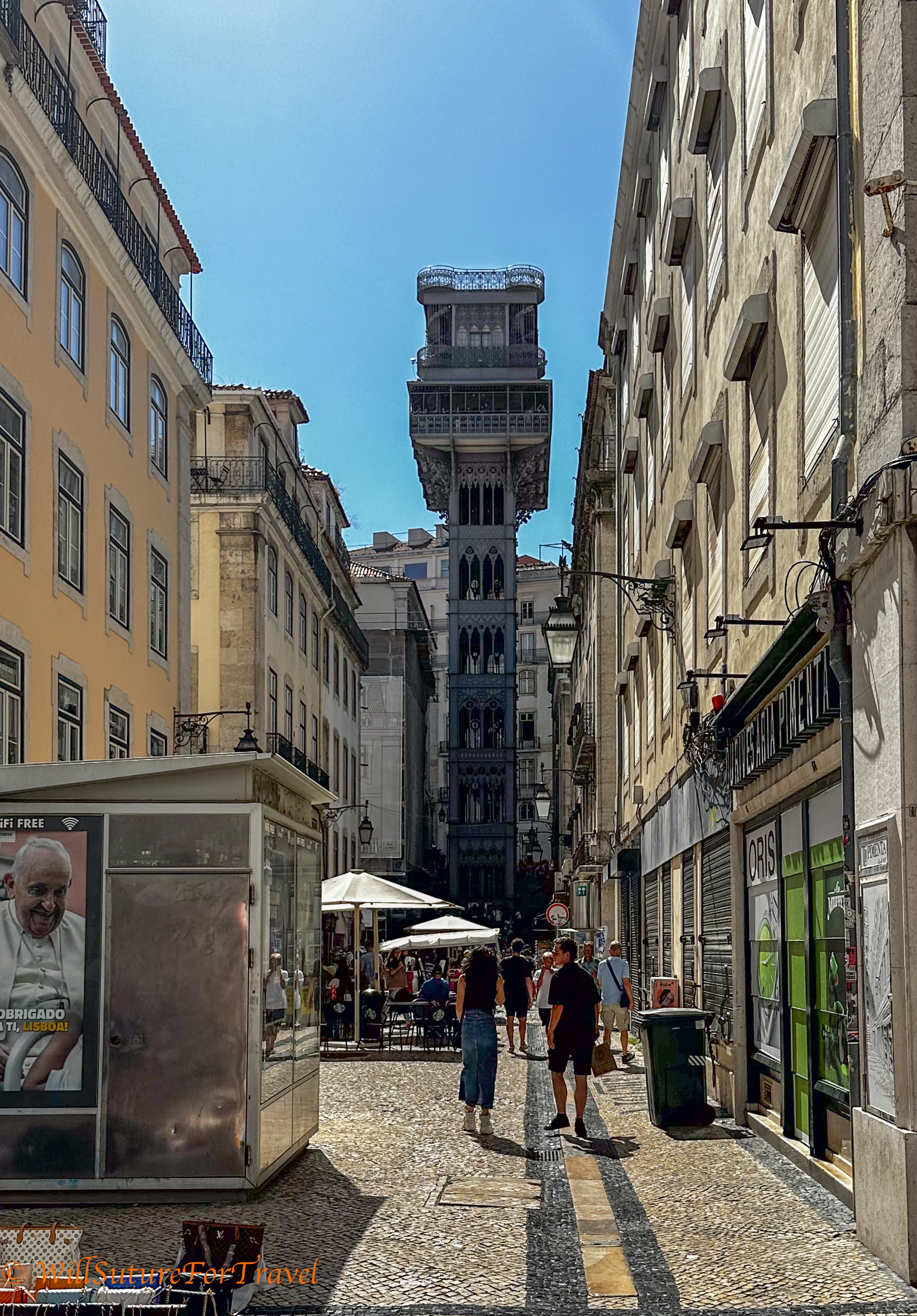
This is the Santa Justa Lift or the elevator. It is a way to get from the lower levels of the city to the upper levels, but, for tourists is serves as a viewpoint. The elevator was designed by Raoul Mesnier du Ponsard, a student of Gustave Eiffel (as in Eiffel Tower), and opened in 1899.
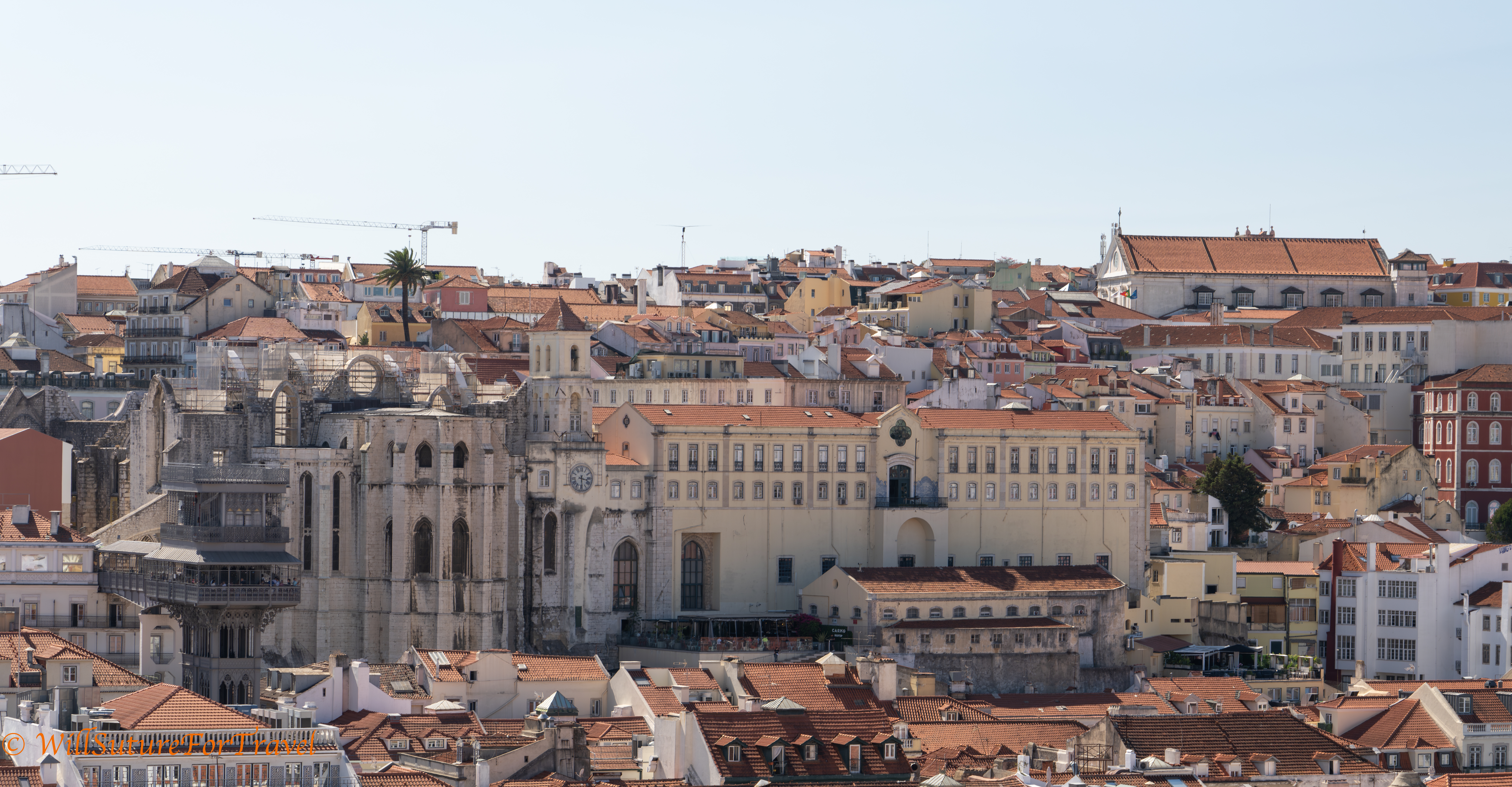
The Church of Our Lady of Mount Carmel and the Convent of Our Lady of Mount Carmel: Founded in 1389. These buildings were heavily damaged in the 1755 earthquake. Various repairs have been done over the centuries, but the buildings have mainly been used by the military since the earthquake, until being transformed into an archaeological museum. To the left of the church you can see the Santa Justa Lift.
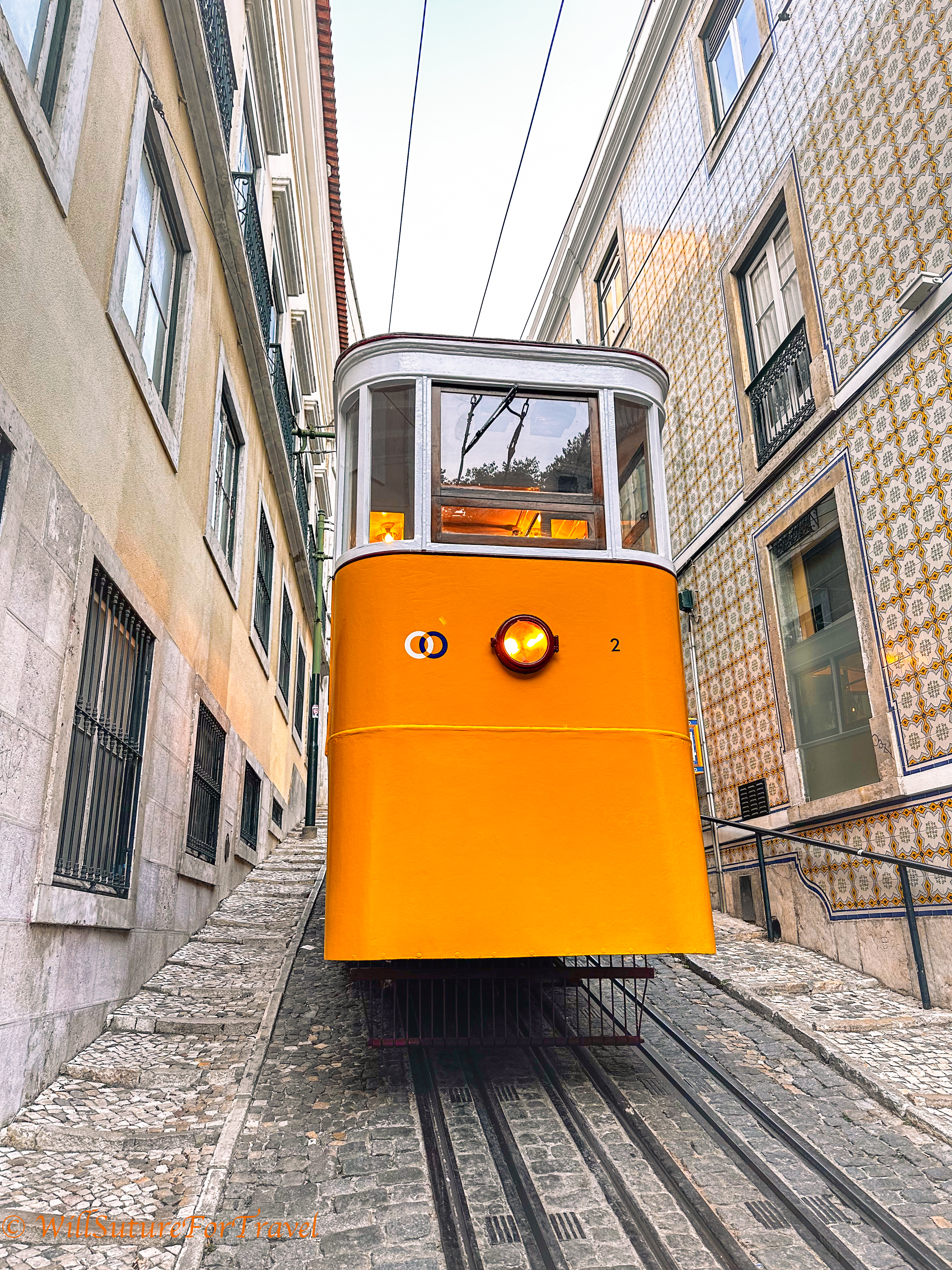
In addition to the Santa Justa Lift, there are 3 funiculars in Lisbon to help traverse elevations. They were also designed by Raoul Mesnier du Ponsard. This one is Ascensor do Lavra.


Leave a Reply