We have arrived in Buenos Aires, the capital of Argentina. We had a short time to explore here before moving on so tried to make the most of it. Buenos Aires is on the Río de la Plata, an estuary that flows into the Atlantic Ocean. The city dates back to the 16th century and is known for its architecture styles from Spain, France, and Great Britain.
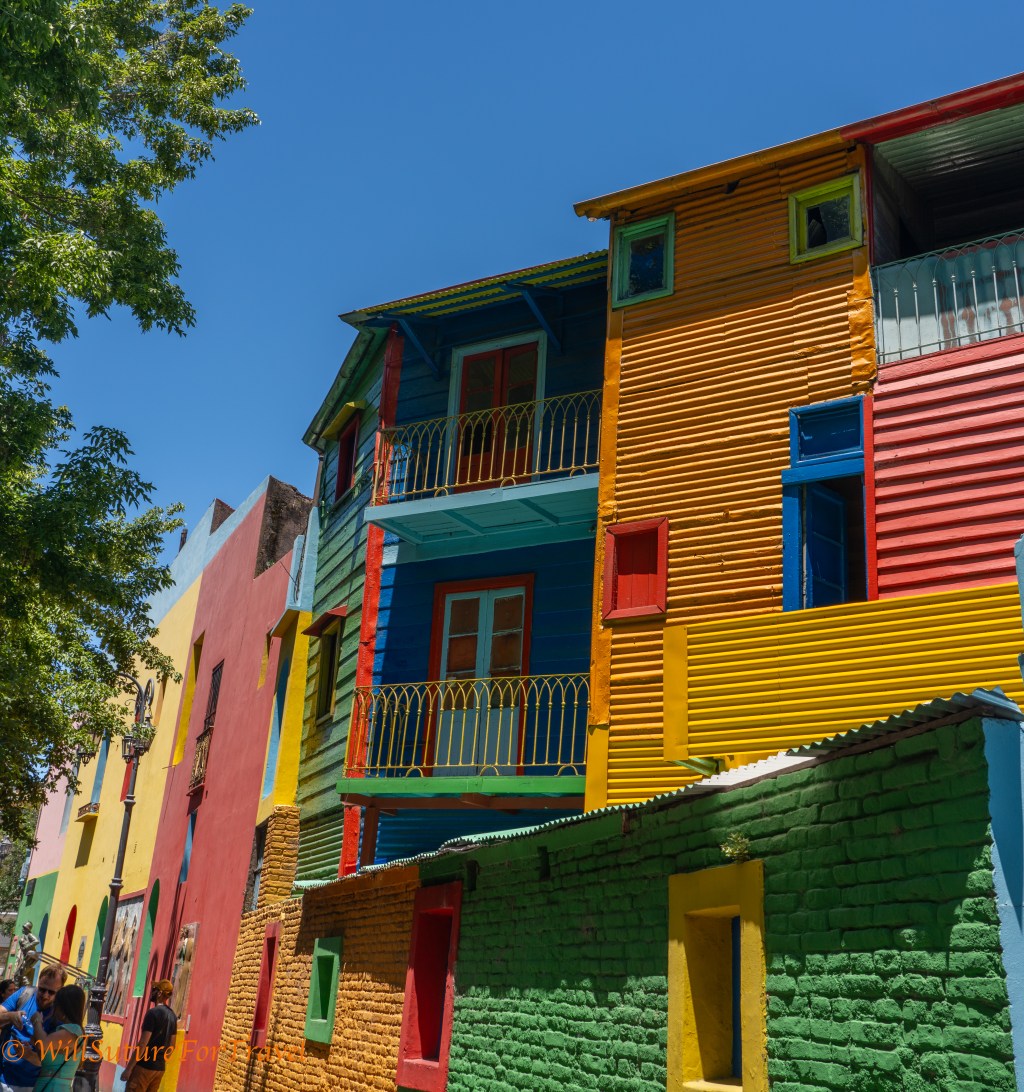
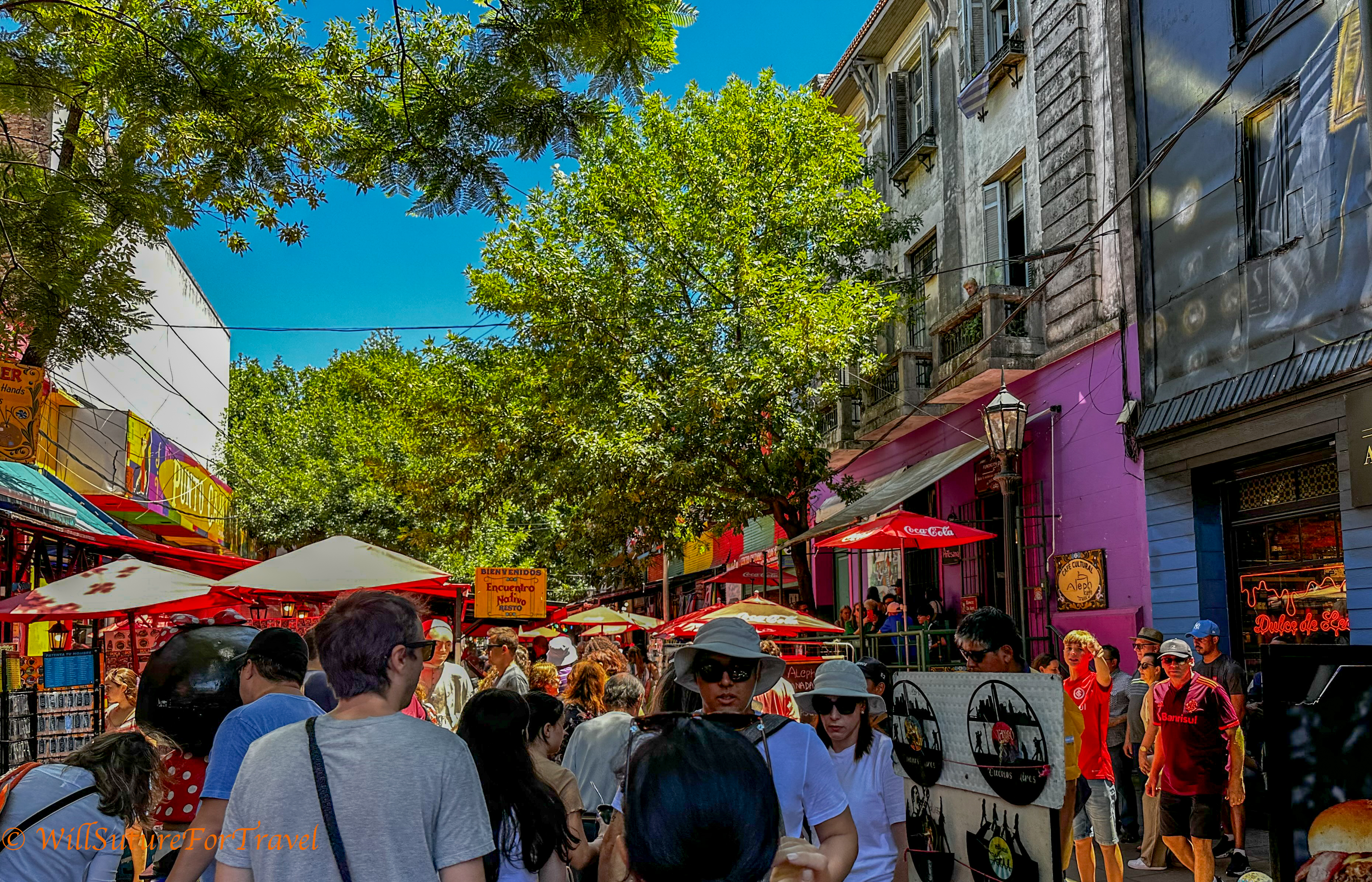
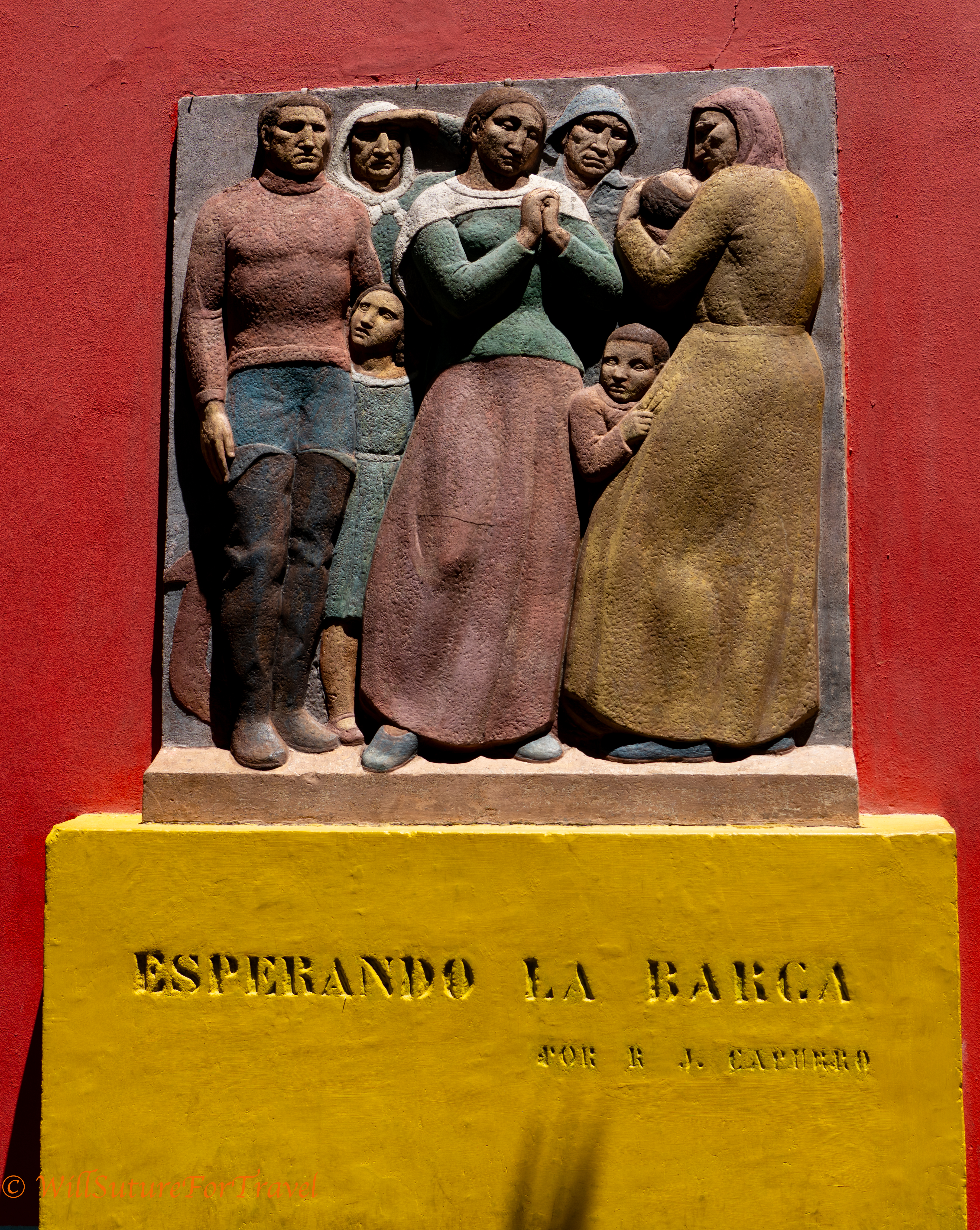
We started the day in one of the oldest neighborhoods of Buenos Aires, La Boca. This is an older neighborhood near the old port. In the 19th and 20th centuries this was an immigrant neighborhood as well as being an industrial area.
It was here that the tango was developed and spread along the Río de la Plata and later around the world. Many of the immigrant painted their homes bright colors.
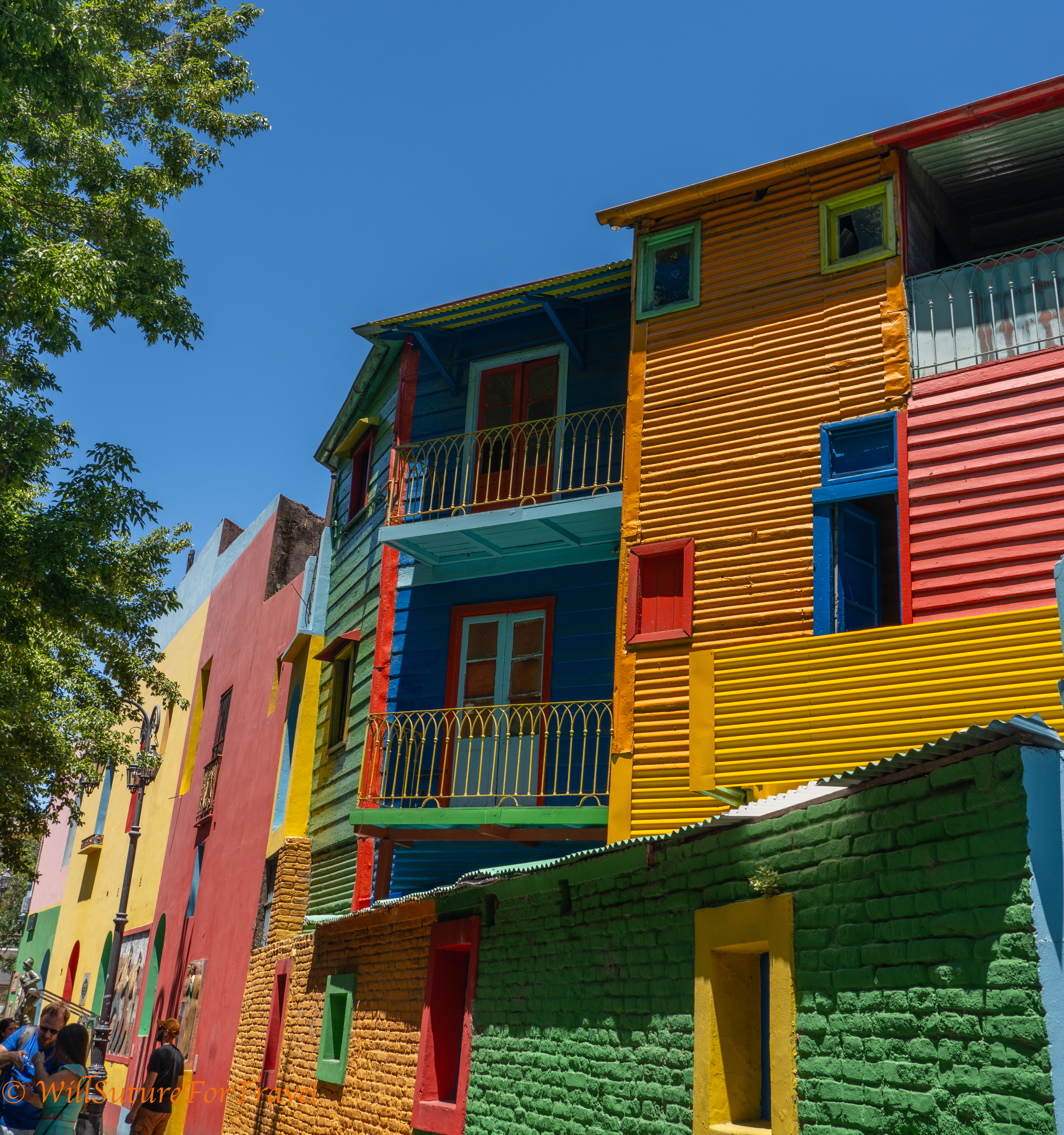
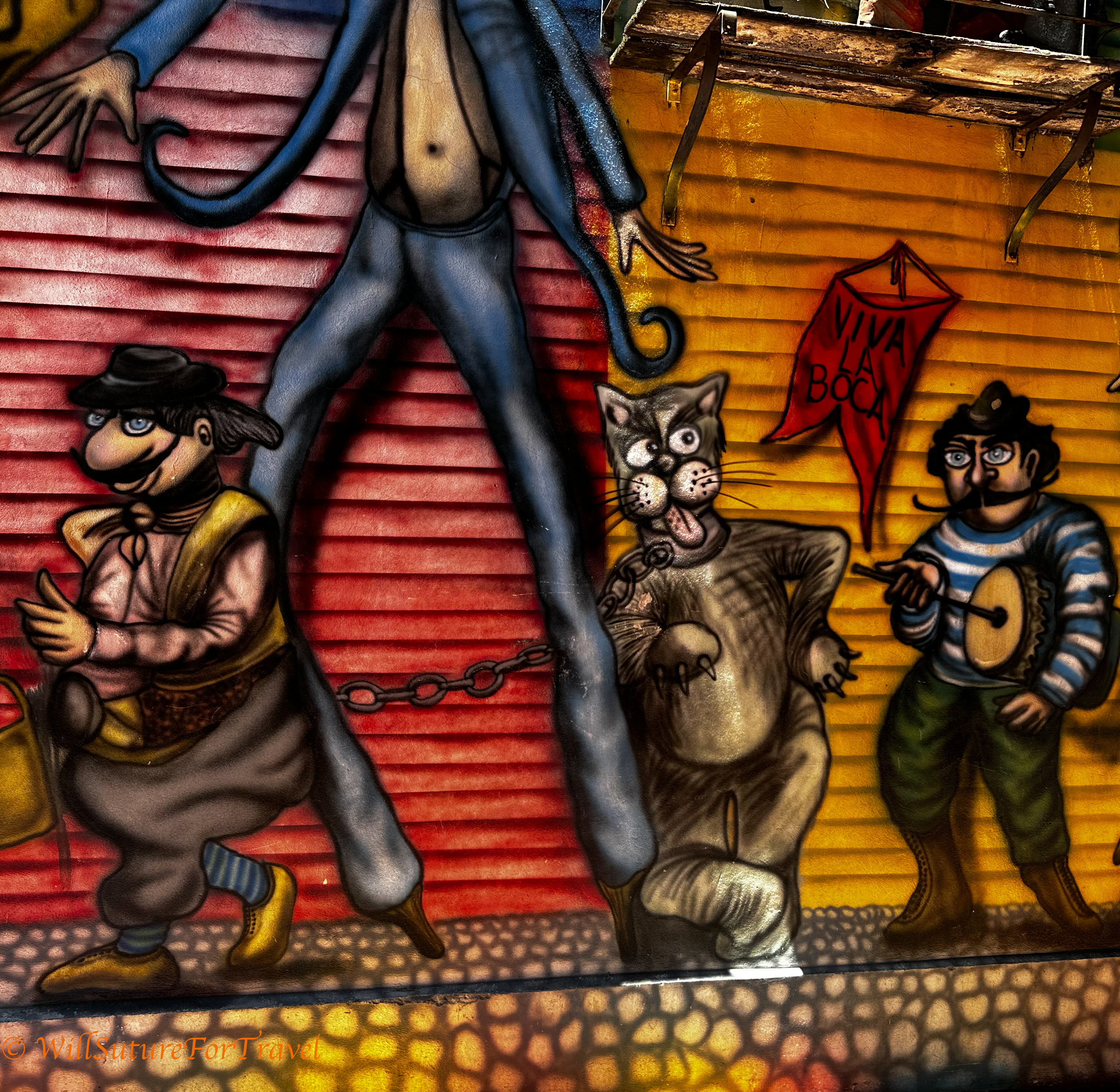
Over time this neighborhood and the port were abandoned. In the 1950s a portion of La Boca was revitalized and is a tourist attraction. There are artists, shops, restaurants, and tango demonstrations.
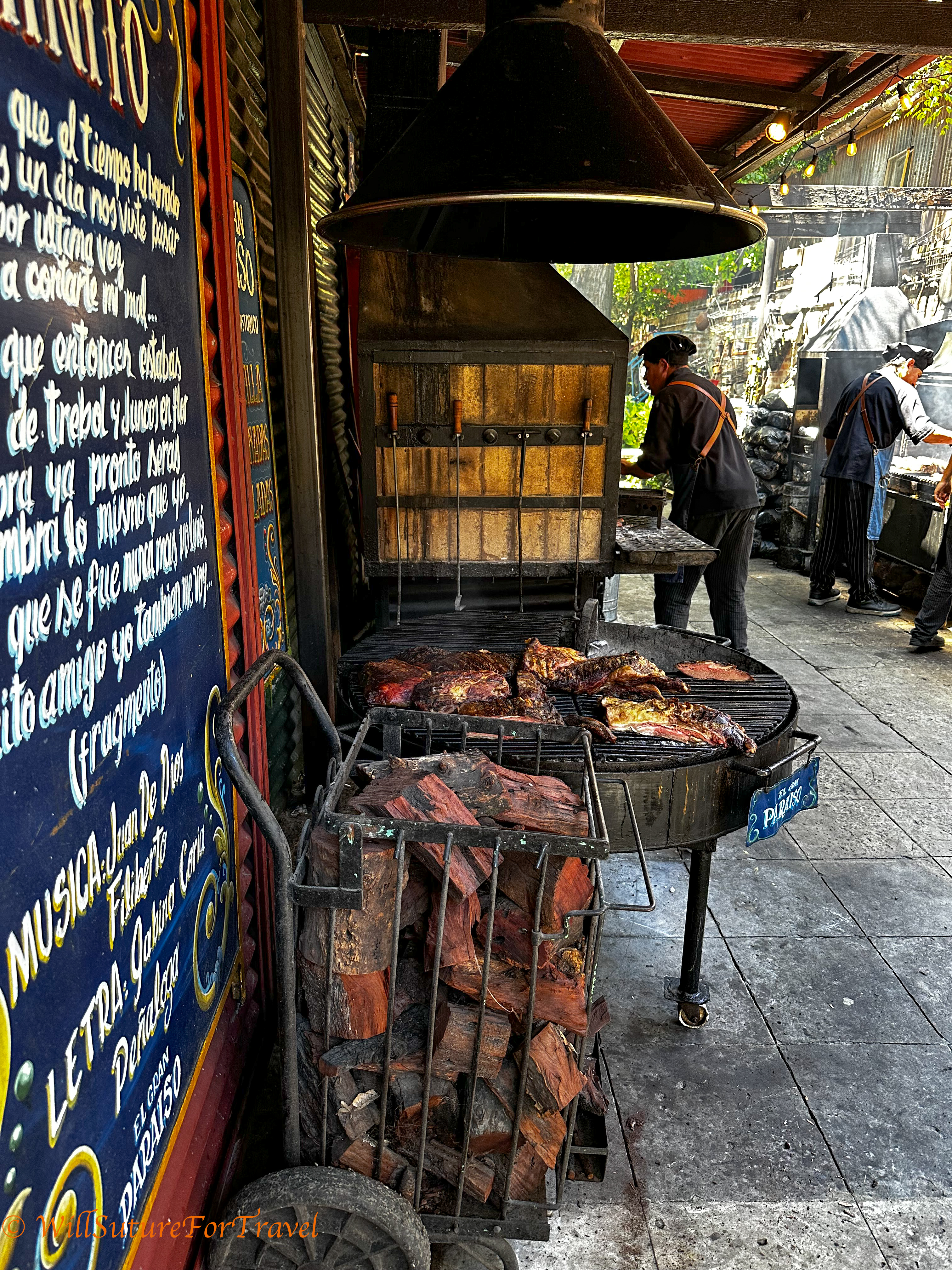
This smelled so good.
Unfortunately, the remainder of the neighborhood remains impoverished and the old port is polluted and unusable.
Next we headed over to San Telmo, a neighborhood that had was known for its mansions by the late 1800s. When a yellow fever epidemic hit in the 1870s, these families fled to higher ground, leaving their mansions. The area was transformed into a multicultural artistic community with many families sharing these former mansions. Today some of these former great homes house restaurants and art shops.
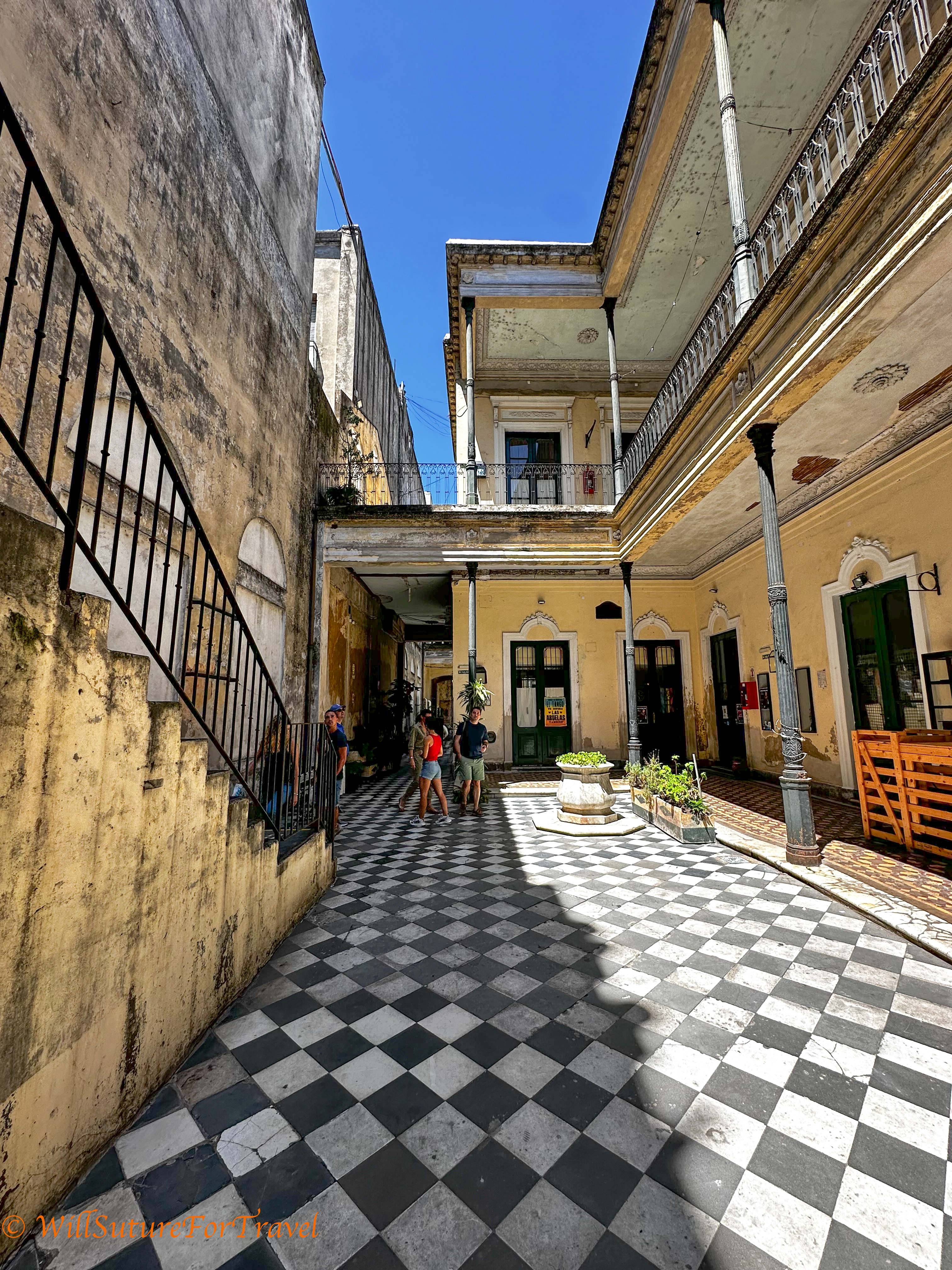
One of the old mansions, now shops.
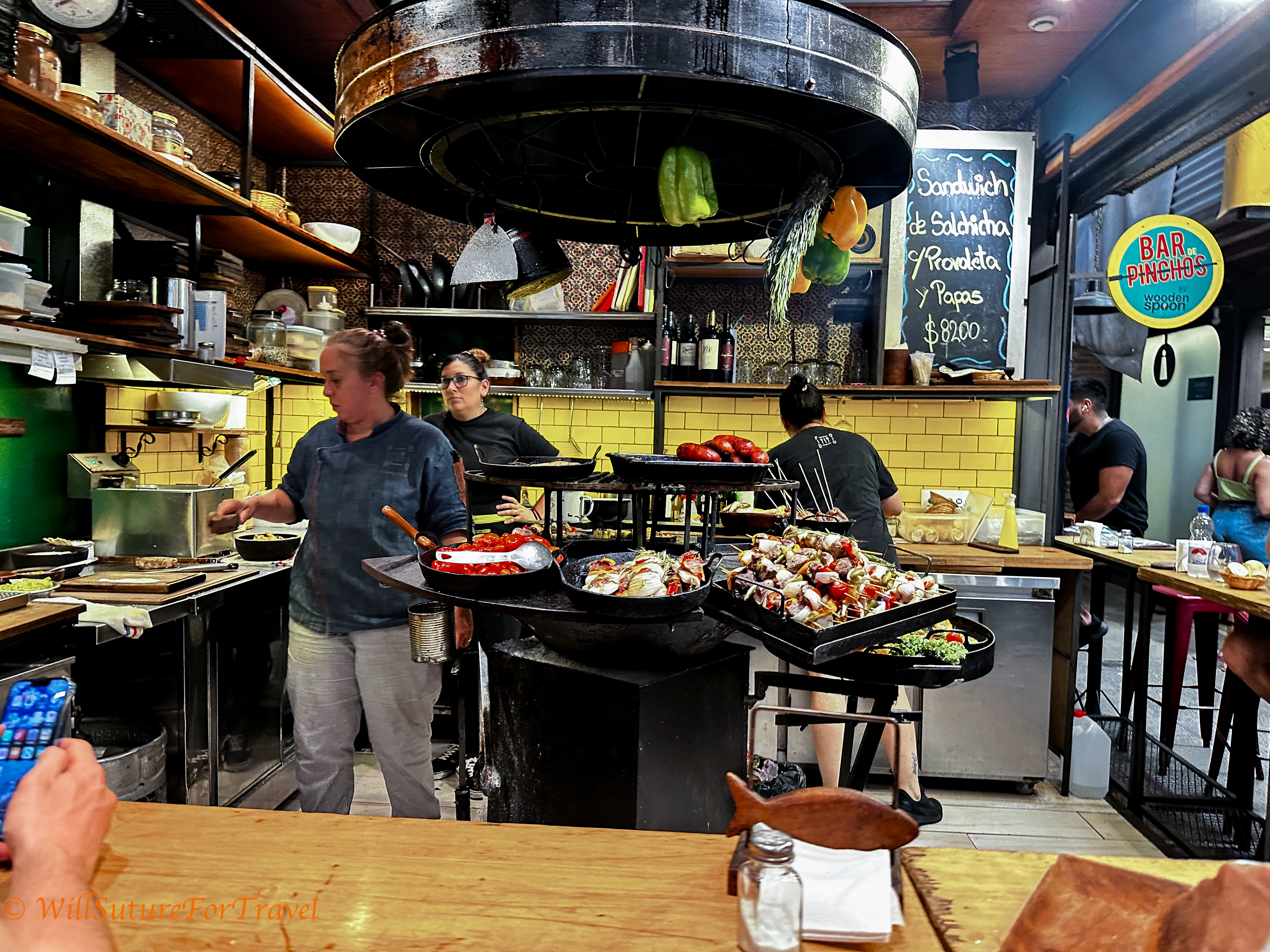
San Telmo Market
We made it over to the Plaza de Mayo, the main square, of Buenos Aires. This is where many of the governmental buildings are found along with the Metropolitan Cathedral.
The Metropolitan Cathedral of the Holy Trinity is the main Catholic church of Buenos Aires.
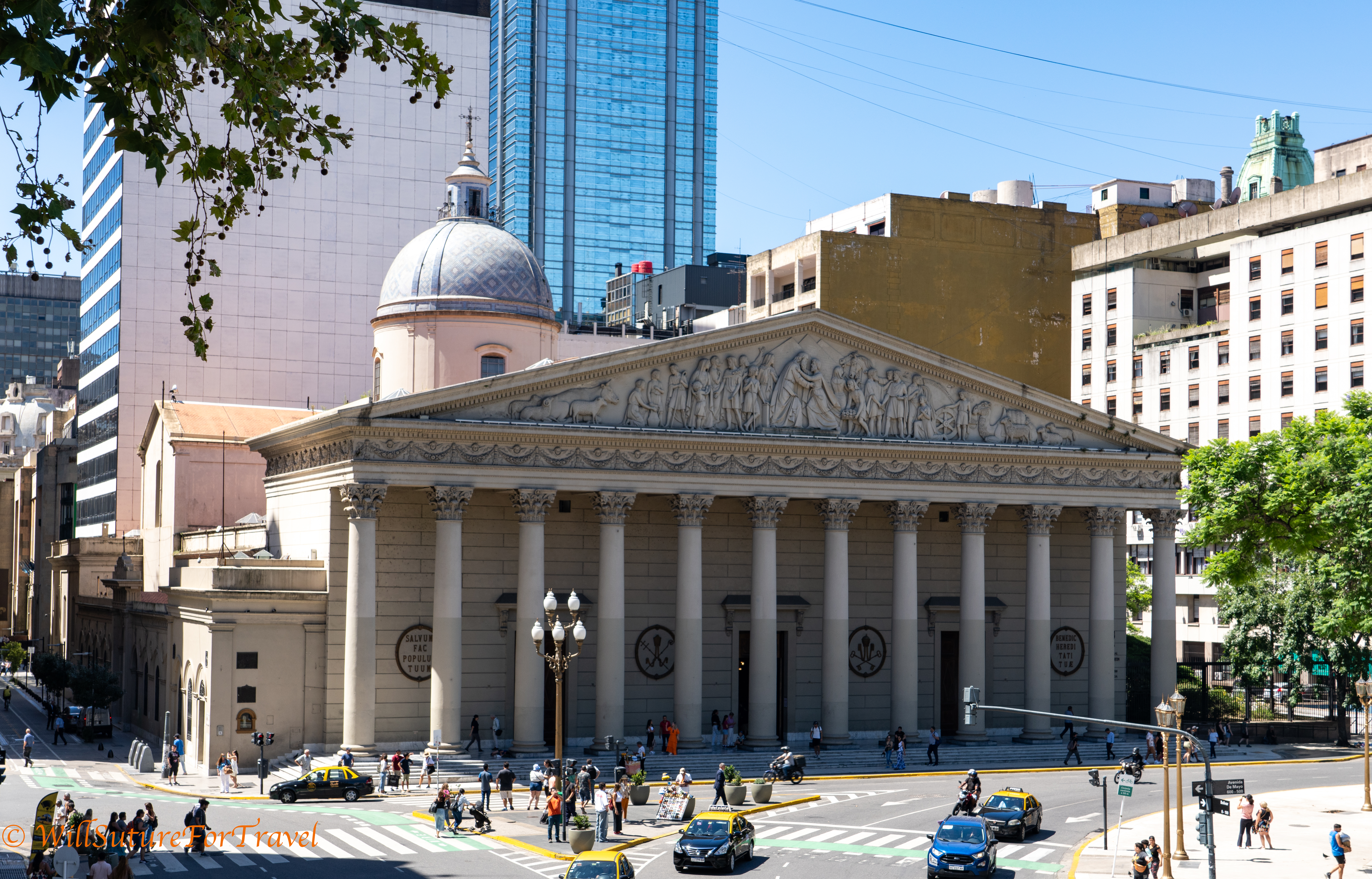
The current pope, Pope Francis, was the Archbishop of Buenos Aires here for 15 years and the chair he sat in remains roped off behind the altar. The church is built with a nontraditional Neoclassical exterior and has a relatively plain Rococo interior.
Inside the Cathedral is the mausoleum of General San Martin who helped liberate Argentina, Peru, and Chile from Spain. His mausoleum is guarded as an act of respect.
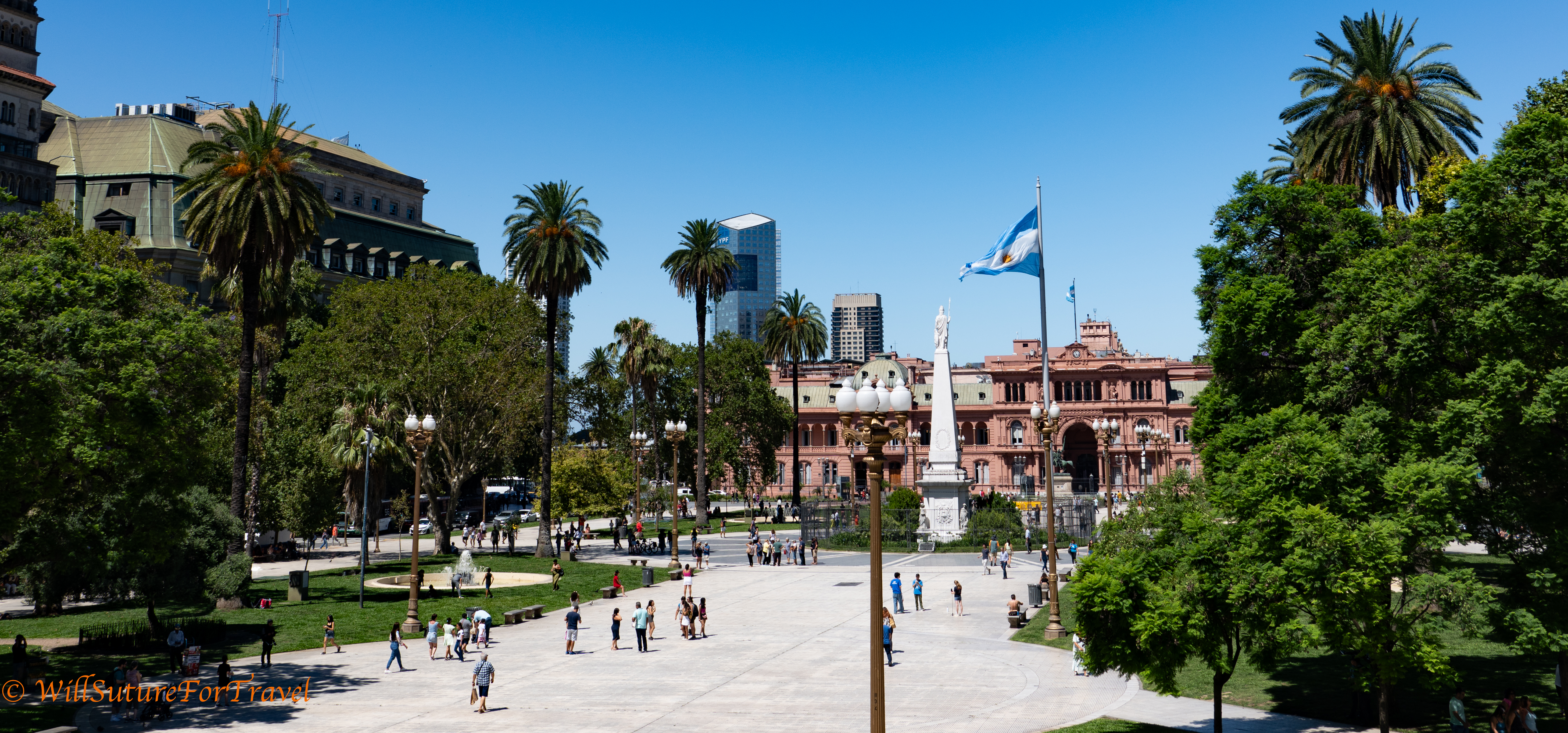
Looking out on the Plaza Mayo. You can see the Casa Rosada which is the equivalent of our White House.
We lastly headed to the Recoleta Cemetery. This may seem like an odd tourist site. This cemetery holds the remains of some well-known Argentinians, or as our guide put it, “all of our street names are in here.” The cemetery is 14 acres of over 4500 mausoleums, some dating back to the 18th century up to today. It is laid out like city streets.
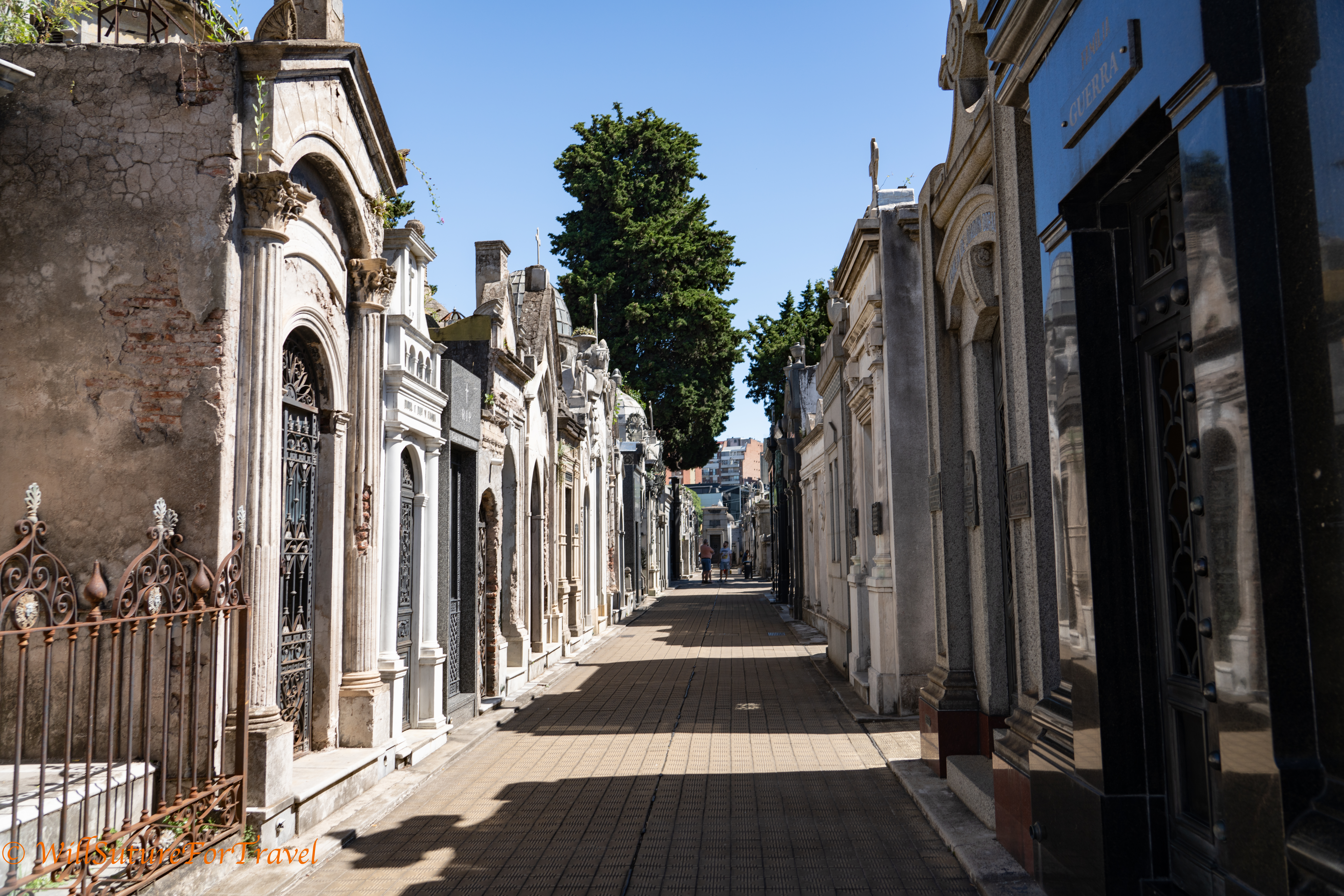
We were there to see the tomb of Eva Perón, Evita, the former first lady of Argentina. She died of cervical cancer in 1952 and her body was put on public display for 2 years. Her husband was overthrown in a coup and her body disappeared for 16 years only to be later found in a crypt in Milan. It was exhumed, returned to her husband, who reportedly kept it in his home. After his death, her body was again stolen, later recovered, and finally buried in her family mausoleum in Recoleta. She is buried under her maiden name.
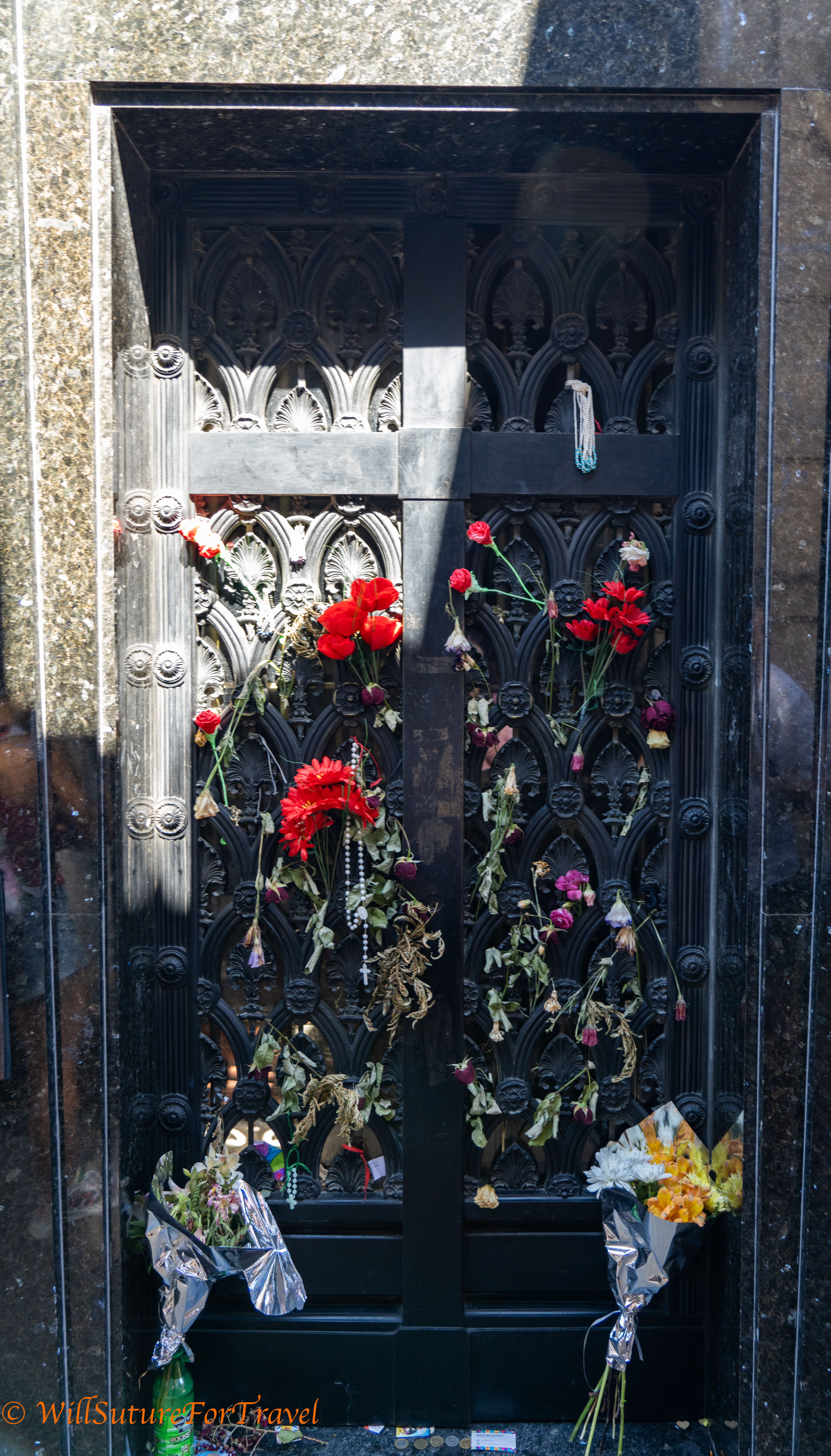
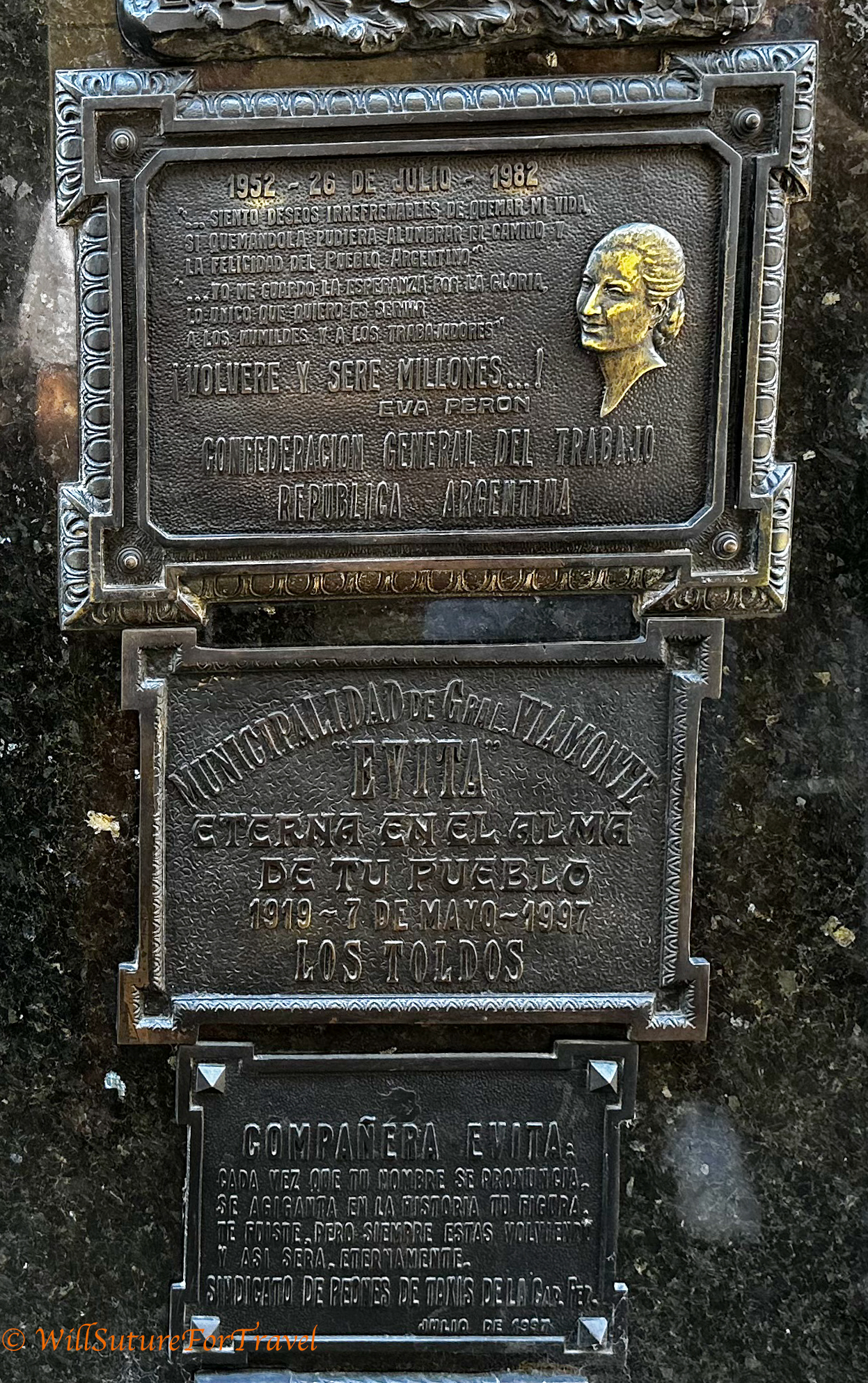
We were told there are always fresh flowers here.
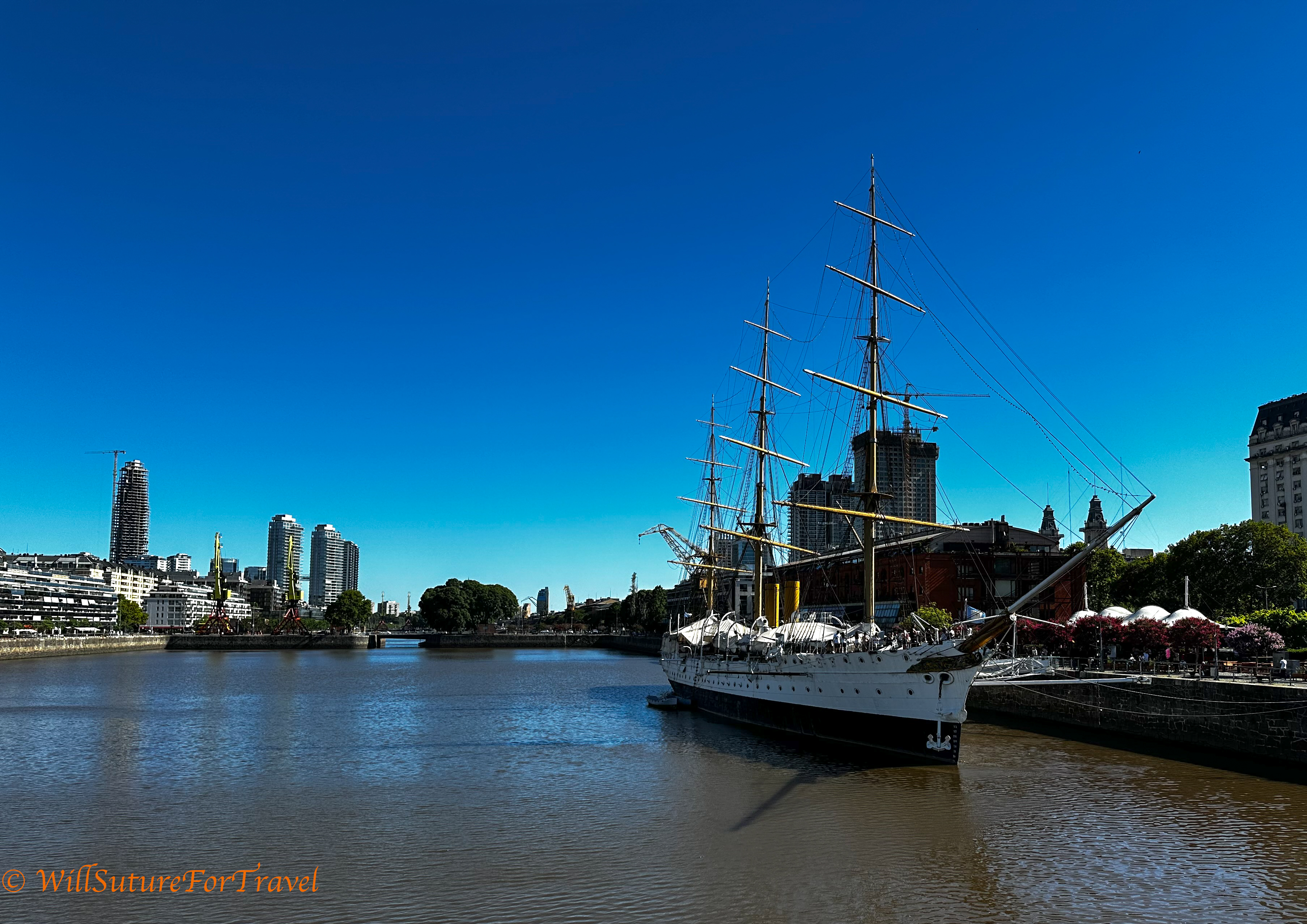
We ended the evening walking along the river by our hotel.


Leave a Reply