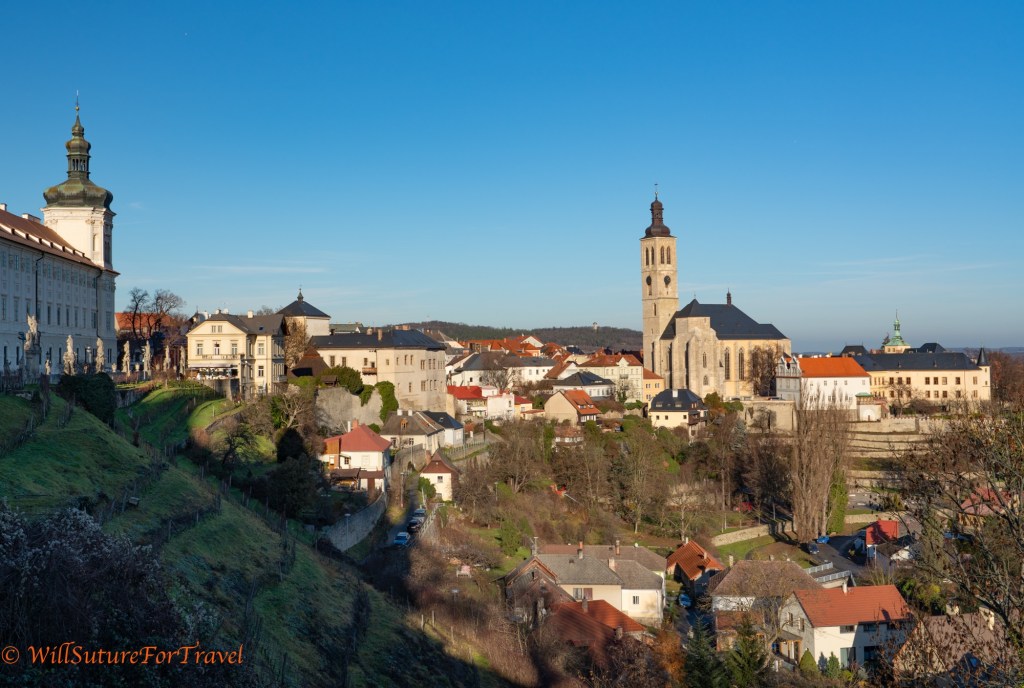
We headed out of Prague today for a day trip to Kutná Hora. This involved a couple of trains and the public bus system going there and back.
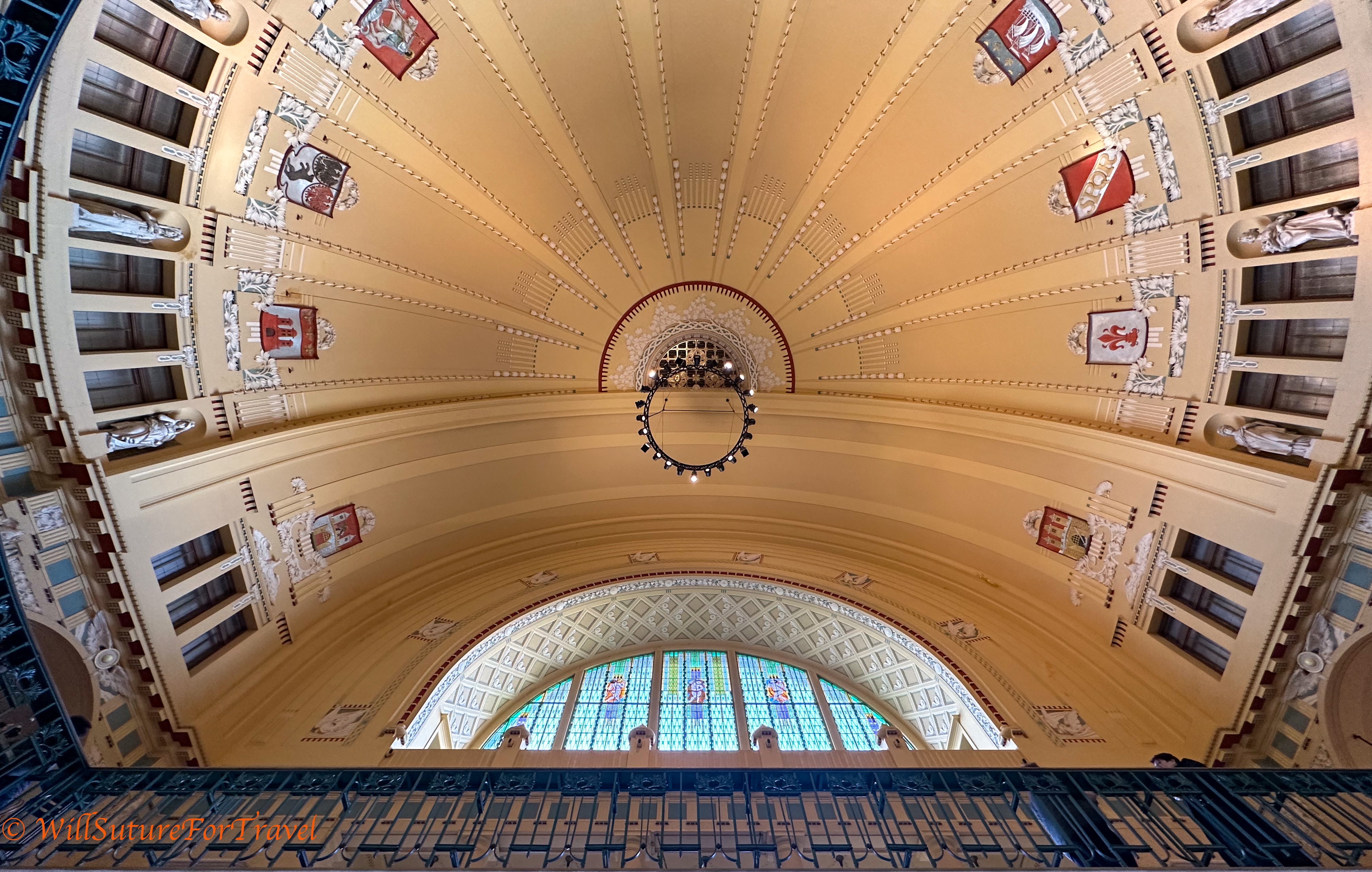
Ceiling of the Prague train station.
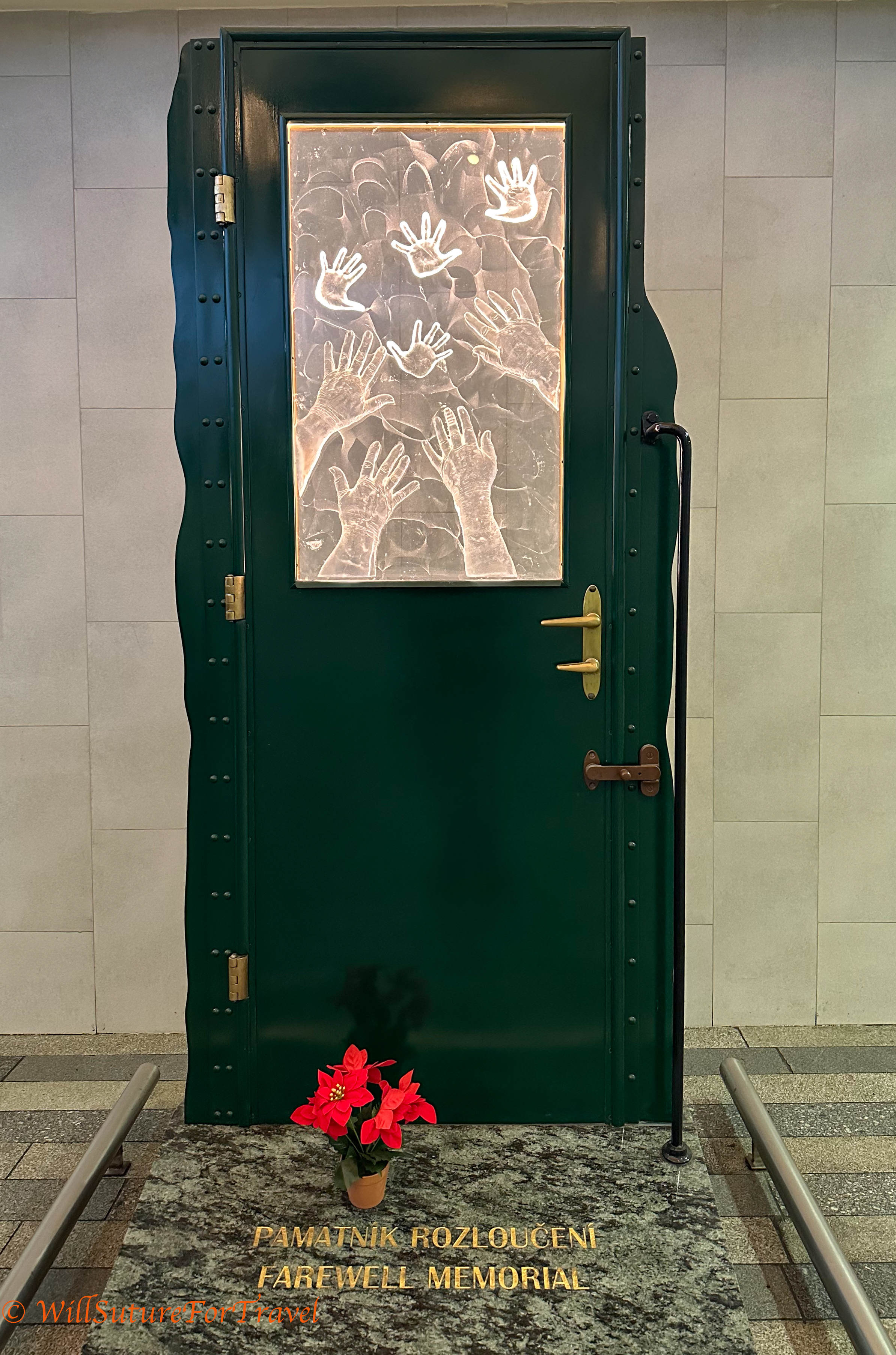
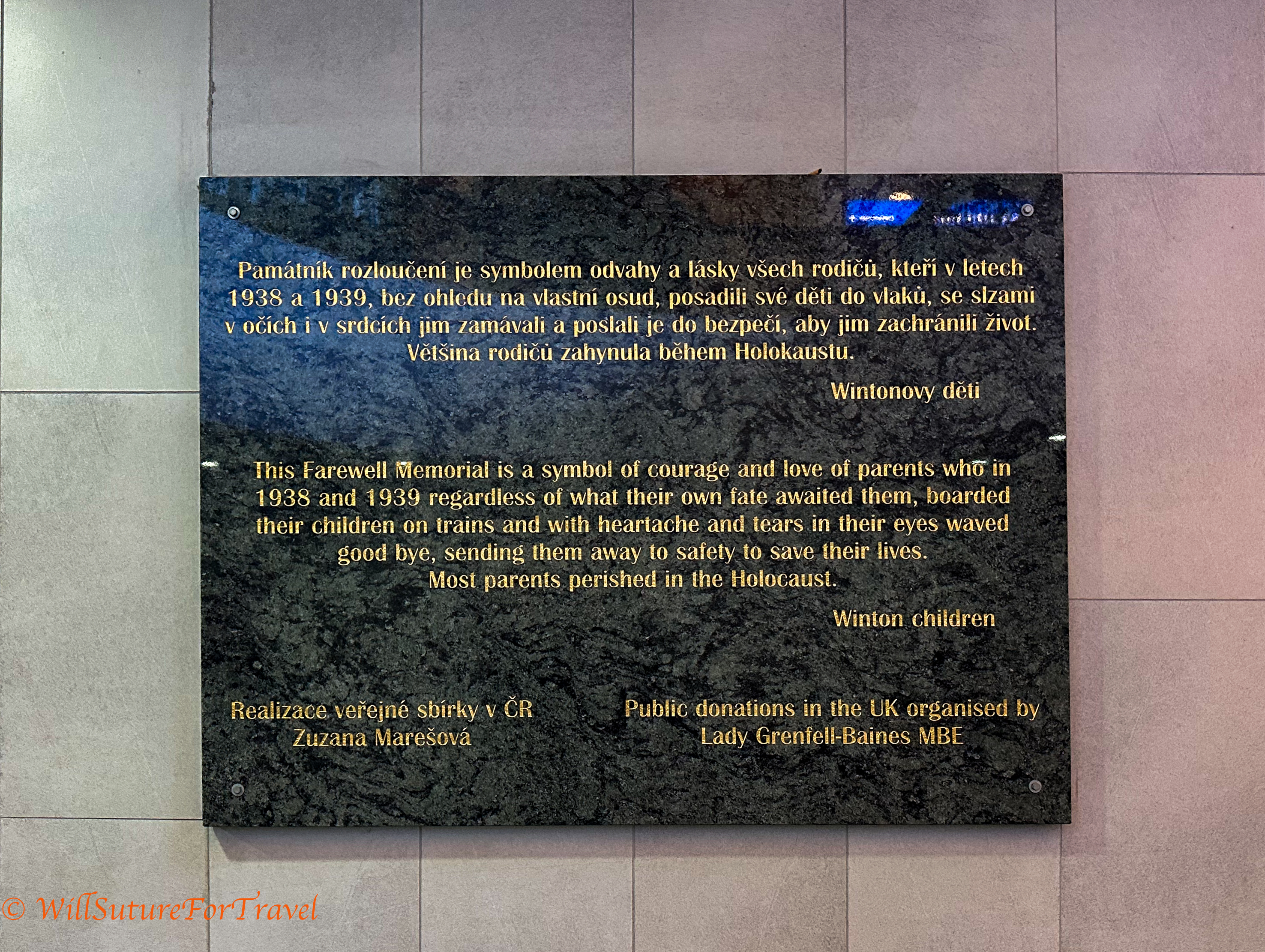
The train station in Prague has this Farewell Memorial. It is a replica of a train door with children’s hands on the inside and their parents’ on the outside. It is here to recognize Nicholas Winton who arranged for multiple transports of children from Prague to London in 1938-1939. He arranged the funding, transportation, and foster families. According to his records, he was able to rescue 664 Jewish children. He did all of this quietly. His wife discovered his records in 1988 and released the information at that time.
We started out at the Sedlec Ossuary. This contains the bones of tens of thousands of victims of the plague and others who died in the 14th and 15th centuries who overfilled the local monastery cemetery. The bodies were exhumed in the early 16th century and the bones stacked in the chapel for more compact storage. Later, these piles of bones were reorganized into organized, decorative piles and other decorative features. We were not allowed to take pictures inside the ossuary.
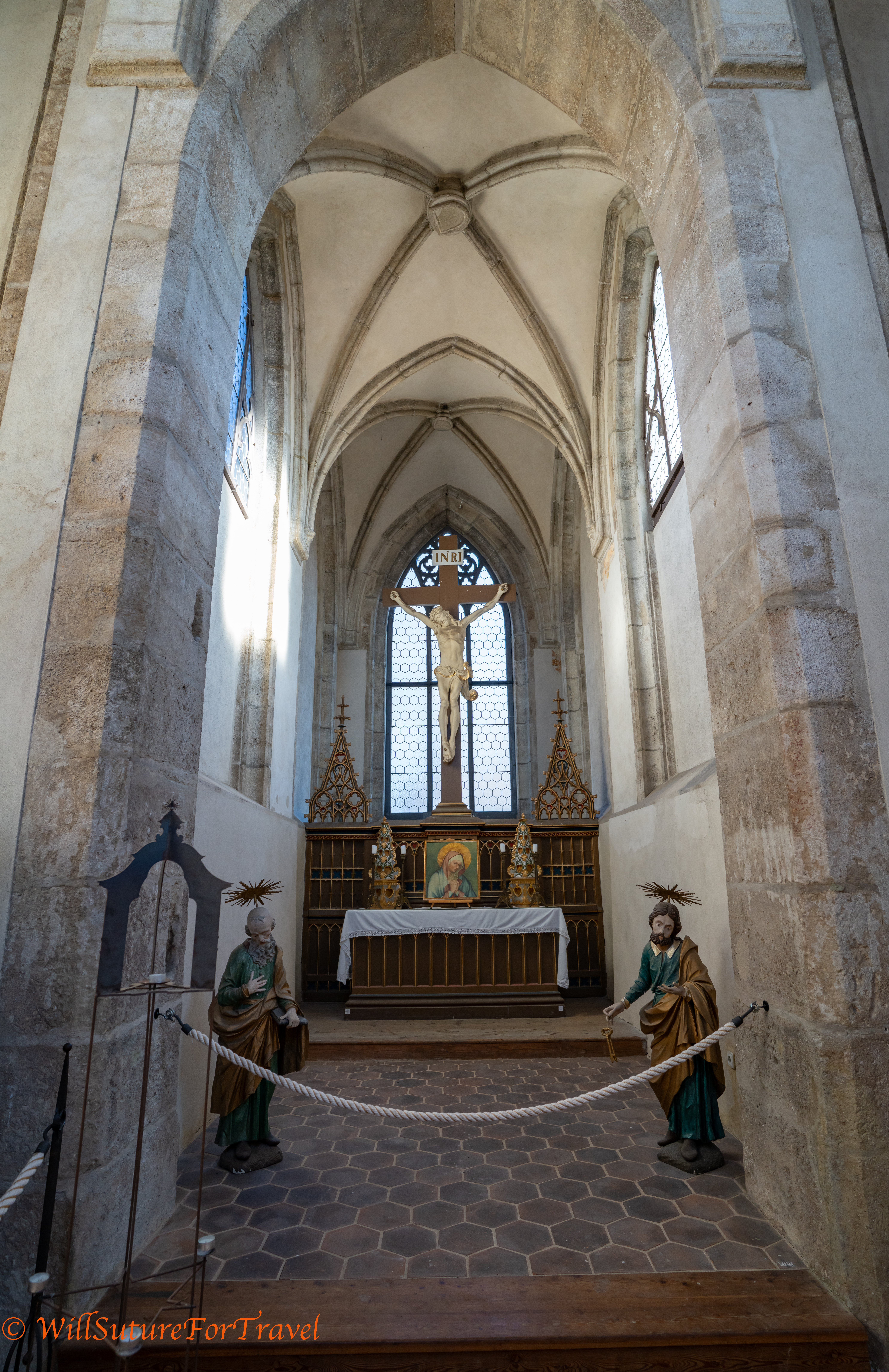
The chapel above the ossuary.
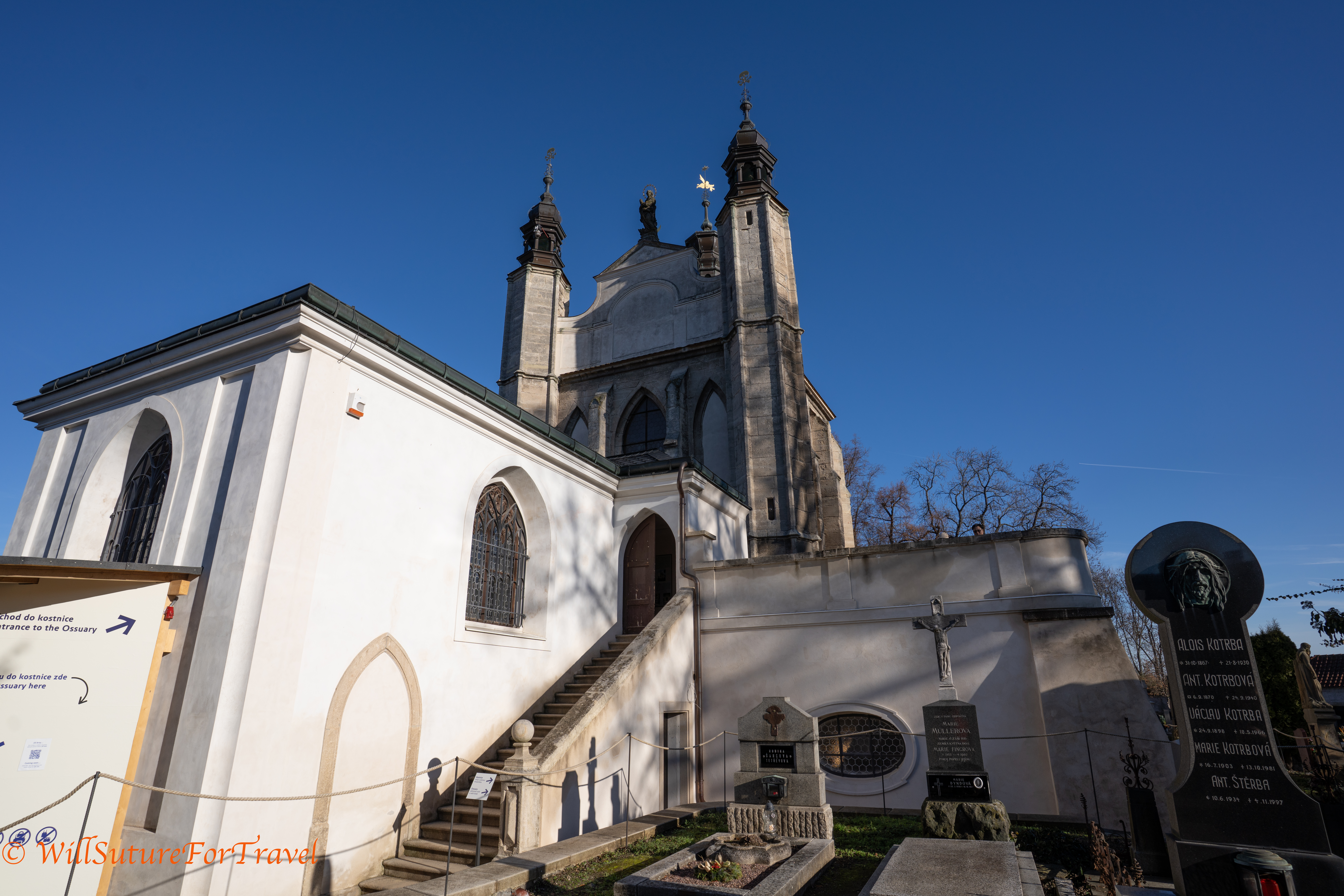
The chapel and the remaining cemetery.
Kutná Hora was historically founded on silver mining and currency minting. Eventually the mines were partially closed in the 16th century and completely closed in the 18th century.
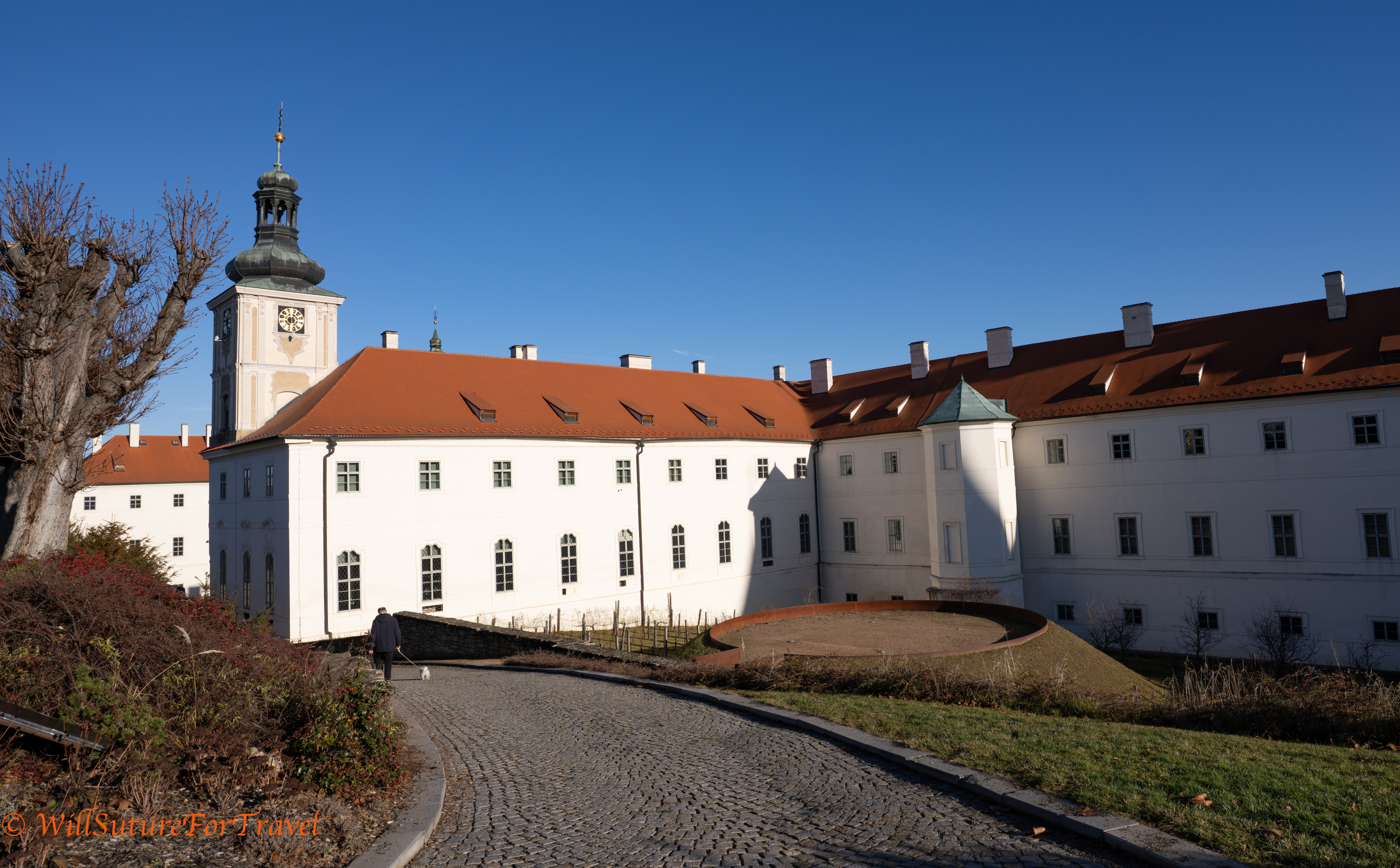
The Strahov Abbey was founded in the 12th century. It was an active monastery until it was closed by the communist government in 1950. It was returned to the order in 1989 and houses a church, library, and museum.
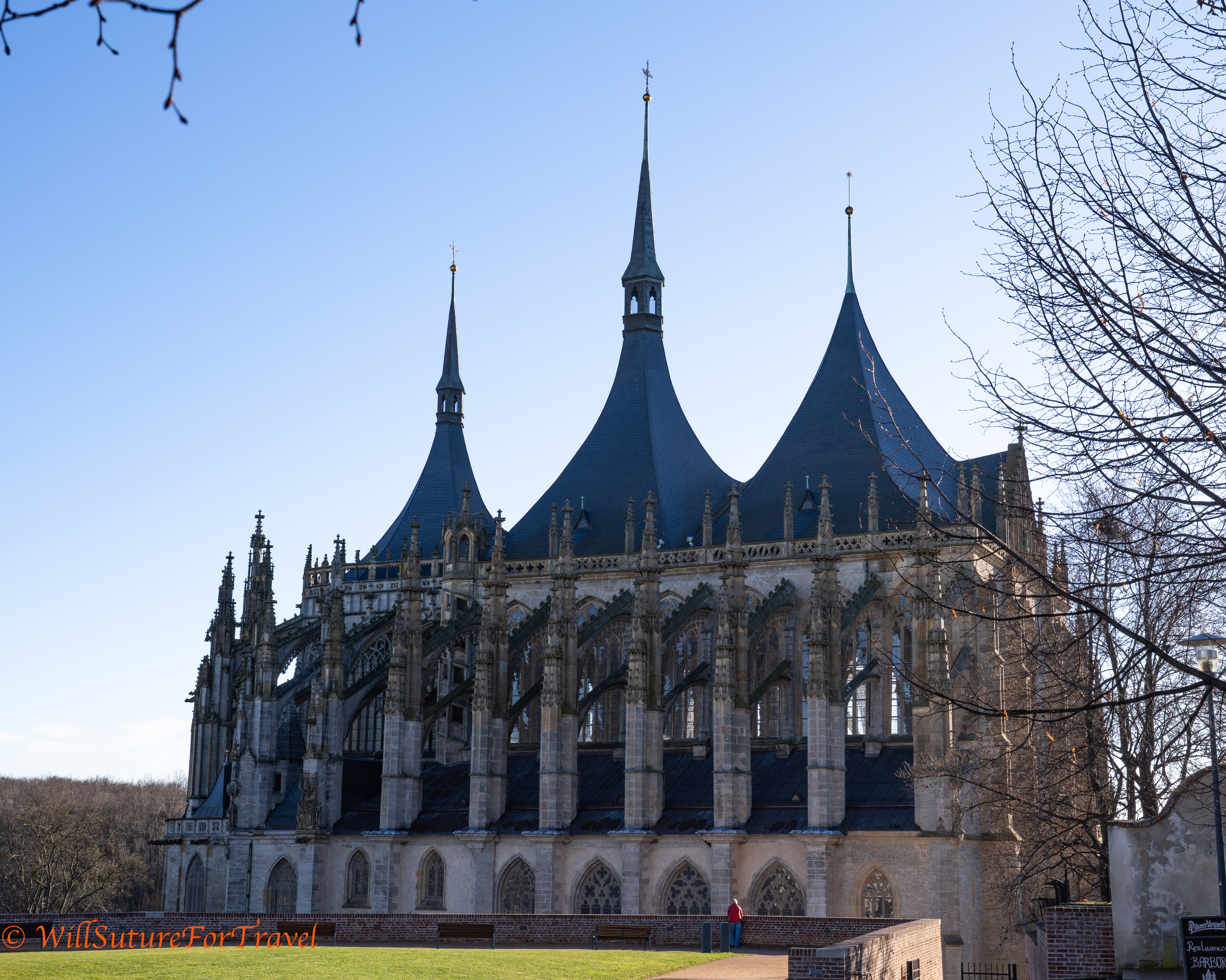
Construction of the Church of St Barbara was begun in the 14th century, when silver mining was very profitable. Silver ran dry before the church was finished, although it was used throughout. The right end is from the very early 20th century.
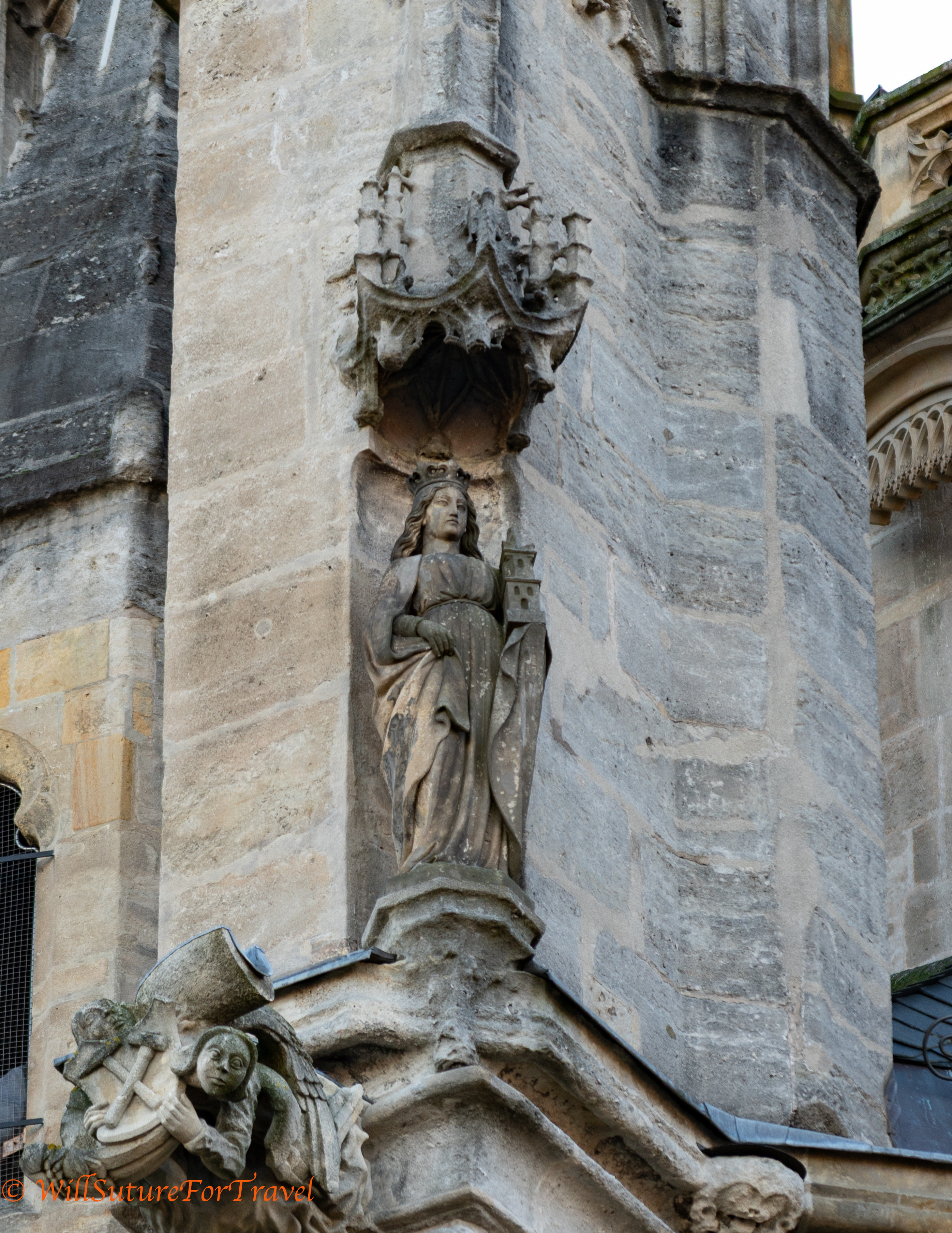
St. Barbara is the patron saint of miners, among others.
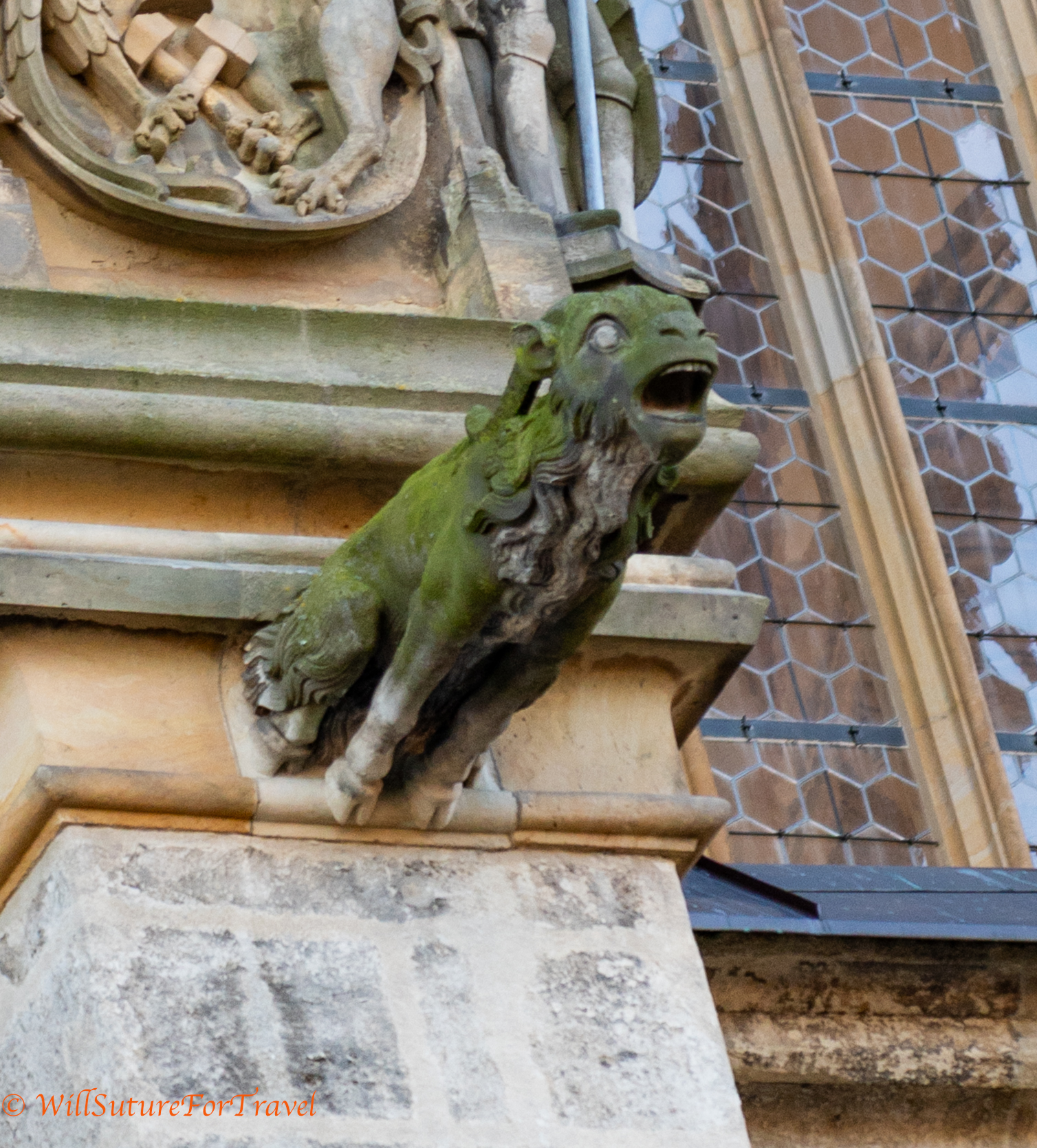
I really liked this goat gargoyle.
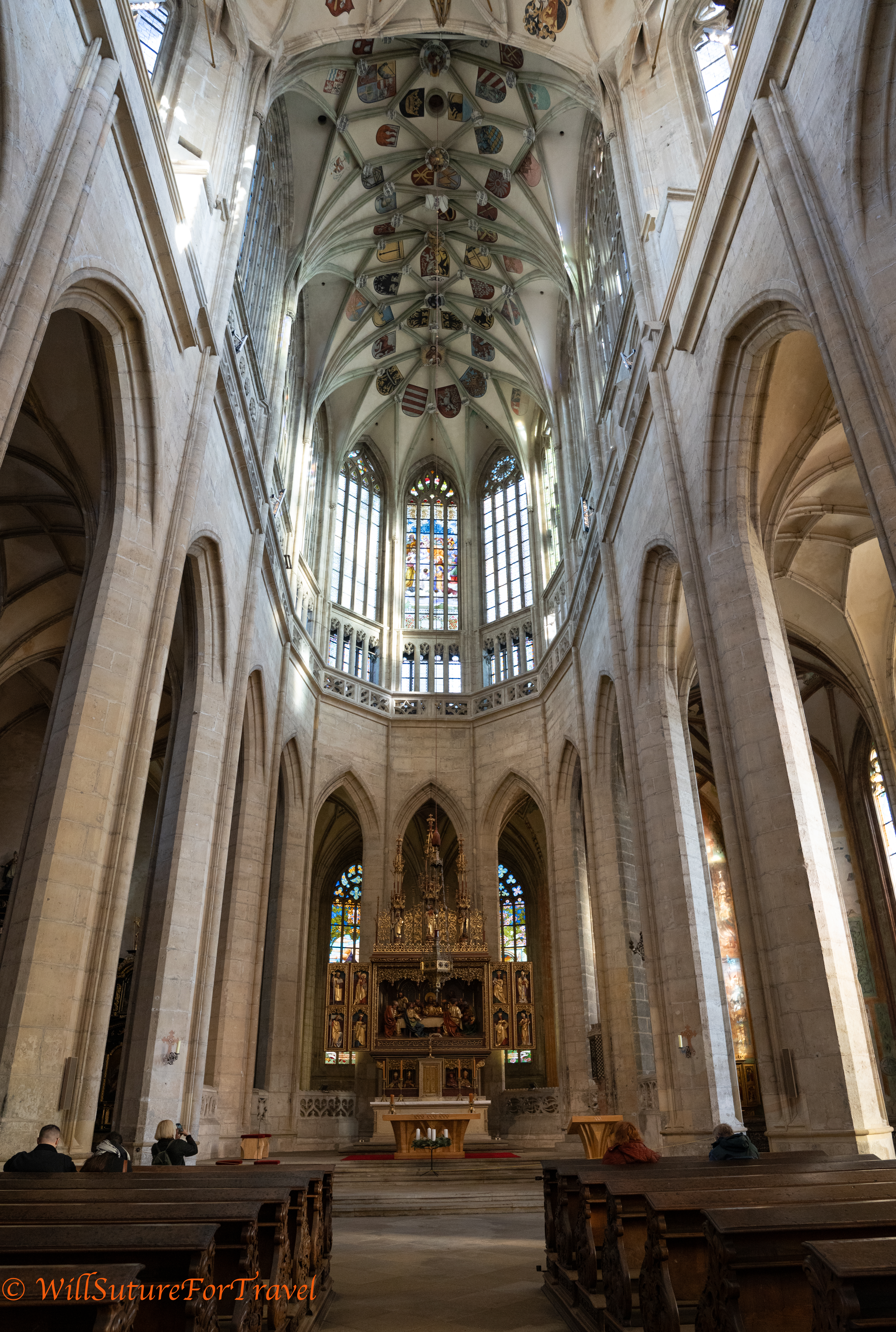
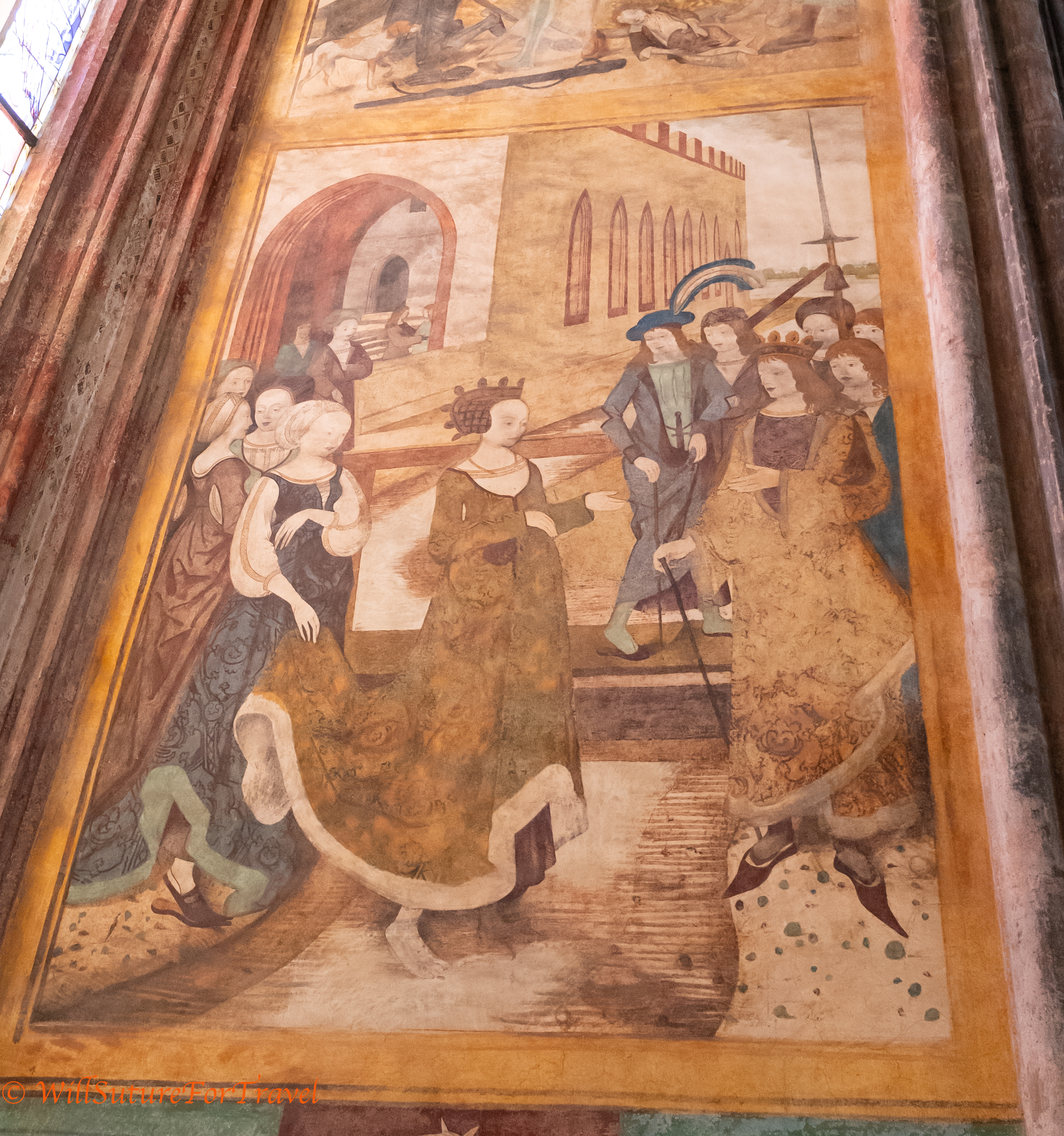
Medieval frescoes
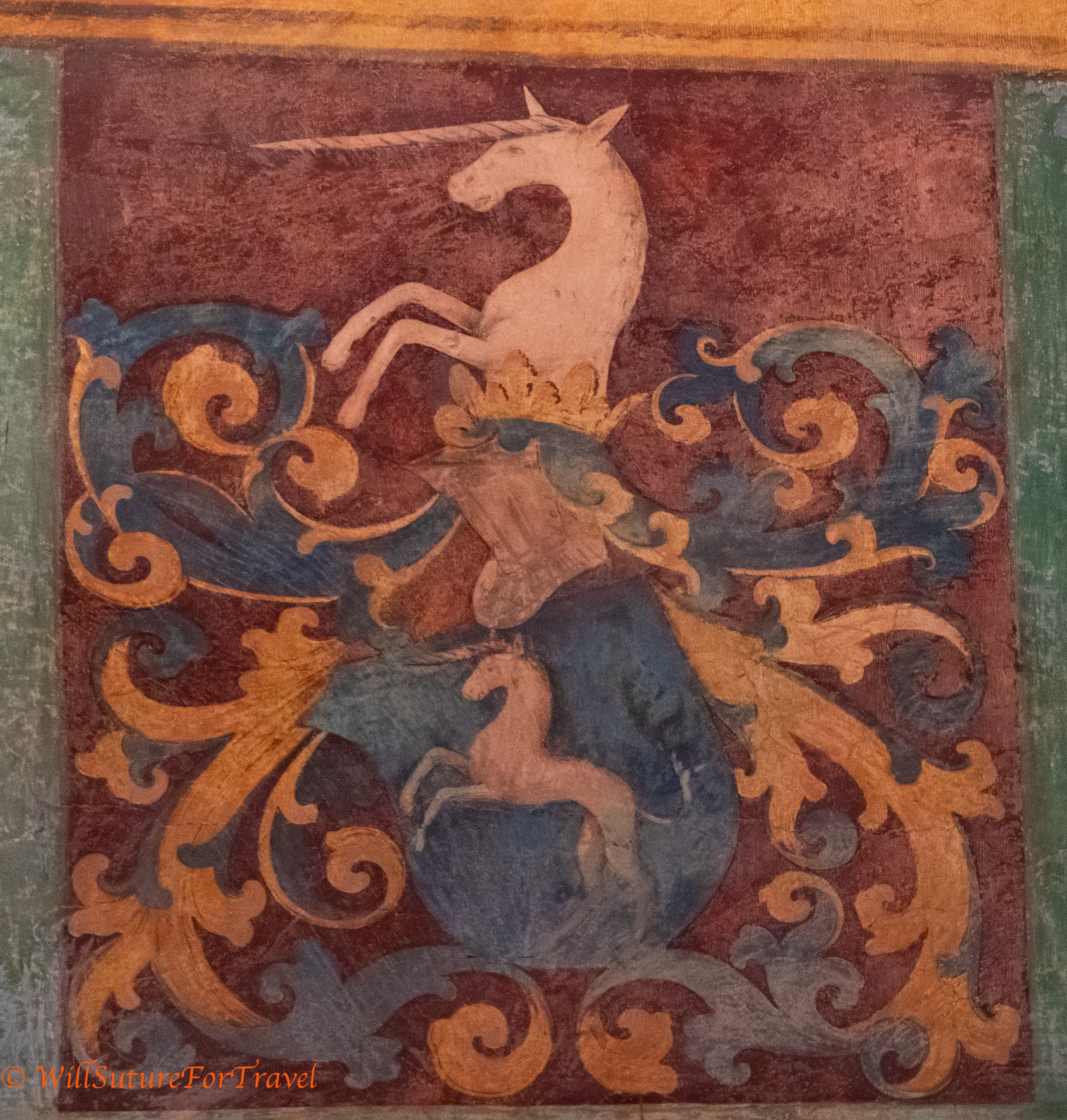
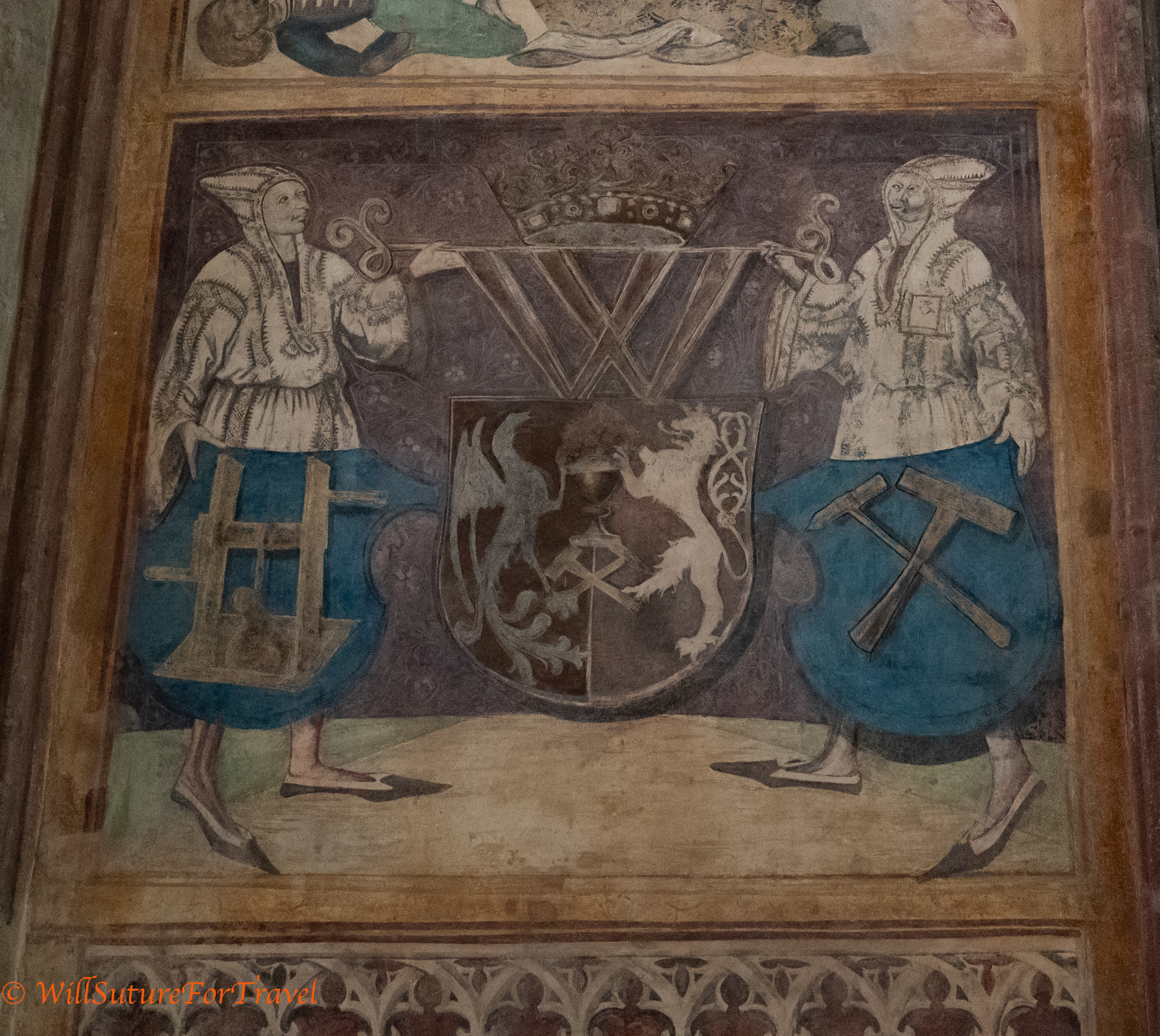
This fresco is unusual in a church as it represents peasant workers.
Baroque altars
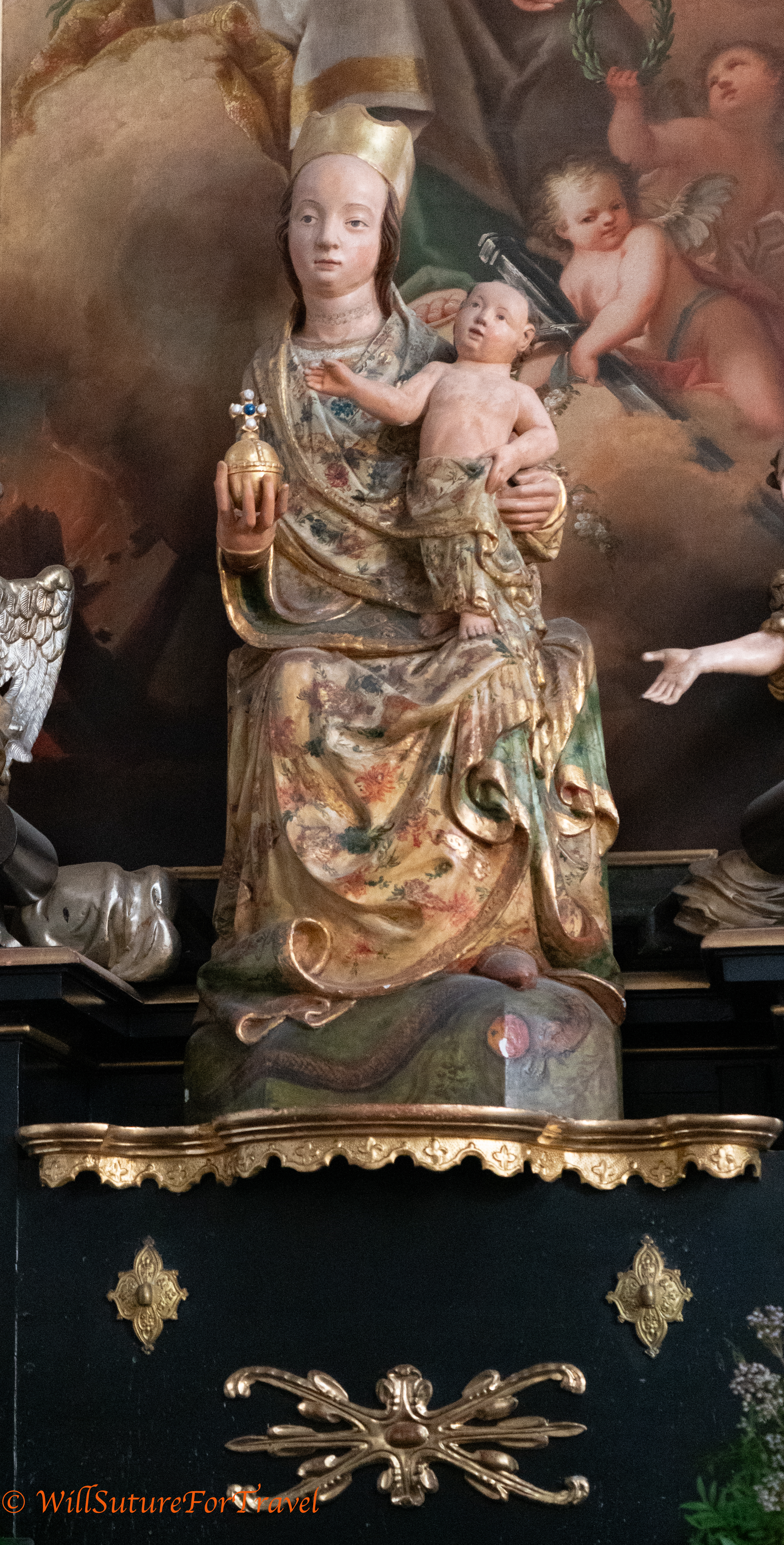
The statue on this Baroque altar is early medieval.
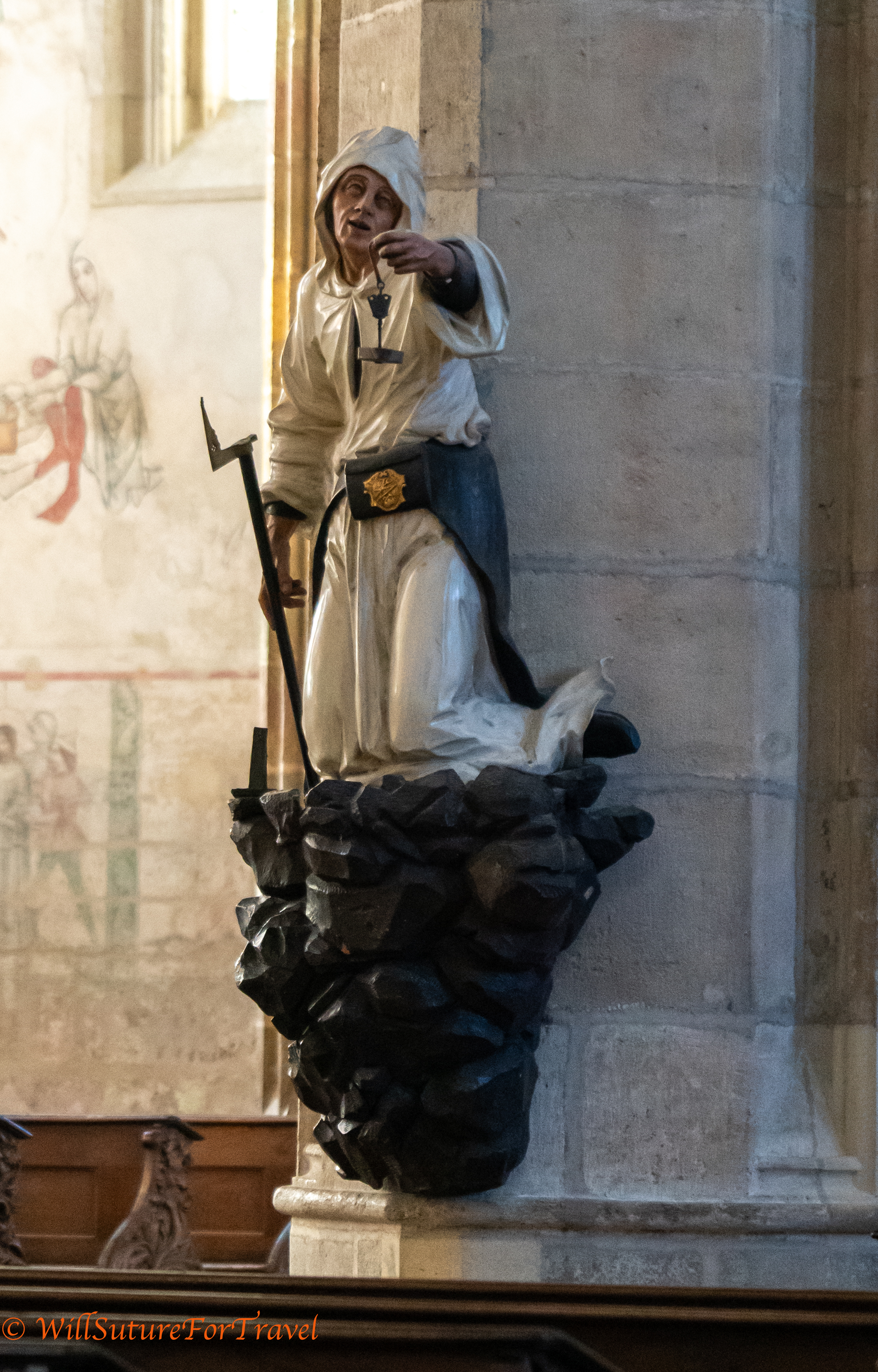
A statue for the miners.
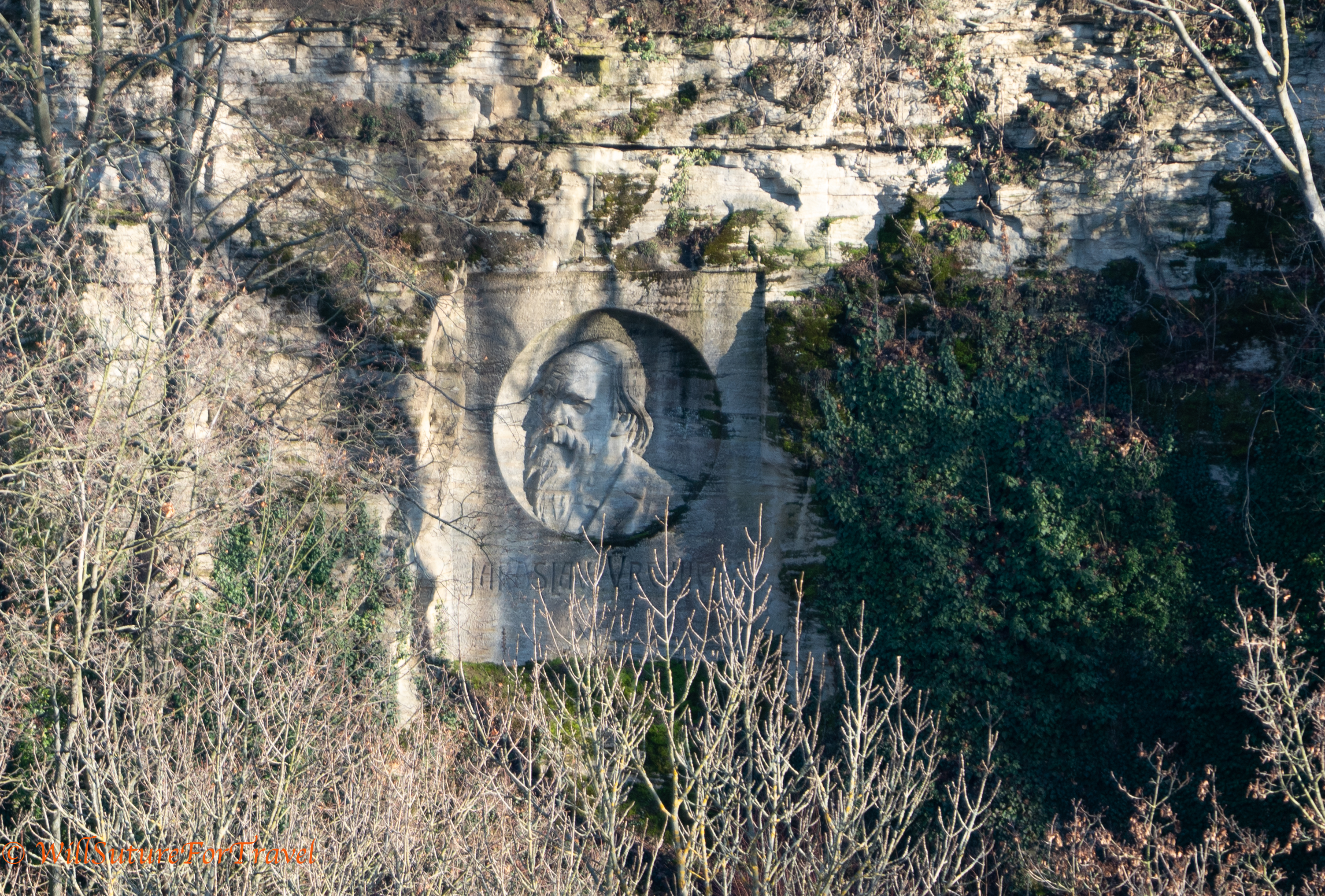
Across from the Church of St Barbara is this engraving of Jaroslav Vrchlický, a Czech poet, writer, and translator.
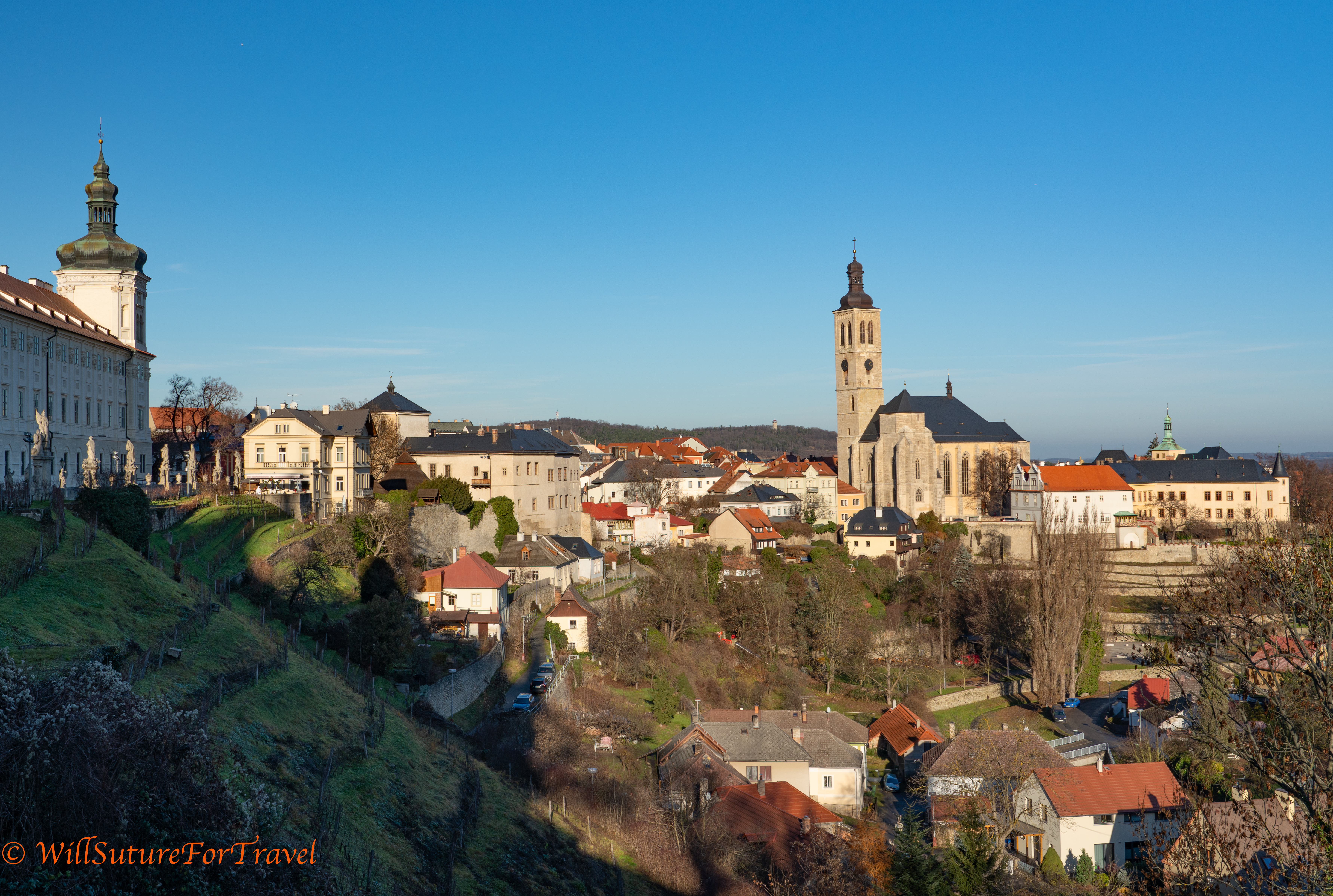
View of the town
This is Vlašský Dvůr, the royal residence and mint in Kutná Hora.
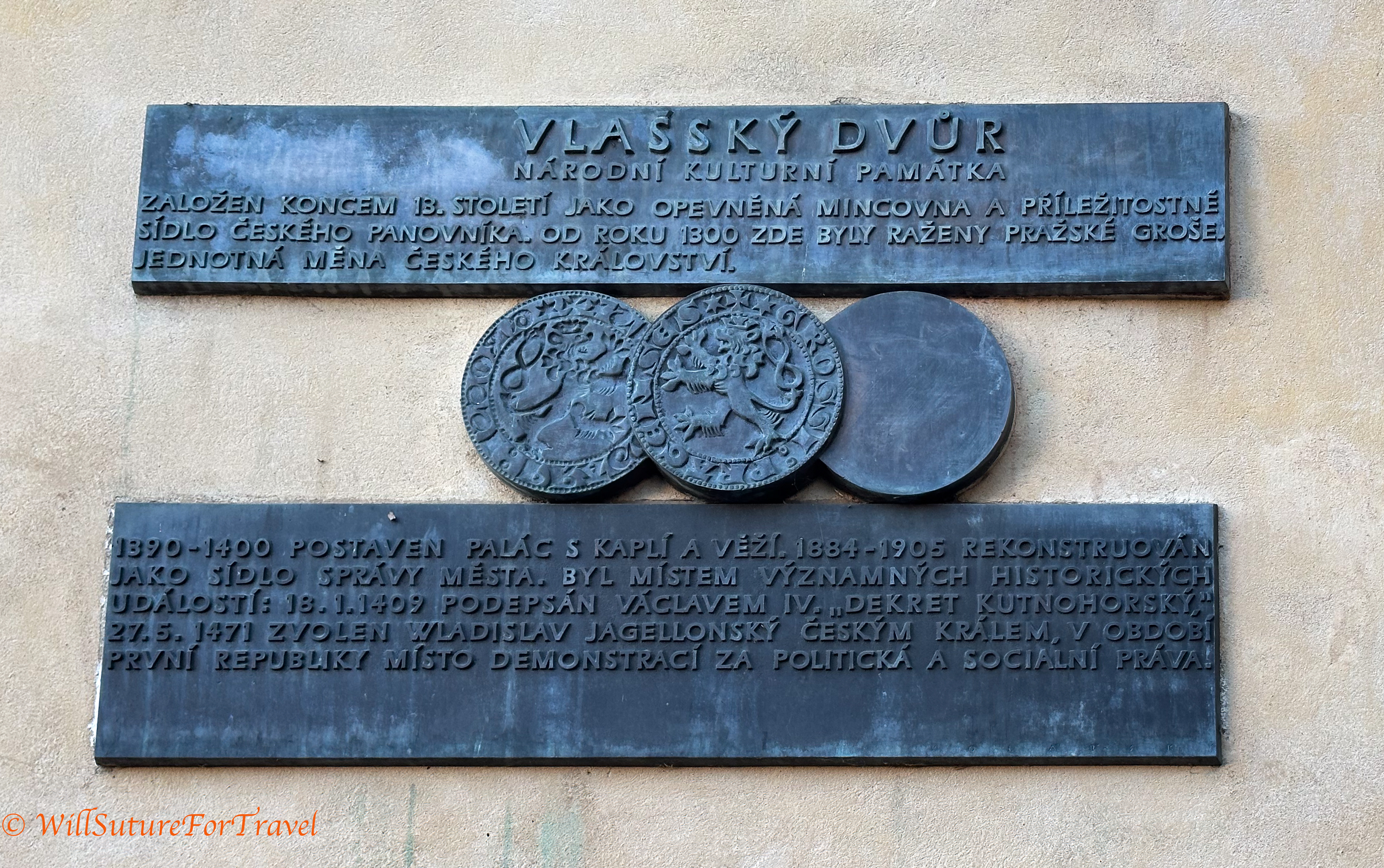
We were told that the middle circle is what the local coins looked like.
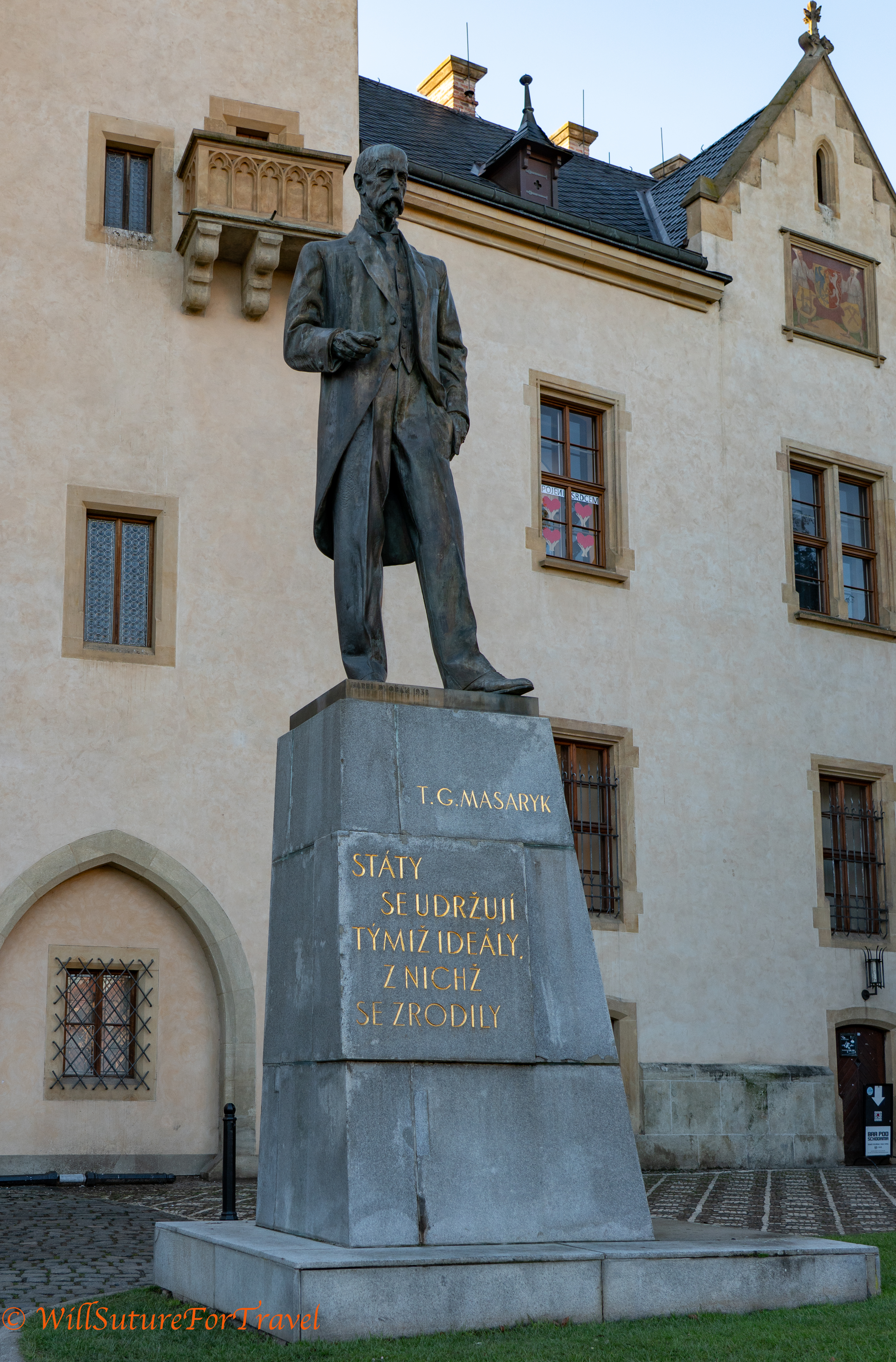
This statue is of Tomáš Masaryk, the first president of Czechoslovakia.
We returned to Prague for the evening and spent the evening in the Old Town.
House of the Black Madonna is a cubist building built in the turn of the 20th century. It is the earliest example of cubist architecture in Prague and is named for the sculpture on the 2nd floor on the right corner.
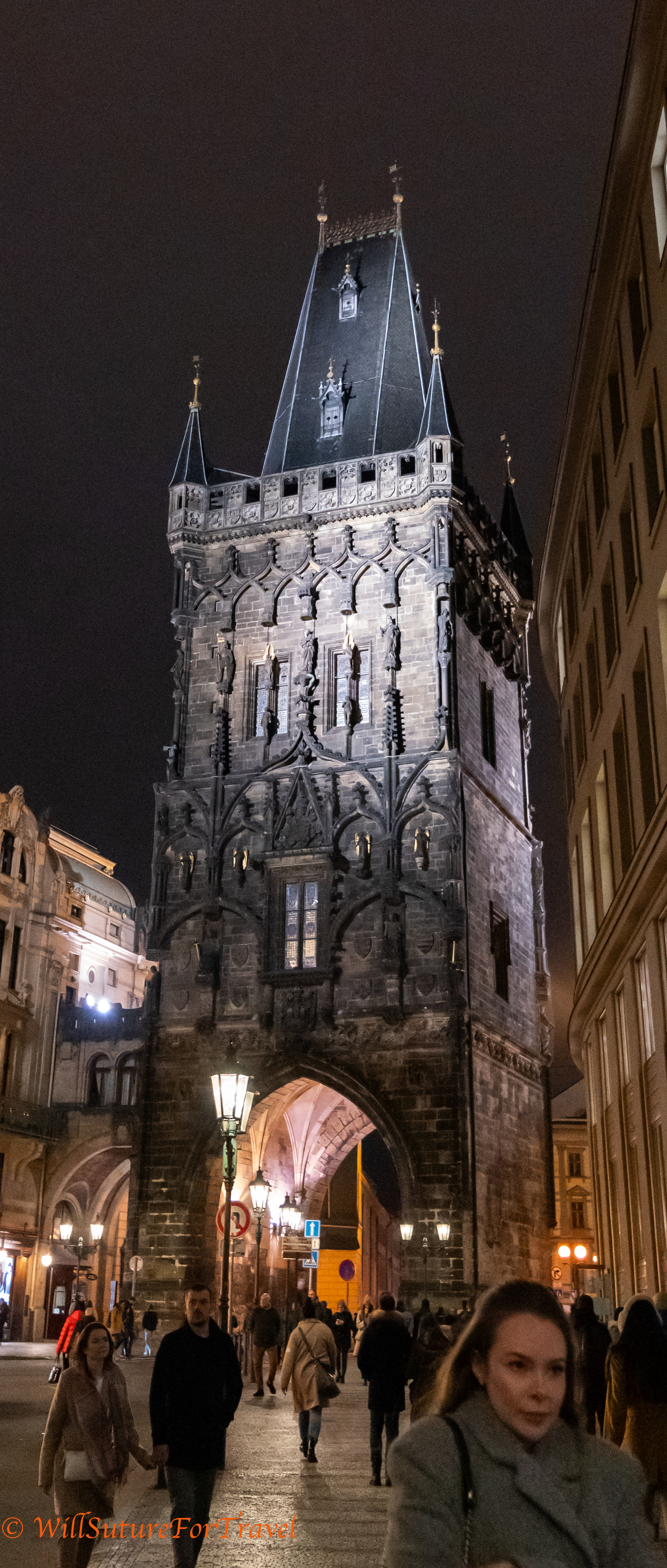
The Powder Tower is one of the original gates of the Old Town. It dates back to the 15th century.
Back in the Christmas market.
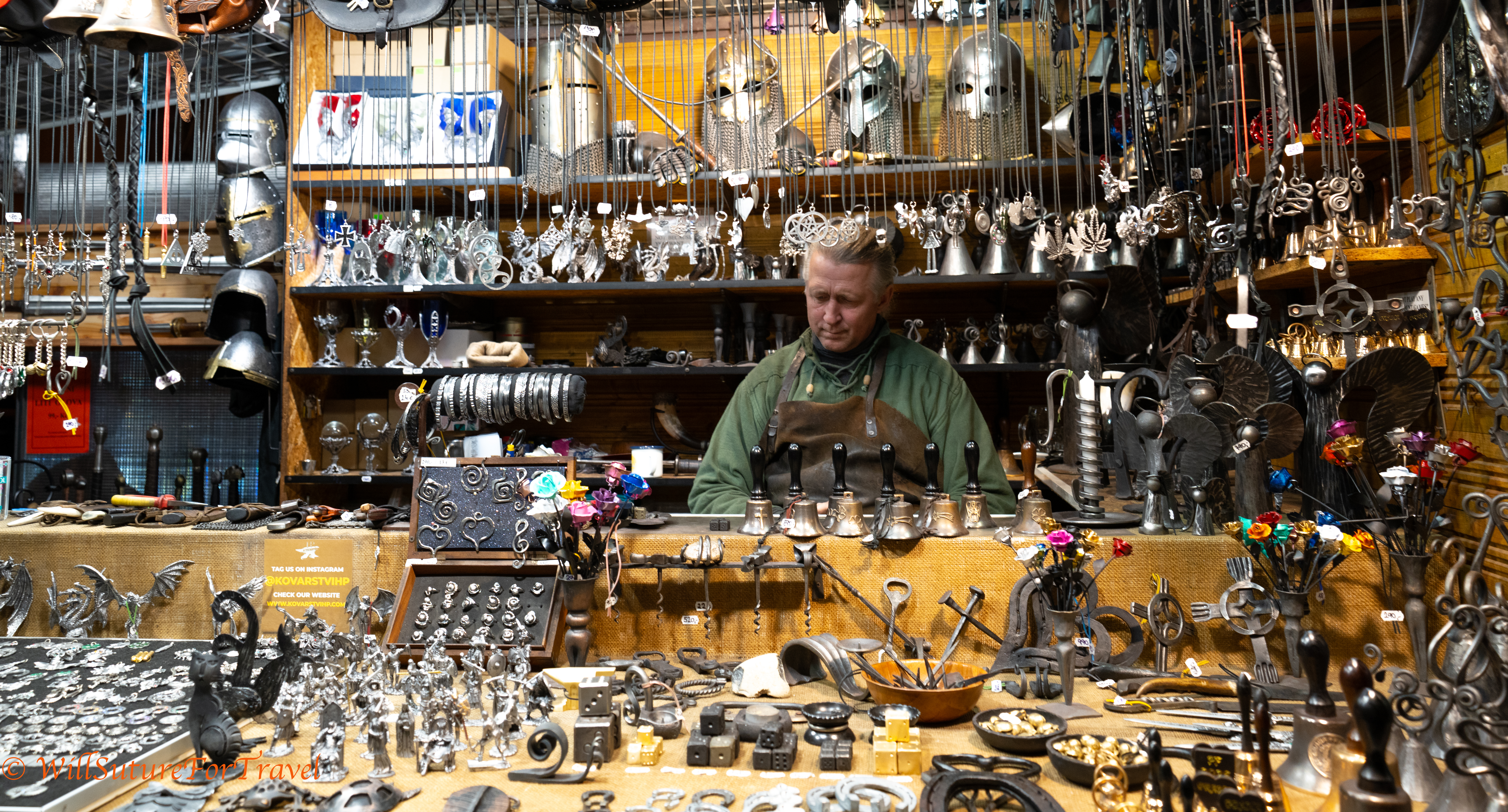
Ready for all of your Christmas armor needs.
 Will Suture for Travel
Leave a comment